
Unconscious bias: definition
Unconscious bias describes mental shortcuts that distort judgements about people without the person judging noticing. In hiring, they lead to decisions based on characteristics that have nothing to do with fitness for the role.
The important part: these patterns are not a character flaw. They are the side effect of a brain that takes shortcuts under time pressure and uncertainty. That is exactly why good intentions do not switch them off.
Why bias training changes little
The obvious answer to distorted judgement is training: know the bias, avoid the bias. The data does not support that.
Dobbin and Kalev (2016) analysed longitudinal data from 829 US companies across three decades. Mandatory diversity and bias training showed no measurable effect on the share of women and minorities in management – in some configurations the effect was negative. Knowing about a bias apparently does not protect you from it.
That is uncomfortable, but useful. It moves the question from „how do we become less biased?“ to „how do we build a process in which bias has less room to act?“
The practical difference is real: one is a workshop, the other is a process decision.
The biases, by where they occur
When screening applications
- Affinity bias – We favour people who resemble us. Same university, same hometown, same hobby on the CV. The mini-me effect.
- Stereotype, gender and racial bias – Judging by group membership rather than individual ability. Studies show identical CVs receive different ratings when only the name or photo changes.
- Ageism – Age-based assumptions. Younger candidates are read as undisciplined, older ones as resistant to change.
- Halo and horns effect – One single attribute outshines or overshadows everything else. An elite university, a typo.
During the interview
- Primacy effect – The first few minutes shape the judgement about the remaining hour.
- Recency bias – After several interviews in one day, the last person stays most present.
- Contrast bias – Candidates are measured against the previous person rather than against the requirements. The yardstick shifts from interview to interview.
- Confirmation bias – After the first impression, we mostly hear what confirms it.
- Framing effect – How something is said overrides what is said. Relevant for a sales role, less so for software engineering.
- Anchor bias – The first piece of information sets the reference point. Often that is the person who held the role before.
When the team decides
- Conformity bias – In a panel, people abandon their own judgement in favour of the group view.
- Bandwagon effect – The more people agree, the harder it gets to object.
- Status quo bias – Preference goes to whoever resembles the existing workforce.
- Overconfidence bias – Confidence in one's own judgement of character routinely exceeds its accuracy.
In the rating itself
- Idiosyncratic rater bias – Up to 60 percent of a rating says more about the person rating than about the person rated.
- Illusory correlation – Connections are seen that do not exist. This is how stereotypes harden.
- Egocentric bias – Our own perspective is overweighted, including when assessing others.
- Affect heuristic – The mood on the day of the interview colours the judgement.
What actually helps
If knowledge alone does not protect, what remains are changes to the process. Four with evidence behind them:
Define requirements before the first application arrives. Setting out what matters in advance makes it impossible to bend the criteria towards whoever happens to appeal. Six to eight observable characteristics are enough. More detail in the requirement profile.
Structured interviews with behavioural anchors. Same questions, same order, rating levels defined up front. Campion and colleagues (1997) catalogued the components of structure in the selection interview and their effect on reliability and validity.
Independent rating before the discussion. Writing before speaking undercuts conformity bias and the bandwagon effect. Once the first opinion is in the room, the group is influenced.
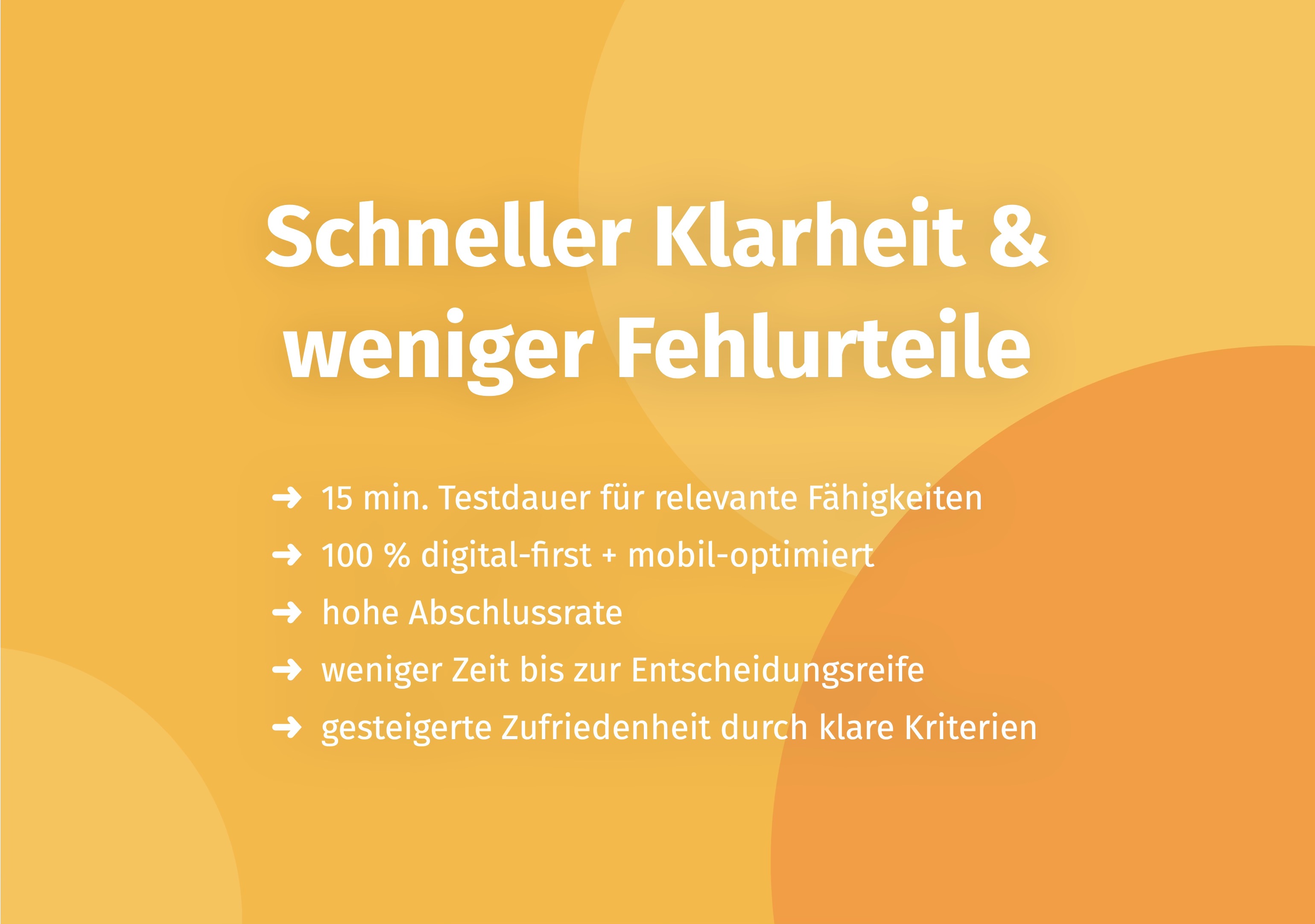
Standardised procedures in pre-selection. A procedure that runs identically for everyone and is scored by computer knows neither sympathy nor daily form. That is what online assessments do.
What bias costs
Bias is not an attitude problem, it is a cost problem. A bad hire costs between 1.5 and 3 times an annual salary, counting recruiting effort, onboarding, lost productivity and replacement.
The link to bias is direct: if the hiring decision rests on characteristics unrelated to the work, the hit rate drops. Not because someone decides badly, but because the basis does not hold.
There is a second effect that rarely gets counted: bias does not only let the wrong people in, it also filters the right ones out. Whoever does not fit the pattern on paper never gets invited – and never appears in any statistic. Those errors stay invisible, because nobody finds out how the person would have performed.
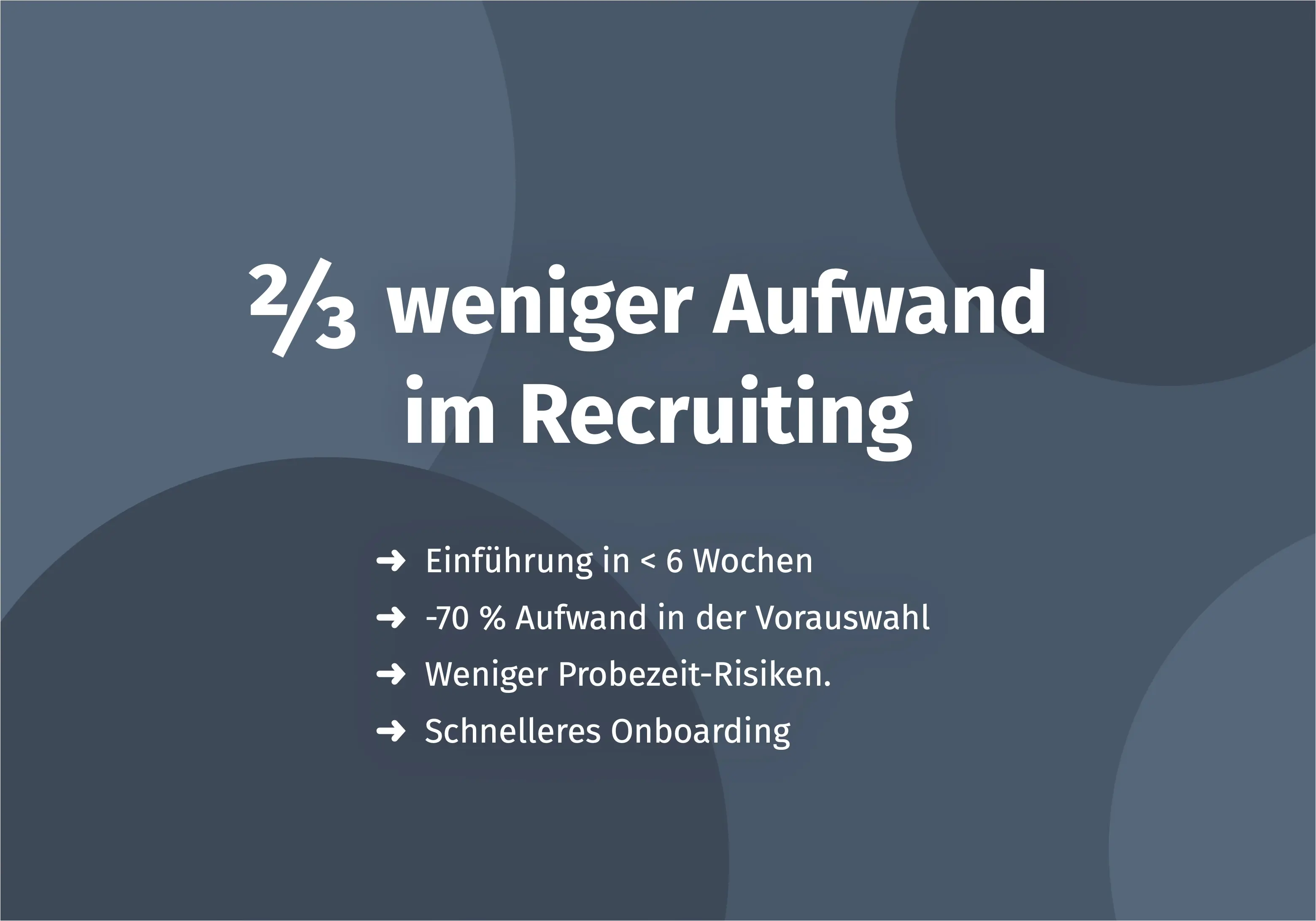
Frankfurt School measured the effect: after introducing objective pre-selection, wrong decisions dropped by 30 percent compared to the previous process.
Where to start
Not with a training, and not with all four measures at once.
The best ratio of effort to effect is the requirement profile, because everything else builds on it. Without defined criteria you can neither interview in a structured way nor rate independently. It costs one to two hours per role and is reusable afterwards.
Then independent rating before the discussion. It costs nothing, it only changes the order of the meeting, and it works immediately.
Only then is it worth looking at standardised procedures in pre-selection.
How this connects to Aivy
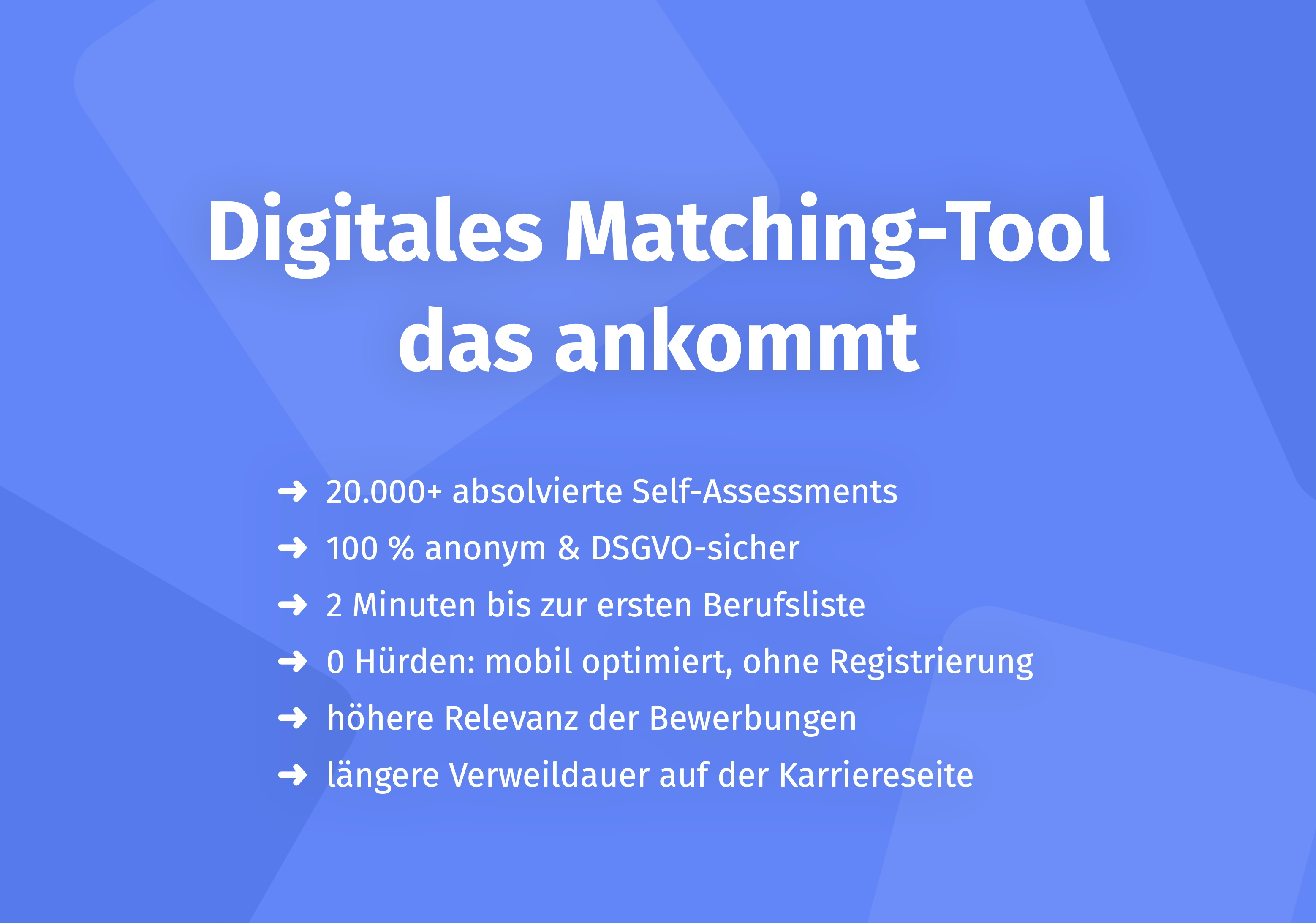
Aivy works at the point where most distortions arise: pre-selection. The assessment procedures measure characteristics defined for the role, in a standardised way, independent of name, photo, age or background.
That does not switch bias off. It shifts what the decision rests on: from impression to measurement.
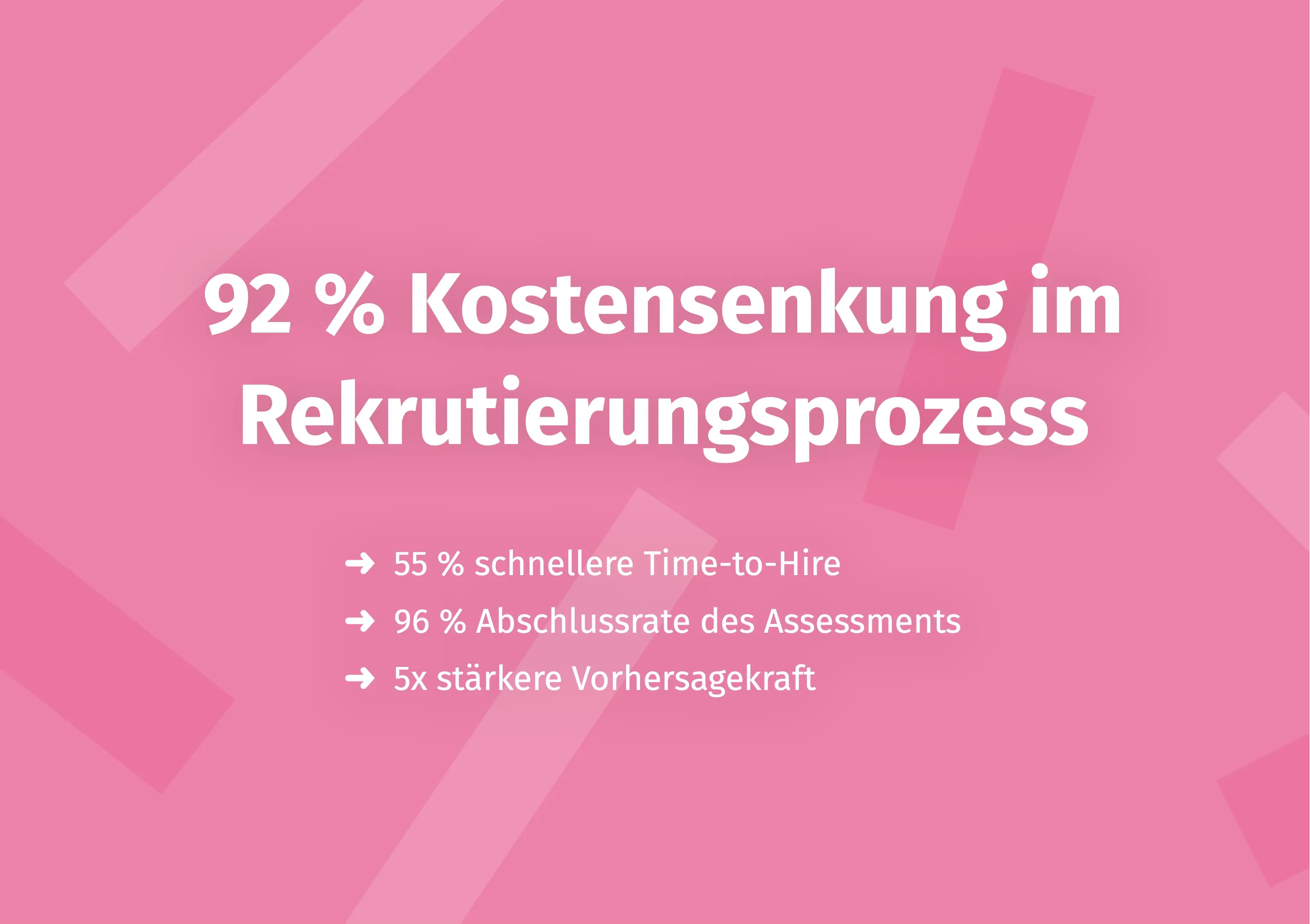
At Deutsche Lufthansa AG the procedure predicted 96 percent of suitability decisions correctly – before the first personal conversation, so before any impression could form.
Frequently asked questions
What is unconscious bias?
Mental shortcuts that distort judgements about people. In hiring they cause characteristics unrelated to fitness for the role to influence the decision.
Can unconscious bias be trained away?
On current evidence, barely. An analysis of 829 companies across three decades found no measurable effect of mandatory training on the actual composition of management. Structural changes to the selection process work better.
Which biases matter most in recruiting?
Affinity bias, halo effect, confirmation bias and contrast bias occur most often in screening and interviews. In panels, conformity bias and the bandwagon effect are added.
What concretely helps against bias in hiring?
A requirement profile before the process starts, structured interviews with behavioural anchors, independent rating before the joint discussion, and standardised procedures in pre-selection.
Is unconscious bias legally relevant?
Yes. Where distortions systematically disadvantage protected groups, discrimination law applies. A documented, requirements-based process is also the stronger legal position.
Sources
- Dobbin, F., & Kalev, A. (2016). Why Diversity Programs Fail. Harvard Business Review, 94(7/8), 52–60.
- Bohnet, I. (2016). What Works: Gender Equality by Design. Harvard University Press.
- Campion, M. A., Palmer, D. K., & Campion, J. E. (1997). A Review of Structure in the Selection Interview. Personnel Psychology, 50(3), 655–702.

Make a better pre-selection — even before the first interview
In just a few minutes, Aivy shows you which candidates really fit the role. Beyond resumes based on strengths.