
An internal promotion refers to the advancement of an employee to a higher-level position within the same organisation. It strengthens employee retention, reduces recruiting costs and puts existing potential to targeted use – provided the decision is based on objective criteria rather than personal preference or length of service alone.
What Is an Internal Promotion?
An internal promotion occurs when an employee moves to a position with greater responsibility, a different scope of duties or a higher level of compensation within the same organisation. It is a core instrument of internal recruitment and employee development.
Definition and Distinction from a Transfer
The terms "promotion" and "transfer" are often used interchangeably in day-to-day HR practice – but they are meaningfully different. A promotion always implies an upward move: more responsibility, a higher hierarchical level or better compensation. A transfer, by contrast, refers to a lateral move – for example, to a different department or location – without a fundamental change in status.
In Germany, both measures may require works council involvement under § 99 of the Works Constitution Act (BetrVG) if they involve a significant change to the employee's area of work. Organisations operating internationally should check equivalent co-determination or consultation obligations under their respective national employment law.
Types of Internal Promotion
Promotions take different forms depending on the organisation and career path:
- Hierarchical promotion: Advancement to a higher management level (e.g. from team lead to department head)
- Expert-track promotion: Elevation within a specialist career path without line management responsibility (e.g. Senior Developer, Principal Consultant)
- Title-based promotion: Adjustment of title and pay grade without an immediate expansion of duties
Internal vs. External Hiring: Advantages and Limitations
Before making a promotion decision, it is worth asking honestly: is internal hiring genuinely the better choice – or does the role need a fresh perspective from outside?
When Internal Promotion Makes Sense
The strengths of internal hiring are clear: employees already know the company culture, the processes and their colleagues. Onboarding time is shorter and turnover tends to decrease. According to the LinkedIn Global Talent Trends report (2023), employees stay significantly longer at organisations with a strong internal mobility culture – meaning a deliberate commitment to internal career development.
Internal promotion is particularly well suited when:
- the required competency profile is already present or can be developed from within
- deep organisational knowledge is a critical success factor for the role
- employee retention and cultural continuity are high priorities
- external search would involve high costs or a long time-to-hire
When External Hiring Is the Better Choice
Internal promotion is not a universal solution. It can lead to strategic tunnel vision at the top or reinforce existing team dynamics issues when the promoted person remains in a difficult environment. External candidates bring new perspectives, different networks and fresh ideas – especially during strategic realignments or organisational transformation processes.
Criteria for Objective Promotion Decisions
The most common mistake in internal promotions: the decision is based not on suitability for the new role, but on past performance in the previous one.
Performance vs. Potential: Understanding the Peter Principle
In 1969, sociologist Laurence J. Peter observed a recurring pattern: employees are promoted until they reach a position for which they are no longer competent – because the new role demands different skills than the previous one. This concept, known as the Peter Principle, explains why outstanding specialists sometimes become ineffective managers when past performance alone drives the promotion decision.
The solution lies in a systematic potential analysis: instead of asking "What has this person achieved so far?", the key question becomes "What will they be capable of in the new role?". This requires structured tools – such as competency-based interviews, role-play simulations or scientifically validated assessment instruments.
Bias Prevention: Avoiding Unconscious Favouritism
Promotion decisions are particularly susceptible to unconscious bias – implicit prejudices that distort judgement without the decision-maker being aware of it. Common patterns include:
- Affinity bias: Preference for candidates who resemble the decision-maker (background, communication style, interests)
- Halo effect: A single strong performance (e.g. a successful project) overshadows the overall picture
- Recency bias: Recent events receive disproportionate weight compared to long-term performance trends
Structured decision-making processes help to minimise these distortions: unified criteria, multi-stage assessments involving different evaluators and documented reasoning for every decision.
Structured Potential Analysis as a Decision Foundation
A clear job requirements profile for the new role is the foundation of every fair promotion decision. It describes precisely which technical competencies, leadership qualities and personality-related traits the position demands.
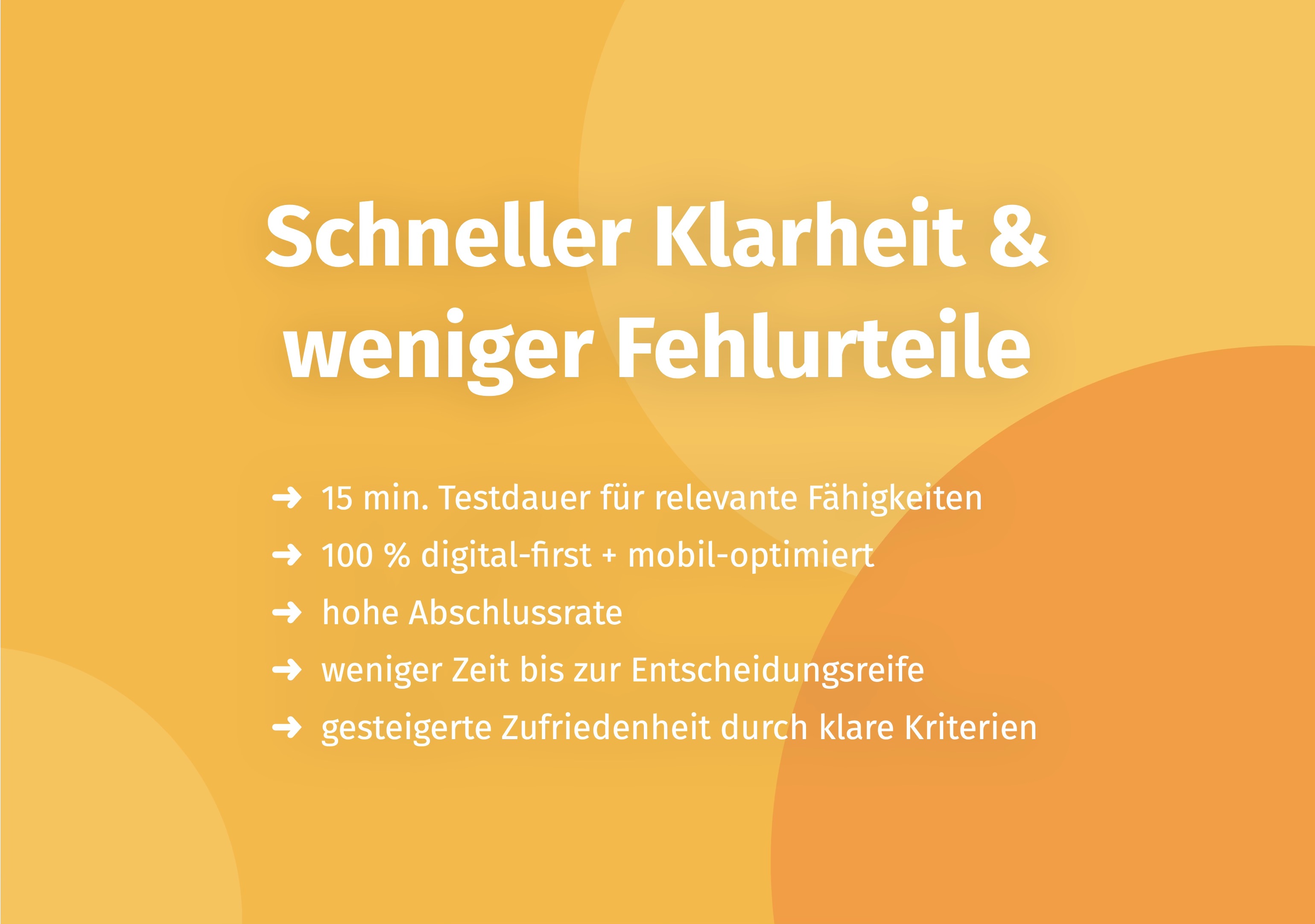
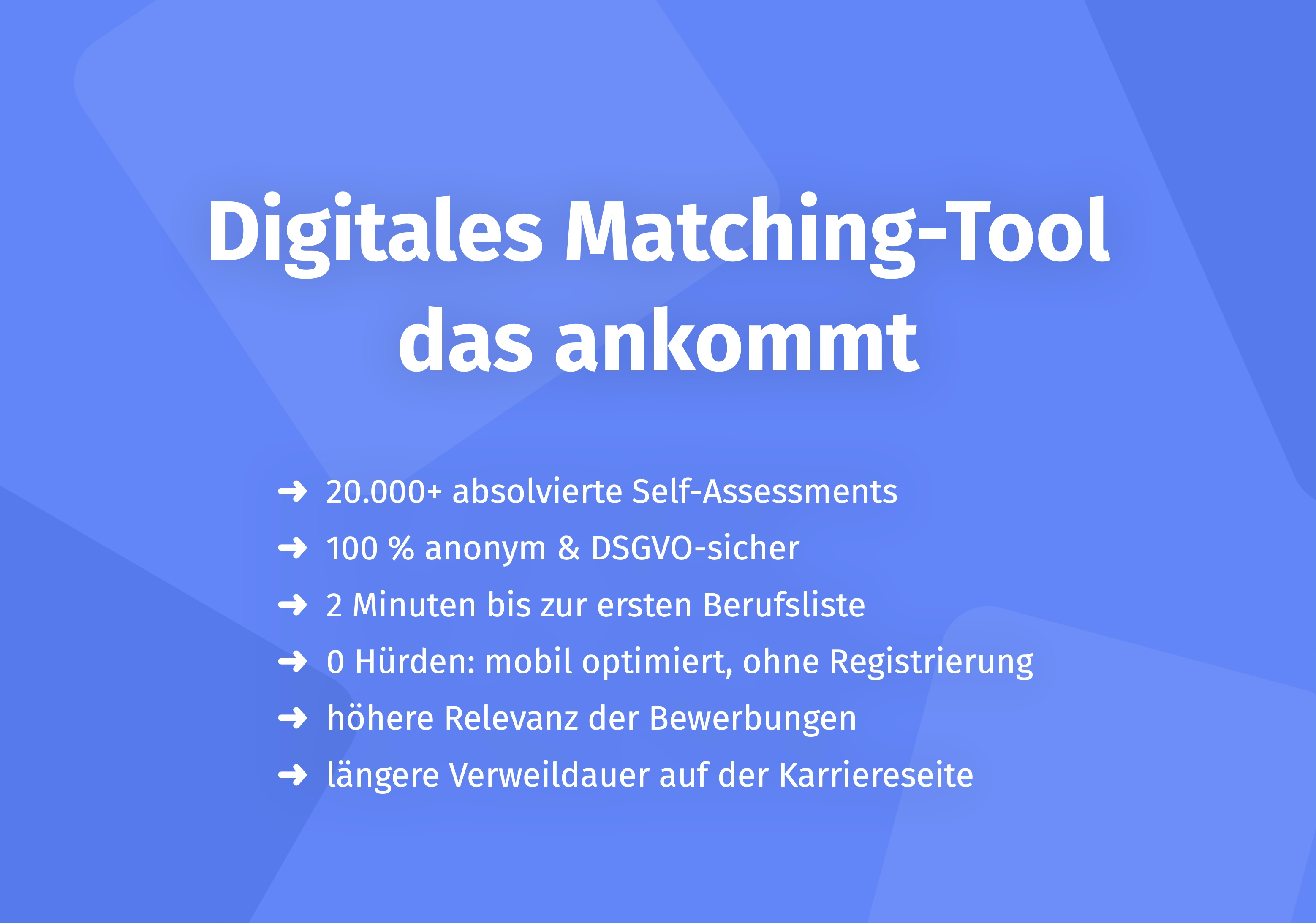
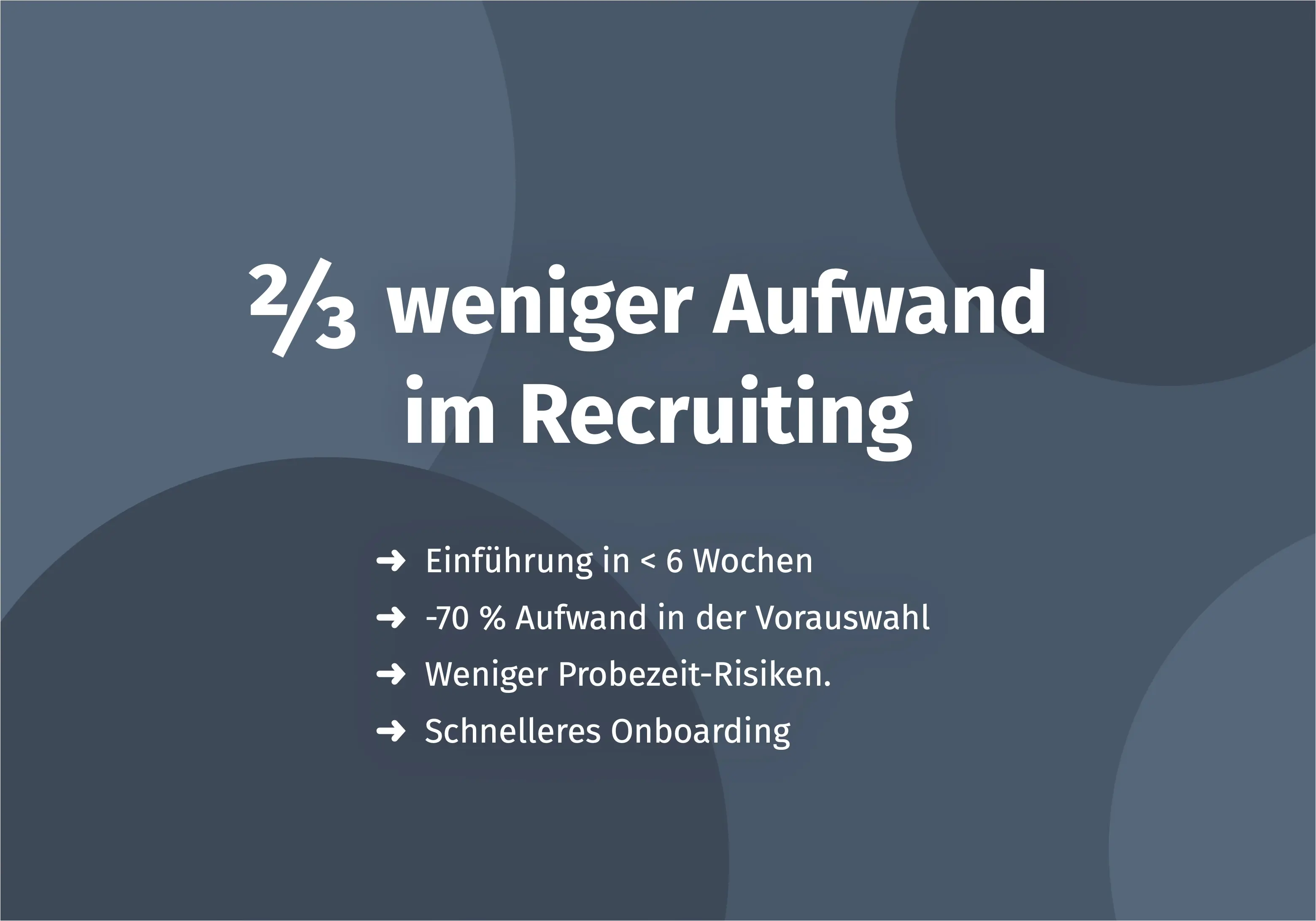
For objective assessment, the digital platform Aivy offers scientifically grounded talent diagnostics – developed on the basis of validated psychometric methods from Freie Universität Berlin. The tool enables organisations to assess the competencies and potential of internal candidates in a structured way, independent of personal rapport or seniority. Companies such as Callways report that strengths-based selection conversations become "significantly better and more focused" after introducing objective diagnostics – an effect equally relevant for internal promotion decisions at leadership level.
The Promotion Process: Step by Step
A well-structured process protects you from legal risks and builds trust among all parties involved.
Legal Framework
The specific legal requirements for internal promotions vary by country. In Germany, the General Equal Treatment Act (AGG) applies to internal promotions. Candidates may not be favoured or disadvantaged on grounds of age, gender, ethnic origin, religion or other characteristics listed in the AGG. In a dispute, you must be able to demonstrate that your decision was based on objective, role-relevant criteria – thorough documentation is therefore essential.
Organisations in other jurisdictions should refer to the applicable anti-discrimination legislation (e.g. the Equality Act 2010 in the UK, Title VII of the Civil Rights Act in the US) and any applicable co-determination or consultation obligations. When in doubt, seek legal advice from an employment law specialist before proceeding.
Conducting the Promotion Conversation
A promotion conversation is not merely a formality – it is an important signal of recognition for the employee. A proven structure includes:
- Rationale: Why this person, why now? Cite specific, concrete observations.
- Expectations: What will change in the new role, practically speaking?
- Support: What resources, onboarding or training will be provided?
- Space for questions: The promoted employee needs time to process the change.
Useful techniques for structuring these conversations can also be found in the Aivy article on job interviews – many of the principles described there transfer well to internal conversations.
Communicating with Candidates Who Were Not Promoted
This is the most sensitive part of the entire process – and the most frequently underestimated. An employee who does not receive a promotion without an honest explanation and a clear development path is a flight risk.
Best practice:
- Personal conversation – not an email, not a vague promise to revisit later
- Specific rationale based on the defined criteria
- Development plan: What does the person need to build in order to be considered next time?
- Communicate promptly – before the decision travels through informal channels
Frequently Asked Questions About Internal Promotion
What Is the Difference Between an Internal Promotion and a Transfer?
A promotion always means advancement to a higher-level position – typically involving more responsibility and higher compensation. A transfer, by contrast, refers to a lateral move, such as to a different department or location, without a fundamental change in status or seniority. Both may require formal consultation or co-determination depending on the applicable employment law framework.
Do Employees Have a Legal Right to a Promotion?
No – there is no general statutory right to be promoted. Employers retain broad discretion over internal advancement decisions. However, anti-discrimination law applies: refusing a promotion on grounds such as age, gender or ethnic origin exposes the organisation to legal risk in most jurisdictions. Collective agreements or works agreements may contain additional obligations.
What Criteria Should Count in a Promotion Decision?
Relevant criteria include technical competencies required for the new role, demonstrated or recognisable potential, and the necessary soft skills (e.g. leadership capability). Criteria that are not appropriate include: length of service alone, personal liking, gender, age or ethnic origin. A documented requirements analysis carried out before the decision provides protection against bias and legal challenge.
Does the Works Council Need to Be Involved in an Internal Promotion?
In Germany, under § 99 BetrVG, the works council has co-determination rights in the case of transfers involving a significant change to the area of work. For a purely title-based promotion without a change in duties, the obligation is less clear-cut. When in doubt, involve the works council early and seek employment law guidance. Organisations outside Germany should consult the consultation or information obligations applicable in their jurisdiction.
What Is the Peter Principle and Why Is It Relevant?
In 1969, sociologist Laurence J. Peter described the phenomenon whereby employees are promoted until they reach a level at which they are no longer competent – because the new role demands different skills than the previous one. The Peter Principle is a strong argument for basing promotion decisions not solely on past performance, but on a structured assessment of potential for the future role.
How Do I Communicate a Promotion Rejection Respectfully?
The conversation should take place in person – not by email. Give specific reasons based on the agreed criteria, and offer a clear development plan: what should the person work on in order to be considered at the next opportunity? Timing matters: communicate promptly, before the decision becomes known through other channels.
Internal or External Hiring – Which Is Better?
It depends on the specific requirements of the role. Internal candidates bring organisational knowledge, shorter ramp-up times and higher loyalty. External candidates offer new perspectives and outside thinking – particularly during periods of strategic change. According to LinkedIn Global Talent Trends (2023), organisations with a strong internal mobility culture benefit from significantly longer employee tenure. As a general principle: assess internally first, and pursue external search only when the required profile cannot be found or developed within the organisation.
Conclusion
Internal promotions are more than a career measure – they are a strategic signal about how seriously an organisation takes employee development. Promoting internally without clear criteria, bias prevention and structured communication creates risks: disengagement, attrition and legal exposure.
The foundation for sound promotion decisions is a concrete requirements profile, a potential analysis – not just a retrospective on past performance – and a fair, documented process. In particular, the communication with candidates who were not selected is an underestimated lever for long-term employee retention.
Assessing cultural fit, potential and competence objectively is challenging – but achievable when the right instruments are in place.
Sources
- General Equal Treatment Act (Allgemeines Gleichbehandlungsgesetz, AGG). Federal Ministry of Justice, Germany, 2006 (current version). https://www.gesetze-im-internet.de/agg/
- Works Constitution Act (Betriebsverfassungsgesetz, BetrVG), in particular § 99. Federal Ministry of Justice, Germany. https://www.gesetze-im-internet.de/betrvg/
- LinkedIn Global Talent Trends – Internal Mobility. LinkedIn, 2023. https://business.linkedin.com/hire/global-talent-trends
- Peter, Laurence J. / Hull, Raymond: The Peter Principle. William Morrow and Company, 1969.
- Deutsche Gesellschaft für Personalführung (DGFP): Studies on Talent Management and Succession Planning. https://www.dgfp.de

Make a better pre-selection — even before the first interview
In just a few minutes, Aivy shows you which candidates really fit the role. Beyond resumes based on strengths.