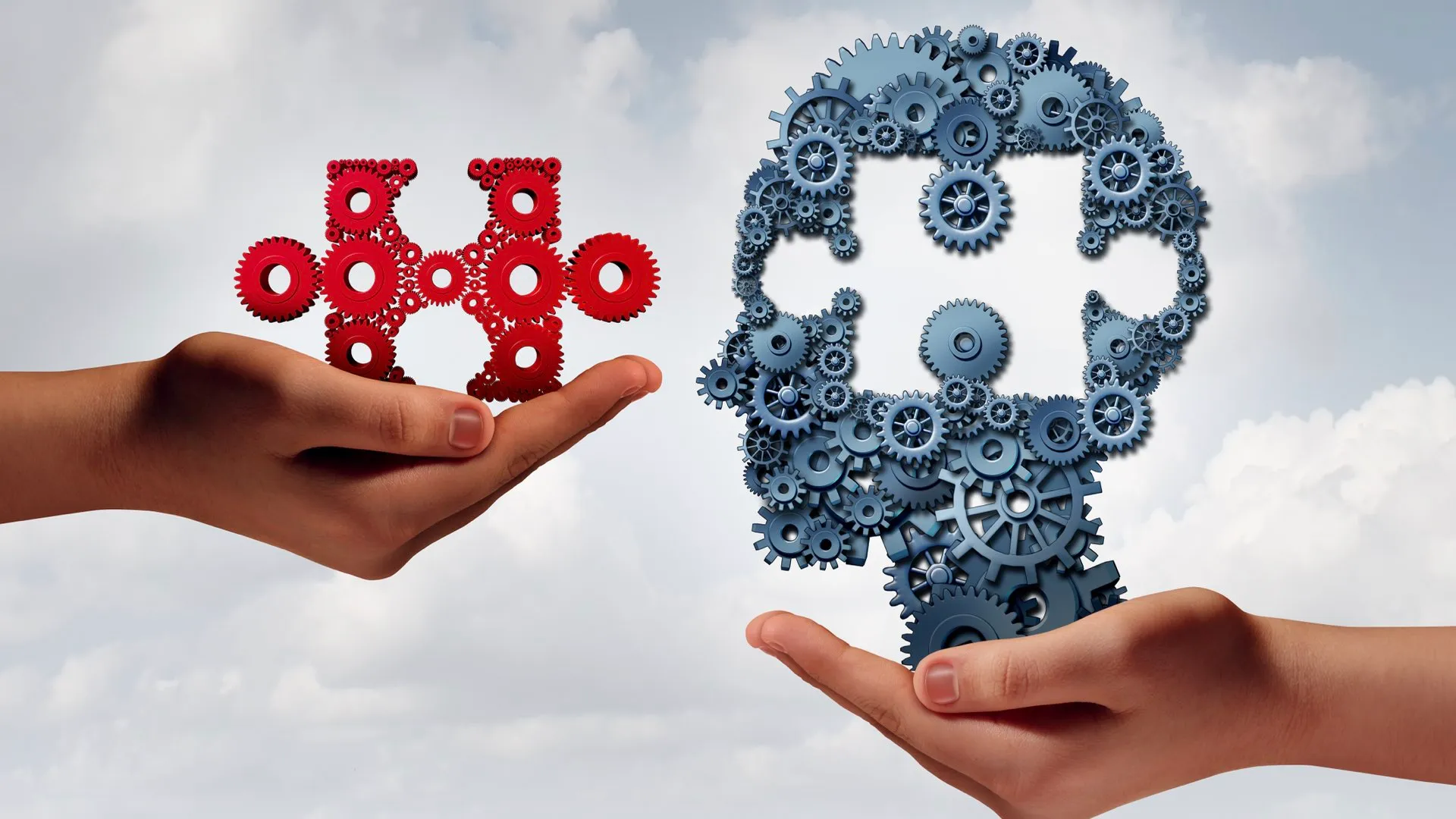

One thing is certain: building diversity in a company brings nothing but advantages.
- Diverse teams are up to 36% more likely to be above average in profitability (McKinsey, 2015).
- Diverse companies are more attractive places to work and are preferred by applicants (Daugherty & Chowdhury, 2019).
- On top of that, 78% of employees say working in a diverse environment matters more to them than a higher salary (Stepstone, 2020).
Greater diversity therefore significantly improves the relationship with employees. Retention, motivation and loyalty all increase, while turnover is actively counteracted (Chamberlain, 2016).
Recruiting determines company success
Recruiting is the key function for building more diversity in a company. This is where the cornerstone for sustainable business success is laid.
Effective candidate selection therefore means identifying suitable candidates based on the factors that genuinely drive job satisfaction and success (Kersting & Ott, 2016). Irrelevant characteristics such as age, gender and social or ethnic origin should be left out. This is the only way to build successful teams that reflect the society they operate in — and that affects many facets of business success, from product performance to customer loyalty and reputation.
One obstacle on this path is the so-called unconscious bias.
Definition: unconscious bias
“The unconscious cognitive distortions and other faulty tendencies in perception, memory, and assessment.” (Wondrak, 2014)
They lie dormant in the subconscious of all of us, because they are simply our brain's shortcut for coping with a complex everyday life (Tolstoy-Miller, 2017). In HR they are best known as the gut feeling people are all too happy to rely on. That gut feeling draws on information already known and mistakenly treats the familiar option as the convenient and desirable one. This approach no longer works in today's working world, where agile companies constantly face new challenges and have to adapt quickly to change (Wondrak, 2014).
Successful HR managers therefore do not accept their gut feeling unreflectively. They actively confront the cognitive distortions that can influence their judgment. In short: they become aware of the unconscious, and that is the first step in the right direction. Because awareness and reflection are the most important mechanisms that lie in our own hands. Knowing the patterns means being able to unmask them — which is why we have broken down the 10 most common types of unconscious bias in recruiting below.
Checklist: the 10 most common unconscious biases in recruiting
To err is human. The limits of human judgment lead to cognitive distortions whose patterns repeat themselves again and again. They are particularly common in the recruiting process and, in the worst case, lead to costly mis-hires. To help you avoid that, we have broken down the 10 most relevant types of unconscious bias here.
1. Primacy effect
Cognitive distortion starts with the first impression. It can be positive or negative; either way, it strongly influences the overall assessment. An opinion forms that is hard to change. Even contradictory information often fails to shift the image of a candidate (Voss, 2014). The so-called primacy effect means that we remember information received earlier more strongly than information that follows. The initial impression is therefore difficult to reverse (Brüggen et al., 2016).
2. Halo & horns effect
This bias is based on the tendency to infer overall performance from a single aspect of good or poor performance. The impression you form about one trait then colors how you assess the person's entire character (Agarwal, 2018). The name says it all: one isolated characteristic shapes the whole perception of a personality. Depending on how that characteristic is subjectively judged, it either enhances or diminishes the overall impression formed. Figuratively speaking, you let a halo or devil's horns float above the person's head and arrive at a hasty verdict (Voss, 2014).
3. Affinity bias
Similar to the halo effect, a characteristic perceived as positive shapes the overall impression of a person. Here the yardstick is similarity to yourself, which is why it is also called the mini-me effect (Voss, 2014). People who resemble us automatically seem more likeable, and we tend to attribute positive qualities to them (Agarwal, 2018). The mechanism rests on the illusion that you already know them well and can therefore assess them accurately. You are drawn to people who, for example, are the same age, share your nationality, have a similar career path or the same sexual identity (Sans, 2020).
4. Status quo bias
This bias particularly influences selection decisions that fall outside the ordinary. It is the tendency to prefer the current state of affairs over any change, based on the phenomenon that the status quo is perceived as good and desirable simply because it already exists (Eidelman & Crandall, 2012). The result is the famous gut feeling, and the power of habit undermines the will to create better conditions for everyone through change (Zeckhauser & Samuelson, 1988). You therefore subconsciously choose candidates who resemble the current workforce — on criteria that are mostly irrelevant to performance, such as skin color or gender (Johnson et al., 2016).
5. Stereotypes, gender or racial bias
The classic: unconscious prejudices shape attitudes towards people who belong to one or more marginalized groups. How strong their influence is depends on how deeply the stereotypes are anchored in the individual environment (Birkelund et al., 2020). HR managers filling a role in a male-dominated industry, for example, tend to be more skeptical of female candidates. In fact, they simply do not picture these candidates when they picture the right hire (Madsen & Andrade, 2018). The same applies to attitudes towards people of color, who are more likely to be perceived as less qualified or less effective (Bendick & Nunes, 2011). The influence of such stereotypes has been confirmed in studies where names and photos were changed on otherwise identical CVs, which produced a changed rating (González et al., 2019).
6. Confirmation bias
With this bias, you tend to give more attention to information that confirms existing convictions. Characteristics matching the existing opinion are perceived more strongly — you even search for them unconsciously (Sans, 2020). This means that preconceived attitudes towards a particular educational path, nationality or religious affiliation influence how a person is assessed, because the information that confirms them is unconsciously registered and stored (Agarwal, 2018).
7. Conformity bias
This bias stems from group pressure, or simply from the need to be praised by those around you for the decisions you make and to meet their expectations. These socially desirable decisions are shaped by the attitudes and behavior of your immediate environment, such as colleagues involved in the selection process (Sans, 2020). When you carry responsibility, you tend to seek their approval and suppress your own, possibly contrary, opinion. As a result, decisions that fall outside the ordinary become impossible — as does changing your own view of a person (Padalia, 2014).
8. Illusory correlation
Here it is assumed that one identified factor must be related to another. An illusory connection is constructed between a characteristic and a competence, and suitability for the vacancy is then judged on that assumption (Platts, 2020). Such an approach appears rational and well-founded. In fact it is the opposite: a result of unconscious faulty connections in our thought processes. There is, for example, a tendency to assign rare characteristics to minorities and more common traits to majorities (Costello & Watts, 2019).
9. Contrast bias
A phenomenon that occurs especially on days packed with job interviews or CV reviews. A person's performance is assessed relative to the performance of the previous or the following candidate. The assessment criteria are no longer objective but influenced by the impression of the predecessor or successor (Voss, 2014). Your odds are better if the person before you performed poorly, and vice versa. The sharper the contrast between one person's impression and that of their neighbors in the sequence, the more strongly it affects the rating. The standard is constantly and unconsciously readjusted. The risk is that genuinely suitable candidates go unrecognized, while less suitable ones slip through the resulting gap (Platts, 2020).
10. Overconfidence bias
As the name suggests, this is about the unconscious overestimation of one's own abilities. Even on a small scale it can have significant consequences, because you do not know what you do not know — and decisions get made without sufficient information. After all, you believe you already know everything needed for a successful decision. This form of unconscious overconfidence is also known as the Dunning–Kruger effect (Dunning, 2011). In candidate selection it means that HR managers can be so convinced of their own experience that they base the decision on just a few, sometimes irrelevant, criteria. They rely on instinct — the famous gut feeling. As a result, the candidate with the most potential is not selected, which can lead to costly mis-hires (Platts, 2020).
Assessments: overcoming unconscious bias in recruiting
Being aware of the various unconscious biases that affect us all is the first step to overcoming them. That requires constant reflection and active change of your own behavior and thought patterns. This is not always easy and remains prone to error. That is why you can get support from intelligent algorithms and digital tools.
Recruiting therefore draws on psychological assessments. The focus here is on applicants' individual strengths and potential, measured through objective criteria. Modern assessments make this possible by gathering information in a targeted, strengths-based way. Stereotypical judgment is counteracted, and the selection criteria used are the ones that genuinely lead to work success and satisfaction. This significantly increases recruiting success and at the same time builds an attractive employer brand (Kersting & Ott, 2016). In the form of game-based assessments, psychological diagnostics also deliver an appealing candidate experience — and generate more valid data for a well-founded selection decision.
The result is a structured selection process in which candidates are assessed fairly and objectively, because the information generated is consistent and directly comparable. It is also anonymized and therefore detached from irrelevant features that so often prevent objective comparison. For a given role, all candidates go through exactly the same procedures, so their results can be compared directly and unconscious biases are avoided.
Conclusion
Unconscious biases lie dormant in all of us. In recruiting, they are an obstacle on the way to greater equal opportunity and diversity. Being able to name and identify cognitive distortions is an important step towards overcoming them.
Where human judgment reaches its limits, successful HR managers turn to modern assessments. These give them objective, comparable information about potential additions to the team. The candidate experience improves and the employer brand becomes more attractive. And best of all: we hire people who are truly successful and satisfied in their roles. That is how recruiting works today. We would be happy to advise you on this.