
Internal recruitment: How to find the best talent in your own company
Shortage of skilled workers, high time-to-hire and rising recruiting costs — many companies are desperately looking for quick and efficient solutions to fill vacancies. The focus is increasingly on internal recruitment and promises to solve many of these challenges. But how does searching in your own talent pool really work? And how do you ensure that you identify the best internal candidates without neglecting fairness and transparency?
In this comprehensive guide, you will learn exactly what internal recruitment is, what methods and processes exist, and why an evidence-based, diagnostic approach is the key to sustainable recruiting success.
What is internal recruitment? A definition
Internal recruitment is a strategic process within personnel management in which vacancies are filled with employees already employed by the company. In contrast to external recruitment, which recruits new candidates from the labour market, the focus here is on using and promoting the existing internal talent pool.
Typical measures include:
- Internal job posting: Open positions are offered to employees exclusively or in parallel with the external advertisement, often via the intranet, internal career portals or internal company newsletters.
- Internal transfer: Employees move from one department or location to another without an official call for proposals (e.g. on the initiative of the manager).
- Development & career planning: Proactively encouraging employees to prepare them for future, higher-qualified positions.
- Talent pools & talent marketplaces: Development of structured databases or digital platforms in which employees can store their skills and career aspirations in order to be automatically taken into account when there are suitable vacancies.
This approach is not only a quick solution for acute staffing needs, but also a decisive lever for employee retention, reducing recruiting costs and strengthening corporate culture.
Benefits of internal recruitment: More than just saving costs
Opting for internal staffing can bring significant benefits that go far beyond financial aspects.
1. Shorter time-to-hire & lower costs
One of the most obvious benefits is speed. Recruitment processes are often shorter as the entire external search process is omitted. Internal candidates are already known, their qualifications, their working style and their corporate culture fit have already been proven in everyday working life. This reduces the effort required to review application documents, conduct complex interviews and background checks. Accordingly, cost-per-hire also falls significantly, as spending on job boards, recruiters or external advertisements is eliminated.
2. Faster onboarding & higher productivity
Internal candidates already know the corporate culture, internal processes and colleagues. This drastically reduces the training period, as they do not have to be introduced to the basics of the company first. They can immediately focus on their new tasks and be productive faster. This not only saves time for the new team colleagues, but also reduces the start-up losses that a long training phase would entail.
3. Increasing employee retention and motivation
The opportunity for professional development is a key motivator for many employees. Transparent and active internal recruitment signals that the company is investing in the careers of its employees. This strengthens retention, increases motivation and reduces turnover. The result is a culture in which employees feel valued and see a clear perspective for their future in the company.
4. Lower risk of mis-hires
Since the performance, working methods and personality of internal candidates are already known, the risk of a mis-hire is significantly lower than with external new hires. In-house references provide valuable insights that external application documents and interviews are often only able to reproduce to a limited extent.
Disadvantages and risks: Where internal recruitment reaches its limits
Despite the many advantages, there are also potential disadvantages that require a strategic approach.
1. The “vacancy shift” problem
If a position is filled internally, a new vacancy is created in the previous department, which must be filled in turn. This domino effect can lead to a “shift” of the problem and ultimately to no actual gain in personnel. Careful planning and a holistic approach are essential here.
2. Smaller selection of candidates
The internal talent pool is naturally smaller than the external labor market. This can limit the selection and mean that the best possible fit cannot be found in-house. There is a risk that the appointment will be made for pragmatic reasons, but not because the candidate is really the most suitable candidate.
3. Envy and rivalry
An internal appointment can lead to disappointment, envy and rivalry among unsuccessful candidates. To avoid this, transparent communication and fair, comprehensible selection processes are essential.
4. Risk of operational blindness
Although internal candidates have a deep knowledge of corporate culture, they often have the same ways of thinking and perspectives. This can slow down innovative strength and prevent the introduction of fresh ideas from outside.
Internal vs. external recruitment: The decision matrix
When does it make sense to recruit internally and when externally? There is no fixed rule, but there are a number of criteria that can serve as a basis for decision-making.
| Criterion | Internal Recruitment | External Recruitment |
|---|---|---|
| Cost | Lower (little marketing spend, no agency fees) | Higher (ads, agencies, onboarding costs) |
| Time required | Lower (shorter search, faster onboarding) | Higher (longer search, longer ramp-up) |
| Risk of mis-hire | Lower (candidates are already known) | Higher (candidates are unknown) |
| Cultural fit | Very high (culture is already internalized) | Can vary, must be actively assessed |
| Innovation potential | Lower (risk of operational blindness) | Higher (fresh ideas & new perspectives) |
| Employee retention | Strong positive effect (career opportunities) | No direct effect |
Most companies today use a combined strategy, which gives internal candidates preferential treatment, but also monitors the external market at the same time. This enables an optimal mix of speed, cost control and access to external know-how.
Governance & legal aspects: transparency creates trust
Successful internal recruitment depends on employee acceptance. Clear guidelines and transparent communication are therefore essential.
- Principle of equal treatment: All internal applicants should be given the same opportunity and evaluated using the same procedure.
- Involvement of the works council: Particularly when it comes to sensitive issues such as internal transfer, the early involvement of the works council is crucial in order to protect the rights of employees and ensure a smooth process.
Clear communication: The selection criteria, the process and the decision must be communicated transparently, even to applicants who have not been considered. Constructive feedback and the opportunity to develop can prevent frustration here.
Objective potential analysis: The key to success
Internal risks, such as rivalry or filling the position with candidates who are not ideally suited, can only be minimized by one thing: objectivity.
Traditional internal selection processes are often based on informal recommendations, the manager's “gut feeling” or mere seniority. This leads to a lack of transparency, promotes nepotism and can even cause legal problems due to a lack of equal opportunities.
This is exactly where modern, scientifically based assessments come in and fill the gap. Instead of relying on subjective opinions, the competencies and potential of internal applicants are assessed objectively and based on data.
How Aivy objectifies your internal recruitment
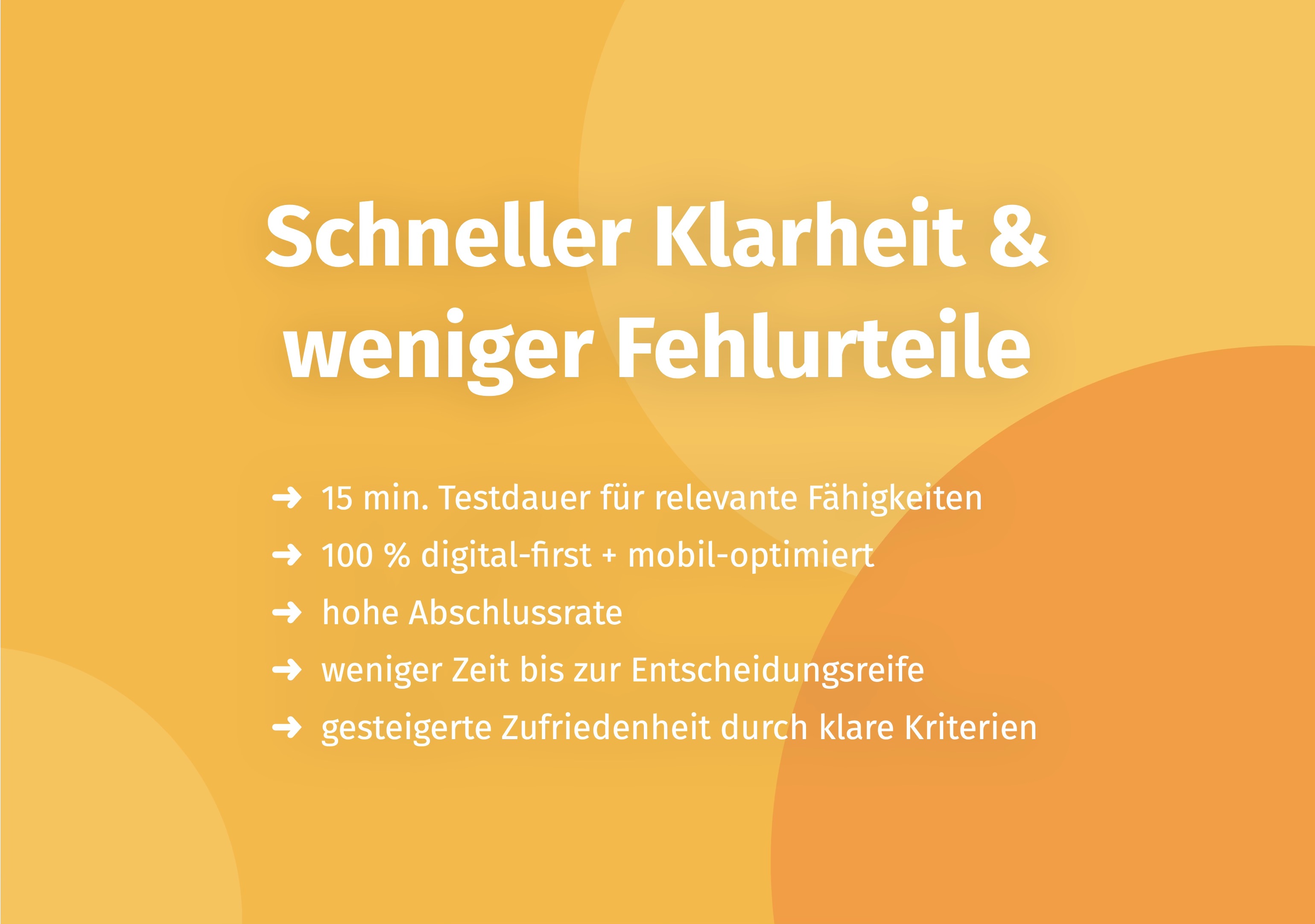
A digital solution such as Aivy provides a toolkit that directly addresses these challenges. By using scientifically validated game-based assessments and well-founded questionnaires, HR managers and executives can create an objective and fair picture of internal talent.
1. Create internal talent profiles: In just a few minutes, employees go through interactive, playful assessments that measure their cognitive abilities (e.g. problem solving, logic), their social skills (e.g. empathy) and their personality traits (e.g. openness, conscientiousness). Based on this data, comprehensive, data-based profiles are created that go beyond mere professional experience.
2. Data-based matching: Based on internal talent profiles and the requirement profiles of vacancies, the platform calculates a fit score. This score provides an objective recommendation as to which internal candidates are best suited to the competencies they are looking for. This allows you to quickly and fairly identify the most suitable talent and the entire decision-making process is guided by a data-based process.
3. Bias minimization: A major advantage of scientifically based methods is the minimization of unconscious biases (unconscious bias). Gender, age, origin or previous career no longer matter. Only the relevant skills and potential that are decisive for success in the new role count. In this way, you ensure equal opportunities and actively promote diversity.
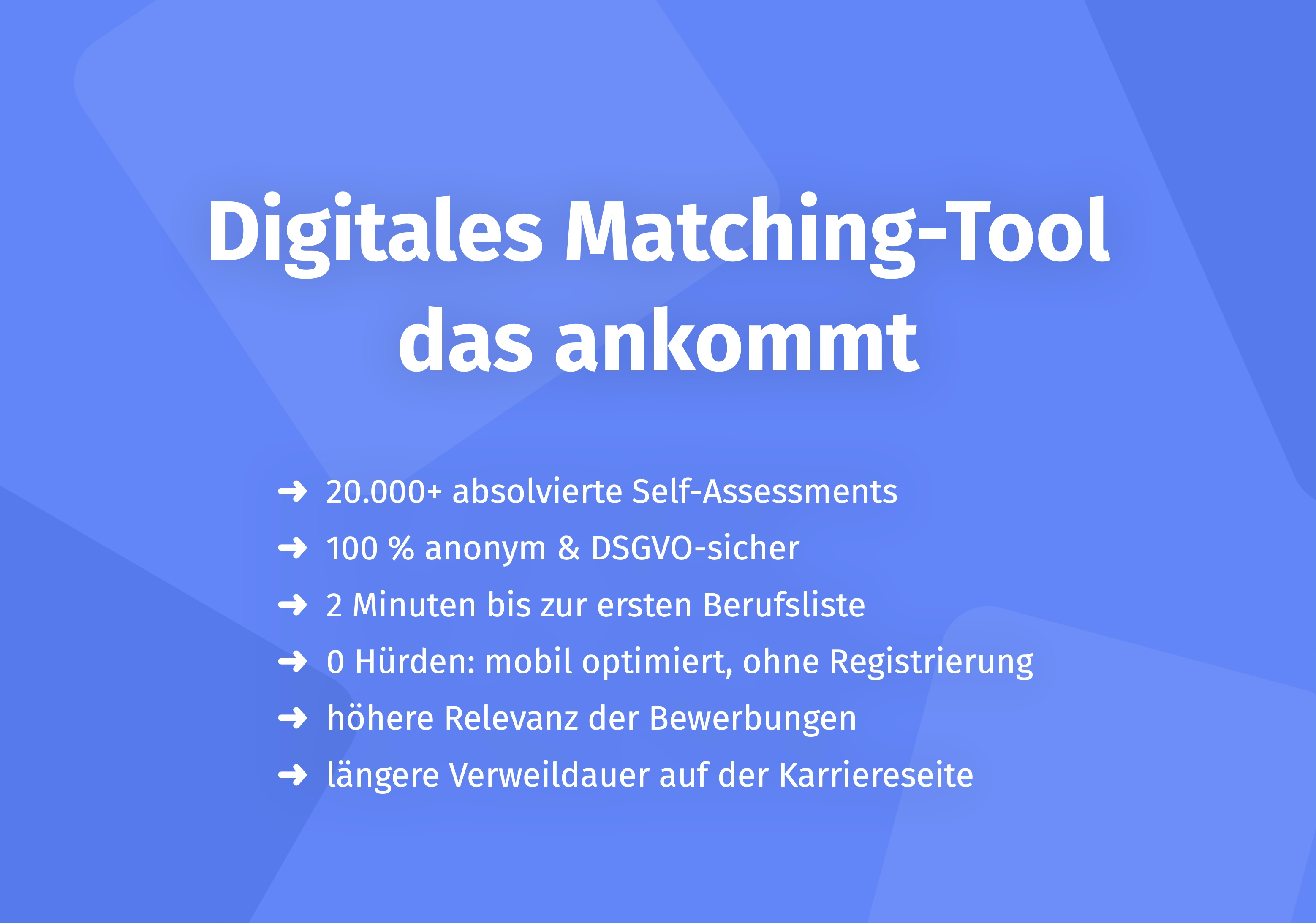
A practical example: OMR also focuses on diversity, objectivity and equal opportunities in recruiting and deliberately breaks with traditional selection processes. To ensure that not only the curriculum vitae counts and that candidates who could fall through the grid at first glance are also given a fair chance, OMR uses Aivy's objective potential analysis. With the help of game-based assessments on smartphones, strengths and potential are made visible regardless of previous career. Kaya Kruse and Alexandra Kammer show how OMR successfully implements this in practice in a short video on the OMR HR on-demand platform.
Conclusion: Rethinking internal recruitment
Internal recruitment is a powerful lever for responding to job market challenges. It not only offers the opportunity to save costs and time, but also to strengthen employee loyalty and establish a culture of internal development.
But the traditional approach is no longer sufficient to minimize potential risks and ensure fairness. An evidence-based, data-driven process is critical. Digital platforms such as Aivy provide the necessary tools to objectively measure internal potential, create matching scores and thus bring existing talent to the most appropriate roles. This turns a simple personnel measure into a strategic investment in the future of the company.
FAQ: Frequently asked questions about internal recruitment
- What is the difference between internal and external recruitment? Internal recruitment fills vacancies with employees already employed in the company, while external recruitment attracts new candidates from outside the company. The internal method is usually faster and less expensive, while the external method provides access to new skills and perspectives.
- What methods of internal recruitment are there? The most common methods include internal job postings, the transfer of employees, the proactive management of talent pools, and the use of internal talent marketplaces.
- What are the benefits of internal recruitment for companies? The biggest benefits are shorter hiring times, lower costs, faster onboarding, stronger employee retention and a lower risk of mis-hires, as the candidates are already known.
- What are the disadvantages and risks? Disadvantages can be the limited selection of candidates, the development of rivalry between applicants and the risk of operational blindness, as there is no new impetus from outside. In addition, filling a position can create a new vacancy in the previous department.
- How do I find the most suitable internal candidates? Scientifically based methods such as psychological tests or game-based assessments are suitable for objectively identifying the best internal candidates. They measure the actual competencies and potential that are relevant for the new role and thus minimize the risk of incorrect decisions.
Sources:
- Deloitte. (2019). From Careers to Experiences: New Pathways. In 2019 Global Human Capital Trends (pp. 450—461). Deloitte Insights https://deloitte.wsj.com/cmo/from-careers-to-experiences-1528171336
- Fernandez, R.M., Castilla, E.J., & Moore, P. (2000). Social Capital at Work: Networks and Employment at a Phone Center. American Journal of Sociology, 105(5), 1288—1356. https://doi.org/10.1086/210432
- Landers, R.N., Bauer, K.N., & Callan, R.C. (2017). Gamification of task performance with leaderboards: A goal setting experiment. Computers in Human Behavior, 71, 508—515. https://doi.org/10.1016/j.chb.2015.08.008
- Lund, S., Madgavkar, A., Manyika, J., & Smit, S. (2021). The future of work after COVID-19. McKinsey Global Institute. https://www.mckinsey.com/featured-insights/future-of-work/the-future-of-work-after-covid-19
- Rivera, L.A. (2012). Hiring as cultural matching: The case of elite professional service firms. American Sociological Review, 77(6) 999-1022. https://doi.org/10.1177/0003122412463213
- Schmidt, F.L., & Hunter, J.E. (1998). The Validity and Utility of Selection Methods in Personnel Psychology: Practical and Theoretical Implications of 85 Years of Research Findings. Psychological Bulletin, 124(2), 262—274. https://doi.org/10.1037/0033-2909.124.2.262

Make a better pre-selection — even before the first interview
In just a few minutes, Aivy shows you which candidates really fit the role. Beyond resumes based on strengths.