
You have an open position – and you're looking for the best talent. The first question: Where should I post my job ad to actually receive qualified applications?
The answer is more complex than many HR professionals expect. In Germany alone, there are over 1,000 job boards with different reach, target audiences, and pricing models. Costs range from free (Federal Employment Agency) to €2,399 per ad (StepStone Premium). And while the number of job boards grows, so do the challenges: According to a StepStone study, an unfilled position costs an average of €29,000 – due to productivity losses, overtime, and lost revenue.
But here's the real problem: Many job ads generate applications – but not the right ones. Scientific research clearly shows: CV-based screening has a predictive validity of only r=.18 (Schmidt & Hunter, 1998). This means that a resume alone says little about whether someone will be successful in the job.
In this guide, you'll learn which job boards actually match your target audience, what job ads cost in 2026, and how you can significantly improve the quality of your applications.
Posting a Job Ad: Where Do I Find the Best Talent?
Posting a job ad today is easier than ever – and simultaneously more complex. The multitude of platforms makes the decision difficult: Generalists with millions of reach or niche portals with a precise target audience? Free options or premium ads?
The answer depends on one central question: Where does your target audience search for jobs?
The Challenge: Quantity vs. Quality
Many HR professionals focus on reach: The more people see the ad, the more applications. But this logic falls short. A study by Bertrand and Mullainathan (2004) shows: Even with identical qualifications, applicants with certain names receive 50% more callbacks – proof that screening after posting is often influenced by unconscious biases.
The result: Many applications, but little fit. Screening effort explodes while the best talent may be filtered out.
The solution lies not only in choosing the right job board, but in the question: How do I objectively filter the right candidates after posting?
The Most Important Job Boards Compared
Generalists: StepStone, Indeed, and Monster
The major players in the German market offer enormous reach – but also corresponding prices.
StepStone is the leading job board in Germany with over 22 million visitors per month. The platform excels with professional ad design, strong employer branding, and a network of over 500 partner portals. StepStone is particularly suitable for skilled professionals and executives.
Indeed works differently: As a job search engine, the platform aggregates job ads from across the web. Employers can post for free and increase visibility through sponsored ads. The performance-based model (pay-per-click) enables flexible budgeting.
Monster is one of the most established job boards but has lost visibility in recent years. The platform is particularly suitable for international recruiting strategies.
| Platform | Reach (Germany) | Pricing Model | Best Suited For |
|---|---|---|---|
| StepStone | 22+ million/month | Package prices (from €1,349) | Skilled professionals & executives |
| Indeed | 15+ million/month | Pay-per-click | High flexibility, broad target audience |
| Monster | 5+ million/month | Single ads | International search |
Niche Portals: Industry-Specific and Regional
Niche portals have less traffic – but reach exactly your target audience. For specialized positions, they can be more effective than generalists.
Examples:
- Praktischarzt.de: Over 1.9 million page views for medical professions
- HOGAPAGE: Focus on hospitality and gastronomy
- Jobvector: Specialized in STEM professions (natural sciences, IT, engineering)
- Regio-Jobanzeiger: Regional focus, often cheaper
The advantage: Fewer scattering losses, higher quality of applications. The disadvantage: Lower overall reach.
Business Networks: LinkedIn and Xing
For skilled professionals and leadership positions, business networks are indispensable. LinkedIn offers job ads via Onlyfy starting at €699 for 30 days and enables targeted active sourcing. The platform continues to grow and increasingly reaches the German market.
Xing was long the German market leader but is losing significance. However, integration with Onlyfy still offers interesting recruiting features.
The Free Option: Federal Employment Agency Job Board
The job board of the Federal Employment Agency (Bundesagentur für Arbeit) is completely free – and often underestimated. With over 1.1 million visitors per month and 818,000 open positions, it provides a solid foundation. The platform is particularly relevant for trade jobs and entry-level positions.
What Does a Job Ad Cost? 2026 Price Overview
The costs for job ads vary considerably – from free to several thousand euros. Here's a current overview:
StepStone: €199 to €2,399
StepStone offers various packages:
| Package | Price | Duration | Features |
|---|---|---|---|
| All Jobs Starter | from €149/month | Unlimited | For max. 5 positions/year |
| Pro | €1,349 | 30 days | Standard ad, partner portals |
| Pro Plus | €1,599 | 30 days | + Candidate outreach, +15% applications |
| Pro Ultimate | €2,399 | 45 days | + Premium features, +50% applications |
New customers can create an ad for free via StepStone Recruit and share it in their own networks. However, posting on stepstone.de and partner portals is paid.
Indeed: Performance-Based
Indeed works with a flexible model:
- Free basic ad: Fundamentally possible, but low visibility
- Sponsored ads: Pay-per-click with daily budget
- Premium options: From €45 to €795 depending on reach
The performance model enables better cost control – you only pay for actual clicks.
LinkedIn: From €699
Job ads via Onlyfy (formerly Xing/LinkedIn Jobs) start at €699 for 30 days. Volume discounts are available.
Cost-Saving Tip: Use Multiposting
Multiposting means publishing a job ad simultaneously on multiple job boards – through a service provider with framework agreements. The advantage: Up to 70% savings compared to individual bookings and significantly less effort.
Recruitment marketing agencies like Stellenpakete.de or Raven51 offer such packages. For multiple open positions, multiposting almost always pays off.
Posting a Job Ad the Right Way: 7 Success Factors
The platform is only half the battle. These factors determine the success of your job ad:
1. The Right Job Board for Your Target Audience
A simple trick: Google what your target audience would search for. If you're looking for a master painter in Hamburg, type "master painter jobs Hamburg." The job boards that appear in the top positions are your best options.
For trade jobs, unconventional channels can also work – even eBay Classifieds.
2. The Perfect Time to Post
It's best to post job ads at the beginning of the week (Monday or Tuesday) in the morning. At this time, many job seekers are active, and your ad appears prominently in search results.
3. The Optimal Duration
Standard is 30 days. For hard-to-fill positions, extending to 45 or 60 days can make sense. Important: A "refresh" should occur after 15 days – many platforms offer this automatically.
4. Choosing the Right Job Title and Keywords
The job title is crucial for findability. Use terms that your target audience actually searches for – not internal designations. "Sales Manager" is searched more often than "Business Development Representative."
5. Mobile Optimization
Over 60% of job searches are done on mobile devices. Make sure your ad is readable on smartphones – short paragraphs, clear structure, quickly digestible information.
6. Integrate Employer Branding
A job ad is more than a job description – it's a window into your company culture. According to a StepStone study, 76% of employees find it important that their employer values sustainability. Communicate your values authentically.
7. Measure Success: Define KPIs
Relevant metrics:
- Number of applications: Quantitative
- Quality of applications: How many match the job requirements?
- Time-to-hire: Time until contract signing
- Cost-per-hire: Total cost per successful hire
The Problem with Traditional Job Ads: Many Applications, Little Fit
Here lies the blind spot of many recruiting strategies: Job ads generate reach – but they say nothing about the actual suitability of applicants.
Why Reach Alone Is Not Enough
A job ad with 10,000 views and 100 applications sounds successful. But if only 5 of them actually fit the position, you've wasted 95% of your screening time.
The problem: The resume is a poor predictor of job success. It shows what someone has done – not what someone can do.
The Scientific Perspective: Validity of Selection Methods
The meta-analysis by Schmidt and Hunter (1998) examined the predictive validity of various selection methods – i.e., how well they predict subsequent job success:
| Selection Method | Validity (r) |
|---|---|
| CV screening / Experience | 0.18 |
| Unstructured interviews | 0.38 |
| Structured interviews | 0.51 |
| Aptitude tests | 0.54 |
| Combination (test + interview) | 0.63 |
The result is clear: Job ads + CV screening have the lowest predictive power. Those who want to find the best talent must think beyond the resume.
Unconscious Bias in Application Screening
Another problem: After posting the job ad, screening begins – and with it the influence of Unconscious Bias (unconscious prejudices).
The groundbreaking study by Bertrand and Mullainathan (2004) showed: Applicants with typically "white" names like Emily or Greg received 50% more callbacks than candidates with African American names like Lakisha or Jamal – with identical qualifications.
This means: Even the best job ad cannot reach its potential if pre-selection is influenced by unconscious biases. The Affinity Bias (preference for similar people), the Confirmation Bias (confirmation of assumptions), or the Halo-Horns Effect (overshadowing by individual characteristics) influence decisions – often without us noticing.
The Solution: Job Ad + Objective Aptitude Assessment
The combination makes the difference: Job ads provide reach, aptitude assessment provides quality.
How Aptitude Assessment Improves Application Quality
Objective selection methods measure what the resume doesn't show: cognitive abilities, personality traits, problem-solving skills. They are based on scientifically validated methods and reduce the influence of bias.
The effect: Instead of manually screening hundreds of CVs, you receive data-based information about actual fit – before the first interview.
Game-Based Assessments: Modern and Scientifically Validated
Game-Based Assessments are a modern form of aptitude assessment. Gamified test procedures measure competencies without creating exam pressure. Studies show: They reduce test anxiety and increase acceptance among applicants – without losing validity (Lievens & Sackett, 2017).
Platforms like Aivy use scientifically validated Game-Based Assessments to objectively capture competencies. The foundation: Research from Freie Universität Berlin and over 1 million assessments completed.
Case Study: How MCI Reduced Time-to-Hire by 55%
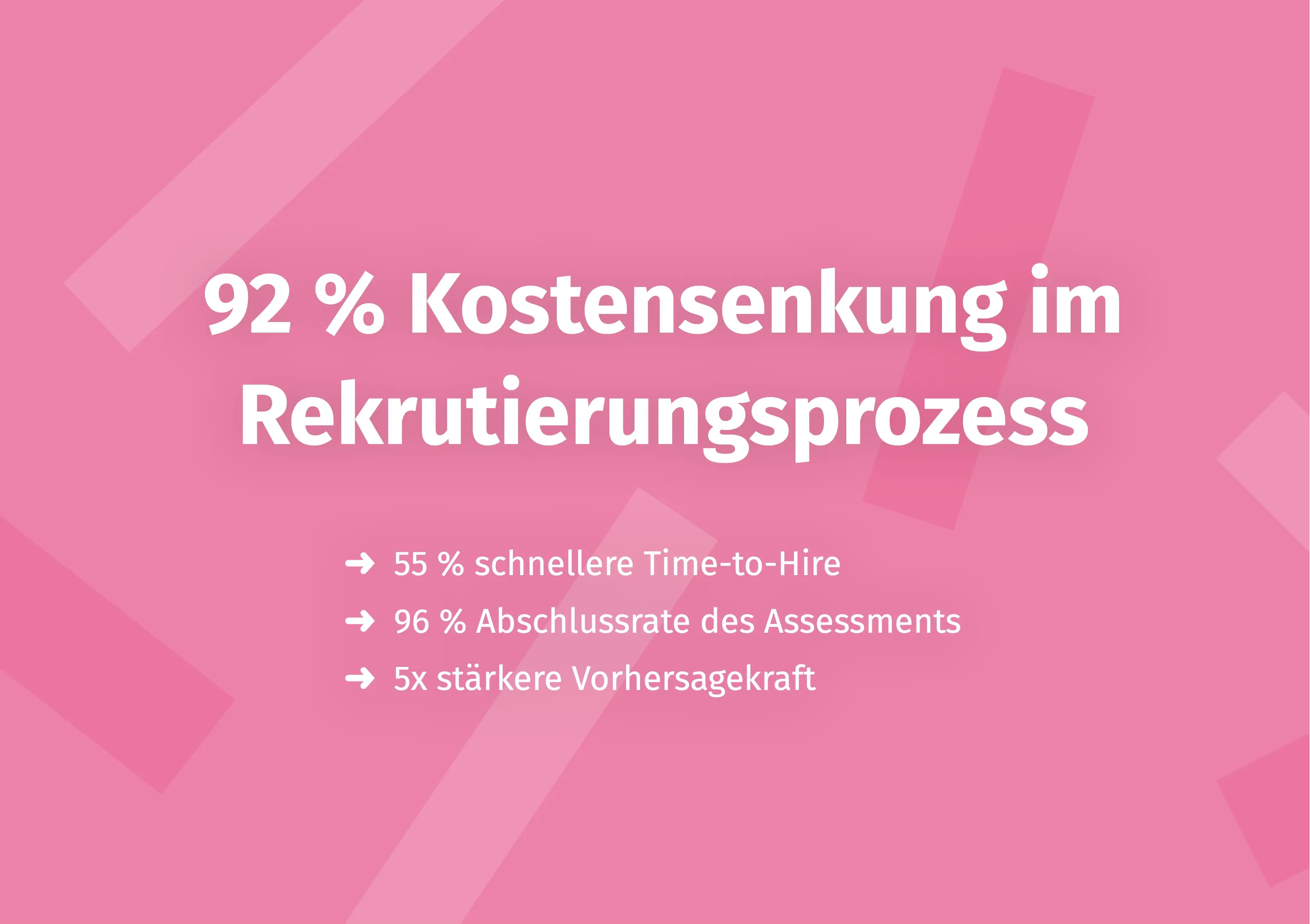
The combination of job ads and objective pre-screening shows measurable results. MCI Deutschland GmbH implemented Game-Based Assessments in their recruiting process – with impressive results:
- 55% faster time-to-hire
- 96% completion rate in the assessment
- 92% lower cost-per-hire
Matthias Kühne, Director People & Culture at MCI, describes the impact: "We had largely digitized the recruiting process for a long time thanks to softgarden. With Aivy, we have now digitized another process step in recruitment and greatly professionalized it through a more objective evaluation basis. Since both systems also interact completely seamlessly, the whole thing not only saves time but is also really fun in daily work!"
More details can be found in the MCI success story.
Callways also reports measurable success: The recruiting process was completely transformed within 6 weeks. Co-CEO Achim Reinhardt emphasizes: "Resumes and certificates say little about future performance. With Aivy, we see what technology can really achieve: an intuitive tool that makes us significantly more effective."
Checklist: Posting a Job Ad in 10 Steps
- Define job requirements: What competencies are truly required?
- Analyze target audience: Where does your target audience search for jobs?
- Select job boards: Combine generalists + niche portals
- Set budget: Single ads or multiposting?
- Create ad: Clear job title, authentic employer presentation
- Choose timing: Beginning of week, morning
- Set duration: 30 days standard, refresh after 15 days
- Plan pre-screening: Define objective criteria or use aptitude assessment
- Conduct screening: Systematic and bias-aware
- Measure success: Time-to-hire, cost-per-hire, quality of hires
Frequently Asked Questions (FAQ)
Can I also post job ads for free?
Yes, posting on the Federal Employment Agency job board is completely free. Indeed also offers free basic ads that can be boosted through paid clicks. With StepStone, you can create an ad and share it in your networks – but posting on stepstone.de is paid.
Which job board is best for my job ad?
It depends on your target audience. Generalists like StepStone and Indeed have the greatest reach. For specialists, niche portals are often more effective. Tip: Google what your target audience would search for – the top results show you the relevant portals.
When is the best time to post a job ad?
It's best to post job ads at the beginning of the week (Monday or Tuesday) in the morning. This way, your ad appears prominently when many job seekers are active.
What is multiposting and is it worth it?
Multiposting means publishing a job ad simultaneously on multiple job boards – through a provider with framework agreements. This saves up to 70% of costs and increases reach. For more than one open position, it almost always pays off.
Why am I not getting qualified applications despite a good ad?
Job ads alone say little about actual suitability. They reach many people, but not necessarily the right ones. The solution: Combine your job ad with objective aptitude assessment – this way you filter for fit before the first interview, not just by resume.
What does an unfilled position cost?
According to a StepStone study, an unfilled position costs an average of €29,000 – due to productivity losses, overtime by colleagues, and lost revenue. In specialized areas like IT or leadership, the amount can be significantly higher.
How can I improve the quality of my applications?
Three approaches: 1) Sharpen your job requirements and communicate them clearly in the ad. 2) Use niche portals for specific target groups. 3) Use online assessments to objectively pre-screen candidates.
Generalists or niche portals – which is better?
Both have pros and cons. Generalists offer large reach but also more scattering losses. Niche portals reach exactly your target audience but have less traffic. Ideal: A combination of both via multiposting.
Conclusion: Posting a Job Ad Is Just the Beginning
Posting a job ad is an important first step – but not the complete solution. Choosing the right job board, optimal timing, and compelling ad design ensure reach. But reach alone doesn't lead to qualified hires.
The science is clear: CV-based screening has low predictive power. Unconscious bias influences decisions. The best talent is often overlooked while unsuitable candidates clog the screening process.
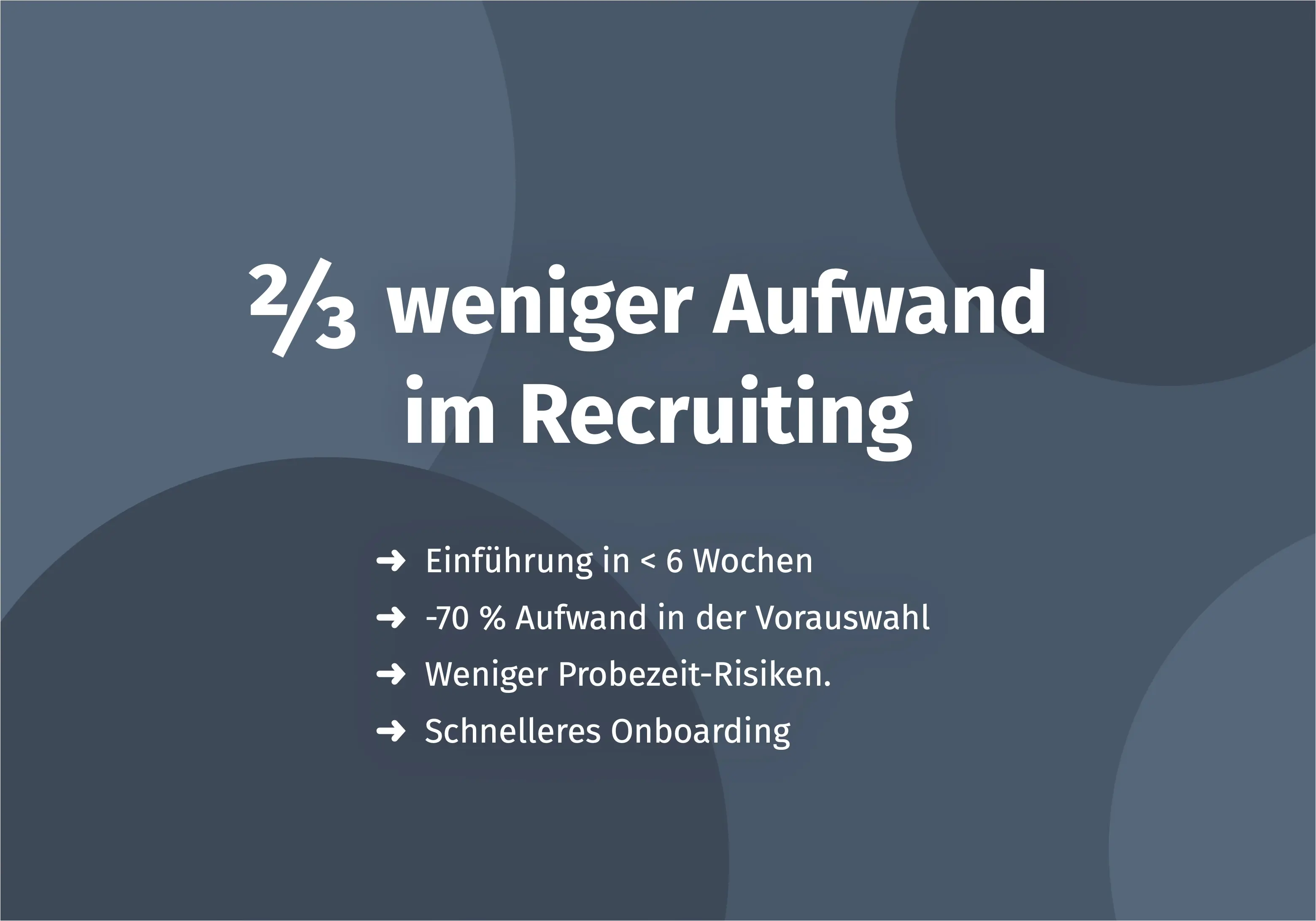
The solution: Combine job ads with objective aptitude assessment. Tools like Aivy enable data-based decisions instead of gut feeling – with measurable results like 55% faster time-to-hire and 92% lower cost per hire.
Your next step: Review your current process. How much time do you spend screening unsuitable applications? What's your cost-per-hire? If the numbers don't add up, objective pre-screening might be the missing piece.
Sources
- Schmidt, F. L. & Hunter, J. E. (1998). The Validity and Utility of Selection Methods in Personnel Psychology. Psychological Bulletin, 124(2), 262-274.
- Bertrand, M. & Mullainathan, S. (2004). Are Emily and Greg More Employable than Lakisha and Jamal? A Field Experiment on Labor Market Discrimination. American Economic Review, 94(4), 991-1013.
- Lievens, F. & Sackett, P. R. (2017). The Effects of Predictor Method Factors on Selection Outcomes. Journal of Applied Psychology, 102(1), 43-58.
- StepStone (2023). Cost of Vacancy Study. StepStone Deutschland GmbH.
- LinkedIn (2024). Global Talent Trends Report.

Make a better pre-selection — even before the first interview
In just a few minutes, Aivy shows you which candidates really fit the role. Beyond resumes based on strengths.