
A Human Resource Information System (HRIS) is a software solution that centrally captures, manages and evaluates all personnel-related data in an organisation – from master data and time tracking to recruiting and training. It forms the digital foundation for efficient, GDPR-compliant HR management. Modern systems are built on a modular architecture and can be integrated with specialised tools such as applicant tracking systems or talent assessment platforms.
What Is a Human Resource Information System?
A Human Resource Information System, or HRIS, is a central database and administration solution for all workforce-related information within an organisation. The term is sometimes abbreviated to PIS (from the German Personalinformationssystem), though HRIS is the internationally recognised standard. The system consolidates data that was previously scattered across spreadsheets, emails and separate point solutions into a single, structured platform.
The origins of HRIS date back to the 1970s, when the first computer-based personnel administration systems were introduced in large enterprises. Today, HRIS solutions are affordable and available as cloud services for small and medium-sized businesses as well. They cover the entire employee lifecycle: from the first job application through onboarding, development and compensation all the way to offboarding.
HRIS, HRMS and HCM – What Is the Difference?
In practice, the terms HRIS, HRMS and HCM are often used interchangeably, even though they describe different scopes of functionality:
HRIS (Human Resource Information System) is the foundational type: the focus is on data management and administration – master records, digital personnel files, and absence management. It is well suited to organisations that want to establish a solid data foundation.
HRMS (Human Resource Management System) extends the HRIS to include operational HR processes: onboarding workflows, payroll processing, performance appraisals and structured employee communications. It supports HR professionals in their day-to-day operational work.
HCM (Human Capital Management) is the most comprehensive category. In addition to operational functions, it includes strategic modules: talent management, workforce planning, succession planning and people analytics. Large enterprises rely on HCM suites such as SAP SuccessFactors or Workday to manage HR as a strategic business function.
For most small and medium-sized businesses, a solid HRIS or HRMS is the right starting point – a full HCM suite only becomes economically worthwhile once an organisation employs several hundred people.
Core Functions of a Human Resource Information System
Employee Master Data and Digital Personnel Files
The core of every HRIS is the centralised management of master data: name, address, bank details, contract information, qualifications and organisational chart position. The digital personnel file replaces the physical folder and enables role-based access rights – only authorised individuals can view sensitive information. Documents such as employment contracts, payslips and references can be stored directly in the system and archived in an audit-proof manner.
Time Management and Absence Tracking
Modern HRIS solutions record working hours, overtime and absences (holiday, sickness, parental leave) automatically. Employees can submit requests digitally and managers approve them with a single click. This reduces manual processes and provides reliable data for payroll processing.
Recruiting Module and Talent Assessment
Many HRIS solutions integrate an ATS (Applicant Tracking System) that coordinates job postings, application intake and candidate communication. Advanced systems can be connected via standardised interfaces (API) to specialised talent assessment platforms. This allows assessment results to flow directly into the candidate profile within the HRIS – with no media breaks or manual double entry.
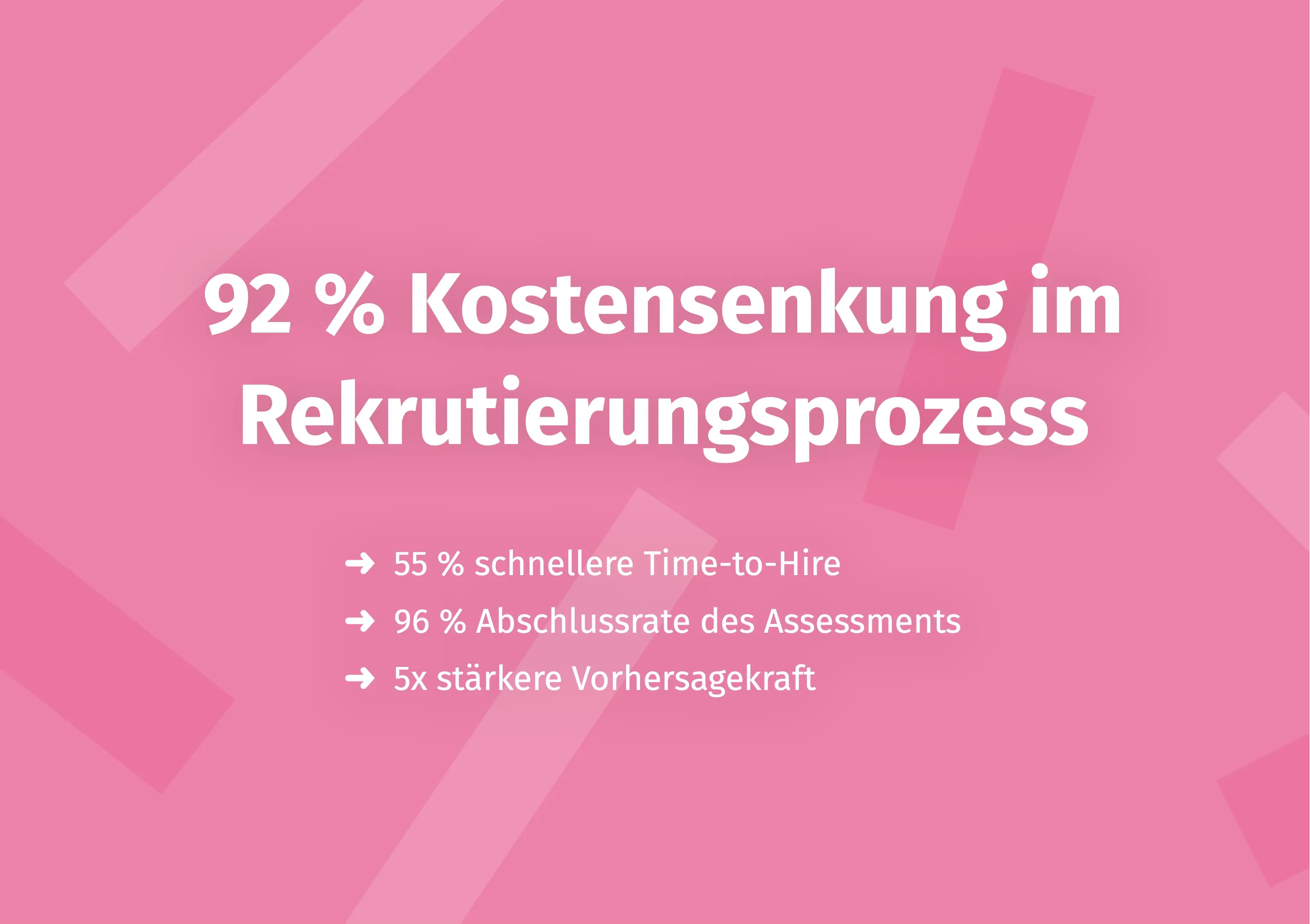
MCI Deutschland put this approach into consistent practice: by integrating an ATS with a talent assessment platform, the company reduced time-to-hire by 55% and cut cost-per-hire by 92%. The MCI success story illustrates what a fully digitalised, interconnected recruiting process looks like in practice.
The Aivy platform integrates with existing HR systems via open interfaces and delivers validated assessment results directly into the hiring process – enabling objective, bias-reduced personnel selection.
Learning & Development and Talent Management
Learning modules (LMS integration) and competency profiles enable HR to identify and address development needs systematically. For further information on structured potential analysis, the Aivy Lexicon provides a dedicated article.
Reporting and HR Analytics
A centralised HRIS provides the data foundation for well-informed decisions: turnover rates, time-to-hire, headcount development, and absence rates. HR analytics functionality makes it possible to identify patterns and adapt HR strategies based on data – rather than gut feeling.
GDPR and Data Privacy: What Must an HRIS Fulfil?
Permitted Data Categories (BDSG §26 / GDPR Art. 88)
Under §26 of the German Federal Data Protection Act (BDSG) and Art. 88 of the GDPR, only data that is necessary for the establishment, performance or termination of the employment relationship may be processed. Typically permitted categories include: name, address, bank details, contract data, qualifications and performance appraisals.
Particularly sensitive data – such as health information, religious affiliation or trade union membership – is subject to heightened protection under Art. 9 GDPR and may generally only be processed with explicit consent. The principle of data minimisation applies: only data that is genuinely needed should be stored in the HRIS.
Retention Periods
Personnel data may not be stored indefinitely. Key reference periods under German law:
- Payroll documents and accounting-relevant records: 6 years (§ 147 AO) to 10 years (§ 257 HGB)
- Application data for rejected candidates: Maximum 6 months after the rejection (AGG exclusion period)
- General personnel files: Typically up to 10 years after the employee leaves the organisation
A well-designed HRIS supports automated deletion schedules and alerts HR professionals when retention periods are about to expire.
Requirements for Cloud Solutions (DPA and Server Location)
Anyone using a cloud-based HRIS must conclude a Data Processing Agreement (DPA) with the provider in accordance with Art. 28 GDPR. This agreement governs how the provider is permitted to process the transmitted personnel data. In addition, the server location should be within the EU to ensure GDPR compliance. Providers based in third countries (e.g. the USA) require additional examination of the legal basis for data transfers (e.g. Standard Contractual Clauses).
Choosing an HRIS: A Checklist for HR
A structured needs analysis is worthwhile before selecting a system. The following questions can help:
Functional scope:
- Which HR processes need to be covered (master data, recruiting, time management, learning & development)?
- Are interfaces to payroll, ATS or talent assessment tools required?
- Are employee self-service features needed?
Technical requirements:
- Cloud (SaaS) or on-premise?
- Is mobile access required?
- Which existing systems need to be integrated?
Compliance:
- Does the provider offer a Data Processing Agreement (DPA)?
- Is the server located within the EU?
- Are automated deletion schedules supported?
Company size and budget:
- Up to 100 employees: Lightweight HRIS tools (e.g. Personio, Kenjo, HeavenHR)
- 100–500 employees: Modular HRMS platforms (e.g. DATEV, Rexx Systems)
- 500+ employees: Comprehensive HCM suites (e.g. SAP SuccessFactors, Workday)
For organisations that also want to address cultural fit or internal recruitment within their HRIS, solutions with integrated talent management modules are a strong option.
Frequently Asked Questions about HRIS
What is a Human Resource Information System?
A Human Resource Information System (HRIS) is a software solution for the centralised management of all personnel-related data within an organisation. It typically encompasses master data management, digital personnel files, time and absence tracking, recruiting support and reporting functions.
What is the difference between HRIS, HRMS and HCM?
HRIS focuses on data management and administration. HRMS extends this to include operational HR processes such as onboarding and payroll. HCM is the most comprehensive category, additionally covering strategic functions like talent management and workforce planning. In practice, the terms are often used interchangeably.
What data may an HRIS store?
Under BDSG §26 and GDPR Art. 88, only data necessary for the employment relationship may be processed. Typically permitted data includes: name, address, bank details, contract data and qualifications. Particularly sensitive data (health, religion) generally requires explicit consent. The GDPR principle of data minimisation must be strictly observed.
How long must personnel data be retained?
Payroll documents are subject to a retention period of 6 years (§ 147 AO) or 10 years for accounting-relevant records (§ 257 HGB). Application data for rejected candidates may be retained for a maximum of 6 months. General personnel files are typically archived for up to 10 years after the employee's departure.
What must a GDPR-compliant HRIS deliver?
Minimum requirements include: role-based access controls, audit logging of data access, support for subject access requests and data deletion, a Data Processing Agreement (DPA) for cloud solutions, and a server location within the EU.
Which system suits which company size?
Small organisations with up to 100 employees are well served by lightweight HRIS tools. Mid-sized companies benefit from modular HRMS platforms. Organisations with 500 or more employees should consider full HCM suites capable of supporting strategic HR management.
How does an HRIS integrate with other HR tools?
Modern systems offer standardised interfaces (REST API) through which ATS platforms, payroll systems, LMS solutions or talent assessment platforms can be connected. Bidirectional data exchange eliminates manual double entry and ensures that all relevant information – including assessment results from the recruiting process – is centrally available within the HRIS.
Conclusion
A Human Resource Information System is not a luxury – it is an operational necessity for any organisation that wants to manage HR efficiently, scalably and in compliance with data protection law. Centralising master data, time management, recruiting and reporting in a single system saves time, reduces errors and creates the data foundation for sound HR decisions.
The key to success lies in choosing the right system: not the largest, but the one that fits the organisation's actual size and requirements – and in consistently integrating specialised tools, from payroll to talent assessment, via open interfaces.
Would you like to complement your recruiting process with objective, scientifically grounded talent assessment? The Aivy platform integrates seamlessly with existing HR systems and supports bias-reduced personnel selection. Learn more about the Aivy platform.
Sources
- GDPR Art. 88 – Processing of data in the context of employment. European Parliament / Council of the EU, 2018. https://eur-lex.europa.eu/legal-content/EN/TXT/?uri=CELEX%3A32016R0679
- BDSG §26 – Data processing for purposes of the employment relationship. German Federal Ministry of Justice, 2018. https://www.gesetze-im-internet.de/bdsg_2018/__26.html
- HGB §257 – Retention of records. German Federal Ministry of Justice. https://www.gesetze-im-internet.de/hgb/__257.html
- AO §147 – Provisions for the retention of records. German Federal Ministry of Justice. https://www.gesetze-im-internet.de/ao_1977/__147.html
- Bitkom e.V.: Digitalisation in HR. https://www.bitkom.org/Themen/Digitale-Transformation/HR
- MCI Deutschland GmbH – Success Story. Aivy GmbH. https://www.aivy.app/en/success-stories/mci-deutschland-gmbh
Make a better pre-selection — even before the first interview
In just a few minutes, Aivy shows you which candidates really fit the role. Beyond resumes based on strengths.