
The food industry is one of the sectors most severely affected by the skills shortage in Germany: qualified workers are particularly lacking in production, quality assurance, logistics and food trades. Key causes include demographic change, the low appeal of shift and physical work, and strong competition from other industries. HR professionals can counteract this with targeted employer branding, apprenticeship initiatives and modern recruiting methods.
What Is the Skills Shortage in the Food Industry?
A skills shortage describes a situation in which, over an extended period, there are more open positions than qualified applicants available – within a specific industry, region or occupational group. In the food industry, this shortage has become structurally entrenched in recent years.
The food and beverage industry is Germany's fourth-largest industrial sector. According to the Federation of German Food and Drink Industries (BVE), the sector employs around 630,000 people across more than 6,000 companies, with annual revenues exceeding 200 billion euros. Despite this economic significance, the industry has long struggled with a considerable deficit of qualified workers – both in industrial production and in food trade occupations.
The German Federal Employment Agency (Bundesagentur für Arbeit) regularly identifies several food industry occupations in its bottleneck analysis as so-called shortage occupations: roles where open positions persistently outnumber available qualified candidates.
Causes: Why Is the Food Industry Facing a Skills Shortage?
Demographic Change
The large baby boomer cohorts are retiring over the coming years, while smaller generations follow. For the food industry, this means a significant portion of experienced professionals is leaving the workforce without sufficient new talent to replace them. According to the Institute for Employment Research (IAB), this effect will intensify markedly by 2030.
Image Problem of the Sector
Many roles in food production are associated with physical strain, shift and night work, and comparatively lower wages – at least in public perception. This makes it difficult to attract new talent. Professions such as baker or butcher are perceived as unattractive despite their genuine craft and qualification requirements, contributing to declining apprenticeship numbers.
Competition from Other Industries
HR professionals in food companies compete directly with the logistics, automotive and IT sectors – often for the same target groups: specialists in production, engineering, quality management and logistics. These industries frequently offer more attractive compensation structures and flexible working models.
Declining Apprenticeship Numbers
The number of apprenticeship contracts in food technology and trade occupations is stagnating or falling. Many young people opt for academic career paths. At the same time, small and medium-sized food businesses invest comparatively little in apprentice marketing and school partnerships – a gap that takes its toll over time.
Most Affected Occupational Fields
Production and Food Technology
Food technology specialists, food technologists and food engineers are in particularly high demand, according to the Federal Employment Agency. These roles require an understanding of production processes, hygiene standards (HACCP) and quality assurance. Training and graduate numbers are not growing fast enough to meet demand.
Food Trades: Bakers and Butchers
The shortage is especially acute in food trades. Guilds and employer associations have been reporting significant recruitment difficulties for bakers and butchers for years. The Association of German Chambers of Industry and Commerce (DIHK) confirms in its skilled labour report that craft occupations in the food sector rank among the hardest positions to fill.
Quality Management and Laboratory Roles
Quality managers, food chemists and laboratory technicians are urgently sought in production and research departments. These positions require specific training or degree qualifications – and are correspondingly difficult to fill.
Logistics and Supply Chain
Food logistics comes with particular requirements: mandatory cold chain management, tight delivery windows and strict hygiene regulations. Here too, demand for qualified personnel clearly exceeds supply – a problem further compounded by the e-commerce boom in the food sector.
Solutions for HR Professionals
Employer Branding and Employer Attractiveness
Food companies need to actively work on their visibility as employers. This means: authentic communication of company culture on career websites and social media, structured apprentice marketing at vocational schools and clear communication of benefits, development opportunities and working conditions. Employees who act as brand ambassadors are particularly effective in this regard.
Apprenticeship Initiatives and Talent Pipeline
Anyone planning for the long term must invest in their own training programmes. Partnerships with vocational schools, school internships, apprenticeship fairs and targeted social media campaigns for younger audiences are powerful levers. Companies that align apprentice pay with market rates and communicate guaranteed employment prospects clearly show measurably better application rates.
International Recruiting and Skilled Worker Immigration
The Skilled Worker Immigration Act (Fachkräfteeinwanderungsgesetz), which came into force in 2020 and was significantly expanded in 2023, facilitates the simplified immigration of qualified professionals from non-EU countries. Within the EU, the internal market already eases cross-border recruitment. Structured onboarding with language support and intercultural guidance is critical to success – an investment that pays off in practice.
Digital Recruiting and Modern Aptitude Diagnostics
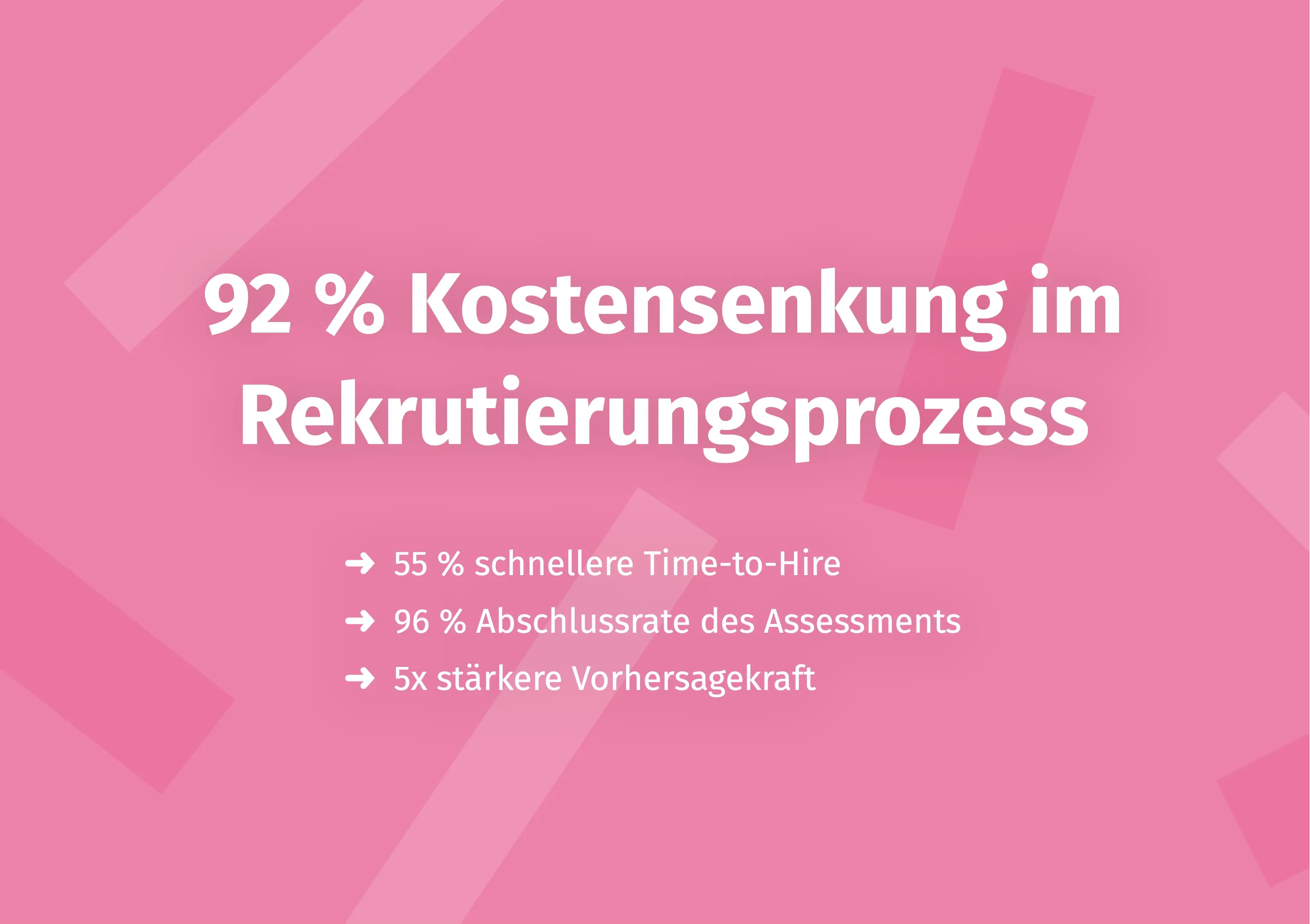
When qualified applicants are scarce, the quality of selection decisions becomes even more important. Companies that rely on scientifically grounded aptitude diagnostics make objective decisions – independent of CVs or subjective impressions during interviews. The digital platform Aivy, for example, enables standardised pre-selection via game-based assessments that reduce unconscious bias and improve candidate experience. Companies like MCI Deutschland, using objectifying aptitude diagnostics, were able to reduce time-to-hire by 55% and cut cost-per-hire by 92% – a significant lever precisely when every mis-hire matters.
Employee Retention and Reducing Turnover
Retaining skilled workers is at least as important as attracting new ones. Regular performance conversations, clear career paths, flexible working time models (where production allows) and targeted training opportunities measurably reduce turnover. Companies that support their workforce in developing skills signal genuine appreciation – and differentiate themselves from the competition.
Frequently Asked Questions About the Skills Shortage in the Food Industry
How severe is the skills shortage in the food industry?
As Germany's fourth-largest industrial sector, the food industry is particularly affected. The Federal Employment Agency lists several food occupations in its bottleneck analysis as persistently hard to fill. The DIHK skilled labour report confirms that craft occupations in the food sector are among the most problematic. The shortage is structural – meaning it is not cyclically driven but rooted in demographic and educational trends.
Which roles are most in demand in the food sector?
The most sought-after roles include: food technology specialists, food technologists and food engineers, quality managers in food production, bakers, confectioners and butchers in the trades sector, and specialists in warehousing logistics and cold chain management.
What are the main causes of the skills shortage in the food industry?
The central causes are: demographic change (baby boomers retiring, smaller cohorts following), image problems due to shift work and physical demands, strong competition for skilled workers from the automotive and logistics sectors, and declining apprenticeship numbers in food technology occupations.
How can food companies address the skills shortage?
Effective measures include: active employer branding and apprentice marketing, partnerships with vocational schools, international recruitment (Skilled Worker Immigration Act), the use of modern aptitude diagnostics for more objective candidate selection, and investment in employee retention and continuing education. A mix of short-term measures (filling vacancies through international recruiting) and long-term approaches (apprenticeship initiatives, employer branding) is advisable.
How does employer branding help with the skills shortage in the food industry?
Employer branding encompasses all measures through which a company communicates its attractiveness as an employer. For food businesses, this means: visibility on relevant job platforms, authentic insights into day-to-day work via social media, targeted outreach to young audiences at vocational schools and apprenticeship fairs, and credible communication of benefits and career opportunities.
What role does the Skilled Worker Immigration Act play for the food industry?
The Skilled Worker Immigration Act (in force since 2020, expanded in 2023) significantly simplifies the immigration of qualified professionals from non-EU countries. Among other provisions, it enables the recognition of foreign qualifications and streamlines the granting of residence and work permits. For the food industry, this presents concrete opportunities – provided companies invest in structured onboarding and language support.
How can digital recruiting help in the food industry?
Digital recruiting methods – including standardised aptitude diagnostics and automated pre-selection – enable faster and more objective candidate selection. Particularly when qualified applicants are scarce, it helps to identify candidates who may have an unconventional CV but possess the relevant competencies. More on objective candidate selection: Unconscious Bias in Recruiting.
Conclusion
The skills shortage in the food industry is not a temporary problem but a structural one – rooted in demographics, occupational image and training numbers. HR professionals in the sector need a multi-pronged strategy: short-term through international recruiting and more efficient selection processes, medium-term through employer branding and training investment, and long-term through employee retention and skills development.
Those who adopt modern methods such as scientifically grounded aptitude diagnostics make better decisions even in a tight applicant market – and reduce the risk of costly mis-hires. Find out more about objective recruiting with the digital platform Aivy: Book a demo now.
Sources
- Federation of German Food and Drink Industries (BVE): BVE Annual Report / Industry Report Food and Beverage. BVE, 2024.
- Federal Employment Agency (Bundesagentur für Arbeit): Bottleneck Analysis – Skilled Worker Shortages by Occupation. BA, 2024. https://statistik.arbeitsagentur.de/DE/Statischer-Content/Statistiken/Fachstatistiken/Fachkraeftebedarf-Stellen/Generische-Publikationen/Fachkraefteengpassanalyse.pdf
- Association of German Chambers of Industry and Commerce (DIHK): DIHK Skilled Labour Report 2024. DIHK, 2024. https://www.dihk.de/de/themen-und-positionen/fachkraefte/fachkraeftesicherung
- Federal Ministry of the Interior and Community (BMI): Skilled Worker Immigration Act. BMI, 2023. https://www.bmi.bund.de/DE/themen/migration/zuwanderung/fachkraefteeinwanderung/fachkraefteeinwanderung-node.html
- Institute for Employment Research (IAB): IAB Job Survey – Skilled Worker Bottlenecks. IAB, 2024. https://iab.de/
- dfv Media Group: Lebensmittel Zeitung – Industry Report on Skilled Labour. 2023. https://www.lebensmittelzeitung.net

Make a better pre-selection — even before the first interview
In just a few minutes, Aivy shows you which candidates really fit the role. Beyond resumes based on strengths.