
A scorecard in HR is a structured evaluation tool that makes the requirements of a role or the assessment of candidates measurable against consistent criteria. It reduces subjective gut decisions, enables meaningful comparison between candidates, and documents hiring decisions in a transparent, traceable way. In modern recruiting, scorecards are increasingly combined with objective assessment tools to further improve predictive accuracy.
What Is a Scorecard in HR?
A scorecard is a pre-structured framework that consolidates criteria, weightings, and a rating scale for a hiring decision. It makes explicit and verifiable what in many organizations still relies on gut instinct: what does a candidate need to bring to the table — and how well do they actually meet those requirements?
In the HR context, the term has come to describe two distinct use cases that should not be confused: the job scorecard (defining role requirements before recruiting begins) and the candidate scorecard (evaluating applicants during the selection process). Separate from both is the Balanced Scorecard — a strategic management tool for tracking organizational goals across four perspectives (financial, customer, internal processes, learning and growth). The Balanced Scorecard has no direct connection to the recruiting process.
Two Types: Job Scorecard and Candidate Scorecard
The Job Scorecard: Defining Requirements Clearly
The job scorecard is created before the first job posting goes live. It answers a single core question: what exactly are we looking for? Typical components include:
- Must-have criteria: Non-negotiable prerequisites (e.g. qualifications, language skills, years of experience)
- Core competencies: Technical and interpersonal skills critical to success in the role (e.g. problem-solving, communication)
- Outcome goals: What should this person achieve within the first 6–12 months?
- Cultural fit criteria: Alignment with team values and ways of working
The job scorecard creates alignment between recruiters and hiring managers — before misunderstandings can arise during the process.
The Candidate Scorecard: Evaluating Applicants Fairly
The candidate scorecard is its counterpart in the active selection process. It translates the criteria from the job scorecard into a concrete rating sheet that all interviewers complete independently after each conversation. Only then are the individual ratings brought together and compared.
This approach is not bureaucratic overhead — it is methodologically essential. When interviewers only record their impressions after a joint debrief, they are unconsciously shaped by others' opinions. This is a textbook example of Conformity Bias.
Why Scorecards Reduce Unconscious Bias
Without structured evaluation, interviewers tend to favor candidates who are similar to themselves (Affinity Bias), to over-weight the first impression (Primacy Effect), or to let one standout trait color their assessment of a candidate overall (Halo-Horns Effect). A scorecard disrupts these patterns: when evaluators focus on pre-defined criteria, their attention is directed toward what genuinely matters.
This is not just intuition — it is backed by research. Schmidt and Hunter demonstrated in their landmark 1998 meta-analysis that structured interviews — with standardized questions and systematic rating — show significantly higher predictive validity than unstructured conversations. Predictive validity describes how well a selection method forecasts future job performance. Campion et al. (1994) confirmed that standardized rating frameworks significantly improve interrater reliability — the degree to which different evaluators reach consistent conclusions about the same candidate.
In short: a scorecard makes recruiting not only fairer, but also more accurate.
How to Create a Scorecard: Step by Step
1. Derive the Criteria
Draw your criteria directly from the role requirements — not from the job posting. Ask yourself: what distinguishes someone who will genuinely excel in this role from someone who merely looks good on paper?
Keep the list manageable: 6–10 criteria is the sweet spot. More than that leads to evaluator fatigue and superficial ratings in practice.
2. Set Weightings
Not all criteria carry equal importance. Differentiate upfront:
- Knock-out criteria (must-haves): Meeting them is a prerequisite, not a plus
- Core criteria (high weight): Direct impact on role performance
- Supporting criteria (low weight): Desirable, but not decisive
3. Define the Rating Scale
Scales with 4 or 5 levels have proven effective. Critically, avoid using bare numbers without explanation. Anchor descriptions — concrete behavioral descriptions for each rating level — significantly improve objectivity:
| Rating | Meaning |
|---|---|
| 1 | Criterion clearly not met — significant gaps evident |
| 2 | Criterion partially met — development needed |
| 3 | Criterion met — requirements reliably covered |
| 4 | Criterion exceeded — a genuine strength beyond expectations |
| 5 | Criterion clearly exceeded — exceptional level of capability |
4. Rate Independently, Then Consolidate
All interviewers complete the scorecard immediately after the conversation — before any discussion with colleagues. Individual ratings are only brought together afterward. This creates a structured basis for discussion rather than a consensus shaped by whoever speaks first.
Scorecard and Digital Assessment
A scorecard is only as good as the data feeding into it. In traditional settings, that data comes exclusively from CV screening and interview impressions — both sources with well-documented limitations: CVs are poor proxies for potential, and interview impressions are vulnerable to bias.
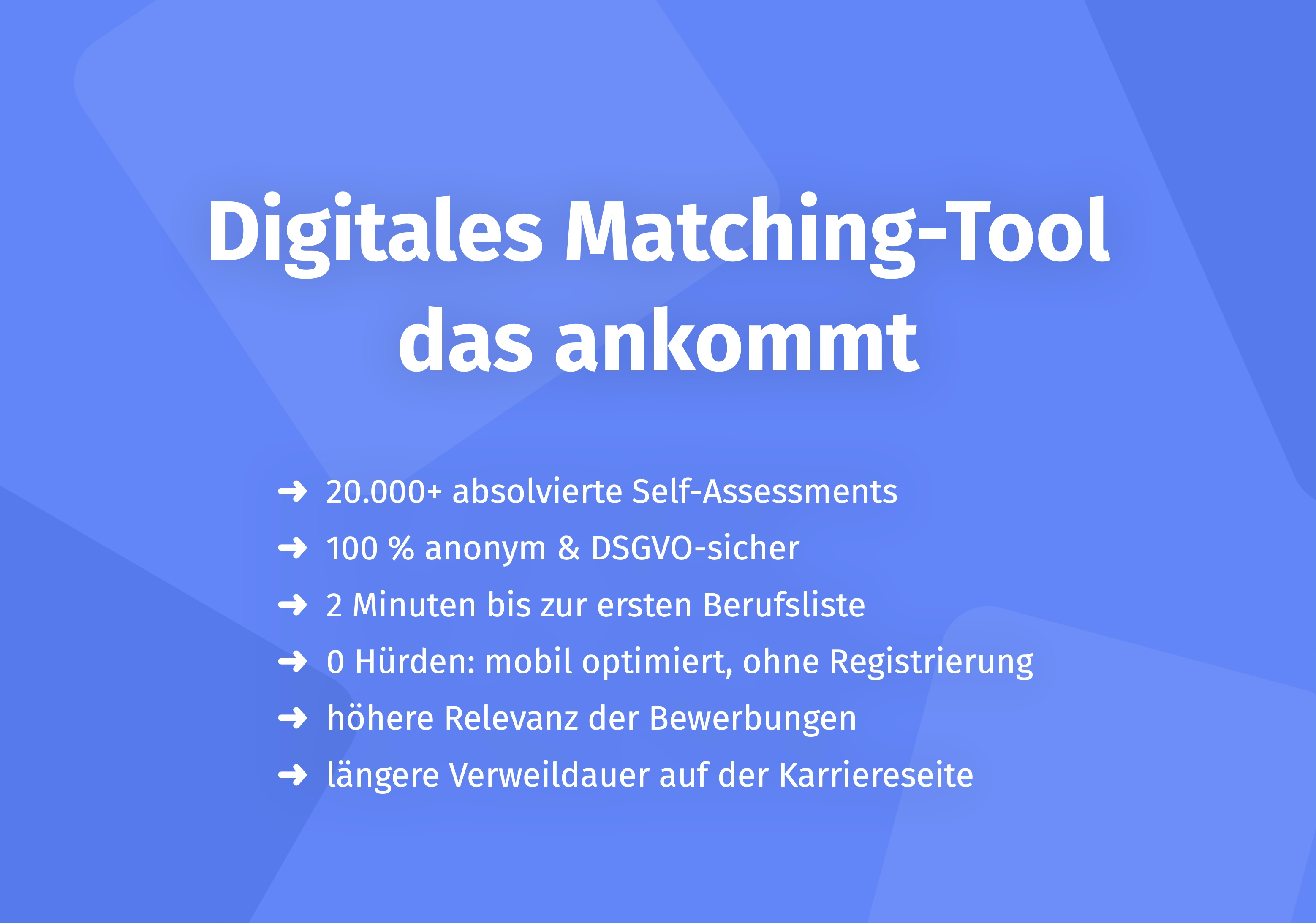
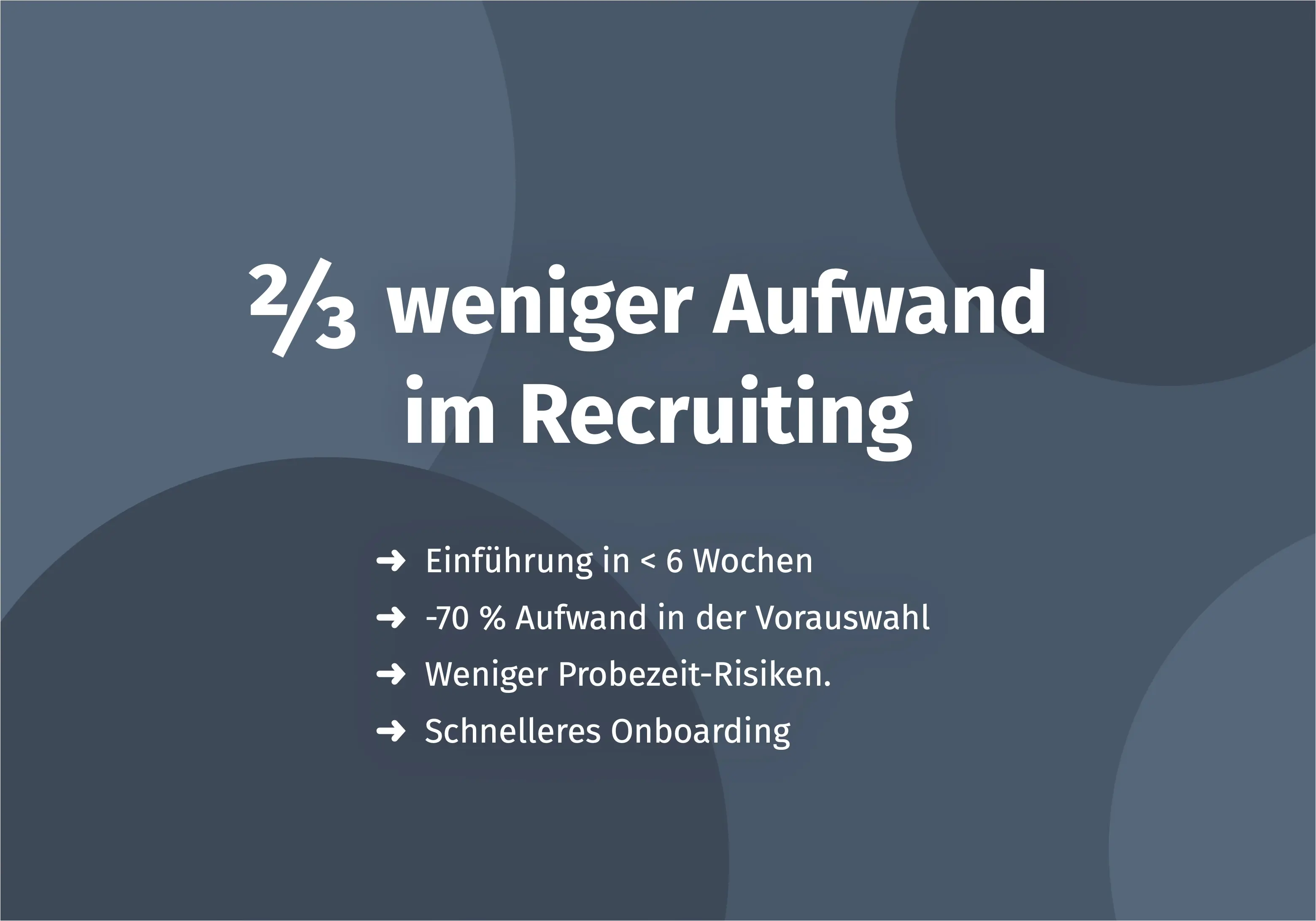
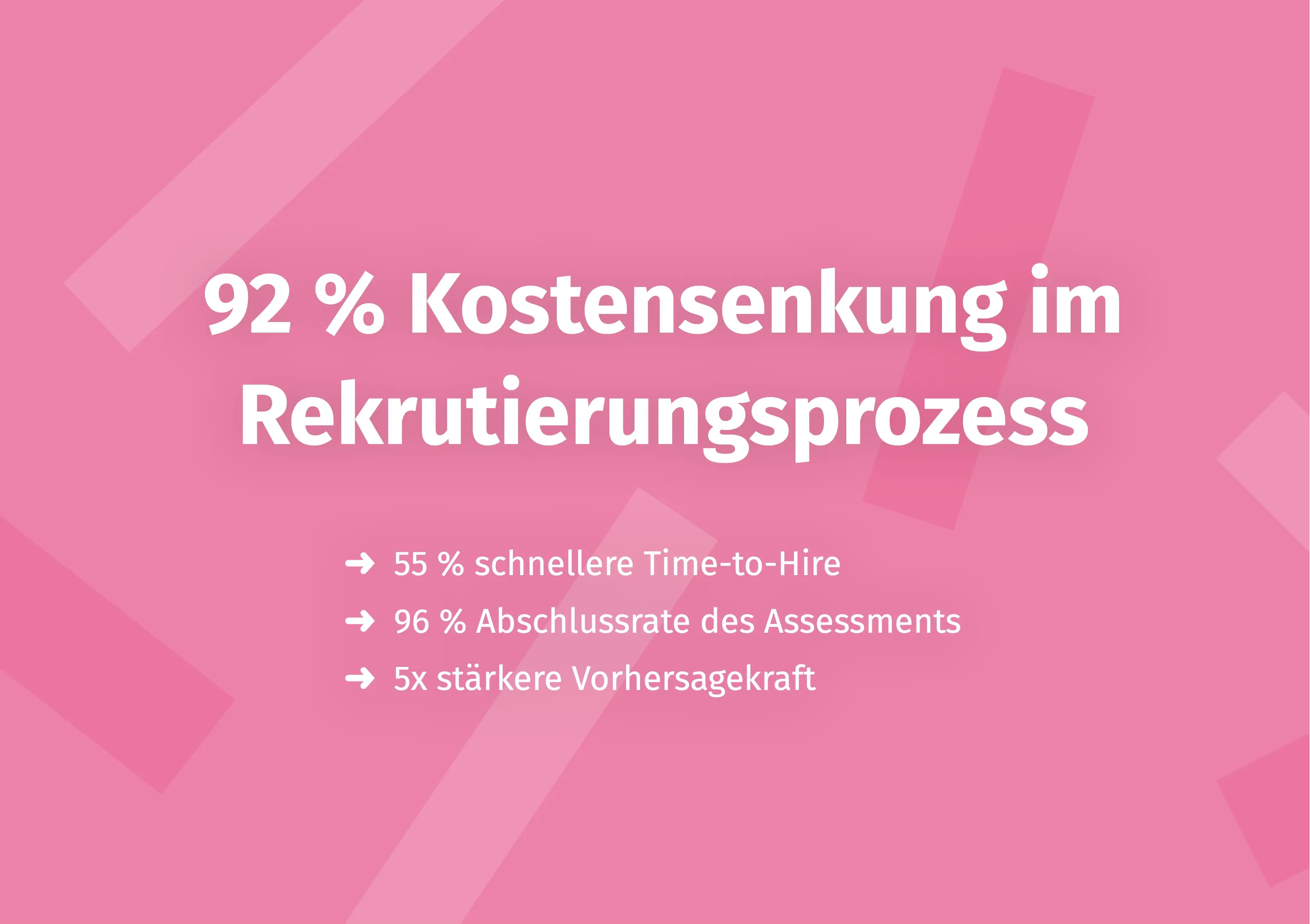
Adding objective, scientifically validated diagnostics closes this gap. The digital platform Aivy — a spin-off from Freie Universität Berlin — delivers measurable data on competencies, personality, and potential through game-based assessments and validated questionnaires. These data points can serve directly as the basis for scorecard criteria, replacing subjective impressions with structured, reproducible insights.
Real-world results demonstrate the impact: Frankfurt School achieved 30% fewer wrong decisions before the first interview by using objective pre-selection, and saw a 4x ROI within the first year. Read the full story in the Frankfurt School case study.
Frequently Asked Questions About the Scorecard
What is a scorecard in HR?
A scorecard is a structured evaluation framework that consolidates criteria, weightings, and a rating scale for hiring decisions. It makes those decisions traceable, comparable, and less susceptible to subjective bias.
What is the difference between a job scorecard and a candidate scorecard?
The job scorecard defines role requirements upfront — it is created before recruiting begins and aligns the team on what they are looking for. The candidate scorecard evaluates applicants against exactly those pre-defined criteria during the process. The two complement each other: the job scorecard sets the standard; the candidate scorecard applies it.
What is the difference between a recruiting scorecard and a Balanced Scorecard?
The Balanced Scorecard is a strategic management tool for organizations — it tracks goals across four perspectives: financial, customer, internal processes, and learning/development. The recruiting scorecard is an evaluation instrument for personnel selection. Both share a name but serve entirely different purposes.
What criteria should a recruiting scorecard include?
Typical criteria include: technical qualifications (hard skills), relevant competencies (e.g. problem-solving, communication), cultural fit, motivation and career goals, and knock-out criteria (non-negotiable prerequisites). A maximum of 6–10 criteria is recommended.
How do I rate candidates on a scorecard?
Scales of 1–4 or 1–5 with concrete anchor descriptions per rating level work best. All interviewers rate independently immediately after the interview — before any group discussion. This prevents individuals from being swayed by majority opinion.
Does a scorecard reduce unconscious bias?
Yes — demonstrably so. Pre-defined criteria shift attention away from likability and similarity toward genuinely relevant attributes. According to Schmidt & Hunter (1998), structured interviews with systematic rating show significantly higher predictive validity than unstructured conversations. Combining scorecards with objective assessment tools amplifies this effect further. For more on tackling unconscious bias: Overcoming Unconscious Bias in Recruiting.
How do I create a scorecard step by step?
(1) Define the role requirements clearly. (2) Derive 6–10 criteria. (3) Set weightings (must-haves vs. core criteria vs. supporting criteria). (4) Define a rating scale with anchor descriptions. (5) Brief all interviewers before the process begins. (6) Document ratings immediately and independently after each interview.
Conclusion
The scorecard is one of the most effective — and most underrated — tools in recruiting. It does not replace human judgment entirely, but it gives that judgment a structured, verifiable form. Any HR team looking to make hiring decisions more traceable, comparable, and fair will find a well-designed scorecard hard to do without.
The logical next step for teams already using or introducing scorecards: integrate objective diagnostic data as a foundation. The result is a selection process that is not just structured, but scientifically grounded.
Discover how the digital platform Aivy provides objective assessment data for your recruiting process: Learn more.
Sources
- Schmidt, F.L. & Hunter, J.E. (1998): The Validity and Utility of Selection Methods in Personnel Psychology. Psychological Bulletin, Vol. 124(2), pp. 262–274. https://doi.org/10.1037/0033-2909.124.2.262
- Campion, M.A., Campion, J.E. & Hudson, J.P. (1994): Structured Interviewing: A Note on Incremental Validity and Alternative Question Types. Journal of Applied Psychology, Vol. 79(6). https://doi.org/10.1037/0021-9010.79.6.998
- Deutsche Gesellschaft für Personalführung (DGFP): Guidelines for Personnel Selection. https://www.dgfp.de
- Lievens, F. & Sackett, P.R. (2017): The Effects of Predictor Method Factors on Selection Outcomes. Journal of Applied Psychology, Vol. 102(1). https://doi.org/10.1037/apl0000136

Make a better pre-selection — even before the first interview
In just a few minutes, Aivy shows you which candidates really fit the role. Beyond resumes based on strengths.