
Three small letters – yet they regularly cause uncertainty in HR departments across Germany. The abbreviation m/w/d stands for männlich/weiblich/divers (male/female/diverse) and has become the standard in German job postings since the introduction of "diverse" as a third gender option in the civil registry in 2019. There is no explicit legal requirement to use these letters, but Germany's General Equal Treatment Act (AGG) mandates discrimination-free job advertisements – and m/w/d is the simplest way to demonstrate compliance.
What Does M/W/D Mean in German Job Postings?
The abbreviation m/w/d stands for männlich / weiblich / divers (male / female / diverse) and signals that a position is open to people of all genders. The "d" addresses people who do not identify exclusively as male or female – including intersex individuals (with non-binary biological sex characteristics) and non-binary people.
Before the Self-Determination Act came into force, estimates put the number of intersex people in Germany at around 100,000 to 160,000. The Self-Determination Act (Selbstbestimmungsgesetz, SBGG), which took effect on 1 November 2024, significantly simplified the process: trans, intersex, and non-binary individuals can now change their registered gender at the registry office without prior medical assessments. The social relevance of the topic continues to grow.
Historical Background: Federal Constitutional Court 2017
For a long time, the suffix "m/w" (male/female) was considered sufficient in German job postings. This changed fundamentally with a ruling by the Federal Constitutional Court (Bundesverfassungsgericht) on 10 October 2017 (Case No. 1 BvR 2019/16). The court found that civil status law violated the constitution because it did not provide a third gender option alongside "male" and "female." Legislators were given until the end of 2018 to make amendments.
Since 1 January 2019, people in Germany can register as "divers" (diverse) or leave the gender entry blank. For job postings, this meant: writing only "m/w" now excludes a group of people who are officially recognised under German law.
Is M/W/D Legally Required in Job Postings?
No – there is no explicit legal requirement to use the letters "m/w/d." What the law requires is a discrimination-free job advertisement. M/w/d is the most widely used and legally secure way to meet this requirement in practice.
What the AGG Requires
The General Equal Treatment Act (Allgemeines Gleichbehandlungsgesetz, AGG) is the central framework for anti-discrimination protection in Germany. Section 1 AGG defines the protected characteristics – including gender and sexual identity. Section 11 AGG specifies for job postings: a position may not be advertised in violation of the prohibition of discrimination. This means the advertisement must be formulated so that people of all genders can feel addressed.
Legal Consequences for Violations
Violations of the AGG can be costly for employers. Section 15 AGG governs the consequences:
- Compensation claims of up to three months' salary if the application was unsuccessful
- Damages claims where a violation is proven
- Reversal of the burden of proof: the company must demonstrate that a rejection had no discriminatory grounds – without thorough documentation, this is nearly impossible
A further risk comes from so-called AGG hoppers: individuals who deliberately apply to flawed job postings not to obtain the position, but to claim compensation when rejected. Using m/w/d is a simple but effective protection against this.
Variants: M/W/D, M/W/I, M/W/X – What Is Permitted?
In practice, you will encounter various abbreviations. All of the following variants fundamentally fulfil the goal of including the third gender:
| Abbreviation | Meaning | Note |
|---|---|---|
| m/w/d | male / female / diverse | Recommended – matches the official civil registry term |
| m/w/i | male / female / intersex | AGG-compliant, but narrower in scope |
| m/w/x | male / female / x (any) | Less common |
| m/w/gn | male / female / gender-neutral | Rarely used |
Recommendation: Use m/w/d consistently. The "d" corresponds to the official term in German civil status law, also includes non-binary people, and has the highest recognition among applicants. A study by Darmstadt University of Applied Sciences found that the format "Business Psychologist (m/w/d)" achieved the most positive effect on target groups – both compared to the generic masculine form and to experimental alternatives.
Gender Star, Colon, or Slash?
Those who want to go beyond m/w/d can additionally use inclusive language throughout the body text. The following applies:
AGG-compliant and inclusive:
- Gender star: Recruiter*in
- Colon: Recruiter:in
- Underscore: Recruiter_in
Not suitable (excludes the third gender):
- Dual naming: Recruiter und Recruiterin (Recruiter and female Recruiter)
- Slash without d: Recruiter/-in
- Internal capitalisation: RecruiterInnen
For Aivy content, the colon is used (e.g., Bewerber:innen, Recruiter:innen), as it is considered more accessible and better handled by screen readers.
Writing an AGG-Compliant Job Posting
M/w/d is an important first step – but not a guarantee of a truly discrimination-free advertisement. A fair job posting requires attention to the entire text.
Choosing Gender-Neutral Job Titles
| Instead of… | Better… |
|---|---|
| Kaufmann / Kauffrau | Kaufleute, kaufmännische Fachkraft (commercial specialist) |
| Krankenschwester / -pfleger | Pflegefachkraft (nursing professional) |
| Ingenieur (m/w/d) | Ingenieur:in (m/w/d) or "Engineering role" |
| Sachbearbeiter (m/w/d) | Sachbearbeitung (m/w/d) (processing role) |
English job titles such as "Consultant," "Manager," or "Engineer" are grammatically gender-neutral – adding (m/w/d) is sufficient here.
Recognising Gendered Language
Research shows that seemingly neutral words are unconsciously perceived as "male" or "female" – and influence who applies in the first place.
A widely cited study by Gaucher, Friesen, and Kay (2011) analysed thousands of job postings and reached a striking conclusion: women feel less attracted to postings containing many masculine-coded words – regardless of their actual qualifications.
Masculine-coded words (can deter women from applying):dominant, assertive, competitive, leading, analytical, independent
Feminine-coded words:support, understand, collaborate, empathetic, committed, reliable
Feminine-coded words have no negative effect on male applicants. The free FührMINT Gender Decoder from the Technical University of Munich allows you to analyse the ratio of masculine- and feminine-coded words in your job posting.
10 Tips for Discrimination-Free Job Postings
- Add m/w/d after every job title – including English titles
- Choose neutral job titles – "Team leadership" rather than "Team leader"
- Check the full body text – no masculine pronouns after an m/w/d headline
- Use a Gender Decoder – reduce masculine-coded language
- No age references – including indirect ones like "young, dynamic team"
- Justify language requirements – otherwise there is discrimination potential
- Add a diversity statement – "We welcome applications from all people"
- Review application forms – offer a third salutation option
- Formulate rejection letters neutrally – the AGG applies here too
- Document the process – in case of legal proceedings
Why M/W/D Alone Is Not Enough
Correctly formulating the job posting matters – but it is only the first step toward a genuinely fair selection process. Unconscious bias operates well beyond the job advertisement.
Unconscious Bias Throughout the Process
A widely cited study by Bertrand and Mullainathan (2004) examined over 5,000 applications to real job postings in the United States. The result: applicants with typically "white" names like Emily or Greg received 50% more callbacks than candidates with African-American-sounding names like Lakisha or Jamal – with identical qualifications.
This shows: even when the job posting is perfectly worded, unconscious prejudices can affect CV screening, interviews, and final hiring decisions.
Common bias types in recruiting:
- Affinity Bias: favouring candidates who are similar to oneself
- Halo Effect: over-weighting a single positive characteristic
- Confirmation Bias: seeking information that confirms an initial impression
- Stereotype Bias: assumptions about suitability based on gender, background, or age
Objective Assessment Methods as the Solution
The meta-analysis by Schmidt and Hunter (1998), one of the most cited studies in HR psychology, shows that selection methods vary considerably in their ability to predict later job performance. Structured, scientifically validated assessments rank among the most reliable methods – and simultaneously reduce unconscious bias, because standardised procedures leave less room for subjective interpretation.
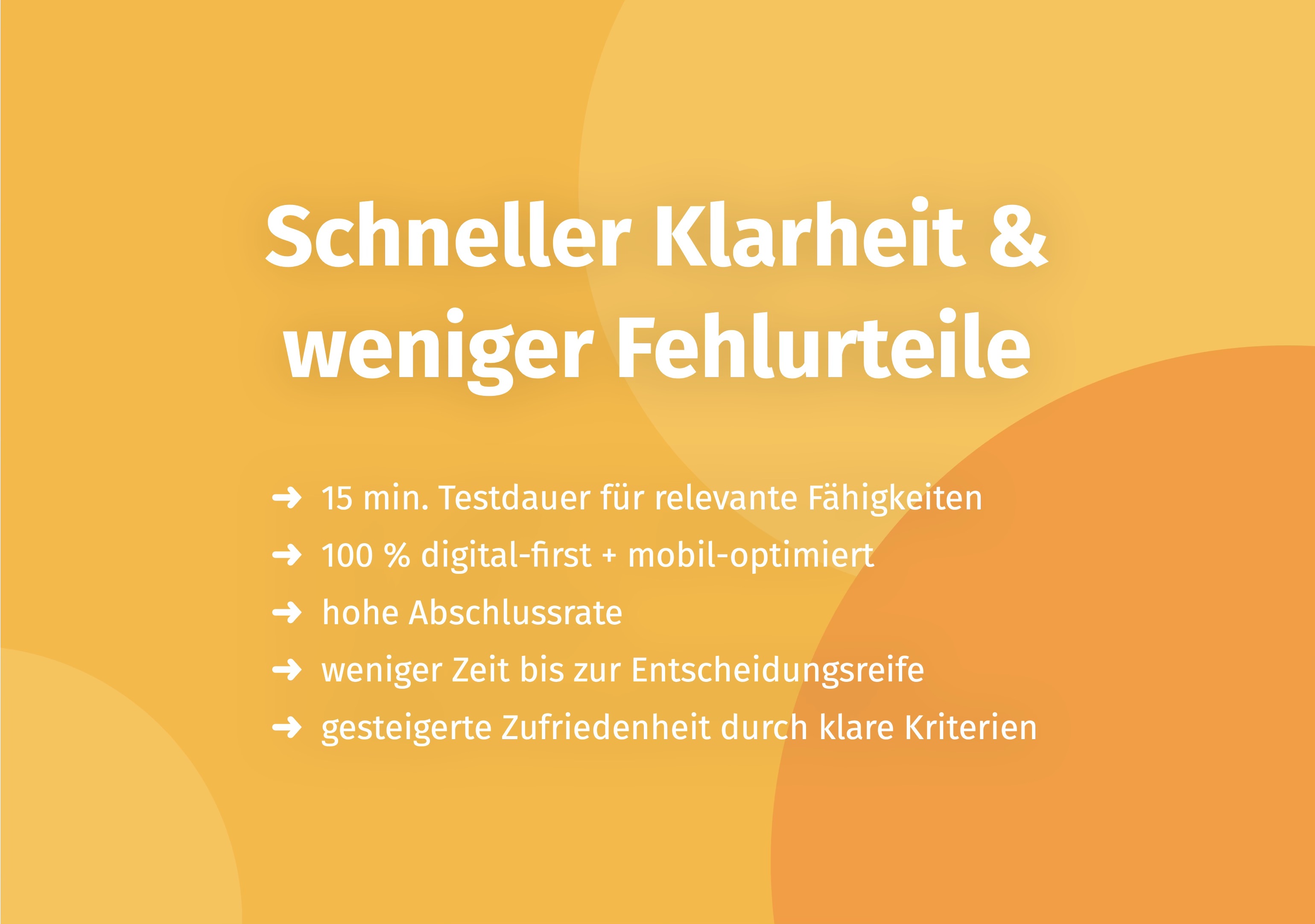
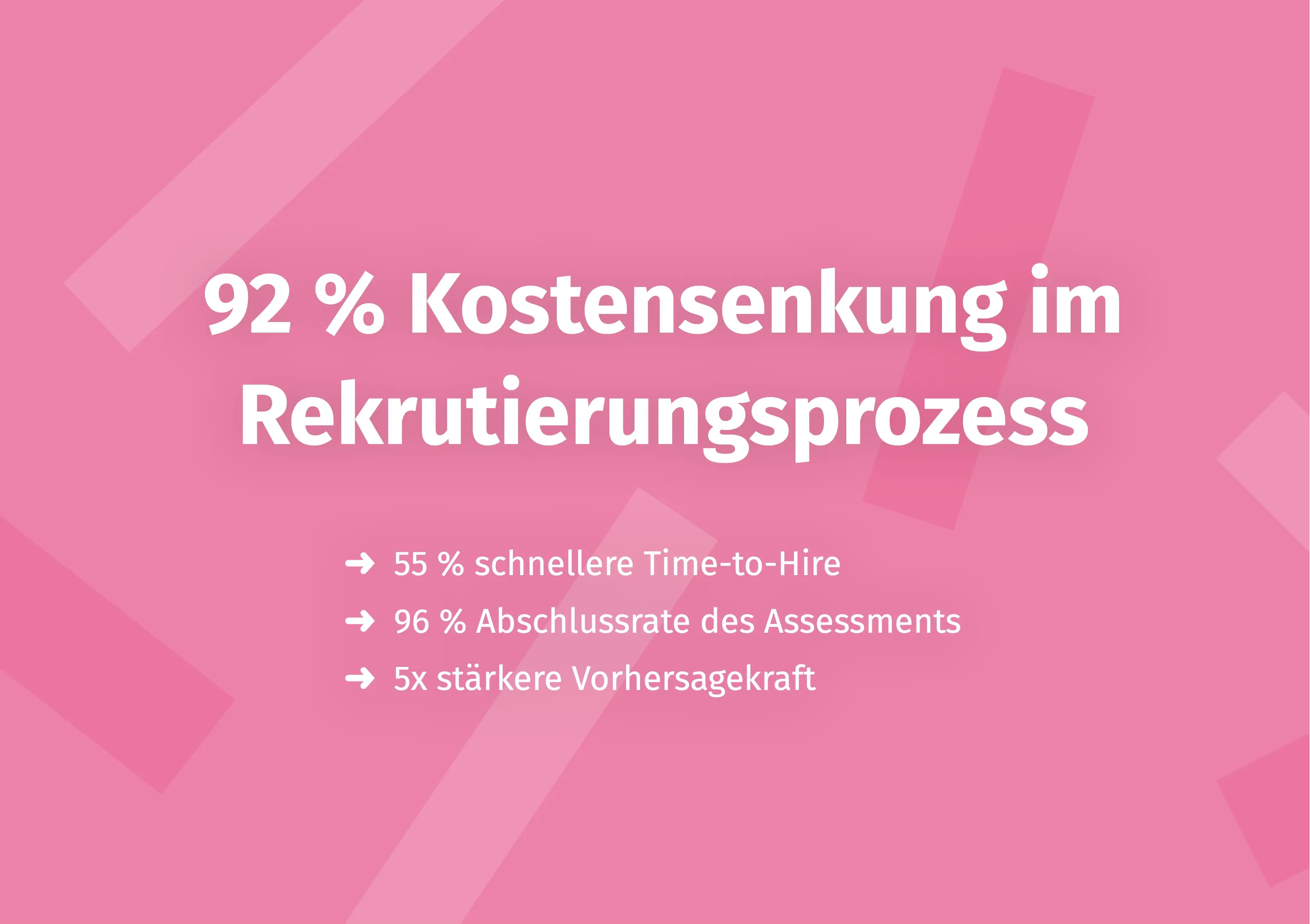
Companies such as Lufthansa already apply this approach: rather than prioritising CVs, competencies relevant to future challenges are measured directly – with measurable results: 81% satisfaction among applicants and a 96% accuracy rate in predicting suitability. OMR similarly reports successful bias reduction: candidates were invited and hired who would likely have been overlooked based on their CV alone.
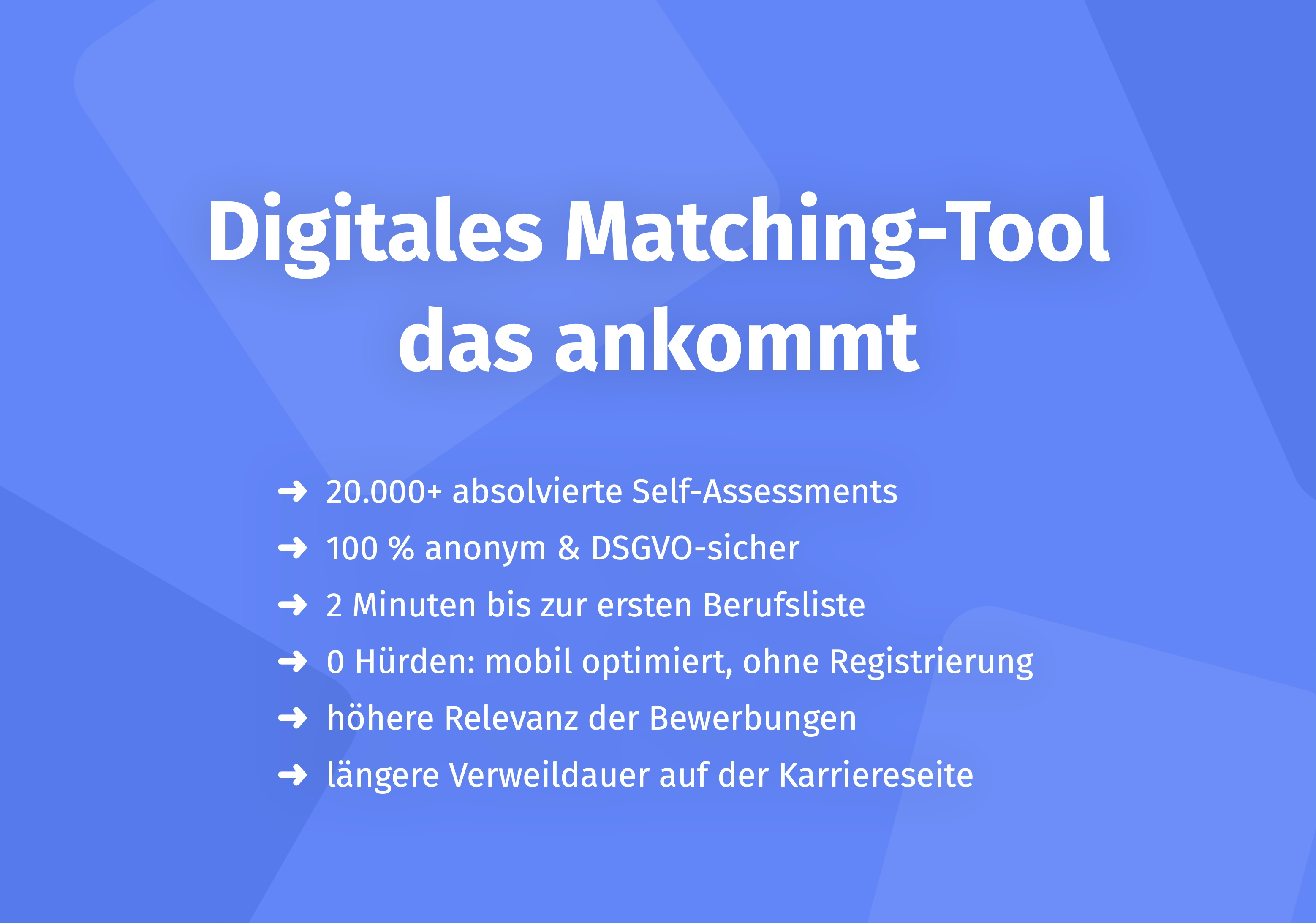
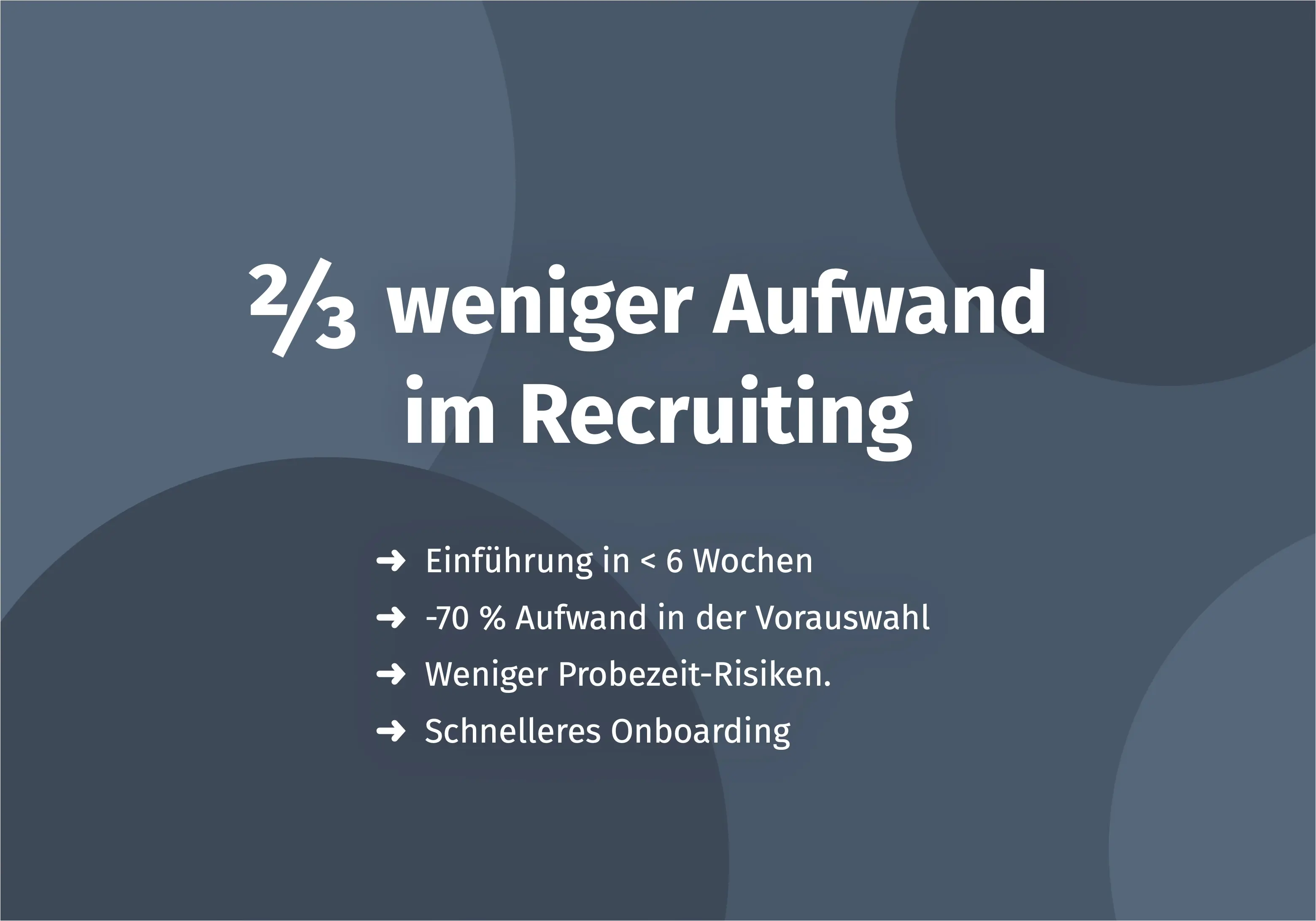
The digital platform Aivy supports HR teams in systematically applying objective talent diagnostics throughout recruiting – from scientifically validated game-based assessments to structured selection processes that make equal opportunity measurable, not just a stated aspiration.
Frequently Asked Questions about M/W/D in Job Postings
What does the "d" in m/w/d stand for?
The "d" stands for "divers" (diverse) and addresses people who do not identify as either male or female. This includes intersex individuals (with non-binary biological sex characteristics) and non-binary people. The term "divers" corresponds to the official civil registry entry that has been available in Germany since January 2019.
Is m/w/d legally required in job postings?
No, there is no explicit legal requirement for the letters m/w/d. However, the AGG requires discrimination-free job advertisements. M/w/d is the simplest and most legally secure way to demonstrably meet this requirement.
What is the difference between m/w/d and m/w/i?
Both variants are AGG-compliant. The "d" stands for "divers" (the official civil registry term), while the "i" stands for "intersexuell" (intersex). Since "divers" also encompasses non-binary people, m/w/d is more comprehensive and is therefore recommended.
Does m/w/d need to be used for internal job postings too?
Yes. The AGG applies equally to external and internal postings. Employees can also claim discrimination and assert legal claims.
Can I use the gender star instead of m/w/d?
Yes, forms like "Manager*in" or "Manager:in" are also AGG-compliant as they include all genders. However, studies show that m/w/d enjoys the highest acceptance among target groups. A combination – inclusive language in the body text plus m/w/d in the job title – offers the best approach.
What does an AGG violation in a job posting cost?
Successful legal claims can result in compensation payments of up to three months' salary, plus damages, legal costs, and potential reputational harm.
What are AGG hoppers?
AGG hoppers are individuals who deliberately apply to flawed job postings – not to obtain the position, but to claim discrimination compensation when rejected. Correct formulation with m/w/d and thorough process documentation are the best protection.
Why doesn't m/w/d alone lead to greater diversity?
Because unconscious bias also operates in other phases of recruiting – during CV screening, in interviews, and in final hiring decisions. Only structured, objective selection methods such as scientifically validated assessments systematically reduce these distortions.
Conclusion
M/w/d in job postings is now standard practice in Germany – and for good reason: it protects against AGG violations, signals openness to all applicants, and strengthens employer branding. The abbreviation is the simplest way to demonstrably fulfil the legal requirement for discrimination-free job advertisements.
But those who genuinely want to promote equal opportunity need to go further: review the entire ad text for gender neutrality, reduce masculine-coded language, adapt application forms – and above all, safeguard the selection process through structured, objective methods. Because unconscious bias continues to operate even after the perfectly worded job posting.
Want to implement fair, data-driven hiring decisions not just in the job posting but throughout the entire selection process? The digital platform Aivy supports you with scientifically validated assessments that reduce bias and make potential visible – regardless of CV and first impressions. Learn more about Aivy.
Sources
- General Equal Treatment Act (Allgemeines Gleichbehandlungsgesetz, AGG), in particular Sections 1, 7, 11, 15. Federal Ministry of Justice. https://www.gesetze-im-internet.de/agg/
- Federal Constitutional Court (Bundesverfassungsgericht), Decision of 10.10.2017, Case No. 1 BvR 2019/16. https://www.bundesverfassungsgericht.de
- Self-Determination Act (Selbstbestimmungsgesetz, SBGG), in force since 01.11.2024. https://www.gesetze-im-internet.de/sbgg/
- Gaucher, D., Friesen, J., & Kay, A. C. (2011). Evidence That Gendered Wording in Job Advertisements Exists and Sustains Gender Inequality. Journal of Personality and Social Psychology, 101(1), 109–128.
- Bertrand, M., & Mullainathan, S. (2004). Are Emily and Greg More Employable Than Lakisha and Jamal? A Field Experiment on Labor Market Discrimination. American Economic Review, 94(4), 991–1013.
- Schmidt, F. L., & Hunter, J. E. (1998). The Validity and Utility of Selection Methods in Personnel Psychology. Psychological Bulletin, 124(2), 262–274.

Make a better pre-selection — even before the first interview
In just a few minutes, Aivy shows you which candidates really fit the role. Beyond resumes based on strengths.