
Drei kleine Buchstaben – und doch sorgen sie regelmäßig für Unsicherheit in HR-Abteilungen. Die Abkürzung m/w/d steht für männlich, weiblich, divers und hat sich seit der Einführung des dritten Geschlechtseintrags im Jahr 2019 als Standard in deutschen Stellenanzeigen etabliert. Eine explizite gesetzliche Pflicht zur Verwendung gibt es zwar nicht, aber das Allgemeine Gleichbehandlungsgesetz (AGG) schreibt diskriminierungsfreie Stellenausschreibungen vor – und m/w/d ist der einfachste Weg, diese Anforderung zu erfüllen.
Was bedeutet m/w/d in Stellenanzeigen?
Die Abkürzung m/w/d steht für männlich / weiblich / divers und kennzeichnet, dass eine Stelle für Menschen aller Geschlechter offen ist. Das „d" adressiert dabei Personen, die sich weder eindeutig als männlich noch als weiblich identifizieren – darunter intergeschlechtliche Menschen (mit nicht-binären biologischen Geschlechtsmerkmalen) sowie nicht-binäre Personen.
In Deutschland lebten laut Schätzungen vor dem Selbstbestimmungsgesetz rund 100.000 bis 160.000 intergeschlechtliche Menschen. Mit dem Selbstbestimmungsgesetz (SBGG), das seit dem 1. November 2024 in Kraft ist, können trans, intergeschlechtliche und nicht-binäre Personen ihren Geschlechtseintrag nun einfach beim Standesamt ändern – ohne vorangehende medizinische Gutachten. Die gesellschaftliche Relevanz des Themas wächst damit weiter.
Historischer Hintergrund: Bundesverfassungsgericht 2017
Lange Zeit reichte der Zusatz „m/w" in deutschen Stellenanzeigen aus. Das änderte sich grundlegend durch ein Urteil des Bundesverfassungsgerichts vom 10. Oktober 2017 (Az. 1 BvR 2019/16). Das Gericht stellte fest, dass das damalige Personenstandsrecht verfassungswidrig war, weil es neben „männlich" und „weiblich" keine dritte Option vorsah. Der Gesetzgeber erhielt bis Ende 2018 Zeit zur Anpassung.
Seit dem 1. Januar 2019 können sich Menschen in Deutschland auch als „divers" oder ohne Geschlechtseintrag registrieren. Für Stellenanzeigen bedeutete das: Wer nur „m/w" schreibt, schließt eine offiziell anerkannte Personengruppe aus.
Ist m/w/d in Stellenanzeigen gesetzlich vorgeschrieben?
Nein – eine explizite gesetzliche Pflicht zur Verwendung der Buchstaben „m/w/d" gibt es nicht. Was das Gesetz fordert, ist eine diskriminierungsfreie Ausschreibung. M/w/d ist die am weitesten verbreitete und rechtssicherste Methode, diese Anforderung umzusetzen.
Was das AGG vorschreibt
Das Allgemeine Gleichbehandlungsgesetz (AGG) ist die zentrale Grundlage des Diskriminierungsschutzes in Deutschland. § 1 AGG benennt die geschützten Merkmale – darunter Geschlecht und sexuelle Identität. § 11 AGG konkretisiert für Stellenausschreibungen: Eine Stelle darf nicht unter Verstoß gegen das Benachteiligungsverbot ausgeschrieben werden. Das bedeutet: Die Anzeige muss so formuliert sein, dass sich Menschen aller Geschlechter angesprochen fühlen können.
Rechtliche Konsequenzen bei Verstößen
Verstöße gegen das AGG können teuer werden. § 15 AGG regelt die Konsequenzen:
- Entschädigungsansprüche von bis zu drei Monatsgehältern, wenn die Bewerbung erfolglos blieb
- Schadenersatzansprüche bei nachgewiesenem Verstoß
- Beweislastumkehr: Das Unternehmen muss nachweisen, dass die Ablehnung keine diskriminierenden Gründe hatte – ohne lückenlose Dokumentation ist das kaum möglich
Ein weiteres Risiko sind sogenannte AGG-Hopper: Personen, die gezielt auf fehlerhaft formulierte Stellenanzeigen reagieren, nicht um die Stelle zu bekommen, sondern um bei einer Ablehnung Entschädigungsansprüche geltend zu machen. M/w/d ist eine einfache, aber wirksame Schutzmaßnahme.
Varianten: m/w/d, m/w/i, m/w/x – was ist erlaubt?
In der Praxis begegnen dir verschiedene Schreibweisen. Alle folgenden Varianten erfüllen grundsätzlich das Ziel der Inklusion des dritten Geschlechts:
| Abkürzung | Bedeutung | Hinweis |
|---|---|---|
| m/w/d | männlich / weiblich / divers | Empfohlen – entspricht dem offiziellen Standesamtsbegriff |
| m/w/i | männlich / weiblich / intersexuell | AGG-konform, aber enger gefasst |
| m/w/x | männlich / weiblich / x (beliebig) | Weniger verbreitet |
| m/w/gn | männlich / weiblich / geschlechtsneutral | Selten genutzt |
Empfehlung: Verwende konsequent m/w/d. Das „d" entspricht dem offiziellen Begriff im Personenstandsrecht, schließt auch nicht-binäre Personen ein und hat die höchste Bekanntheit bei Bewerber:innen. Eine Studie der Hochschule Darmstadt zeigte, dass die Schreibweise „Wirtschaftspsychologe (m/w/d)" die positivste Wirkung auf Zielgruppen erzielt – sowohl im Vergleich zum generischen Maskulinum als auch zu experimentellen Formen.
Genderstern, Doppelpunkt oder Schrägstrich?
Wer über m/w/d hinausgehen möchte, kann den Fließtext der Stellenanzeige zusätzlich gendern. Dabei gilt:
AGG-konform und inklusiv:
- Genderstern: Recruiter*in
- Doppelpunkt: Recruiter:in
- Unterstrich: Recruiter_in
Nicht geeignet (schließt drittes Geschlecht aus):
- Doppelnennung: Recruiter und Recruiterin
- Schrägstrich ohne d: Recruiter/-in
- Binnenmajuskel: RecruiterInnen
Für Aivy-Inhalte verwenden wir den Doppelpunkt (z. B. Bewerber:innen, Recruiter:innen), da er als zugänglicher gilt und von Screenreadern besser verarbeitet wird.
AGG-konforme Stellenanzeigen formulieren
M/w/d ist ein wichtiger erster Schritt – aber keine Garantie für eine wirklich diskriminierungsfreie Anzeige. Eine faire Stellenanzeige erfordert Aufmerksamkeit für den gesamten Text.
Geschlechtsneutrale Berufsbezeichnungen wählen
| Statt… | Besser… |
|---|---|
| Kaufmann / Kauffrau | Kaufleute, kaufmännische Fachkraft |
| Krankenschwester / -pfleger | Pflegefachkraft |
| Ingenieur (m/w/d) | Ingenieur:in (m/w/d) oder „Stelle im Ingenieurwesen" |
| Sachbearbeiter (m/w/d) | Sachbearbeitung (m/w/d) |
Englische Berufsbezeichnungen wie „Consultant", „Manager" oder „Engineer" sind grammatikalisch geschlechtsneutral – der Zusatz (m/w/d) reicht hier.
Sprachliche Kodierung erkennen
Besonders relevant: Forschung zeigt, dass scheinbar neutrale Wörter unbewusst als „männlich" oder „weiblich" wahrgenommen werden – und beeinflussen, wer sich überhaupt bewirbt.
Eine vielzitierte Studie von Gaucher, Friesen und Kay (2011) analysierte tausende Stellenanzeigen und kam zu einem bemerkenswerten Ergebnis: Frauen fühlen sich von Anzeigen mit vielen maskulin kodierten Wörtern weniger angesprochen – unabhängig von ihrer tatsächlichen Qualifikation.
Maskulin kodierte Wörter (können Frauen abschrecken):dominant, durchsetzungsstark, wettbewerbsorientiert, führend, analytisch, eigenständig
Feminin kodierte Wörter:unterstützen, verstehen, zusammenarbeiten, empathisch, engagiert, verlässlich
Feminin kodierte Wörter haben übrigens keinen negativen Effekt auf männliche Bewerber. Mit dem kostenlosen FührMINT Gender Decoder der TU München kannst du deine Stellenanzeige auf das Verhältnis von maskulin und feminin kodierten Wörtern prüfen.
10 Tipps für diskriminierungsfreie Stellenanzeigen
- m/w/d nach jeder Berufsbezeichnung – auch bei englischen Titeln
- Neutralen Jobtitel wählen – „Teamleitung" statt „Teamleiter"
- Fließtext konsequent prüfen – keine maskulinen Pronomen nach m/w/d-Überschrift
- Gender Decoder nutzen – maskulin kodierte Wörter reduzieren
- Keine Altersangaben – auch indirekte wie „junges, dynamisches Team"
- Sprachanforderungen begründen – sonst Diskriminierungspotenzial
- Diversity-Statement ergänzen – „Wir freuen uns über Bewerbungen aller Menschen"
- Bewerbungsformulare prüfen – dritten Anrede-Option anbieten
- Absagen neutral formulieren – AGG gilt auch für Ablehnungsschreiben
- Prozess dokumentieren – für den Ernstfall einer Klage
Warum m/w/d allein nicht genug ist
Die korrekte Formulierung der Stellenanzeige ist wichtig – aber nur der erste Schritt zu einem wirklich fairen Auswahlprozess. Denn Unconscious Bias wirkt weit über die Stellenanzeige hinaus.
Unbewusste Vorurteile im gesamten Prozess
Eine vielzitierte Studie von Bertrand und Mullainathan (2004) untersuchte über 5.000 Bewerbungen auf reale Stellenausschreibungen in den USA. Das Ergebnis: Bewerber:innen mit typisch „weißen" Namen wie Emily oder Greg erhielten 50 % mehr Rückrufe als Kandidat:innen mit afroamerikanisch klingenden Namen wie Lakisha oder Jamal – bei absolut gleichen Qualifikationen.
Das zeigt: Selbst wenn die Stellenanzeige perfekt formuliert ist, können unbewusste Vorurteile bei der Lebenslauf-Sichtung, in Interviews oder bei der Entscheidungsfindung wirksam werden.
Typische Bias-Arten im Recruiting:
- Affinity Bias: Bevorzugung ähnlicher Kandidat:innen
- Halo-Effekt: Überbetonung einzelner positiver Merkmale
- Confirmation Bias: Suche nach Informationen, die das erste Urteil bestätigen
- Stereotype Bias: Annahmen über Eignung aufgrund von Geschlecht, Herkunft oder Alter
Objektive Auswahlverfahren als Lösung
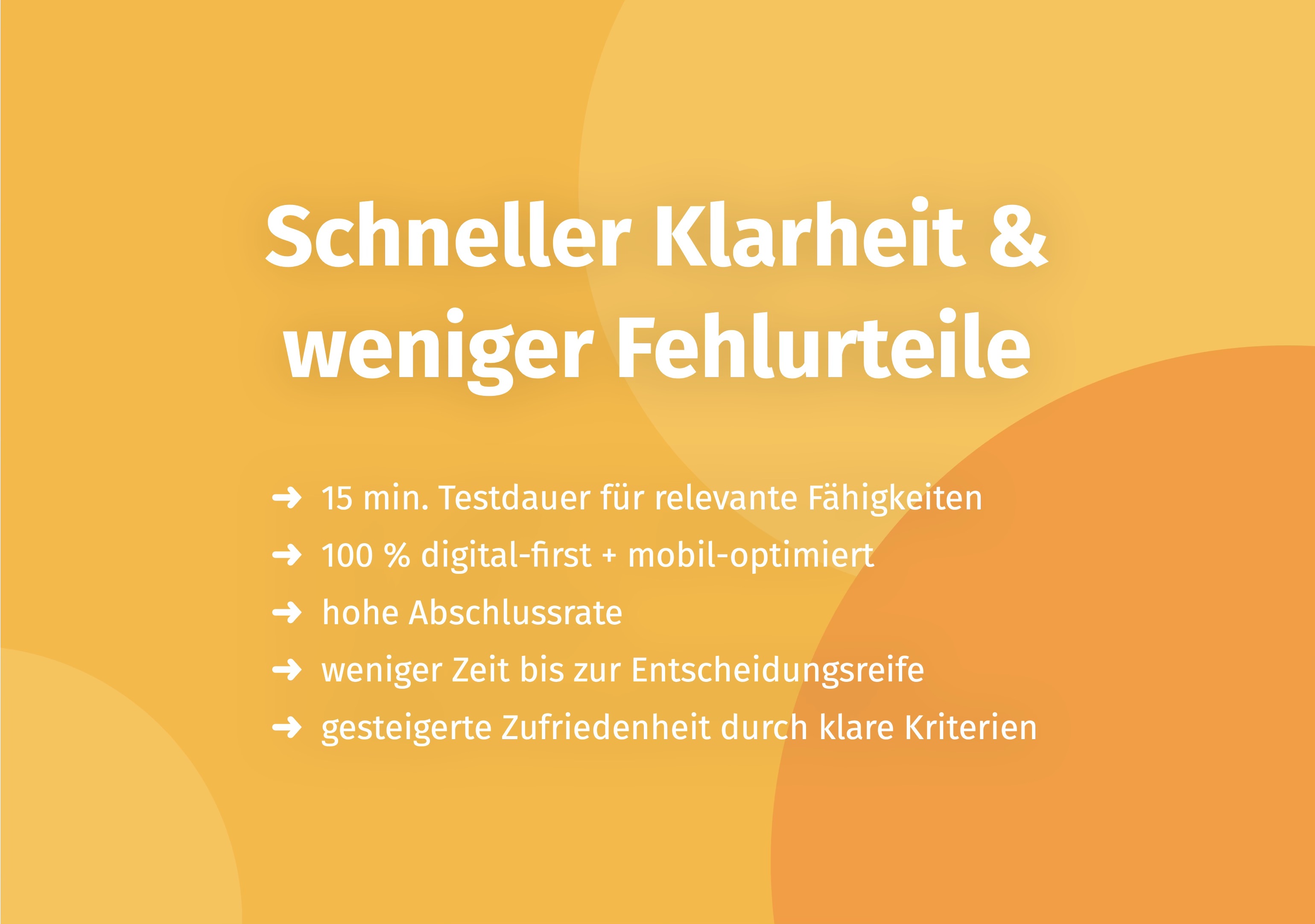
Die Meta-Analyse von Schmidt und Hunter (1998), eine der meistzitierten Studien der Personalpsychologie, zeigt: Verschiedene Auswahlmethoden unterscheiden sich erheblich in ihrer Vorhersagekraft für späteren Berufserfolg. Strukturierte, wissenschaftlich validierte Assessments gehören zu den zuverlässigsten Methoden – und reduzieren gleichzeitig unbewusste Vorurteile, weil standardisierte Verfahren weniger Raum für subjektive Interpretation lassen.
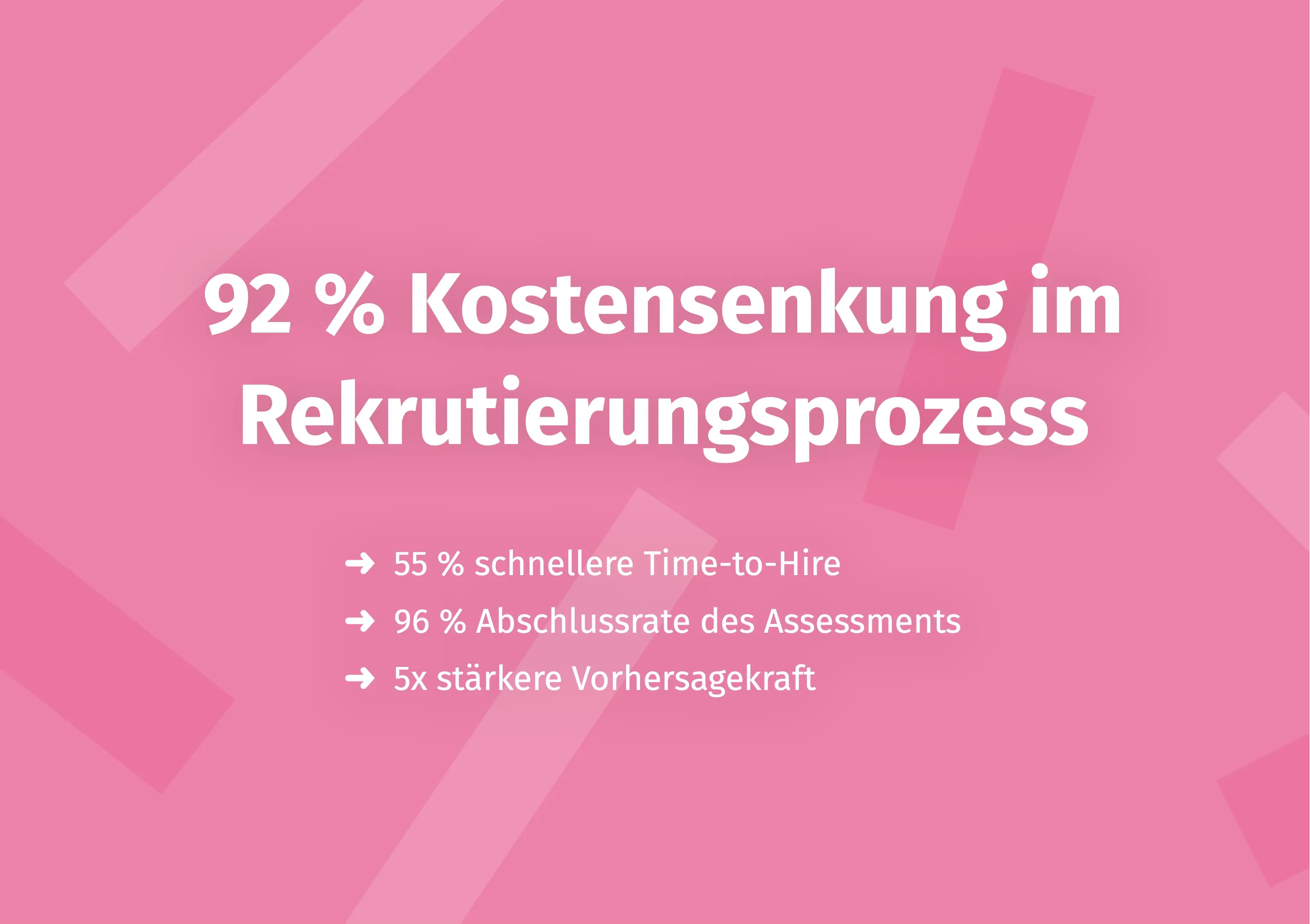
Unternehmen wie Lufthansa setzen bereits auf diesen Ansatz: Statt Lebensläufe in den Vordergrund zu stellen, werden Kompetenzen für zukünftige Herausforderungen direkt gemessen – mit messbaren Ergebnissen: 81 % Zufriedenheit der Bewerbenden und eine Trefferquote von 96 % bei der Vorhersage von Eignung. Auch OMR berichtet von erfolgreicher Bias-Reduktion: Kandidat:innen wurden eingeladen und eingestellt, die anhand des Lebenslaufs wahrscheinlich übersehen worden wären.
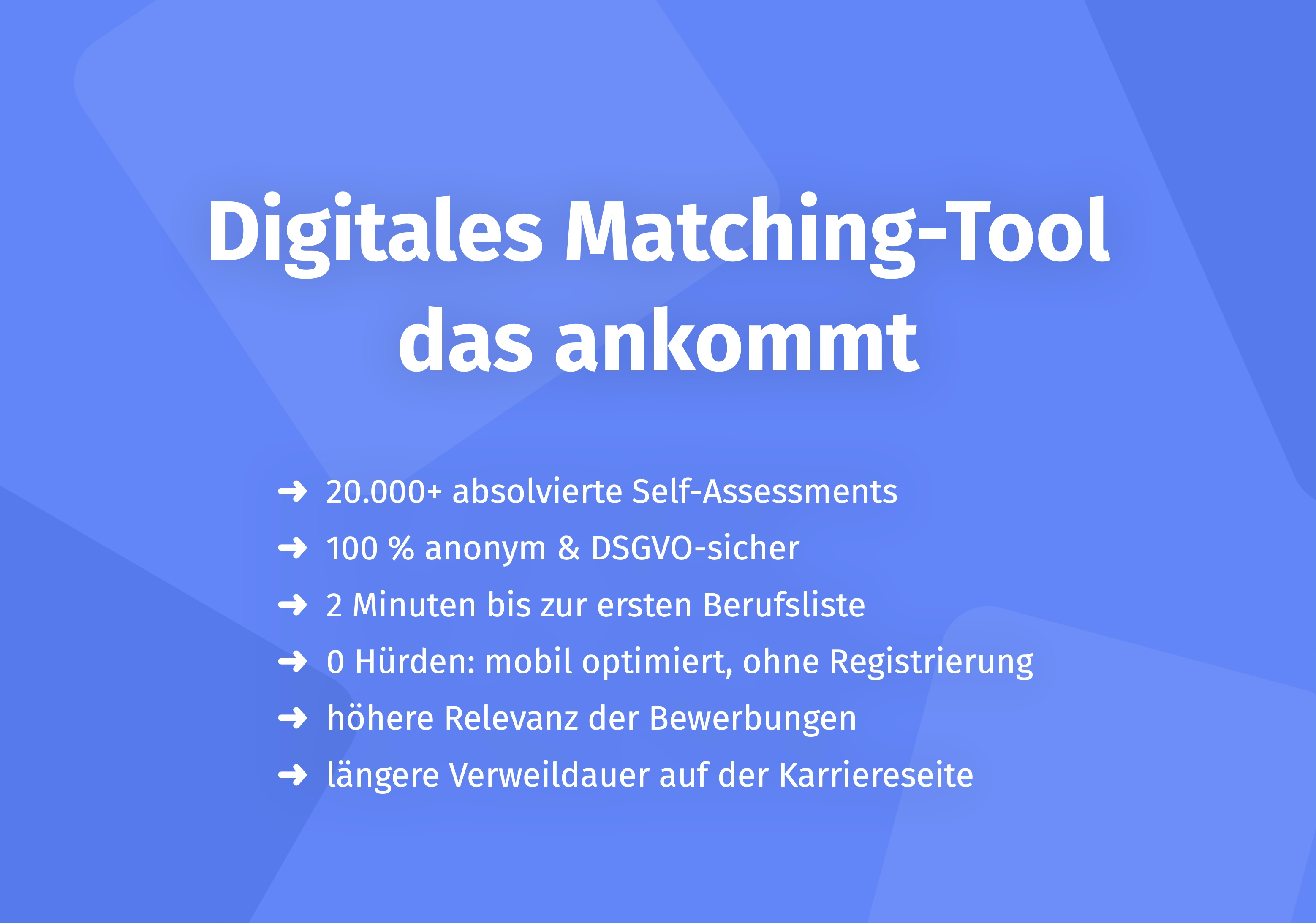
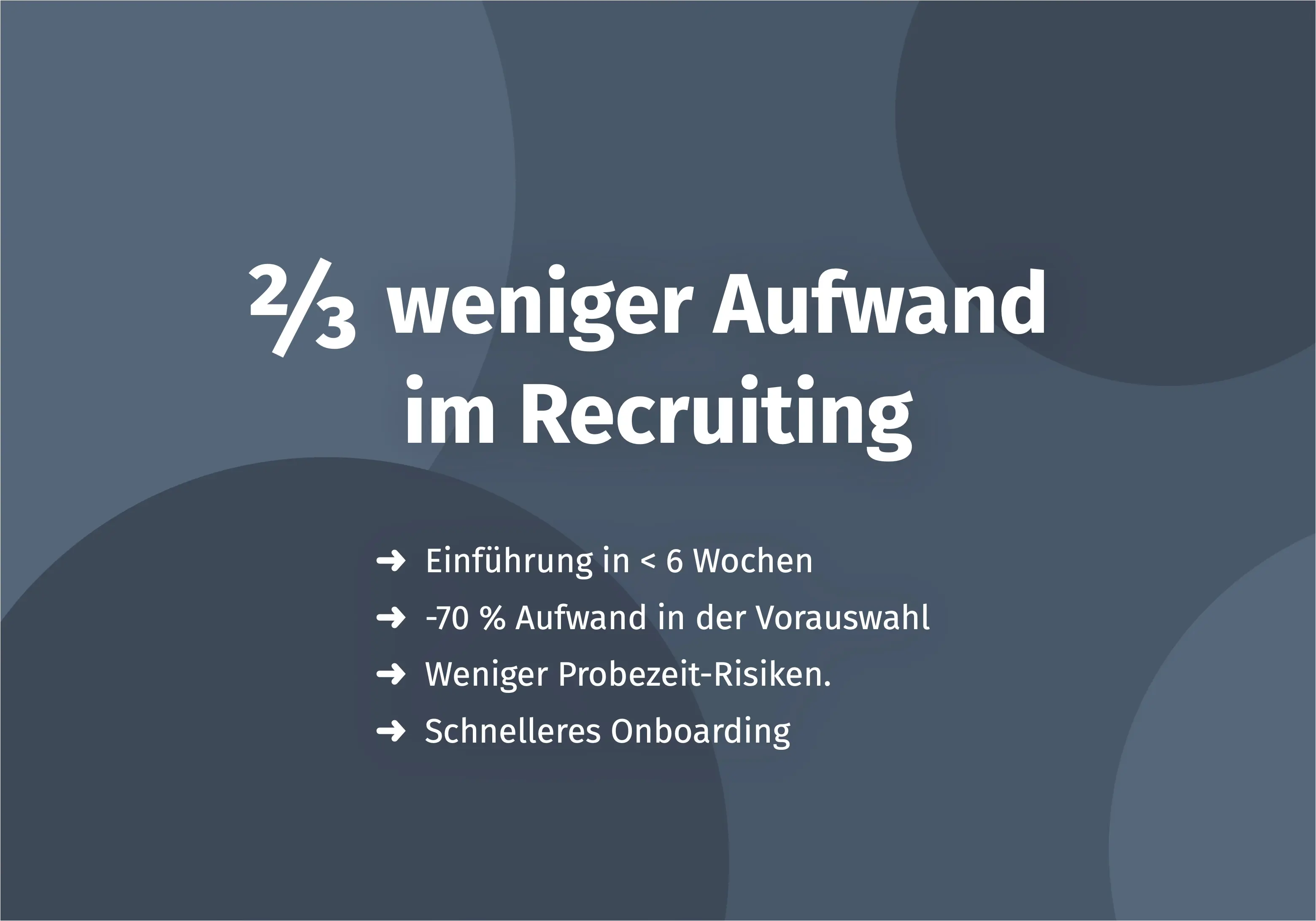
Die digitale Plattform Aivy unterstützt HR-Teams dabei, objektive Eignungsdiagnostik systematisch im Recruiting einzusetzen – von wissenschaftlich validierten Game-Based Assessments bis zu strukturierten Auswahlverfahren, die Chancengleichheit nicht nur versprechen, sondern messbar machen.
Häufige Fragen zu m/w/d in Stellenanzeigen
Wofür steht das „d" in m/w/d?
Das „d" steht für „divers" und adressiert Menschen, die sich weder als männlich noch als weiblich identifizieren. Das umfasst intergeschlechtliche Personen (mit nicht-binären biologischen Geschlechtsmerkmalen) sowie nicht-binäre Menschen. Der Begriff „divers" entspricht dem offiziellen Standesamtsbegriff, der seit Januar 2019 in Deutschland möglich ist.
Ist m/w/d in Stellenanzeigen gesetzlich vorgeschrieben?
Nein, eine explizite gesetzliche Pflicht zu den Buchstaben m/w/d gibt es nicht. Das AGG verlangt aber diskriminierungsfreie Ausschreibungen. M/w/d ist die einfachste und rechtssicherste Methode, diese Anforderung nachweislich zu erfüllen.
Was ist der Unterschied zwischen m/w/d und m/w/i?
Beide Varianten sind AGG-konform. Das „d" steht für „divers" (der offizielle Standesamtsbegriff), das „i" für „intersexuell". Da „divers" auch nicht-binäre Personen einschließt, ist m/w/d umfassender und wird empfohlen.
Muss ich m/w/d auch bei internen Stellenausschreibungen verwenden?
Ja. Das AGG gilt gleichermaßen für externe und interne Ausschreibungen. Auch Mitarbeitende können sich diskriminiert fühlen und Ansprüche geltend machen.
Kann ich den Genderstern statt m/w/d verwenden?
Ja, Schreibweisen wie „Manager*in" oder „Manager:in" sind ebenfalls AGG-konform, da sie alle Geschlechter einschließen. Studien zeigen jedoch, dass m/w/d bei Zielgruppen die höchste Akzeptanz genießt. Eine Kombination – gendered Fließtext plus m/w/d im Jobtitel – bietet den besten Ansatz.
Was kostet ein AGG-Verstoß bei Stellenanzeigen?
Erfolgreiche Klagen können Entschädigungszahlungen von bis zu drei Monatsgehältern nach sich ziehen, zuzüglich Schadenersatz und Rechtskosten. Hinzu kommt ein potenzieller Reputationsschaden.
Was sind AGG-Hopper?
AGG-Hopper sind Personen, die gezielt auf fehlerhaft formulierte Stellenanzeigen reagieren – nicht um die Stelle zu erhalten, sondern um bei einer Ablehnung Entschädigungsansprüche geltend zu machen. Eine korrekte Formulierung mit m/w/d und lückenlose Prozessdokumentation sind der beste Schutz.
Warum führt m/w/d allein nicht zu mehr Diversität?
Weil unbewusste Vorurteile auch in anderen Phasen des Recruitings wirken – bei der Lebenslauf-Sichtung, in Interviews, bei der Entscheidungsfindung. Nur strukturierte, objektive Auswahlverfahren wie wissenschaftlich validierte Assessments reduzieren diese Verzerrungen systematisch.
Fazit
M/w/d in Stellenanzeigen ist heute Standard – und das aus gutem Grund: Es schützt vor AGG-Verstößen, signalisiert Offenheit gegenüber allen Bewerber:innen und stärkt dein Employer Branding. Die Abkürzung ist der einfachste Weg, das gesetzliche Gebot diskriminierungsfreier Ausschreibungen nachweislich zu erfüllen.
Doch wer echte Chancengleichheit anstrebt, muss weiterdenken: Formulierung des gesamten Texts prüfen, maskulin kodierte Sprache reduzieren, Bewerbungsformulare anpassen – und vor allem den Auswahlprozess durch strukturierte, objektive Methoden absichern. Denn unbewusste Vorurteile wirken auch nach der perfekt formulierten Stellenanzeige weiter.
Du möchtest faire, datenbasierte Personalentscheidungen nicht nur in der Stellenanzeige, sondern im gesamten Auswahlprozess umsetzen? Die digitale Plattform Aivy unterstützt dich mit wissenschaftlich validierten Assessments, die Bias reduzieren und Potenziale sichtbar machen – unabhängig von Lebenslauf und erstem Eindruck. Jetzt mehr über Aivy erfahren.
Quellen
- Allgemeines Gleichbehandlungsgesetz (AGG), insbesondere §§ 1, 7, 11, 15. Bundesministerium der Justiz. https://www.gesetze-im-internet.de/agg/
- Bundesverfassungsgericht, Beschluss vom 10.10.2017, Az. 1 BvR 2019/16. https://www.bundesverfassungsgericht.de
- Selbstbestimmungsgesetz (SBGG), in Kraft seit 01.11.2024. https://www.gesetze-im-internet.de/sbgg/
- Gaucher, D., Friesen, J., & Kay, A. C. (2011). Evidence That Gendered Wording in Job Advertisements Exists and Sustains Gender Inequality. Journal of Personality and Social Psychology, 101(1), 109–128.
- Bertrand, M., & Mullainathan, S. (2004). Are Emily and Greg More Employable Than Lakisha and Jamal? A Field Experiment on Labor Market Discrimination. American Economic Review, 94(4), 991–1013.
- Schmidt, F. L., & Hunter, J. E. (1998). The Validity and Utility of Selection Methods in Personnel Psychology. Psychological Bulletin, 124(2), 262–274.

Triff eine bessere Vorauswahl – noch vor dem Erstgespräch!
Aivy zeigt dir auf einen Blick, welche Kandidat:innen wirklich zur Rolle passen.