
An HR ERP is an integrated software system that consolidates core HR processes — such as personnel administration, payroll, time tracking, and recruiting — into a single platform, seamlessly connecting them with other business functions like finance and controlling. What sets it apart from standalone HR tools is that all company data flows into one shared database. For organizations with around 200 or more employees, an HR ERP delivers significant efficiency gains through data consistency and automated processes.
What Is an HR ERP?
HR ERP stands for Human Resources Enterprise Resource Planning. The term refers to the HR component within a company-wide ERP system (Enterprise Resource Planning) — software that unifies various business functions such as finance, production, procurement, and human resources in a single central system.
The core idea: instead of running separate tools for payroll, time tracking, and recruiting, all HR data flows into one shared database. This eliminates data silos, reduces manual effort, and enables company-wide reporting — for example, how personnel costs affect overall business results.
Well-known HR ERP systems include SAP HCM (and its successor SAP SuccessFactors), Oracle HCM Cloud, Workday, and Microsoft Dynamics 365 Human Resources.
HR ERP, HRIS, and HCM – What's the Difference?
The terms HR ERP, HRIS, and HCM are often used interchangeably in the market, but they describe conceptually different approaches:
HR ERP is the HR component within a full enterprise resource planning system. The key distinction: HR here is not an isolated module, but is directly connected to financial accounting, controlling, and logistics. Typical for large organizations that already operate an ERP system such as SAP.
HRIS (Human Resource Information System) refers to specialized software for managing personnel data, payroll, and HR reports. An HRIS has no direct connection to other business areas — it is a standalone HR tool. Personio or BambooHR are typical examples.
HCM (Human Capital Management) is a broader term for software that goes beyond traditional personnel administration to cover strategic topics like talent management, employee development, and performance management. Modern systems like Workday or SAP SuccessFactors position themselves as HCM suites.
In practice, these boundaries are increasingly blurring. Many vendors use all three terms interchangeably for the same product.
Core Features of an HR ERP System
A complete HR ERP system typically covers the following areas:
Personnel Administration and Master Data
The backbone of every HR ERP: centralized management of all personnel master data — from contact details and contract information to org charts and job descriptions. Changes are entered once and instantly available across all modules.
Payroll
Automated payroll processing, including tax and social security contributions, is one of the core functions. The direct connection to financial accounting eliminates manual data transfer — and with it, a common source of errors.
Time Tracking and Absence Management
Working time accounts, vacation requests, overtime, and sick days are recorded centrally and automatically factored into payroll. Many systems offer self-service portals where employees can submit absence requests themselves.
Recruiting and Applicant Management
Most HR ERP systems include an integrated ATS (Applicant Tracking System) — a function for managing job postings, incoming applications, and selection processes. The depth of this feature varies considerably: while basic systems offer only core functionality, modern HCM suites such as SAP SuccessFactors or Workday are well suited for more complex recruiting workflows.
Employee Development and Performance Management
Learning management systems (LMS), goal-setting processes, training planning, and competency profiles are integrated in many modern HR ERP systems. This allows the entire employee journey — from hiring through to development — to be mapped within a single system.
HR Reporting and Analytics
Since all HR data resides in one database, an HR ERP enables meaningful reporting: turnover rates, absenteeism analysis, personnel costs in a business context, or time-to-hire reports. Modern systems provide pre-configured dashboards for this purpose.
When Does an HR ERP Make Sense?
The decision for or against an HR ERP depends heavily on company size, existing IT infrastructure, and strategic needs.
For SMBs: When Is Specialized HR Software the Better Choice?
For companies with fewer than approximately 150–200 employees, a full HR ERP is often too complex and too costly. Implementation effort, license fees, and the required IT support outweigh the benefits. In these cases, specialized HR tools such as Personio, Factorial, or BambooHR are frequently the better option: they cover essential HR processes, are quick to implement, and significantly more affordable.
For Enterprise: When Is a Full ERP the Right Path?
Once HR data needs to be regularly linked to financial accounting, controlling, or production, there is a strong case for an integrated HR ERP. Organizations already running SAP or Oracle benefit from seamless connectivity. For international structures with complex payroll requirements, an HR ERP is often the most robust solution.
According to Gartner market research, SAP, Oracle, and Workday dominate the enterprise market for HR ERP and HCM suites (Gartner Magic Quadrant for Cloud HCM Suites, 2024).
The Limits of HR ERP – When Specialized Tools Add Value
An HR ERP covers the operational HR infrastructure — personnel administration, payroll, time tracking, and reporting. What most systems handle only to a limited degree, however, is the qualitative side of personnel selection. Recruiting modules in ERP systems manage applications, but they rarely assess whether a candidate is actually a good fit for a role.
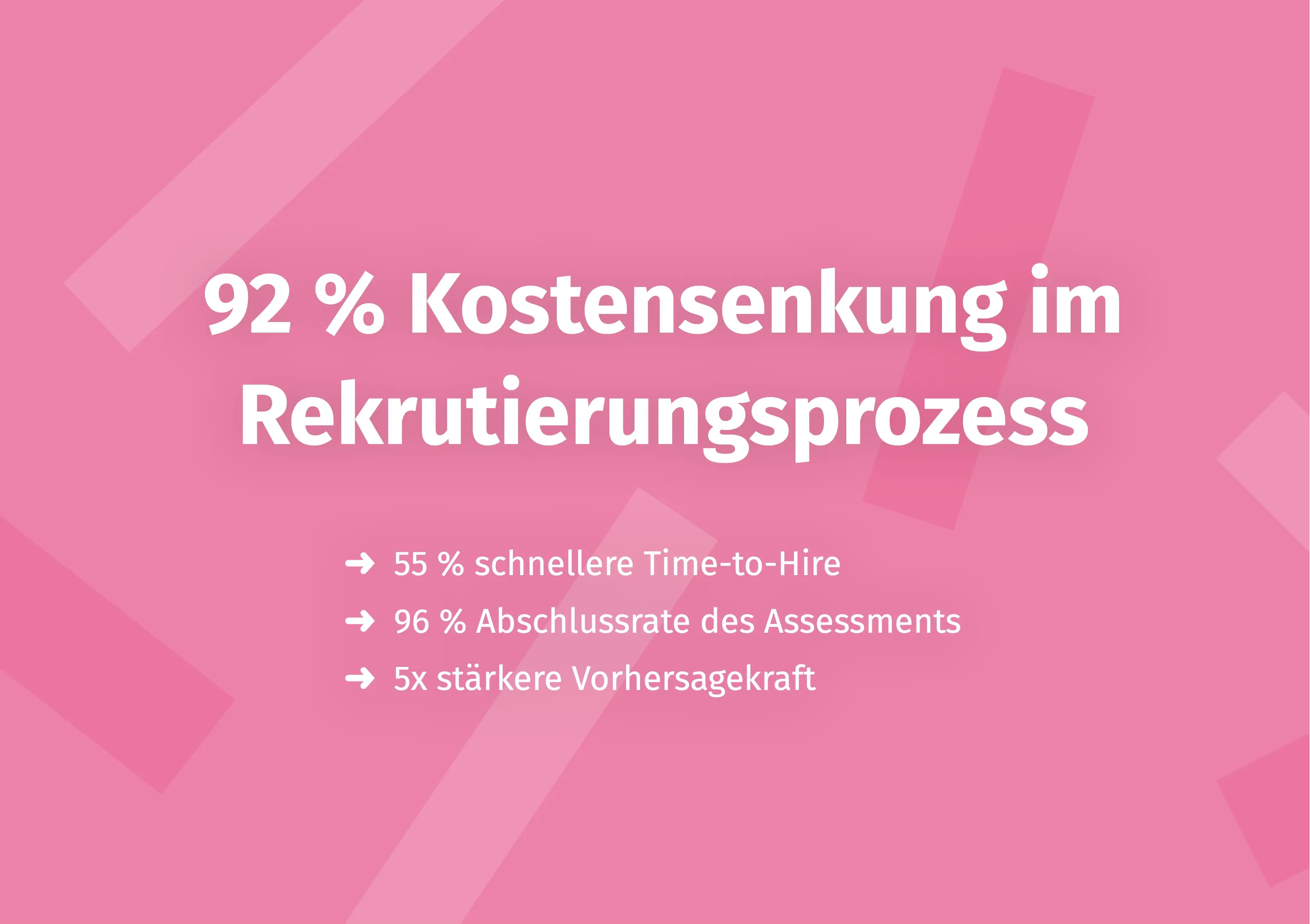
This is precisely where specialized talent assessment tools come in. The digital platform Aivy, for example, complements existing ERP and ATS environments with scientifically validated assessments that objectively measure candidates' competencies and potential — independently of CVs or subjective interviewer judgment. Such tools can be integrated into existing HR ERP systems via API. MCI Deutschland, for instance, reduced time-to-hire by 55% and cost-per-hire by 92% by integrating Aivy into its existing ATS environment.
The question, therefore, is not either/or, but rather: what does the ERP handle — and where does it make sense to complement it with best-of-breed solutions?
Discover how objective talent assessment can enhance your ERP recruiting module – explore Aivy now
Frequently Asked Questions About HR ERP
What is an HR ERP?
An HR ERP (Human Resources Enterprise Resource Planning) is an integrated software system that consolidates HR processes such as personnel administration, payroll, time tracking, and recruiting in a central platform, directly connecting them with other business areas such as finance. Well-known providers include SAP HCM, Oracle HCM Cloud, Workday, and Microsoft Dynamics 365 HR.
What is the difference between HR ERP and HRIS?
An HR ERP is part of a company-wide ERP system and connects HR directly with finance, controlling, and other business areas. An HRIS (Human Resource Information System), by contrast, is a standalone HR tool focused on data management and reporting, without deep integration into other enterprise systems.
What features does an HR ERP system offer?
Typical features include: personnel master data management, payroll, time tracking and absence management, recruiting and applicant management, onboarding and offboarding, employee development and training management, performance management, and HR reporting and analytics.
How much does an HR ERP system cost?
Cloud-based solutions for SMBs often start at around €5–20 per user per month for basic features. Enterprise systems such as SAP SuccessFactors or Workday require significantly higher investment — license and implementation costs can quickly reach six figures. Beyond licensing, you should always calculate the Total Cost of Ownership (TCO): training, data migration, maintenance, and internal IT resources are all relevant cost factors.
When is an HR ERP worthwhile for smaller companies?
For companies with fewer than approximately 150–200 employees, a full HR ERP is generally not cost-effective. Implementation effort and license costs tend to exceed the benefits. Specialized HR software (HRIS) typically offers a better cost-to-value ratio in these cases. From around 200 employees onward — or when deep ERP integration is needed — the ROI potential increases considerably.
How long does an HR ERP implementation take?
This depends heavily on system size, data migration complexity, and customization requirements. Simpler cloud systems for mid-sized companies can be up and running in 3–6 months. Complex enterprise implementations (e.g., SAP) frequently take 12–36 months. Change management and employee training are often the most underestimated factors.
Can an HR ERP fully cover recruiting?
For the operational management of applications — job postings, incoming applications, communication — yes. For in-depth talent assessment, potential analysis, or the objective evaluation of soft skills, however, the recruiting modules of most ERP systems are not designed for this. This is where specialized tools that integrate via API interfaces offer real value.
Which HR ERP systems integrate well with external recruiting tools?
SAP SuccessFactors, Workday, and Oracle HCM offer open API architectures through which specialized assessment tools, ATS systems, and other HR tech solutions can be connected. When selecting a system, it is important to check the available integrations and partner ecosystems in advance.
Conclusion
An HR ERP is the operational backbone for HR processes in medium-sized and large organizations. It consolidates personnel administration, payroll, time tracking, and recruiting in a single system — and by connecting with finance and controlling, creates a unified data foundation for the entire company. For SMBs with fewer than around 200 employees, specialized HR tools are often the more efficient choice.
The decision to implement an HR ERP is strategic and long-term: implementation effort, Total Cost of Ownership, and integration capability with existing tools should be carefully evaluated. In recruiting especially, it pays to combine the ERP with specialized talent assessment tools — not just to manage applications, but to identify the right people with precision.
Learn more about potential analysis and talent assessment as a complement to your HR ERP in the Aivy Lexicon.
Sources
- Gartner (2024): Magic Quadrant for Cloud HCM Suites for 1,000+ Employee Enterprises. Gartner Inc. https://www.gartner.com/en/human-resources/insights/hcm-cloud
- DGFP – German Association for People Management (2023): Study: Digitalization in HR. https://www.dgfp.de/
- Bitkom e.V. (2023): Digitalization in HR Management. https://www.bitkom.org/
- Personio (2024): HR Glossary: HR Software. https://www.personio.de/hr-lexikon/hr-software/
- Haufe Online Editorial (2023): ERP Systems in HR – A Practical Overview. https://www.haufe.de/

Make a better pre-selection — even before the first interview
In just a few minutes, Aivy shows you which candidates really fit the role. Beyond resumes based on strengths.