
An HR department handles all tasks related to the employee lifecycle – from recruiting and onboarding to compensation and people development. The right structure depends on company size and strategy: small businesses rely on HR generalists, while larger organizations turn to specialized teams and models such as the HR Business Partner model. A clear structure is the foundation for efficient, fair, and professional people management.
What Is an HR Department?
The HR department – also referred to as Human Resources, People & Culture, or Personnel Management – is the organizational unit within a company responsible for all employee-related tasks. It covers both operational activities (e.g., contract administration, payroll) and strategic responsibilities (e.g., workforce planning, employer branding).
Historically, HR was seen primarily as an administrative function. Today, a modern HR department positions itself as a strategic partner to senior leadership: shaping organizational culture, securing talent, and driving people development. The structure of the department reflects this understanding – and is a key factor in how professionally and effectively people management operates in practice.
Responsibilities of an HR Department
Operational Responsibilities
Operational tasks form the day-to-day backbone of any HR department. These include contract management and the drafting of employment agreements, payroll processing, absence and leave management, and the maintenance of employee records and HR systems. Ensuring legal compliance (e.g., working time regulations, data protection) and managing onboarding and offboarding processes are also part of this scope.
Strategic Responsibilities
At the strategic level, HR actively contributes to business development. Core areas include recruiting and talent acquisition, workforce planning and onboarding, employer branding, and shaping company culture. Performance management, compensation strategy, and the implementation of HR technologies also fall into this domain. Strategic HR does not see itself as a service provider, but as an active driver of organizational development.
Typical Roles in an HR Department
Head of HR / Chief People Officer (CPO)
The Head of HR – often titled Chief People Officer (CPO) or Chief Human Resources Officer (CHRO) in larger organizations – holds overall responsibility for all HR activities. This role reports directly to senior management and represents HR interests at the leadership level. Responsibilities include strategic workforce planning, budget ownership, and leading the entire HR team.
HR Business Partner
The HR Business Partner serves as the strategic interface between the HR department and individual business units. They advise line managers on HR topics, support organizational change, and translate business objectives into people initiatives – without getting tied up in operational routine tasks. The role was significantly shaped by Dave Ulrich's model (more on this in the next section).
Recruiter / Talent Acquisition
Recruiters own the entire recruiting process: from requirements analysis and job postings through active sourcing to guiding the selection process. In larger organizations, this function is consolidated under Talent Acquisition and also encompasses strategic responsibilities such as building and managing a talent pipeline.
HR Generalist vs. HR Specialist
HR generalists cover the full HR spectrum – from hiring to offboarding. This role is typical in small and medium-sized businesses where one person handles all HR tasks. HR specialists, on the other hand, focus on a specific area such as Learning & Development, Compensation & Benefits, or Recruiting. Larger organizations typically combine both role types.
Structural Models at a Glance
Classic Centralized HR Department
The traditional model: all HR tasks are consolidated within a single central department serving the entire organization. The advantage is clear ownership and straightforward management. The drawback: the larger the company, the harder it becomes to stay closely aligned with the needs of individual business units.
HR Business Partner Model (Ulrich Model)
The most widely adopted structural model today was described in 1997 by US management researcher Dave Ulrich in his work Human Resource Champions. It organizes HR into three pillars:
HR Business Partners provide strategic support to individual business units and act as direct points of contact for managers. Centers of Excellence (CoE) are specialized teams that concentrate expertise on a specific topic (e.g., recruiting, learning & development, compensation) and provide internal advisory services. The Shared Service Center (SSC) handles standardizable, transactional HR tasks such as payroll or contract administration – efficiently and at scale.
The Ulrich model enables organizations to separate strategic HR work from operational routine tasks, significantly increasing the value delivered by the HR function.
Shared Services and Centers of Excellence
Even without implementing the full Ulrich model, many organizations combine SSC and CoE structures. Standard processes are centralized and automated, while subject matter expertise is pooled in specialized teams. This model is particularly well suited to mid-sized companies (from around 500 employees) looking to professionalize their HR structure.
Agile HR Structure
In increasingly agile organizations, traditional line structures are dissolving. HR professionals work in cross-functional teams, respond flexibly to shifting demands, and apply iterative methods (e.g., OKRs, sprints) to their own HR work. According to McKinsey & Company (2022), high-growth companies in particular are adopting agile HR structures to attract and retain talent more quickly.
When Does a Company Need an HR Department?
A dedicated HR function is not required from a specific headcount on a particular date – it grows alongside the business. As a general guide:
Up to 20 employees: HR tasks are often handled by management or an executive assistant. External support (e.g., an accountant for payroll) is usually sufficient.
20–50 employees: A first dedicated HR person makes sense, typically as an HR generalist. The focus is on recruiting and administrative foundations.
50–150 employees: A structured HR team is recommended. Alongside the HR generalist, first specialists join – most often initially in recruiting.
150–200+ employees: A dedicated HR department with clear role definitions becomes necessary. The HR Business Partner model becomes increasingly relevant.
500+ employees: A differentiated structure with CoE, SSC, and HR Business Partners. A CHRO as a dedicated leadership position at board level.
As a rule of thumb: 1 HR professional per 50–100 employees. Companies with high recruiting volumes (e.g., startups, retail) typically need more HR capacity; stable large enterprises may operate at a ratio of 1:150 or higher.
Building an HR Department – Practical Steps
Anyone building or reorganizing an HR department should take the following steps: Start with a thorough audit of current HR tasks and processes, and distinguish between operational routine work and strategic HR work. From this, you can derive which roles need to be filled first. Next, select an appropriate structural model and introduce it incrementally – not every company needs the full Ulrich model right away.
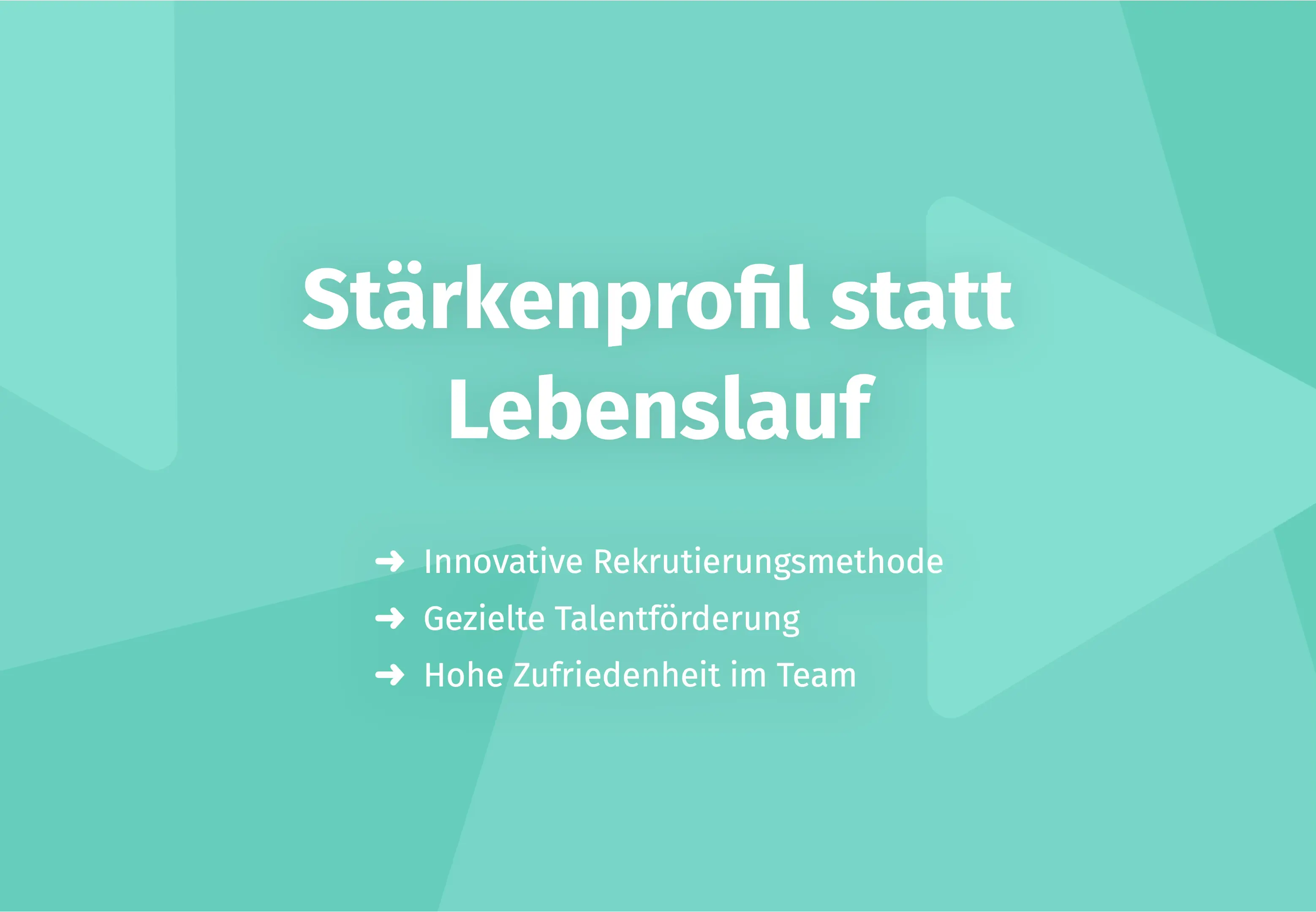
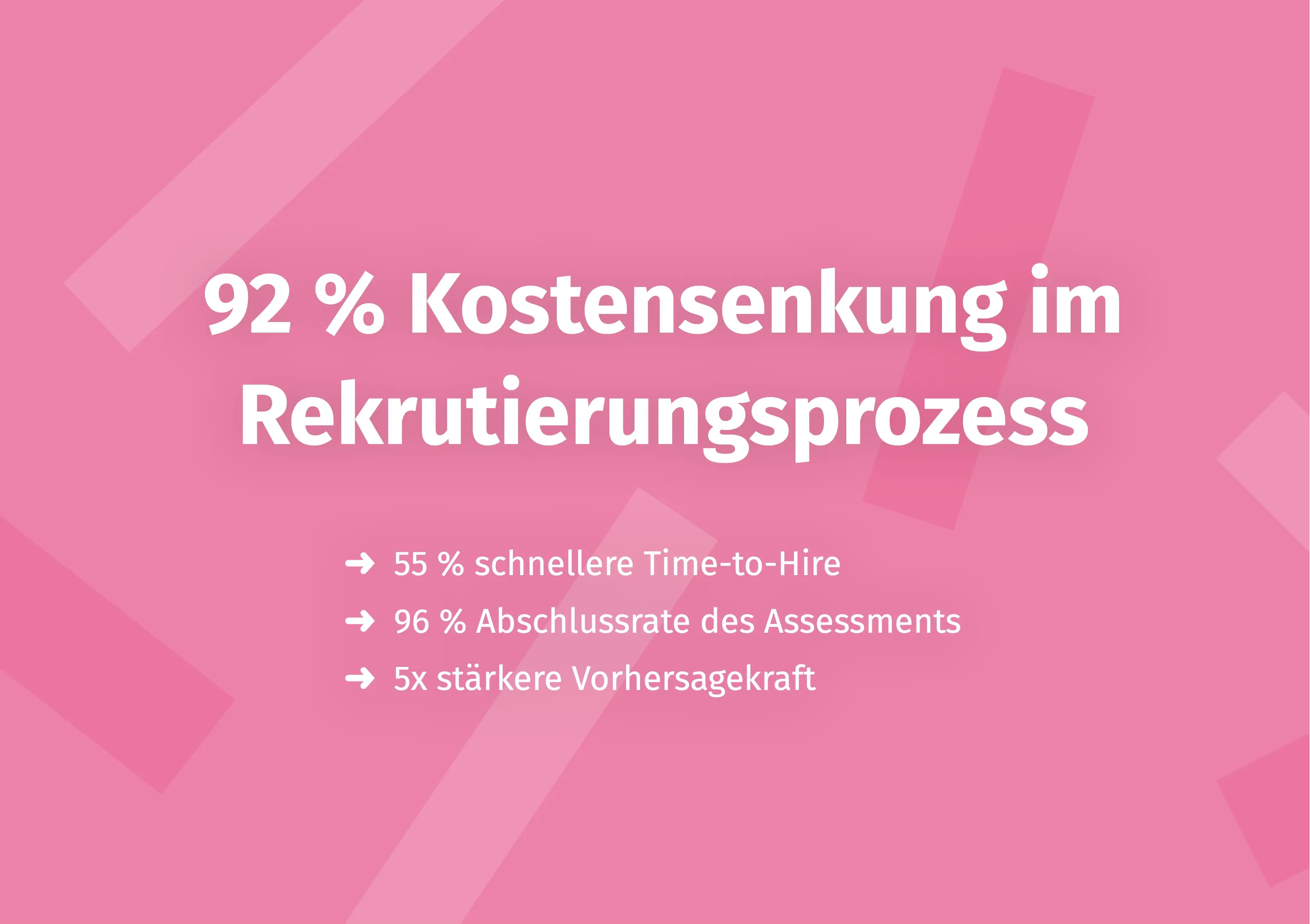
One frequently underestimated area is developing a professional recruiting process. Modern recruiting goes well beyond job postings: it encompasses structured selection procedures based on objective, validated criteria. Experience shows that companies adopting scientifically grounded talent assessment methods can make their recruiting process significantly more efficient. For example, MCI Deutschland reduced its time-to-hire by 55% and cut cost-per-hire by 92% by digitizing a key step in their candidate selection process. The digital platform Aivy helps HR departments assess candidates objectively and on the basis of scientific evidence – independent of CV or background.
In parallel, HR technologies (e.g., applicant tracking systems, HR software) should be selected and implemented early to reduce manual workload and make data actionable. Employer branding is also an important building block from the outset: a strong employer brand makes recruiting easier and attracts qualified candidates.
Frequently Asked Questions about HR Department Structure
What does an HR department do?
An HR department is responsible for the entire employee lifecycle – from hiring to offboarding. Operationally, it handles contracts, payroll, and absence management. Strategically, it shapes recruiting, people development, employer branding, and company culture.
When does a company need its own HR department?
As a rule of thumb: from around 20–50 employees, a first dedicated HR person makes sense. From 150 employees, a structured HR department with clear role definitions is recommended. The exact timing also depends on the pace of growth and recruiting volume.
What is the HR Business Partner model?
The HR Business Partner model was developed by Dave Ulrich (1997) and organizes HR into three pillars: HR Business Partners (strategic advisory to business units), Centers of Excellence (subject matter expertise on specific HR topics), and Shared Service Centers (standardized operational HR processes). It is today one of the most widely used structural models for HR departments.
What is the difference between an HR generalist and an HR specialist?
HR generalists cover all HR tasks – from recruiting through people development to payroll. This role is typical in smaller companies. HR specialists focus on a specific area, such as recruiting, learning & development, or compensation & benefits. Larger organizations typically combine both role types.
What roles typically exist in an HR department?
Typical roles include: Head of HR / Chief People Officer (CPO), HR Business Partner, Recruiter / Talent Acquisition Manager, HR Generalist / HR Coordinator, Learning & Development Manager, and Compensation & Benefits Specialist. Depending on company size, these roles may be combined in one person or distributed across multiple team members.
What is a Shared Service Center in HR?
A Shared Service Center (SSC) is a centralized unit that handles standardizable and recurring HR tasks (e.g., payroll, contract management, data maintenance) efficiently for the entire organization. The SSC frees up HR Business Partners and specialist teams to focus on strategic work.
How many HR employees does a company need?
As a benchmark: 1 HR professional per 50–100 employees. Companies with high recruiting volumes or fast growth (e.g., startups) typically require more HR capacity. Stable large enterprises with largely automated processes may operate at a ratio of 1:150 or higher.
How do I turn HR into a strategic function?
The most important step is separating operational routine work from strategic HR work. Operational processes should be standardized as much as possible – and automated where feasible. The capacity freed up allows HR to advise managers, develop talent, and actively shape company culture. The HR Business Partner model provides a proven framework for this transformation.
Conclusion
The structure of an HR department is not an end in itself – it determines how effectively HR can fulfill its strategic role within the organization. For small companies, an experienced HR generalist is sufficient to start. As the business grows, it pays to gradually introduce specialized roles and proven structural models such as the Ulrich model.
What matters most is that operational routine tasks do not consume all available capacity – leaving room for what truly counts: attracting, developing, and retaining talent. Organizations that build structured, objective selection processes into their HR function lay the groundwork for a high-performing organization over the long term.
Looking to professionalize the recruiting function of your HR department with scientifically grounded talent assessment? Find out how the digital platform Aivy supports HR teams in making objective, evidence-based hiring decisions: Learn more
Sources
- Ulrich, Dave: Human Resource Champions. The Next Agenda for Adding Value and Delivering Results. Harvard Business School Press, 1997.
- DGFP – Deutsche Gesellschaft für Personalführung: HR Trends and Structures in German Companies. Practice Papers, 2023. https://www.dgfp.de/hr-wiki/praxispapiere/
- Federal Employment Agency (Bundesagentur für Arbeit): HR Role Profiles, 2024. https://www.arbeitsagentur.de/bildung/berufsberatung
- McKinsey & Company: The future of HR, 2022. https://www.mckinsey.com/capabilities/people-and-organizational-performance/our-insights
- Ritz, Adrian / Thom, Norbert: Talent Management. Gabler Verlag, 2011.

Make a better pre-selection — even before the first interview
In just a few minutes, Aivy shows you which candidates really fit the role. Beyond resumes based on strengths.