
Strategic workforce planning ensures that an organisation has the right employees with the right competencies at the right time – today and in the future. It connects business strategy with concrete staffing needs and forms the foundation for all recruiting, development and retention measures. Unlike operational planning, it thinks in time horizons of 3 to 5 years.
What Is Strategic Workforce Planning?
Strategic workforce planning is the systematic process by which organisations identify, analyse and secure their future staffing needs. It answers one fundamental question: which people with which competencies will we need in the future – and how do we get them?
At its core, it plans across two dimensions: the quantitative side (how many employees are needed?) and the qualitative side (what skills, experience and competencies must they bring?). Organisations that only react to open vacancies are not engaging in strategic planning – at best, they are doing operational planning.
Operational vs. Strategic Workforce Planning: The Difference
| Operational Workforce Planning | Strategic Workforce Planning | |
|---|---|---|
| Time horizon | Up to 1 year | 3 to 5 years |
| Focus | Filling specific vacancies | Anticipating competency and capacity needs |
| Starting point | Current job posting | Business strategy |
| Approach | Reactive (responding to departures) | Proactive (anticipating future needs) |
Strategic workforce planning does not replace operational planning – it guides it. It sets the direction for recruiting, development and retention.
Why Strategic Workforce Planning Is Indispensable Today
For a long time, workforce planning was seen as a task that took care of itself: positions became vacant, job postings went out, candidates were hired. That model no longer works in many industries.
Demographic Change and the Skills Shortage
According to the Federal Employment Agency's Skills Monitor (Fachkräftemonitor), Germany is already facing significant shortages of qualified workers across numerous professions – and the gap is growing. Organisations that fail to plan their staffing needs early are increasingly losing out in the competition for talent.
Technological Change and New Competency Requirements
According to the McKinsey Global Institute (2021), automation and digitalisation will transform a substantial share of existing job activities by 2030. Many competencies in high demand today will become obsolete within a few years – while new requirements are emerging for which there are currently very few candidates on the market. Organisations that fail to anticipate this shift risk making wrong hires or leaving positions unfilled.
Deloitte confirms in its annual Global Human Capital Trends report that workforce planning ranks among the top strategic priorities of HR leaders worldwide – and simultaneously among the least mature processes.
The 5 Phases of Strategic Workforce Planning
Phase 1: Current State Analysis
The first step is an honest assessment of the status quo: what does the current workforce look like? Which competencies are present, which are missing? Relevant data includes age structure, turnover rates, competency profiles by functional area and foreseeable departures due to retirement or known flight risks.
Phase 2: Target State Definition (from Business Strategy)
The second step defines what the workforce should look like in 3 to 5 years – derived directly from the business strategy. Is the organisation planning international expansion? Then it will need more linguistic and intercultural competencies. Is a technological transformation on the horizon? Then digital and data-driven skills must be built up.
Phase 3: Gap Analysis
The skills gap analysis compares the current and target states: where are there surpluses (too many employees with certain profiles), and where are there gaps (missing competencies or capacity)? The result is a prioritised list of areas requiring action.
Phase 4: Measures – Make, Buy, Borrow
For each identified gap, there are essentially three options:
- Make: Develop existing employees internally through training, reskilling or mentoring
- Buy: Recruit externally for candidates who already bring the required competencies
- Borrow: Supplement capacity temporarily through freelancers, contract workers or cooperation partners
In practice, a combination of all three strategies is advisable. The decision depends on urgency, labour market availability and cost structure.
Phase 5: Implementation and Controlling
Strategic workforce planning is not a one-off project – it is a continuous process. Defined measures must be implemented, progress must be measured, and plans must be regularly reviewed and adjusted. Key metrics include the fill rate for critical roles, development progress in targeted competency areas and the quality of new hires.
Methods and Instruments
Quantitative Methods
Quantitative approaches use historical data and key figures to estimate future staffing needs:
- Trend analysis: Tracking headcounts, turnover rates and productivity metrics over time
- Ratio analysis: Ratios between employees and business metrics (e.g. revenue per headcount)
- Regression: Statistical models linking workforce size to business performance
Quantitative methods work well in stable, predictable environments. In dynamic markets, they quickly reach their limits.
Qualitative Methods
Qualitative approaches supplement the numbers with forward-looking judgement:
- Scenario planning: Multiple possible future scenarios are explored – from conservative growth to disruptive change. Staffing needs are derived for each scenario.
- Delphi method: Structured consultation of internal experts (e.g. executives, HR business partners) on expected developments
- Leadership workshops: Direct involvement of specialist departments to define future competency requirements
Skills Gap Analysis
The skills gap analysis is the central instrument of strategic workforce planning. It makes visible which competencies the organisation already has – and which it will need in the future. This goes beyond formal qualifications; it increasingly covers cross-functional competencies such as systems thinking, adaptability and collaboration.
A growing trend is skills-based planning: organisations move away from job descriptions and instead think in terms of capability profiles. This makes planning more flexible and individuals more visible – regardless of job titles or CVs.
From Planning to Selection: Competency-Based Recruiting
Strategic workforce planning does not end with the plan – that is where it truly begins. Knowing which competencies are needed in three years means translating those requirements into concrete hiring decisions. This is precisely where a common weakness lies: even well-designed competency profiles fail when selection processes remain subjective.
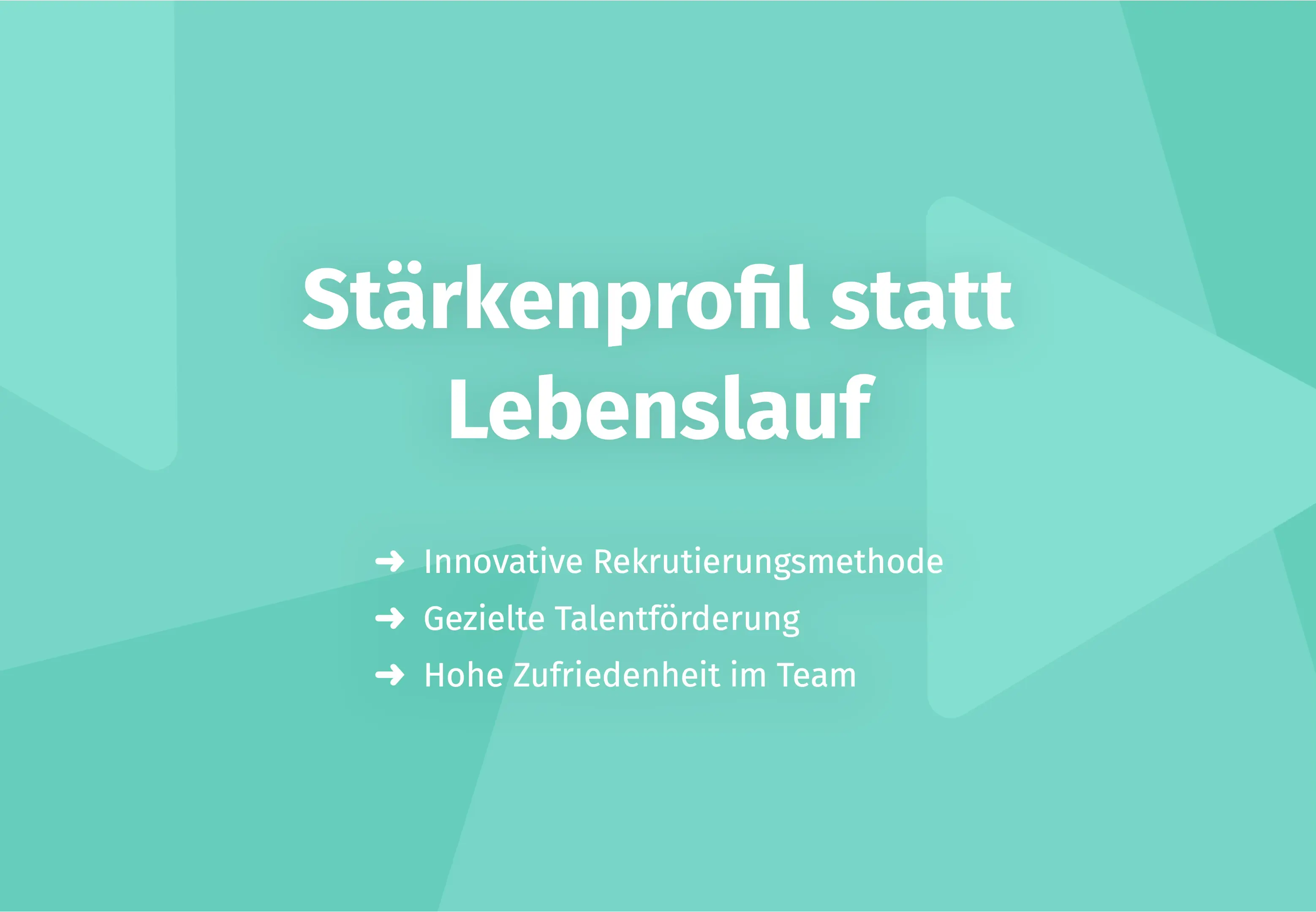
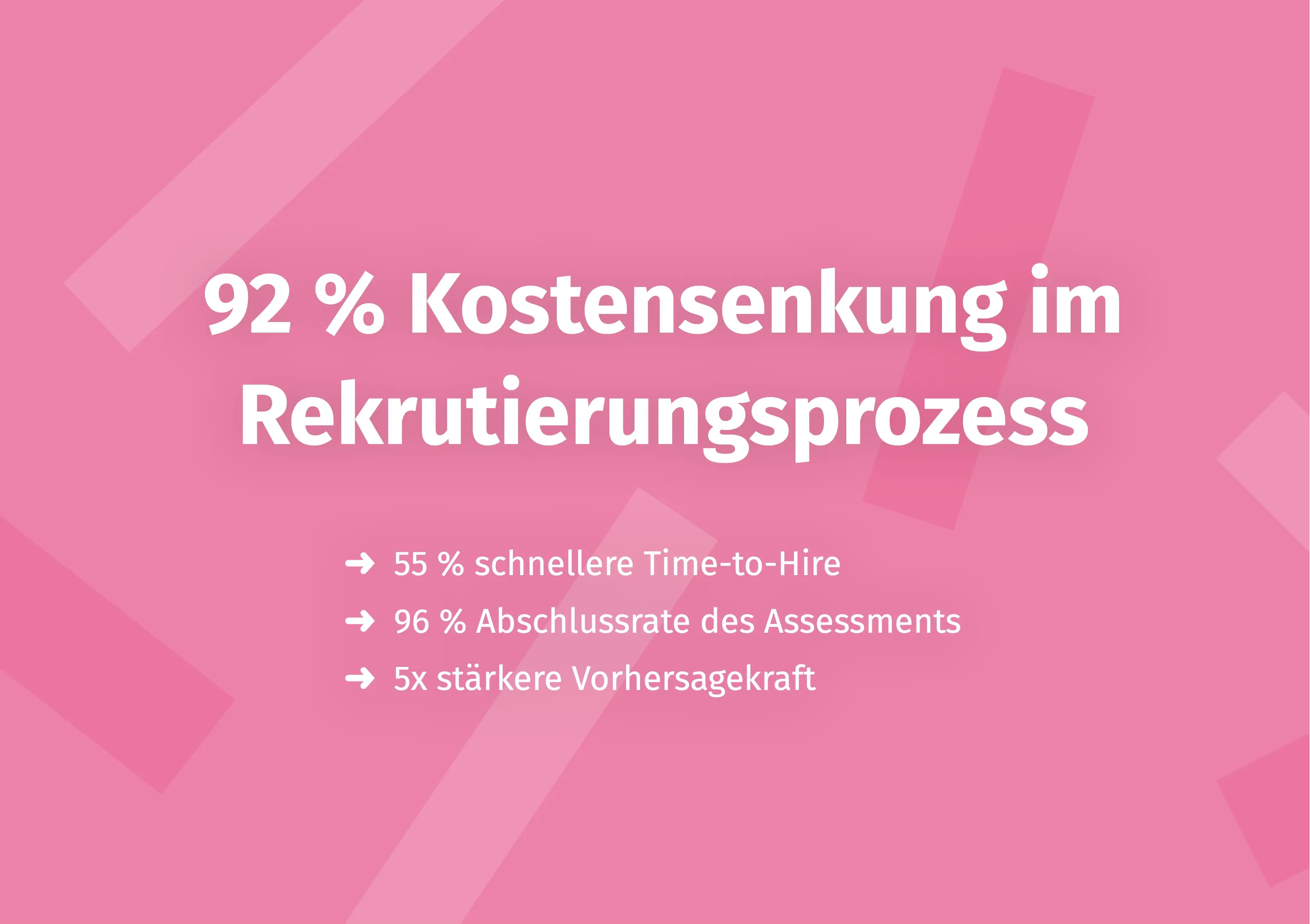
When recruiters make decisions based on gut feeling, educational credentials or the visual appeal of a CV, they systematically miss the competencies that the strategy actually demands. The digital platform Aivy helps organisations make competencies measurable – through scientifically validated assessments that reveal strengths and potential independently of CVs. MCI Deutschland, through the use of objective diagnostics, was able to reduce time-to-hire by 55% and cut cost-per-hire by 92% – while simultaneously increasing the accuracy of its hiring decisions.
Talent relationship management is another area where strategic workforce planning plays an important role: organisations that know their future competency needs can proactively build talent pools and engage potential candidates over the long term.
Frequently Asked Questions About Strategic Workforce Planning
What is strategic workforce planning?
Strategic workforce planning is a long-term process (time horizon: 3 to 5 years) through which organisations determine their future staffing needs – both in quantity (how many employees?) and quality (which competencies?). It is derived directly from business strategy and forms the foundation for recruiting, development and retention.
What is the difference between operational and strategic workforce planning?
Operational workforce planning reacts in the short term to specific vacancies – it fills open positions. Strategic workforce planning anticipates, over the long term, which competencies the organisation will need in the future and derives measures accordingly. The strategic level sets the direction for the operational level.
What methods are used in strategic workforce planning?
There are quantitative methods (trend analyses, ratio analysis, regression models) and qualitative methods (scenario planning, the Delphi method, leadership workshops). In practice, a combination is recommended: numbers provide the foundation, qualitative judgements provide the context. The skills gap analysis bridges both perspectives.
What does "Make, Buy, Borrow" mean in workforce planning?
These three strategies describe how organisations can close workforce gaps: Make means developing existing employees internally. Buy means hiring new talent externally. Borrow means temporarily supplementing capacity through freelancers or contract workers. In practice, a combination of all three is most effective.
What is a skills gap analysis?
A skills gap analysis compares the competencies currently present in the workforce with those that will be needed in the future – and identifies where action is required. It is the central tool of strategic workforce planning and forms the basis for all Make-Buy-Borrow decisions.
What data do I need for strategic workforce planning?
Key baseline data includes: age structure and turnover rate of the workforce, current competency profiles by functional area, the long-term business strategy (growth plans, transformation initiatives) and external market data (labour market conditions, industry trends). The better the data foundation, the more reliable the planning.
How does strategic workforce planning relate to recruiting?
Strategic workforce planning defines future competency needs – recruiting must then reflect those needs in selection decisions. Without a strategic foundation, many organisations recruit on instinct or for outdated requirement profiles. Organisations that have strategically defined competencies can focus specifically on them in the job interview – and use objective diagnostics to ensure that selection decisions align with the plan.
What time horizon should strategic workforce planning cover?
A time horizon of 3 to 5 years is the standard. For industries experiencing particularly rapid change (e.g. tech, pharma), the relevant horizon may be shorter. More important than the exact number of years is that planning is derived from the business strategy – and regularly reviewed and adjusted.
Conclusion
Strategic workforce planning is not an HR luxury – it is a business necessity. Organisations that only react to vacancies in times of skills shortages, demographic change and technological transformation will fall behind. Those that systematically plan which competencies they will need in three to five years can develop, recruit and retain with purpose.
The key is to derive workforce planning from strategy – and then translate it consistently into operational measures. Make, Buy or Borrow: every decision is only as good as the foundation it is built on.
Want to make sure that strategically planned staffing needs are actually filled with the right candidates in practice? The digital platform Aivy supports HR teams with scientifically grounded assessments – for selection decisions based on competencies rather than CVs. Learn more about objective recruiting with Aivy.
Sources
- Federal Employment Agency: Skills Monitor (Fachkräftemonitor). Bundesagentur für Arbeit, 2024. https://fachkraeftemonitor.de
- Deloitte Insights: Global Human Capital Trends. Deloitte, 2024. https://www2.deloitte.com/de/de/pages/human-capital/articles/global-human-capital-trends.html
- McKinsey Global Institute: The Future of Work After COVID-19. McKinsey & Company, 2021. https://www.mckinsey.com/featured-insights/future-of-work
- DGFP e.V.: HR-Report – Focus: Skills Shortage. Deutsche Gesellschaft für Personalführung, 2023. https://www.dgfp.de/wissen/studien/
- Scholz, Christian: Personalmanagement – Grundlagen, Handlungsfelder, Praxis. Vahlen Verlag, 2014.
- Bitkom e.V.: Digital HR Survey. Bitkom, 2023. https://www.bitkom.org/studien

Make a better pre-selection — even before the first interview
In just a few minutes, Aivy shows you which candidates really fit the role. Beyond resumes based on strengths.