
A shift schedule template helps companies plan working hours in a structured and legally compliant way. A valid shift schedule must comply with the requirements of the German Working Hours Act (Arbeitszeitgesetz, ArbZG) – in particular rest periods, maximum working hours and record-keeping obligations. In companies with a works council (Betriebsrat), there is also a genuine right of co-determination under § 87 para. 1 no. 2 of the Works Constitution Act (BetrVG).
What Is a Shift Schedule?
A shift schedule is a document that organises the allocation of employees to defined work shifts. It specifies who works when – including the start time, end time and breaks for each shift. As such, it is a central tool of operational workforce planning, especially in companies that operate outside standard business hours.
Shift Schedule vs. Duty Roster: What Is the Difference?
The two terms are often used interchangeably and are legally identical. In practice, an informal sector-specific distinction has emerged: the term duty roster (Dienstplan) is typical in healthcare, hospitality and the public sector, while shift schedule (Schichtplan) is used primarily in manufacturing, industry and logistics. There is no legal or substantive difference – both are subject to the same statutory requirements.
Who Needs a Shift Schedule?
Shift schedules are required wherever operating hours extend beyond standard working hours or rotating teams are deployed: in manufacturing and industry, in healthcare and nursing, in hospitality and retail, and in logistics and security. According to the German Federal Statistical Office, approximately one in five employees in Germany works in shift work.
Legal Framework for Shift Scheduling in Germany
Working Hours Act (ArbZG): Maximum Working Hours and Rest Periods
The Working Hours Act (ArbZG) is the central legal basis for every shift schedule. The key provisions are:
Maximum working hours (§ 3 ArbZG): The daily working time on working days must not generally exceed eight hours. An extension to up to ten hours per day is permitted, provided that an average of eight hours per day is achieved within a compensatory period of six calendar months or 24 weeks.
Break requirements (§ 4 ArbZG): For working times of more than six up to nine hours, a minimum break of 30 minutes is required; for more than nine hours, a minimum of 45 minutes. Breaks may be split into periods of at least 15 minutes each.
Rest period (§ 5 ArbZG): After the end of the daily working time, employees must have at least eleven uninterrupted hours of rest. Compliance with this minimum rest period is the most common error in shift schedule creation – particularly when transitioning from a late shift to an early shift.
Record-keeping obligation (§ 12 ArbZG): Employers are required to record and retain documentation of any working time exceeding eight hours per day (for a minimum of two years).
Night Work: Special Regulations (§ 6 ArbZG)
Night time is defined as the period between 23:00 and 06:00. Employees who regularly work during this period are classified as night workers. Special statutory protections apply: night workers are entitled to appropriate compensation – either in the form of paid time off or a pay supplement. They are also entitled to occupational health examinations upon request.
Works Council and Co-Determination Rights (§ 87 BetrVG)
If your company has a works council, it holds a genuine right of co-determination over the design of shift schedules. Under § 87 para. 1 no. 2 BetrVG, the works council must consent to the determination of the start and end of daily working hours, including breaks, and the distribution of working hours across the days of the week. A shift schedule introduced without this consent may be contested. It is therefore advisable to check early on whether a works agreement (Betriebsvereinbarung) on shift scheduling already exists or needs to be concluded.
What Must a Shift Schedule Contain? Checklist
A legally compliant shift schedule should include the following information:
Required contents:
- Names and, where applicable, employee ID numbers of staff
- Validity period of the schedule (e.g. calendar week or month)
- Date and day of the week for each working day
- Start and end time of each shift
- Planned break times and duration
- Identification of night shifts (shifts with any portion between 23:00 and 06:00)
- Shift type designation (early / late / night / on-call)
Recommended additional information:
- Name of the shift supervisor or contact person
- Reference to the applicable works agreement
- Version number and date of last amendment
- Signature or approval notation
Shift Models at a Glance
Two-Shift Model
The two-shift model divides the working day into two shifts – typically an early shift (e.g. 06:00–14:00) and a late shift (e.g. 14:00–22:00). It is the most commonly used model in retail and hospitality. Advantages: straightforward to plan, no night work supplement required.
Three-Shift Model
In the three-shift model, the day is divided into early, late and night shifts to enable 24-hour operations. This model is common in manufacturing and healthcare. Particular attention is required when transitioning from a night shift to an early shift: compliance with the minimum eleven-hour rest period is critical here.
Rotating Shifts and Continuous Operations
In rotating shift arrangements, employees regularly cycle between different shifts (e.g. weekly rotation between early and late). This requires careful planning to ensure both fairness and compliance with rest period requirements.
Continuous operations cover the business around the clock, seven days a week. This requires at least four rotating teams and is particularly demanding in terms of scheduling. Collective agreements (Tarifverträge) frequently regulate supplement entitlements and compensatory mechanisms for this model.
Creating a Shift Schedule: Step by Step
Step 1: Assess Your Needs
Before filling in the template, clarify the following questions: How many hours per day does the operation need to be covered? How many employees are available for shifts? Are there any constraints (part-time contracts, required qualifications, parental leave)?
Step 2: Choose the Right Template Format
For straightforward teams of up to around 20 people, an Excel template is sufficient. It allows flexible adjustments, automatic hour totals and easy copying for subsequent weeks. Word or PDF templates are suitable for very small teams with stable, recurring shifts. As team size or scheduling complexity grows (frequent shift swaps, multiple shift models running in parallel), dedicated digital scheduling tools are worth considering.
Step 3: Communicate and Document the Schedule
Notify employees in good time. While no statutory minimum notice period is prescribed, best practice is a lead time of at least two weeks. Collective agreements or works agreements may set longer periods. Document any changes to the schedule (date, reason, affected employees) and retain these records for at least two years.
Frequently Asked Questions About Shift Schedule Templates
What must a shift schedule contain?
A shift schedule must contain at minimum: employees' names, the validity period, and the date and start and end times of each shift, along with planned breaks. Night shifts (work between 23:00 and 06:00) should be labelled separately, as special statutory protections apply to them under § 6 ArbZG.
How far in advance must a shift schedule be published?
The Working Hours Act does not prescribe a statutory minimum notice period. In practice, collective agreements or works agreements may establish announcement deadlines of two to four weeks. Without a contractual provision, the recommended best practice is at least two weeks' advance notice so that employees can plan their personal commitments accordingly.
Does the works council have to approve a shift schedule?
Yes – where a works council exists. Under § 87 para. 1 no. 2 BetrVG, the works council has a genuine right of co-determination over the timing and distribution of working hours, including shift schedules. A schedule introduced without the works council's consent may be challenged.
What is the difference between a shift schedule and a duty roster?
Both terms refer to the same instrument and are subject to the same legal requirements. "Duty roster" (Dienstplan) is the conventional term in healthcare, hospitality and the public sector; "shift schedule" (Schichtplan) is primarily used in manufacturing, industry and logistics.
How many hours can an employee work in a single shift?
Under § 3 ArbZG, the maximum daily working time on working days is eight hours. This may be extended to up to ten hours per day, provided that an average of eight hours per day is achieved over a six-month period. In certain sectors (e.g. healthcare, agriculture), collective agreements may permit exceptions.
Which format is best for a shift schedule template?
For small teams (up to around 20 people), Excel is the most flexible and widely used solution. Word and PDF templates are suitable for simple, static shift patterns. Larger teams or businesses with frequent shift swaps benefit from digital scheduling tools that automatically flag conflicts and rest period violations.
Is there a legal obligation to document shift schedules in writing?
There is no explicit statutory obligation requiring shift schedules to be created in writing. However, § 12 ArbZG requires written records of working time exceeding eight hours per day, and the works council's co-determination right effectively necessitates a documented format. In practice, a written template is therefore indispensable.
Conclusion
A legally compliant shift schedule template is more than a calendar with names and times. It must accurately reflect the requirements of the Working Hours Act regarding maximum hours, breaks and rest periods, flag night work separately, and – where a works council is in place – take its co-determination rights into account. For most teams, an Excel template is a sufficient starting point; as complexity grows, switching to a dedicated digital planning tool is worthwhile.
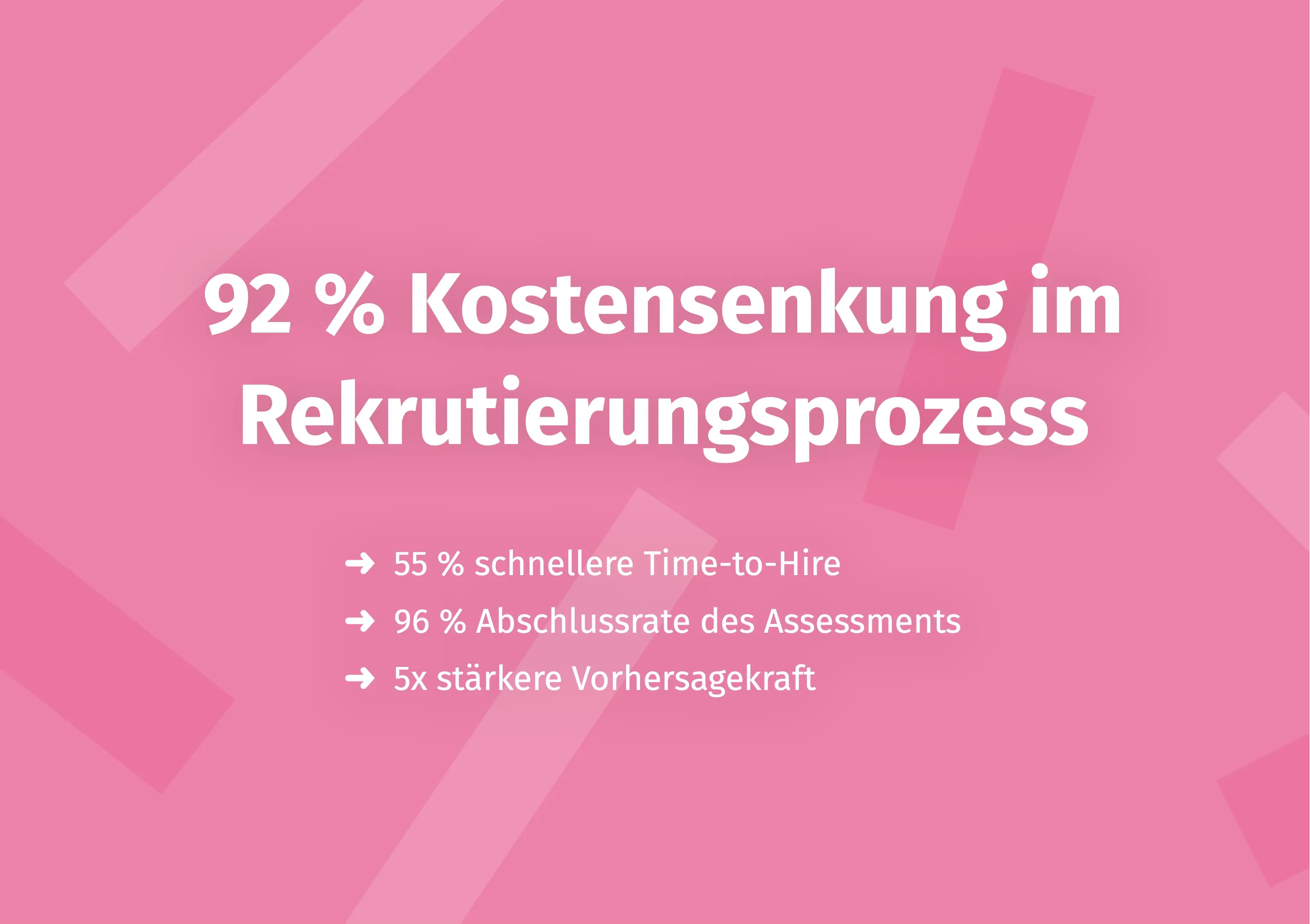
If you are also looking to make the selection of new employees for your shift operation more objective and efficient, the digital aptitude diagnostics platform Aivy offers scientifically validated assessments for personnel selection. Learn more about data-driven recruiting with Aivy
Sources
- Working Hours Act (Arbeitszeitgesetz, ArbZG) – §§ 3, 4, 5, 6, 12. Federal Ministry of Justice, 2023. https://www.gesetze-im-internet.de/arbzg/
- Works Constitution Act (Betriebsverfassungsgesetz, BetrVG) – § 87 para. 1 no. 2 (Co-determination over working hours). Federal Ministry of Justice, 2023. https://www.gesetze-im-internet.de/betrvg/__87.html

Make a better pre-selection — even before the first interview
In just a few minutes, Aivy shows you which candidates really fit the role. Beyond resumes based on strengths.