
Recruitment consultants help companies find, assess, and hire the right candidates for specialist and leadership roles. Their core responsibilities include requirements analysis, active candidate sourcing (including direct outreach), aptitude diagnostics, and support throughout the hiring process. Companies typically engage external recruitment consultants when internal resources are limited or specialised market knowledge is required.
What Is a Recruitment Consultant?
A recruitment consultant is an external service provider who supports organisations in identifying, evaluating, and hiring suitable candidates for open positions. Unlike internal recruiters, who are employed directly by a company, recruitment consultants work as independent advisors or on behalf of a recruitment agency.
The term is often used interchangeably with "headhunter" – but there is an important distinction: headhunting is a specific method within recruitment consulting, in which candidates are proactively and often confidentially approached directly. Recruitment consulting is the broader term encompassing the full spectrum from job analysis to onboarding support.
According to the German Federal Association of Management Consultants (BDU), the recruitment consulting industry in Germany is one of the fastest-growing advisory sectors – a clear indicator of how heavily organisations rely on external expertise to attract skilled talent.
Responsibilities of Recruitment Consultants: An Overview
The specific tasks vary depending on the mandate and the client company, but they typically follow a defined process.
Requirements Analysis and Job Profile Development
Every mandate begins with a thorough requirements analysis. Recruitment consultants work closely with the client organisation to clarify: What technical competencies are required? What personality traits align with the company culture? Which criteria are must-haves and which are nice-to-haves?
The outcome is a detailed requirements and competency profile that serves as the foundation for all subsequent steps. Well-defined profiles significantly reduce the risk of mis-hires.
Candidate Sourcing: Direct Outreach, Databases, and Networks
Based on the profile, active candidate sourcing begins. Recruitment consultants draw on multiple channels:
Active Sourcing: The direct approach of passive candidates – people who are not actively looking for a new role – via platforms such as LinkedIn or XING, as well as through proprietary industry networks. This method is particularly effective for specialist and leadership positions.
Database Research: Many recruitment firms maintain their own candidate databases from previous mandates, which can significantly accelerate the process.
Job Postings: Depending on the mandate, recruitment consultants may also place traditional job advertisements – typically in the client's name or anonymously for confidential searches.
Aptitude Assessment and Pre-Selection
Pre-selection is one of the most demanding aspects of the role. Recruitment consultants conduct initial phone or in-person screening interviews, review CVs, and – depending on the firm – apply structured assessment methods to evaluate candidate suitability.
High-quality recruitment firms rely on scientifically grounded aptitude diagnostics: structured interviews, personality assessments (e.g. based on the Big Five model), or cognitive ability tests. These methods measurably improve predictive validity compared to CV screening alone, as evidenced by the DGFP's practice papers on aptitude diagnostics.
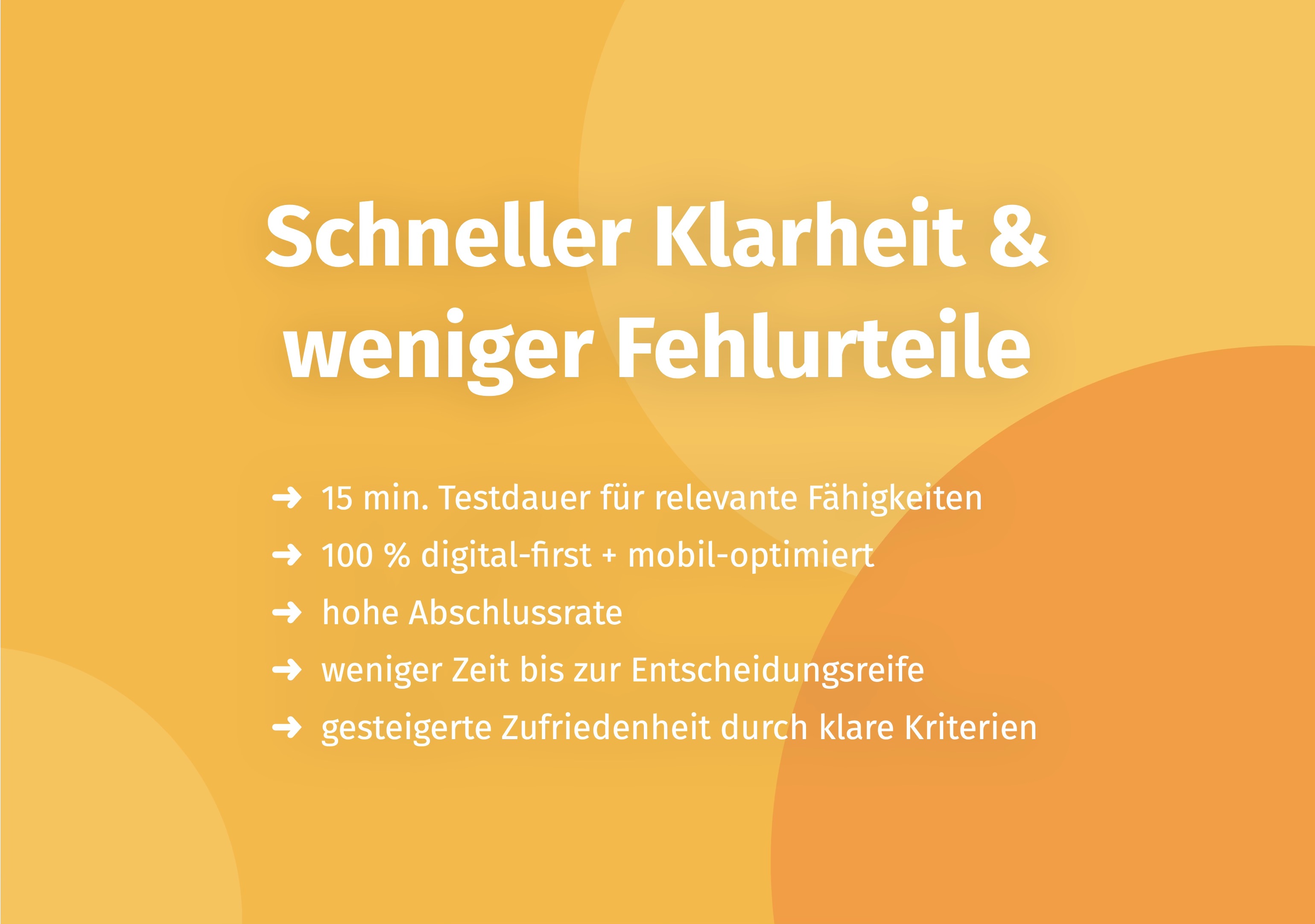
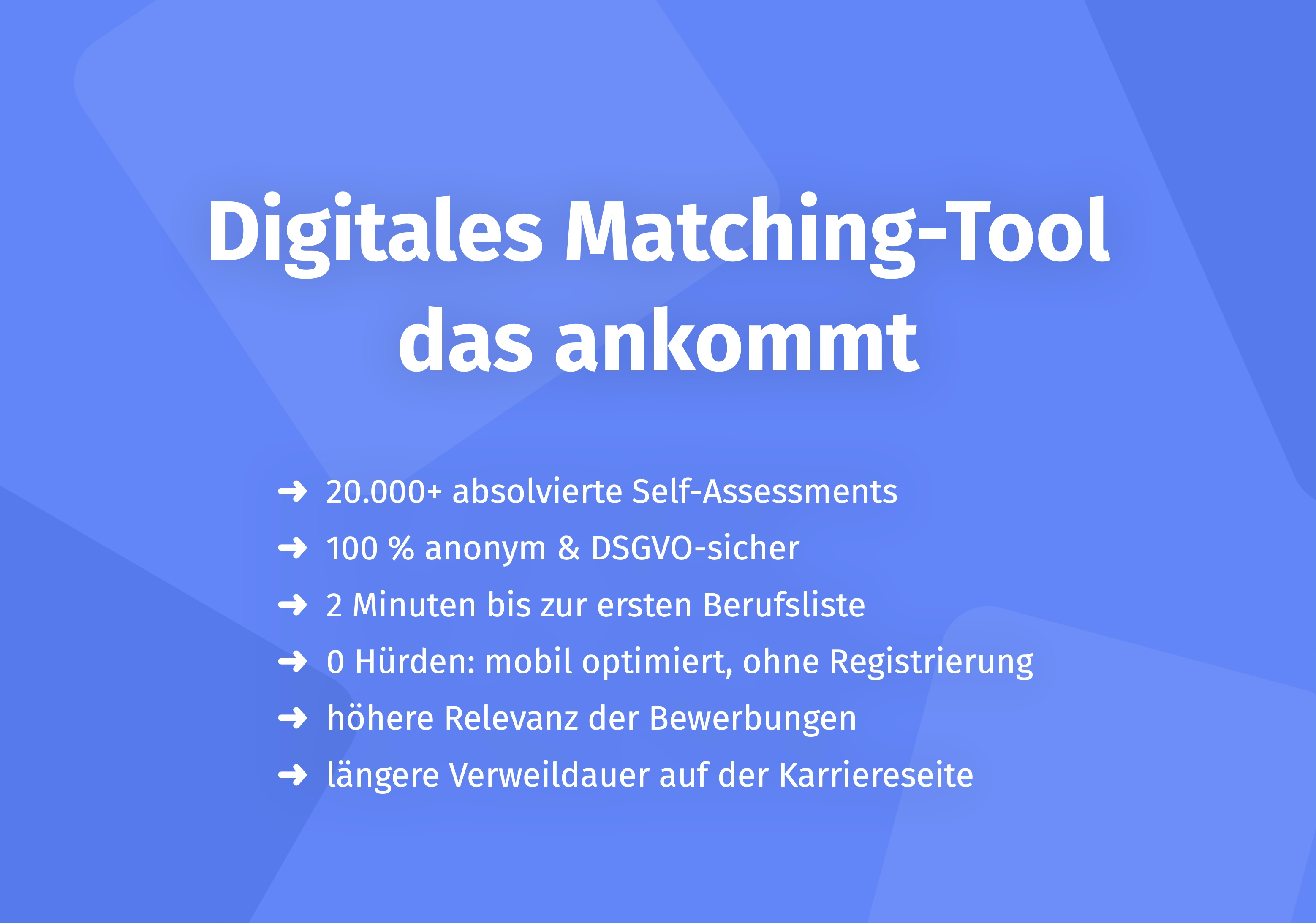
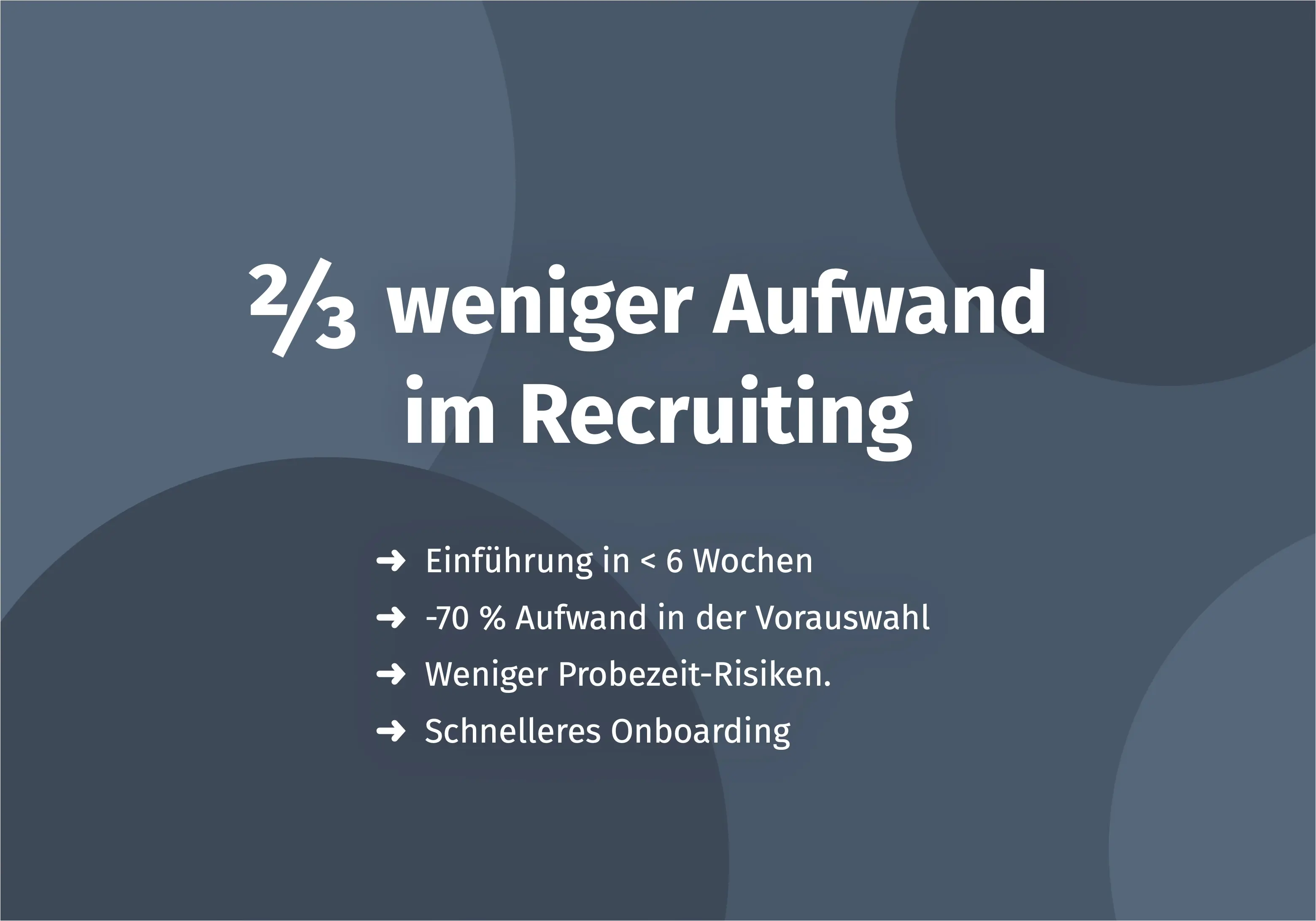
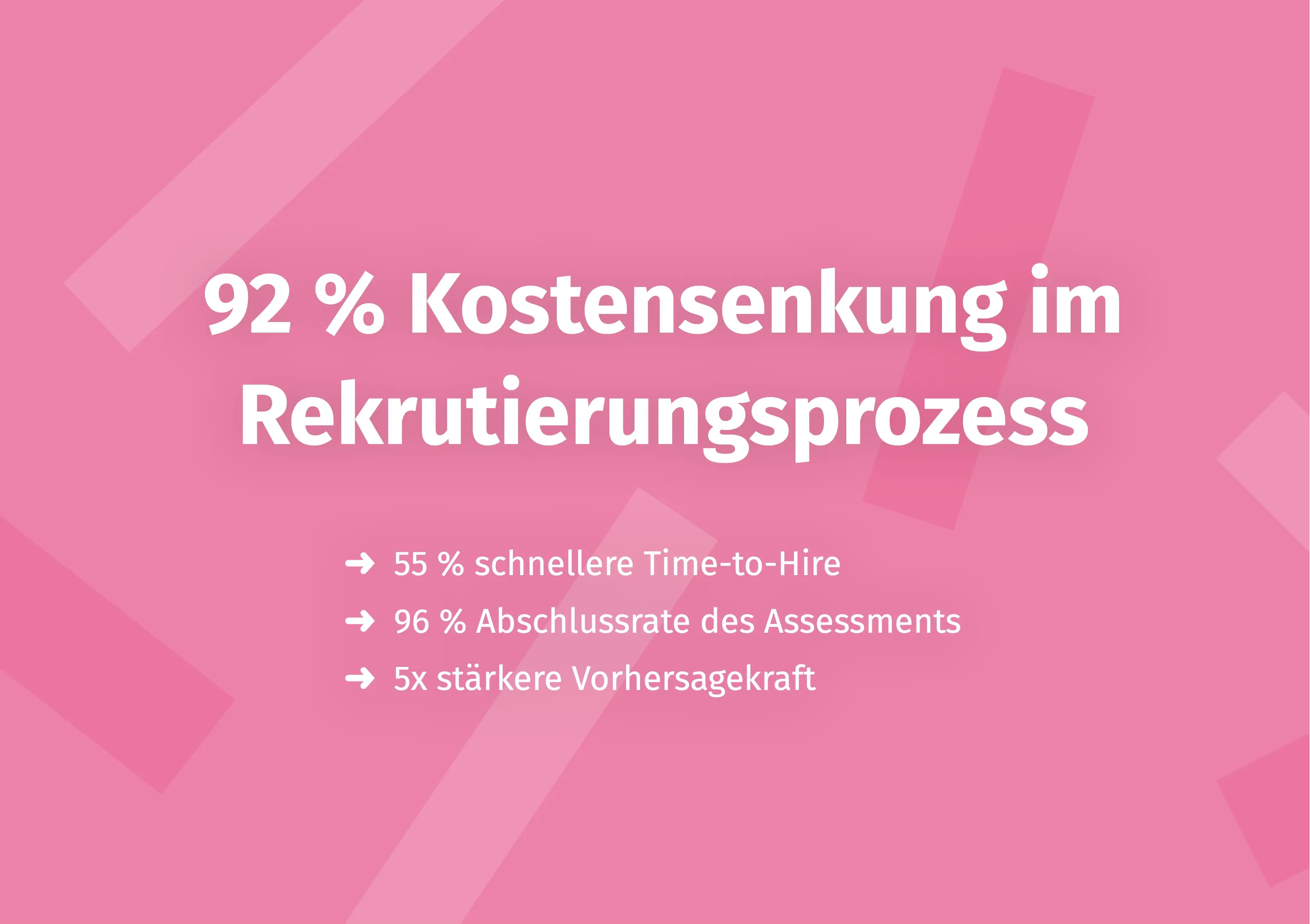
For organisations looking to make their selection process more objective – whether internally or in conjunction with a recruitment firm – the digital platform Aivy offers scientifically validated game-based assessments that evaluate candidates beyond their CV. Frankfurt School achieved 30% fewer hiring errors before the first interview by implementing objective aptitude diagnostics, with a 4x ROI already in the first year.
Shortlist Presentation and Process Support Through to Hire
Following pre-selection, recruitment consultants present the client with a shortlist – a narrowed-down selection of typically three to five suitable candidates, accompanied by candidate profiles and a recommendation.
From there, consultants support the remaining process: coordinating interviews, managing feedback between the company and candidates, and facilitating contract negotiations. Some firms also offer post-placement support during the onboarding phase.
Recruitment Consultant vs. Headhunter vs. Internal Recruiter
These three roles are frequently confused. Here are the key distinctions:
Internal Recruiter: Employed by the company and responsible for the end-to-end hiring process. Deeply familiar with company culture and internal processes, but limited in reach and capacity.
Recruitment Consultant (External): An independent service provider with a broader scope – from requirements analysis through to hire. Brings market knowledge and established candidate networks.
Headhunter: Specialises in the discreet, direct approach of passive candidates. In practice, headhunting is a method or sub-category of recruitment consulting rather than a distinct profession.
Executive Search: The premium tier of recruitment consulting, focused on top leadership positions (board level, C-suite). Places a strong emphasis on discretion and bespoke research, and is typically billed under the retained model – meaning a portion of the fee is paid upfront, regardless of outcome.
Methods in Recruitment Consulting
The quality of a recruitment firm is largely reflected in the methods it employs:
Structured Interviews are behaviour- or competency-based and demonstrably improve the predictive accuracy of hiring decisions compared to unstructured conversations – a finding well-supported by DGFP research.
Aptitude Assessment Tools such as personality tests (Big Five), cognitive ability tests, or situational judgement tests deliver measurable, comparable data on candidates. They also reduce the influence of unconscious bias in the pre-selection stage.
Reference Checks with former supervisors or colleagues round out the picture and are standard practice for leadership roles.
Network Research – particularly in specialised sectors – leverages the consultants' personal and professional networks to identify suitable candidates who may not be actively on the market.
When Does an External Recruitment Firm Make Sense?
Not every vacancy warrants an external recruitment consultant. Engagement is most worthwhile in the following situations:
Leadership and Key Positions: For roles with significant impact on business success, the investment in external expertise pays off most clearly.
Limited Internal Capacity: Start-ups and SMEs in particular often lack dedicated recruiting resources. An external firm can take over the entire process.
Confidential Search: When a position needs to be filled discreetly – such as in succession planning or when replacing an existing leader – external consultants provide the necessary confidentiality.
Specialist Talent: In niche markets or for rare qualifications, specialist recruitment firms typically have better visibility of the candidate market than in-house HR teams.
Time Pressure: When a critical vacancy needs to be filled quickly, an external firm with an established network can often deliver faster results.
On typical costs: recruitment consultants generally charge 20 to 33 percent of the placed candidate's annual salary – either as a success-based fee (contingency) or as an upfront retainer (retained search).
What to Look for When Choosing a Recruitment Firm
The quality of recruitment consultants varies considerably. These criteria can guide your decision:
1. Transparent Methodology: What methods are used in pre-selection? Are scientifically validated tools employed, or is assessment based primarily on gut feeling?
2. Industry Expertise: Does the firm have demonstrable experience in your sector or the relevant functional area?
3. References and Placement Rates: What proportion of mandates result in successful hires? How long do placed candidates typically remain with the company?
4. Communication and Process Clarity: Are timelines, reporting structures, and points of contact clearly defined from the outset?
5. Professional Association Membership: The BDU (German Federal Association of Management Consultants) sets quality standards for recruitment firms. Membership is a useful quality indicator for firms operating in Germany.
6. Contractual Terms: What happens if a placement is unsuccessful? Is there a guarantee period in the event of a mis-hire?
Frequently Asked Questions About Recruitment Consultant Responsibilities
What Is the Difference Between a Recruitment Consultant and a Headhunter?
Headhunting is a method within recruitment consulting: the active, typically discreet direct approach of candidates who are not actively seeking a new role. Recruitment consultants, by contrast, cover a broader spectrum – from requirements analysis and job advertising through to aptitude assessment. Executive search is the premium variant for leadership roles and often combines both approaches.
What Are the Core Responsibilities of a Recruitment Consultant?
Core responsibilities include: requirements analysis and job profile development, active candidate sourcing (direct outreach, database research, networking), aptitude assessment and pre-selection, shortlist presentation, and support through to contract signing. Some firms also offer onboarding assistance.
When Should You Engage an External Recruitment Firm?
External recruitment is most valuable for: leadership and key roles, situations where internal HR capacity is limited (common in SMEs and start-ups), confidential searches, specialist talent in niche markets, and time-critical vacancies. For standard roles with a sufficient pool of applicants, external support is generally not necessary.
How Much Does a Recruitment Firm Charge?
The typical fee is 20 to 33 percent of the placed candidate's annual salary. Under the contingency model, payment is only due upon successful placement. Under the retained model (common for executive search), part of the fee is paid upfront. When calculating costs, factor in the potential savings from avoiding a mis-hire.
How Does the Recruitment Consulting Process Work?
A typical process follows these steps: (1) briefing and requirements analysis, (2) development of the candidate profile, (3) active sourcing, (4) pre-selection and aptitude assessment, (5) initial interviews, (6) shortlist presentation, (7) coordination of client interviews, (8) contract support. Depending on the mandate, the process typically takes four to twelve weeks.
Which Methods Do Recruitment Consultants Use?
Active sourcing and direct outreach via professional networks, structured (behavioural or competency-based) interviews, aptitude diagnostics (personality tests, cognitive assessments), reference checks, and network research within the relevant sector.
What Is Executive Search?
Executive search is a specialist form of recruitment consulting for top leadership roles (board members, managing directors, C-suite). It focuses on passive candidates who are not actively looking, places high value on discretion and confidentiality, and is typically billed under the retained model. Executive search mandates generally take longer than standard recruitment assignments.
Conclusion
Recruitment consultants manage a complex process – from precise requirements analysis through active candidate sourcing to a supported hire. Their value lies in market knowledge, established networks, and – in the case of high-quality firms – scientifically grounded aptitude assessment methods.
For HR professionals, the key takeaway is this: external recruitment consulting is most worthwhile for leadership roles, niche profiles, and confidential searches. The quality of a firm is best judged by the transparency of its methods and its willingness to base candidate evaluation on measurable criteria.
Looking to integrate objective aptitude diagnostics into your hiring process – whether internally or alongside an external recruitment firm? Learn more about evidence-based candidate assessment with Aivy.
Sources
- BDU e.V. (Bundesverband Deutscher Unternehmensberater / German Federal Association of Management Consultants): Facts & Figures on the Consulting Market. 2024. https://www.bdu.de/studien-publikationen
- DGFP e.V. (Deutsche Gesellschaft für Personalführung / German HR Association): Practice Paper on Aptitude Diagnostics in HR Management. 2023. https://www.dgfp.de/wissen/praxispapiere
- Schuler, H. & Kanning, U.P.: Lehrbuch der Personalpsychologie [Textbook of Personnel Psychology]. Hogrefe, 2014.
- Haufe Editorial Team: Personalberatung – Definition, Aufgaben, Methoden [Recruitment Consulting – Definition, Tasks, Methods]. 2024. https://www.haufe.de/personal/hr-management/personalberatung

Make a better pre-selection — even before the first interview
In just a few minutes, Aivy shows you which candidates really fit the role. Beyond resumes based on strengths.