
Recruitment is the systematic process by which companies fill open positions with suitable candidates — from workforce planning through job posting and pre-screening to the final hiring decision. It encompasses internal methods such as transfers or promotions as well as external channels like job boards or active sourcing. The quality and efficiency of the process depend above all on choosing valid selection methods and structured, bias-reduced procedures.
What Is Recruitment?
Recruitment — also referred to as talent acquisition or hiring — is the targeted process by which companies identify, attract and hire qualified employees for open positions. It is one of the core functions of Human Resources Management and forms the operational foundation for building high-performing teams.
Recruitment should be distinguished from related terms: employer branding and HR marketing refer to all measures that position a company as an attractive employer and draw candidates in — the upstream step. Talent acquisition is a broader concept that includes not only filling specific vacancies but also the strategic development of talent pools and networks. Recruitment, by contrast, is the operational core: the actual filling of an open position.
Internal vs. External Recruitment
There are two fundamental approaches to filling a vacancy: internal and external. In practice, most companies combine both.
Internal Recruitment
Internal recruitment fills a position from the existing workforce — through transfer, promotion or an internal job posting. The advantages are clear: the process is faster and more cost-effective, and the person already knows the company's culture and processes. This reduces onboarding time and the risk of a bad hire.
The downside is that the company gains no fresh perspectives or new expertise from outside. Additionally, an internal move typically creates a new vacancy elsewhere.
External Recruitment
External recruitment means bringing in new employees from outside the organisation. Common channels and methods include:
- Job boards (Indeed, LinkedIn, Glassdoor, national employment portals)
- Active sourcing — the direct, proactive outreach to suitable candidates, e.g. via LinkedIn
- Staffing agencies and executive search / headhunting — especially for leadership roles and specialists
- University marketing and internships — engaging talent early
- Employee referral programmes — an often underestimated source of qualified applications
The external route offers more choice, brings new perspectives and is particularly worthwhile when no suitable profile exists internally. However, both the cost and the time investment are considerably higher.
Which Strategy — and When?
As a general rule: internal candidates should be considered first for every vacancy. Only when no suitable profile is available does an external search make sense. A hybrid approach — running an internal posting in parallel with external sourcing — saves time and improves the quality of the candidate pool.
The Recruitment Process: Step by Step
A structured process is the foundation for efficient and fair hiring decisions. The following overview outlines the typical stages.
1. Workforce Planning
The process begins with a question: which positions need to be filled — and why? Workforce planning distinguishes between replacement needs (someone is leaving), new needs (new tasks, growth) and adjustment needs (changed requirements for existing roles). Careful planning prevents positions from being posted spontaneously and without a clear profile.
2. Job Posting and Requirements Profile
The requirements profile defines which professional qualifications, competencies and personality traits the ideal candidate should bring. It forms the basis for the job advertisement, selection criteria and later suitability assessment. Important: the requirements profile must comply with applicable equal treatment and anti-discrimination legislation — discriminatory wording is prohibited.
3. Application Review and Pre-Screening
The pre-screening stage determines which applications move to the next step. This is where a common risk arises: unconscious bias — unconscious prejudices relating to certain names, universities, CVs or genders — influences decisions more strongly than many realise. Structured scoring criteria and anonymised procedures (blind recruitment) can reduce this effect significantly. For more on this topic, see the article on Stereotype and Gender Bias in Recruiting.
4. Suitability Assessment and Selection Procedures
The suitability assessment is the quality-determining step in the entire process. Not all selection methods are equally valid: a meta-analysis by Schmidt and Hunter (1998), which remains the standard reference in personnel psychology to this day, shows that structured interviews, cognitive tests and scientifically validated personality assessments predict future job performance significantly better than unstructured interviews or pure CV analysis.
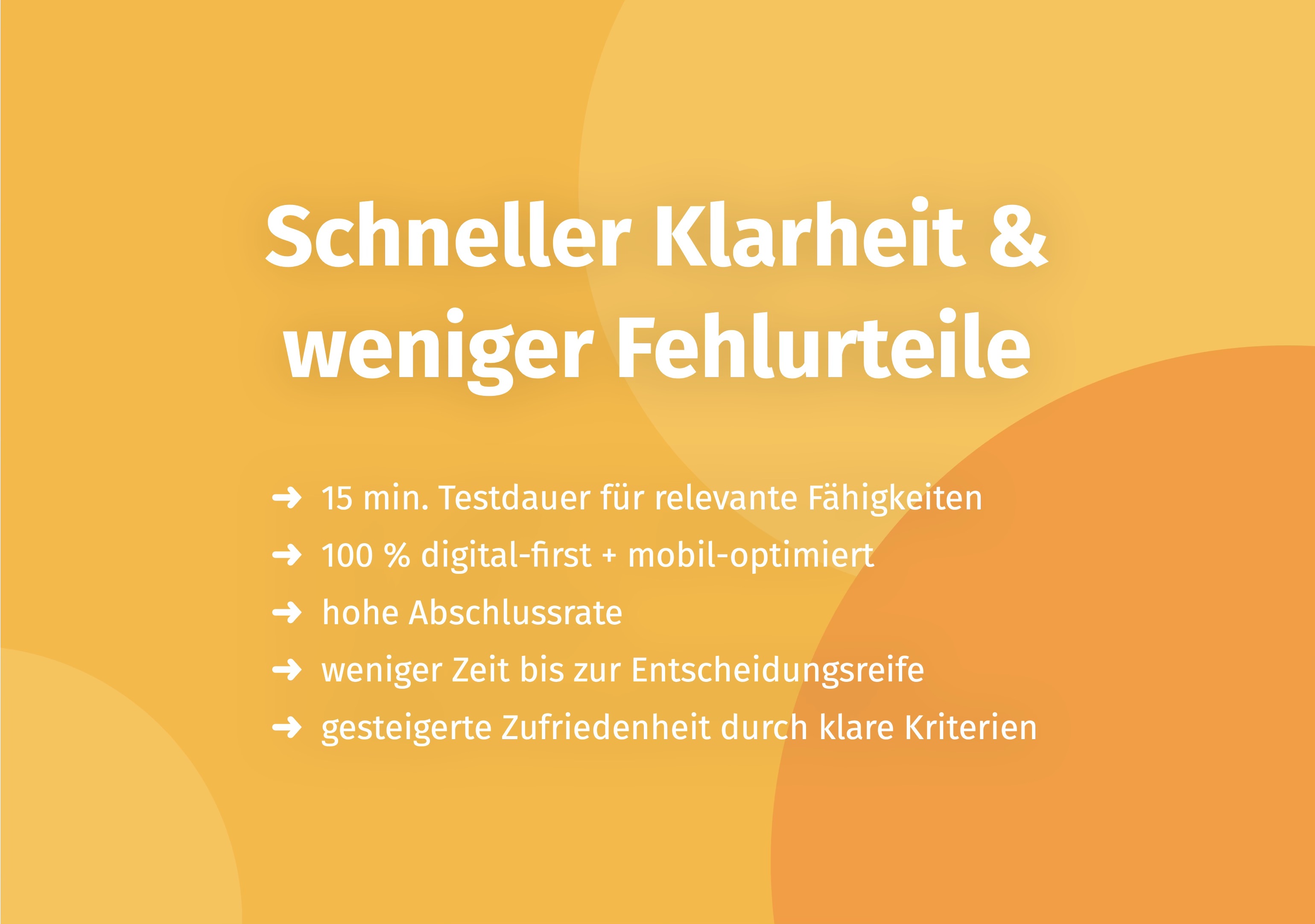
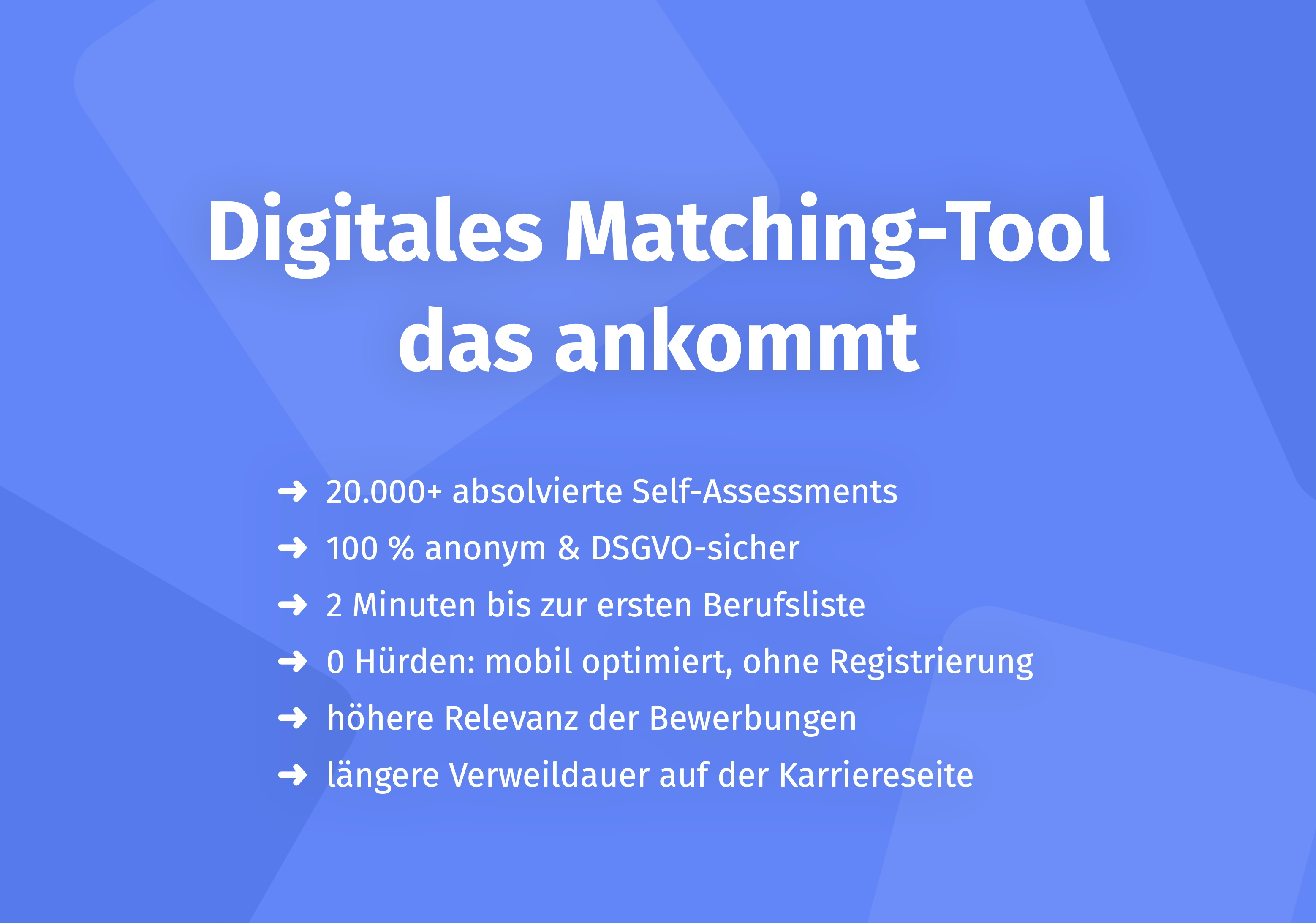
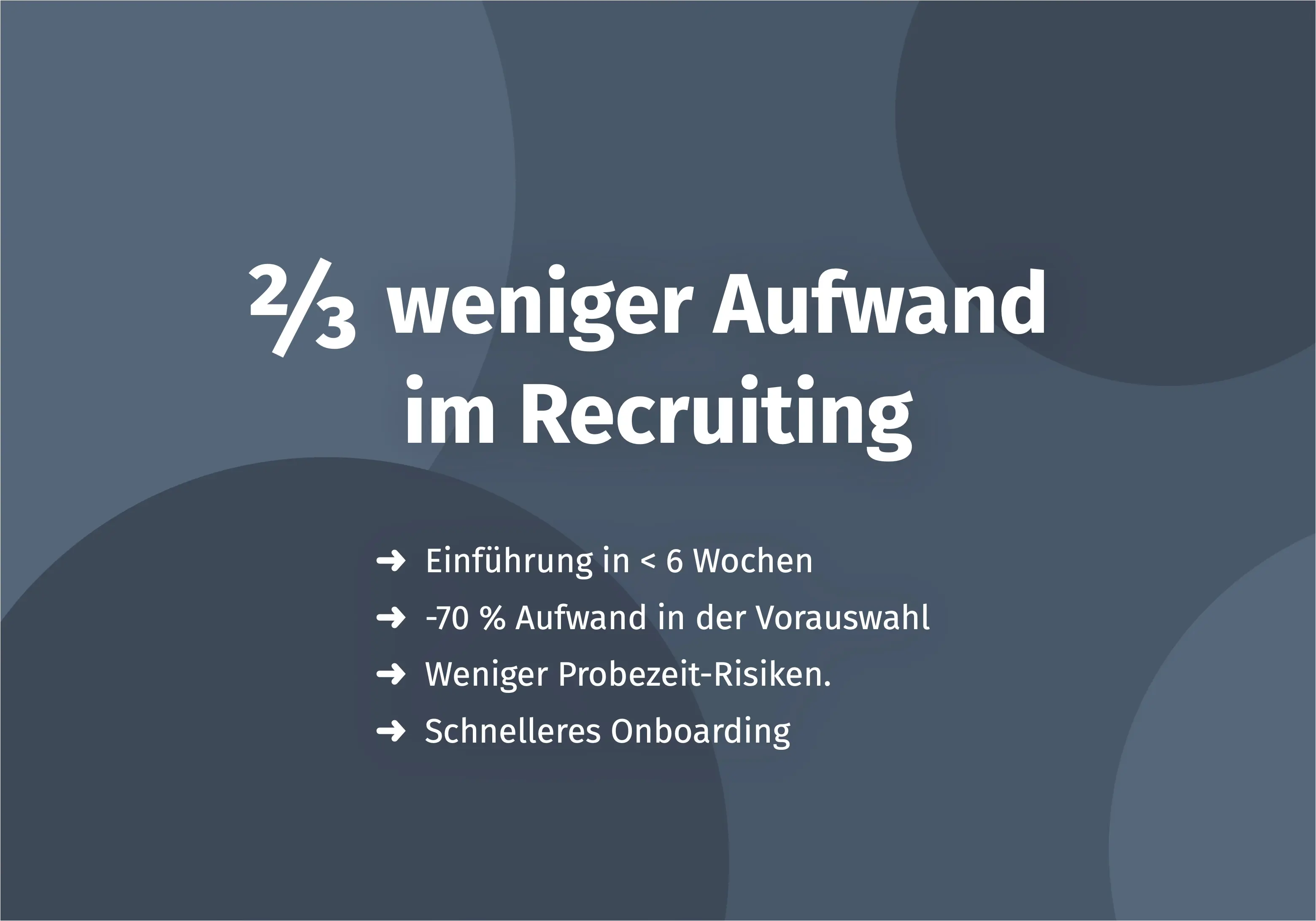
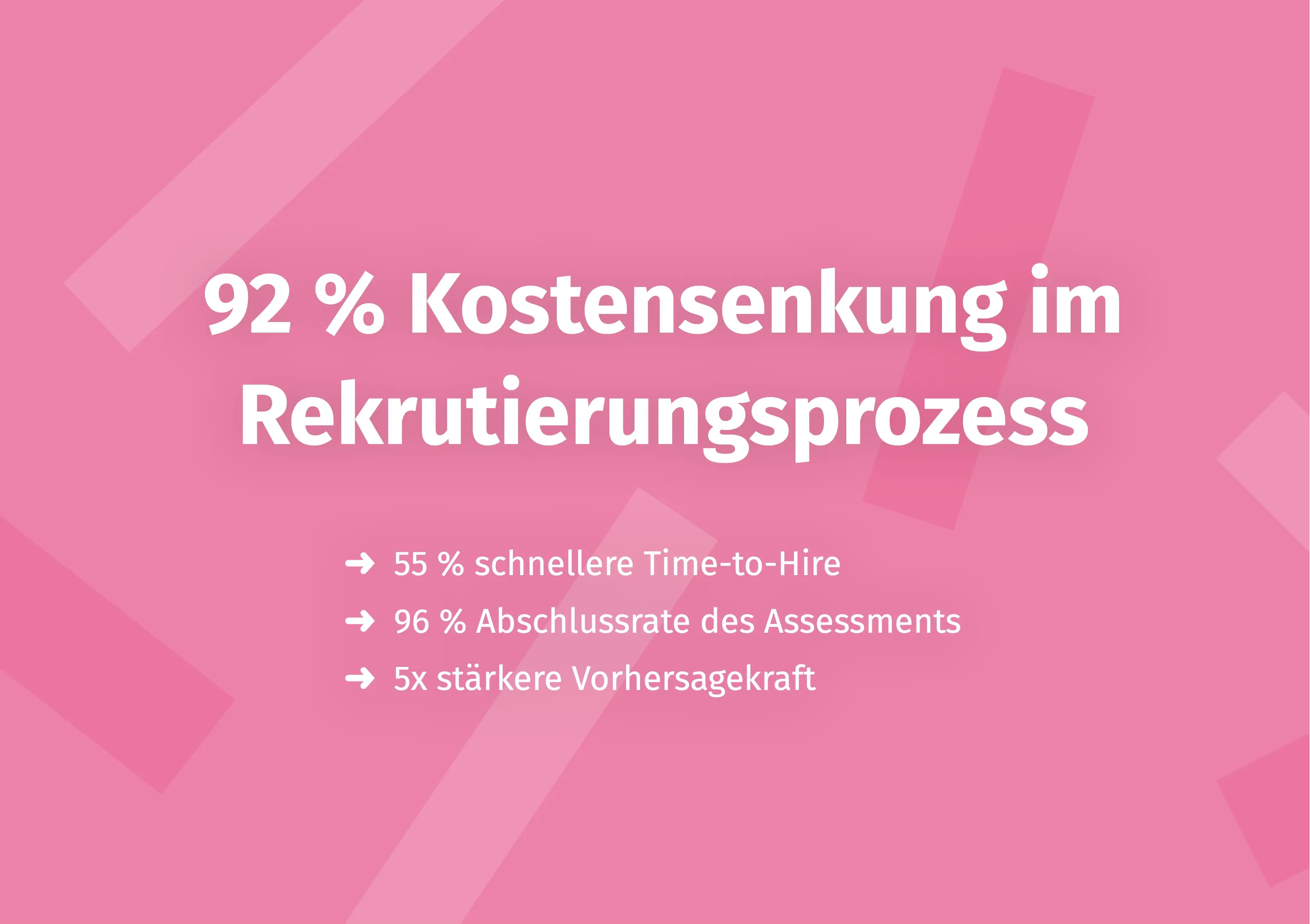
Modern digital platforms such as Aivy complement the selection process with scientifically validated game-based assessments grounded in psychometric methods (including the Big Five model), developed on the basis of research at Freie Universität Berlin. The benefit: objective measurement of relevant competencies, with less influence from gut feeling or bias. MCI Deutschland was able to reduce its time-to-hire by 55% and cut cost-per-hire by 92% through the use of digital suitability diagnostics — with an assessment completion rate of 96%. Further details are available in the MCI success story.
For a standards-compliant suitability assessment, companies may wish to orient themselves to the DIN 33430 standard, which defines requirements for job-related suitability assessments in Germany.
5. Hiring Decision and Contract
The hiring decision should be based on clearly defined criteria and — where available — diagnostic results. Involving multiple people in the decision reduces individual bias. The job interview as a central element of this step is covered in a dedicated glossary article.
6. Onboarding as the Final Step
Recruitment does not end with the signed contract. Structured onboarding is essential for ensuring that new employees become productive quickly and remain with the company. A lack of structured induction is one of the most common reasons for early resignations during the probationary period.
KPIs in Recruitment
Successful recruitment can and should be measured. The most important metrics:
Time-to-Hire
Time-to-hire is the time between the approval of a vacancy and the signing of the employment contract. Industry averages typically range from 30 to 60 days, varying significantly by role and sector. A long time-to-hire means unfilled positions, lost productivity and the risk of losing strong candidates to faster-moving competitors.
Cost-per-Hire
Cost-per-hire covers all costs associated with a single hire: job advertisement costs, staff time for screening and interviews, tool costs and, where applicable, agency fees. Efficient pre-screening processes and structured procedures can measurably reduce this figure.
Quality-of-Hire
Quality-of-hire is the most demanding metric: it measures how well new employees actually perform and how long they stay. It is typically derived from a combination of probationary period feedback, performance ratings and staff turnover rates. High quality of hire is, ultimately, the true objective of all recruitment efforts.
Common Mistakes and How to Avoid Them
Many companies lose valuable candidates or make poor hiring decisions because typical process errors go unaddressed:
No clear requirements profile: If you do not know who you are looking for, you will find the wrong person. A precise, role-specific requirements profile is non-negotiable — before the job is posted.
Process takes too long: Qualified candidates typically have multiple options. If the process drags on, they disengage. A reasonable target is no more than four weeks between first contact and offer.
Bias in pre-screening: CVs are often assessed on instinct rather than criteria. Structured scorecards and scientifically validated procedures help ground decisions in objective evidence.
Neglected onboarding: Even well-chosen candidates leave early if the induction phase is unstructured. Onboarding should be understood as part of the recruitment process, not as a separate afterthought.
Frequently Asked Questions About Recruitment
What is the difference between recruitment and employer branding / HR marketing?
HR marketing refers to all measures through which a company builds its reputation as an attractive employer and attracts candidates — such as employer branding initiatives, careers pages or university partnerships. Recruitment is the operational follow-up step: the concrete filling of an open position. The two are complementary: effective HR marketing generates more and better applications; structured recruitment ensures that the right hiring decisions are made from that pool.
What are the most common methods of external recruitment?
The most widely used external channels include job boards (Indeed, LinkedIn, Glassdoor), active sourcing through professional networks, staffing agencies and executive search, university marketing and employee referral programmes. The most effective method depends strongly on the role being filled, the industry and the available budget.
What is time-to-hire and what is a good benchmark?
Time-to-hire measures the period between the official approval of a vacancy and the signing of the employment contract. Industry averages typically fall between 30 and 60 days, though this varies considerably by role and company structure. Structured processes and digital support during pre-screening can significantly reduce time-to-hire.
What is cost-per-hire?
Cost-per-hire refers to the total cost of a single hire — including job advertising, staff time for screening and interviews, tool costs and any external placement fees. The metric helps organisations evaluate the efficiency of their recruitment process and identify where improvements can be made.
What is the difference between internal and external recruitment?
Internal recruitment fills positions using existing employees through transfer, promotion or an internal job posting. This is fast and cost-effective, but limited to existing competency profiles within the organisation. External recruitment brings in new talent from outside — with greater choice and fresh perspectives, but at higher cost and effort. A hybrid strategy is appropriate in most cases.
How do I reduce bias in recruitment?
Structured interviews using identical questions for all candidates, anonymised pre-screening (blind recruitment), scientifically validated assessments and involving multiple decision-makers are the most effective measures against unconscious bias. Further guidance is available in the articles on Talent Relationship Management and Stereotype and Bias in Recruiting.
What legal requirements apply to recruitment?
Equal treatment and anti-discrimination legislation prohibits discrimination on the grounds of gender, age, origin, religion, disability or sexual identity — both in job advertisements and throughout the selection process. Data protection law regulates the lawful handling of applicant data. Companies with a works council must also comply with its co-determination rights in relation to new hires (in Germany: Betriebsverfassungsgesetz, §99 BetrVG).
Conclusion
Recruitment is far more than placing a job advertisement. A structured process — from the requirements profile through valid selection procedures to onboarding — determines whether companies attract and retain the right talent. At the same time, an objective, bias-reduced approach protects against poor decisions and legal risk.
For organisations looking to strengthen their recruitment process with scientifically grounded suitability diagnostics, you can find out more here: How the digital platform Aivy enables objective talent selection.
Sources
- Schmidt, F.L. & Hunter, J.E. (1998). The validity and utility of selection methods in personnel psychology. Psychological Bulletin, 124(2), 262–274. https://doi.org/10.1037/0033-2909.124.2.262
- Deutsches Institut für Normung (DIN) (2016). DIN 33430 – Anforderungen an berufsbezogene Eignungsbeurteilungen. Beuth Verlag. https://www.beuth.de
- Bundesministerium der Justiz (2006). Allgemeines Gleichbehandlungsgesetz (AGG). https://www.gesetze-im-internet.de/agg/
- Bundesagentur für Arbeit (2024). Statistik gemeldete Arbeitsstellen und Vakanzdauer. https://statistik.arbeitsagentur.de
- DGFP – Deutsche Gesellschaft für Personalführung (2024). HR-Report / Recruiting-Trends. https://www.dgfp.de
- Trendence / Stepstone (2024). Candidate Experience Study. https://www.stepstone.de/recruiting

Make a better pre-selection — even before the first interview
In just a few minutes, Aivy shows you which candidates really fit the role. Beyond resumes based on strengths.