
A proof of performance documents a person's demonstrated achievements – in an HR context, this includes employment references, certificates, academic grades, and internal appraisals. However, traditional credentials should be treated with caution in recruiting: studies show that their predictive power for future job performance is limited and that they frequently reflect structural disadvantages rather than actual ability. For fair, objective hiring decisions, HR professionals recommend supplementing traditional credentials with scientifically validated assessment methods.
What Is a Proof of Performance? Definition
A proof of performance is documentation of the achievements a person has delivered – in a professional, educational, or academic context. The term is an umbrella concept: it covers both formally regulated documents such as the German employment reference (Arbeitszeugnis) and more informal forms of evidence such as certificates, portfolios, or internal appraisal forms.
In an HR context, proofs of performance arise primarily in two situations: first, in recruiting, where candidates provide evidence of their past achievements, and second, in ongoing employment, for example during probationary period reviews or in the context of employee development conversations.
It is important to distinguish the proof of performance from the concept of performance appraisal: while a proof of performance is a document (an outcome), a performance appraisal describes the evaluation process itself.
Types of Proof of Performance in an HR Context
Employment Reference (Arbeitszeugnis)
In Germany, the employment reference (Arbeitszeugnis) is the most well-known and legally regulated form of professional credential. It is issued by the employer and certifies the employee's role – and, in the case of a qualified reference, also their performance and conduct.
Two types are distinguished:
- Simple reference: Contains only information about the type and duration of employment
- Qualified reference: Additionally includes an assessment of performance and conduct
A distinctive feature of the German employment reference is the so-called Zeugnissprache (reference language): certain phrasings carry coded meanings in practice. The sentence "always completed tasks to our complete satisfaction" is considered equivalent to an excellent rating, while "to our satisfaction" corresponds more to a satisfactory grade. Recruiters should be familiar with these conventions in order to interpret references correctly.
Certificates and Qualifications
Certificates from further training programmes, university degrees, and vocational qualifications document acquired skills. They indicate what a person has learned – not necessarily how well they will perform in a future role.
Internal Performance Appraisals
Many organisations use structured appraisal forms, objective-setting reviews, or 360-degree feedback as internal records of performance during an ongoing employment relationship. These documents are particularly relevant for probationary period assessments and promotion decisions.
References and Letters of Recommendation
References – written or verbal – are another form of proof of performance. They provide a personal assessment from a third party, but are highly subjective and difficult to compare in a standardised way.
Legal Foundations: What Do Employers Need to Know?
Under § 630 of the German Civil Code (BGB), employees are entitled to a written reference upon termination of their employment relationship. This entitlement applies regardless of the duration or nature of the employment.
Upon request and with a legitimate interest, a reference can also be requested during an ongoing employment relationship – for example, when changing roles internally or starting a course of study.
Employers are required to draft the reference in a benevolent yet truthful manner. This means: a deliberately unfavourable reference is legally contestable; however, a reference that conceals known problems may also raise questions of liability.
A key principle for HR professionals: references should always be issued promptly, drafted consistently, and accurately reflect actual performance. Internal appraisals should be documented in writing and traceable in the event of a dispute.
Please note: The legal provisions described in this section are specific to German employment law (§ 630 BGB). Requirements in other countries may differ significantly.
The Limits of Traditional Credentials in Recruiting
Credentials such as references and grades carry considerable weight in recruiting – often justifiably so, but frequently overestimated. The research paints a more nuanced picture.
Limited Predictive Power
Meta-analyses on personnel selection show that traditional credentials such as school grades or university degrees explain only a limited portion of later job performance. Sackett et al. (2022) conclude in a comprehensive meta-analysis that more structured methods – such as cognitive ability tests or validated personality questionnaires – demonstrate significantly stronger predictive validity than educational qualifications alone.
Predictive validity describes how reliably a selection method forecasts future professional success. The higher the predictive validity, the more accurate the hiring decision.
Bias Risk and Structural Disadvantage
Credentials are not neutral. Grades also depend on the school attended, the social environment, and implicit grading standards. Employment references often reflect the relationship with a line manager – and can be distorted by unconscious bias: candidates who come from a less prestigious employer may receive a weaker reference regardless of their actual performance.
Recruiters who rely solely on credentials risk systematically favouring certain groups – not on the basis of competence, but on the basis of background and professional networks.
Objective Supplements Through Aptitude Diagnostics
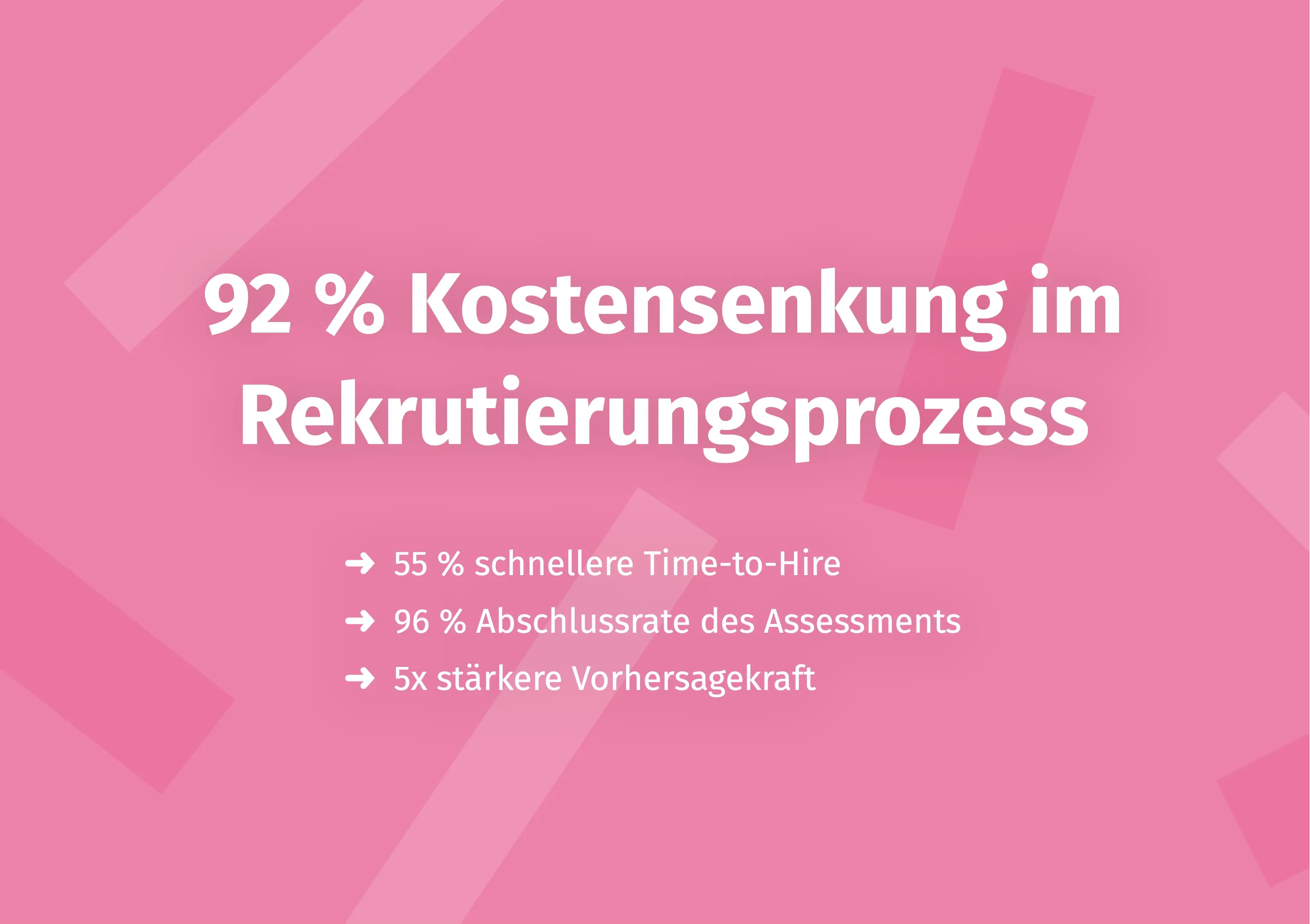
Companies seeking to place their recruiting process on a more objective footing are increasingly combining traditional credentials with scientifically validated methods: cognitive ability tests, potential analyses, and structured interviews improve predictive accuracy and reduce bias. The digital platform Aivy, a scientific spin-off of Freie Universität Berlin, offers game-based assessments that objectively measure competencies and personality traits – independent of background or reference language. By introducing such methods, MCI Deutschland achieved 5x stronger predictive power compared to traditional selection methods and reduced time-to-hire by 55%.
Using Credentials in Recruiting: What to Look Out For
Putting Credentials in Context
Use proofs of performance as one element in the selection process – not as the sole basis for a decision. Combine them with structured interviews, work samples, or validated tests to build a more complete picture.
Recognising Bias When Reading References
Reflect on the assumptions you bring to certain employers, universities, or professional profiles. A reference from a lesser-known company is not automatically weaker than one from a major corporation. The assessment centre approach addresses exactly this issue: standardised tasks, equal conditions for all candidates.
Checklist: Evaluating Credentials Systematically
- Is the employment reference drafted in a benevolent and truthful manner (check for coded language)?
- Do the job description and appraisal match the requirements of the advertised role?
- Are there any gaps in the CV that warrant explanation?
- Do the certificates genuinely cover the competencies required?
- Are references gathered in a standardised way (the same questions asked of all referees)?
- Are supplementary, objective assessment methods being used?
Frequently Asked Questions About Proof of Performance
What is a proof of performance?
A proof of performance is documentation of a person's demonstrated achievements. In an HR context, this includes employment references, certificates, qualifications, and internal appraisals. The term is an umbrella concept that encompasses both formally regulated documents and informal forms of evidence.
What is the difference between a proof of performance and an employment reference?
An employment reference is a specific, legally regulated form of professional credential (under § 630 BGB in Germany). Proof of performance is the broader umbrella term and can also include certificates, grades, references, and internal appraisal forms.
When is an employee entitled to an employment reference?
Under § 630 BGB, employees are entitled to a written reference upon termination of their employment. Where there is a legitimate interest – for example, when changing roles internally or undertaking further training – an interim reference can also be requested during an ongoing employment relationship. Note: this specific entitlement applies under German law; provisions in other jurisdictions may vary.
How meaningful are employment references and grades in recruiting?
Their informational value is limited. Recent meta-analyses show that educational qualifications and references account for only a portion of later job performance. There is also a risk of bias: references reflect not only performance but also the relationship with a manager and the professional environment. Scientifically validated selection methods demonstrate significantly higher predictive validity.
What should be documented when assessing performance during a probationary period?
Record specific objectives and their achievement in writing. Document feedback meetings with dates and content, and note both strong performance and areas for development. Structured appraisals at approximately 4 and 8 weeks create transparency – and are legally relevant in the event of a dispute.
What alternatives to traditional credentials exist in recruiting?
Scientifically validated alternatives and supplements include: structured interviews, cognitive ability tests, validated personality questionnaires, work samples, and game-based assessments. These typically demonstrate higher predictive validity than educational credentials alone and help reduce unconscious bias.
Conclusion
The proof of performance remains indispensable in HR practice – as a point of orientation, a legal document, and a basis for conversation. At the same time, HR professionals should be aware of its limitations: traditional credentials such as references and grades are no reliable guarantee of future professional success and can amplify bias.
The research recommendation is clear: use proofs of performance in conjunction with structured, validated methods. This improves the accuracy of hiring decisions, reduces legal risk, and makes the recruitment process fairer.
Would you like to find out how the digital platform Aivy integrates objective aptitude diagnostics into your selection process? Book a demo and learn more.
Sources
- § 630 BGB – Obligation to issue a reference. Federal Ministry of Justice, Germany, 2024. https://www.gesetze-im-internet.de/bgb/__630.html
- Sackett, P. R., Zhang, C., Berry, C. M., & Lievens, F. (2022). Revisiting meta-analytic estimates of validity in personnel selection: Addressing systematic overcorrection for restriction of range. Journal of Applied Psychology, 107(11), 2040–2068. https://doi.org/10.1037/apl0000994
- Schmidt, F. L., & Hunter, J. E. (1998). The validity and utility of selection methods in personnel psychology: Practical and theoretical implications of 85 years of research findings. Psychological Bulletin, 124(2), 262-274.
- Deutsche Gesellschaft für Personalführung (DGFP). Guidelines for Performance Appraisal. https://www.dgfp.de
- Bundesagentur für Arbeit. Information on employment references. https://www.arbeitsagentur.de

Make a better pre-selection — even before the first interview
In just a few minutes, Aivy shows you which candidates really fit the role. Beyond resumes based on strengths.