
The office of the future is no longer a traditional workplace — it is a flexible, technology-enabled collaboration space designed to enable exactly what remote work cannot: team culture, creative work, and personal connection. For HR professionals, the office concept is simultaneously a strategic instrument for employer branding, employee retention, and attracting talent that values both flexibility and collaboration.
What Is the Office of the Future?
The office of the future describes a new kind of physical workspace that is consistently aligned with the changing demands of modern working environments. Instead of rigid individual workstations, the focus is on flexible zones: spaces for focused work, collaborative meetings, informal exchange, and creative processes.
The concept is closely associated with "New Work," which understands work not as mere obligation but as a meaningful field of activity. In this context, the office of the future is not a dying model — it is a redefined space. It complements working from home and mobile working, taking on tasks that are difficult to perform remotely: above all, social connection, knowledge transfer, and culture building.
The office of the future should be distinguished from the classic open-plan office. The latter simply meant the removal of individual offices without any thoughtful zoning. The office of the future goes further: it is deliberately designed and oriented around specific use cases.
Why Companies Need to Rethink the Office
Remote Work and Hybrid Working as the New Standard
The COVID-19 pandemic transformed hybrid working from an exception into the norm. According to a Bitkom study (2024), more than 80 percent of companies in Germany now operate with hybrid working models. The IFO Institute (2024) shows that around one quarter of all working hours in Germany are now performed from home.
This development fundamentally changes the role of the office. Someone who already works remotely half the week no longer needs a fixed desk — but they do need a place where collaboration works better than at home.
Generational Shift: What Employees Expect Today
Younger generations (Millennials, Generation Z) have different expectations of employers than earlier cohorts. Flexibility, purpose, and a modern working environment are decisive factors in employer choice, according to the Microsoft Work Trend Index (2024). Companies operating with outdated office concepts risk falling behind in the competition for talent.
AI and Digitalization Are Changing Work
Routine tasks are increasingly being taken over by AI systems. What remains are tasks that require human interaction, creative thinking, and collaboration — precisely those activities for which a well-designed office environment is most important. The office of the future accounts for this shift by creating physical spaces tailored to these strengths.
The Most Important Office Concepts at a Glance
Activity Based Working (ABW)
With Activity Based Working, there are no fixed workstations. Employees choose each day the area that best suits their current task. Typical zones include quiet areas for focused work, collaboration spaces for teamwork, and social areas for informal exchange. The prerequisite is a fully digital infrastructure — cloud-based working, digital file storage, and mobile devices are essential.
Desk Sharing
With desk sharing, multiple employees share a workstation since not everyone is on-site at the same time. The concept reduces space requirements and costs, but requires good booking organisation and clear rules for use. Desk sharing works best when supported by a dedicated app or booking system.
Smart Office
The smart office connects the workplace with digital technology: sensors capture room utilisation, booking systems show available spaces in real time, and automated lighting and climate control adapt to current needs. These technologies make the office more efficient and enable data-driven planning.
Hybrid Hub
The hybrid hub explicitly positions the office as a place for teamwork and connection. Individual work takes place predominantly remotely, while in-person attendance is reserved for meetings, workshops, and cultural activities. This concept is particularly suited to companies with a high proportion of remote work who want to deliberately combine the strengths of both worlds.
Key Features of the Office of the Future
Flexibility and Zoning
A future-ready office offers different areas for different working modes. Zoning follows the principle: quiet zones for concentration, collaboration spaces for joint work, social areas for breaks and informal exchange, and creative rooms for workshops and brainstorming.
Technology and Connectivity
Reliable internet connectivity, high-quality video conferencing equipment in every meeting room, and intuitive booking systems for rooms and workstations are no longer extras — they are baseline requirements. Companies supporting hybrid teams must ensure that remote and on-site participants can engage in meetings on equal terms.
Wellbeing and Biophilic Design
Biophilic design is a design approach that brings nature into the workspace: plants, natural light, natural materials, and acoustic insulation. Research by the Fraunhofer IAO shows that a well-designed working environment measurably improves wellbeing and productivity. Ergonomic furniture, adequate ventilation, and spaces for retreat are further important factors.
Collaboration Over Individual Work
The office of the future is not a place for individual work that could equally well be done at home. It is a place for everything that requires presence and direct interaction: joint problem-solving, creative processes, onboarding, mentoring, and nurturing team relationships.
The Office of the Future as an HR Strategy
Employer Branding: The Office as a Recruiting Asset
A modern office concept is today a visible signal to candidates. It communicates: this company thinks ahead, trusts its employees, and invests in their wellbeing. Particularly in sectors affected by skills shortages, an attractive office environment can be the deciding factor in employer choice. HR professionals should therefore actively communicate the office concept in job postings, on the careers page, and during interviews.
Employee Retention Through the Right Working Environment
The Gallup Engagement Index (2024) consistently shows that the physical working environment has a direct impact on employee satisfaction. Employees who feel comfortable at work and can choose between different working modes demonstrate higher engagement and lower turnover. Employee retention therefore does not begin after onboarding — it starts with the first impression of the office.
What Competencies Do Employees Need for New Working Models?
The office of the future changes not only the spaces but also the requirements placed on employees. Self-organisation, the ability to collaborate, and systems thinking become more important than ever in hybrid environments. Adaptability is equally essential: anyone who works from home today, in the office tomorrow, and with international teams the day after must be flexible and strong in communication.
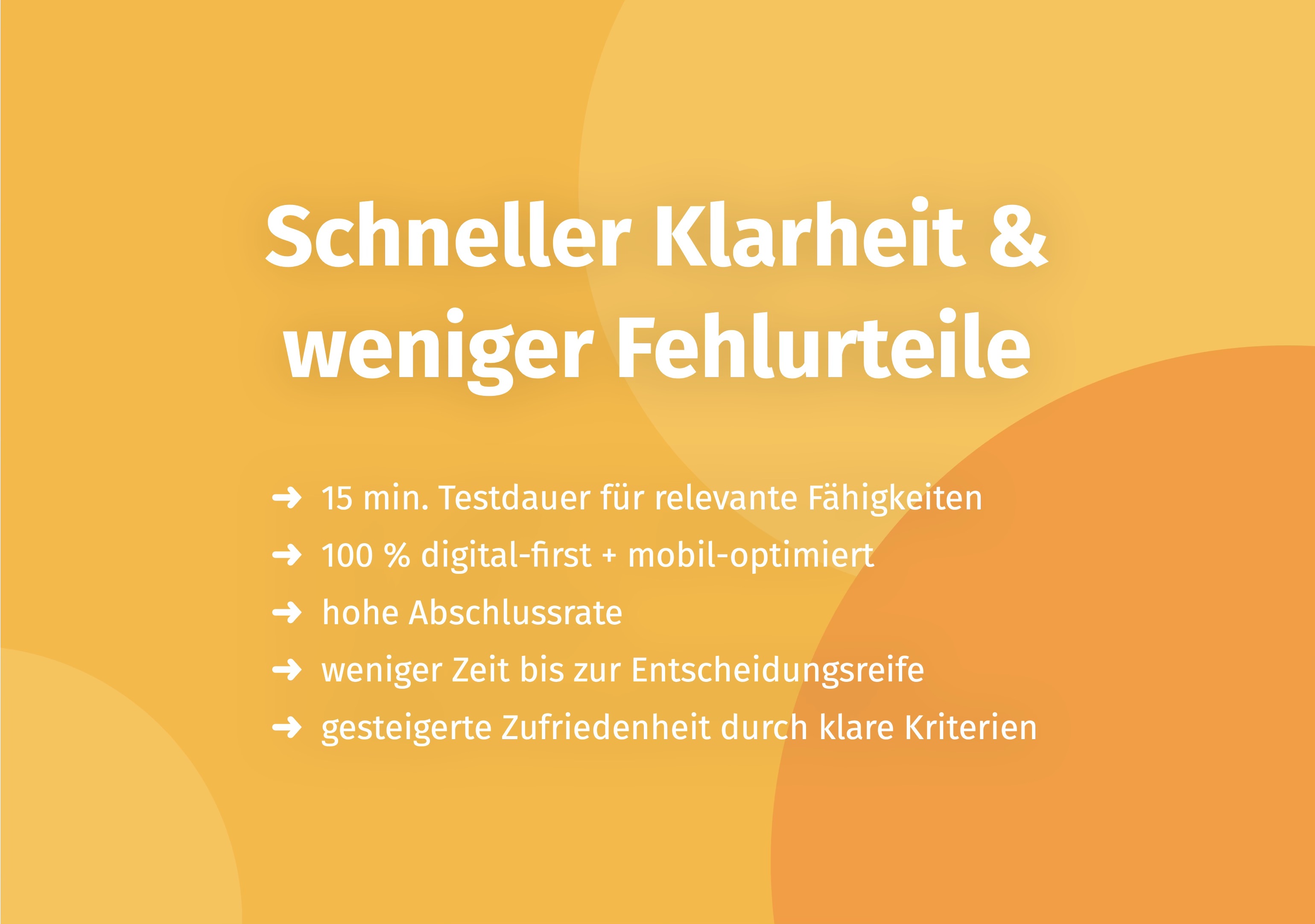
For HR professionals, this creates a strategic task: not only the office must be rethought, but also the personnel selection process. The digital platform Aivy helps companies objectively assess precisely these competencies — self-organisation, collaboration skills, and adaptability — within the recruiting process. Scientifically validated game-based assessments make visible which candidates are particularly well suited to new, flexible working environments, regardless of their CV or academic grades. Find out how the digital platform Aivy helps identify employees with the right competencies for new working environments here.
Frequently Asked Questions About the Office of the Future
What Does the Office of the Future Look Like?
The office of the future is a flexible collaboration space without rigid individual workstations. It is divided into zones — for focused work, for teamwork, for informal exchange — and equipped with technology to enable seamless hybrid collaboration. Biophilic design (plants, natural light, natural materials) and ergonomic furnishings promote wellbeing.
Why Do Companies Still Need an Office?
The office fulfils functions that cannot be replaced remotely: it fosters team culture, social cohesion, spontaneous knowledge exchange, and creative collaboration. It is also an important employer branding instrument. According to the Microsoft Work Trend Index (2024), most employees prefer hybrid models — a meaningful combination of office and remote work, not the complete disappearance of the office.
How Much Remote Work Is Optimal for Companies?
There is no universal benchmark. The optimal balance depends on the role, the team, and the company culture. As a rough guide, 2–3 days of remote work per week are frequently cited as a productive sweet spot (Fraunhofer IAO). What matters most is that the arrangement is developed collaboratively with the teams and reviewed regularly.
What Is Activity Based Working (ABW)?
Activity Based Working (ABW) is an office concept without fixed workstations. Employees choose each day the area that best fits their current task — a quiet zone for individual work, a collaboration space for meetings, a social area for breaks. The prerequisite is a fully digital infrastructure and clear rules for use.
What Is the Difference Between Desk Sharing and Hot Desking?
With desk sharing, employees share a workstation in an organised way via a booking system — each person has a fixed place for the day. Hot desking is less structured: first come, first served, with no booking required. Desk sharing is considered the more organised and employee-friendly option.
How Do I Practically Redesign the Office of the Future?
A successful redesign follows these steps: needs analysis (which tasks genuinely require presence?), zoning by activity type, investment in technology (booking systems, video conferencing equipment), employee involvement in planning, and piloting with iterative adjustments based on feedback. Without employee involvement, many New Work concepts fail due to lack of acceptance.
Which Office Trends Are Most Relevant in 2025?
The most significant trends include: AI-supported space utilisation and booking systems, biophilic design for improved wellbeing, a clear focus on collaboration spaces rather than individual offices, and the so-called "hospitality approach" — the office as an experience space, deliberately designed to attract employees. At the same time, expectations around in-person attendance (Return to Office) are rising in many organisations.
How Do I Use the Office as a Recruiting Asset?
The office concept should be actively embedded in employer communications: on the careers page with photos and descriptions of the working areas, in job postings with specific details about flexibility, and in interviews through an office tour. An attractive office can measurably improve candidate experience and be a decisive competitive advantage in the race for skilled talent.
Conclusion
The office of the future is not a dying model — it is a strategic lever. Companies that rethink their physical workspaces create not only better conditions for productivity and wellbeing, but also position themselves as attractive employers. For HR professionals, this means: the office is not solely a matter for facility management, but a central instrument of employee retention, employer branding, and recruiting.
Anyone designing the office of the future should simultaneously consider what competencies employees need to succeed in hybrid and flexible working environments — and anchor these requirements in the recruiting process from the outset.
Sources
- Fraunhofer Institute for Industrial Engineering IAO. New Working Worlds – Office Concepts in Transition. Stuttgart: Fraunhofer IAO, 2023. https://www.iao.fraunhofer.de
- Microsoft. Work Trend Index 2024. Microsoft WorkLab, 2024. https://www.microsoft.com/en-us/worklab/work-trend-index
- Gallup. Engagement Index Germany 2024. Gallup, 2024. https://www.gallup.com/de
- IFO Institute. Remote Work in Germany – Current Figures. Munich: IFO Institute, 2024. https://www.ifo.de/ifo-startseite
- Bitkom. Remote Work Study 2024. Berlin: Bitkom, 2024. https://www.bitkom.org
- German Society for Personnel Management (DGFP). Future of Work – DGFP Study 2023. Düsseldorf: DGFP, 2023. https://www.dgfp.de

Make a better pre-selection — even before the first interview
In just a few minutes, Aivy shows you which candidates really fit the role. Beyond resumes based on strengths.