
Mental health at work describes the psychological well-being of employees and their ability to cope with occupational demands in a healthy way. Mental illness is today one of the leading causes of absenteeism and productivity loss in Germany. As an employer, you are legally required to identify and actively reduce psychological stressors – and at the same time you benefit from more engaged, resilient teams.
What Is Mental Health at Work?
The World Health Organization (WHO) defines mental health as a state of complete physical, mental and social well-being – not merely the absence of illness. In a workplace context, this means: employees are mentally healthy when they can approach their tasks with energy, maintain meaningful relationships with colleagues, and deal constructively with stress and setbacks.
Mental health is not a static state, but a continuum. Between complete well-being and a clinical disorder lies a wide spectrum – and that is precisely where many employees find themselves in everyday working life. Prolonged pressure, a lack of control over one's work, or insufficient social support can gradually undermine psychological health long before any diagnosis is made.
An important distinction: mental health is not the same as the absence of stress. A certain level of challenge is actually beneficial. It becomes problematic when demands persistently exceed a person's resources.
Why Is Mental Health an HR Responsibility?
Facts and Figures: The Cost of Mental Illness
According to the DAK Health Report 2024, mental disorders are the second most common cause of sick leave in Germany – accounting for an average of more than 30 lost working days per case. That is more than twice as many as most physical illnesses.
Even more costly than absenteeism (complete absence from the workplace) is so-called presenteeism: employees who come to work despite psychological strain but are unable to work productively. Studies indicate that presenteeism can cost organisations up to three times more than direct absenteeism, because errors, impaired decision-making and reduced creativity are difficult to see but have a lasting impact.
For HR professionals, this means: investing in the mental health of the workforce is not a luxury – it is an economic necessity.
Legal Basis: What Employers Are Required to Do
Since the amendment of the Occupational Health and Safety Act (Arbeitschutzgesetz, ArbSchG) in 2013, employers in Germany have been legally obligated to include psychological stressors in the workplace risk assessment. Specifically, §5 ArbSchG requires that all risks to health and safety – explicitly including psychological risks – be systematically identified, assessed and reduced through appropriate measures.
The psychological risk assessment (Gefährdungsbeurteilung psychische Belastung) is therefore not a voluntary measure, but a documentation requirement with concrete consequences. It typically covers the following stress factors: work intensity and pace, scope for action and decision-making autonomy, social support from managers and colleagues, and the organisation of working hours and breaks. Recommended tools for conducting this assessment include the checklists provided by the Federal Institute for Occupational Safety and Health (BAuA) and the validated COPSOQ questionnaire.
Recognising Warning Signs: When Is Action Needed?
Managers and HR professionals are often the first to notice changes in employee behaviour – long before those affected actively seek help themselves. Typical warning signs at team level include:
- Increased sick leave, particularly frequent short-term absences
- Visible decline in performance, frequent errors or concentration problems
- Social withdrawal, reduced participation in meetings
- Irritability, conflict or changes in communication
- Expressions of exhaustion, meaninglessness or helplessness
Important: these signals are not an invitation to self-diagnose. As a manager or HR professional, your role is not to diagnose mental illness – but to initiate conversations early, offer support and refer people to specialists.
Measures to Promote Mental Health
At Organisational Level: Structures and Programmes
A well-structured Occupational Health Management system (Betriebliches Gesundheitsmanagement, BGM) is the foundation. It encompasses all systematic measures through which an organisation promotes the health of its workforce – from ergonomic workplaces and physical activity programmes to psychological counselling.
Particularly effective are Employee Assistance Programmes (EAPs): anonymous, external counselling services that support employees through personal and professional crises in a straightforward and confidential way. Because use is anonymous, the barrier to access is significantly lower – a key advantage over internal offerings, which may carry the stigma of being seen as a problem.
Further structural measures include flexible working hours and remote working options (which demonstrably reduce stress caused by commuting and rigid schedules), clear communication channels and achievable targets.
At Leadership Level: Conversations and Role Modelling
Managers have the greatest influence on the psychological health of their teams – for better or worse. Those who communicate their own boundaries, prioritise recovery and model taking breaks actively reduce the implicit pressure within the team.
When approaching a direct conversation with a struggling employee, the key is to address concrete behavioural changes – not to speculate about diagnoses. A helpful approach might be: "I'm concerned because I've noticed you've been making more mistakes recently and withdrawing from team discussions. How are you doing?" – rather than: "You seem burned out." Offering resources (EAP, occupational health physician, works council) without applying pressure is essential.
At Individual Level: Building Self-Efficacy
Resilience – the psychological capacity to withstand and recover from pressure – can be developed. Programmes such as mindfulness training, stress management courses or coaching can help employees make better use of their own resources. It is important to understand these offerings as a complement to structural measures, not a substitute for them.
Person-Role Fit as a Prevention Strategy: The Recruiting Approach
Mental health does not begin once someone is already in a role – it starts at the point of hiring. Employees who fill a position that matches their strengths, values and working style demonstrably experience less chronic stress and report higher job satisfaction. Poor person-role fit, on the other hand, creates sustained pressure for everyone involved.
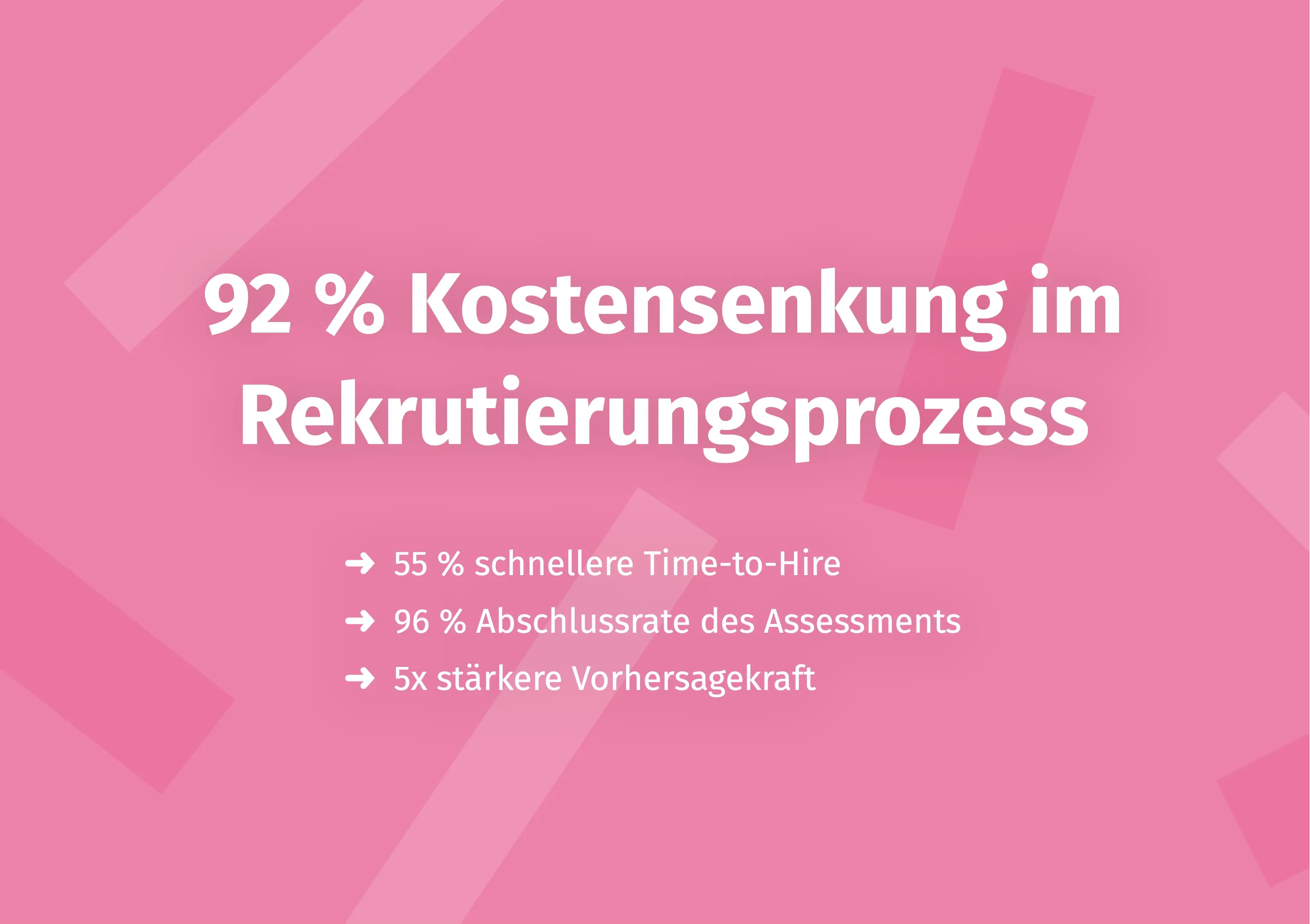
The digital platform Aivy helps HR professionals objectively assess the fit between candidates and role requirements – through game-based assessments and validated psychometric instruments developed in collaboration with Freie Universität Berlin. This makes it possible to reduce mismatches before they occur.
Frequently Asked Questions About Mental Health at Work
What does mental health at work mean?
Mental health at work describes the psychological well-being of employees within their professional context. According to the WHO, health encompasses a state of complete physical, mental and social well-being. In everyday working life, this means: employees can manage their responsibilities, maintain healthy relationships and deal constructively with pressure – without being permanently overwhelmed.
What are employers legally required to do?
Under §5 ArbSchG, employers have been required since 2013 to systematically include psychological stressors in their workplace risk assessment. This covers the identification of stressors, their evaluation and the derivation of concrete protective measures. Results must be documented. Non-compliance can have legal consequences under employment law.
How do I recognise psychological strain in employees?
Typical indicators include increased sick leave, frequent short-term absences, declining performance, concentration problems, social withdrawal, irritability and expressions of exhaustion. Physical symptoms such as sleep difficulties or headaches may also be relevant signals. Importantly: managers should initiate conversations – not make diagnoses.
What does mental illness cost organisations?
According to the DAK Health Report 2024, mental disorders result in an average of more than 30 lost working days per case – more than twice as many as most physical conditions. Added to this are the harder-to-measure costs of presenteeism: employees who attend work while struggling but are not fully productive can, according to research, generate losses up to three times greater than those caused by direct absence.
What concrete measures can HR take?
Proven approaches include implementing a structured Occupational Health Management system (BGM), introducing anonymous Employee Assistance Programmes (EAPs), training managers in early recognition and supportive conversation skills, conducting the legally required psychological risk assessment, and promoting flexible working arrangements and a healthy culture around breaks.
How should a manager raise the topic?
Address specific behavioural changes – not assumptions about diagnoses. Phrases such as "I'm concerned because I've noticed..." help you open a conversation without passing judgement. Offer resources (EAP, occupational health physician) without applying pressure. Treat mental health the same way you would physical health: as a normal topic of conversation, not a taboo.
What is a psychological risk assessment?
It is a systematic analysis of all psychological stressors in the work environment – from time pressure and limited scope for decision-making to interpersonal conflict. The assessment has been a legal requirement since 2013 (ArbSchG §5), must be documented and must result in concrete reduction measures. Recommended tools include the BAuA checklists and the COPSOQ questionnaire.
Conclusion
Mental health at work is not an optional extra – it is a legal obligation and a driver of business performance. Mental disorders are among the most costly sources of workforce absence in Germany, and presenteeism makes the true costs even greater. At the same time, the evidence is clear: organisations that invest early – in structural measures, in leadership capability and in an open culture – benefit from more resilient, more engaged employees.
For HR professionals, this means taking action: conduct the risk assessment, explore EAP options, train your managers and move the topic out of the shadows. Mental health belongs on the same agenda as workplace safety or diversity – and deserves the same systematic approach.
Sources
- Occupational Health and Safety Act (ArbSchG) §5 – Assessment of Working Conditions. Federal Ministry of Labour and Social Affairs (BMAS), 2013. https://www.gesetze-im-internet.de/arbschg/__5.html
- DAK Health Report 2024 (DAK-Gesundheitsreport 2024). DAK-Gesundheit, 2024. https://www.dak.de/dak/bundesthemen/gesundheitsreport-2024
- Mental health: strengthening our response. World Health Organization (WHO), 2022. https://www.who.int/news-room/fact-sheets/detail/mental-health-strengthening-our-response
- Mental Health in the Workplace – Scientific Overview (Psychische Gesundheit in der Arbeitswelt). Federal Institute for Occupational Safety and Health (BAuA), 2017.
- AOK Absenteeism Report 2023 (AOK Fehlzeiten-Report 2023). AOK Federal Association / Scientific Institute of AOK (WIdO), 2023. https://www.aok-bv.de
- Gallup Engagement Index Germany 2024. Gallup GmbH, 2024. https://www.gallup.com/de

Make a better pre-selection — even before the first interview
In just a few minutes, Aivy shows you which candidates really fit the role. Beyond resumes based on strengths.