
Human capital management refers to all strategic and operational measures that organisations use to systematically attract, develop and retain the knowledge, skills and potential of their employees. The core idea is to invest in people as a competitive advantage – from recruitment and training through to employee retention. When implemented well, human capital management reduces turnover, minimises bad hires, and increases an organisation's long-term performance.
What Is Human Capital Management? Definition & Origins
Human capital management is the systematic approach of viewing employees not merely as a cost factor, but as a strategic resource in which investment pays off over the long term. The term combines two concepts: "human capital" refers to the totality of knowledge, skills, experience and competencies that employees bring to their work. "Management" describes the active, strategic steering of this resource.
The theoretical foundation was laid by US economist Gary S. Becker in 1964 with his work Human Capital: A Theoretical and Empirical Analysis. Becker treated investment in education and training as analogous to investment in machinery or equipment – with measurable returns and calculable risks. This perspective fundamentally changed how businesses and economies think about the value of people in the workplace.
Human Capital, Social Capital, Structural Capital – What Is the Difference?
Human capital is part of what is known as an organisation's intellectual capital, which can be divided into three dimensions:
- Human capital: The individual knowledge, skills and experience of each employee – everything that leaves the organisation when they do.
- Social capital: Relationships, networks and trust within and beyond the organisation – for example, well-functioning teamwork or strong customer relationships.
- Structural capital: Processes, systems, organisational culture and knowledge management tools – what remains when everyone has gone home.
Human capital management focuses primarily on the first dimension, while always taking into account the interactions with social and structural capital.
Why Is Human Capital Management More Important Than Ever?
Skills Shortages and Demographic Change
Many economies are experiencing a structural shortage of skilled workers. In Germany alone, the Institute for Employment Research (IAB) has documented a persistent gap in qualified labour across numerous industries – a trend that continues to grow. At the same time, the baby boomer generation is leaving the workforce, taking decades of valuable expertise with them. Organisations without an active human capital management strategy risk not only unfilled positions, but also the gradual erosion of critical competencies.
The High Cost of Bad Hires
A bad hire is expensive – far beyond what is immediately visible. Industry estimates suggest that a mis-hire costs between 30 and 200 percent of the annual salary for the position in question, depending on seniority level. This includes direct costs such as recruitment and onboarding, as well as indirect costs from productivity losses, team disruption and the loss of client relationships. Human capital management starts by minimising exactly these poor decisions – through better selection processes, clearer job requirements and data-driven decision-making.
The Key Instruments of Human Capital Management
Effective human capital management is not a single programme, but an interplay of multiple instruments across the entire employee lifecycle.
Talent Acquisition and Objective Assessments
The foundation of any human capital management strategy is attracting the right people. Alongside traditional application documents and the job interview, scientifically grounded assessment methods are gaining increasing importance. They make it possible to evaluate potential objectively – independent of CVs, academic grades or the personal impression made in an interview. The latter in particular is susceptible to unconscious bias: ingrained prejudices that lead to candidates being favoured because they resemble the existing team, rather than because they are the best fit for the role.
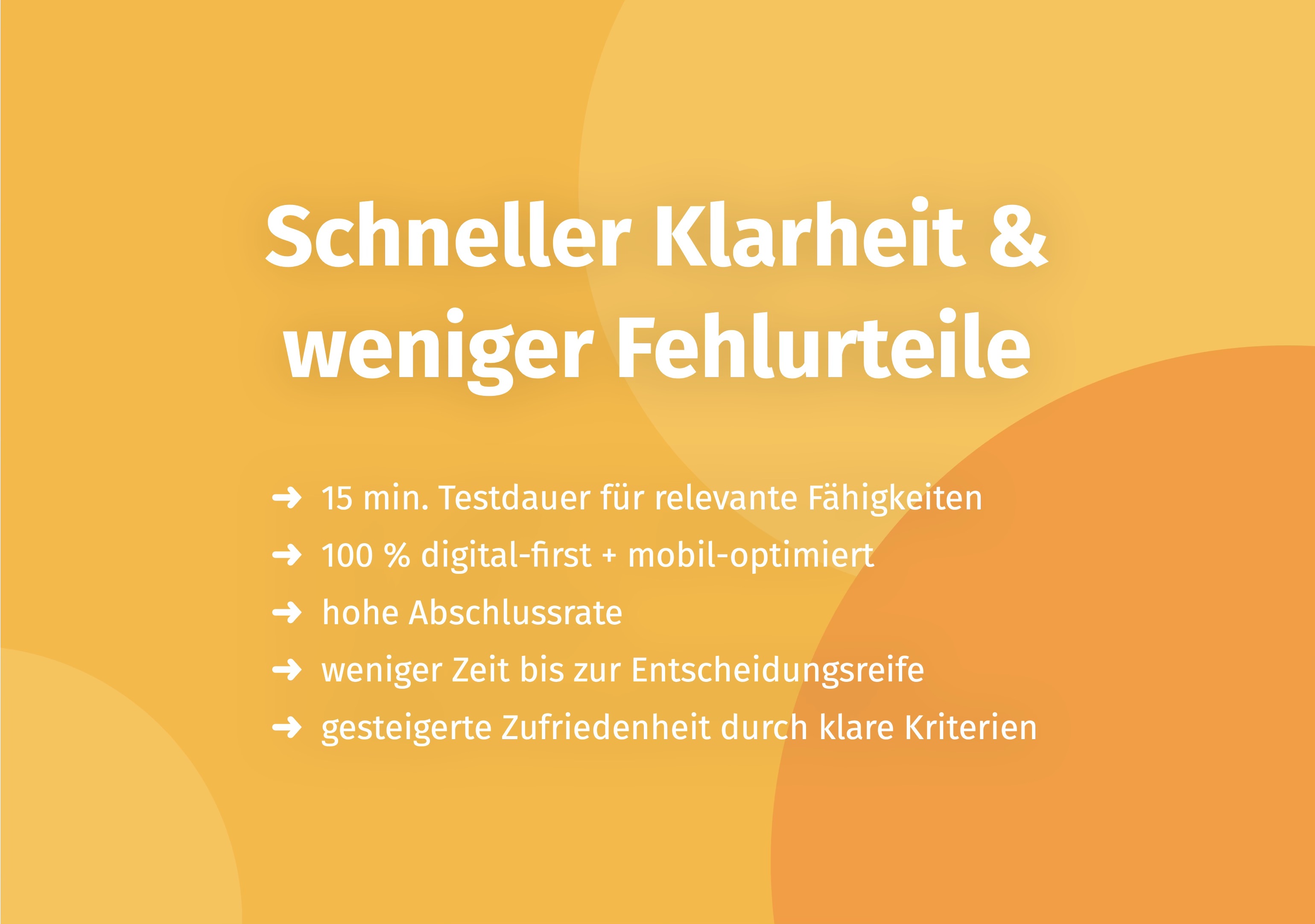
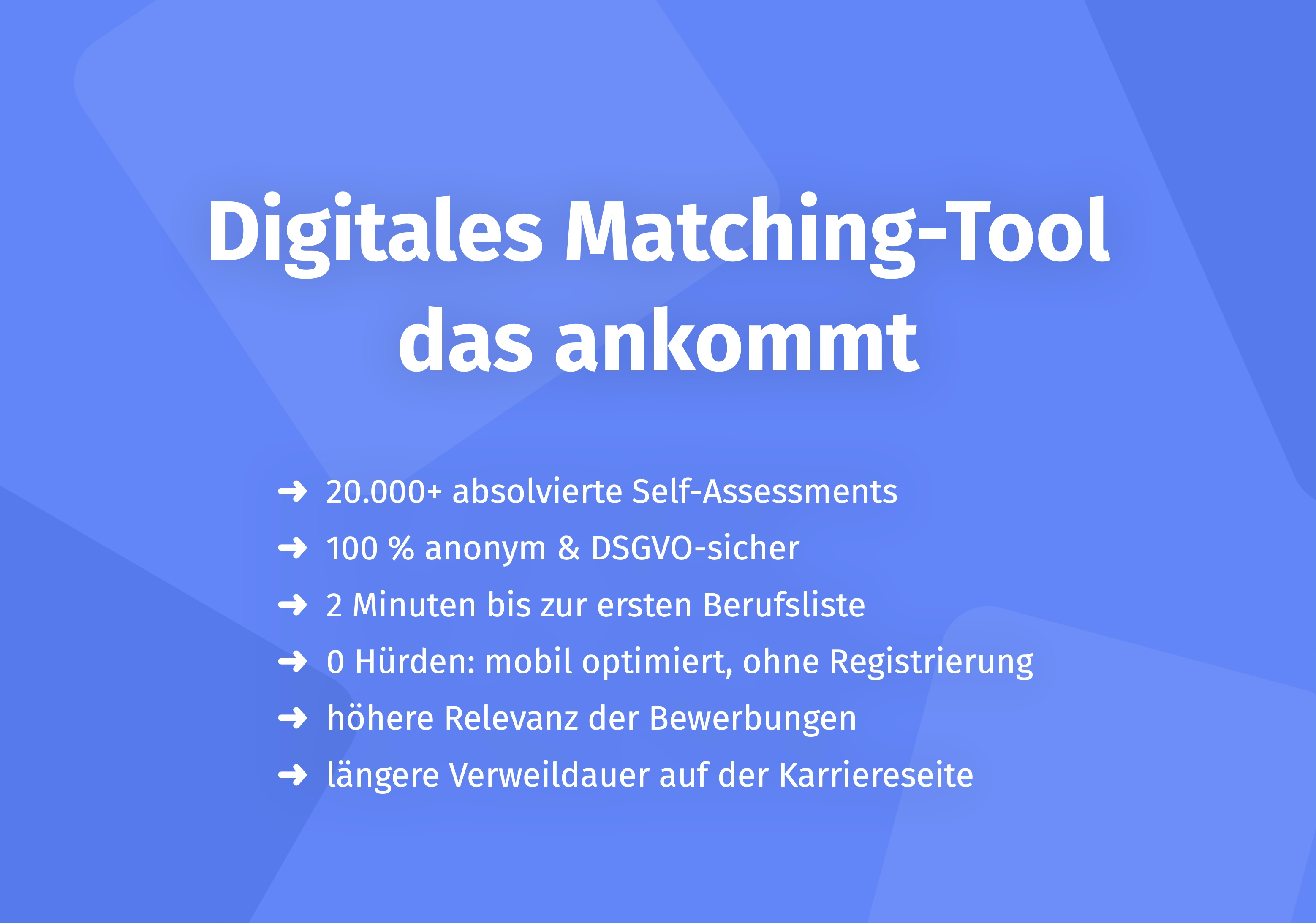
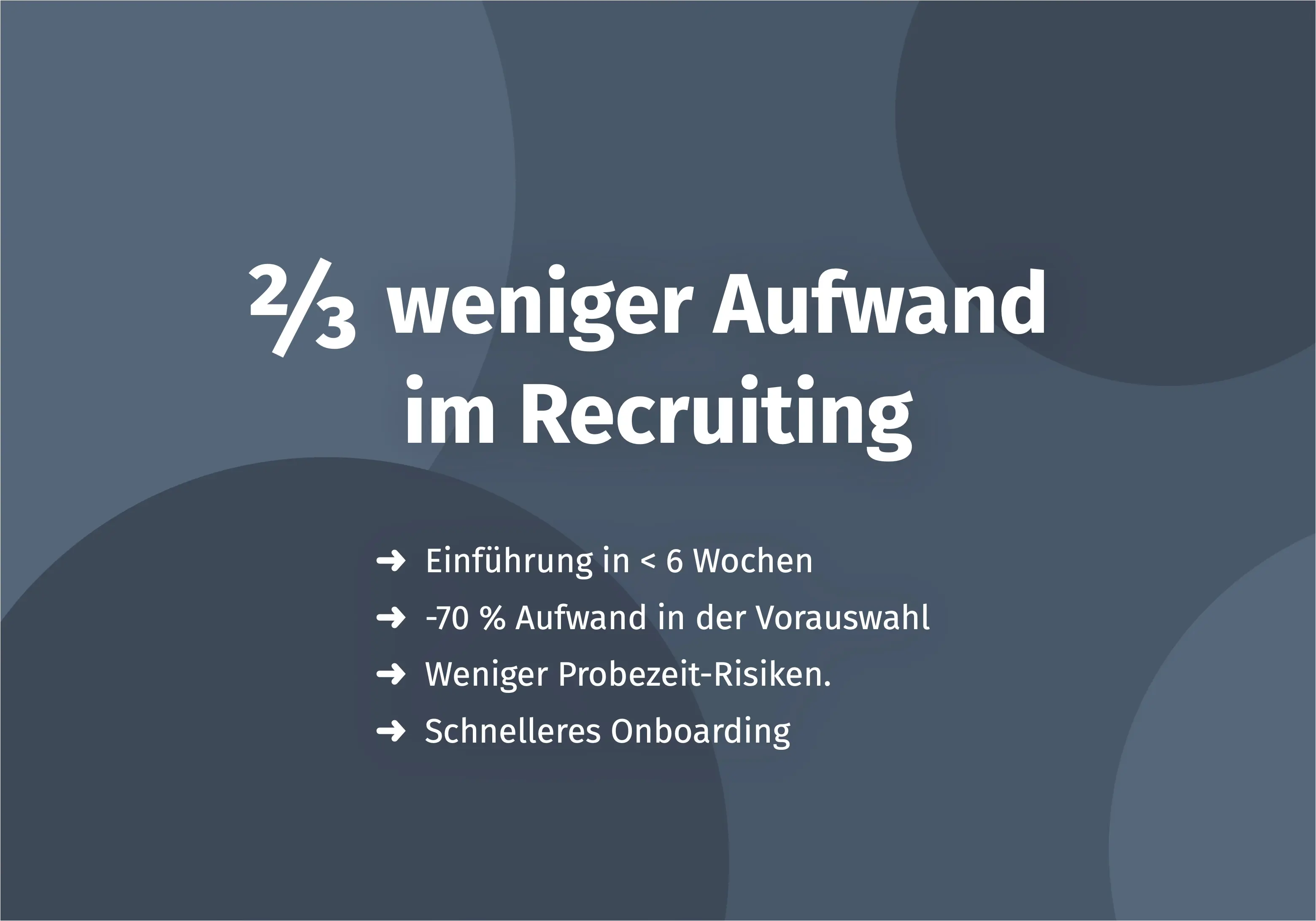
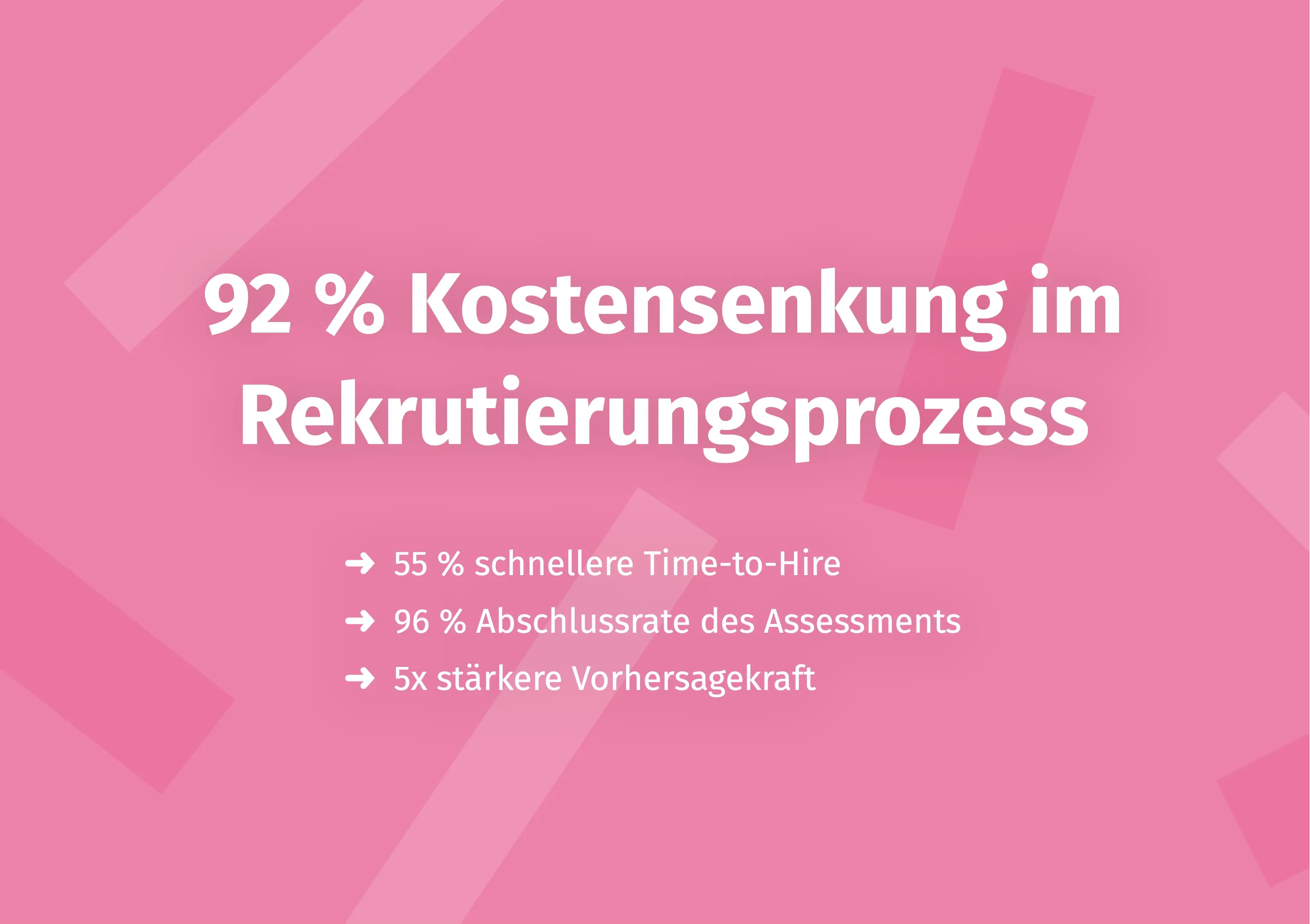
The Aivy digital platform supports HR teams with scientifically validated game-based assessments that make relevant competencies and potential measurable. The result: more objective hiring decisions, fewer bad hires and demonstrably greater diversity in the selection process. By using data-driven talent assessment, MCI Deutschland reduced time-to-hire by 55 percent and cut cost-per-hire by 92 percent. More details are available in the MCI success story.
Onboarding and Integration
Effective onboarding is a key determinant of whether new employees are able to fulfil their full potential. Research shows that structured onboarding programmes significantly reduce the time to full productivity and lower early turnover rates. Onboarding encompasses not only functional role training, but also cultural integration, building internal networks and aligning mutual expectations.
Learning and Development
Human capital is not static – it grows or diminishes depending on how systematically development is invested in. Learning and development includes formal training programmes as well as informal on-the-job learning, mentoring, coaching and job rotation. A central objective is building future-ready skills, particularly in the context of digital transformation. Talent relationship management extends this perspective by focusing on the long-term nurturing of talent – both within the organisation and in the external candidate pool.
Performance Management and Feedback
Performance management connects individual objectives with organisational goals and creates the foundation for targeted development. Regular one-to-ones, 360-degree feedback and clear goal-setting frameworks (such as the OKR model) help to surface strengths and identify development needs at an early stage.
Employee Retention
Human capital that leaves an organisation must be rebuilt at considerable cost. Retention measures include not only competitive compensation, but also factors such as organisational culture, leadership quality, flexible working arrangements and clear development pathways. Regular employee surveys help identify dissatisfaction early and take corrective action before people resign.
Measuring Human Capital: KPIs and Methods
Human capital is harder to measure than physical assets, but it is far from unmeasurable. The following metrics have proven their worth in practice:
| KPI | Description | Benchmark |
|---|---|---|
| Time-to-Hire | Time from first candidate contact to contract signing | Avg. 30–45 days |
| Cost-per-Hire | Total cost per filled position | Avg. €3,000–€7,000 |
| Turnover Rate | Share of employees leaving per year | Target: below 10–15% |
| Training Participation Rate | Share of employees completing training per year | Target: >80% |
| Time-to-Productivity | Time until new employees reach full performance | Depending on role: 3–6 months |
| L&D ROI | Return on a training measure relative to its cost | Varies significantly by initiative |
| Employee Satisfaction (eNPS) | Employee Net Promoter Score | Target: >30 |
The OECD emphasises in The Well-being of Nations (2001) that human capital, alongside social capital, is one of the decisive drivers of economic and social development – and that investment in building it measurably contributes to productivity.
Frequently Asked Questions about Human Capital Management
What Is the Difference between Human Capital Management and Traditional HR Management?
Traditional HR management focuses primarily on the administrative side of the employment relationship: payroll, contract management, absence tracking. Human capital management goes further: it treats employees as a strategic investment and asks how their potential can be grown and sustained over the long term. The fundamental difference lies in the underlying philosophy – cost centre versus return-generating asset.
What Instruments Does Human Capital Management Include?
The most important instruments are: scientifically grounded talent assessment in the selection process, structured onboarding, systematic learning and development, performance management with regular feedback, mentoring and coaching, and retention measures. Ideally, these work together to support employees throughout their entire lifecycle within the organisation.
How Do You Measure Human Capital in Practice?
Proven KPIs include time-to-hire, cost-per-hire, turnover rate, training participation rate and the ROI of learning and development initiatives. Employee surveys (eNPS), 360-degree feedback and assessment scores add further layers of insight. Importantly, no single metric fully captures human capital – only the combination of multiple KPIs provides a reliable picture.
How Much Does a Bad Hire Cost?
Industry estimates put the cost of a bad hire at between 30 and 200 percent of the annual salary for the position. This includes direct costs (recruitment, onboarding, severance) and indirect costs (productivity loss, team disruption, knowledge loss, employer brand damage). The more senior the role, the more costly the mis-hire.
What Is the Difference between Human Capital, Social Capital and Structural Capital?
Human capital encompasses the individual knowledge and skills of each employee. Social capital describes relationships, trust and networks within the organisation. Structural capital stands for processes, systems and organisational culture. Together, all three form an organisation's intellectual capital – and all three can be actively developed through deliberate management.
How Important Is Talent Selection for Human Capital Management?
It is the foundation. Every subsequent measure – onboarding, development, retention – builds on the quality of the initial hiring decision. Bringing in the wrong people from the outset wastes resources and generates costs that downstream initiatives can rarely offset. Objective selection methods that measure potential rather than simply tracking career milestones are therefore a central lever in any human capital management strategy.
What Role Do Professional Interests Play in Talent Selection?
Professional interests are a reliable predictor of how motivated and effective someone will be in a given role. People who work in a role that aligns with their interests tend to be more productive, more engaged and more likely to stay. Capturing professional interests as part of the assessment process is therefore an important component of a holistic human capital management approach.
Conclusion
Human capital management is far more than a buzzword from the management literature. It is the strategic response to one of the most pressing challenges facing modern organisations: attracting, developing and retaining qualified people – in an environment shaped by skills shortages, demographic change and accelerating digitalisation.
The key is to consistently view employees as an investment, not a cost centre. This starts with objective, scientifically grounded talent selection that surfaces potential beyond CVs and first impressions. It continues through structured onboarding, targeted development initiatives and a performance management approach that builds on strengths rather than merely managing weaknesses.
Well-executed human capital management pays off – through lower turnover, fewer bad hires and a workforce that can genuinely fulfil its potential.
Want to make talent selection in your organisation more objective and efficient? Find out how the Aivy platform strengthens your human capital management.
Sources
- Becker, G.S. (1964): Human Capital: A Theoretical and Empirical Analysis, with Special Reference to Education. Columbia University Press / University of Chicago Press. https://press.uchicago.edu/ucp/books/book/chicago/H/bo3684031.html
- OECD (2001): The Well-being of Nations: The Role of Human and Social Capital. OECD Publishing. https://www.oecd.org/education/skills-beyond-school/1870573.pdf
- Deutsche Gesellschaft für Personalführung – DGFP (2024): HR Report 2024. https://www.dgfp.de/hr-wiki/hr-report/
- Institut für Arbeitsmarkt- und Berufsforschung – IAB: Research reports on skills shortages and workplace learning. https://iab.de/
- Berthel, J. / Becker, F.G. (2017): Personal-Management. Grundzüge für Konzeptionen betrieblicher Personalarbeit. Schäffer-Poeschel Verlag.
- Gabler Wirtschaftslexikon: Humankapital. Springer Gabler. https://wirtschaftslexikon.gabler.de/definition/humankapital

Make a better pre-selection — even before the first interview
In just a few minutes, Aivy shows you which candidates really fit the role. Beyond resumes based on strengths.