
HR workflows are structured sequences of tasks, approvals, and responsibilities that standardize and accelerate HR processes such as recruiting, onboarding, or offboarding. They reduce manual errors, create transparency, and enable automation in human resources management. Well-designed HR workflows are today a central lever for efficient and scalable people operations.
What Are HR Workflows?
An HR workflow is a structured, repeatable sequence of tasks within an HR process. It defines who does what, when, which approvals are required, and which steps can be automated.
It is important to distinguish three terms that are often used interchangeably in everyday HR work:
- HR process refers to the overarching concept – for example, "recruiting" or "onboarding."
- HR workflow is the operational implementation of that process: concrete, with defined steps, triggers, responsibilities, and deadlines.
- Checklist is a simple task list without logic, automation, or assigned responsibilities.
The key difference: a workflow contains logic. It is triggered by an event (e.g., a new application), automatically assigns tasks to the right people, and can initiate reminders, escalations, and system actions. A checklist does not.
For HR professionals, well-defined workflows are particularly valuable because they ensure process quality independent of individual people – an important factor in growing teams and distributed organizations.
Types of HR Workflows
HR workflows accompany employees throughout the entire employee lifecycle – from application to departure. An overview of the most common types:
Recruiting Workflow
The recruiting workflow covers all steps from job posting to hiring: define requirements profile → publish job posting → receive applications → pre-selection → assessment → interview → offer → contract signing.
This workflow has a direct impact on time-to-hire and the quality of hiring decisions. Bottlenecks typically arise during pre-selection and interview scheduling between HR and the hiring department.
Onboarding Workflow
A structured onboarding workflow ensures that new employees are productive and well-integrated from day one. Typical steps: contract signing → provide IT equipment → assign buddy → schedule introductory meetings → 30/60/90-day check-in.
Research shows that structured onboarding significantly shortens time-to-productivity and improves employee retention in the first months.
Absence and Leave Workflow
Leave requests, sick notifications, or special leave without a clear workflow quickly lead to confusion and manual corrections. Automated absence workflows route requests directly to the responsible manager, update the team calendar, and notify relevant parties.
Performance Management Workflow
This workflow structures the entire performance cycle: goal setting → mid-year feedback → annual review → development plan → salary review. Without a defined workflow, performance reviews are frequently delayed or conducted inconsistently.
Offboarding Workflow
An often underestimated workflow. When employees leave, many tasks must run in parallel: confirm resignation → organize knowledge transfer → deactivate IT access → prepare employment reference → conduct exit interview → finalize payroll. A missing offboarding workflow carries legal and security risks.
Step by Step: Recruiting Workflow as a Practical Example
The recruiting workflow is the most complex and error-prone process for most HR teams. It is therefore the ideal first digitalization and optimization project.
The 6 Phases of a Structured Recruiting Workflow
- Needs assessment: Define the requirements profile together with the hiring department (trigger: open position reported).
- Job posting: Approval by hiring manager → automatic publication in the ATS and on job portals.
- Application receipt & initial communication: Automatic confirmation email → application appears in the ATS dashboard.
- Pre-selection: CV screening and/or standardized assessment (more on this below).
- Interview coordination: Invitations, reminders, and interview notes automated through the system.
- Offer & contract signing: Offer approval → digital contract dispatch → onboarding workflow is automatically triggered.
Aptitude Diagnostics as an Objective Pre-Selection Step
A critical phase in the recruiting workflow is pre-selection. If it relies exclusively on CV screening, two problems arise: it is time-consuming and susceptible to unconscious bias – unconscious prejudices that distort decisions.
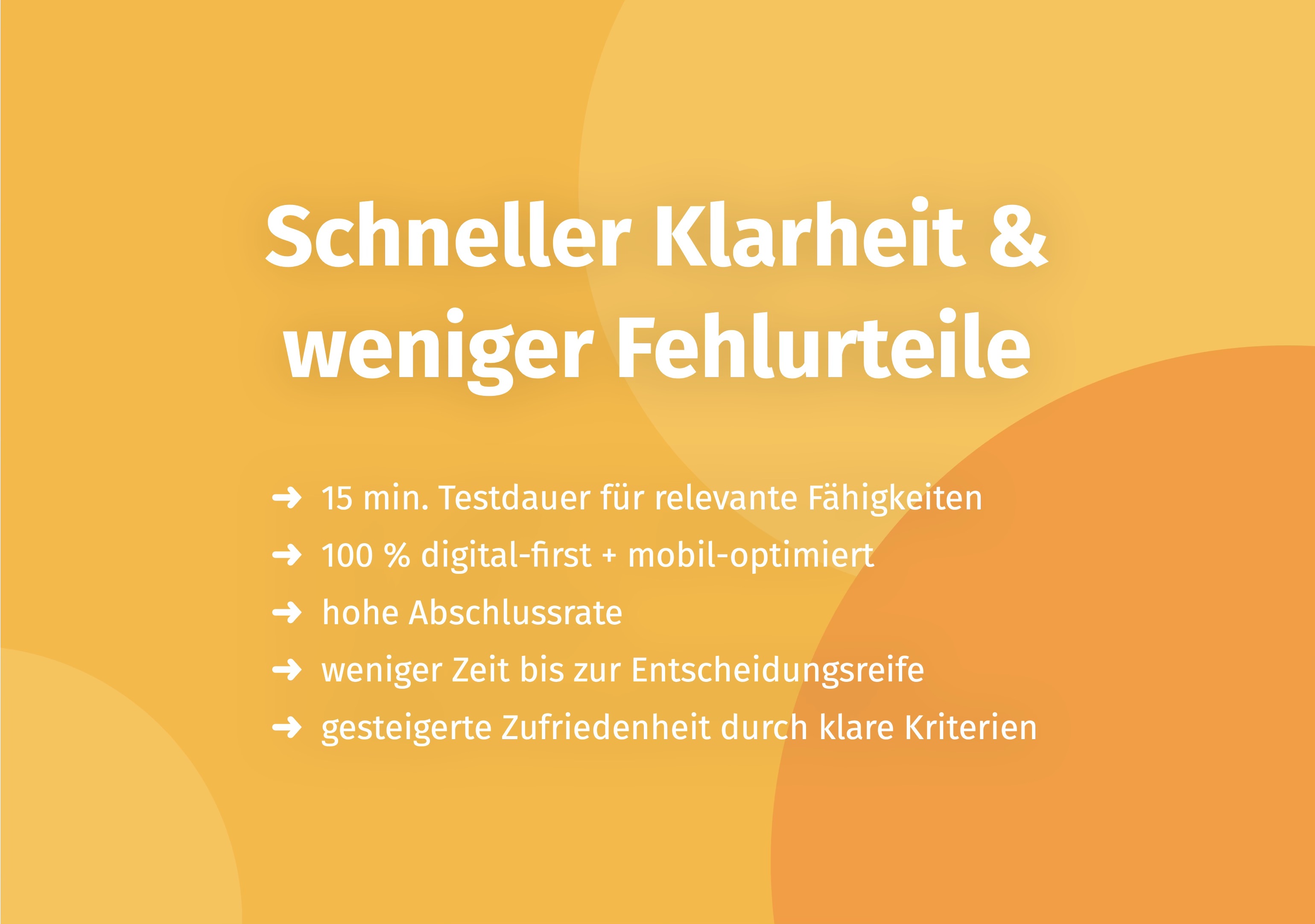
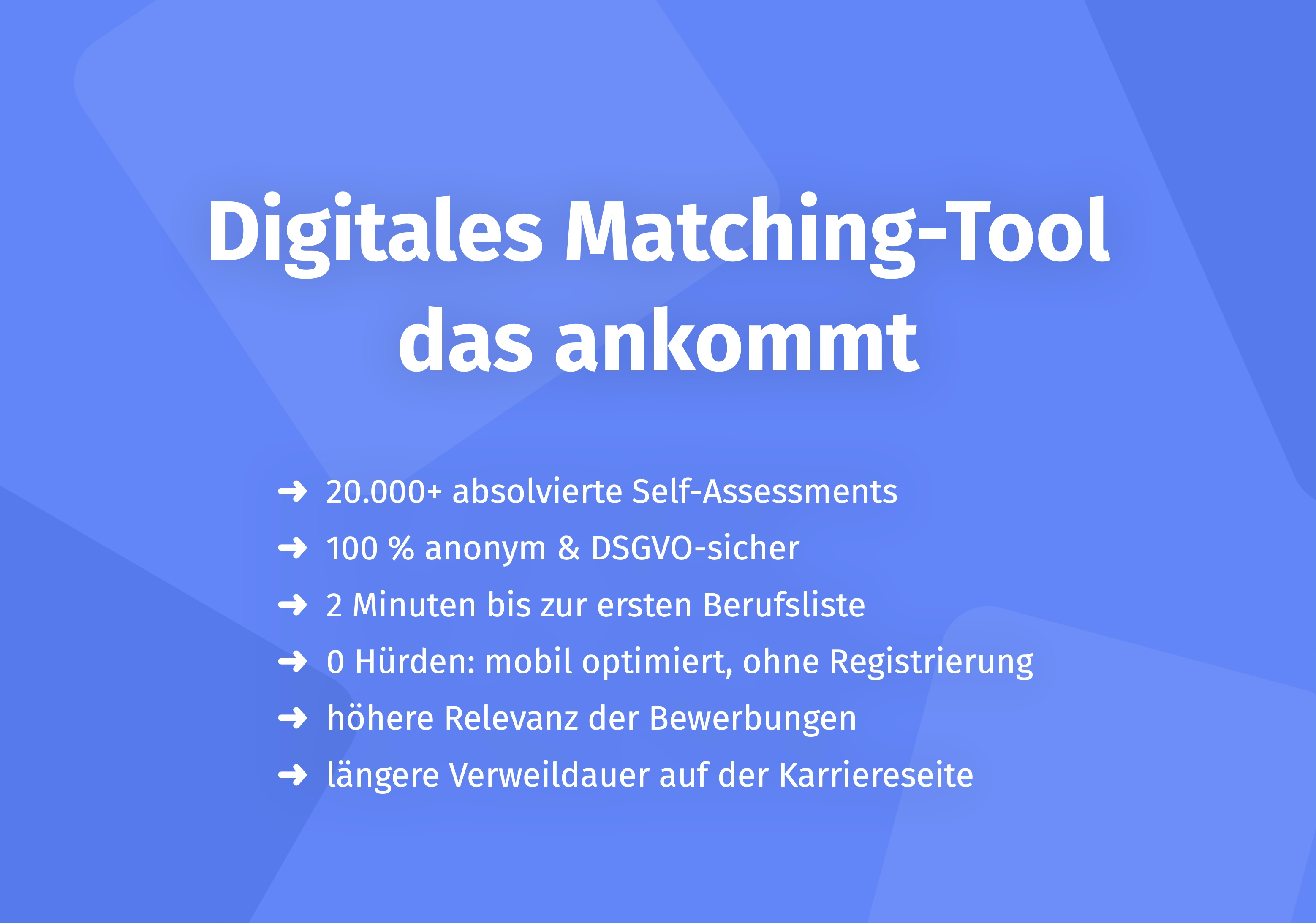
A structured approach is the use of standardized aptitude diagnostics as a fixed workflow step before the first interview. The digital platform Aivy – a scientific spin-off of Freie Universität Berlin – uses game-based assessments and validated psychometric methods that integrate seamlessly into existing ATS systems.
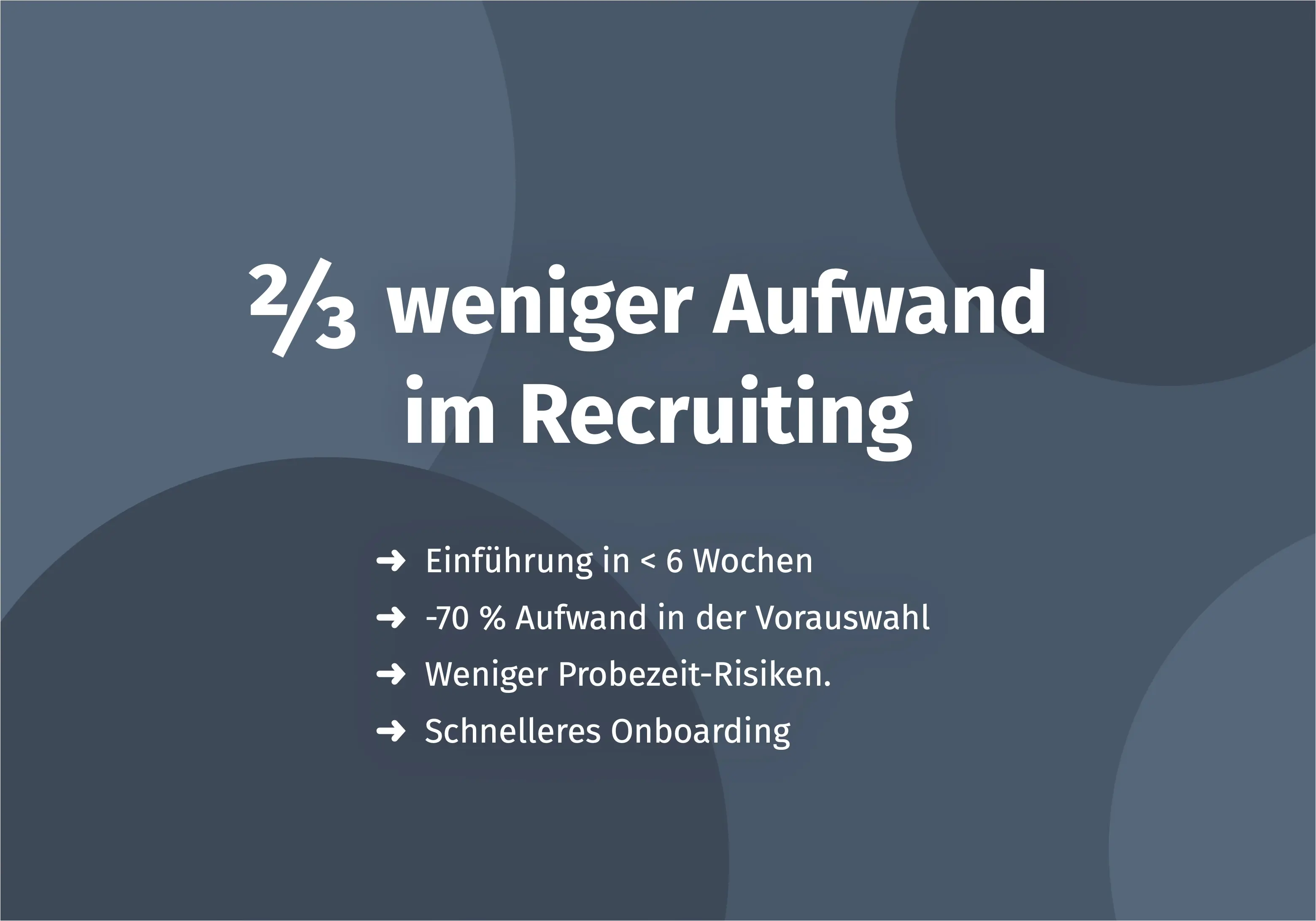
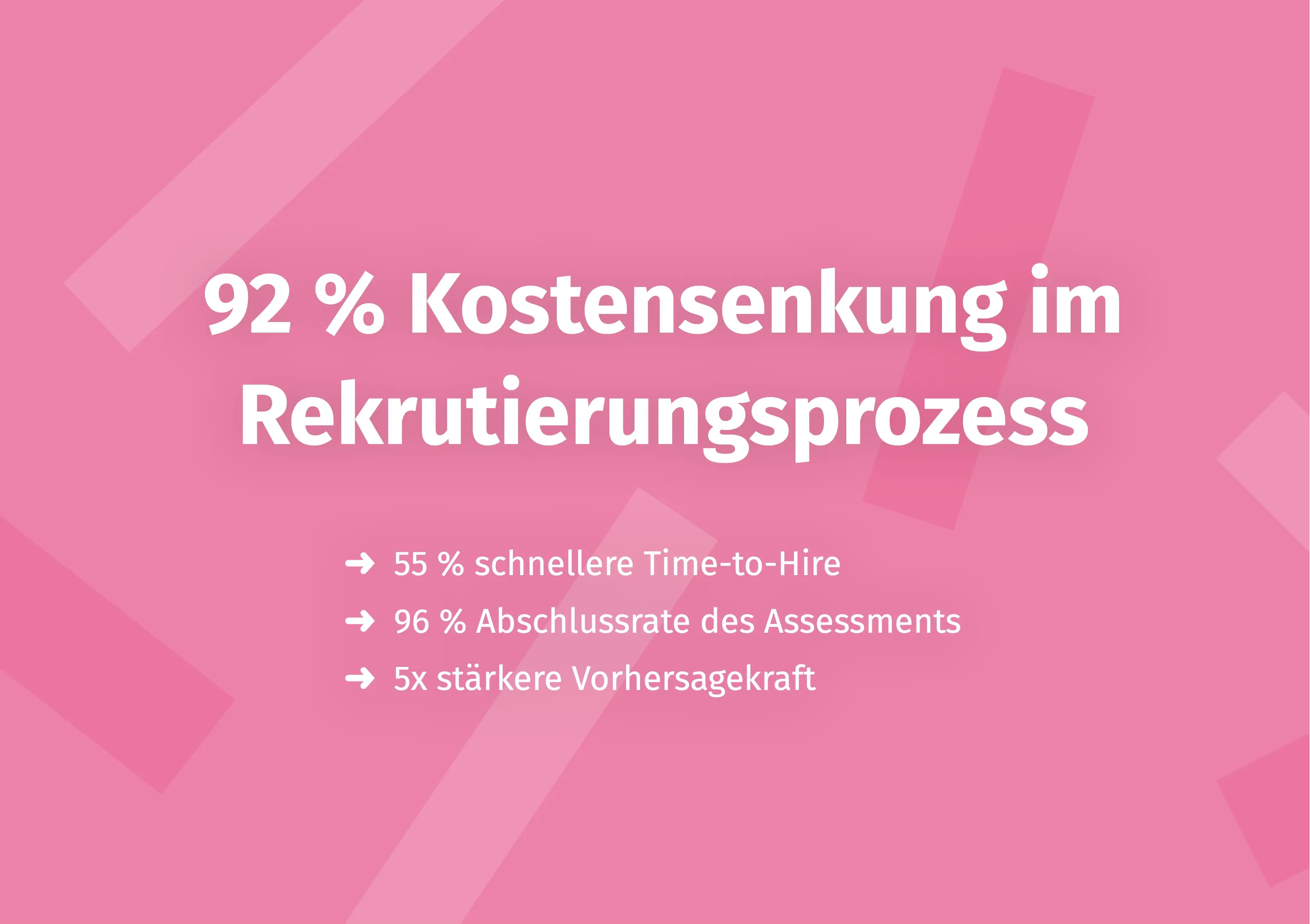
Practice confirms the benefit: by integrating aptitude diagnostics into its recruiting workflow, MCI Deutschland reduced time-to-hire by 55% and cost-per-hire by 92% – while achieving a more objective basis for hiring decisions. More details in the MCI success story.
Digitalizing and Automating HR Workflows
Which Steps Can Be Automated?
Not every workflow step is suitable for automation. Tasks requiring judgment and human interaction (e.g., the job interview) remain manual. The following steps, however, are well-suited for automation:
- Application confirmations and status updates to candidates
- Leave approvals (when rules are clearly defined)
- Reminders for performance reviews and feedback meetings
- Document dispatch (employment contracts, NDAs, onboarding documents)
- IT provisioning for new hires (trigger: contract signing)
- Deactivation of IT access upon departure
Important: When digitalizing HR workflows, data protection requirements must be considered – in particular data minimization, purpose limitation, and regulations on data processing agreements with external systems. Involving a data protection officer is recommended.
Tools and Systems at a Glance
Various categories of systems are available for digitalizing HR workflows:
- HRIS (Human Resource Information System): Central HR system with workflow modules (e.g., Personio, Workday, SAP SuccessFactors). Manages personnel records, absences, and performance processes.
- ATS (Applicant Tracking System): Specialized in recruiting workflows. Manages applications, coordinates interviews, and maps the entire recruiting process digitally.
- Aptitude diagnostics platforms: Complement the recruiting workflow with standardized, objective pre-selection steps.
- Workflow tools: General automation tools (e.g., Factorial, HRworks) that map HR-specific workflows.
The best solution is not an isolated one: systems should be connected via interfaces (APIs) so that data does not need to be transferred manually between platforms.
Common Mistakes in HR Workflows – and How to Avoid Them
Many HR teams fail not because of a lack of willingness to digitalize, but because of typical implementation errors:
Too many approval levels: When every step requires sign-off from three people, the workflow slows down dramatically. Review which approvals are genuinely necessary.
Unclear responsibilities: Tasks without a clear owner get stuck. The RACI model helps assign responsibilities clearly (Responsible, Accountable, Consulted, Informed).
No monitoring: Workflows that are not measured are never improved. Define KPIs such as time-to-hire, step throughput time, or error rate.
Tool silos: When ATS, HRIS, and payroll systems are not integrated, manual transfer steps emerge – sources of error and time wasters alike.
Missing data protection compliance: Especially with automated, data-processing workflows, privacy requirements must be observed.
Frequently Asked Questions About HR Workflows
What is an HR workflow?
An HR workflow is a structured, repeatable sequence of tasks within an HR process. It defines who does what when, which approvals are required, and which steps can be automated. Unlike a simple checklist, a workflow contains logic, triggers, and clearly assigned responsibilities.
What types of HR workflows exist?
The most common HR workflows are the recruiting workflow (from job posting to hiring), the onboarding workflow (from contract signing to the end of the probationary period), the absence workflow (leave request and approval), the performance management workflow (goal setting to annual review), and the offboarding workflow (resignation to final settlement).
How do I create an HR workflow?
Take a structured approach: document the existing process in full (a swimlane diagram works well), assign responsibilities using RACI, identify bottlenecks and manual steps, assess automation potential, select a suitable tool, and pilot the workflow before rolling it out. Then measure, evaluate, and continuously improve.
Which HR workflows are easiest to automate?
Particularly well-suited for automation are absence and leave approvals, onboarding checklists (triggered by contract signing), application confirmations and status updates in recruiting, and reminders for performance reviews and employee meetings. Tasks requiring judgment (e.g., hiring decisions) remain manual.
What is the difference between an HR workflow and an HR process?
The HR process is the overarching concept (e.g., "recruiting"). The HR workflow is the concrete operational implementation of that process – with defined steps, triggers, responsible parties, deadlines, and where applicable, automation. A single process can contain multiple workflows (e.g., a standard recruiting workflow and an abbreviated workflow for internal applications).
What KPIs should I measure for HR workflows?
Key metrics include: time-to-hire (recruiting), time-to-productivity (onboarding), step throughput time, error rate and manual corrections, and employee satisfaction with HR processes (e.g., via pulse surveys or eNPS).
Which tools are suitable for HR workflow management?
For recruiting workflows, ATS systems such as softgarden, Recruitee, or Personio Recruiting are recommended. For cross-functional HR workflows, HRIS platforms such as Personio, Workday, or SAP SuccessFactors are a good fit. For objective pre-selection within the recruiting workflow, specialized aptitude diagnostics solutions such as the digital platform Aivy can be added.
What are common mistakes in HR workflows?
The most common mistakes are: too many approval levels (slows down the process), unclear responsibilities (tasks get stuck), no monitoring (no basis for improvement), tool silos without integration (manual data transfer), and missing data protection compliance in automated, data-processing workflows.
Conclusion
HR workflows are not an end in themselves – they are the foundation of efficient, fair, and scalable HR work. Organizations that structure, standardize, and incrementally digitalize their HR processes gain not only time but also quality: in hiring decisions, onboarding, and day-to-day HR operations.
The first step is documenting existing processes. The second is deciding which workflows to digitalize first – in most organizations, the recruiting workflow is the top priority, because it has a direct impact on speed, cost, and decision quality.
Want to optimize the recruiting workflow at your organization with objective aptitude diagnostics? The digital platform Aivy offers scientifically validated game-based assessments that integrate seamlessly into existing HR workflows. Book a demo and get to know Aivy.
Sources
- Deutsche Gesellschaft für Personalführung (DGFP): HR-Report 2024 – Priorities in HR Work. DGFP e.V., 2024. https://www.dgfp.de
- Bitkom e.V.: Digitalization in HR Work. Bitkom, 2023. https://www.bitkom.org
- Society for Human Resource Management (SHRM): HR Workflow Best Practices. SHRM, 2024. https://www.shrm.org
- Drumm, H.J.: Personalwirtschaft. Springer Gabler, 7th edition, 2012.
- Nerdinger, F.W. et al.: Work and Organizational Psychology. Springer, 2019.
- MCI Deutschland GmbH: https://www.aivy.app/en/success-stories/mci-deutschland-gmbh

Make a better pre-selection — even before the first interview
In just a few minutes, Aivy shows you which candidates really fit the role. Beyond resumes based on strengths.