
HR outsourcing refers to the delegation of HR tasks – such as payroll, recruiting, or training – to external service providers. Companies use it to reduce costs, free up internal resources, and focus on their core business. The key question is which processes are truly suited for outsourcing – and where internal HR expertise remains indispensable.
Definition: What Is HR Outsourcing?
HR outsourcing is the transfer of human resources tasks to external service providers. This can cover individual areas – such as payroll processing – or virtually all HR functions within an organisation.
The concept follows the principle of focusing on core competencies: tasks that do not represent a strategic differentiator are handed over to specialised providers. This allows internal HR teams to concentrate on strategically relevant topics such as company culture, leadership development, or talent management.
Distinction: HR Outsourcing vs. HR Shared Services vs. Interim HR
These three terms are often confused, but they describe fundamentally different approaches:
- HR Outsourcing: External service providers take over HR tasks entirely outside the organisation.
- HR Shared Services: An internal, centralised unit provides HR services to multiple business units – the provider remains within the organisation.
- Interim HR: Temporary HR professionals are brought in for limited periods, for example during projects or vacancies. This is not permanent outsourcing.
HR Outsourcing Models at a Glance
Depending on scope and objectives, three main models can be distinguished:
Full-Service HR Outsourcing
The provider takes over virtually all HR functions – from personnel administration and payroll to recruiting and training. This model is particularly suitable for smaller companies without a dedicated HR department, or for organisations looking to radically streamline their HR resources.
Selective Outsourcing
Only defined areas are outsourced; the rest remains in-house. For example, a company outsources payroll and HR administration but keeps recruiting and people development internal. Selective outsourcing is the most common model, as it combines control with efficiency.
Recruitment Process Outsourcing (RPO)
RPO refers to the full or partial outsourcing of the recruiting process to a specialised provider. Unlike traditional recruitment agencies, an RPO provider acts as an integrated part of the internal HR team: handling job postings, candidate screening, interviews, and sometimes onboarding as well. RPO is particularly well suited to high or fluctuating hiring volumes.
| Model | Degree of Outsourcing | Best Suited For |
|---|---|---|
| Full-Service Outsourcing | High (all HR functions) | SMEs without an HR department, start-ups |
| Selective Outsourcing | Medium (specific areas) | Companies of all sizes |
| RPO | High (recruiting only) | Organisations with high or fluctuating hiring demand |
Which HR Functions Are Suitable for Outsourcing?
Not every HR task is equally well-suited for outsourcing. The key question is whether the process is standardisable, measurable, and not strategically critical to the organisation.
Well-Suited Areas
- Payroll: Standardised, rule-based, and heavily compliance-driven – the most commonly outsourced HR function.
- Recruiting / Talent Acquisition (RPO): Particularly cost-effective when hiring volumes fluctuate.
- HR Administration: Contract management, personnel file maintenance, reporting and documentation.
- Learning & Development: Standardised training programmes, compliance courses, e-learning platforms.
Less Suitable Areas
- Strategic HR Planning: Workforce planning and people strategy require deep organisational knowledge.
- Company Culture and Employer Branding: Closely tied to the organisation's identity.
- Leadership Development: Requires personal trust and familiarity with internal dynamics.
Benefits and Risks of HR Outsourcing
Benefits
- Cost Reduction: Fixed costs (salaries, infrastructure, licences) are converted into variable costs.
- Access to Expertise: Specialised providers bring up-to-date knowledge – for example on payroll compliance or current recruiting technologies.
- Scalability: Capacity can be scaled up or down quickly, for example during growth phases.
- Focus on Core Business: Internal HR teams gain time for strategically important tasks.
Risks
- Loss of Control: Without adequate oversight of the provider, quality can decline.
- Data Protection (GDPR): Personnel data is particularly sensitive. Once data is transferred to external providers, a Data Processing Agreement (DPA) under Art. 28 GDPR is mandatory. Without a DPA, significant fines may apply.
- Vendor Lock-in: Dependency on a single provider can make switching costly and complex later on.
- Cultural Distance: External providers often have only a superficial understanding of company culture – a quality risk in sensitive HR processes.
Important: Before any HR outsourcing project, data protection compliance must be reviewed. The DPA under Art. 28 GDPR is not an optional add-on – it is a legal requirement.
When Does HR Outsourcing Make Sense? – A Decision Checklist
HR outsourcing is worth considering when several of the following points apply:
For SMEs (up to ~250 employees):
- No dedicated HR team in place
- Payroll processes are taking up a disproportionate amount of time
- Compliance requirements (payroll, employment law) are becoming increasingly complex
- Growth requires rapidly scalable recruiting capacity
For mid-sized and large organisations:
- The HR team is overloaded with operational tasks and unable to deliver strategic projects
- Hiring volumes fluctuate significantly (e.g. seasonal business)
- International expansion requires local payroll expertise
- Cost-per-hire and time-to-hire need to be measurably reduced
Outsourcing is not recommended when:
- Company culture and values are central to the recruiting process
- Trust and confidentiality are essential in sensitive HR processes
- The quality of external providers cannot be adequately monitored
HR Outsourcing in Recruiting: RPO and Objective Selection
Recruitment Process Outsourcing has established itself as a discipline in its own right. RPO providers promise measurable value: faster placements, lower cost-per-hire, and access to larger talent pools.
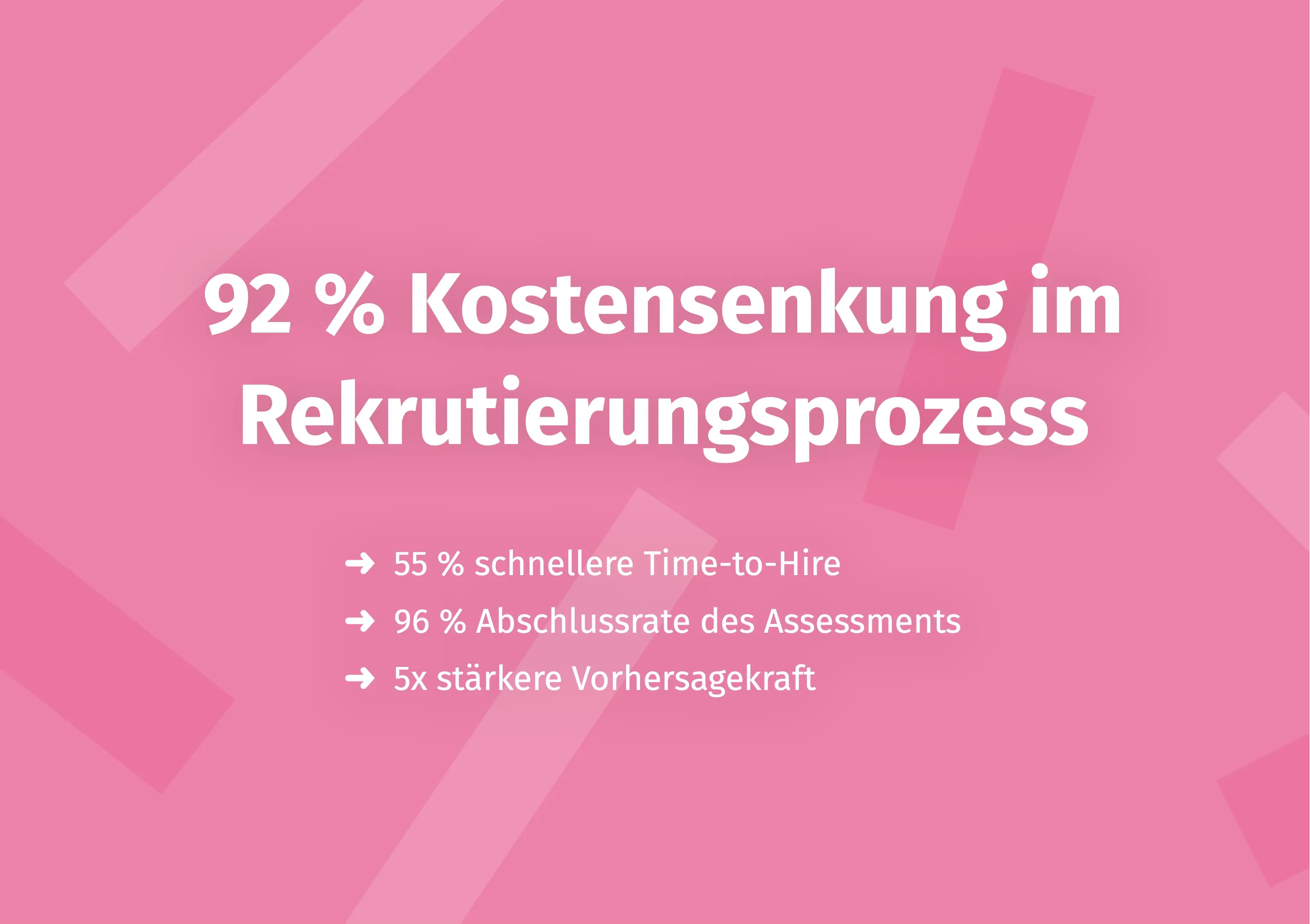
However, one critical success factor is often underestimated: the quality of selection decisions. Even when the recruiting process is outsourced, the criteria by which candidates are assessed must be scientifically sound and free from unconscious bias. Evidence from practice shows that companies like MCI Deutschland were able to reduce time-to-hire by 55% and cost-per-hire by 92% through the use of digital talent assessment tools.
The digital platform Aivy supplements RPO processes with scientifically validated talent diagnostics – developed as a spin-off of Freie Universität Berlin. Through game-based assessments, candidates are evaluated objectively and with minimal bias, regardless of whether recruiting is managed internally or by an external provider. Learn more about objective talent diagnostics in recruiting.
Frequently Asked Questions about HR Outsourcing
What is HR outsourcing?
HR outsourcing is the delegation of HR tasks to external service providers. It can cover individual areas (e.g. payroll) or comprehensive HR functions. The goal is typically a combination of cost reduction, greater efficiency, and access to specialised expertise.
Which HR functions can be outsourced?
Standardisable, rule-based processes are particularly well-suited: payroll, recruiting (RPO), HR administration, and compliance training. Less suitable are strategic, culture-shaping tasks such as organisational culture development or leadership programmes.
What is Recruitment Process Outsourcing (RPO)?
In RPO, an external provider takes over all or part of the recruiting process – including job postings, candidate screening, and interviews. Unlike a headhunter, the RPO provider acts as an extension of the internal HR team. RPO is scalable and aligned with measurable KPIs such as time-to-hire and cost-per-hire.
How much does HR outsourcing cost?
Costs vary considerably depending on scope, provider, and company size. Payroll outsourcing is often billed per employee per month. RPO models frequently use transaction-based pricing (cost-per-hire) or retainer arrangements. A fair cost comparison should always account for Total Cost of Ownership – including internal effort that would otherwise be required.
What is the difference between HR outsourcing and HR Shared Services?
HR outsourcing moves tasks to external providers outside the organisation. HR Shared Services, by contrast, centralises HR services within an internal organisational unit that serves multiple business areas. The decisive difference: Shared Services remain inside the organisation; outsourcing leaves it.
When is HR outsourcing worthwhile for SMEs?
For SMEs, outsourcing makes the most sense when no dedicated HR team is in place (typically under 50 employees), when payroll processes become too complex or time-intensive, when strong growth creates rapidly increasing recruiting demand, or when compliance requirements can no longer be reliably managed internally.
What do I need to consider regarding GDPR and HR outsourcing?
Whenever personal data is transferred to external providers – which is almost always the case with HR outsourcing – a Data Processing Agreement (DPA) under Art. 28 GDPR is legally required. The DPA governs how the provider may handle the data and what technical and organisational protection measures must be in place. Without a DPA, significant fines may be imposed.
Conclusion
HR outsourcing is not a cure-all, but it is a powerful instrument for organisations looking to run their operational HR processes more efficiently. The key is a clear-eyed analysis: which tasks are standardisable and better placed externally – and which require internal expertise, trust, and cultural proximity?
The greatest leverage lies in payroll and Recruitment Process Outsourcing. Used strategically, HR outsourcing can reduce costs, improve scalability, and free internal HR teams to focus on what truly matters: developing people, shaping culture, and thinking strategically.
One caveat: even outsourced processes require quality assurance – especially in recruiting. Objective, scientifically grounded selection methods are not a nice-to-have; they are the foundation of sound hiring decisions.
Sources
- GDPR Art. 28 – Processor. European Parliament and Council of the EU, 2018. https://gdpr-text.com/en/read/article-28/
- Deutsche Gesellschaft für Personalführung (DGFP) – HR Reports and Studies. https://www.dgfp.de
- Bundesverband der Personalmanager (BPM) – HR Trend Reports. https://www.bpm.de
- Deloitte – Global Human Capital Trends 2024. https://www2.deloitte.com/insights/us/en/focus/human-capital-trends.html
- SHRM (Society for Human Resource Management) – Recruitment Process Outsourcing. https://www.shrm.org

Make a better pre-selection — even before the first interview
In just a few minutes, Aivy shows you which candidates really fit the role. Beyond resumes based on strengths.