
Even without a dedicated HR department, companies must fulfil core HR responsibilities: drafting legally compliant employment contracts, maintaining personnel files, processing payroll, and meeting reporting obligations. With clear processes and the right digital tools, this is entirely manageable for small businesses and founders without HR expertise — and essential for avoiding legal risks and staying operational as an employer.
What Is HR Administration?
HR administration covers all administrative tasks associated with employing staff: from signing employment contracts and running ongoing payroll to issuing references when an employee leaves. It is distinct from strategic HR management, which deals with topics such as company culture, employee development, or employer branding.
For many small businesses and startups, HR administration is primarily an operational obligation. It must be handled regardless of whether a dedicated HR person is in place. According to the Institut für Mittelstandsforschung Bonn (IfM), around 99% of all companies in Germany are small and medium-sized enterprises (SMEs). The majority have no dedicated HR department — these responsibilities fall to managing directors, office managers, or are absorbed by the accounting team.
Which HR Tasks Are Legally Required?
Anyone who employs staff is bound by a range of legal requirements. These can be grouped into four key areas:
Employment Contract and Documentation Obligations
The German Evidence Act (Nachweisgesetz, NachwG) requires employers to document the essential terms and conditions of employment in writing and hand them to employees at the start of the employment relationship. This includes: place of work, job description, start date, working hours, remuneration, and holiday entitlement. Section 611a of the German Civil Code (BGB) additionally governs the fundamental obligations within the employment contract.
Since the NachwG was amended in 2022, stricter requirements apply: certain details must be provided on the first working day, others within seven days at the latest. Violations can give rise to claims for damages by employees.
Payroll and Social Security
Employers are required to correctly withhold wage tax and remit it to the tax office. At the same time, social security contributions (pension, health, care, and unemployment insurance) must be calculated and reported via the DEÜV (Datenerfassungs- und -übermittlungsverordnung — the German data collection and transmission regulation). The DEÜV governs how and within what timeframes employers must report employee data to the social insurance institutions.
Errors in payroll can be costly: back payments, late payment surcharges, and fines are the most common consequences.
Working Time Documentation
The German Working Hours Act (Arbeitszeitgesetz, ArbZG) requires employers to document deviations from regular working hours. Following the ECJ ruling of 2019 and subsequent German case law, systematic working time recording for all employees is increasingly becoming mandatory — even though the specific statutory rules are still being transposed into national legislation. Introducing a reliable time-tracking system now puts you on safe legal ground.
Data Protection for Employee Data (GDPR)
All personal data relating to employees is subject to the General Data Protection Regulation (GDPR) as well as the German Federal Data Protection Act (BDSG). This means: only collect data that is genuinely necessary — and store it securely, with clearly defined access rights. Violations can be fined up to 4% of global annual turnover.
HR Administration Without an HR Team: How to Get Started
Prioritising Processes: What Comes First?
Not everything is equally urgent. The following order of priority provides a helpful framework:
Implement immediately (legal requirement):
- Draft and issue a written employment contract in line with the NachwG
- Register employees with the social insurance system (DEÜV notification)
- Verify tax class and ensure payroll is correctly processed
- Document holiday entitlement (under the Federal Holiday Act, BUrlG: a minimum of 24 working days based on a six-day week)
Set up as soon as possible:
- Introduce working time recording
- Create a personnel file (contract, warnings, references)
- Ensure GDPR-compliant data storage
Build over the medium term:
- Structure the onboarding process
- Digitalise absence management
- Standardise the recruiting process
Digital Tools as an HR Substitute
For small businesses without dedicated HR staff, specialist software is a practical way to manage processes cleanly and in compliance with the law — without a large headcount. A broad overview by category:
- Payroll: Datev, Lexware, Sage — often used in combination with a tax adviser
- HR administration / HRIS: Personio, HeavenHR, Factorial — centralised storage for contracts, documents, and employee data
- Absence management: Kenjo, Absence.io — digital holiday tracking instead of spreadsheets
- Time tracking: Many HRIS tools include integrated time tracking; specialist alternatives include Clockodo or Personio Time
An HRIS (Human Resource Information System) is more than a digital filing cabinet: it standardises data, reduces manual errors, and creates an auditable record.
The Most Important HR Areas at a Glance
Recruiting and Pre-Selection
Without a dedicated recruiting team, a structured process is essential — otherwise every new hire consumes a disproportionate amount of time. Best practice: define a clear job profile before advertising, use a standardised application form, and conduct a structured pre-selection that goes beyond simply reading CVs.
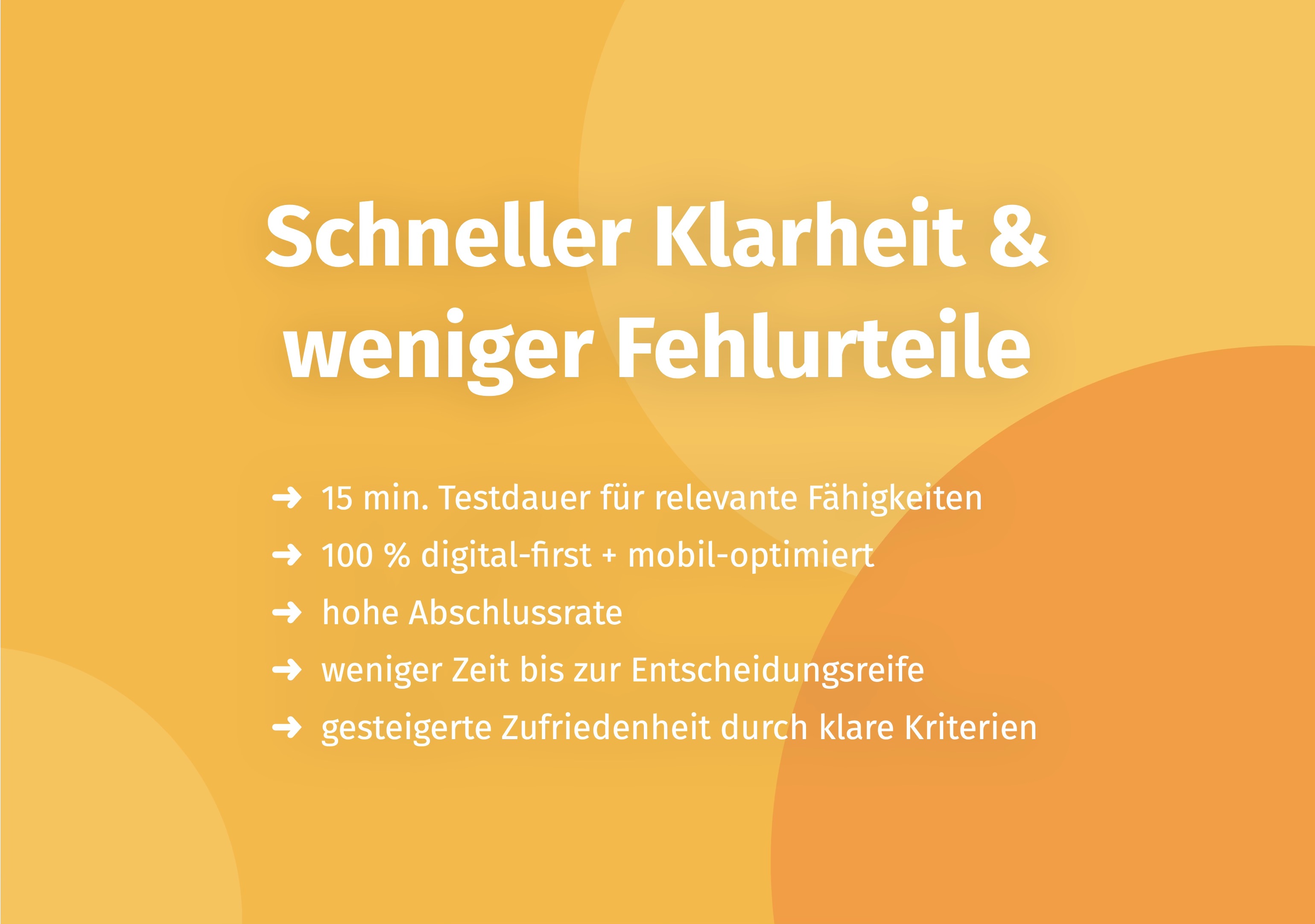
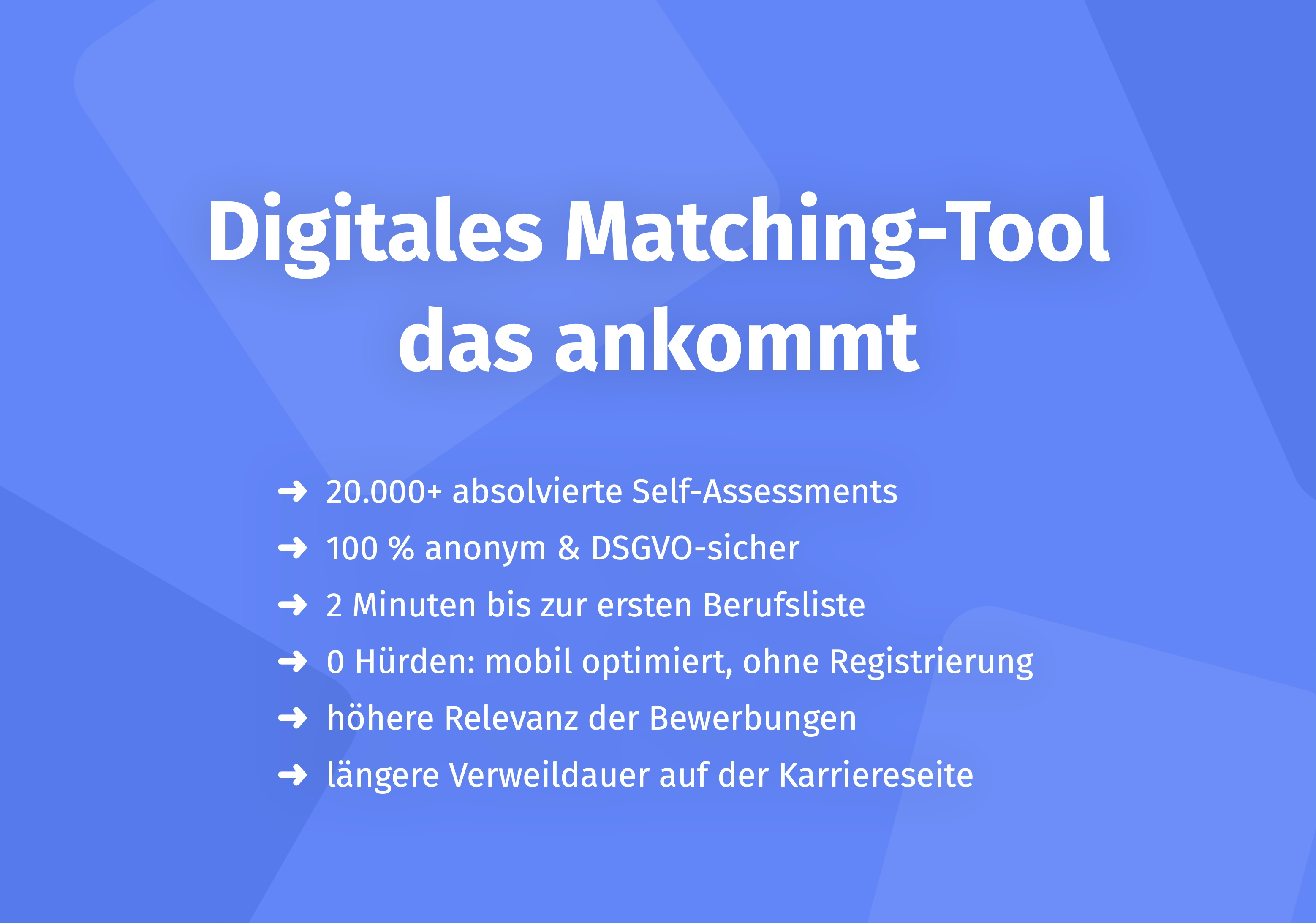
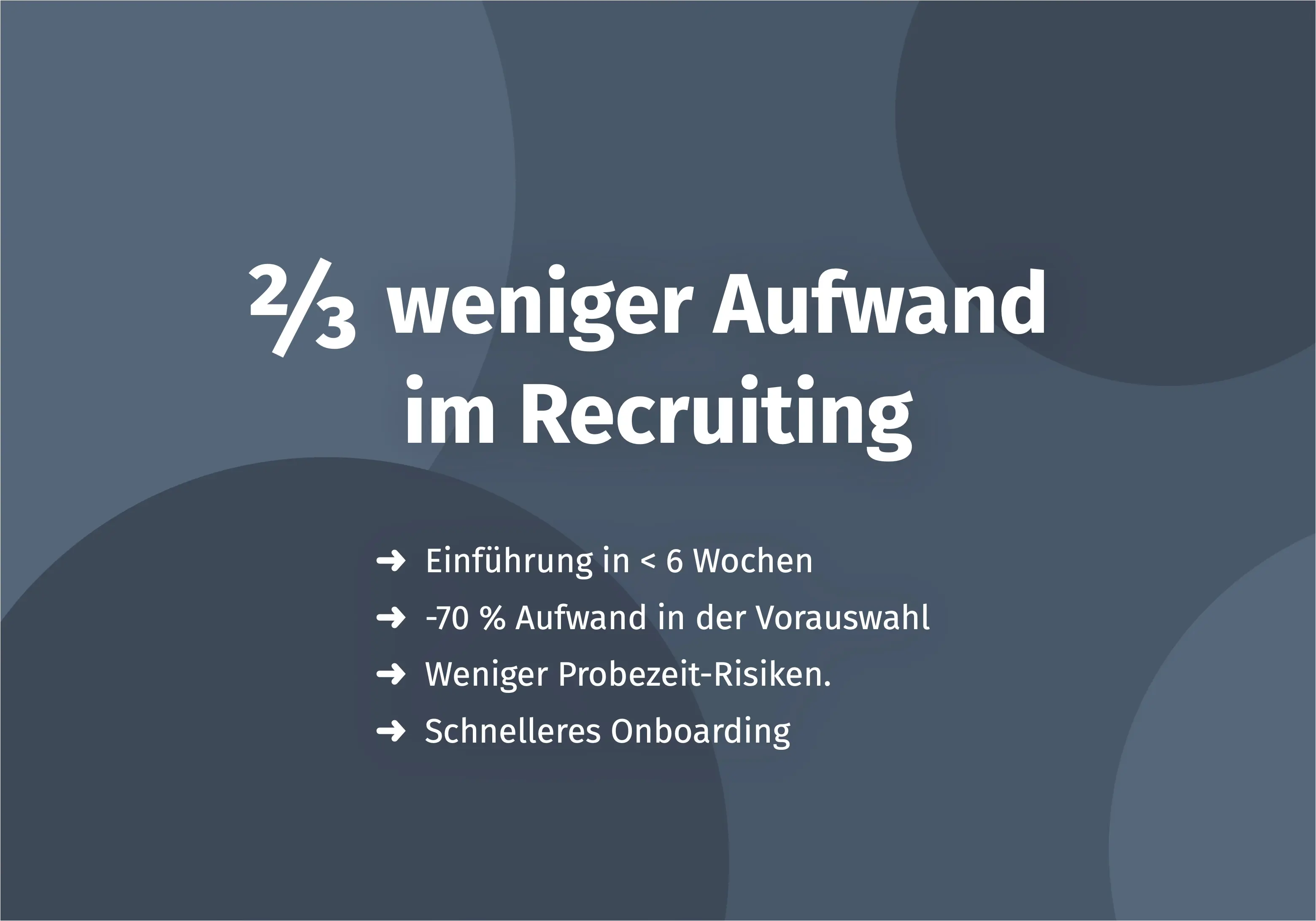
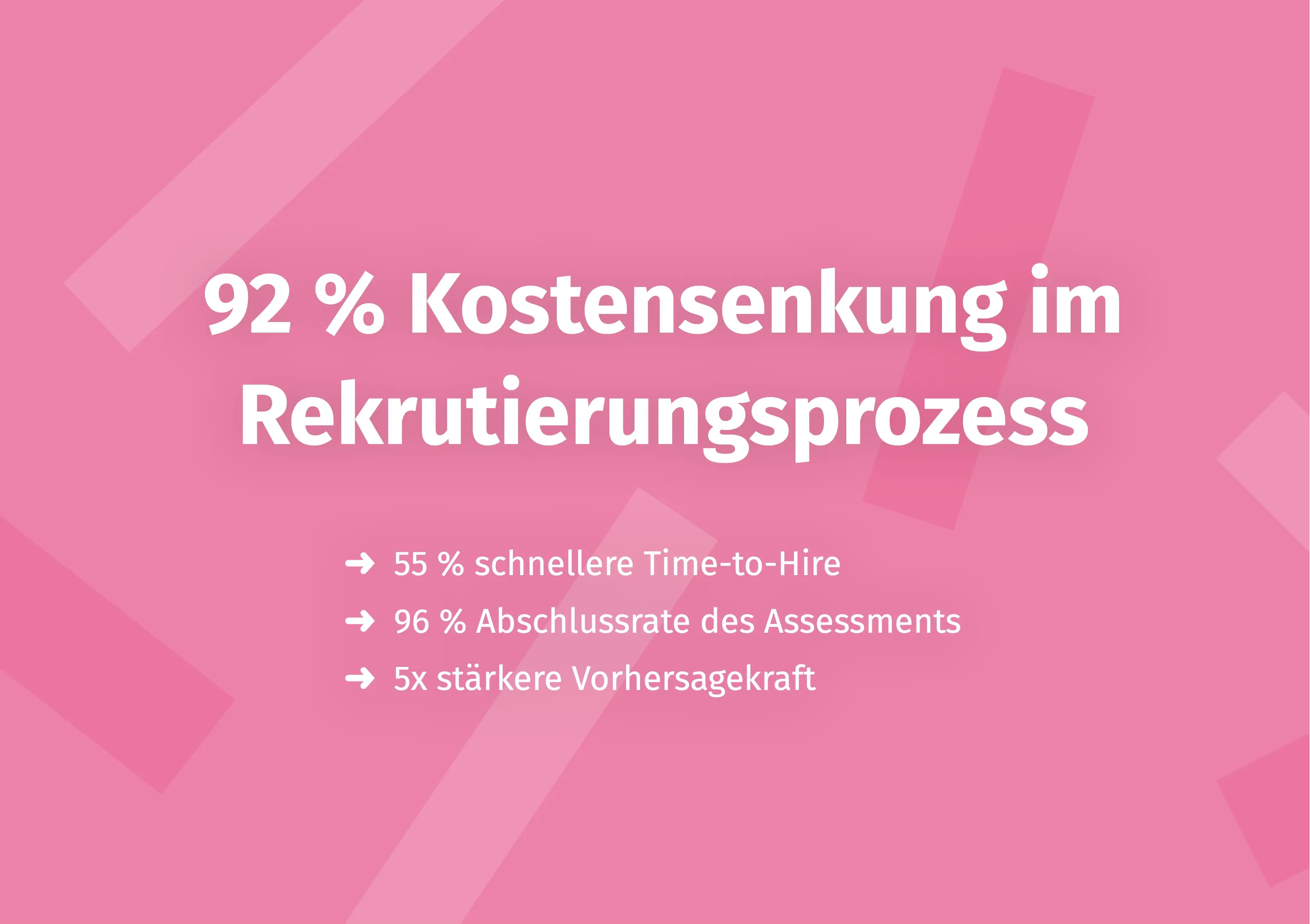
Objective aptitude diagnostics can make a significant difference here: rather than manually screening large numbers of CVs, digital pre-selection based on validated criteria enables a far more efficient selection process. The digital aptitude diagnostics platform Aivy supports companies in assessing candidates using scientifically grounded assessments — independently of CV presentation or gut feeling. Using this approach, MCI Deutschland was able to reduce time-to-hire by 55% and cut cost-per-hire by 92%.
Onboarding
Structured onboarding is not an optional extra — it is a key lever for long-term employee retention. Even without an HR team, a simple onboarding checklist can achieve a great deal: preparing the workstation, setting up system access, identifying initial points of contact, and creating an induction plan.
Absence Management
Annual leave, sick days, parental leave — without clear documentation, ambiguities and legal risks can arise quickly. Even a simple digital solution (including a well-structured spreadsheet) is better than no system at all. From a team size of five or more, a dedicated tool is a worthwhile investment.
Offboarding
An employee's departure has legal implications: the obligation to provide a reference (§ 109 GewO), return of company equipment, deregistration from the social insurance system, and deletion of data in line with the GDPR. A checklist saves time here too and prevents oversights.
When Do I Need a Dedicated HR Department?
There is no one-size-fits-all answer — but a number of indicators can inform the decision.
As a rough rule of thumb: from around 50–80 employees, a dedicated HR role tends to pay off. An in-house HR person can make sense earlier if the company is growing rapidly (many new hires per year), staff turnover is high, complex collective bargaining structures or a wide variety of employment types are in place, or when HR topics are becoming increasingly strategic (e.g. employer branding, employee development).
A sensible interim solution: combine external HR consultancy for strategic questions with internal office management for day-to-day administration.
Frequently Asked Questions About HR Management Without an HR Department
Which HR tasks are legally mandatory?
The following are required by law: a written record of employment conditions in line with the NachwG, correct payroll processing including social insurance notifications under the DEÜV, documentation of working hours in accordance with the ArbZG, and GDPR- and BDSG-compliant management of employee data. Granting statutory holiday entitlement under the BUrlG is also a legal obligation.
Do I need a personnel file for every employee?
There is no statutory obligation to maintain a personnel file — but thorough documentation is practically indispensable: for formal warnings, dismissals, performance reviews, and references. Importantly, the GDPR requires that only genuinely necessary data is collected and stored with clearly defined access rights. A digital personnel file provides both structure and an auditable record.
Can I handle payroll myself?
In principle, yes — but the complexity should not be underestimated. Tax classes, social security contributions, tax-free allowances, mini-job rules, and special payments all require up-to-date specialist knowledge. Most small businesses therefore use a combination of payroll software (e.g. Datev, Lexware) and a tax adviser.
How do I organise recruiting without an HR team?
Start with a clearly defined job profile, a structured job advertisement on relevant platforms, and a standardised pre-selection process. Objective assessment tools replace the manual reading of large numbers of CVs while simultaneously reducing subjective bias in decision-making.
When does HR software become worthwhile?
From as few as five employees, a basic HR software solution can save more time than it costs — particularly for absence management, contract administration, and time tracking. The larger the team, the more important a centralised, integrated solution becomes that maps multiple HR processes in one place.
What happens if I neglect my HR obligations?
The consequences vary depending on the violation: if documentation required under the NachwG is missing, employees may claim damages. Incorrect payroll leads to back payments and late payment surcharges. Data protection breaches can result in fines of up to 4% of global annual turnover. Incomplete working time documentation is also subject to fines.
How do I build HR processes without prior experience?
The simplest starting point: begin with a checklist of statutory obligations, structure the key documents (employment contract, personnel file, payroll), and digitalise them step by step. Many HRIS providers offer onboarding support and templates that are usable without HR expertise.
Conclusion
HR management without an HR department is not an exceptional situation — for the majority of German companies, it is the norm. What matters is knowing your legal obligations, prioritising processes, and investing in structured digital solutions from the outset. Anyone who issues employment contracts correctly, manages payroll and social security accurately, and handles employee data in compliance with data protection law is on a solid legal footing — regardless of company size.
As the team grows, it becomes increasingly worthwhile to digitalise individual areas such as recruiting or time tracking. Objective aptitude diagnostics can help select the right candidates in a structured and fair way — even without dedicated recruiters. The digital platform Aivy shows how this works in practice — Find out more.
Sources
- Nachweisgesetz (NachwG) — Minimum content of employment contracts. Federal Ministry of Justice, 2022. https://www.gesetze-im-internet.de/nachwg/index.html
- Bürgerliches Gesetzbuch § 611a — Employment contract. Federal Ministry of Justice, 2023. https://www.gesetze-im-internet.de/bgb/__611a.html
- Arbeitszeitgesetz (ArbZG) — Working Hours Act. Federal Ministry of Justice, 2023. https://www.gesetze-im-internet.de/arbzg/index.html
- General Data Protection Regulation (GDPR) and Federal Data Protection Act (BDSG). Federal Commissioner for Data Protection (BfDI). https://www.bfdi.bund.de
- Bundesurlaubsgesetz (BUrlG) — Federal Holiday Act. Federal Ministry of Justice. https://www.gesetze-im-internet.de/burlg/index.html
- Institut für Mittelstandsforschung Bonn (IfM): SME definition and company sizes in Germany. https://www.ifm-bonn.org
- Aivy GmbH: Success story — MCI Deutschland GmbH. https://www.aivy.app/en/success-stories/mci-deutschland-gmbh

Make a better pre-selection — even before the first interview
In just a few minutes, Aivy shows you which candidates really fit the role. Beyond resumes based on strengths.