
The HR department is responsible for all tasks related to the employee lifecycle – from recruiting and onboarding to employee development, payroll, and employment law compliance. Strategically, it plays a key role in attracting the right people to the organisation, developing their potential, and retaining them long-term. In modern companies, the focus is increasingly shifting away from administrative routine tasks towards data-driven, strategic people management.
What Is an HR Department?
The HR department – also known as Human Resources, People & Culture, or Personnel Management – is the organisational unit within a company that oversees all matters relating to its employees. It acts as an interface between senior management, line managers, and staff, ensuring the organisation is always equipped with the right people in the right roles.
Two fundamental orientations can be distinguished: HR administration covers operational, administrative tasks such as contract management, payroll processing, and maintaining employee records. HR management, on the other hand, refers to the strategic level – planning, development, culture work, and employer branding. Modern HR departments combine both areas, with a clear trend towards greater strategic alignment.
The Key Responsibilities of an HR Department
Recruiting and Talent Acquisition
Recruiting is one of the most visible and strategically significant responsibilities of any HR department. It encompasses writing job postings, selecting appropriate channels, screening applications, conducting interviews, and making the final hiring decision.
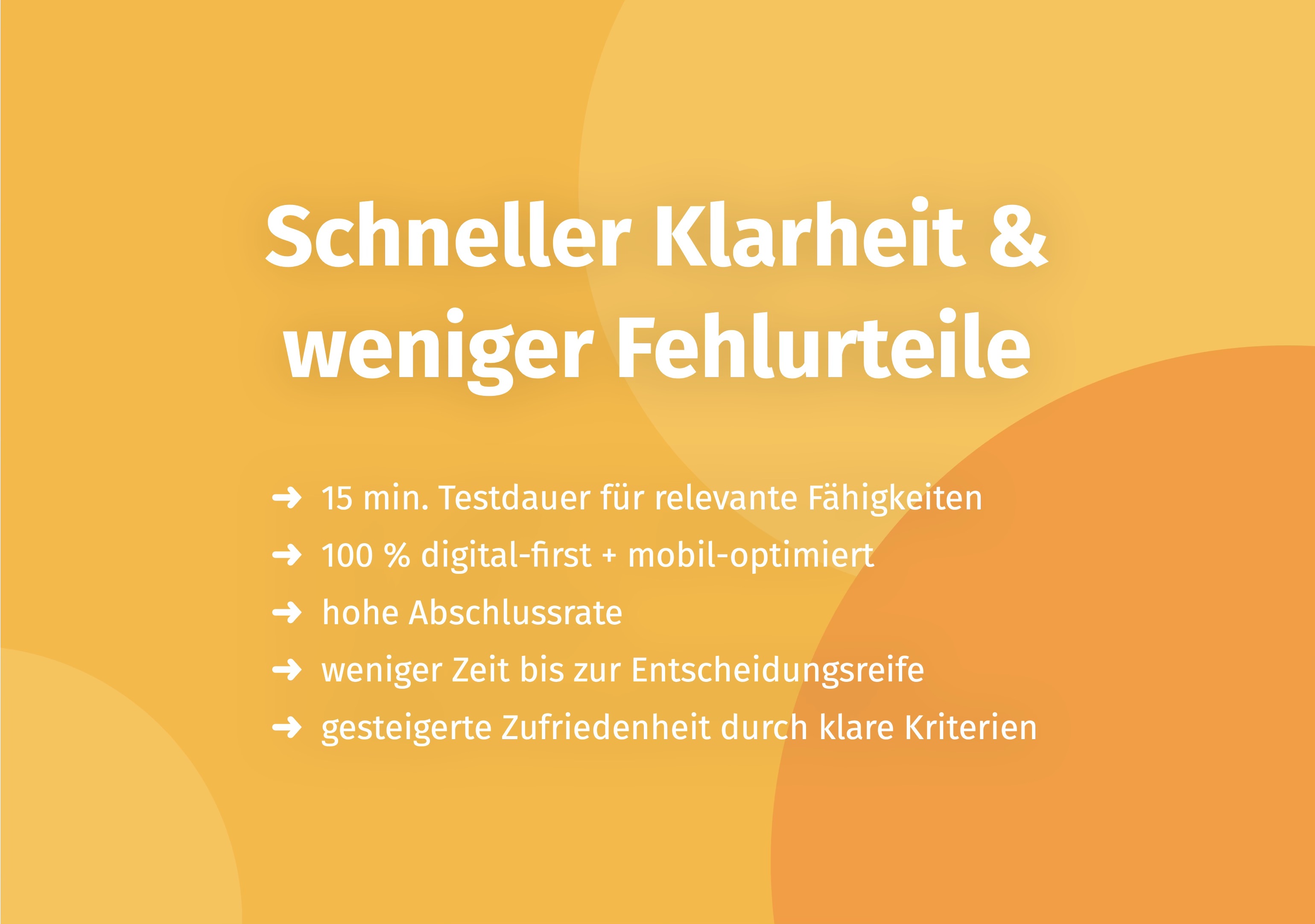
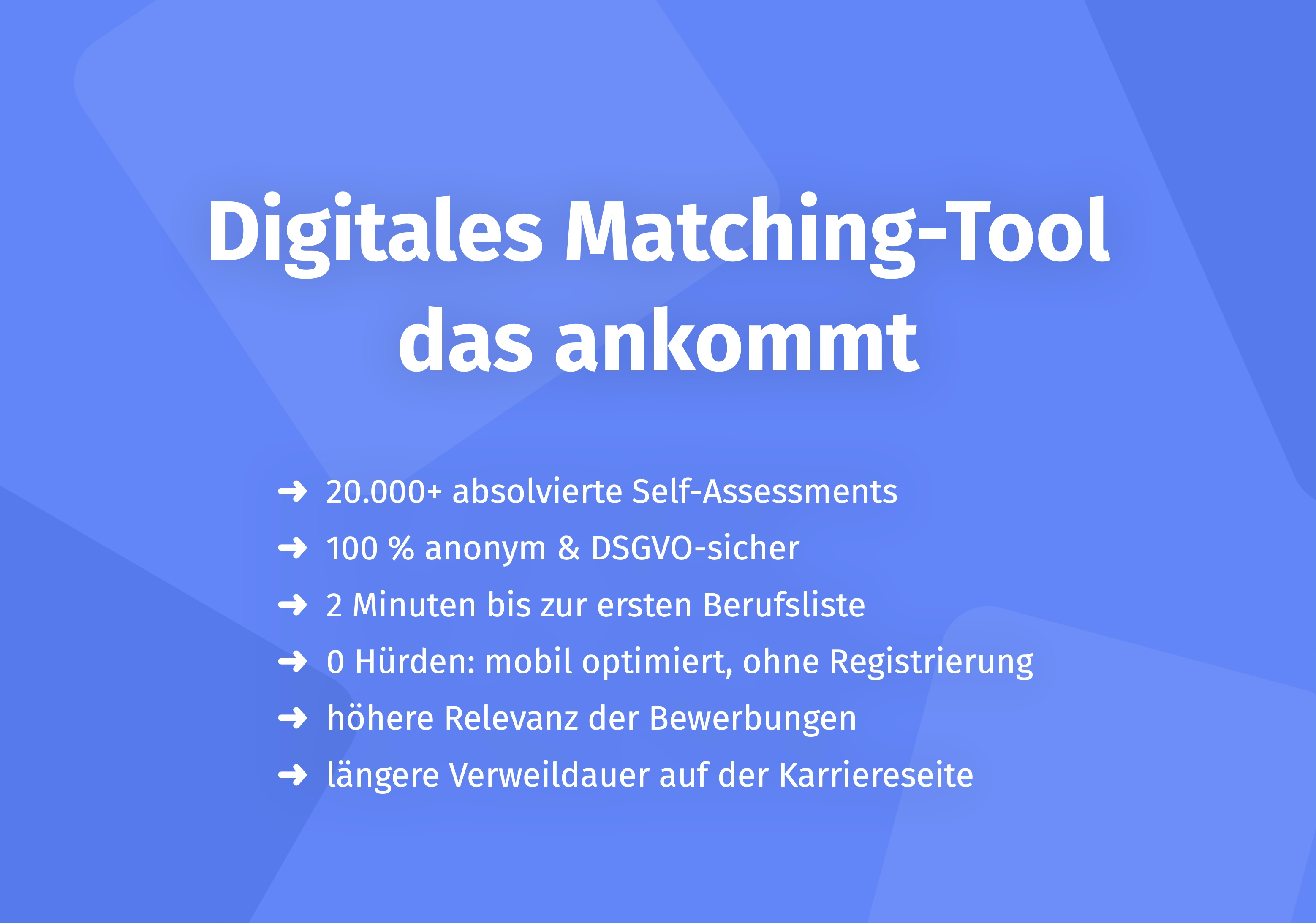
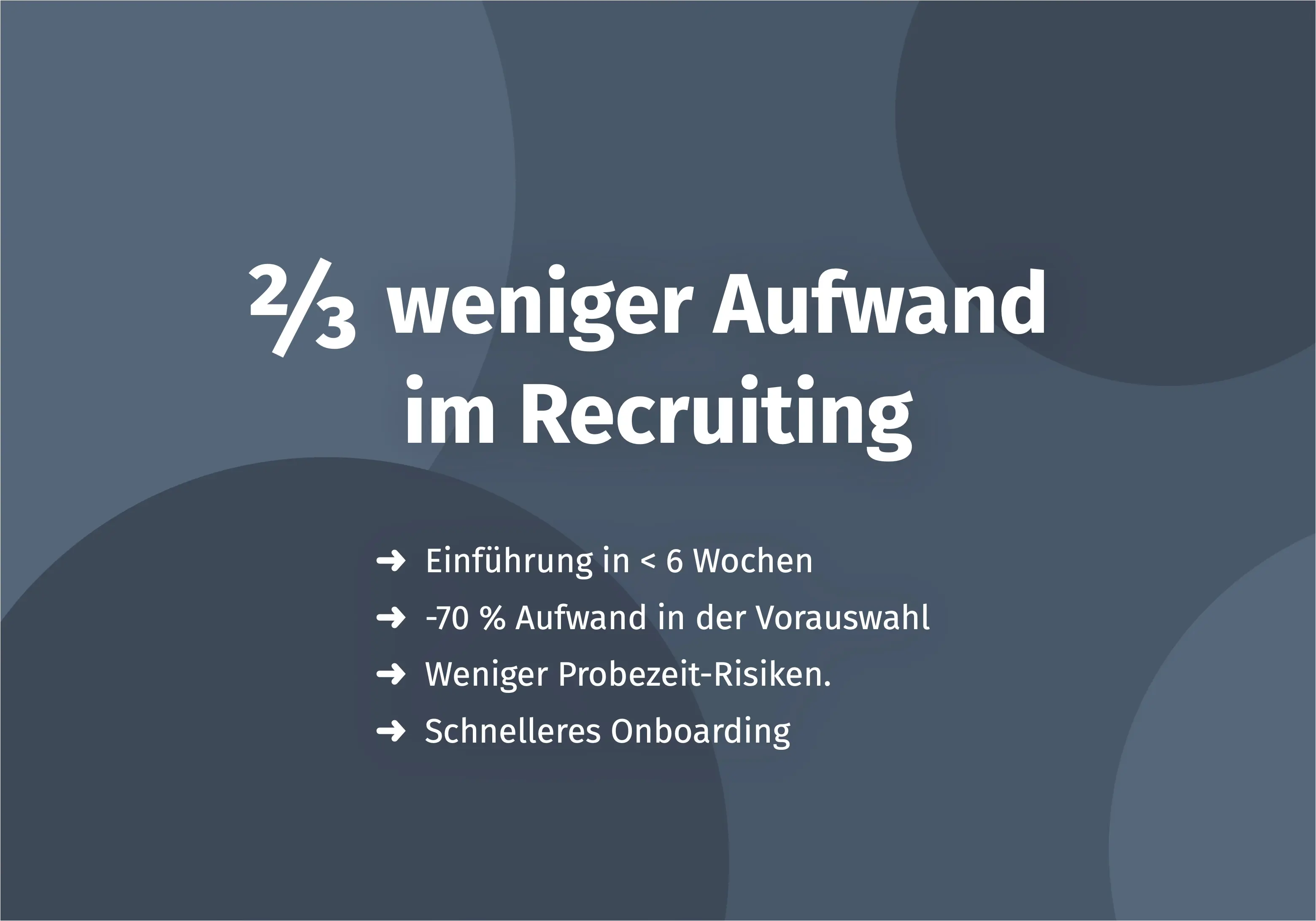
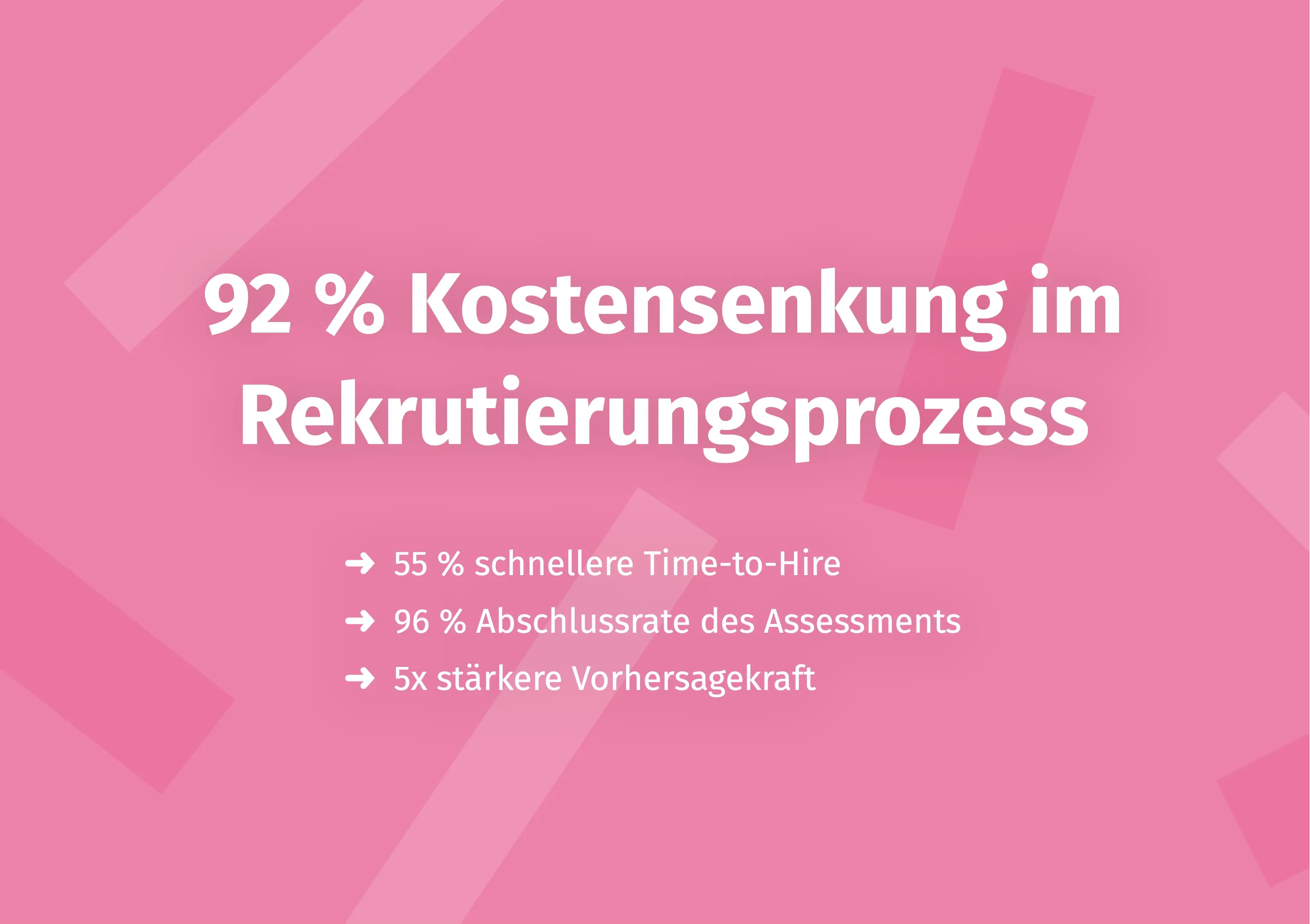
The quality of hiring decisions is becoming increasingly important. Subjective impressions from interviews alone are not sufficient – so-called unconscious biases can distort decision-making and lead to suitable candidates being overlooked. Scientifically grounded aptitude diagnostics help minimise this risk. Aivy, a digital platform and academic spin-off of Freie Universität Berlin, offers game-based assessments and validated questionnaires that enable an objective, standardised evaluation of applicants. MCI Deutschland was able to reduce its time-to-hire by 55% through the use of digital aptitude diagnostics, while significantly improving the predictive power of its hiring process.
For further information on structured selection processes, see the Aivy lexicon articles on job requirements profiles and candidate experience.
HR Administration
HR administration forms the operational backbone of the HR department. Classic administrative tasks include:
- Drafting and maintaining employment contracts
- Payroll processing
- Managing digital or physical personnel files
- Administering absences (annual leave, sick leave, parental leave)
- Maintaining employee master data and reporting to authorities and social security institutions
These tasks are legally regulated and error-prone – yet they also offer significant potential for digitalisation. Many companies already rely on specialised HR software that automates routine processes and reduces error rates.
Employee Development and Training
Employee development encompasses all measures aimed at systematically enhancing the skills and competencies of staff. This includes:
- Needs analysis: What competencies are missing within the organisation?
- Designing and organising training programmes, workshops, and coaching sessions
- Career planning and talent development
- Leadership development
- Succession planning for key positions
Well-planned employee development strengthens retention and increases the organisation's competitiveness. According to studies by the German Society for Personnel Management (DGFP), developing and retaining talent ranks among the central challenges facing HR professionals in Germany.
Workforce Planning and HR Controlling
Workforce planning means identifying and securing an organisation's personnel requirements in the short, medium, and long term. It encompasses:
- Demand planning: How many employees are needed in which areas?
- Sourcing planning: Fill internally or recruit externally?
- Succession planning: Which key positions need to be secured in the long term?
- HR controlling: Managing key metrics such as turnover rate, time-to-hire, cost-per-hire, and absence rates
HR controlling refers specifically to the monitoring and analysis of these metrics to support informed decision-making and optimise workforce deployment.
Employment Law and Compliance
HR professionals must ensure that the company adheres to all relevant employment legislation. This includes, among other things:
- Compliance with applicable employment laws and regulations (working time, protection against dismissal, parental leave, etc.)
- Collaboration with works councils or employee representatives (where applicable)
- Data protection in accordance with GDPR, particularly in handling applicant data
- Drafting legally sound employment contracts and references
- Managing terminations and separation processes
For specific legal questions, it is always advisable to consult an employment law specialist.
Operational vs. Strategic HR Responsibilities
HR responsibilities can broadly be divided into two categories:
Operational tasks are day-to-day, recurring activities: payroll, contract management, absence administration, applicant communications. They are indispensable, but rarely differentiating.
Strategic tasks shape the future of the organisation: employer branding, culture development, diversity & inclusion, HR analytics, talent management. They require a deep understanding of corporate strategy and close collaboration with senior leadership.
The industry trend is clear: HR departments are evolving from administrative back-office functions into strategic business partners. The role of employer branding as a tool for attracting qualified talent is growing in importance – particularly in the context of an ongoing skills shortage.
HR Department by Company Size
HR in SMEs (up to approx. 250 employees)
In small and medium-sized enterprises, HR responsibilities are often handled by the management team, office managers, or individual HR generalists. According to HR professionals, a dedicated HR function typically becomes worthwhile from around 50 employees – at the latest when recruiting volume and administrative complexity increase significantly.
At this stage, digitalisation and lean processes are especially important: payroll software, digital personnel files, and structured applicant tracking systems (ATS) can substantially reduce the administrative burden.
HR in Mid-Sized and Large Companies
From around 250 employees, the HR department typically differentiates into specialist functions: recruiting, employee development, compensation & benefits, HR business partnering, and HR operations. In large corporations, Centres of Excellence (CoE) are often added to manage company-wide standards and tools.
HR business partners – strategic HR advisors embedded within individual business units – play a central role in this structure. They translate HR strategy into the business and advise line managers on people-related decisions.
Frequently Asked Questions About HR Departments
What are the most important responsibilities of an HR department?
Core responsibilities include recruiting and talent acquisition, HR administration (contracts, payroll, personnel files), employee development, workforce planning, and ensuring employment law compliance. In modern HR departments, strategic topics such as employer branding, culture development, and HR analytics are increasingly central.
What is the difference between HR administration and HR management?
HR administration refers to operational, administrative tasks – contract management, payroll, data maintenance. HR management is the strategic umbrella term: it encompasses planning, development, culture work, and the long-term alignment of HR with corporate strategy. Both areas are necessary and complement one another.
From what size does a company need its own HR department?
HR professionals generally recommend a dedicated HR function from around 50 employees. Below this threshold, management or office teams can typically cover the core HR tasks. With rapid growth or high recruiting volume, building an HR function earlier may make sense.
What does an HR business partner do?
An HR business partner is a strategically oriented HR role that directly advises managers and business units on all people-related matters. Unlike classic operational HR roles, the focus is not on administration but on linking HR strategy with business objectives.
Which HR tasks can be digitalised?
High digitalisation potential exists in: payroll processing (payroll software), applicant management (applicant tracking systems, ATS), digital personnel files, onboarding workflows, and aptitude diagnostics via online assessments. According to a Bitkom study (2024), many German companies plan to further digitalise their HR processes in the coming years – particularly in the areas of recruiting and employee development.
What are strategic HR responsibilities?
Strategic responsibilities include employer branding and employer attractiveness, HR strategy and workforce planning, culture development and change management, diversity & inclusion, as well as HR analytics and data-driven personnel decisions. These tasks require close alignment with senior management.
Conclusion
The HR department is far more than an administrative unit – it is a strategic partner that makes a significant contribution to organisational success. The scope of HR responsibilities ranges from structured talent acquisition and targeted employee development through to ensuring compliance with employment law.
The most important trend: HR departments are evolving from operational administrators into data-driven shapers of the organisation. Those who rely on scientifically grounded methods – particularly in personnel selection – not only improve the quality of their decisions, but also promote fairness and equal opportunity in recruiting.
Would you like to incorporate objective aptitude diagnostics into your recruiting process? Learn more about the possibilities offered by the Aivy platform.
Sources
- Deutsche Gesellschaft für Personalführung (DGFP): Practice Papers and Studies on HR Management in Germany. https://www.dgfp.de
- Federal Employment Agency (Bundesagentur für Arbeit): Berufenet – HR Specialist Profile. https://web.arbeitsagentur.de/berufenet/
- Destatis – Federal Statistical Office: Statistical Yearbook – Companies and Employees, 2023. https://www.destatis.de
- Stopp, Udo: Personalwirtschaft – Lehrbuch für Studium und Praxis [Human Resources Management – Textbook for Study and Practice]. 2019.
- Bitkom e.V.: HR Digitalisation Study 2024. https://www.bitkom.org

Make a better pre-selection — even before the first interview
In just a few minutes, Aivy shows you which candidates really fit the role. Beyond resumes based on strengths.