
An HR audit is the systematic review of all personnel-related processes, structures, and policies within an organisation – spanning recruiting and compliance through to compensation and talent development. Its purpose is to identify weaknesses, minimise legal risks, and improve HR efficiency. Companies conduct HR audits either internally or with external support, typically on an annual basis or triggered by a specific event.
What Is an HR Audit?
An HR audit is a structured assessment of an organisation's entire people management function. The actual state of affairs (the "as-is" state) is systematically compared against legal requirements, internal standards, and recognised best practices – a process commonly referred to as a gap analysis.
The goal is not to evaluate individual employees, but to assess systems, processes, and structures: Are HR processes running efficiently? Are they legally sound? Where does improvement potential exist?
The term derives from the Latin "audire" (to hear, to examine) and has migrated from financial and quality management into the world of HR. Much like a financial audit, an HR audit creates transparency and trust – internally for management and works councils, and externally towards authorities or potential investors.
HR Audit vs. HR Due Diligence
While the two terms sound similar, they serve different purposes. An HR audit supports ongoing quality assurance, whereas HR due diligence is an event-driven review conducted in the context of corporate transactions such as mergers or acquisitions (M&A). Due diligence focuses on identifying employment-related risks that could affect the value of a transaction. The methodology is similar, but the context and depth differ considerably.
Goals and Benefits of an HR Audit
An HR audit pursues several objectives simultaneously – creating genuine value for organisations of all sizes.
Risk Mitigation and Legal Compliance
Violations of anti-discrimination laws, data protection regulations, or employee co-determination rights can be costly – both financially and reputationally. An HR audit systematically examines whether all processes meet applicable legal requirements. Compliance gaps are particularly common – and often unrecognised – in recruiting, compensation, and data protection.
Process Optimisation and Efficiency Gains
Many HR departments operate with processes that have grown organically over time – not always optimally. An audit reveals where time is wasted, where duplication of effort occurs, and where digital tools could deliver real added value. The findings provide a solid foundation for investment decisions in HR systems and tooling.
Audit Areas: What Does an HR Audit Examine?
A comprehensive HR audit typically covers five core areas. The focus may vary depending on company size and the reason for the audit.
Recruiting & Personnel Selection
The central question here is: Are selection processes fair, valid, and free from discrimination? Areas examined include job postings (compliance with equal treatment legislation), selection methods used (structured interviews, tests, assessment centres), documentation of hiring decisions, and candidate experience. Particular attention is paid to unconscious bias in the selection process – Unconscious Bias – which can constitute a violation of anti-discrimination law.
Compliance & Legal (Data Protection, Equal Treatment, Co-Determination)
This area reviews the legal foundation of all HR activities: Are employment contracts correctly drafted? Is applicant data stored and deleted in accordance with data protection law (GDPR, Art. 5 and 88)? Are the co-determination rights of the works council being observed (Works Constitution Act, §87)? Are formal warnings and terminations procedurally correct? GDPR violations in the handling of applicant data are among the most frequently identified findings in HR audits.
Compensation & Benefits
Are salaries determined fairly and transparently? Are there unexplained pay disparities between different groups (Pay Transparency Directive)? Are bonus systems clearly defined and legally sound? Do benefits meet current market standards and the expectations of target talent pools?
Learning & Development
Are there structured training and development programmes? Are performance reviews conducted systematically and documented? Are career paths clearly communicated? This area is particularly relevant for employee retention and long-term competitiveness.
HR Systems & Digitalisation
Which HR software is in use? Are the systems compliant with data protection requirements? Are processes being digitalised meaningfully, or do analogue silos still exist? This area is growing in importance as digitalisation in HR accelerates.
Process: How Does an HR Audit Work?
An HR audit typically follows a structured four-phase process.
Phase 1: Preparation and Scope Definition
The first step is to define the scope of the audit: Will all areas be reviewed or only selected ones? Who is responsible internally? What data and documents are required? A clear scope definition prevents the audit from spiralling out of control or missing critical areas.
Phase 2: Data Collection and Analysis
In this phase, documents are reviewed (employment contracts, job postings, policies), interviews are conducted with HR managers and senior leaders, and process workflows are observed and documented. The goal is to build a complete picture of the current state.
Phase 3: Evaluation and Reporting
The current state is compared against the target state: legal requirements, internal standards, and market best practices. Findings are classified by urgency (critical, significant, recommended). The final report provides a structured summary of findings along with concrete recommendations for action.
Phase 4: Action Planning and Follow-Up
An audit without consequences is worthless. In this phase, a prioritised action plan is developed, responsibilities are assigned, and implementation progress is reviewed regularly. Ideally, the audit is established as a recurring quality assurance process.
Internal or External – What Is the Right Choice?
Both approaches have their merits – the right choice depends on the occasion, available resources, and the desired outcome.
An internal audit is more cost-effective and benefits from the contextual knowledge of your own employees. The risk: organisational blind spots and a lack of independence may mean that critical issues are not given sufficient weight.
An external audit conducted by consultants or specialist legal counsel provides an independent perspective and greater credibility with management, works councils, or regulatory authorities. The drawbacks are higher costs and the initial effort required for onboarding and briefing.
A hybrid model is frequently recommended: the in-house HR team handles preparation and data collection, while external experts evaluate the findings and contribute an independent viewpoint. This combines cost efficiency with professional independence.
HR Audit in Recruiting: Ensuring Fair and Valid Personnel Selection
The recruiting function is one of the most sensitive audit areas – and simultaneously one of the most frequent sources of compliance risk. This is where it is decided whether selection processes meet anti-discrimination requirements, whether methods are valid and traceable, and whether all candidates are treated fairly.
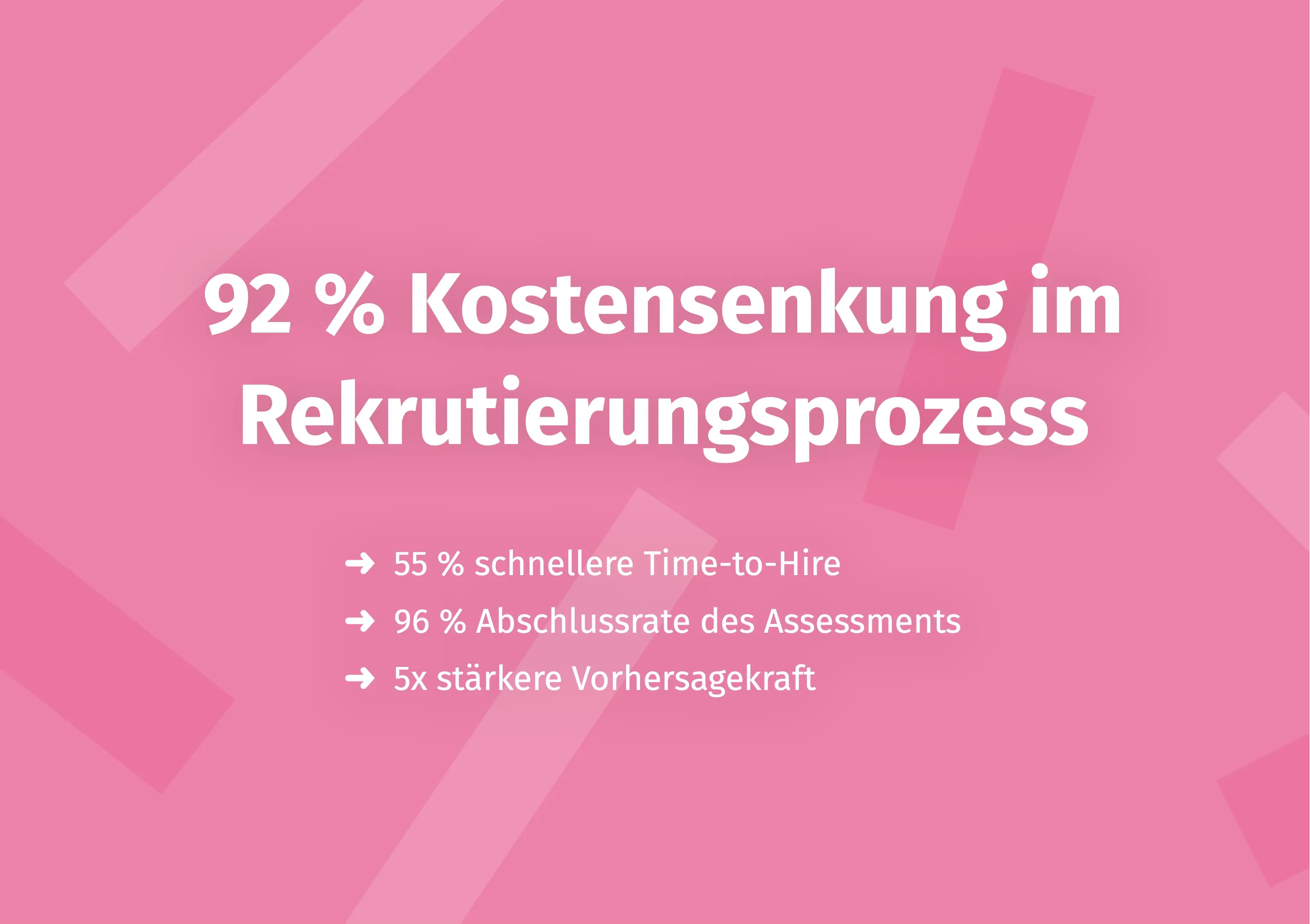
A common finding: hiring decisions are driven more by subjective impressions than by measurable criteria. Structured interviews, validated personality assessments, or assessment centres increase objectivity and reduce the risk of discriminatory selection. Digital talent assessment platforms such as Aivy enable the standardised use of scientifically validated procedures – delivering results that are both documentable and audit-ready. Companies such as MCI Deutschland were able to reduce time-to-hire by 55% through the use of objective selection processes, while simultaneously achieving 5x greater predictive validity compared to traditional methods.
Frequently Asked Questions About HR Audits
What is an HR audit?
An HR audit is the systematic review of all HR processes and structures within an organisation, assessed against standards of legal compliance, efficiency, and strategic alignment. The current state is compared against legal requirements and best practices to identify risks and areas for improvement.
What does an HR audit examine?
Typical areas include: recruiting and personnel selection (compliance with equal treatment law, validity of methods); legal compliance (GDPR, anti-discrimination law, co-determination rights, employment contracts); compensation and benefits (pay structures, pay equity); learning and development; and HR systems and digitalisation. The focus may vary depending on the occasion and company size.
How does an HR audit work?
An HR audit follows four phases: preparation (scope, responsibilities, data collection), analysis (document review, interviews, process observation), evaluation (gap analysis, risk classification, reporting), and implementation (action planning, follow-up).
Internal or external – which is better?
It depends on the occasion and available resources. Internal audits are more cost-effective but risk organisational blind spots. External audits offer independence and credibility but are more expensive. A hybrid model – internal preparation combined with external evaluation – is frequently recommended.
How often should an HR audit be conducted?
For ongoing quality assurance, a cycle of one to three years is advisable. Event-triggered audits should be conducted following mergers, significant company growth, compliance incidents, or major legislative changes.
What is the difference between an HR audit and HR due diligence?
HR due diligence is an event-driven review specifically for corporate transactions (M&A), focused on employment-related risks that could affect transaction value. An HR audit serves general quality assurance without a transactional context. The methodology is similar, but the occasion and depth differ considerably.
What legal frameworks are relevant to an HR audit?
Key legal frameworks include: the General Data Protection Regulation (GDPR), in particular Art. 5 and Art. 88 on employee data protection; anti-discrimination legislation governing equal treatment in employment; employee co-determination rights (where applicable under national law); and general employment contract law.
Conclusion
An HR audit is not a luxury – it is a strategic instrument for any organisation that wants to manage its people function in a legally compliant, efficient, and future-ready way. Regular auditing enables organisations to identify risks early, avoid costly compliance violations, and build the foundation for continuous improvement. The recruiting function in particular warrants close attention – fair, objective, and documentable selection processes are not only a legal requirement, but also a decisive lever for better hiring decisions.
Sources
- General Equal Treatment Act (AGG). Federal Ministry of Justice (Germany), 2006 (current version). https://www.gesetze-im-internet.de/agg/
- General Data Protection Regulation (GDPR), in particular Art. 5 and Art. 88. European Parliament and Council, 2018. https://eur-lex.europa.eu/legal-content/EN/TXT/?uri=CELEX:32016R0679
- Works Constitution Act (BetrVG), in particular §87. Federal Ministry of Justice (Germany), current version. https://www.gesetze-im-internet.de/betrvg/
- Deutsche Gesellschaft für Personalführung (DGFP). Guides on HR Strategy & Quality Assurance, 2023. https://www.dgfp.de
- SHRM – Society for Human Resource Management. HR Audit Framework, 2022. https://www.shrm.org

Make a better pre-selection — even before the first interview
In just a few minutes, Aivy shows you which candidates really fit the role. Beyond resumes based on strengths.