
Hard skills are learnable, measurable technical knowledge and abilities – from programming languages to foreign languages to operating machinery. In recruiting, they help evaluate candidates against concrete job requirements. For a fair and valid assessment, standardised tests are recommended over relying solely on CV analysis.
Definition: What Are Hard Skills?
Hard skills are concrete, learnable abilities and knowledge that can be objectively measured, tested, and in most cases certified. They are acquired through vocational training, academic study, professional experience, or targeted continuing education.
The term originates from US management and HR literature and describes technical and professional competencies, as opposed to the harder-to-measure soft skills. In recruiting, hard skills form the basis of job requirement profiles: they define what a candidate must bring to a role in terms of specialist knowledge.
Typical hard skills include proficiency in a programming language, bookkeeping knowledge, language certificates, or the ability to use specific software. They are closely tied to concrete tasks and can be demonstrated through tests, references, or certificates.
Hard Skills vs. Soft Skills – What Is the Difference?
In HR practice, hard skills and soft skills are often considered together, but they describe fundamentally different types of competency.
Hard Skills: Technical, Measurable, Certifiable
Hard skills are tied to specific content: a person can either use Excel or cannot, speaks Spanish at C1 level or does not, understands the principles of double-entry bookkeeping or does not. They are teachable, testable, and objectively assessable – through tests, certificates, or practical work samples.
Soft Skills: Personal, Contextual, Harder to Measure
Soft skills describe personal attributes and social abilities: empathy, communication strength, problem-solving capacity, or teamwork. They are more context-dependent and harder to standardise. For more, see the article on Soft Skills.
Why Both Matter
Neither hard skills nor soft skills alone determine job success. According to the seminal study by Schmidt & Hunter (1998) on the predictive validity of selection methods, structured tests of technical knowledge combined with personality and ability assessments are significantly more informative than any single method on its own.
| Characteristic | Hard Skills | Soft Skills |
|---|---|---|
| Learnability | High, can be deliberately acquired | Partial, long-term process |
| Measurability | Objective, standardisable | More difficult, context-dependent |
| Evidence | Certificate, test, diploma | Assessment, reference, observation |
| Examples | Python, Spanish C1, SAP | Empathy, teamwork, resilience |
| Job relevance | Technical suitability | Cultural fit, collaboration |
Examples of Hard Skills – by Industry
Hard skills are strongly industry-specific. The following overview shows typical professional competencies by sector:
IT & Technology
- Programming languages (Python, Java, JavaScript, SQL)
- Cloud platforms (AWS, Azure, Google Cloud)
- Data analysis and machine learning
- Network security and cryptography
- Agile methodologies (Scrum, Kanban)
Marketing & Communications
- SEO/SEA and performance marketing
- CRM systems (Salesforce, HubSpot)
- Data analysis (Google Analytics, Tableau)
- Copywriting and content strategy
- Graphic design (Adobe Creative Suite)
Finance & Accounting
- Double-entry bookkeeping and financial reporting
- ERP systems (SAP, DATEV)
- Tax law and compliance
- Financial modelling and Excel
- IFRS and local GAAP knowledge
Healthcare & Nursing
- Medical expertise and diagnostic standards
- Medication management and dosage
- Medical technology and device operation
- Care documentation and quality standards
Trades & Production
- Machine operation and maintenance
- Welding, CNC milling, electrical installation
- Quality assurance and standards knowledge (ISO)
- Reading technical drawings
The World Economic Forum's Future of Jobs Report 2023 identifies analytical thinking, technological literacy, and data skills as the fastest-growing hard skill requirements across industries.
Hard Skills in Recruiting: How Do You Identify and Assess Them?
Why the CV Is Not Enough
The CV is the most commonly used basis for assessing hard skills – yet it is one of the weakest methods for valid evaluation. Self-reported information is unverified, and assessments are prone to unconscious bias: which university someone attended, their most recent employer, or how their application is formatted all influence judgements – often without the assessor being aware of it.
According to Schmidt & Hunter (1998), screening application documents alone has very low predictive validity for future job performance. Structured tests and work samples perform significantly better in research.
Methods for Assessing Hard Skills
Several approaches can be used to assess hard skills objectively:
Work samples: Candidates complete a real task from the day-to-day job – such as a coding test, a written task, or a case study. This method has high predictive validity and is transparent for applicants.
Standardised knowledge tests: Normed online tests assess defined areas of expertise (e.g. SQL, bookkeeping, language proficiency). They are reproducible and bring objectivity to the evaluation.
Certificates and diplomas: Recognised qualifications formally evidence competencies – such as language certificates (TOEFL, DELF), IT certifications (AWS, Cisco), or vocational qualifications. They are proof of prior learning, not a live test.
Game-based assessments: Scientifically validated, game-based procedures measure cognitive abilities and professional competencies under controlled conditions. They reduce social desirability effects and are generally less stressful for candidates than traditional tests.
DIN 33430 as a Quality Framework
DIN 33430 (German Institute for Standardisation, 2016) defines requirements for occupational aptitude diagnostic procedures. It serves as a quality framework for all selection methods used in Germany – from work samples to psychometric tests. HR professionals should verify whether any test procedure they consider meets the requirements of this standard.
Objective Hard Skills Assessment with Modern Aptitude Diagnostics
Traditional selection methods – CV screening, brief telephone interviews, subjective impressions – reach their limits when it comes to assessing hard skills. Potential analysis has become an established complementary method that goes beyond existing knowledge and also captures learning potential and cognitive abilities.
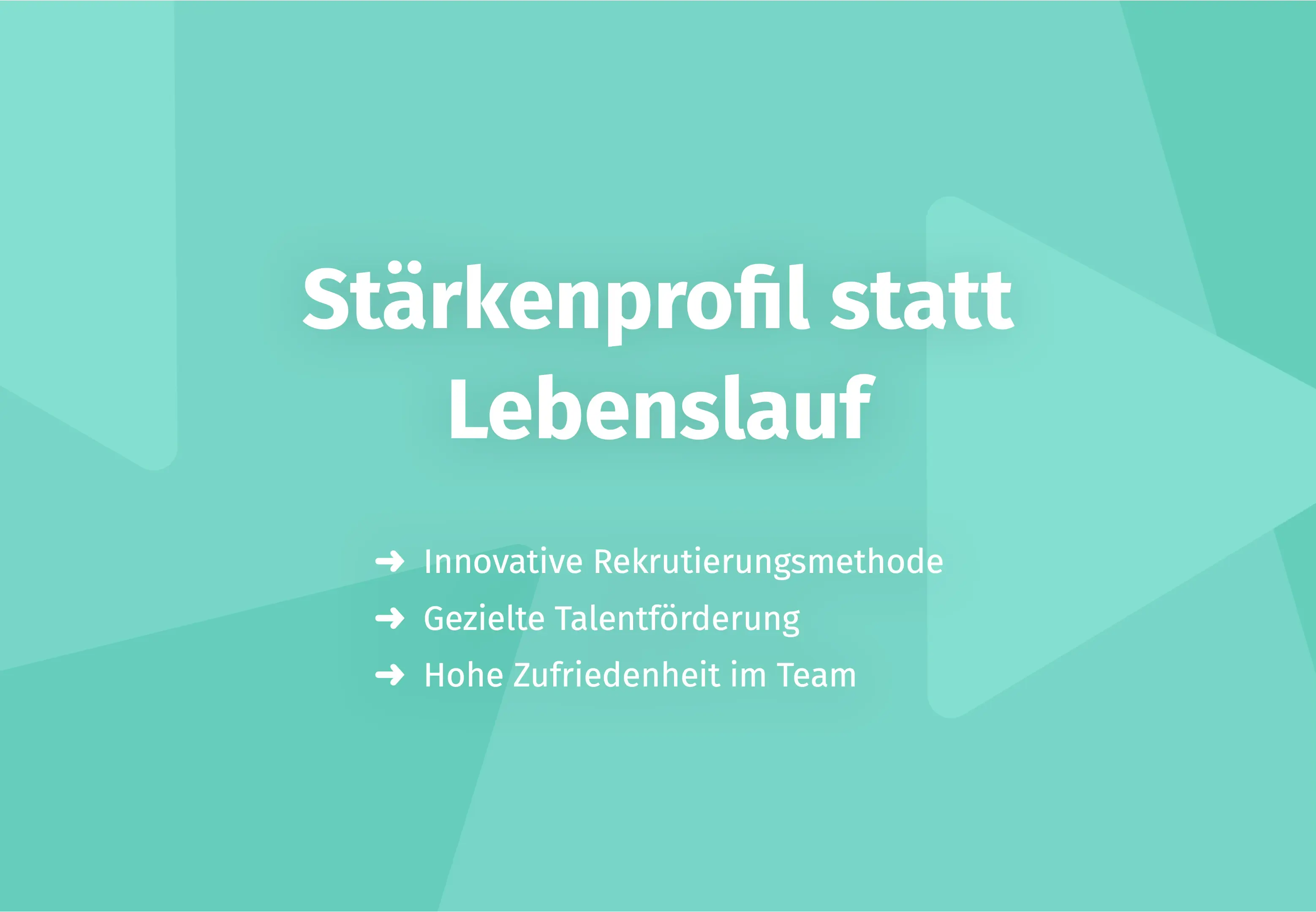
The digital platform Aivy uses game-based assessments that have been scientifically validated by the Freie Universität Berlin. The procedures measure cognitive abilities, work behaviour, and competencies objectively – independent of background, academic record, or CV presentation. This significantly reduces unconscious bias and increases comparability across candidates.
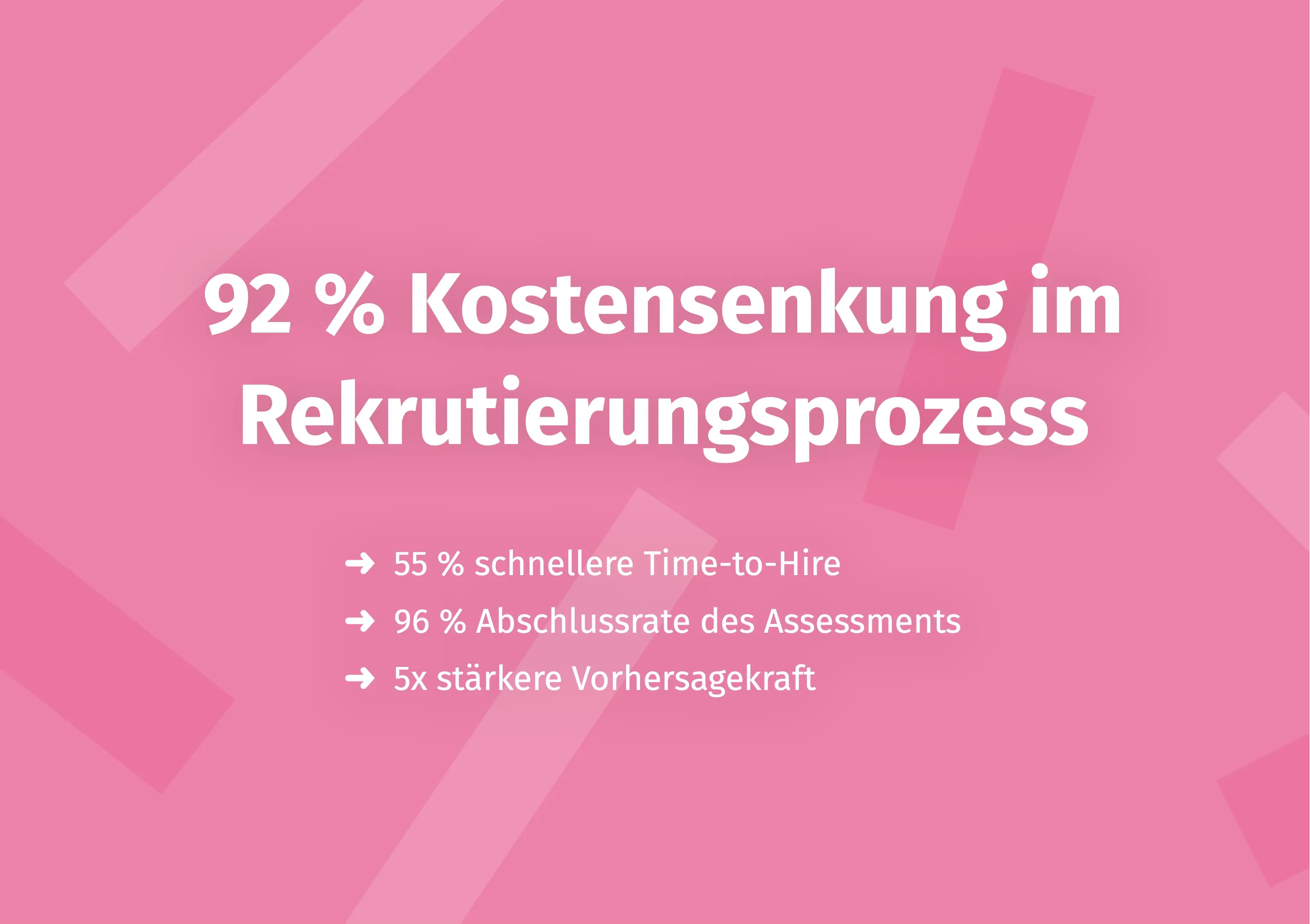
That this approach works in practice is demonstrated by Lufthansa: using scientifically validated aptitude diagnostics, the company achieves a hit rate of 96% (correct prediction compared to its own in-house assessment) alongside 81% satisfaction among applicants. More details are available in the Lufthansa success story.
Those looking to assess hard skills objectively and free from bias in their recruiting process will find standardised, scientifically grounded procedures to be a valid alternative to relying on self-reported information alone.
Frequently Asked Questions About Hard Skills
What are hard skills?
Hard skills are learnable, objectively measurable technical knowledge and abilities. These include proficiency in programming languages, foreign language skills, bookkeeping, software use, or operating machinery. They can be acquired through training, study, professional experience, or continuing education and demonstrated through certificates, tests, or work samples.
What is the difference between hard skills and soft skills?
Hard skills are technical and professional in nature and can be objectively tested (e.g. Excel proficiency, Java, welding). Soft skills describe personal and social abilities such as empathy, teamwork, or communication strength – they are harder to standardise and measure. In recruiting, both dimensions matter: hard skills ensure technical suitability, while soft skills determine cultural fit and the ability to collaborate effectively.
How do I test hard skills objectively in recruiting?
The most valid methods are work samples (concrete tasks from everyday job life), standardised normed knowledge tests, and game-based assessments. Certificates and diplomas provide formal evidence but do not replace direct competency measurement. DIN 33430 provides quality criteria for aptitude diagnostic procedures.
Why is the CV not sufficient for assessing hard skills?
Self-reported information on a CV is unverified, and assessment is prone to unconscious bias – through factors such as school names, employer reputation, or CV formatting. Research by Schmidt & Hunter (1998) shows that structured tests are significantly more valid for predicting job performance than CV screening alone.
What is skills-based hiring?
Skills-based hiring is a recruiting strategy in which skills and competencies take priority over formal qualifications or job titles. It broadens the candidate pool to include career changers who possess relevant hard skills and reduces the emphasis on academic credentials. A prerequisite is structured competency measurement during the selection process.
Which hard skills are most in demand right now?
According to the World Economic Forum's Future of Jobs Report 2023, analytical thinking, technological literacy, and data skills are the fastest-growing requirements. By sector, IT is dominated by programming and cloud expertise, marketing by data analysis and SEO, and healthcare by specialist medical knowledge.
How do I define hard skills for a job profile?
Start with a structured requirements analysis: which tasks are central to the role? Which technical knowledge is essential, and which is desirable? Distinguish between must-haves (without which suitability cannot be established) and nice-to-haves. Clearly defined hard skill requirements enable more objective pre-screening and reduce the risk of poor hiring decisions. A potential analysis can additionally help to capture not only existing skills but also learning potential.
Conclusion
Hard skills are the professional foundation of every hiring decision. They describe what a candidate must concretely bring to a role – and they are objectively measurable, which distinguishes them from soft skills. The key principle in recruiting is that hard skills should not be assessed on the basis of the CV alone: structured tests, work samples, and scientifically validated procedures are significantly more valid and reduce the risk of poor hires.
With the growing trend towards skills-based hiring, hard skills are coming into even sharper focus – and with that comes an increasing need for objective, bias-free methods to assess them.
Want to assess hard skills objectively and on a sound scientific basis in your recruiting process? Find out how the Aivy platform measures competencies free from bias: Learn more
Sources
- Schmidt, F. L. & Hunter, J. E. (1998). The Validity and Utility of Selection Methods in Personnel Psychology. Psychological Bulletin, 124(2), 262–274. https://doi.org/10.1037/0033-2909.124.2.262
- Deutsches Institut für Normung (DIN) (2016). DIN 33430 – Requirements for occupational aptitude diagnostics. https://www.din.de/de
- World Economic Forum (2023). Future of Jobs Report 2023. https://www.weforum.org/reports/the-future-of-jobs-report-2023/
- Deutsche Gesellschaft für Personalführung (DGFP) (2022). Competency-Based Recruiting – A Practical Guide. https://www.dgfp.de
- Bitkom (2023). Digital Competencies in the Labour Market. https://www.bitkom.org

Make a better pre-selection — even before the first interview
In just a few minutes, Aivy shows you which candidates really fit the role. Beyond resumes based on strengths.