
In recruiting, the final interview is the last step in the hiring process – the conversation where the hiring decision is made. It is more focused and in-depth than earlier rounds. In HR management, the term also refers to the exit interview conducted when employees leave a company, providing valuable insights for people operations. In both formats, structure and objectivity are the key factors for a successful outcome.
What Is a Final Interview?
In HR contexts, the term "final interview" covers two distinct conversation formats that are worth keeping clearly separate.
In recruiting, the final interview is the last round of job interviews, conducted with the remaining shortlisted candidates after one or more earlier selection stages. It is the final step before a hiring decision is made, and it is typically more focused and detailed than previous conversations.
In offboarding, the final interview refers to the exit interview: a structured conversation that HR professionals hold with employees who are leaving the organisation. The goal is to understand the reasons behind the resignation and identify areas for improvement within the company.
Both formats are strategically valuable – yet they sit at opposite ends of the employee lifecycle.
The Final Job Interview in Recruiting
Difference from First-Round Interviews
The job interview in its first-round form primarily serves as an initial get-to-know: Is this person a potential fit? Do their qualifications and expectations align? Many candidates take part in this stage.
The final interview, by contrast, is the last round for a narrow shortlist – typically two to three candidates. A preliminary decision has largely been made; the candidates have already demonstrated that they are fundamentally suited for the role both professionally and personally. The focus now shifts to final differentiation: cultural fit, specific working conditions, and the ultimate hiring decision.
It is also common for different people to conduct the final interview than those involved in earlier rounds – for example, senior managers, the CEO, or direct future colleagues who will work closely with the person in the role.
Structure and Duration
A final interview in recruiting typically lasts between 45 and 90 minutes, and can be longer for leadership positions. A typical flow looks like this:
Opening (5–10 min.): Brief welcome, introductions, and outlining the agenda.
Deep-dive on competencies (20–30 min.): Concrete project experience, situational questions, and behavioural examples. This is where interviewers follow up on anything left open in previous rounds.
Cultural fit and motivation (10–15 min.): What do you expect from this role? Why this company? How do you see yourself fitting into the team? This section is crucial for assessing cultural fit.
Practicalities (10 min.): Salary expectations, start date, remote work preferences, and any open questions from the candidate.
Wrap-up (5 min.): Clearly communicating next steps – when will the decision be made, and how will it be communicated? This is critical for a positive candidate experience.
Typical Questions in the Final Interview
Recruiters and hiring managers tend to use behavioural and situational questions in the final round, as these provide a concrete picture of the candidate:
- "Tell me about a time you had to make a decision under significant pressure. How did you approach it?"
- "What do you expect of yourself in the first 90 days in this role?"
- "What has prompted you to consider leaving your current employer?"
- "What motivates you in the long term – and what holds you back?"
- "What questions do you still have for us?"
That last question matters: candidates who have prepared thoroughly will ask specific, informed questions at this stage. It signals genuine interest.
The Exit Interview: Final Conversation at Departure
Goals and Benefits
The exit interview is a frequently underestimated HR instrument. When employees are leaving, they tend to be more open and candid than during active employment. That makes their perspectives particularly valuable.
Concrete goals of the exit interview:
Understanding turnover drivers: Why are employees leaving? Are these isolated cases or systemic patterns?
Identifying improvement areas: Are there issues with leadership culture, development opportunities, or the working environment that can be addressed?
Protecting the employer brand: A respectful, well-conducted exit conversation leaves a positive final impression – and helps prevent damaging reviews on platforms like Glassdoor or Indeed.
Knowledge transfer: In some cases, the exit conversation is the right moment to clarify how responsibilities will be handed over and what knowledge needs to be documented.
The exit interview should be voluntary and treated confidentially – that is the only way to encourage genuine honesty. Individual responses should not be passed on to direct line managers.
Typical Questions in the Exit Interview
- "What prompted you to start looking for a new position?"
- "What did you particularly enjoy about your work here?"
- "What could we have done better as an organisation?"
- "How would you describe your experience working with your manager?"
- "Would you recommend us as an employer – and why?"
- "What will you take away from your time here?"
Reviewing findings across multiple exit interviews over time provides reliable insights into where structural problems exist within the organisation.
Practical Tips for HR: How to Run a Strong Final Interview
Preparation and Structure
An unprepared final interview wastes time – on both sides. The key preparation steps for HR professionals:
Brief everyone involved: If multiple people are taking part, they all need to know in advance who is covering which topics. Repeated questions feel unprofessional to candidates.
Use a structured interview guide: A clear framework with core questions prevents important topics from being missed and ensures comparability across candidates.
Review the materials beforehand: All interviewers should have read the CV, notes from earlier rounds, and – where available – assessment results. Candidates immediately notice when the person across the table is unprepared.
Agree on a shared evaluation framework: Define upfront which criteria will be used to assess candidates. This makes the post-interview decision significantly easier.
Ensuring Objectivity – Reducing Bias
The final interview is the most emotionally charged step in the recruiting process – and therefore the most vulnerable to cognitive bias. The halo effect causes a positive first impression (such as a confident manner) to unconsciously colour the assessment of all other qualities. Affinity bias, similarity bias, or the simple tendency to be swayed by the most recent impression all lead to poor hiring decisions.
Scientifically grounded methods reduce this risk. According to a widely cited meta-analysis by Schmidt & Hunter (1998), the structured interview – using consistent questions and a standardised scoring rubric for all candidates – is substantially more valid than unstructured conversations. DIN 33430, the German standard for occupational aptitude assessments, likewise recommends structured selection procedures.
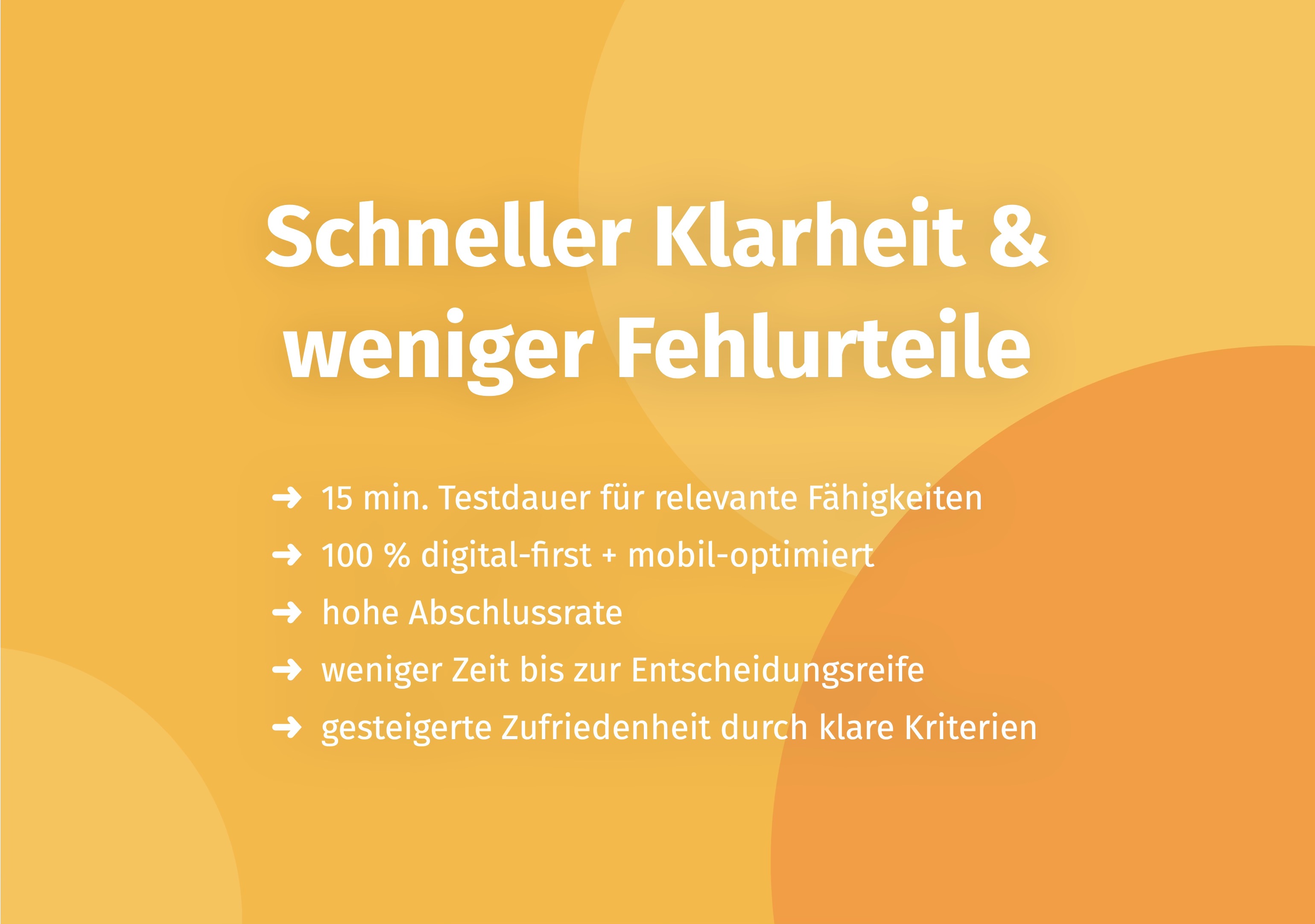
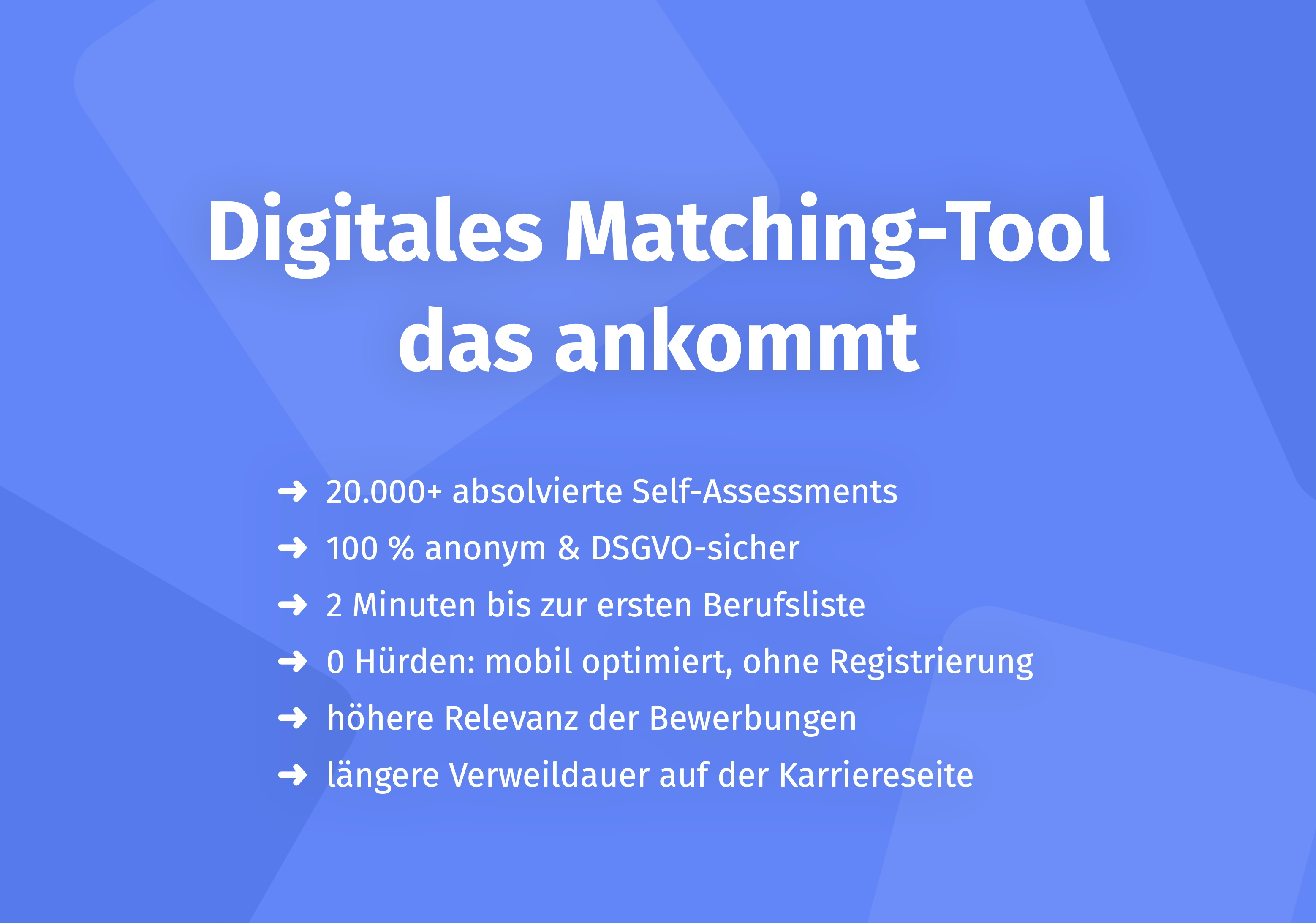
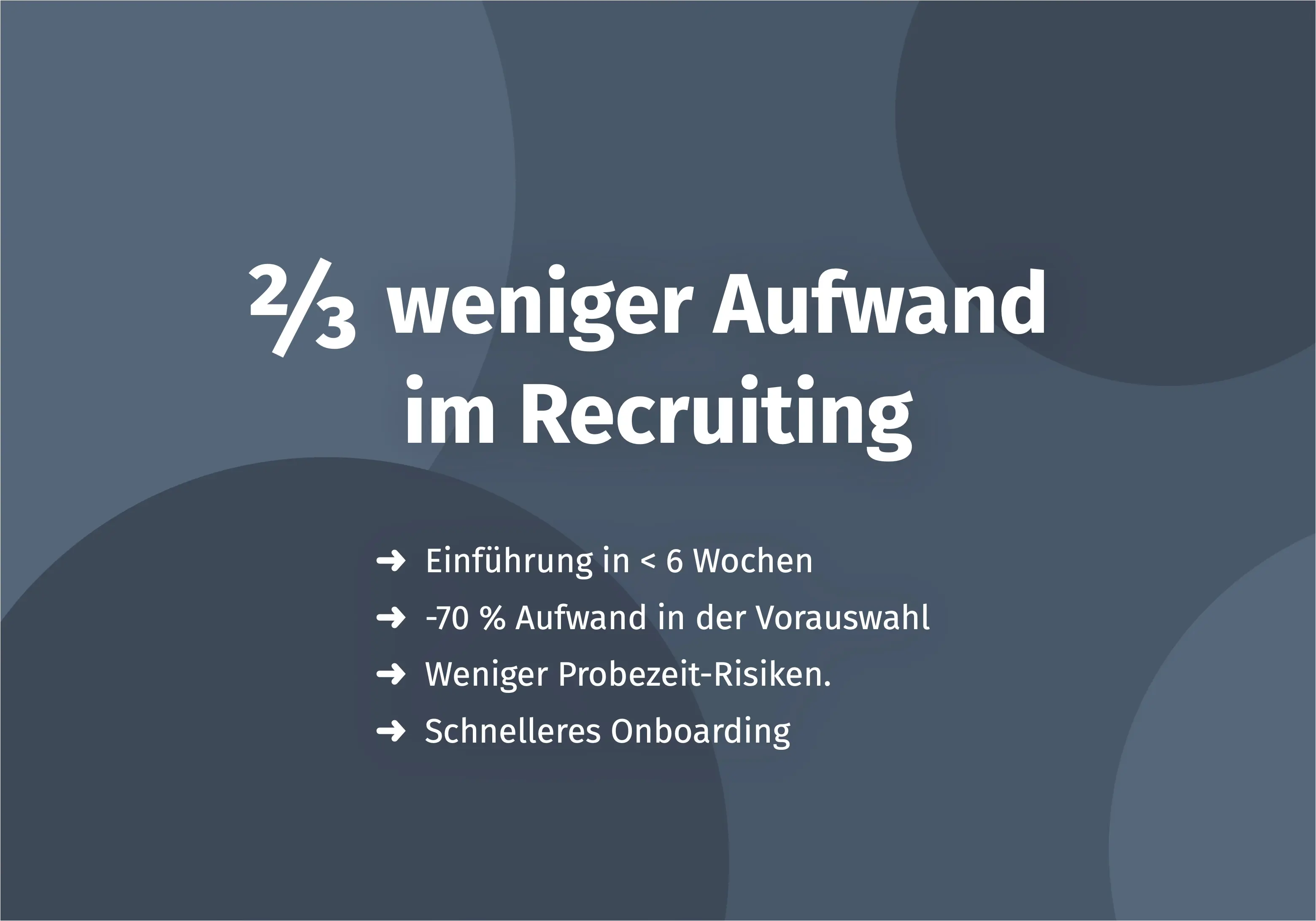
A further lever: making use of objective data from upstream aptitude assessment tools. When candidates have already completed a scientifically validated assessment, the results provide a structured basis for the final interview conversation. Companies like Callways report that their final interviews became significantly more focused after introducing objective assessments – recruiters can engage directly with a candidate's strengths and development areas rather than asking generic questions. The digital platform Aivy supports this approach with scientifically validated game-based assessments designed for objective pre-screening.
To address unconscious bias more broadly across the hiring process, panel interviews are also recommended: multiple evaluators from different backgrounds assess candidates together, which measurably reduces individual distortions.
Common Mistakes in the Final Interview
These five mistakes are the ones HR professionals encounter most often:
1. Lack of preparation: When interviewers are unfamiliar with the CV or haven't coordinated with each other, candidates notice – and it leaves a poor impression.
2. No shared evaluation criteria: Without agreed-upon criteria, post-interview discussions devolve into conflicting opinions – making the decision harder, not easier.
3. Talking too much, listening too little: The candidate should account for at least 60% of the talking time.
4. Failing to communicate next steps: Candidates who don't know when to expect a response will continue looking – and may accept another offer in the meantime.
5. Taking too long to decide: The market for qualified candidates is competitive. Delays in reaching a decision after the final interview cost companies top talent.
Frequently Asked Questions about the Final Interview
What is a final interview?
The term covers two distinct formats. In recruiting, it is the last-round job interview that leads to the hiring decision. In HR management, it refers to the exit interview conducted when an employee leaves the company. Both formats serve the purpose of structured communication at a pivotal transition point in the employment relationship.
What is the difference between a first-round and a final interview?
The first-round interview involves many candidates and serves as a broad initial screening. The final interview is the last round with a small shortlist. It goes deeper and is more focused, and is often conducted by different people – such as the future line manager or senior leadership. Practical matters like salary and start date are also typically addressed at this stage.
How long does a final interview last?
In recruiting, a final interview typically lasts between 45 and 90 minutes, and can be longer for leadership roles. Exit interviews in offboarding tend to be shorter: 30 to 60 minutes is the norm.
What questions are asked in a final interview?
In a final job interview, the focus is on behavioural questions, situational scenarios, cultural fit, and motivation. Salary expectations and start dates are also discussed. In an exit interview, the conversation covers reasons for leaving, experiences with management and company culture, and suggestions for improvement.
How do I reduce bias in the final interview?
Structured questions and a standardised evaluation rubric applied consistently to all candidates are the most effective tools. Panel interviews involving multiple evaluators and – where available – objective pre-assessment data provide further support. According to Schmidt & Hunter (1998), structured interviews are substantially more valid than unstructured ones.
What is an exit interview?
An exit interview is a final conversation with employees who are leaving the organisation. It should be voluntary and confidential. The goal is to understand the reasons for resignation and identify systemic improvement opportunities. Insights gathered across multiple exit interviews provide valuable data for HR strategy and employee retention.
How do I conduct a strong final interview as an HR professional?
Brief all participants in advance, use a structured interview guide, and agree on shared evaluation criteria. Give candidates sufficient time to ask their own questions. Clearly communicate at the end how and when the decision will be conveyed. For exit interviews: create a confidential atmosphere and systematically review findings on a regular basis.
What happens after the final interview?
After the final interview, all participants align internally – ideally on the same day. The decision is then communicated promptly: either as a job offer or as a respectful, appreciative rejection. Those who reach an agreement should move quickly into the onboarding process.
Conclusion
In both of its forms, the final interview is a critical moment: in recruiting, it determines who joins the team – and by extension shapes long-term business success. In offboarding, it generates important insights that contribute to improvements in company culture and employee retention.
The decisive success factor in both cases is structure: clear questions, consistent evaluation criteria, and well-prepared interviewers make the difference between a conversation that generates real insight and one that squanders its potential.
Want to improve the quality of your final interviews through objective aptitude assessment? The digital platform Aivy provides scientifically validated assessment results that serve as a solid data foundation for your final interview – enabling you to engage directly with candidate strengths rather than asking generic questions. Learn more about objective talent assessment with Aivy.
Sources
- Schmidt, F.L. & Hunter, J.E. (1998). The Validity and Utility of Selection Methods in Personnel Psychology. Psychological Bulletin, 124(2), 262–274. https://doi.org/10.1037/0033-2909.124.2.262
- DIN 33430 – Requirements for procedures and their application in occupational aptitude assessment. Deutsches Institut für Normung (DIN), 2016. https://www.beuth.de/de/norm/din-33430/244568905
- Schuler, H. (2014). Psychologische Personalauswahl. Hogrefe Verlag.
- Deutsche Gesellschaft für Personalführung (DGFP). Best Practice Papers – Structured Selection Interviews. https://www.dgfp.de

Make a better pre-selection — even before the first interview
In just a few minutes, Aivy shows you which candidates really fit the role. Beyond resumes based on strengths.