
Convincing decision-makers in an HR context means winning over executives and senior leadership for HR initiatives — from new recruiting tools to strategic workforce measures — in a targeted, data-driven way. Those who speak the language of the decision-making level (ROI, risk reduction, efficiency) and back their arguments with solid metrics significantly increase their chances of success. A structured business case is the most powerful tool to achieve this.
What Does "Convincing Decision-Makers" Mean in an HR Context?
In day-to-day business, HR professionals rarely make decisions alone. Budgets, new tools, or process changes need to be approved by senior management, CFOs, or department heads — people who often have different priorities, perspectives, and information needs than HR.
Convincing decision-makers is therefore not about rhetorical brilliance, but about strategic communication: the right argument for the right person at the right time. In organizational psychology, this is also referred to as stakeholder management — the targeted identification, analysis, and involvement of all individuals who influence or are affected by a decision.
This approach is distinct from general persuasion rhetoric: while the latter focuses on communication technique, the HR context calls for factual, data-based argumentation — complemented by an understanding of what actually drives decision-makers.
Why Do HR Initiatives Fail at the Leadership Level?
Many good HR ideas never get implemented — not because they are flawed, but because they were not communicated convincingly. The most common reasons:
Missing Data and ROI Argumentation
Senior leadership thinks in numbers: costs, risks, returns. Presenting HR measures without solid metrics quickly loses their attention. Without a clear ROI (return on investment) — that is, what the initiative delivers relative to what it costs — even sensible investments can appear as budget line items without measurable value.
Communicating Past the Wrong Audience
A CFO cares about cost savings and efficiency. A CEO thinks in terms of growth and competitiveness. An IT lead prioritises data security and system integration. Addressing all decision-makers with the same argument misses the mark for most of them. Tailored communication is not a luxury — it is a prerequisite for buy-in.
No Stakeholder Management in Place
Decisions in organisations rarely emerge from a single conversation. Starting persuasion efforts only at the formal presentation is often too late. Effective stakeholder management begins early: informal conversations, advance information-sharing, and involving influential people ahead of time.
The 5 Success Factors for Persuasive HR Communication
1. Stakeholder Analysis: Who Decides How?
Before you make your case, you need to understand whom you are trying to convince. Build a simple stakeholder map:
- Who makes the formal decision? (CEO, board, department head)
- Who influences the decision informally? (colleagues, works council, specialist departments)
- What motivates this person? (costs, reputation, security, growth)
- What concerns are they likely to have? (effort, risk, resistance to change)
The clearer this picture, the more precisely you can tailor your argumentation. It is also worth exploring the fundamentals of systems thinking — a competency that helps identify connections between different stakeholder interests.
2. Data-Based Argumentation – ROI and KPIs
Data is the strongest persuasion tool at the decision-making level. For HR measures, this means:
- Time-to-hire: How long does it currently take to fill a role — and how long after the measure?
- Cost-per-hire: What does hiring cost today — and what will the new approach save?
- Turnover rate: What are the costs of a bad hire? (Rule of thumb: 1–2 times annual salary)
- Productivity metrics: How does faster, better hiring affect team performance?
According to McKinsey & Company (The State of Organizations, 2023), companies that make HR decisions on a data-driven basis are significantly more resilient and competitive — a compelling argument at C-level.
3. Structuring the Business Case
A business case is a structured decision document that weighs the costs, benefits, and risks of a planned measure. It is not a report — it is an argument in document form. A proven basic structure:
- Problem definition: What pain does the measure solve? (e.g. high time-to-hire, rising turnover)
- Cost of the status quo: What does the problem cost today — in time and money?
- Proposed solution: What is the measure, and how does it work?
- Investment costs: What does implementation cost (one-time and ongoing)?
- Expected benefit: What will concretely improve — with metrics?
- Risk assessment: What happens if we do nothing?
- References: Which comparable organisations have implemented this successfully?
4. Anticipating and Addressing Objections
Knowing objections before they are raised builds trust. Typical counter-arguments from decision-makers — and convincing responses:
- "This costs too much." → Show the cost of the status quo. What does a bad hire, a long vacancy, or high turnover actually cost?
- "We don't have time for this." → Propose a pilot project with a clear start date and defined success metrics.
- "We've tried this before." → Show what has changed — new technology, new data, new methods.
- "I need more information first." → Deliver a compact summary with three core messages. Less is often more.
5. Timing and Format of the Presentation
Even the best content fails at the wrong moment. Key pointers for getting the timing right:
- Use budget planning cycles: Q3/Q4 is typically the best window to position investments for the following year.
- Communicate after visible problems: High turnover, a failed hire, a lost candidate — these are moments when decision-makers are particularly receptive.
- Avoid crisis periods: When leadership is focused on other priorities, request a dedicated slot.
On format: fewer slides, more clarity. Three core messages, one clear recommendation, one concrete next step.
Business Case Step by Step – A Template for HR
A practical business case for HR investments follows this logic:
Step 1 – Name the problem: "Our average time-to-hire is currently X days. This costs us Y per open position and leads to Z bottlenecks."
Step 2 – Describe the solution: "With [measure], we can shorten the process by X days while simultaneously improving selection quality."
Step 3 – Compare the numbers: Investment vs. expected savings. A clear break-even point.
Step 4 – Cite references: What have other organisations achieved? External benchmarks and results from comparable companies are particularly persuasive here.
Step 5 – Propose a pilot: "I suggest testing this in one area with X roles over Y weeks — with pre-defined success criteria."
A structured business case not only increases approval rates, but also strengthens HR's standing as a strategic partner — rather than merely an administrative function. For further insights into strategic HR processes, the article on Talent Relationship Management is a useful reference.
Making a Stronger Case with Objective Data
One often underestimated lever in a business case is the quality of the underlying data. Anyone who can demonstrate that a new method delivers a measurably higher hit rate in personnel selection — rather than simply saying "we want to recruit better" — has a significantly stronger argument.
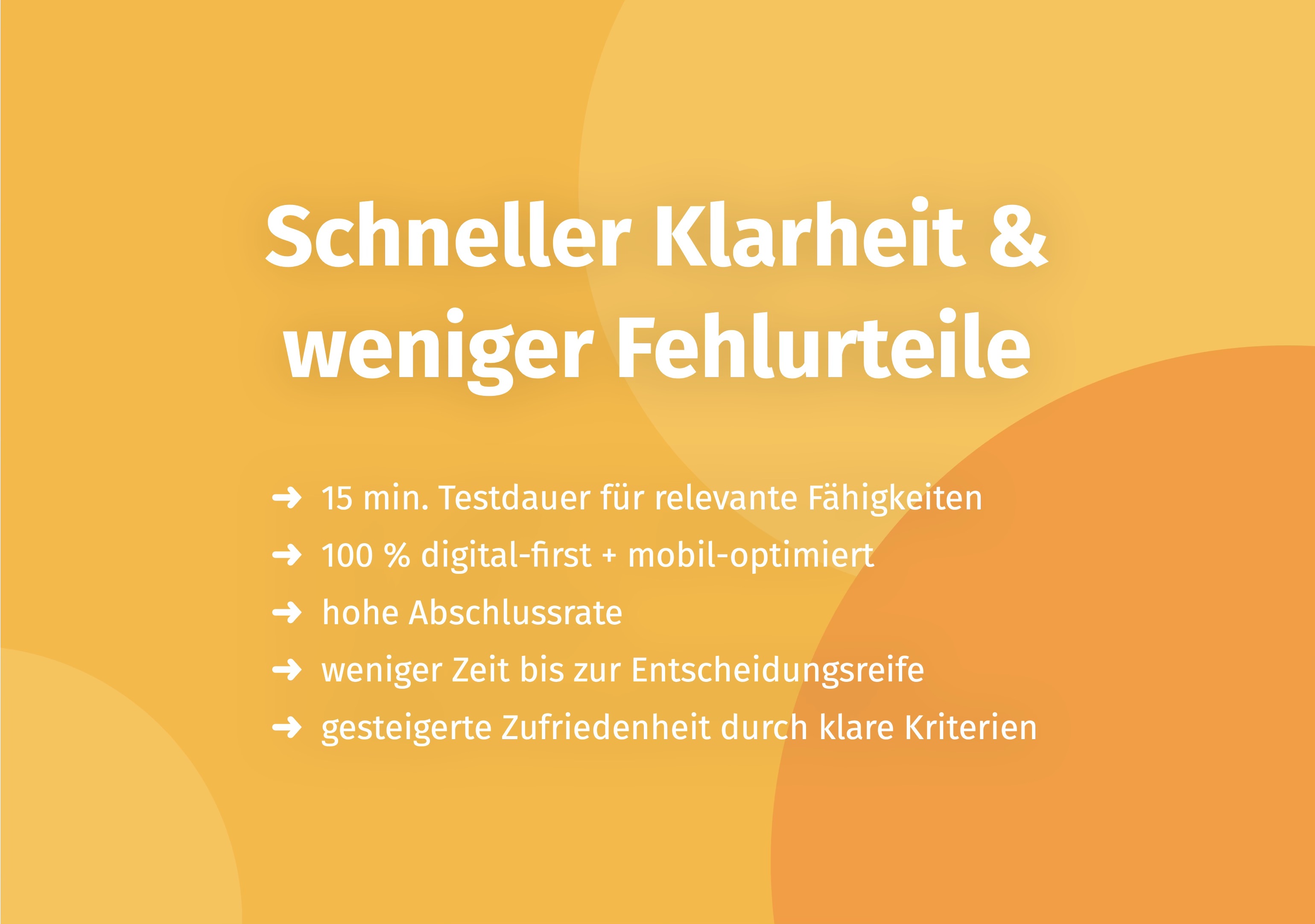
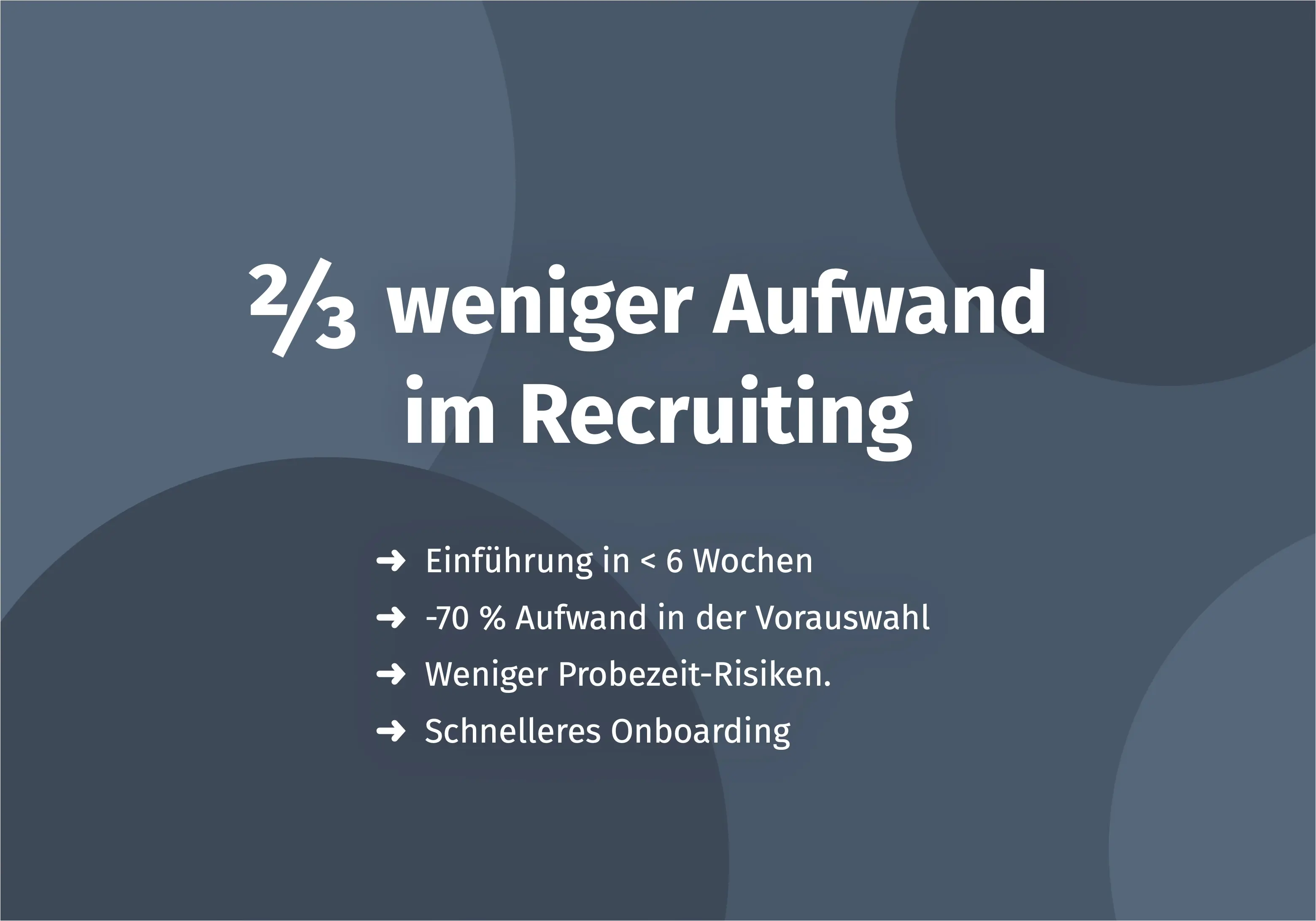
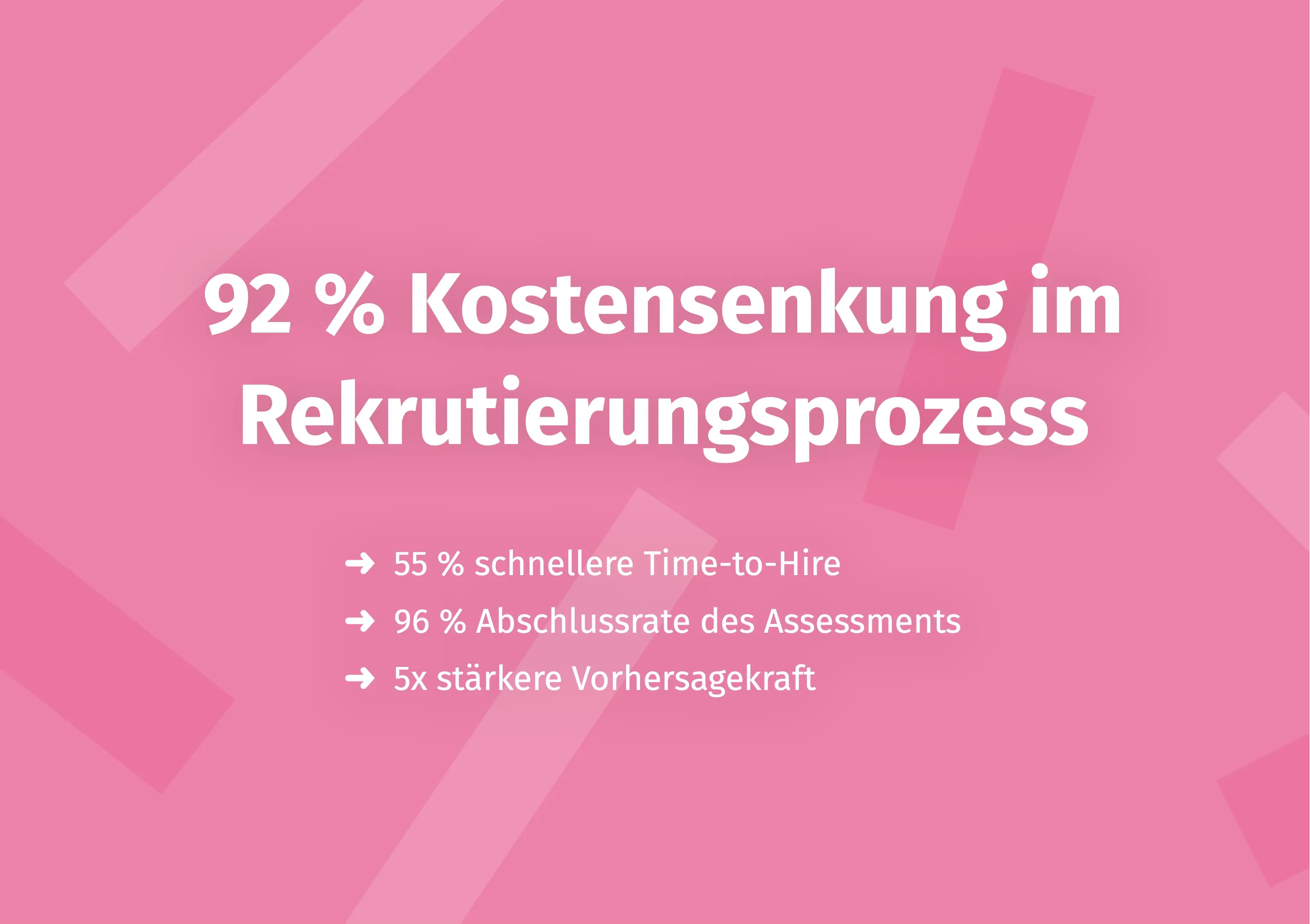
Digital aptitude diagnostics provides exactly this kind of data. The Aivy platform — a research spin-off of Freie Universität Berlin — enables objective, validated personnel selection based on psychometric methods. The result: measurable metrics that substantiate the business case for recruiting investments. For example, MCI Deutschland reduced time-to-hire by 55% and cut cost-per-hire by 92% — figures that hold up in any boardroom presentation.
Find out more about data-driven aptitude diagnostics and its application in recruiting at aivy.app.
Frequently Asked Questions: Convincing Decision-Makers
What is the most important step in convincing decision-makers?
The most important step is a thorough stakeholder analysis upfront: who decides, and who influences the decision? Arguments should be framed in the "language" of each individual — finance cares about ROI, IT about security, the CEO about growth. Data and metrics are always the strongest foundation; purely opinion-based statements rarely land at decision-making level.
How do I build a business case for an HR measure?
A strong business case starts with problem definition: what measurable pain does the measure solve? This is followed by quantification (cost of the status quo vs. investment vs. expected benefit), relevant KPIs such as time-to-hire, cost-per-hire or turnover rate, a risk assessment ("what happens if we do nothing?"), and references from comparable organisations.
What arguments are most convincing to C-level leadership?
Financial arguments (ROI, cost savings, efficiency gains) are the most effective. Risk arguments (compliance, reputational risk, skills shortages) and competitive arguments ("what is the competition doing?") are also particularly persuasive. Data-driven projections consistently outperform gut-feel reasoning at this level.
How do I handle resistance from decision-makers?
Objections should be proactively addressed in the business case — before they are raised. Pilot projects with a small budget and clear success metrics lower the barrier to approval. External industry references enhance credibility. It also helps to identify internal allies: who already supports the initiative?
How do I present HR data in an understandable way?
Complex data should be visualised (charts, dashboards). Keep it focused: 3–5 core KPIs rather than a flood of numbers. Benchmarks are helpful — "industry average vs. our organisation" makes the need for action tangible. Most effective of all is a narrative: embed the numbers in a story that describes a problem and presents a solution.
What is stakeholder management in an HR context?
Stakeholder management refers to the systematic identification of all individuals who influence or are affected by an HR decision — and the targeted, individualised communication with each group. This includes senior management, works councils, specialist departments, and where relevant, external partners. Effective stakeholder management starts early and is not a one-off conversation but an ongoing process.
When is the best time to approach senior leadership?
Budget planning cycles (typically Q3/Q4) are ideal for positioning investments for the following year. Leadership tends to be most receptive following visible problems — such as high turnover or a failed hire — or after successful pilot projects. During periods of crisis or competing priorities, it is advisable to request a separate, dedicated meeting.
How do I measure the success of an HR initiative after it is approved?
KPIs must be defined and communicated in advance — not after implementation. Regular update reports (monthly or quarterly) keep decision-makers engaged. The most convincing approach is a direct before-and-after comparison: status quo prior to the measure vs. the measured outcome. Successes should be made visible internally.
Conclusion
Convincing decision-makers is a core competency of modern HR practice. Those who understand that senior leadership thinks in terms of numbers, risks, and competitiveness can communicate HR initiatives in a targeted and impactful way. The structured business case is the most powerful tool for this: it combines problem description, cost-benefit analysis, and a concrete recommendation into a single argument that resonates at decision-making level. Supported by early stakeholder management and data-based reasoning, the likelihood of gaining buy-in increases significantly.
Find out how data-driven aptitude diagnostics can strengthen your next business case at aivy.app.
Sources
- Cialdini, Robert B. (2001). Influence: The Psychology of Persuasion. Collins Business. https://www.harpercollins.com/products/influence-robert-b-cialdini
- Kotter, John P. (1996). Leading Change. Harvard Business Review Press. https://www.hbr.org/product/leading-change/11031E-KND-ENG
- McKinsey & Company (2023). The State of Organizations 2023. https://www.mckinsey.com/capabilities/people-and-organizational-performance/our-insights/the-state-of-organizations-2023
- Deutsche Gesellschaft für Personalführung – DGFP (2023). Studies on Strategic HR Communication. https://www.dgfp.de
- Hays AG (2024). HR Report 2024. https://www.hays.de/hr-report

Make a better pre-selection — even before the first interview
In just a few minutes, Aivy shows you which candidates really fit the role. Beyond resumes based on strengths.