
An Applicant Tracking System (ATS), also known as a candidate management system or recruiting software, digitalises and centralises the entire recruiting process – from job posting to hiring. It replaces spreadsheets and unstructured email communication with a structured candidate pipeline and ensures GDPR-compliant data management. Modern systems can be extended with pre-employment assessment tools to improve not just the administration but also the quality of hiring decisions.
What Is an Applicant Tracking System?
An Applicant Tracking System is a software solution that maps and manages every step of the recruiting process digitally. It serves as a central platform where recruiters receive, review, communicate about and document decisions on job applications.
Unlike general HR software that also covers payroll or learning management, an ATS focuses specifically on the recruiting workflow. The boundaries with broader recruiting suites are increasingly blurring: many vendors combine classic applicant management with active sourcing features, career page builders or analytical dashboards.
Who uses an ATS? Primarily recruiters and HR managers who work with applications every day. Executives use it for reporting and strategic decisions, while hiring managers rely on it for structured candidate evaluation within their departments.
Core Features at a Glance
Job Posting and Multi-Posting
A good ATS allows job ads to be created and published directly from the platform – posted to multiple job boards simultaneously with a single click. This so-called multi-posting saves considerable time and ensures that all channels (e.g. Indeed, LinkedIn, Glassdoor, the company's own career site) are covered consistently. Many systems also offer customisable career page templates that match the company's corporate identity.
Candidate Pipeline and Collaborative Evaluation
The centrepiece of every ATS is the candidate pipeline – a structured sequence of application stages, from "Application Received" through "Phone Interview" to "Offer". Recruiters can see at a glance which stage each candidate is at. Particularly valuable: multiple people can simultaneously view, comment on and rate applications – without email chains or duplicate files. Standardised evaluation forms help ensure that all candidates are assessed against the same criteria.
Communication and Candidate Experience
An ATS enables automated status notifications: candidates receive an immediate confirmation when their application is received, and a notification after every status change. This may seem minor, but it has a significant impact on candidate experience – how applicants perceive the company as an employer. Prolonged silence is one of the most common complaints from candidates; an ATS resolves this problem structurally.
GDPR-Compliant Data Management
Applicant data constitutes personal data under the General Data Protection Regulation (GDPR, Art. 4). This means companies may only collect and process it on a valid legal basis. Under Art. 6(1)(b) GDPR, processing is permitted when it is necessary for the performance of a contract or to take steps prior to entering into a contract – which covers the recruitment process.
In practical terms, this means applicant data must be deleted after the process concludes – typically within six months (Art. 17 GDPR). Professional ATS solutions offer automated deletion schedules, full audit trails of all data access and a Data Processing Agreement (DPA) with the software vendor – a data protection requirement when personal data is shared with third parties.
Reporting and Analytics
Modern applicant tracking systems deliver metrics that are indispensable for strategic HR work: time-to-hire (duration from application receipt to hiring), source of hire (which channel delivers the best candidates?) and conversion rates between pipeline stages. This data helps continuously improve recruiting processes and allocate investments in job boards or sourcing channels more effectively.
Why an ATS Improves the Recruiting Process
Companies that still manage applications by email face familiar challenges: applications get lost, responses are delayed, the overview is gone – and qualified candidates accept other offers in the meantime. An ATS addresses these weaknesses at a structural level.
Efficiency: Routine tasks such as acknowledgements, reminders and status updates run automatically. Recruiters gain time for what truly matters: personal conversations with suitable candidates.
Quality of hiring decisions: Standardised evaluation forms and clear pipeline stages ensure that all applicants are assessed against the same criteria – an important foundation for reducing unconscious bias in recruiting.
Candidate experience: Fast response times and professional communication improve the company's image as an employer – even for candidates who are ultimately unsuccessful.
Legal compliance: Automated deletion schedules and comprehensive audit trails protect against GDPR violations.
Applicant Tracking System and Pre-Employment Assessment
An ATS manages applications – it does not evaluate them. This is a structural limitation: research in personnel selection has consistently shown that CVs and cover letters are only weakly predictive of later job performance. Relying solely on CV screening means making decisions on a narrow data basis and risks overlooking genuine talent.
A meaningful complement to the ATS is therefore the use of scientifically validated pre-employment assessment – standardised tests and questionnaires that objectively measure competencies, personality traits and potential. These instruments can be integrated directly into existing ATS systems: candidates receive a link to the assessment after submitting their application, and results appear automatically in their candidate profile within the ATS.
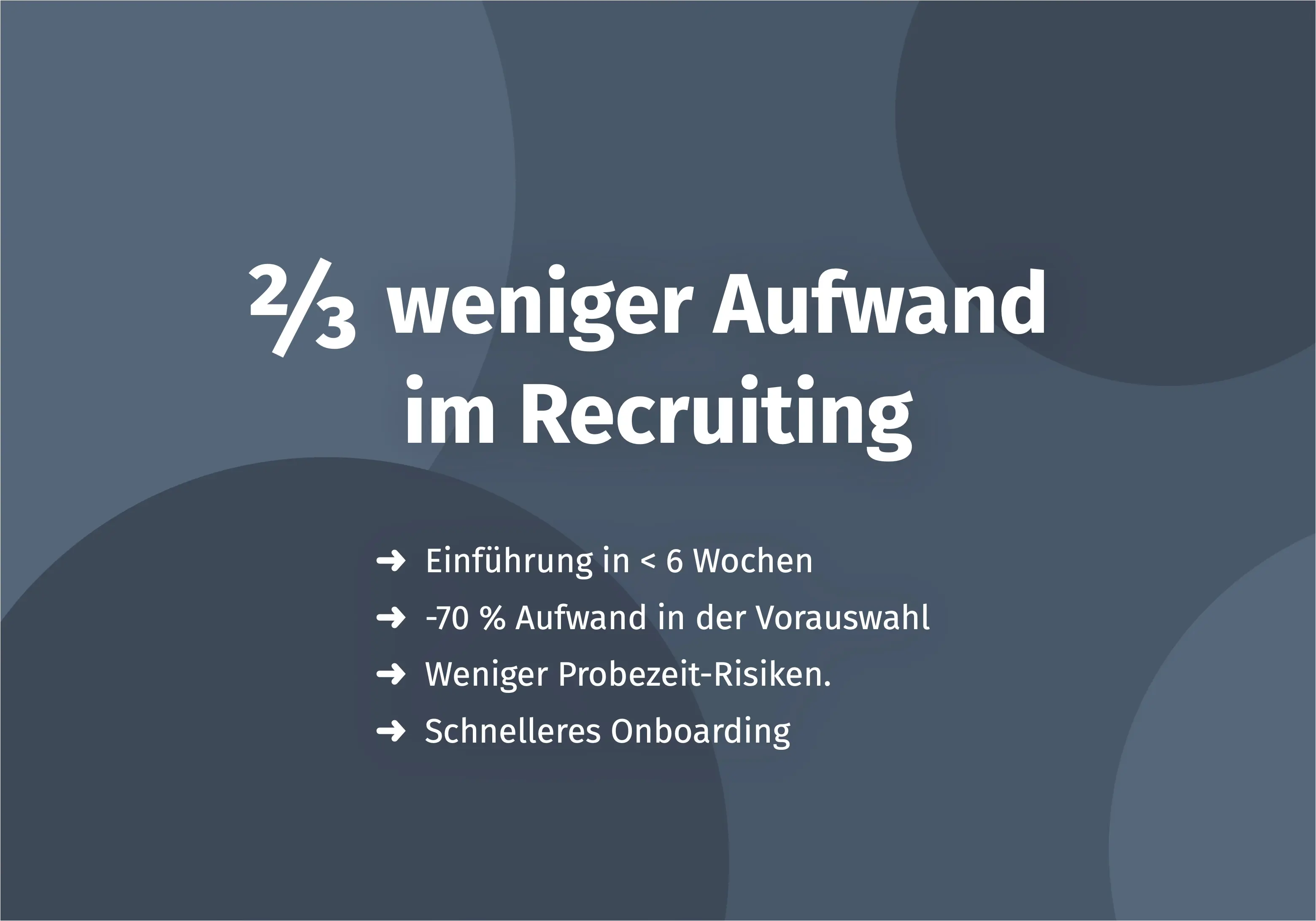
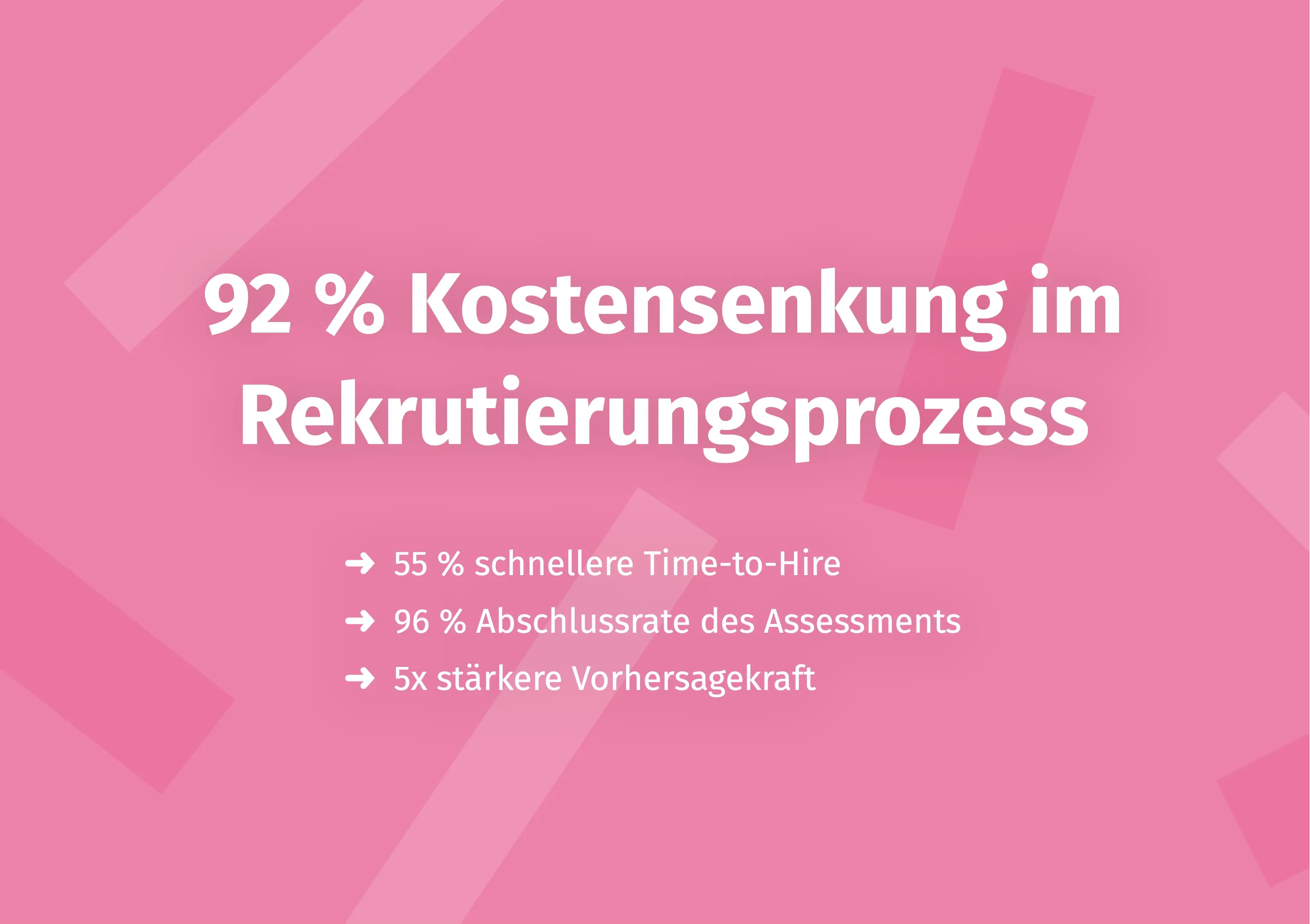
The digital assessment platform Aivy demonstrates how this integration works in practice. MCI Deutschland GmbH combined the softgarden ATS with Aivy and was able to reduce time-to-hire by 55% and cost-per-hire by 92% – while achieving a more objective basis for evaluation. Matthias Kühne, Director People & Culture at MCI, notes that the two systems "interact completely seamlessly" and that the added assessment step "not only saves time, but is also genuinely enjoyable in day-to-day work." The full case study is available here.
The result: the ATS handles process management and administration, while assessment provides the analytical depth needed for better hiring decisions. The two layers complement – rather than replace – each other.
What to Look for When Choosing an ATS
Checklist: 7 Must-Have Criteria
1. GDPR Compliance: Automated deletion schedules, a DPA with the vendor and data storage on EU servers are mandatory requirements – not optional features.
2. Usability for All Stakeholders: An ATS is used daily by recruiters, hiring managers and candidates alike. Complex interfaces lead to adoption problems. Always test the platform with a real recruiting process before committing.
3. Multi-Posting and Career Page Integration: Direct connections to relevant job boards and a customisable career page save time every single day.
4. Collaborative Evaluation Features: Standardised rating forms, comment functions and clearly defined user roles enable genuine teamwork in recruiting.
5. Reporting and Analytics: At a minimum, time-to-hire, source of hire and pipeline conversion rates should be available without manual data extraction.
6. Integrations and API Connectivity: Can the ATS connect to your existing HR systems (e.g. payroll, onboarding tools, assessment platforms)?
7. Scalability and Value for Money: Will the system grow with your organisation? Many vendors offer modular pricing – calculate not only the licence costs but also the implementation effort.
When Does an ATS Pay Off?
An applicant tracking system typically becomes worthwhile from around 20 to 30 applications per month – and certainly once multiple people are involved in the recruiting process or several positions need to be filled simultaneously. If GDPR compliance cannot be clearly guaranteed under the current process, investing in an ATS also makes sense from a risk perspective: the costs of a data protection incident far exceed the licence fees of a professional solution.
Frequently Asked Questions About Applicant Tracking Systems
What is an Applicant Tracking System?
An Applicant Tracking System (ATS) is software for the digital management of all job applications within an organisation. It centralises job posting, application intake, candidate communication and decision documentation – replacing manual processes carried out by email or spreadsheet.
What can an Applicant Tracking System do?
Core features include: multi-posting to job boards, a structured candidate pipeline with clear application stages, automated status notifications, collaborative evaluation by the hiring team, GDPR-compliant data storage with automated deletion schedules, and reporting dashboards covering metrics such as time-to-hire and source of hire.
How much does an Applicant Tracking System cost?
Costs vary considerably depending on company size and feature scope. Entry-level solutions for smaller organisations start at approximately €50 to €100 per month. Enterprise solutions for larger organisations can cost several thousand euros monthly. Most vendors use SaaS models with modular pricing. When calculating the investment, ROI should be considered alongside licence costs: time saved through automation and improved candidate quality through more structured processes both contribute to the return.
Is an Applicant Tracking System GDPR-compliant?
Applicant data constitutes personal data under GDPR (Art. 4) and may only be processed on a valid legal basis. Under Art. 6(1)(b) GDPR, processing in the context of a recruitment process is generally permissible. After the process concludes, data must typically be deleted within six months (Art. 17 GDPR). Professional ATS vendors provide the relevant GDPR features and conclude a Data Processing Agreement (DPA) – both aspects should be verified when selecting a system.
What is the difference between an ATS and recruiting software?
An ATS (Applicant Tracking System) and a candidate management system refer to the same type of tool: software for managing job applications. The term "recruiting software" is often used more broadly, encompassing active sourcing, talent CRM, employer branding tools and deeper analytics. The distinction is increasingly blurred, as many vendors are extending their ATS core with these additional capabilities. A dedicated pre-employment assessment platform can serve as a valuable complement to either.
When is an Applicant Tracking System worth the investment?
An ATS is typically worthwhile from approximately 20 to 30 applications per month, when multiple stakeholders are involved in recruiting, or when several roles need to be filled at the same time. If GDPR compliance is not clearly ensured under the current process, deploying an ATS is advisable regardless of volume. The earlier a structured process is established, the more easily it can be scaled.
How does an ATS improve candidate experience?
An ATS enables fast, automated responses to new applications and status changes. Candidates receive immediate feedback rather than weeks of silence – a central factor in how they perceive the company as an employer. In addition, an ATS enables mobile application via responsive career pages and reduces communication gaps between all parties involved in the process.
Conclusion
An Applicant Tracking System is no longer a nice-to-have – it is an operational foundation for professional recruiting. It creates structure, ensures GDPR compliance and improves candidate experience: three factors that directly influence hiring quality in an increasingly competitive labour market.
For organisations that want to go beyond process administration, an ATS can be combined with scientifically validated pre-employment assessment. Objective data on competencies and potential analysis then complement CV-based screening – making selection decisions more transparent, fairer and more accurate.
Discover how the digital assessment platform Aivy enhances your applicant tracking system with scientifically validated assessments: Learn more
Sources
- General Data Protection Regulation (GDPR), in particular Art. 4, 6, 17. European Commission, 2016. https://eur-lex.europa.eu/legal-content/EN/TXT/?uri=celex%3A32016R0679
- German Federal Data Protection Act (BDSG), §26 – Data processing in the employment context. Federal Ministry of Justice, 2018. https://www.gesetze-im-internet.de/bdsg_2018/__26.html
- Bitkom e.V.: Recruiting in the Digital Economy. https://www.bitkom.org
- Deutsche Gesellschaft für Personalführung (DGFP): Recruiting Trends Benchmark Study. https://www.dgfp.de
- LinkedIn: Global Talent Trends Report, 2024. https://business.linkedin.com/hire/resources
- Aivy GmbH: MCI Deutschland GmbH Success Story. https://www.aivy.app/en/success-stories/mci-deutschland-gmbh

Make a better pre-selection — even before the first interview
In just a few minutes, Aivy shows you which candidates really fit the role. Beyond resumes based on strengths.