
An applicant management template helps HR teams to systematically record all incoming applications, track their processing status, and document them in compliance with GDPR. It typically includes fields for candidate data, application status, interview notes, and deadlines. Depending on company size, an Excel or Google Sheets template is a good starting point — once you're managing around 20 open positions simultaneously, a dedicated Applicant Tracking System (ATS) is recommended.
What Is Applicant Management?
Applicant management refers to all processes by which a company receives, evaluates, communicates with, and closes out applications. It covers the entire period from the receipt of an application through to hiring or rejection — including all communication steps and documentation requirements.
The term is often used interchangeably with an Applicant Tracking System (ATS), but the scope is broader: applicant management is the process; an ATS is the digital tool. Companies without an ATS can map the same process using a structured Excel or Google Sheets template — at least up to a certain volume.
Without structured applicant management, common problems arise: applications slip through the cracks, deadlines are missed, candidates receive no response or hear back too late, and there is no consistent basis for comparing candidates. This not only harms the candidate experience, but also creates legal risks — particularly around compliance with GDPR data retention requirements.
What Belongs in an Applicant Management Template?
A good template is more than a list of names. It maps the entire recruiting process and enables consistent comparison between candidates.
Required Fields: What Must Be Included?
Every applicant management template should contain at least the following fields:
Candidate
- Name, email address, phone number
- Application source (job portal, direct application, referral)
- Application date
Position
- Job title, department, location
- Internal job ID (if applicable)
Process Status
- Current status (e.g. Received → Review → Interview → Offer → Rejected/Hired)
- Date of last action
- Planned date of next action
Evaluation
- Standardized assessment criteria (e.g. professional competence, language skills, availability)
- No field for subjective impressions about appearance, age, or background — this violates anti-discrimination law (in Germany: AGG; in the UK/US: Equality Act / Title VII)
Communication
- Acknowledgement of receipt sent: yes/no
- Rejection or invitation sent: yes/no, with date
GDPR / Data Protection
- Consent for talent pool: yes/no
- Deletion deadline (automatically calculated: rejection date + 6 months)
Status Tracking: Keeping the Overview
A clear status system is the most important element of any template. A multi-stage model is recommended:
- Received
- Under Review (documents checked)
- Phone Interview
- In-Person Interview / Video Interview
- Offer Made
- Hired
- Rejected (with date)
- Talent Pool (with consent)
Each status should be accompanied by a date so that bottlenecks in the process become visible — for example, if candidates are stuck in the review stage for too long.
Communication Templates in Applicant Management
A complete template includes not only the tracking spreadsheet but also standardized email templates:
- Acknowledgement of receipt: Immediate response upon receiving the application
- Interview invitation: With a specific appointment and preparation guidance
- Rejection after review: Friendly, clear, without detailed reasoning (legally safer)
- Rejection after interview: Optionally with constructive feedback
- Talent pool request: With explicit consent in accordance with GDPR
Standardized communication saves time and ensures a consistent candidate experience — regardless of which HR team member is handling the case.
Excel, Tool, or ATS — What Works for You?
The right solution depends on recruiting volume and team size.
For Small Teams: Excel & Google Sheets
For up to five open positions simultaneously, a simple spreadsheet is sufficient. Advantages: free, ready to use immediately, no onboarding required. Disadvantages: no automated email sending, no real-time team access (with Excel), no automatic deadline tracking.
Google Sheets has an advantage over Excel in that multiple people can edit simultaneously — making it more practical for small HR teams.
For Growing Companies: Lightweight Tools
From five to twenty open positions, lightweight project management tools like Notion or Airtable become worthwhile. They offer more structure than a spreadsheet, allow custom status fields, and support team collaboration. Setup typically takes about half a day with no coding required.
When Does a Full ATS Make Sense?
An Applicant Tracking System (ATS) is specialized software for applicant management. It offers:
- Automated email sending (acknowledgements, reminders)
- Integrated careers page for your own website
- Team access with role-based permissions
- Automatic deadline monitoring (GDPR compliance)
- Reporting and recruiting analytics
- Integration with HR software (e.g. payroll, onboarding tools)
From around twenty simultaneous open positions, or a recruiting volume of more than one hundred applications per month, an ATS is generally more cost-effective than manual management. Well-known providers in the DACH market include Personio, softgarden, and Recruitee.
GDPR-Compliant Applicant Management
Applicant management is subject to strict data protection requirements. In Germany, the legal basis is the General Data Protection Regulation (GDPR) in conjunction with § 26 of the Federal Data Protection Act (BDSG), which governs data processing in the employment context. Organizations in other countries should apply the equivalent national data protection legislation.
Retention Periods for Applicant Data
Rejected candidates' data must be deleted after the rejection. In Germany, the deadline is governed by the General Equal Treatment Act (AGG): candidates have two months to assert discrimination claims (§ 15 para. 4 AGG). A retention period of six months after the rejection date is therefore recommended to preserve evidence in the event of a dispute.
After this period expires, all personal data must be fully deleted — this includes application documents, emails, and all entries in the template (Art. 17 GDPR).
Deletion Obligations and the Talent Pool
If you want to keep candidates in mind for future positions, you need explicit, informed consent in accordance with Art. 6 para. 1 lit. a GDPR. This consent must be:
- Freely given (no pressure)
- Specific (clearly stating the purpose of the talent pool)
- Revocable at any time
- Documented
With valid consent, applicant data may be stored in the talent pool for up to 24 months. Without consent, the six-month period applies without exception.
Important: Consent for the talent pool must not be bundled into the general application — it must be obtained separately and voluntarily.
Common Mistakes in Applicant Management
Many HR teams make similar mistakes in practice:
Subjective notes in the template: Comments about appearance, accent, or personal impressions are legally problematic and can be used as evidence of discrimination in a dispute. Only standardized criteria belong in the template.
Forgotten rejections: Leaving candidates without a response is not only discourteous — it damages employer branding and leaves a lasting negative impression.
Missing deadlines: Without recorded deletion deadlines, GDPR retention periods are frequently exceeded. A simple "deletion deadline" date field in the template is enough to prevent this.
No standardized evaluation: When every recruiter evaluates candidates according to their own criteria, comparability is lost. Standardized criteria are essential — even in an Excel template.
Too much information at once: An overloaded template will not be used consistently. Fewer fields that are actually filled out are better than complete fields left blank.
Improving Selection Quality in Applicant Management
A structured template solves the tracking problem — but it does not automatically improve the quality of selection decisions. Relying solely on application documents and subjective interview impressions risks systematic distortion: unconscious biases such as the halo effect, affinity bias, or confirmation bias influence hiring decisions without recruiters being aware of it.
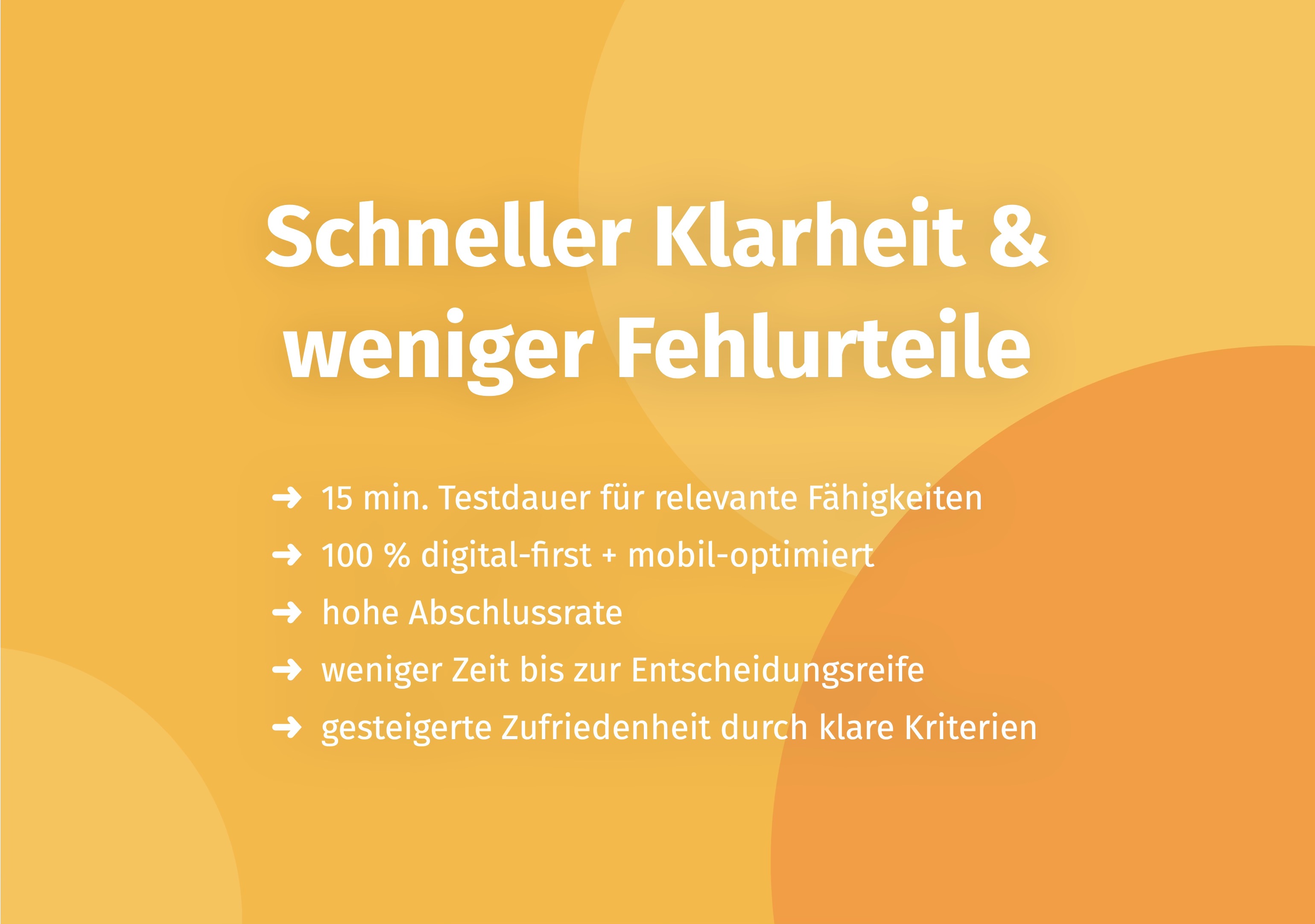
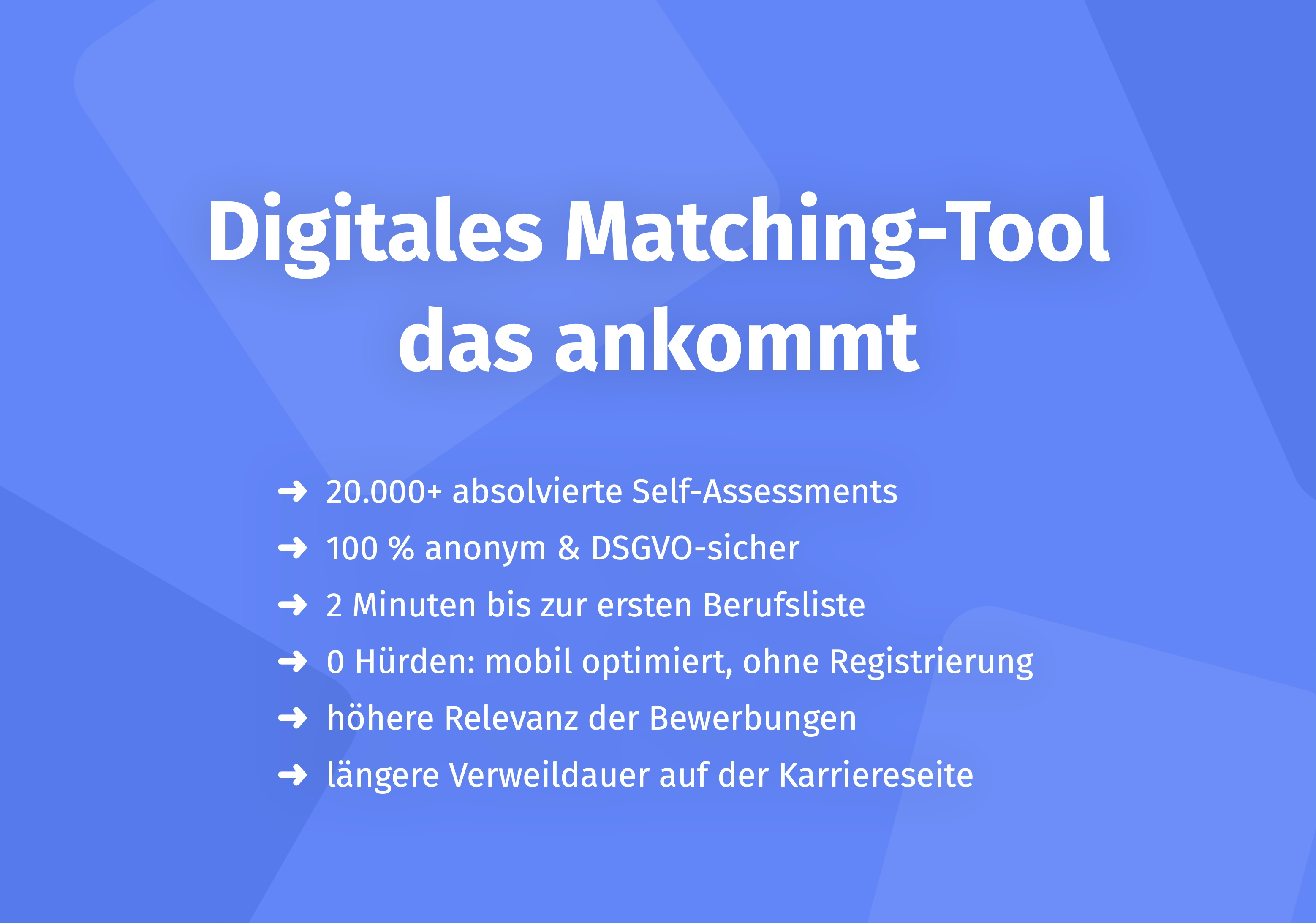
Scientifically validated aptitude diagnostics complement the structured process with an objective basis for evaluation. The digital platform Aivy — a spin-off of Freie Universität Berlin — offers game-based assessments and scientifically grounded personality questionnaires that can be used in a standardized, bias-reduced way. They measure relevant competencies and potential that a CV and interview alone cannot capture.
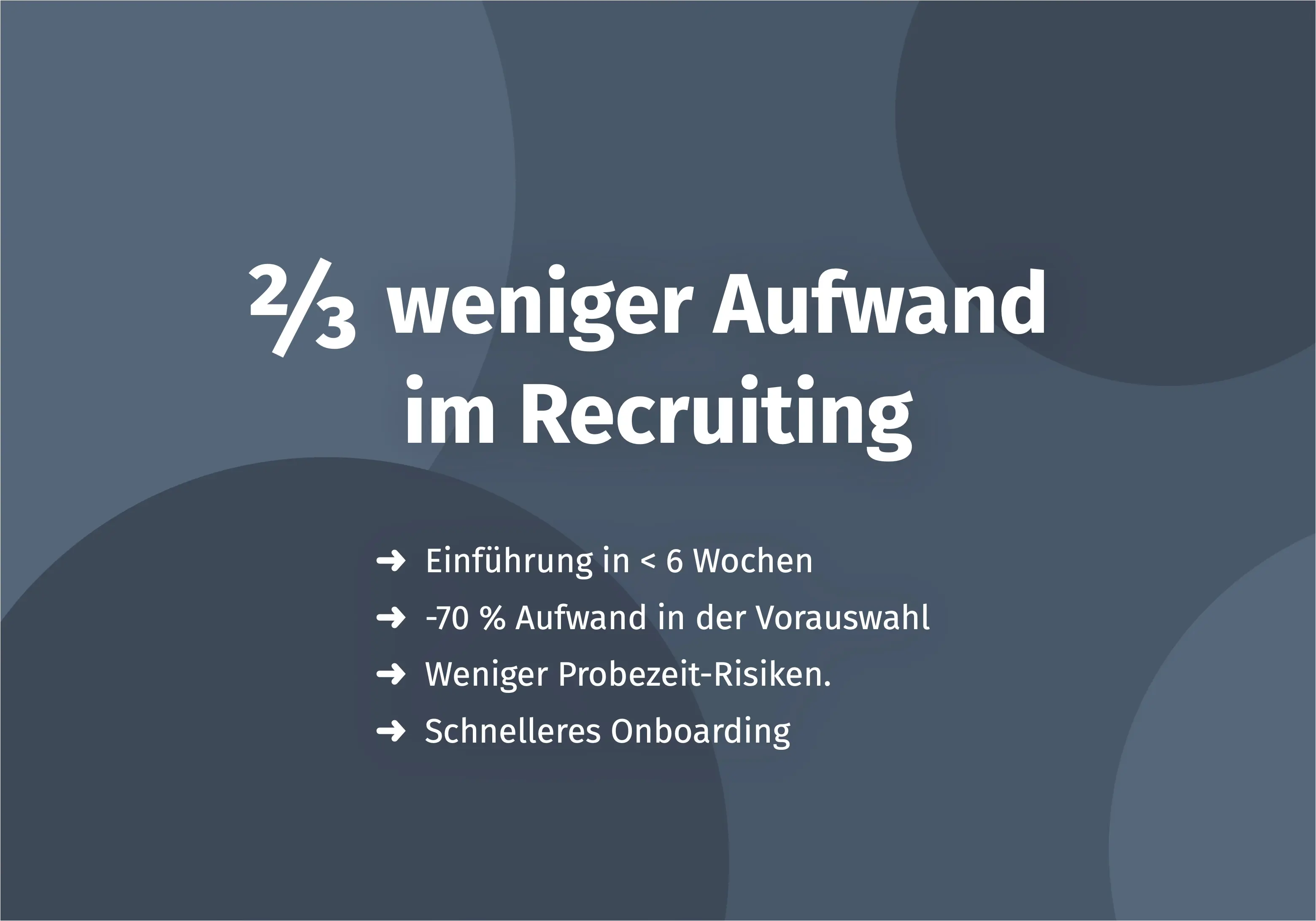
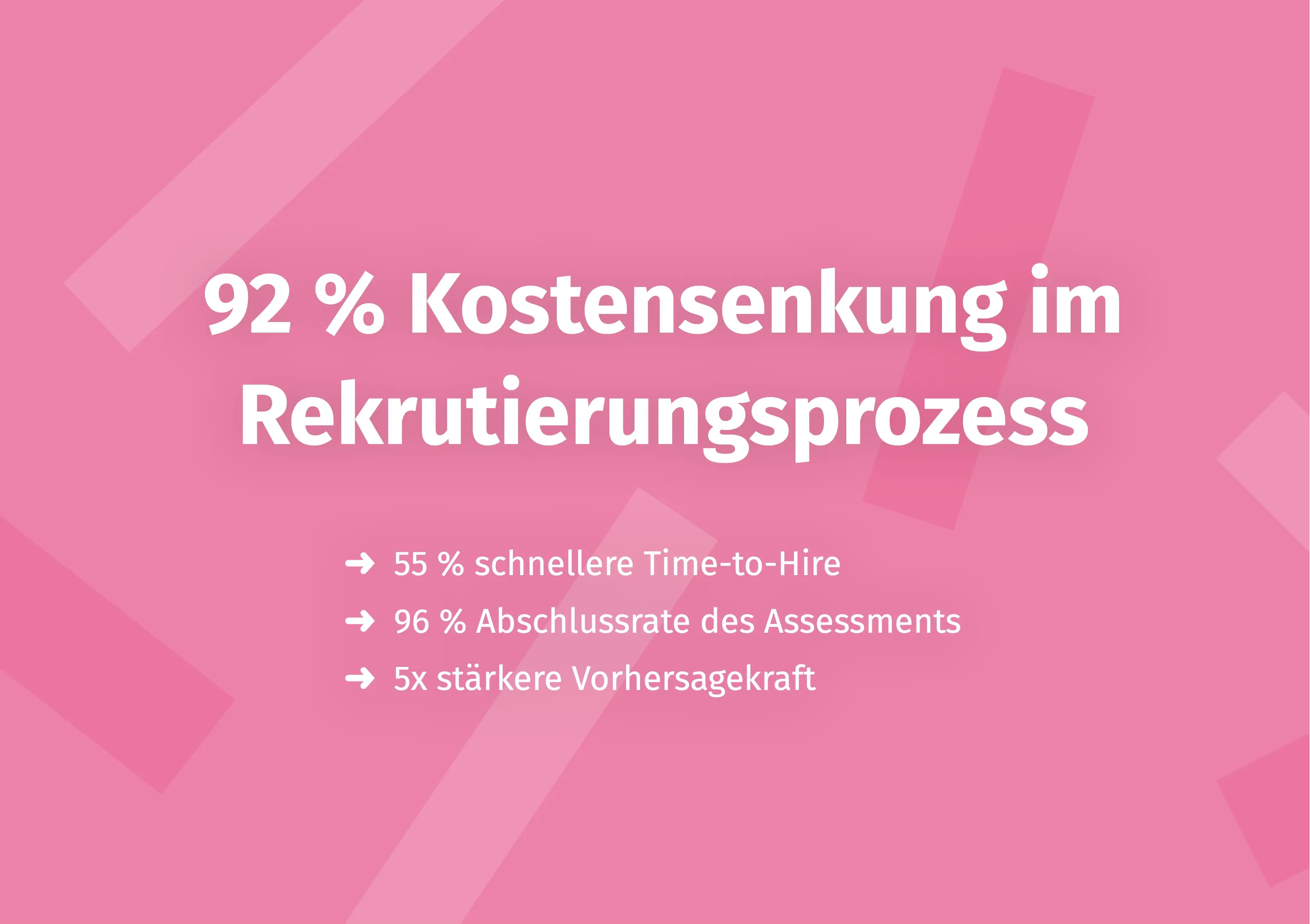
Practice demonstrates the impact: MCI Deutschland was able to reduce time-to-hire by 55% and cost-per-hire by 92% by combining a structured ATS process (softgarden) with aptitude diagnostics — with a completion rate of 96% in the assessment. More details are available in the MCI success story.
Want to measurably improve the quality of your selection decisions? Learn more about objective aptitude diagnostics with the Aivy platform.
Frequently Asked Questions About Applicant Management
What is an applicant management template?
An applicant management template is a structured overview — typically in Excel or Google Sheets — that records all incoming applications with key information: name, position, application date, current status, communication history, and GDPR-relevant deadlines. The goal is to maintain oversight, meet deadlines, and ensure a consistent process.
What fields should an applicant management template include?
Required fields are: candidate (name, contact, application source), position (title, department), dates (received, last action, planned decision), process status, standardized evaluation criteria, communication status (acknowledgement sent, rejection sent), and GDPR fields (talent pool consent, deletion deadline).
How long may applicant data be stored?
Under current law (Germany), rejected candidates' data may be stored for a maximum of six months after the rejection date in order to defend against discrimination claims under the AGG (§ 15 para. 4 AGG). After that, full deletion in accordance with Art. 17 GDPR is mandatory. With explicit consent for the talent pool, the period extends to up to 24 months.
Excel template or ATS — which is better?
It depends on volume: up to five simultaneous open positions → Excel or Google Sheets. Five to twenty positions → lightweight tools such as Notion or Airtable. Twenty or more positions or high application volume → ATS (Personio, softgarden, Recruitee). An ATS automates communication, monitors deadlines, and enables genuine team access.
What GDPR requirements apply to applicant management?
The key obligations are: establish a legal basis for processing (§ 26 BDSG or equivalent national law), inform candidates about data processing (privacy notice), do not record sensitive characteristics (origin, health, religion), fully delete data after the retention period expires (Art. 17 GDPR), and obtain talent pool consent separately and voluntarily.
How do I avoid discrimination in applicant management?
Use standardized evaluation criteria instead of subjective impressions, write job postings in a non-discriminatory way, do not record characteristics such as age, origin, or family status in the template, and conduct structured interviews with consistent questions. Scientifically validated selection methods — such as potential analyses or standardized assessments — additionally reduce the influence of unconscious bias.
What is the difference between applicant management and an ATS?
Applicant management is the umbrella term for all methods and processes of managing applications — regardless of whether they are carried out manually or digitally. An Applicant Tracking System (ATS) is specialized software that automates these processes: automated emails, careers page, team access, GDPR deadline management, analytics. A template is manual and simple; an ATS is automated and scalable.
Conclusion
An applicant management template is the first step toward a structured, legally compliant recruiting process. It creates transparency, prevents applications from falling through the cracks, and helps ensure GDPR deadlines are met. A well-structured Excel or Google Sheets template is sufficient to get started — once volume increases, switching to a dedicated ATS becomes worthwhile.
One important point: the template structures the process, but does not automatically improve the quality of selection decisions. Anyone who wants to objectively evaluate cultural fit, potential, and competencies should consider adding standardized aptitude diagnostics to their process.
Sources
- General Data Protection Regulation (GDPR), Art. 6 (Lawfulness of processing), Art. 17 (Right to erasure). European Parliament / Council of the EU, 2018. https://eur-lex.europa.eu/legal-content/EN/TXT/?uri=CELEX%3A32016R0679
- Federal Data Protection Act (BDSG), § 26 — Data processing for employment purposes. Federal Ministry of Justice (Germany), 2018. https://www.gesetze-im-internet.de/bdsg_2018/__26.html
- General Equal Treatment Act (AGG), § 11 (Job postings), § 15 para. 4 (Deadlines). Federal Ministry of Justice (Germany), 2006. https://www.gesetze-im-internet.de/agg/__11.html
- German Society for Human Resource Management (DGFP): Study on digitalization in recruiting, 2023. https://www.dgfp.de
- Bitkom e.V.: HR digitalization in German SMEs, 2023. https://www.bitkom.org

Make a better pre-selection — even before the first interview
In just a few minutes, Aivy shows you which candidates really fit the role. Beyond resumes based on strengths.