
Applicant management: How to optimize your recruiting for the best talent
In today's dynamic working world, the search for qualified specialists is one of the biggest challenges for companies. But success often fails not because of a lack of applicants, but because of inefficient internal processes — and this is where applicant management plays a decisive role.
Professional applicant management is much more than just managing resumes. It is the key to making the candidate journey positive, making well-founded decisions and ultimately reducing time-to-hire and cost-per-hire. In this comprehensive guide, you will learn what constitutes good applicant management, which tools can help you do so and how to sustainably improve the quality of your hiring.
What is applicant management? A clear definition
Applicant management comprises all processes and measures that a company carries out, from publishing a job advertisement to hiring or rejecting an applicant. The aim is to make the entire recruiting process efficient, transparent and objective.
The main tasks of applicant management can be divided into the following phases:
- Sourcing: The active search for potential candidates via various channels (job boards, social media, career page, etc.).
- Receipt of applications: The central collection and management of all incoming applications, regardless of the channel.
- Screening & pre-selection: The examination of application documents according to defined criteria in order to make an initial selection.
- Selection process: Conducting interviews, tests and assessments to assess candidates' suitability.
- Offer & onboarding: The preparation and dispatch of the employment contract and the preparation of the new employee for the start in the company.
- Rejection: Professional and respectful communication with candidates who cannot be considered.
An efficient process is crucial to guide applicants through the process quickly and not to lose the best talent to the competition. But this is where the biggest weaknesses often arise.
The classic process: Where weak points lurk
Many companies still use manual processes and email inboxes to manage applications. This may work with just a few applications per year, but it quickly reaches its limits. The typical problems are:
- Chaos and lack of transparency: Application documents are lost in overcrowded email boxes, the status of candidates is unclear, and communication with hiring managers is unstructured.
- Susceptibility to errors: Manual data transfer results in errors. Deletion periods under the GDPR are forgotten, which entails legal risks.
- Bad candidate experience: Long waiting times, impersonal communication, and lack of updates frustrate applicants. A negative experience can damage the company's reputation.
- Lack of objectivity: Without standardized criteria and structured procedures, there is a risk of unconscious bias, i.e. unconscious distortions in decision-making. Personal preferences or stereotypes influence choices, which can lead to discriminatory decisions.
These weaknesses not only cost time and money, but also reduce the quality of hires. Because if the process is not objective, it may not be the most suitable candidates that will be selected, but the subjectively preferred candidates.
Applicant Management Software (ATS): The Key to Efficiency
To solve these problems, more and more companies rely on applicant management software — also known as an Applicant Tracking System (ATS). An ATS is a digital platform that automates and centralizes the entire application process.
Typical functions of modern applicant management software:
- Multi-posting: Publication of job advertisements on several job boards and social media channels at the same time.
- Receipt of applications: A central dashboard that collects all applications, regardless of channel.
- CV parsing: The software automatically reads the relevant information from CVs and structures it in a standardized profile.
- Automation: Automatic confirmation emails, reminders to hiring managers, and compliance with GDPR deletion deadlines.
- Collaboration: Team members can comment on and rate applications and view candidates' status in real time.
Analytics & Reporting: Key figures such as time-to-hire, cost-per-hire or the origin of applications are visualized in dashboards.
Applicant management and GDPR: How to stay on the safe side
Another key aspect is data protection. Applicant management includes the processing of sensitive personal data. Compliance with GDPR is therefore essential. Modern applicant management software must ensure that all processes meet legal requirements.
Important criteria for GDPR-compliant applicant management:
- Earmarking: Data may only be collected and processed for the purpose of the application process.
- Transparency: Applicants must be clearly informed about data processing.
- Deletion periods: After completion of the procedure, the data must be deleted in due time, unless consent has been given for longer storage.
- Order processing: If you use external software, there must be a clear order processing agreement (AVV).
Professional applicant management software such as Aivy ensures that all these requirements are technically implemented. In this way, you protect your company from legal risks and show applicants that you treat their data with respect.
The most important KPIs in applicant management
To measure the success of your applicant management system, you should keep an eye on the right KPIs (Key Performance Indicators). This includes:
- Time-to-hire: The time that elapses from the first contact with a candidate until the contract is signed. A shorter time-to-hire means you hire talent faster.
- Cost per hire: The total costs per hire (advertising costs, recruiter salaries, etc.) divided by the number of hires.
- Candidate conversion rate: The percentage of applicants who successfully complete a specific phase in the process.
- Source of hire: The channels through which the best hires are achieved.
By using applicant management software that provides these key figures in a dashboard, you can optimize your recruiting strategy based on data.
Applicant management and scientific assessments: quality instead of quantity
Most ATS are focused on efficient management and automation. This is an important step, but it doesn't solve the core problem of many recruiting processes: the lack of objectivity in personnel selection.
This is where scientific assessments come into play. These are scientifically based methods that reliably measure the professional suitability of candidates. They go beyond pure information from CVs and assess competencies, personality traits or cognitive abilities that are relevant to the job.
Applicant management software that integrates scientific assessments makes it possible to identify the best talents not only quickly but also objectively (“Quality of Hire”). Instead of relying on gut feeling, you make decisions based on data.
Why this is so important:
- Objectivity: Standardised tests minimise the impact of prejudices. All applicants are assessed according to the same criteria.
- Validity: Scientifically based procedures predict future professional success more reliably than an unstructured interview.
Candidate Experience: Gamified assessments or short questionnaires can make the application process modern and interactive. It's fun and leaves a positive impression.
The role of Aivy: Recruiting that is truly objective
As a digital platform, Aivy has taken on exactly this challenge: combining efficient applicant management with scientifically based assessments. Aivy is not just another ATS, but a holistic solution that objectifies the entire recruiting funnel from acquisition to final decision.
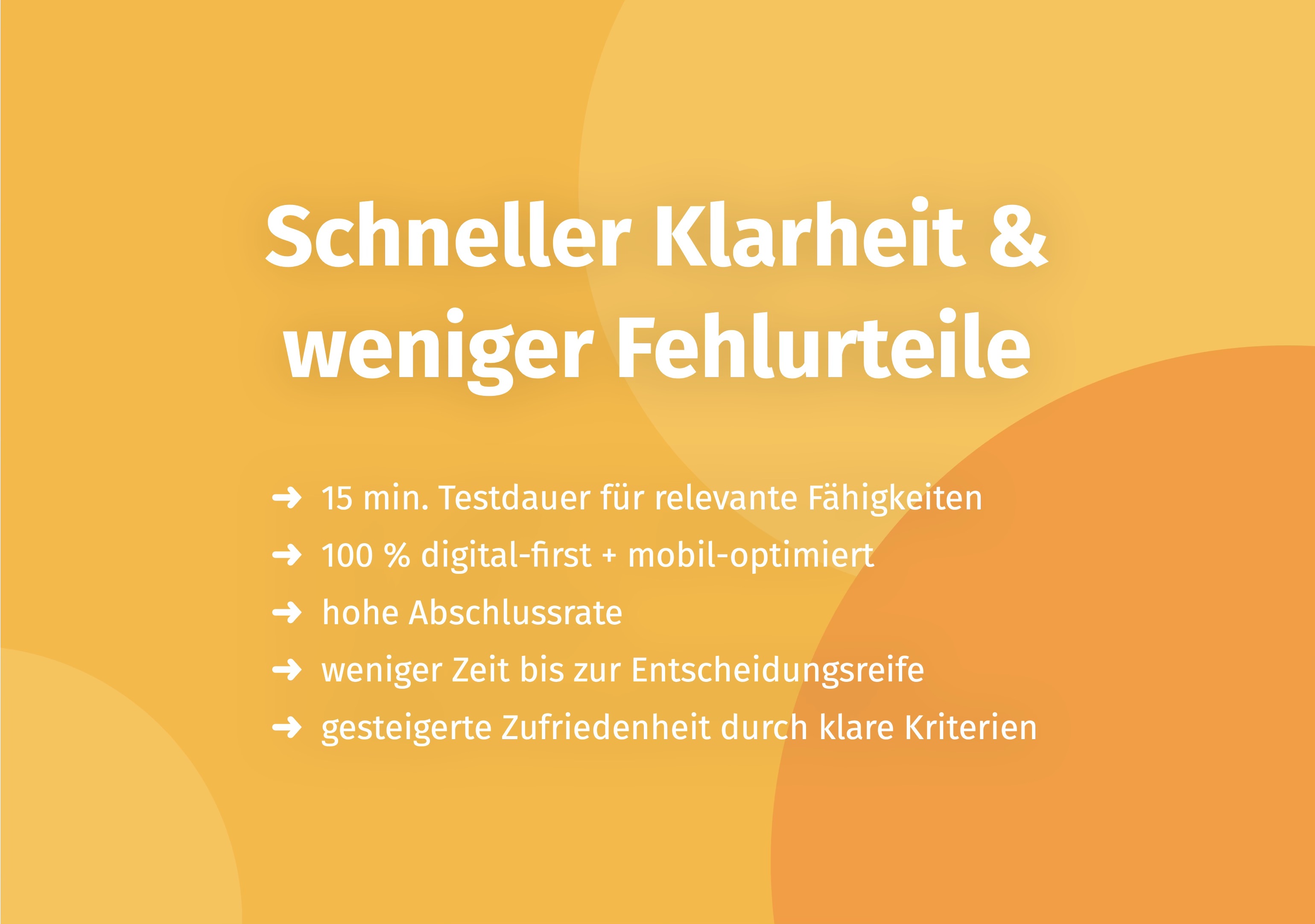
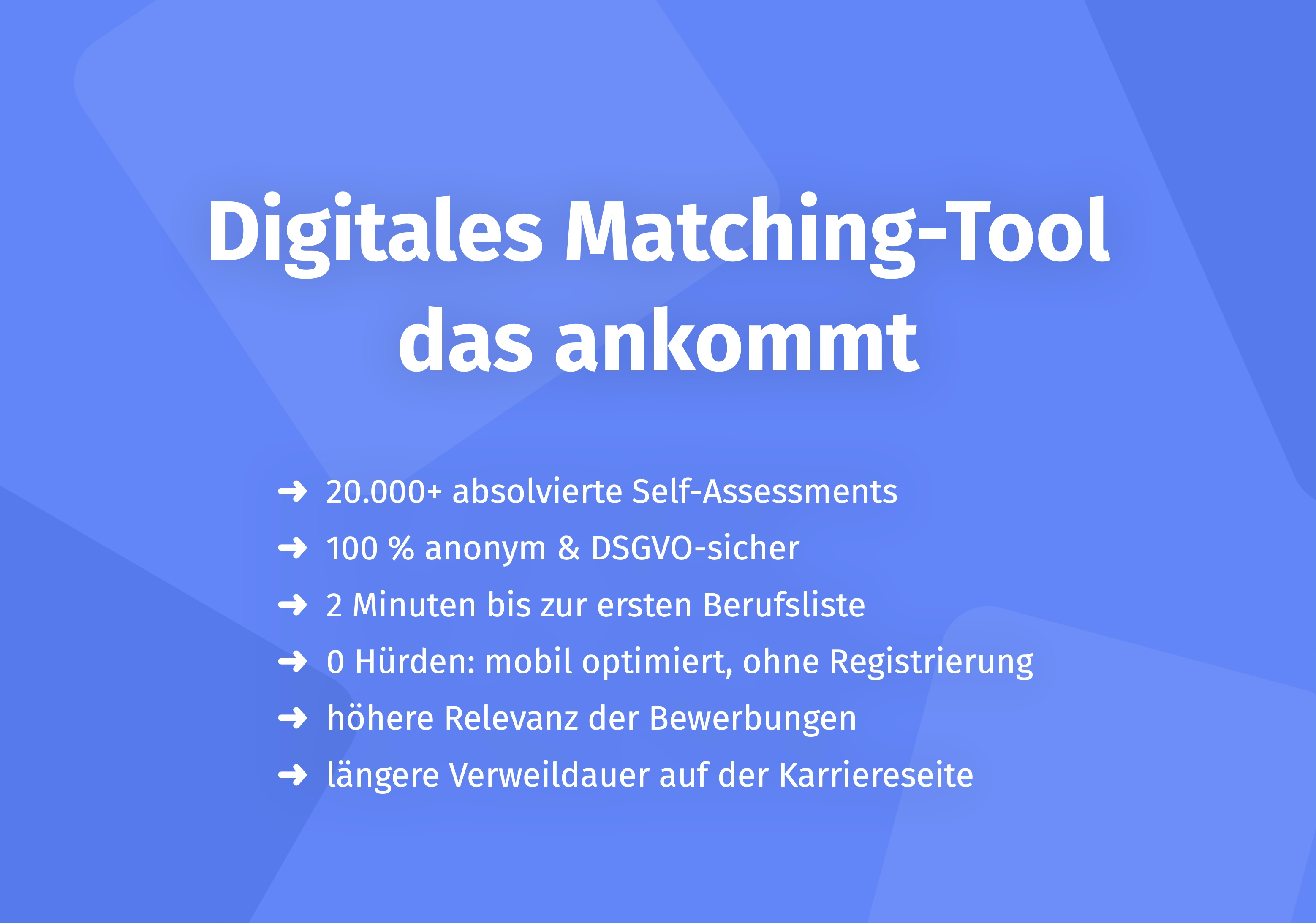
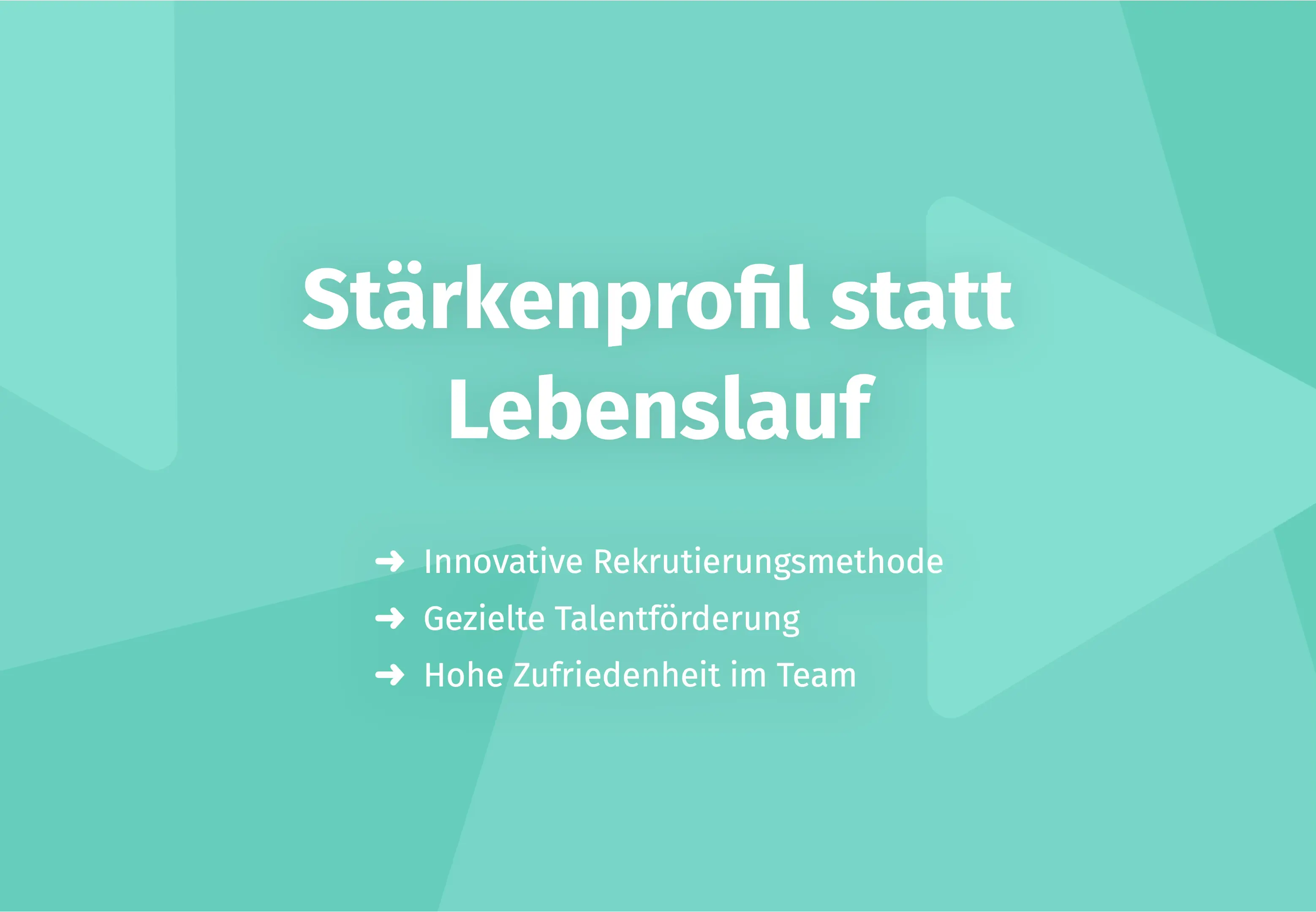
Instead of struggling through countless resumes, Aivy, for example, offers game-based assessments and scientifically based questionnaires that playfully measure applicants' soft skills. These objective data points flow directly into the candidate profile and provide you with a well-founded basis for decision-making.
This is how it works in practice
Christin Seel, regional manager at Persona Service, aptly summarizes the problem in recruiting: “Without Aivy, I would never have invited them.” She talks about Janice, a candidate who probably wouldn't have had a chance in classic CV screening based on her resume.
But Aivy made the difference: In just 15 minutes, Janice was able to make important skills such as customer focus, drive and enthusiasm visible in a strength-based selection process. These characteristics, which were not visible in the curriculum vitae, are decisive for hiring with Persona Service.
By using Aivy, recruiting teams can regularly achieve:
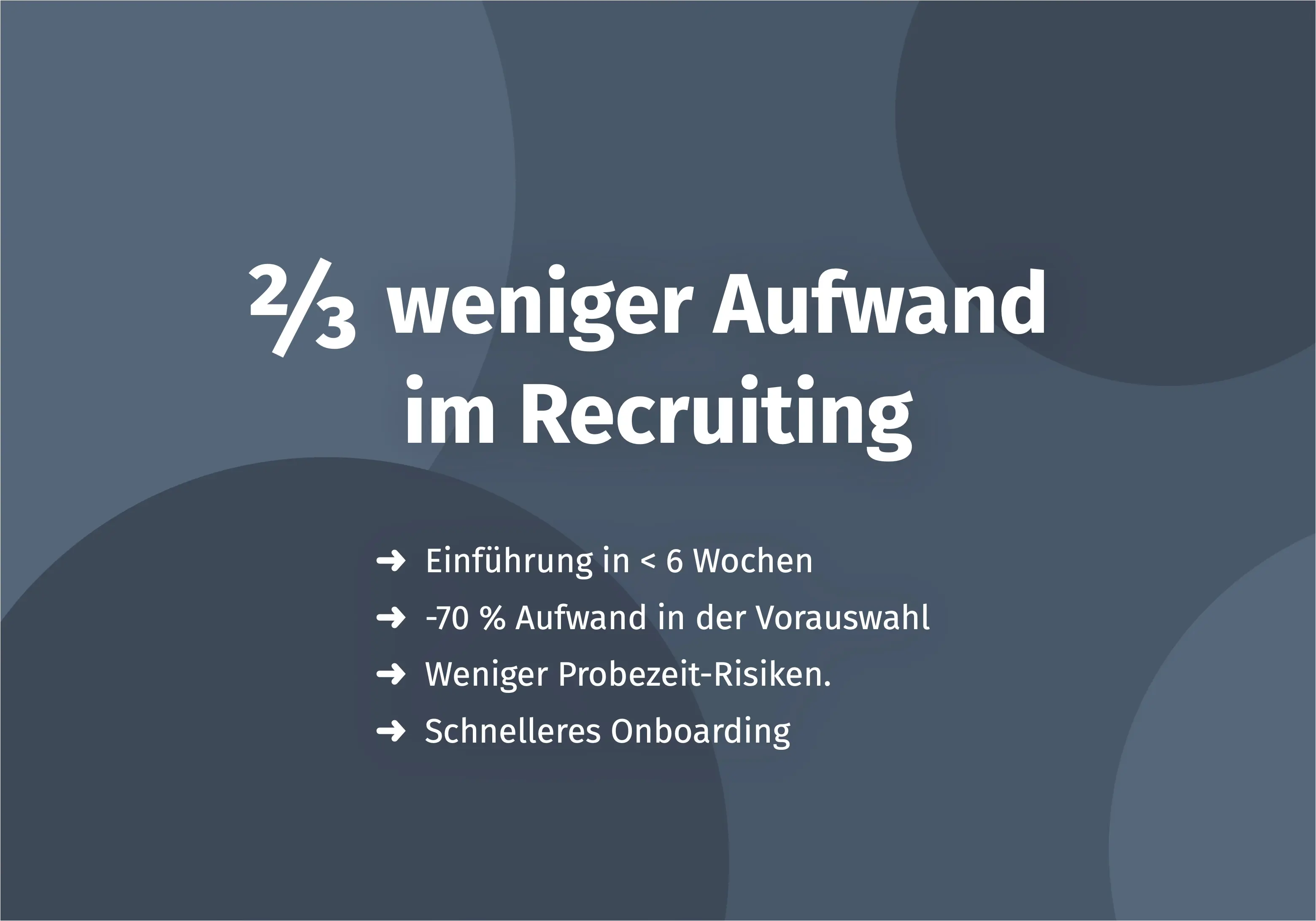
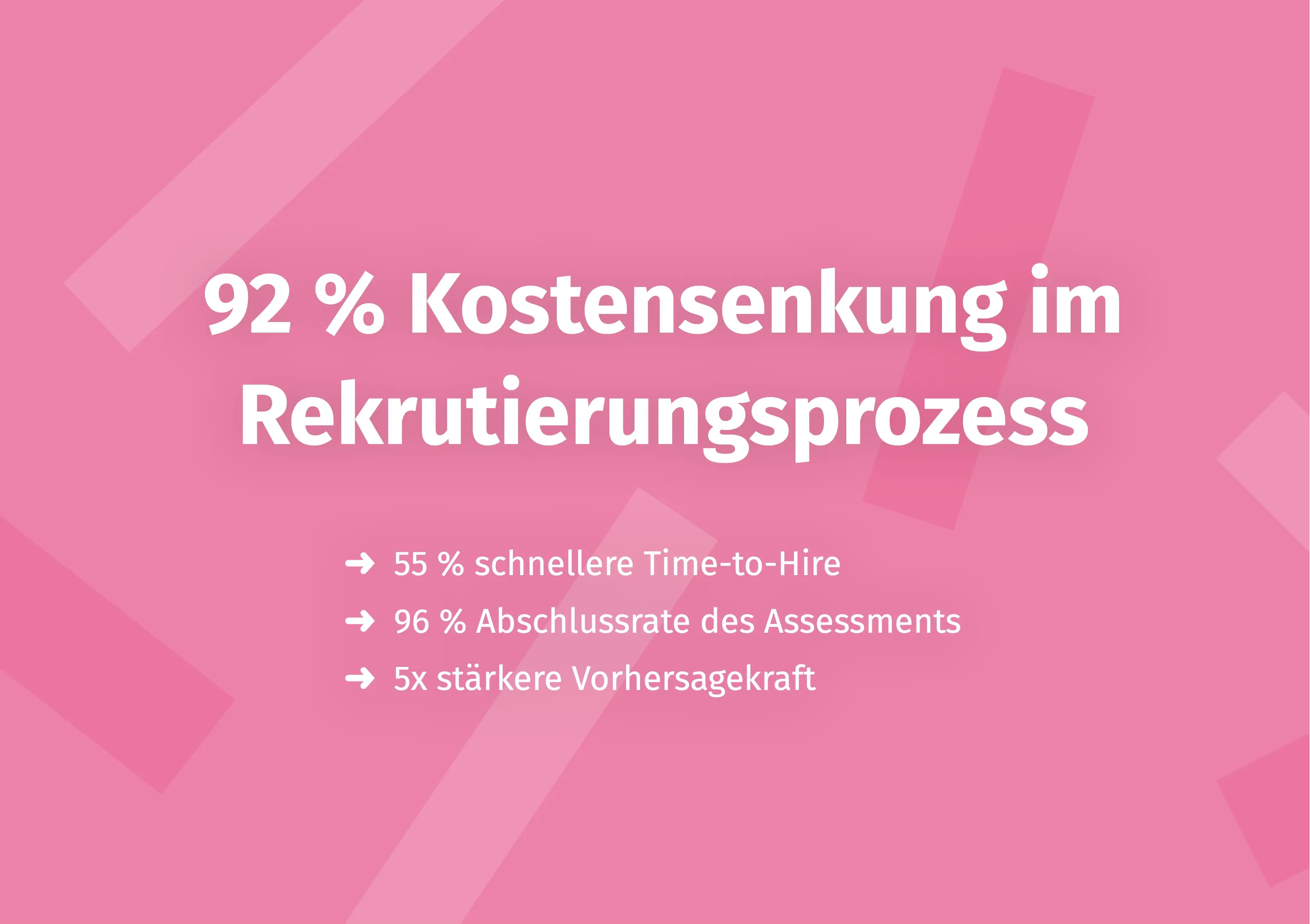
- 5x higher preselection quality because potential is identified at an early stage.
- A 96% fit in the final selection because decisions are based on objective data.
- A 55% faster time-to-hire because the process became more efficient and data-driven.
This example shows that a holistic digital solution such as Aivy makes it possible to identify hidden potential, make better decisions and at the same time drastically increase efficiency in applicant management.
Conclusion: Quality through system
Applicant management is the foundation of successful recruiting. An unstructured process not only leads to inefficiency and high costs, but can also have a negative impact on the quality of hiring. The solution lies in digitization and systematic objectification.
Modern applicant management software is at the heart of this. It automates routine tasks, creates transparency and ensures that you keep an eye on compliance with legal requirements. When such a solution then integrates scientifically based assessments, you not only make faster decisions, but also better and fairer decisions. This ensures that you find the talent that really suits your company — not just on paper, but in their competencies.
Aivy's digital platform shows how this symbiosis of efficiency and objectivity works in practice. It helps companies embark on the path to modern and future-proof recruiting.
Frequently asked questions (FAQ) about applicant management
- What is the difference between applicant management and an ATS? Applicant management is the generic term for all processes and tasks in recruiting. An ATS (Applicant Tracking System) is the software that digitizes and automates these processes. You could say that the ATS is the tool for applicant management.
- Which KPIs are decisive for recruiting success? The most important KPIs include time-to-hire (time from application to recruitment), cost-per-hire (cost per hire) and candidate experience (applicants' satisfaction). The quality of hiring, measured by the subsequent success of employees (Quality of Hire), is also a decisive factor.
- How much does applicant management software cost? The costs vary greatly and depend on the size of the company, the range of functions and the provider. There are solutions with monthly fees per user or with tiered prices based on the number of applications per year.
- How do I integrate assessments into the application process? Modern applicant management systems often offer standardized interfaces (APIs) to seamlessly integrate external tools such as scientific assessments. Applicants can take the tests directly from the application process, and the results are automatically incorporated into the profile.
- Is applicant management GDPR-compliant? Which documents do I need? Yes, professional applicant management is GDPR-compliant. A transparent privacy policy, the consent of applicants and compliance with the deletion deadlines are important. When external software is used, a written order processing agreement (AVV) between the company and the software provider is often required.
- How do I reduce my time-to-hire? By automating routine tasks, communicating faster with candidates and hiring managers, and using objective pre-selection tools, you can significantly reduce the duration of the application process.
Sources:
- European Parliament & Council. (2016). Regulation (EU) 2016/679 (General Data Protection Regulation). Official Journal L119. https://eur-lex.europa.eu/eli/reg/2016/679/oj/eng?utm_source=chatgpt.com
- Laumer, S., Maier, C., & Eckhardt, A. (2015). The Impact of Business Process Management and Applicant Tracking Systems on Recruiting Process Performance: An Empirical Study. Journal of Business Economics, 85(4), 421-453. https://doi.org/10.1007/s11573-014-0758-9
- Leutner, F., Ahmetoglu, G., Chamorro-Premuzic, T., & Kostopoulos, G. (2023). Game-based assessments of cognitive ability in recruitment: validity, fairness, and test-taking experience. Frontiers in Psychology, 14, 942662. https://doi.org/10.3389/fpsyg.2022.942662
- Marler, J.H., & Parry, E. (2016). An evidence-based review of e-HRM and strategic human resource management. Human Resource Management Review, 26(1), 33—51. https://doi.org/10.1016/j.hrmr.2012.06.002
- McCarthy, J.M., Bauer, T.N., Truxillo, D.M., Anderson, N.R., Costa, A.C., & Ahmed, S.M. (2017). Applicant Perspectives During Selection: A Review Addressing “So What?” , “What's new?” , and “Where to Next?” Journal of Management, 43(6), 1693-1725. https://doi.org/10.1177/0149206316681846
- Sackett, P.R., Zhang, C., Berry, C.M., & Lievens, F. (2021). Revisiting meta-analytic estimates of validity in personnel selection: Addressing systematic overcorrection for restriction of range. Journal of Applied Psychology, 106(10), 1433—1461. https://doi.org/10.1037/apl0000994
- Schmidt, F.L., & Hunter, J.E. (1998). The Validity and Utility of Selection Methods in Personnel Psychology: Practical and Theoretical Implications of 85 Years of Research Findings. Psychological Bulletin, 124(2), 262—274. https://doi.org/10.1037/0033-2909.124.2.262

Make a better pre-selection — even before the first interview
In just a few minutes, Aivy shows you which candidates really fit the role. Beyond resumes based on strengths.