You want to explore your strengths as a talent?

This way

Login

Retail Recruiting: Strategies to Combat the Talent Shortage

Home
-
Lexicon
-
Retail Recruiting: Strategies to Combat the Talent Shortage

You know the problem: Job postings barely generate any applications anymore. And when they do, many candidates aren't the right fit. Meanwhile, employees quit after just a few months. The cycle starts all over again.

You're not alone. According to the latest EHI study "People in Retail 2024/25," 90% of HR managers in German retail see the talent shortage as their biggest challenge. 50% are actively struggling with recruitment—and another 50% with employee retention.

In this guide, you'll learn why the retail sector is particularly affected by the talent shortage, which recruiting channels actually work, and how you can sustainably reduce turnover through objective candidate selection. Current studies and practical examples show you what really works—beyond generic advice.

Retail Recruiting: The Current Situation

The German retail sector employs around 3 million people, making it one of the country's largest employers. But the industry is under enormous pressure: caught between talent shortages, high turnover, and rising costs, HR managers must become increasingly creative.

Talent Shortage: Facts and Figures

The numbers are alarming. The German Retail Association (HDE) estimates unfilled positions in retail at around 122,000—despite overall stable employment levels. The German Economic Institute projects that an additional 37,000 skilled workers will be missing by 2027.

Store locations are particularly affected. There's a shortage of salespeople, cashiers, and apprentices. But headquarters are also finding it increasingly difficult to source qualified personnel.

The SmartRecruiters Recruiting Benchmark 2025 shows: Retail already has the shortest time-to-hire of any industry at 25 days—34% below the global average. Yet turnover stands at a staggering 60%. This means: what's quickly won is often just as quickly lost.

Why Turnover in Retail Is So High

The turnover rate—the percentage of employees who leave the company per year—stands at 25.7% in German retail (AGA Study 2024). That's significantly higher than in wholesale (17.6%) or manufacturing (5%).

But why do so many people leave retail?

The reasons are multifaceted:

Structural factors:

  • Long and irregular working hours (weekends, holidays)
  • Comparatively low wages
  • High proportion of part-time and mini-jobs
  • Physical strain (standing for long periods, heavy lifting)

Employer-related factors:

  • Lack of appreciation and communication
  • Limited development opportunities
  • Poor onboarding
  • Unsuitable candidate selection (bad hires)

The last point is crucial: Many early resignations are due to a poor fit between person and position. Those who only look at resumes during selection often overlook whether someone is truly suited for customer contact and the demands of retail work.

The True Cost of Unfilled Positions

Every resignation costs money—more than many realize. The KPMG study "Retail Trends 2025" estimates turnover costs at approximately 33% of the annual salary. For a sales associate earning €28,000 per year, that's over €9,000—per resignation.

These costs include:

  • Recruiting efforts (job postings, selection process)
  • Training and onboarding
  • Productivity loss during vacancy
  • Knowledge loss
  • Burden on the existing team

On a national economic level, the costs of employee turnover in Germany are estimated at up to €118.4 billion annually. For individual companies, this means: every investment in better candidate selection pays off quickly.

The Biggest Challenges in Retail Recruitment

Why is it so difficult for retail to find good staff? The causes go beyond the general talent shortage.

Image Problem: Why Retail Struggles as an Employer

Let's be honest: Retail doesn't have the best reputation as an employer. Many potential applicants associate the industry with low wages, stressful working hours, and little recognition. Young people in particular often see a retail job as just a temporary solution—not a career option.

Yet retail does offer opportunities: from part-time work to store management, from sales associate to buyer. These development paths are rarely communicated effectively.

Competition for Talent: Retail vs. Other Industries

Retail competes not only with other retailers for staff but also with industries like logistics, hospitality, or the growing e-commerce sector. Amazon, Zalando, and others aggressively recruit from the same talent pool—often with better conditions.

Additionally, those seeking flexible hours and remote work options won't find them in brick-and-mortar retail. The industry can only partially meet these expectations of younger generations.

Seasonality: Finding Staff for Peak Times

Christmas season, clearance sales, Easter—retail thrives on peak periods. But precisely when staff is most needed, it's hardest to find. High-volume recruiting—hiring large numbers of employees in a short time—places special demands on processes and tools.

Many retailers solve this problem with temporary workers and staffing agencies. But this brings new challenges: short training periods, inconsistent quality, lack of company loyalty.

Apprentice Shortage: Attracting the Next Generation

The situation is particularly dramatic for apprentices. According to EHI, there's a shortage of trainees especially in stores. Retail apprenticeships are considered unattractive by many school leavers—even though they offer solid career prospects.

Those who want to attract apprentices today must approach things differently: social media instead of newspaper ads, potential instead of grades, fast processes instead of months of waiting.

Which Recruiting Channels Work in Retail?

Not every channel works for every target group. The EHI study shows clear differences between recruiting for headquarters, stores, and logistics.

Online Job Boards: What's Worth It and What's Not

Online job boards and company career websites are the most important channels for store recruiting at 58% each. For headquarters positions, online business networks like Xing or LinkedIn dominate (63%).

Tips for successful retail job postings:

  • Be specific: Instead of "attractive salary," say "€2,400 starting salary + employee discount"
  • Be transparent about working hours: Weekend work yes, but with reliable scheduling
  • Show development opportunities: "Become a store manager in 2 years"
  • Mobile-optimized: Over 70% of applications come from smartphones

Social Recruiting: How to Reach Passive Candidates

The majority of potential candidates aren't actively looking for a new job. You can reach these "passive candidates" where they spend their time: on social media.

Social recruiting uses platforms like Instagram, TikTok, Facebook, and LinkedIn not just for job postings but for authentic insights into everyday work life. A short video from the store, an employee interview, a behind-the-scenes look—this appeals to people who would never visit traditional job boards.

Platform recommendations:

  • Instagram/TikTok: Younger target groups, apprentices, part-timers
  • Facebook: Broader age groups, regional reach
  • LinkedIn/Xing: Managers, headquarters, specialized roles

The advantage of social recruiting: You can target very precisely by region, interests, and demographics. This way, you reach exactly the people who might be right for your open positions.

Employee Referrals: The Underestimated Potential

According to SmartRecruiters, only 2% of retail hires come through referrals—significantly fewer than in other industries. Yet referred candidates are often better: They know the company through friends or family, have more realistic expectations, and stay longer.

How to activate employee referrals:

  • Bonuses for successful referrals (€50-500 depending on position)
  • Simple process: share a link, done
  • Regular team reminders
  • Celebrate and communicate successes

Local Presence: From Window Signs to Career Fairs

Especially in retail, recruiting often works locally. The employment agency is an important channel for store positions at 21%. But traditional methods also have their place:

  • Window signs: Reaches customers who already know the store
  • School partnerships: For apprentice recruiting
  • Local career fairs: Personal contact, authentic conversations
  • Regional Facebook groups: High reach in the community

Hire Faster and Better: The Optimal Recruiting Process

In retail, speed counts. Those who take too long lose candidates to competitors. At the same time, speed shouldn't come at the expense of quality.

Job Postings That Actually Generate Applications

A good job posting is more than a list of requirements. It's your company's calling card—often the first contact with potential applicants.

Dos:

  • Clear job titles (Sales Associate Full-Time instead of Retail Ambassador)
  • Name concrete benefits
  • Be transparent about working hours
  • Easy application option (no login required!)
  • Contact person with details

Don'ts:

  • Endless requirement lists
  • Phrases like "dynamic team" without substance
  • Complicated online forms
  • Weeks without response

Mobile First: Why Applicants Use Their Phones

In retail, mobile recruiting isn't a nice-to-have—it's essential. Many potential applicants—especially younger ones—don't have a laptop but always have a smartphone.

This means:

  • Career page must work flawlessly on mobile
  • Application possible with just a few clicks (one-click apply)
  • No forced file uploads
  • Fast loading times

The Recruiting Benchmark 2025 shows: Companies using AI and automation hire an average of 11 days faster than others. But technology alone isn't enough—it must be implemented in an applicant-friendly way.

From Application to Hire: Reducing Time-to-Hire

Time-to-hire—the time from job posting to hiring—averages 25 days in retail. That's already the lowest value across all industries. Still, there's room for optimization:

Speed up:

  • Automated confirmation of receipt (immediately!)
  • Pre-selection through short assessments instead of extensive document review
  • Flexible interview times (evenings or Saturdays too)
  • Decision within 48 hours after the interview
  • Digital contract (no paper mail)

Don't rush:

  • Selection quality takes priority—a quick bad hire is more expensive than an extra week of searching
  • Give candidates time for questions
  • Provide a realistic picture of the job

Identifying the Right Employees: Objective Candidate Selection

This is one of the biggest levers against high turnover: Those who hire the right people need to replace fewer. But how do you recognize if someone really fits?

Why Gut Feeling Isn't Enough in Retail

Many hiring decisions are based on rapport in the interview, resume impressions, or simply gut feeling. The problem: Our gut is often wrong.

The halo effect describes the tendency to infer other qualities from one positive trait. Someone who seems likable automatically gets credited with more competence—even though one has nothing to do with the other.

Affinity bias leads us to prefer people who are similar to us. In recruiting, this means: We hire people who fit with us—but not necessarily with the position.

The research is clear: A meta-analysis by Schmidt and Hunter (1998) shows that structured methods have twice the predictive power for job success compared to unstructured interviews. Those who select objectively make better decisions.

Which Competencies Really Matter (and How to Measure Them)

Retail requires different competencies than many other industries. A perfect resume says little about whether someone will respond kindly to stressed customers or handle peak Christmas season.

Key competencies in retail:

Competency Why Important How to Measure
Customer orientation Customer contact is core business Situational questions, assessments
Resilience Peak times, physical work Stress scenarios, self-assessment
Communication skills Advising, teamwork Role plays, structured interviews
Teamwork Store team as a unit Group exercises, references
Flexibility Changing requirements Biographical questions
Reliability Trust in daily operations References, work samples

These competencies can't be read from a resume. They require targeted diagnostics.

Assessment Methods: What Works for Retail

Assessment diagnostics refers to scientifically validated methods for measuring abilities, personality traits, and potential. Unlike unstructured interviews, it's based on validated procedures—and delivers significantly better predictions of job success.

Particularly suitable for retail:

Short, mobile assessments:In high-volume recruiting, speed is essential. Assessments lasting 15-20 minutes that work on smartphones fit perfectly with retail's fast pace.

Competency-based methods:Instead of testing knowledge, they measure behavioral tendencies and potential. Can someone stay friendly under pressure? How does the person handle conflicts? Such questions can be captured in a standardized way.

Structured interviews:If interviews, then with fixed questions and evaluation criteria. This way, all candidates are evaluated comparably—regardless of who conducts the conversation.

Game-Based Assessments: Fast, Fair, and Candidate-Friendly

A special form of assessment diagnostics are game-based assessments. They use playful elements to measure competencies—while providing a positive candidate experience.

Objective assessment tools like Aivy use such game-based assessments. The scientifically validated methods measure relevant competencies in just 15-20 minutes—mobile, engaging, and without exam stress.

Companies like Diehl successfully use this approach in apprentice recruiting. Wolfgang Böhm, Training Manager at DIEHL, describes the experience: "We want to select talents with the right strengths and potential rather than just judging by grades. With Aivy, this works great—the results in the strengths profile match 1:1 with our experience in personal conversations!"

The advantage: Candidates who might have been screened out based on their resume get a fair chance. This is especially important in retail, where many career changers work.

Practical Examples: How Retail Recruiting Succeeds

Theory is one thing—but does it work in practice? The experiences of other companies show: Objective candidate selection pays off.

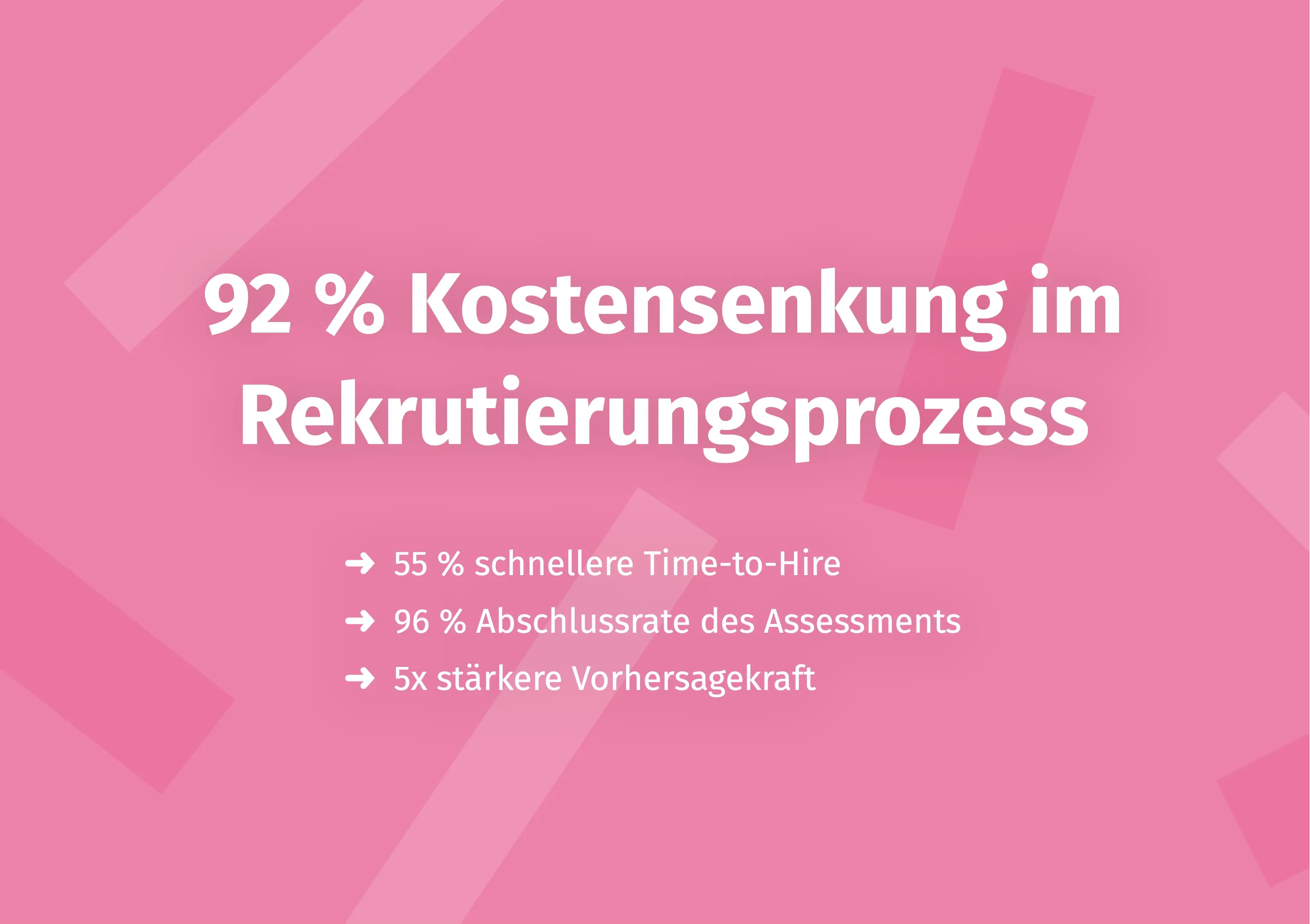
MCI was able to reduce time-to-hire by 55% and simultaneously lower cost-per-hire by 92% through the use of game-based assessments. Matthias Kühne, Director People & Culture at MCI Deutschland, emphasizes: "With Aivy, we've digitized another process step in recruitment and significantly professionalized it through a more objective evaluation basis."

OMR also relies on objective diagnostics—with measurable success in bias reduction. Kaya Kruse, People Lead at OMR, summarizes: "Aivy works. We reduce bias, gain more objectivity in hiring, and strengthen diversity in the long term."

What's special: At OMR, candidates were hired who would have been rejected based on their resumes. The objective view of potential rather than paper opens up opportunities—for companies and applicants alike.

Employee Retention: The Other Side of the Coin

The best recruiting strategy doesn't help much if employees leave after a few months. That's why employee retention is inseparable from the topic of talent acquisition.

Onboarding: The Underestimated Turnover Driver

Many resignations happen in the first 90 days. The reason: inadequate onboarding. New employees are thrown in at the deep end, feel overwhelmed or left alone—and look for something new.

Good onboarding in retail:

  • Structured training plan (not just "watch how the others do it")
  • Dedicated contact person / mentor
  • Regular check-ins in the first weeks
  • Training on products, systems, processes
  • Early feedback—in both directions

What Retail Employees Really Want

Money is important, but not everything. Studies show that retail employees particularly value:

Top factors for employee retention:

  1. Reliable scheduling: Predictable working hours, early notification
  2. Appreciation: Praise, recognition, respectful treatment
  3. Development opportunities: Advancement prospects, training
  4. Team cohesion: Good working atmosphere, collegial support
  5. Fair pay: Appropriate salary, transparent structure

Interestingly: According to Lighthouse Research & Advisory, 72% of retail applicants want to be informed about career development opportunities during the hiring process. Those who communicate these chances score in the competition for talent.

Checklist: How to Optimize Your Retail Recruiting

Strategy & Channels:

  • Target groups defined (apprentices, salespeople, managers)?
  • Mix of online job boards and social media?
  • Employee referral program active?
  • Local channels (employment agency, school partnerships) used?

Job Postings & Career Site:

  • Concrete benefits instead of buzzwords?
  • Working hours transparently communicated?
  • Mobile-optimized application possible?
  • Simple process without login requirement?

Selection Process:

  • Structured instead of unstructured interviews?
  • Objective criteria for all candidates?
  • Competencies checked, not just resume?
  • Fast response (within 48 hours)?

Onboarding & Retention:

  • Training plan in place?
  • Mentor system?
  • Regular check-ins in the first 90 days?
  • Development opportunities communicated?

Frequently Asked Questions (FAQ)

What is the average turnover rate in retail?The turnover rate in German retail is approximately 25-30%, according to the AGA Study 2024 at 25.7%. This is significantly higher than in wholesale (17.6%) or manufacturing (5%). Globally, retail turnover is around 60%.

Which recruiting channels work best for retail?According to the EHI study, online job boards (58%), company career websites (58%), and online business networks (63% for headquarters) are the most important channels. For store positions, the employment agency also plays a role (21%). Social media is gaining importance especially for younger target groups and passive candidates.

How can I reduce time-to-hire in retail?Retail already has the shortest time-to-hire at 25 days. Further optimization is possible through: mobile-optimized application processes, fast assessment methods (15-20 minutes), automated pre-selection, and immediate responses. Companies using AI hire an average of 11 days faster.

What does a bad hire cost in retail?Approximately 33% of the annual salary per resignation. For a sales associate earning €28,000 annually, that's over €9,000. With high turnover, this adds up quickly.

How do I attract apprentices for retail?Success factors: Evaluate potential instead of grades, offer gamified assessments (Gen Z expects modern processes), be present on social media, provide fast processes, and consider parents as a target group too.

Can assessment tests help in high-volume recruiting?Yes, especially mobile, short assessments (15-20 minutes). Advantages: scalable, objective, candidate-friendly. Scientific studies show twice the predictive power of structured methods compared to unstructured interviews.

How can I objectively evaluate career changers?Through competency-based assessment diagnostics instead of resume focus. Relevant competencies like customer orientation, resilience, and communication skills can be measured with validated tests—regardless of previous career path.

Conclusion: The Right Strategy Against the Talent Shortage

The retail sector faces enormous challenges in talent acquisition. 122,000 unfilled positions, a turnover rate exceeding 25%, and demographic change require creative solutions.

The good news: There are levers that really work.

The key takeaways:

  • Optimize channel mix: Social recruiting complements traditional job boards—especially for passive candidates
  • Speed up processes: Mobile applications and fast responses are essential
  • Select objectively: Structured methods and assessment diagnostics reduce bad hires
  • Recognize potential: Competencies matter more than resumes
  • Strengthen retention: Good onboarding and development opportunities reduce turnover

Objective assessment tools like Aivy help you find the right employees—fast, fair, and scientifically validated. With game-based assessments, you discover potential that isn't visible on a resume.

Sources

  • EHI Retail Institute (2024): People in Retail 2024/25
  • AGA Business Association (2024): Absenteeism & Turnover 2024
  • SmartRecruiters (2025): Recruiting Benchmarks Report
  • German Retail Association HDE (2024): Employment Structure in Retail
  • German Economic Institute (2024): Talent Shortage Forecast
  • KPMG (2025): Retail Trends 2025
  • Schmidt, F. L. & Hunter, J. E. (1998): The Validity and Utility of Selection Methods in Personnel Psychology

Home
-
lexicon
-
Retail Recruiting: Strategies to Combat the Talent Shortage

You know the problem: Job postings barely generate any applications anymore. And when they do, many candidates aren't the right fit. Meanwhile, employees quit after just a few months. The cycle starts all over again.

You're not alone. According to the latest EHI study "People in Retail 2024/25," 90% of HR managers in German retail see the talent shortage as their biggest challenge. 50% are actively struggling with recruitment—and another 50% with employee retention.

In this guide, you'll learn why the retail sector is particularly affected by the talent shortage, which recruiting channels actually work, and how you can sustainably reduce turnover through objective candidate selection. Current studies and practical examples show you what really works—beyond generic advice.

Retail Recruiting: The Current Situation

The German retail sector employs around 3 million people, making it one of the country's largest employers. But the industry is under enormous pressure: caught between talent shortages, high turnover, and rising costs, HR managers must become increasingly creative.

Talent Shortage: Facts and Figures

The numbers are alarming. The German Retail Association (HDE) estimates unfilled positions in retail at around 122,000—despite overall stable employment levels. The German Economic Institute projects that an additional 37,000 skilled workers will be missing by 2027.

Store locations are particularly affected. There's a shortage of salespeople, cashiers, and apprentices. But headquarters are also finding it increasingly difficult to source qualified personnel.

The SmartRecruiters Recruiting Benchmark 2025 shows: Retail already has the shortest time-to-hire of any industry at 25 days—34% below the global average. Yet turnover stands at a staggering 60%. This means: what's quickly won is often just as quickly lost.

Why Turnover in Retail Is So High

The turnover rate—the percentage of employees who leave the company per year—stands at 25.7% in German retail (AGA Study 2024). That's significantly higher than in wholesale (17.6%) or manufacturing (5%).

But why do so many people leave retail?

The reasons are multifaceted:

Structural factors:

  • Long and irregular working hours (weekends, holidays)
  • Comparatively low wages
  • High proportion of part-time and mini-jobs
  • Physical strain (standing for long periods, heavy lifting)

Employer-related factors:

  • Lack of appreciation and communication
  • Limited development opportunities
  • Poor onboarding
  • Unsuitable candidate selection (bad hires)

The last point is crucial: Many early resignations are due to a poor fit between person and position. Those who only look at resumes during selection often overlook whether someone is truly suited for customer contact and the demands of retail work.

The True Cost of Unfilled Positions

Every resignation costs money—more than many realize. The KPMG study "Retail Trends 2025" estimates turnover costs at approximately 33% of the annual salary. For a sales associate earning €28,000 per year, that's over €9,000—per resignation.

These costs include:

  • Recruiting efforts (job postings, selection process)
  • Training and onboarding
  • Productivity loss during vacancy
  • Knowledge loss
  • Burden on the existing team

On a national economic level, the costs of employee turnover in Germany are estimated at up to €118.4 billion annually. For individual companies, this means: every investment in better candidate selection pays off quickly.

The Biggest Challenges in Retail Recruitment

Why is it so difficult for retail to find good staff? The causes go beyond the general talent shortage.

Image Problem: Why Retail Struggles as an Employer

Let's be honest: Retail doesn't have the best reputation as an employer. Many potential applicants associate the industry with low wages, stressful working hours, and little recognition. Young people in particular often see a retail job as just a temporary solution—not a career option.

Yet retail does offer opportunities: from part-time work to store management, from sales associate to buyer. These development paths are rarely communicated effectively.

Competition for Talent: Retail vs. Other Industries

Retail competes not only with other retailers for staff but also with industries like logistics, hospitality, or the growing e-commerce sector. Amazon, Zalando, and others aggressively recruit from the same talent pool—often with better conditions.

Additionally, those seeking flexible hours and remote work options won't find them in brick-and-mortar retail. The industry can only partially meet these expectations of younger generations.

Seasonality: Finding Staff for Peak Times

Christmas season, clearance sales, Easter—retail thrives on peak periods. But precisely when staff is most needed, it's hardest to find. High-volume recruiting—hiring large numbers of employees in a short time—places special demands on processes and tools.

Many retailers solve this problem with temporary workers and staffing agencies. But this brings new challenges: short training periods, inconsistent quality, lack of company loyalty.

Apprentice Shortage: Attracting the Next Generation

The situation is particularly dramatic for apprentices. According to EHI, there's a shortage of trainees especially in stores. Retail apprenticeships are considered unattractive by many school leavers—even though they offer solid career prospects.

Those who want to attract apprentices today must approach things differently: social media instead of newspaper ads, potential instead of grades, fast processes instead of months of waiting.

Which Recruiting Channels Work in Retail?

Not every channel works for every target group. The EHI study shows clear differences between recruiting for headquarters, stores, and logistics.

Online Job Boards: What's Worth It and What's Not

Online job boards and company career websites are the most important channels for store recruiting at 58% each. For headquarters positions, online business networks like Xing or LinkedIn dominate (63%).

Tips for successful retail job postings:

  • Be specific: Instead of "attractive salary," say "€2,400 starting salary + employee discount"
  • Be transparent about working hours: Weekend work yes, but with reliable scheduling
  • Show development opportunities: "Become a store manager in 2 years"
  • Mobile-optimized: Over 70% of applications come from smartphones

Social Recruiting: How to Reach Passive Candidates

The majority of potential candidates aren't actively looking for a new job. You can reach these "passive candidates" where they spend their time: on social media.

Social recruiting uses platforms like Instagram, TikTok, Facebook, and LinkedIn not just for job postings but for authentic insights into everyday work life. A short video from the store, an employee interview, a behind-the-scenes look—this appeals to people who would never visit traditional job boards.

Platform recommendations:

  • Instagram/TikTok: Younger target groups, apprentices, part-timers
  • Facebook: Broader age groups, regional reach
  • LinkedIn/Xing: Managers, headquarters, specialized roles

The advantage of social recruiting: You can target very precisely by region, interests, and demographics. This way, you reach exactly the people who might be right for your open positions.

Employee Referrals: The Underestimated Potential

According to SmartRecruiters, only 2% of retail hires come through referrals—significantly fewer than in other industries. Yet referred candidates are often better: They know the company through friends or family, have more realistic expectations, and stay longer.

How to activate employee referrals:

  • Bonuses for successful referrals (€50-500 depending on position)
  • Simple process: share a link, done
  • Regular team reminders
  • Celebrate and communicate successes

Local Presence: From Window Signs to Career Fairs

Especially in retail, recruiting often works locally. The employment agency is an important channel for store positions at 21%. But traditional methods also have their place:

  • Window signs: Reaches customers who already know the store
  • School partnerships: For apprentice recruiting
  • Local career fairs: Personal contact, authentic conversations
  • Regional Facebook groups: High reach in the community

Hire Faster and Better: The Optimal Recruiting Process

In retail, speed counts. Those who take too long lose candidates to competitors. At the same time, speed shouldn't come at the expense of quality.

Job Postings That Actually Generate Applications

A good job posting is more than a list of requirements. It's your company's calling card—often the first contact with potential applicants.

Dos:

  • Clear job titles (Sales Associate Full-Time instead of Retail Ambassador)
  • Name concrete benefits
  • Be transparent about working hours
  • Easy application option (no login required!)
  • Contact person with details

Don'ts:

  • Endless requirement lists
  • Phrases like "dynamic team" without substance
  • Complicated online forms
  • Weeks without response

Mobile First: Why Applicants Use Their Phones

In retail, mobile recruiting isn't a nice-to-have—it's essential. Many potential applicants—especially younger ones—don't have a laptop but always have a smartphone.

This means:

  • Career page must work flawlessly on mobile
  • Application possible with just a few clicks (one-click apply)
  • No forced file uploads
  • Fast loading times

The Recruiting Benchmark 2025 shows: Companies using AI and automation hire an average of 11 days faster than others. But technology alone isn't enough—it must be implemented in an applicant-friendly way.

From Application to Hire: Reducing Time-to-Hire

Time-to-hire—the time from job posting to hiring—averages 25 days in retail. That's already the lowest value across all industries. Still, there's room for optimization:

Speed up:

  • Automated confirmation of receipt (immediately!)
  • Pre-selection through short assessments instead of extensive document review
  • Flexible interview times (evenings or Saturdays too)
  • Decision within 48 hours after the interview
  • Digital contract (no paper mail)

Don't rush:

  • Selection quality takes priority—a quick bad hire is more expensive than an extra week of searching
  • Give candidates time for questions
  • Provide a realistic picture of the job

Identifying the Right Employees: Objective Candidate Selection

This is one of the biggest levers against high turnover: Those who hire the right people need to replace fewer. But how do you recognize if someone really fits?

Why Gut Feeling Isn't Enough in Retail

Many hiring decisions are based on rapport in the interview, resume impressions, or simply gut feeling. The problem: Our gut is often wrong.

The halo effect describes the tendency to infer other qualities from one positive trait. Someone who seems likable automatically gets credited with more competence—even though one has nothing to do with the other.

Affinity bias leads us to prefer people who are similar to us. In recruiting, this means: We hire people who fit with us—but not necessarily with the position.

The research is clear: A meta-analysis by Schmidt and Hunter (1998) shows that structured methods have twice the predictive power for job success compared to unstructured interviews. Those who select objectively make better decisions.

Which Competencies Really Matter (and How to Measure Them)

Retail requires different competencies than many other industries. A perfect resume says little about whether someone will respond kindly to stressed customers or handle peak Christmas season.

Key competencies in retail:

Competency Why Important How to Measure
Customer orientation Customer contact is core business Situational questions, assessments
Resilience Peak times, physical work Stress scenarios, self-assessment
Communication skills Advising, teamwork Role plays, structured interviews
Teamwork Store team as a unit Group exercises, references
Flexibility Changing requirements Biographical questions
Reliability Trust in daily operations References, work samples

These competencies can't be read from a resume. They require targeted diagnostics.

Assessment Methods: What Works for Retail

Assessment diagnostics refers to scientifically validated methods for measuring abilities, personality traits, and potential. Unlike unstructured interviews, it's based on validated procedures—and delivers significantly better predictions of job success.

Particularly suitable for retail:

Short, mobile assessments:In high-volume recruiting, speed is essential. Assessments lasting 15-20 minutes that work on smartphones fit perfectly with retail's fast pace.

Competency-based methods:Instead of testing knowledge, they measure behavioral tendencies and potential. Can someone stay friendly under pressure? How does the person handle conflicts? Such questions can be captured in a standardized way.

Structured interviews:If interviews, then with fixed questions and evaluation criteria. This way, all candidates are evaluated comparably—regardless of who conducts the conversation.

Game-Based Assessments: Fast, Fair, and Candidate-Friendly

A special form of assessment diagnostics are game-based assessments. They use playful elements to measure competencies—while providing a positive candidate experience.

Objective assessment tools like Aivy use such game-based assessments. The scientifically validated methods measure relevant competencies in just 15-20 minutes—mobile, engaging, and without exam stress.

Companies like Diehl successfully use this approach in apprentice recruiting. Wolfgang Böhm, Training Manager at DIEHL, describes the experience: "We want to select talents with the right strengths and potential rather than just judging by grades. With Aivy, this works great—the results in the strengths profile match 1:1 with our experience in personal conversations!"

The advantage: Candidates who might have been screened out based on their resume get a fair chance. This is especially important in retail, where many career changers work.

Practical Examples: How Retail Recruiting Succeeds

Theory is one thing—but does it work in practice? The experiences of other companies show: Objective candidate selection pays off.

MCI was able to reduce time-to-hire by 55% and simultaneously lower cost-per-hire by 92% through the use of game-based assessments. Matthias Kühne, Director People & Culture at MCI Deutschland, emphasizes: "With Aivy, we've digitized another process step in recruitment and significantly professionalized it through a more objective evaluation basis."

OMR also relies on objective diagnostics—with measurable success in bias reduction. Kaya Kruse, People Lead at OMR, summarizes: "Aivy works. We reduce bias, gain more objectivity in hiring, and strengthen diversity in the long term."

What's special: At OMR, candidates were hired who would have been rejected based on their resumes. The objective view of potential rather than paper opens up opportunities—for companies and applicants alike.

Employee Retention: The Other Side of the Coin

The best recruiting strategy doesn't help much if employees leave after a few months. That's why employee retention is inseparable from the topic of talent acquisition.

Onboarding: The Underestimated Turnover Driver

Many resignations happen in the first 90 days. The reason: inadequate onboarding. New employees are thrown in at the deep end, feel overwhelmed or left alone—and look for something new.

Good onboarding in retail:

  • Structured training plan (not just "watch how the others do it")
  • Dedicated contact person / mentor
  • Regular check-ins in the first weeks
  • Training on products, systems, processes
  • Early feedback—in both directions

What Retail Employees Really Want

Money is important, but not everything. Studies show that retail employees particularly value:

Top factors for employee retention:

  1. Reliable scheduling: Predictable working hours, early notification
  2. Appreciation: Praise, recognition, respectful treatment
  3. Development opportunities: Advancement prospects, training
  4. Team cohesion: Good working atmosphere, collegial support
  5. Fair pay: Appropriate salary, transparent structure

Interestingly: According to Lighthouse Research & Advisory, 72% of retail applicants want to be informed about career development opportunities during the hiring process. Those who communicate these chances score in the competition for talent.

Checklist: How to Optimize Your Retail Recruiting

Strategy & Channels:

  • Target groups defined (apprentices, salespeople, managers)?
  • Mix of online job boards and social media?
  • Employee referral program active?
  • Local channels (employment agency, school partnerships) used?

Job Postings & Career Site:

  • Concrete benefits instead of buzzwords?
  • Working hours transparently communicated?
  • Mobile-optimized application possible?
  • Simple process without login requirement?

Selection Process:

  • Structured instead of unstructured interviews?
  • Objective criteria for all candidates?
  • Competencies checked, not just resume?
  • Fast response (within 48 hours)?

Onboarding & Retention:

  • Training plan in place?
  • Mentor system?
  • Regular check-ins in the first 90 days?
  • Development opportunities communicated?

Frequently Asked Questions (FAQ)

What is the average turnover rate in retail?The turnover rate in German retail is approximately 25-30%, according to the AGA Study 2024 at 25.7%. This is significantly higher than in wholesale (17.6%) or manufacturing (5%). Globally, retail turnover is around 60%.

Which recruiting channels work best for retail?According to the EHI study, online job boards (58%), company career websites (58%), and online business networks (63% for headquarters) are the most important channels. For store positions, the employment agency also plays a role (21%). Social media is gaining importance especially for younger target groups and passive candidates.

How can I reduce time-to-hire in retail?Retail already has the shortest time-to-hire at 25 days. Further optimization is possible through: mobile-optimized application processes, fast assessment methods (15-20 minutes), automated pre-selection, and immediate responses. Companies using AI hire an average of 11 days faster.

What does a bad hire cost in retail?Approximately 33% of the annual salary per resignation. For a sales associate earning €28,000 annually, that's over €9,000. With high turnover, this adds up quickly.

How do I attract apprentices for retail?Success factors: Evaluate potential instead of grades, offer gamified assessments (Gen Z expects modern processes), be present on social media, provide fast processes, and consider parents as a target group too.

Can assessment tests help in high-volume recruiting?Yes, especially mobile, short assessments (15-20 minutes). Advantages: scalable, objective, candidate-friendly. Scientific studies show twice the predictive power of structured methods compared to unstructured interviews.

How can I objectively evaluate career changers?Through competency-based assessment diagnostics instead of resume focus. Relevant competencies like customer orientation, resilience, and communication skills can be measured with validated tests—regardless of previous career path.

Conclusion: The Right Strategy Against the Talent Shortage

The retail sector faces enormous challenges in talent acquisition. 122,000 unfilled positions, a turnover rate exceeding 25%, and demographic change require creative solutions.

The good news: There are levers that really work.

The key takeaways:

  • Optimize channel mix: Social recruiting complements traditional job boards—especially for passive candidates
  • Speed up processes: Mobile applications and fast responses are essential
  • Select objectively: Structured methods and assessment diagnostics reduce bad hires
  • Recognize potential: Competencies matter more than resumes
  • Strengthen retention: Good onboarding and development opportunities reduce turnover

Objective assessment tools like Aivy help you find the right employees—fast, fair, and scientifically validated. With game-based assessments, you discover potential that isn't visible on a resume.

Sources

  • EHI Retail Institute (2024): People in Retail 2024/25
  • AGA Business Association (2024): Absenteeism & Turnover 2024
  • SmartRecruiters (2025): Recruiting Benchmarks Report
  • German Retail Association HDE (2024): Employment Structure in Retail
  • German Economic Institute (2024): Talent Shortage Forecast
  • KPMG (2025): Retail Trends 2025
  • Schmidt, F. L. & Hunter, J. E. (1998): The Validity and Utility of Selection Methods in Personnel Psychology

Heading 1

Heading 2

Heading 3

Heading 4

Heading 5
Heading 6

Lorem ipsum dolor sit amet, consectetur adipiscing elit, sed do eiusmod tempor incididunt ut laboratories et dolore magna aliqua. Ut Enim ad Minim Veniam, Quis Nostrud Exercitation Ullamco Laboris Nisi ut Aliquip ex ea Commodo Consequat. Duis aute irure dolor in reprehenderite in voluptate velit eat cillum dolore eu fugiate nulla pariature.

Block quote

Ordered list

  1. Item 1
  2. Item 2
  3. Item 3

Unordered list

  • Item A
  • Item B
  • Item C

Text link

Bold text

Emphasis

Superscript

Subscript

Heading 1

Heading 2

Heading 3

Heading 4

Heading 5
Heading 6

Lorem ipsum dolor sit amet, consectetur adipiscing elit, sed do eiusmod tempor incididunt ut laboratories et dolore magna aliqua. Ut Enim ad Minim Veniam, Quis Nostrud Exercitation Ullamco Laboris Nisi ut Aliquip ex ea Commodo Consequat. Duis aute irure dolor in reprehenderite in voluptate velit eat cillum dolore eu fugiate nulla pariature.

Block quote

Ordered list

  1. Item 1
  2. Item 2
  3. Item 3

Unordered list

  • Item A
  • Item B
  • Item C

Text link

Bold text

Emphasis

Superscript

Subscript

Florian Dyballa

CEO, Co-Founder

About Florian

  • Founder & CEO of Aivy — develops innovative ways of personnel diagnostics and is one of the top 10 HR tech founders in Germany (business punk)
  • More than 500,000 digital aptitude tests successfully used by more than 100 companies such as Lufthansa, Würth and Hermes
  • Three times honored with the HR Innovation Award and regularly featured in leading business media (WirtschaftsWoche, Handelsblatt and FAZ)
  • As a business psychologist and digital expert, combines well-founded tests with AI for fair opportunities in personnel selection
  • Shares expertise as a sought-after thought leader in the HR tech industry — in podcasts, media, and at key industry events
  • Actively shapes the future of the working world — by combining science and technology for better and fairer personnel decisions
success stories

You can expect these results

Discover what successes other companies are achieving by using Aivy. Be inspired and do the same as they do.

Many innovative employers already rely on Aivy

Say that #HeRoes

“Through the very high response rate Persuade and retain We our trainees early in the application process. ”

Tamara Molitor
Training manager at Würth
Tamara Molitor

“That Strengths profile reflects 1:1 our experience in a personal conversation. ”

Wolfgang Böhm
Training manager at DIEHL
Wolfgang Böhm Portrait

“Through objective criteria, we promote equal opportunities and Diversity in recruiting. ”

Marie-Jo Goldmann
Head of HR at Nucao
Marie Jo Goldmann Portrait

Aivy is the bestWhat I've come across so far in the German diagnostics start-up sector. ”

Carl-Christoph Fellinger
Strategic Talent Acquisition at Beiersdorf
Christoph Feillinger Portrait

“Selection process which Make fun. ”

Anna Miels
Learning & Development Manager at apoproject
Anna Miels Portrait

“Applicants find out for which position they have the suitable competencies bring along. ”

Jürgen Muthig
Head of Vocational Training at Fresenius
Jürgen Muthig Fresenius Portrait

“Get to know hidden potential and Develop applicants in a targeted manner. ”

Christian Schütz
HR manager at KU64
Christian Schuetz

Saves time and is a lot of fun doing daily work. ”

Matthias Kühne
Director People & Culture at MCI Germany
Matthias Kühne

Engaging candidate experience through communication on equal terms. ”

Theresa Schröder
Head of HR at Horn & Bauer
Theresa Schröder

“Very solid, scientifically based, innovative even from a candidate's point of view and All in all, simply well thought-out. ”

Dr. Kevin-Lim Jungbauer
Recruiting and HR Diagnostics Expert at Beiersdorf
Kevin Jungbauer
YOUR assistant FOR TALENT ASSESSMENT

Try it for free

Become a HeRo 🦸 and understand candidate fit - even before the first job interview...