You want to explore your strengths as a talent?

This way

Login

Recruiting Software – Definition, Features & Selection Criteria

Home
-
Lexicon
-
Recruiting Software – Definition, Features & Selection Criteria

Recruiting software is a digital solution that automates and centralizes the entire hiring process – from job posting through applicant management to hiring. It includes features such as multiposting, applicant tracking, automated communication, and reporting. Modern systems can be extended with assessment tools to improve selection quality.

What is Recruiting Software?

Definition and Scope

Recruiting software refers to digital tools that support companies in finding, selecting, and hiring new employees. It combines various functions in a central platform: creating and publishing job ads, managing incoming applications, communicating with candidates, and analyzing the entire process.

The term is often used synonymously with Applicant Tracking System (ATS) or applicant management software. Strictly speaking, however, an ATS is only part of the overall package: it focuses on managing applicants, while comprehensive recruiting software may include additional features such as multiposting, career page builders, or analytics.

Historical Development: From Excel to Cloud Solutions

Just a few years ago, many companies managed their applications using Excel spreadsheets, email inboxes, and physical folders. This method was error-prone, time-consuming, and often led to lost applications or delayed responses.

With digitalization, simple database solutions emerged that stored applicant data centrally. Today, cloud-based systems dominate – accessible from anywhere, automatically updated, and seamlessly connected to other HR tools. According to research by Jobscan, over 98% of Fortune 500 companies now use recruiting software.

Key Features

Job Posting and Multiposting

A central function is multiposting: with one click, you publish a job ad on multiple job boards simultaneously – often on 500 to over 1,000 portals. This saves enormous time compared to manual posting on individual platforms. Additionally, many systems offer a career page builder that lets you create a professional job overview on your company website.

Applicant Management (ATS Features)

The heart of any recruiting software is the Applicant Tracking System. It allows you to manage all applicants in a clear pipeline view. At a glance, you can see who is in which phase – from application through screening to final offer. Roles and access rights ensure that hiring managers and recruiters only see information relevant to them.

Candidate Communication

Fast and professional communication is crucial for a positive candidate experience. Recruiting software automates confirmation emails, interview invitations, and status updates. Many systems also offer self-service features where candidates can book appointments independently. This significantly reduces coordination time and keeps applicants informed throughout the process.

Screening and Pre-Selection

Modern recruiting software supports pre-selection through CV parsing – the automatic extraction and structuring of resume data. Filter options help sort candidates by qualifications, experience, or location.

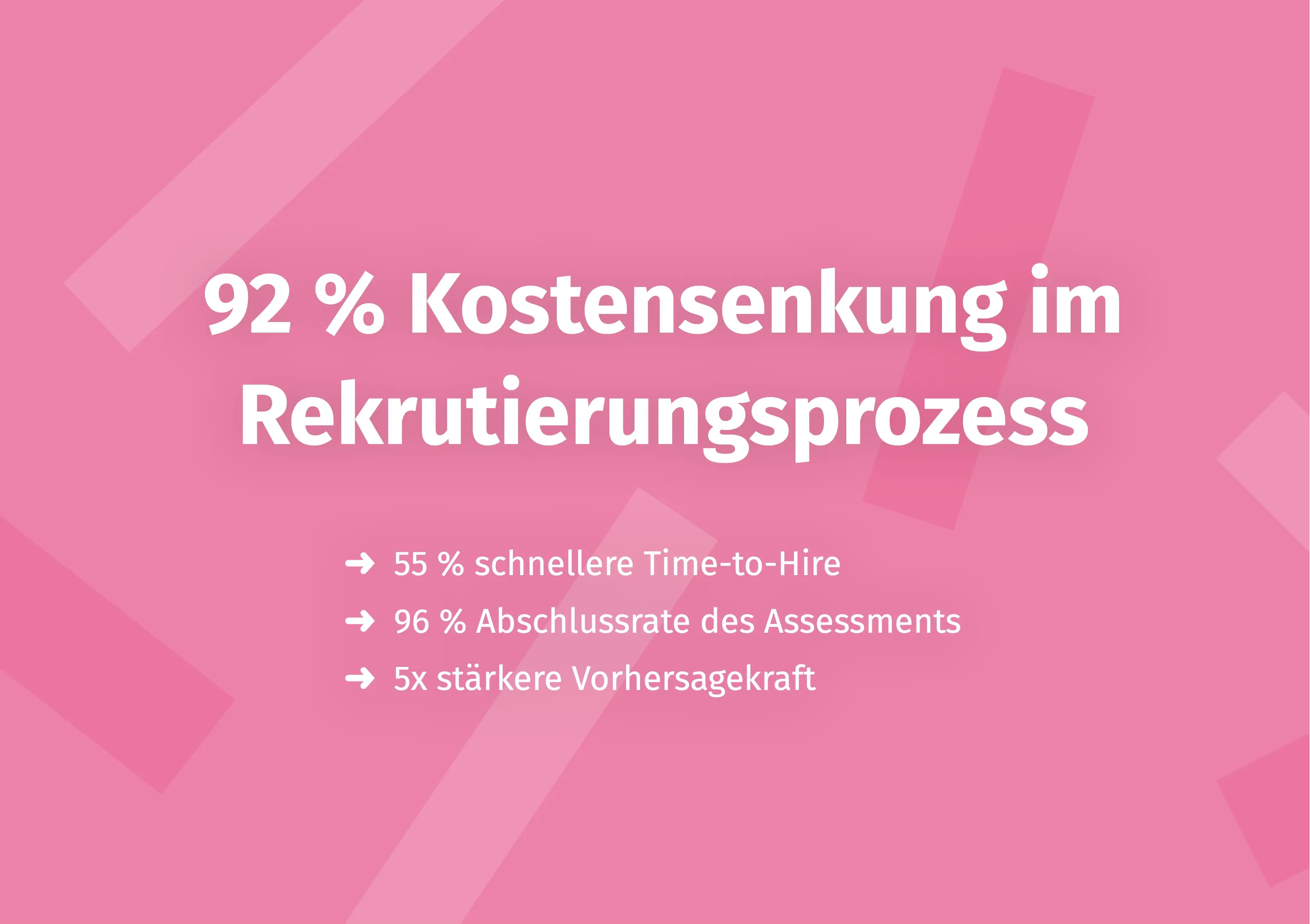
For more objective and valid pre-selection, recruiting software can be extended with specialized assessment tools. The Aivy platform, for example, integrates seamlessly with existing ATS systems like softgarden and enhances them with scientifically validated game-based assessments. This allows companies to evaluate candidates independently of their resume – based on cognitive abilities and personality traits. MCI Germany was able to reduce time-to-hire by 55% and cost-per-hire by 92% through this integration.

Reporting and Analytics

Data-driven decisions are essential in recruiting as well. Recruiting software provides metrics such as time-to-hire (time until hiring), cost-per-hire (cost per placement), conversion rates (ratio of applications to hires), and channel performance (which job boards deliver the best candidates). This data helps you allocate budgets more effectively and identify bottlenecks in the process.

Types of Recruiting Software

ATS (Applicant Tracking System)

A pure ATS focuses on the core task: managing applicants through the selection process. It's ideal for companies looking for a lean solution that already use other tools for multiposting or onboarding. ATS systems are often more affordable and faster to implement than comprehensive solutions.

RMS (Recruitment Management System)

A Recruitment Management System goes beyond the ATS. It integrates additional features such as Candidate Relationship Management (similar to Talent Relationship Management), chatbots for initial candidate interaction, advanced reporting dashboards, and sometimes even onboarding modules. RMS solutions are suitable for medium to large companies with high recruiting volumes.

HR Platform with Recruiting Module

Providers like Personio or Workday offer comprehensive HR platforms where recruiting is just one module alongside personnel administration, time tracking, and payroll. The advantage lies in seamless data transfer: once someone is hired, their data is automatically transferred to the personnel file. The disadvantage is that the recruiting module is often less specialized than dedicated solutions.

Benefits for Companies

Efficiency: Reducing Time-to-Hire

Automation speeds up the entire process. Instead of spending hours posting job ads, you can do it in minutes. Automatic reminders ensure no application is left unattended. A study by Bitkom Research and Personio shows that companies with software-supported applicant tracking conduct fewer interviews – yet hire just as many people.

Improving Candidate Experience

32% of applicants abandon a hiring process because it takes too long, according to the Candidate Experience Report by Criteria Corp. Fast communication and transparent processes are therefore crucial. Recruiting software enables automated yet personalized communication – and it pays off: satisfied candidates recommend the company, even if they weren't hired themselves.

Data-Driven Decisions

With integrated analytics, you can see exactly which recruiting channels are working and where there's optimization potential. You can run A/B tests for job ads, compare performance across different job boards, and make informed decisions about where to invest your budget.

Choosing the Right Software

Define Requirements

Before comparing different providers, you should clarify your requirements: How many positions do you fill per year? Do you need multiposting on international job boards? Should hiring managers be able to enter feedback independently? The more precise your requirements list, the easier the selection.

Check Integrations

Recruiting software should fit seamlessly into your existing system landscape. Check whether interfaces exist for your HRIS, calendar system (Outlook, Google Calendar), video interview tools, and potentially assessment platforms. Open APIs enable additional flexibility. The Aivy platform, for example, can be connected via API or native integration with leading ATS providers like softgarden – so you benefit from scientifically validated assessments without switching your existing system.

Consider Scalability

Your company is growing – and your software should be able to grow with it. Pay attention to whether the pricing model is based on number of users, active positions, or hires per year. Some providers offer entry packages starting at around 50 euros per month, while enterprise solutions are significantly more expensive.

Frequently Asked Questions About Recruiting Software

What is recruiting software?

Recruiting software is a digital solution for automating the hiring process. It covers job posting, applicant management, communication, and selection. Other terms include ATS, applicant management system, or talent acquisition software.

What are the most important features?

Core features include multiposting to job boards, applicant tracking through all phases, automated emails and scheduling, CV parsing and candidate filters, as well as reporting and analytics.

What is the difference between ATS and RMS?

An ATS (Applicant Tracking System) focuses on applicant management. An RMS (Recruitment Management System) offers additional features like CRM, chatbots, and onboarding. HR platforms integrate recruiting as one module alongside payroll and time tracking.

What company size benefits from recruiting software?

The investment can pay off starting from just 10 hires per year. 98% of Fortune 500 companies use recruiting software. For SMBs, entry-level solutions are available starting at around 50 euros per month.

Which recruiting software is common in Germany?

Common solutions include Personio (HR platform with recruiting), softgarden (specialized in applicant management), Recruitee (international, modern interface), Greenhouse (enterprise-focused), and Zoho Recruit (part of the Zoho ecosystem).

How can recruiting software be extended?

Recruiting software can be extended through integration of assessment tools like Aivy, video interview software, background check providers, and onboarding modules.

How much does recruiting software cost?

Costs vary widely: entry-level solutions start at around 50 euros per month, while enterprise solutions can cost several hundred euros. Pricing models are usually based on number of users, active positions, or hires per year.

Conclusion

Recruiting software is now indispensable for companies that want to succeed in the competition for talent. It automates time-consuming tasks, improves candidate experience, and provides data-driven decision-making foundations. When selecting, you should define your requirements precisely, pay attention to integrations, and keep scalability in mind.

Recruiting software becomes particularly valuable when you extend it with specialized tools: assessment platforms like Aivy complement the classic ATS with scientifically validated assessments – for more objective selection decisions and higher quality hires.

Learn how Aivy enhances your recruiting system with scientifically validated assessments

Sources

Home
-
lexicon
-
Recruiting Software – Definition, Features & Selection Criteria

Recruiting software is a digital solution that automates and centralizes the entire hiring process – from job posting through applicant management to hiring. It includes features such as multiposting, applicant tracking, automated communication, and reporting. Modern systems can be extended with assessment tools to improve selection quality.

What is Recruiting Software?

Definition and Scope

Recruiting software refers to digital tools that support companies in finding, selecting, and hiring new employees. It combines various functions in a central platform: creating and publishing job ads, managing incoming applications, communicating with candidates, and analyzing the entire process.

The term is often used synonymously with Applicant Tracking System (ATS) or applicant management software. Strictly speaking, however, an ATS is only part of the overall package: it focuses on managing applicants, while comprehensive recruiting software may include additional features such as multiposting, career page builders, or analytics.

Historical Development: From Excel to Cloud Solutions

Just a few years ago, many companies managed their applications using Excel spreadsheets, email inboxes, and physical folders. This method was error-prone, time-consuming, and often led to lost applications or delayed responses.

With digitalization, simple database solutions emerged that stored applicant data centrally. Today, cloud-based systems dominate – accessible from anywhere, automatically updated, and seamlessly connected to other HR tools. According to research by Jobscan, over 98% of Fortune 500 companies now use recruiting software.

Key Features

Job Posting and Multiposting

A central function is multiposting: with one click, you publish a job ad on multiple job boards simultaneously – often on 500 to over 1,000 portals. This saves enormous time compared to manual posting on individual platforms. Additionally, many systems offer a career page builder that lets you create a professional job overview on your company website.

Applicant Management (ATS Features)

The heart of any recruiting software is the Applicant Tracking System. It allows you to manage all applicants in a clear pipeline view. At a glance, you can see who is in which phase – from application through screening to final offer. Roles and access rights ensure that hiring managers and recruiters only see information relevant to them.

Candidate Communication

Fast and professional communication is crucial for a positive candidate experience. Recruiting software automates confirmation emails, interview invitations, and status updates. Many systems also offer self-service features where candidates can book appointments independently. This significantly reduces coordination time and keeps applicants informed throughout the process.

Screening and Pre-Selection

Modern recruiting software supports pre-selection through CV parsing – the automatic extraction and structuring of resume data. Filter options help sort candidates by qualifications, experience, or location.

For more objective and valid pre-selection, recruiting software can be extended with specialized assessment tools. The Aivy platform, for example, integrates seamlessly with existing ATS systems like softgarden and enhances them with scientifically validated game-based assessments. This allows companies to evaluate candidates independently of their resume – based on cognitive abilities and personality traits. MCI Germany was able to reduce time-to-hire by 55% and cost-per-hire by 92% through this integration.

Reporting and Analytics

Data-driven decisions are essential in recruiting as well. Recruiting software provides metrics such as time-to-hire (time until hiring), cost-per-hire (cost per placement), conversion rates (ratio of applications to hires), and channel performance (which job boards deliver the best candidates). This data helps you allocate budgets more effectively and identify bottlenecks in the process.

Types of Recruiting Software

ATS (Applicant Tracking System)

A pure ATS focuses on the core task: managing applicants through the selection process. It's ideal for companies looking for a lean solution that already use other tools for multiposting or onboarding. ATS systems are often more affordable and faster to implement than comprehensive solutions.

RMS (Recruitment Management System)

A Recruitment Management System goes beyond the ATS. It integrates additional features such as Candidate Relationship Management (similar to Talent Relationship Management), chatbots for initial candidate interaction, advanced reporting dashboards, and sometimes even onboarding modules. RMS solutions are suitable for medium to large companies with high recruiting volumes.

HR Platform with Recruiting Module

Providers like Personio or Workday offer comprehensive HR platforms where recruiting is just one module alongside personnel administration, time tracking, and payroll. The advantage lies in seamless data transfer: once someone is hired, their data is automatically transferred to the personnel file. The disadvantage is that the recruiting module is often less specialized than dedicated solutions.

Benefits for Companies

Efficiency: Reducing Time-to-Hire

Automation speeds up the entire process. Instead of spending hours posting job ads, you can do it in minutes. Automatic reminders ensure no application is left unattended. A study by Bitkom Research and Personio shows that companies with software-supported applicant tracking conduct fewer interviews – yet hire just as many people.

Improving Candidate Experience

32% of applicants abandon a hiring process because it takes too long, according to the Candidate Experience Report by Criteria Corp. Fast communication and transparent processes are therefore crucial. Recruiting software enables automated yet personalized communication – and it pays off: satisfied candidates recommend the company, even if they weren't hired themselves.

Data-Driven Decisions

With integrated analytics, you can see exactly which recruiting channels are working and where there's optimization potential. You can run A/B tests for job ads, compare performance across different job boards, and make informed decisions about where to invest your budget.

Choosing the Right Software

Define Requirements

Before comparing different providers, you should clarify your requirements: How many positions do you fill per year? Do you need multiposting on international job boards? Should hiring managers be able to enter feedback independently? The more precise your requirements list, the easier the selection.

Check Integrations

Recruiting software should fit seamlessly into your existing system landscape. Check whether interfaces exist for your HRIS, calendar system (Outlook, Google Calendar), video interview tools, and potentially assessment platforms. Open APIs enable additional flexibility. The Aivy platform, for example, can be connected via API or native integration with leading ATS providers like softgarden – so you benefit from scientifically validated assessments without switching your existing system.

Consider Scalability

Your company is growing – and your software should be able to grow with it. Pay attention to whether the pricing model is based on number of users, active positions, or hires per year. Some providers offer entry packages starting at around 50 euros per month, while enterprise solutions are significantly more expensive.

Frequently Asked Questions About Recruiting Software

What is recruiting software?

Recruiting software is a digital solution for automating the hiring process. It covers job posting, applicant management, communication, and selection. Other terms include ATS, applicant management system, or talent acquisition software.

What are the most important features?

Core features include multiposting to job boards, applicant tracking through all phases, automated emails and scheduling, CV parsing and candidate filters, as well as reporting and analytics.

What is the difference between ATS and RMS?

An ATS (Applicant Tracking System) focuses on applicant management. An RMS (Recruitment Management System) offers additional features like CRM, chatbots, and onboarding. HR platforms integrate recruiting as one module alongside payroll and time tracking.

What company size benefits from recruiting software?

The investment can pay off starting from just 10 hires per year. 98% of Fortune 500 companies use recruiting software. For SMBs, entry-level solutions are available starting at around 50 euros per month.

Which recruiting software is common in Germany?

Common solutions include Personio (HR platform with recruiting), softgarden (specialized in applicant management), Recruitee (international, modern interface), Greenhouse (enterprise-focused), and Zoho Recruit (part of the Zoho ecosystem).

How can recruiting software be extended?

Recruiting software can be extended through integration of assessment tools like Aivy, video interview software, background check providers, and onboarding modules.

How much does recruiting software cost?

Costs vary widely: entry-level solutions start at around 50 euros per month, while enterprise solutions can cost several hundred euros. Pricing models are usually based on number of users, active positions, or hires per year.

Conclusion

Recruiting software is now indispensable for companies that want to succeed in the competition for talent. It automates time-consuming tasks, improves candidate experience, and provides data-driven decision-making foundations. When selecting, you should define your requirements precisely, pay attention to integrations, and keep scalability in mind.

Recruiting software becomes particularly valuable when you extend it with specialized tools: assessment platforms like Aivy complement the classic ATS with scientifically validated assessments – for more objective selection decisions and higher quality hires.

Learn how Aivy enhances your recruiting system with scientifically validated assessments

Sources

Heading 1

Heading 2

Heading 3

Heading 4

Heading 5
Heading 6

Lorem ipsum dolor sit amet, consectetur adipiscing elit, sed do eiusmod tempor incididunt ut laboratories et dolore magna aliqua. Ut Enim ad Minim Veniam, Quis Nostrud Exercitation Ullamco Laboris Nisi ut Aliquip ex ea Commodo Consequat. Duis aute irure dolor in reprehenderite in voluptate velit eat cillum dolore eu fugiate nulla pariature.

Block quote

Ordered list

  1. Item 1
  2. Item 2
  3. Item 3

Unordered list

  • Item A
  • Item B
  • Item C

Text link

Bold text

Emphasis

Superscript

Subscript

Heading 1

Heading 2

Heading 3

Heading 4

Heading 5
Heading 6

Lorem ipsum dolor sit amet, consectetur adipiscing elit, sed do eiusmod tempor incididunt ut laboratories et dolore magna aliqua. Ut Enim ad Minim Veniam, Quis Nostrud Exercitation Ullamco Laboris Nisi ut Aliquip ex ea Commodo Consequat. Duis aute irure dolor in reprehenderite in voluptate velit eat cillum dolore eu fugiate nulla pariature.

Block quote

Ordered list

  1. Item 1
  2. Item 2
  3. Item 3

Unordered list

  • Item A
  • Item B
  • Item C

Text link

Bold text

Emphasis

Superscript

Subscript

Florian Dyballa

CEO, Co-Founder

About Florian

  • Founder & CEO of Aivy — develops innovative ways of personnel diagnostics and is one of the top 10 HR tech founders in Germany (business punk)
  • More than 500,000 digital aptitude tests successfully used by more than 100 companies such as Lufthansa, Würth and Hermes
  • Three times honored with the HR Innovation Award and regularly featured in leading business media (WirtschaftsWoche, Handelsblatt and FAZ)
  • As a business psychologist and digital expert, combines well-founded tests with AI for fair opportunities in personnel selection
  • Shares expertise as a sought-after thought leader in the HR tech industry — in podcasts, media, and at key industry events
  • Actively shapes the future of the working world — by combining science and technology for better and fairer personnel decisions
success stories

You can expect these results

Discover what successes other companies are achieving by using Aivy. Be inspired and do the same as they do.

Many innovative employers already rely on Aivy

Say that #HeRoes

“Through the very high response rate Persuade and retain We our trainees early in the application process. ”

Tamara Molitor
Training manager at Würth
Tamara Molitor

“That Strengths profile reflects 1:1 our experience in a personal conversation. ”

Wolfgang Böhm
Training manager at DIEHL
Wolfgang Böhm Portrait

“Through objective criteria, we promote equal opportunities and Diversity in recruiting. ”

Marie-Jo Goldmann
Head of HR at Nucao
Marie Jo Goldmann Portrait

Aivy is the bestWhat I've come across so far in the German diagnostics start-up sector. ”

Carl-Christoph Fellinger
Strategic Talent Acquisition at Beiersdorf
Christoph Feillinger Portrait

“Selection process which Make fun. ”

Anna Miels
Learning & Development Manager at apoproject
Anna Miels Portrait

“Applicants find out for which position they have the suitable competencies bring along. ”

Jürgen Muthig
Head of Vocational Training at Fresenius
Jürgen Muthig Fresenius Portrait

“Get to know hidden potential and Develop applicants in a targeted manner. ”

Christian Schütz
HR manager at KU64
Christian Schuetz

Saves time and is a lot of fun doing daily work. ”

Matthias Kühne
Director People & Culture at MCI Germany
Matthias Kühne

Engaging candidate experience through communication on equal terms. ”

Theresa Schröder
Head of HR at Horn & Bauer
Theresa Schröder

“Very solid, scientifically based, innovative even from a candidate's point of view and All in all, simply well thought-out. ”

Dr. Kevin-Lim Jungbauer
Recruiting and HR Diagnostics Expert at Beiersdorf
Kevin Jungbauer
YOUR assistant FOR TALENT ASSESSMENT

Try it for free

Become a HeRo 🦸 and understand candidate fit - even before the first job interview...