
The probation period is a contractually agreed initial phase of an employment relationship that may last a maximum of 6 months (§ 622 Para. 3 BGB). During this time, both employer and employee can terminate the employment relationship with a shortened notice period of 2 weeks without having to provide a reason for termination.
Definition: What is a Probation Period?
The probation period refers to a time-limited initial phase of an employment relationship in which both parties can assess whether the collaboration meets expectations. It serves as a mutual trial phase: employers evaluate whether new employees possess the required qualifications and fit into the team. Employees, in turn, can assess whether the position, work environment, and corporate culture align with their expectations.
The probation period must be expressly agreed upon in the employment contract. If no such provision exists, there is no probation period – the employment relationship then begins directly with regular notice periods. A typical clause in the employment contract reads: "The first six months of the employment relationship are considered a probation period."
Important to understand: The probation period is not a legal requirement but a contractual agreement between employer and employee.
Legal Foundations of the Probation Period
Duration of the Probation Period (§ 622 Para. 3 BGB)
According to § 622 Para. 3 of the German Civil Code (BGB), the probation period may last a maximum of 6 months. This maximum duration can be fully utilized even for simple tasks, according to the case law of the Federal Labor Court. Shorter probation period agreements – for example, 3 months – are possible at any time and are also common in practice.
Special regulations apply to trainees: According to § 20 of the Vocational Training Act (BBiG), the probation period must be between one and four months. It is mandatory in training relationships.
Collective bargaining agreements may deviate from the statutory regulation and provide for both shorter and longer notice periods during the probation period. For example, according to the collective agreement for painters and varnishers, the notice period in the first six months is only six days.
Agreement in the Employment Contract
The probation period must be documented in writing in the employment contract. The Evidence Act (NachwG) stipulates in § 2 Para. 1 Sentence 2 No. 6 that the duration of the probation period – if agreed upon – must be documented in writing. While an oral agreement is generally possible, it is not recommended for evidentiary reasons.
If a probation period longer than 6 months is agreed upon in the employment contract, the probation period agreement is not fundamentally invalid. However, from the seventh month onward, the normal notice periods of § 622 BGB apply, not the shortened probation period.
Probation Period vs. Waiting Period – Important Distinction
Many people confuse the contractually agreed probation period with the so-called waiting period under the Protection Against Dismissal Act (KSchG). However, this distinction is crucial:
The waiting period is always 6 months and applies independently of the agreed probation period. Only after this waiting period expires does general protection against dismissal under § 1 Para. 1 KSchG apply. This means: Even if the probation period is only 3 months, the employer can terminate within the first 6 months with an extended notice period (4 weeks instead of 2 weeks) without social justification.
Example: An employment relationship begins on January 1st with an agreed probation period of 3 months. The probation period ends on March 31st, but the waiting period runs until June 30th. Until June 30th, the employer can terminate with a notice period of 4 weeks to the 15th or end of the month without having to provide a socially justified reason for dismissal.
Termination During the Probation Period
Notice Period: 2 Weeks
During the probation period, according to § 622 Para. 3 BGB, a shortened notice period of 2 weeks applies. This period applies equally to both parties – both employer and employee can terminate the employment relationship with this notice.
An important difference from the regular notice period: Termination can be given on any day, not just to the 15th or end of the month. What is crucial is that the termination is received during the probation period. The end of the notice period may extend beyond the probation period.
Example: The employment relationship begins on November 1st with a 6-month probation period. On April 28th (still within the probation period), the employer gives notice. The employment relationship then ends on May 12th – even though this date is already after the probation period has expired.
After the probation period expires, the notice period automatically extends to 4 weeks to the 15th or end of the calendar month. For employers, notice periods extend additionally depending on the length of service (from 2 years: one month, from 20 years: seven months).
No Reason for Termination Required
A special feature of the probation period: Neither employer nor employee must provide a reason for termination. The Protection Against Dismissal Act only applies after the 6-month waiting period, so social justification for dismissal is not required during this time.
However, this does not mean that employers can terminate completely arbitrarily. The following reasons make termination unlawful even during the probation period:
- Discrimination: Terminations for discriminatory reasons (gender, race, religion, age, disability, etc.) are inadmissible under the General Equal Treatment Act (AGG)
- Prohibition of Retaliation: Terminations as retaliation for the lawful exercise of rights (e.g., sick leave, doctor's visit)
- Immorality: Arbitrary or abusive terminations
Summary dismissal is only possible during the probation period if there is an important reason according to § 626 BGB.
Protection Against Dismissal and Exceptions
Although the general Protection Against Dismissal Act does not apply during the probation period, special protection against dismissal exists for certain groups:
Pregnant Women: According to § 17 of the Maternity Protection Act (MuSchG), there is an absolute prohibition on dismissal from the beginning of pregnancy until 4 months after childbirth. This protection also applies during the probation period. Prerequisite: The employer must be informed about the pregnancy (at the latest 2 weeks after receipt of the dismissal). Termination is only possible with the approval of the competent authority in cases of serious reasons.
Works Council Members: They enjoy special protection against dismissal according to § 15 KSchG. Ordinary dismissal is only possible with the consent of the works council. The works council must be properly consulted before any dismissal (§ 102 BetrVG), otherwise the dismissal is invalid.
Severely Disabled Persons: The special protection against dismissal according to § 173 SGB IX only takes effect after 6 months of employment, i.e., not during the probation period. In the first 6 months, severely disabled employees have no special protection.
Special Cases During the Probation Period
Vacation During the Probation Period
Employees are entitled to vacation even during the probation period. According to § 4 of the Federal Vacation Act (BUrlG), one-twelfth of the annual vacation accrues for each full month of employment. The full vacation entitlement only exists after 6 months of employment.
Example: With 30 days of annual vacation, 7.5 days of vacation are due after 3 months of employment (3 x 2.5 days).
Important: Employers can refuse vacation requests for operational reasons. Especially during the induction phase, it is advisable to coordinate vacation requests early. Longer absences make it difficult to assess performance and can have a negative impact on the decision at the end of the probation period.
Illness During the Probation Period
If employees fall ill during the probation period, special regulations apply to continued payment of wages: According to § 3 of the Continued Remuneration Act (EFZG), the entitlement to continued payment of wages in case of illness only exists after 4 weeks of uninterrupted employment. Anyone who falls ill in the first 4 weeks receives sick pay from the health insurance.
Important: The probation period does not automatically extend in case of illness. An extension is only possible with the consent of both parties and should be agreed upon in writing.
Termination during illness is generally permissible during the probation period. Employers do not have to provide a reason for termination and can therefore also terminate during a period of illness. However, the termination must not be for discriminatory reasons (e.g., because of a disability).
Note for Employees: In case of illness, there is an obligation to immediately notify the employer and to submit a medical certificate of incapacity for work (usually from the 3rd day, some employers require it from the 1st day).
Pregnancy During the Probation Period
If a female employee becomes pregnant during the probation period, special protection against dismissal according to § 17 MuSchG takes effect immediately. The probation period is irrelevant for this protection. The prohibition on dismissal applies:
- during the entire pregnancy
- until 4 months after childbirth
- in case of miscarriage after the 12th week of pregnancy until 4 months thereafter
Prerequisite: The employer must be informed about the pregnancy at the time of dismissal or within 2 weeks of receiving the dismissal.
Termination is only possible in exceptional cases with the approval of the competent state authority – for example, in case of serious misconduct not related to the pregnancy.
Extending the Probation Period – When Possible?
An extension of the probation period is generally possible, but only under certain conditions:
- Mutual Agreement: Both parties must agree to the extension. A unilateral extension by the employer is not possible.
- Original Probation Period Under 6 Months: An extension only makes sense if the originally agreed probation period was shorter than 6 months. A 3-month probation period can be extended to a maximum of 6 months.
- Extended Notice Period: The Federal Labor Court has ruled that when extending beyond the originally agreed probation period, the shortened notice period of 2 weeks no longer applies, but rather a longer, appropriate period. This is intended to give the employee a real chance to prove themselves.
- Consider Waiting Period: After 6 months of employment, the Protection Against Dismissal Act takes effect. Extending the probation period beyond this point makes little sense, as general protection against dismissal applies anyway.
In Case of Illness: The probation period does not automatically extend by days of illness. A corresponding clause in the employment contract would be invalid. However, a mutually agreed extension is possible.
Practical Implementation for HR Professionals
Checklist: Successfully Managing the Probation Period
Structured probation period management significantly increases the success rate of new hires. HR professionals should consider the following aspects:
Before Starting Work:
- Clearly define probation period duration in employment contract (typical: 6 months)
- Explicitly mention notice period (2 weeks)
- Prepare onboarding plan with milestones
- Designate contact person and mentor
During the Probation Period:
- Structured onboarding in the first weeks
- Regular feedback sessions (after 4, 8, 12 weeks)
- Communicate clear expectations
- Document performance and behavior
- Establish objective evaluation criteria
Before End of Probation Period:
- Probation period meeting at least 2 weeks before expiry
- Prepare written assessment
- For positive evaluation: Confirm permanent employment
- For negative evaluation: Clearly communicate reasons
Documentation:
- Record all feedback sessions
- Note performance indicators
- In case of termination: Document reasons (for internal purposes)
Conducting Structured Probation Period Meetings
Successful probation period meetings follow a clear structure:
Meeting Preparation:
- Performance assessment based on pre-defined criteria
- Collect specific examples (positive and negative)
- Obtain feedback from colleagues and supervisors
- Prepare meeting guidelines
Conducting the Meeting:
- Positive introduction and acknowledgment of milestones achieved
- Discuss specific performance examples
- Identify development potential
- Clarify expectations for the upcoming phase
- Provide space for questions and self-assessment
Final Meeting (Before End of Probation Period):
- Communicate overall assessment transparently
- For permanent employment: Discuss prospects and development opportunities
- For termination: Provide factual and respectful reasoning, offer constructive feedback
Objective Assessment During the Probation Period
Fair and objective assessment during the probation period is crucial – both for legal reasons (protection against discrimination) and for the quality of personnel selection.
Structured approaches include:
- Competency-based evaluation forms with measurable criteria
- 360-degree feedback from various team members
- Regular performance indicators (KPIs) for the position
- Documented observations instead of subjective impressions
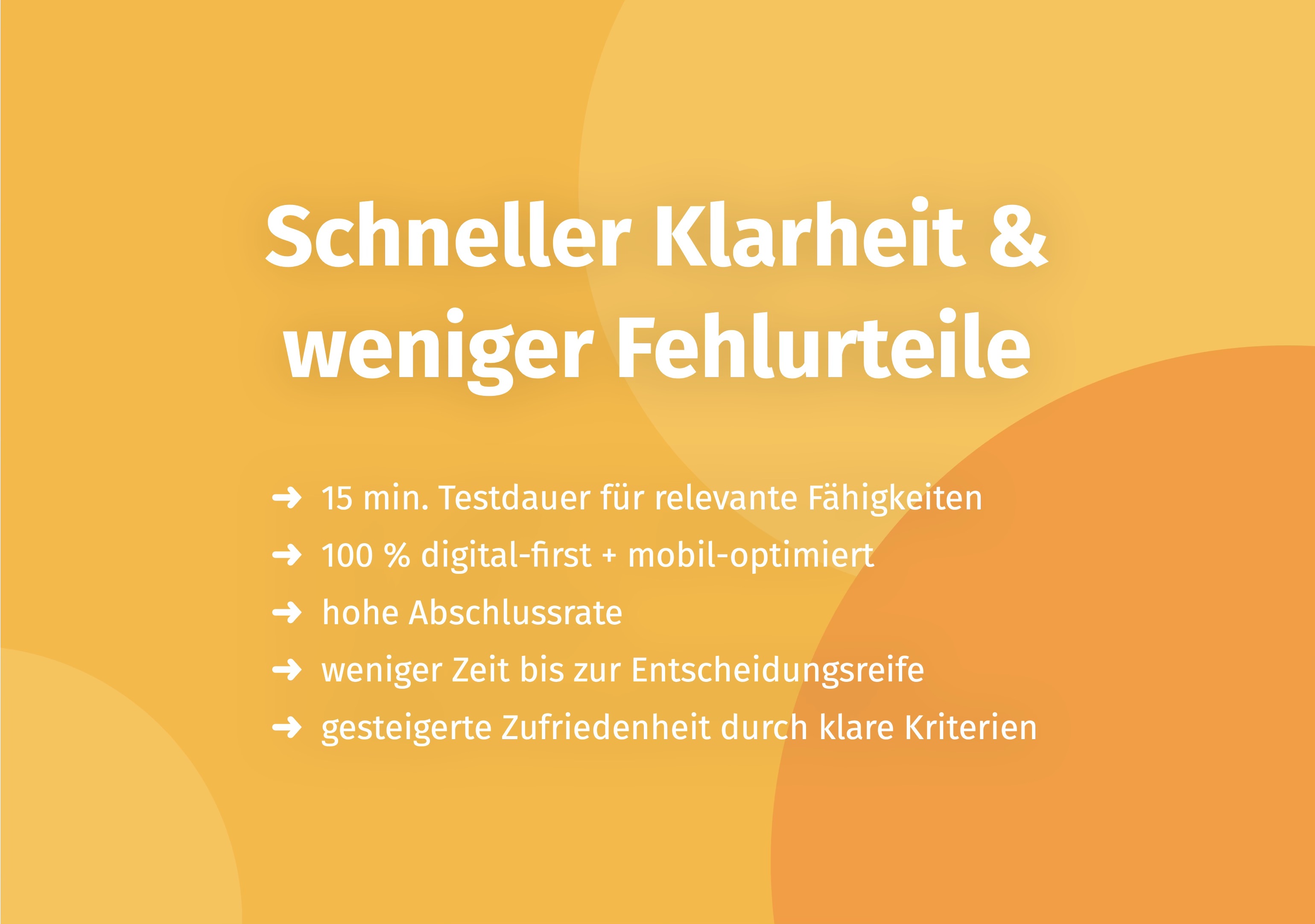
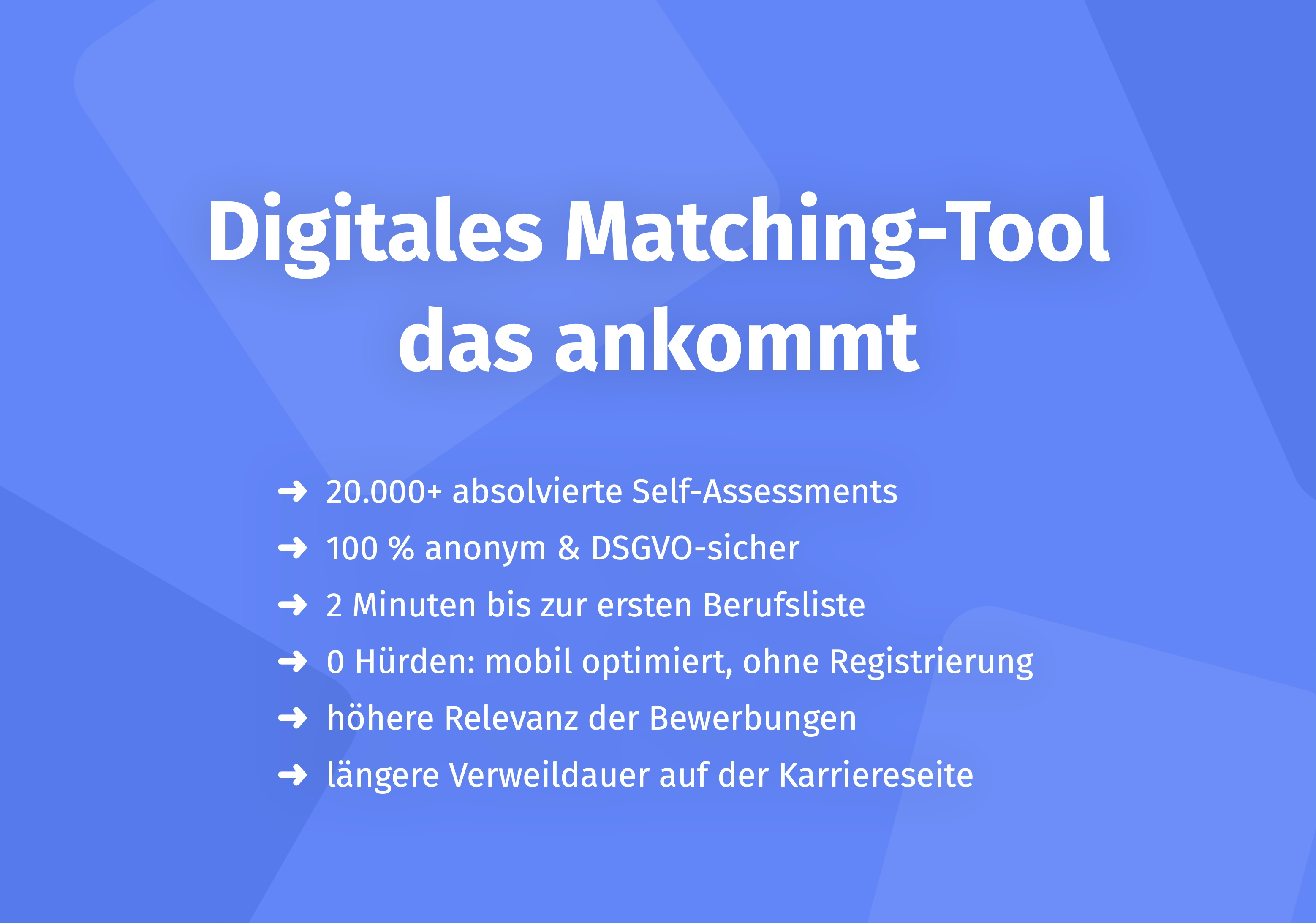
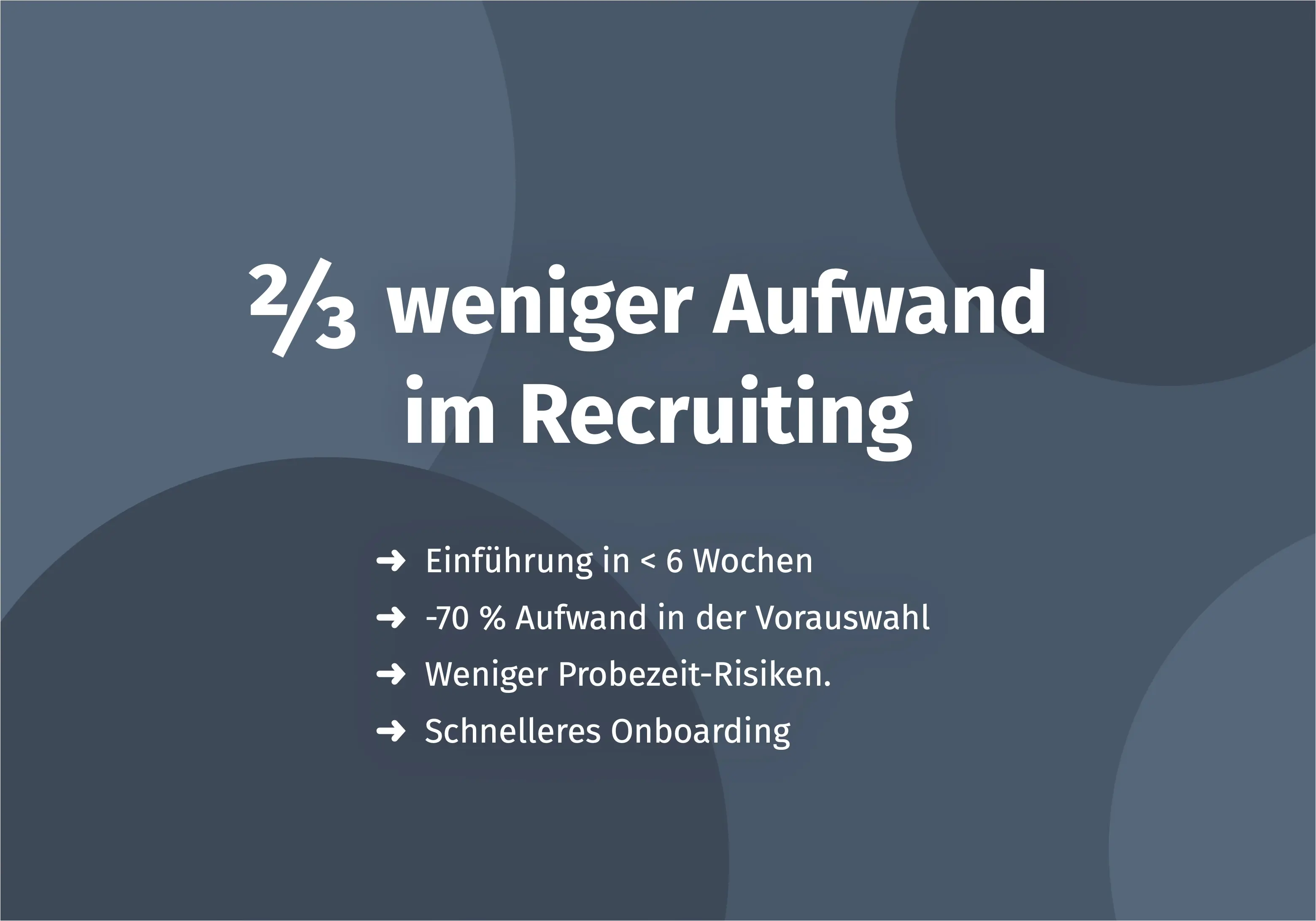
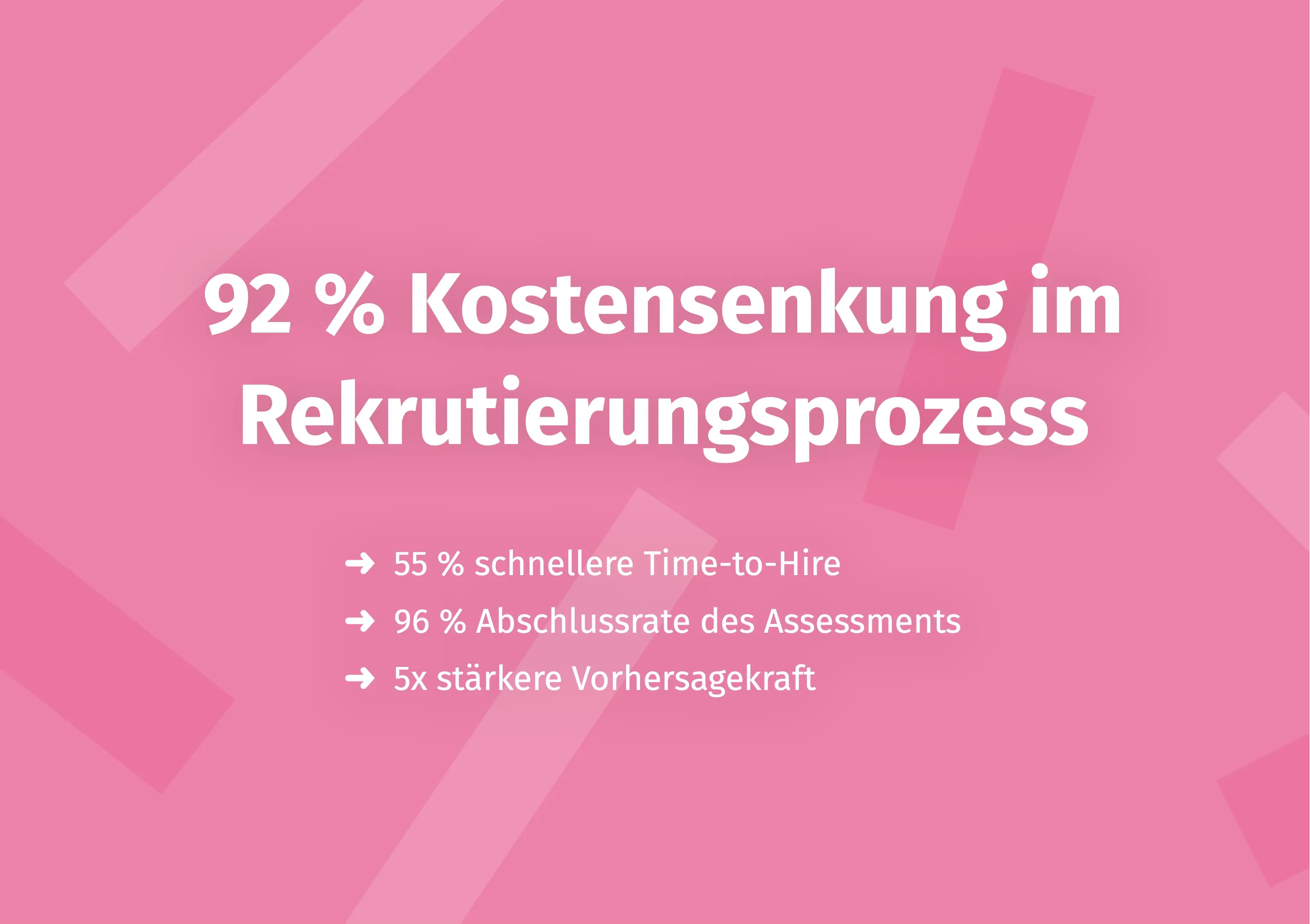
Companies achieve the best results when relying on objective selection procedures already during the recruitment process. Scientifically validated assessments enable data-based evaluation of candidates' suitability – even before the employment relationship begins. The digital platform Aivy, for example, offers psychometric tests and game-based assessments that objectively capture soft skills, cognitive abilities, and personality traits. This reduces hiring mistakes and significantly increases the chances of success during the probation period.
Learn more about objective aptitude diagnostics with Aivy.
Frequently Asked Questions About the Probation Period
How long can a probation period last at most?
The maximum duration of the probation period is 6 months according to § 622 Para. 3 BGB. This maximum duration applies equally to permanent and fixed-term employment relationships and can be fully utilized even for simple tasks.
Shorter probation period agreements are possible at any time – for example, 3 months for positions where a shorter training period is sufficient. Special regulations apply to trainees: The probation period must be between 1 and 4 months (§ 20 BBiG).
Collective bargaining agreements may deviate from the statutory regulation and establish different durations.
Can you terminate without reason during the probation period?
Yes, during the probation period, both employer and employee can terminate the employment relationship without stating reasons. The Protection Against Dismissal Act only takes effect after 6 months of employment (waiting period), so no social justification for the dismissal is required.
However, there are important restrictions: Terminations must not be discriminatory, arbitrary, or immoral. The prohibition of retaliation also applies – termination as retaliation for exercising legal rights (e.g., sick leave) is inadmissible.
Special protection against dismissal for pregnant women, works council members, and other specially protected groups also applies during the probation period.
How long is the notice period during the probation period?
The statutory notice period during the probation period is 2 weeks according to § 622 Para. 3 BGB. This period applies equally to both parties.
An important difference from the regular notice period: Termination can be given on any day, not just to the 15th or end of the month. What is crucial is that the termination is received during the probation period – the end of the notice period may extend beyond the probation period.
After the probation period expires, the notice period automatically extends to 4 weeks to the 15th or end of the calendar month. Collective bargaining agreements may contain deviating regulations.
Does the Protection Against Dismissal Act apply during the probation period?
No, the Protection Against Dismissal Act (KSchG) only takes effect after 6 months of employment. This so-called waiting period applies independently of the agreed probation period.
This means: Even if the probation period is only 3 months, the Protection Against Dismissal Act only applies from the 7th month. In the first 6 months, the employer can terminate without social justification – however, with an extended notice period of 4 weeks once the probation period has expired.
However, special protection against dismissal (e.g., maternity protection according to § 17 MuSchG) takes effect immediately, independently of the waiting period.
Can the probation period be extended?
Yes, an extension of the probation period is possible, but only with the consent of both parties. A unilateral extension by the employer is not permissible.
Important prerequisites:
- The original probation period must have been shorter than 6 months
- Extension beyond 6 months is generally not possible
- When extending, the shortened notice period of 2 weeks no longer applies, but rather a longer, appropriate period
The probation period does not automatically extend in case of illness or vacation. A corresponding clause in the employment contract would be invalid. After 6 months, the Protection Against Dismissal Act takes effect – extending the probation period then makes little sense.
Do I have vacation during the probation period?
Yes, vacation entitlement also accrues during the probation period. According to § 4 Federal Vacation Act (BUrlG), one-twelfth of the annual vacation accrues for each full month of employment.
With 30 days of annual vacation, this means: After 3 months, 7.5 days of vacation are due (3 × 2.5 days). The full vacation entitlement only exists after 6 months of employment.
Employers can refuse vacation requests for operational reasons. During the induction phase, it is advisable to coordinate vacation requests early, as longer absences can make performance assessment more difficult.
Ill during the probation period – what happens?
In case of illness during the probation period, special regulations apply to continued payment of wages: According to § 3 Continued Remuneration Act (EFZG), the entitlement to continued payment of wages in case of illness only exists after 4 weeks of uninterrupted employment. Anyone who falls ill in the first 4 weeks receives sick pay from the health insurance.
The probation period does not automatically extend in case of illness. An extension is only possible with the consent of both parties.
Termination during illness is generally permissible during the probation period, as no reason for termination must be stated. However, the termination must not be for discriminatory reasons (e.g., because of a disability or pregnancy-related illness).
Pregnant during the probation period – can termination occur?
No, termination during pregnancy is inadmissible. Special protection against dismissal according to § 17 Maternity Protection Act (MuSchG) also applies during the probation period and protects:
- during the entire pregnancy
- until 4 months after childbirth
- in case of miscarriage after the 12th week of pregnancy until 4 months thereafter
Prerequisite: The employer must be informed about the pregnancy – either before termination or at the latest 2 weeks after receipt of the termination.
Termination is only possible in exceptional cases with the approval of the competent authority, for example in case of serious misconduct not related to the pregnancy.
Conclusion
The probation period is a proven instrument for mutually testing new employment relationships. With a maximum duration of 6 months and a shortened notice period of 2 weeks, it offers flexibility for employers and employees alike. It is crucial that the probation period is expressly agreed upon in the employment contract – without this agreement, the regular notice periods apply.
For HR professionals, structured probation period management is crucial: Clear expectations, regular feedback sessions, and objective evaluation criteria significantly increase the success rate. Special protection against dismissal for pregnant women and works council members also applies during the probation period – these groups enjoy special protection.
Important to note: The contractually agreed probation period is not identical to the 6-month waiting period under the Protection Against Dismissal Act. Even after a 3-month probation period expires, termination is possible in the first 6 months without social justification – however, with the regular notice period of 4 weeks.
Sources
- German Civil Code (BGB) – § 622 Notice Periods. Federal Republic of Germany, 2024. https://www.gesetze-im-internet.de/bgb/__622.html
- Protection Against Dismissal Act (KSchG) – § 1 Socially Unjustified Dismissals. Federal Republic of Germany, 2024. https://www.gesetze-im-internet.de/kschg/__1.html
- Maternity Protection Act (MuSchG) – § 17 Prohibition of Dismissal. Federal Republic of Germany, 2024. https://www.gesetze-im-internet.de/muschg_2018/__17.html
- Vocational Training Act (BBiG) – § 20 Probation Period. Federal Republic of Germany, 2024. https://www.gesetze-im-internet.de/bbig_2005/__20.html
- Continued Remuneration Act (EFZG) – § 3 Entitlement to Continued Remuneration. Federal Republic of Germany, 2024. https://www.gesetze-im-internet.de/efzg/__3.html
- Federal Vacation Act (BUrlG) – § 4 Accrual and Due Date of Vacation Entitlement. Federal Republic of Germany, 2024. https://www.gesetze-im-internet.de/burlg/__4.html
- Case Law Collection Labor Law. Federal Labor Court, 2024. https://www.bundesarbeitsgericht.de/startseite/

Make a better pre-selection — even before the first interview
In just a few minutes, Aivy shows you which candidates really fit the role. Beyond resumes based on strengths.