You want to explore your strengths as a talent?

This way

Login

HR Controlling KPIs: Definition, Examples & Implementation

Home
-
Lexicon
-
HR Controlling KPIs: Definition, Examples & Implementation

HR controlling KPIs (Key Performance Indicators) are measurable metrics that reflect personnel-related processes and outcomes within an organization. They enable data-driven decisions in areas such as recruiting, employee development, retention, and personnel costs. The most important KPIs include time-to-hire, cost-per-hire, turnover rate, quality-of-hire, and employee satisfaction.

What Are HR Controlling KPIs?

HR controlling KPIs are key metrics that make the success of human resources activities measurable. They form the foundation for strategic HR management and enable personnel work to be transparent, comparable, and controllable.

Definition: Metrics vs. KPIs

Not every metric is a KPI. While metrics describe any measurable value – such as the number of applications or average tenure – KPIs are selected metrics directly linked to strategic business objectives. A KPI doesn't just measure; it also evaluates progress toward defined goals.

In HR controlling, both quantitative and qualitative KPIs are captured. Quantitative KPIs are countable values such as personnel costs, resignations, or absenteeism. Qualitative KPIs, on the other hand, measure harder-to-grasp aspects such as employee satisfaction, candidate experience, or the competency level of individual departments. Both types are essential for comprehensive HR controlling.

Why Are HR KPIs Important?

The importance of HR KPIs has increased significantly in recent years. According to the HR Insights Report 2024, 49% of employers expect higher turnover in 2025, while 70% already observed a decline in employee engagement in 2024. Given these developments, well-founded, data-driven decisions are more important than ever.

HR KPIs enable HR departments to make their work measurable and legitimize it to management. They create transparency, identify optimization potential, and help allocate resources strategically. As Kaplan and Norton formulated in their 1996 Balanced Scorecard methodology: "If you can't measure it, you can't manage it."

Traditional measurements such as attendance time or production volume per employee are losing relevance in the modern workplace. Today, teams work hybrid, performance is delivered collectively, and factors such as employee satisfaction or employee experience are at least as important as pure output numbers.

Operational vs. Strategic HR Controlling

HR controlling can be divided into two areas that examine different time periods and types of metrics:

Operational HR controlling describes the short-term collection, analysis, and evaluation of data. It focuses on "hard" numbers such as headcount, personnel costs, or recruiting efficiency. Results are typically evaluated monthly and communicated to managers. Typical operational KPIs include time-to-hire, absenteeism rate, or current personnel costs.

Strategic HR controlling is oriented toward the medium to long term and focuses on "soft" metrics such as improvements in productivity, personnel structures, or employee development. HR reporting occurs semi-annually or annually and is primarily directed at executive management and boards. Strategic KPIs include aspects such as employee retention, diversity, or training rates.

A newer development is predictive HR controlling, where artificial intelligence is used to forecast future developments in metrics. This enables KPIs to be optimized before problems even arise.

The 5 Most Important KPI Categories

HR controlling KPIs can be divided into five central categories that cover different aspects of personnel work. Clear categorization helps in selecting the right KPIs for your business objectives.

Recruiting KPIs

Recruiting KPIs measure the efficiency and quality of your hiring process. They are particularly important in times of talent shortage, as they reveal where optimization potential exists.

Key recruiting KPIs:

  • Time-to-hire: Time span from job posting to contract signing
  • Cost-per-hire: Average cost per new hire (job ads, tools, HR time)
  • Quality-of-hire: Quality of hires, measured by performance and retention after 6-12 months
  • Applications per channel: Shows which recruiting channels are most effective
  • Offer acceptance rate: Percentage of job offers accepted

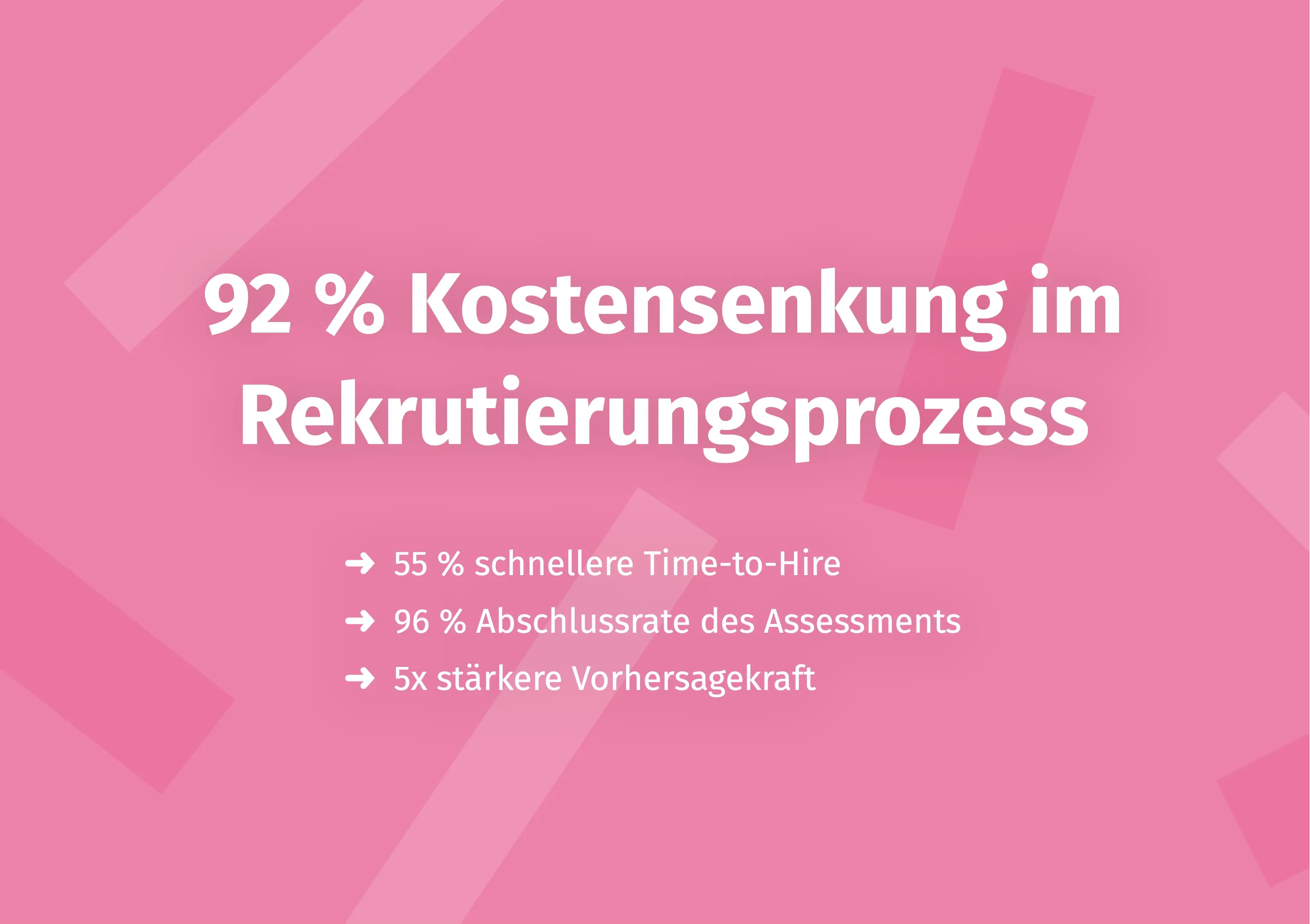
Practice shows: Objective talent assessment tools like Aivy can significantly improve these KPIs. MCI Deutschland reduced time-to-hire by 55% and cost-per-hire by 92%. The platform uses scientifically validated game-based assessments developed based on research from Free University of Berlin, enabling objective evaluation. Learn more about candidate experience and talent assessment to optimize your recruiting KPIs.

Employee Development

This category measures how effectively your organization invests in employee training and development. A high training rate often correlates with higher employee retention and innovation.

Important KPIs:

  • Training participation rate: Percentage of employees participating in training programs
  • Training costs per employee: Average investment in development
  • Training days per employee: Number of training days per year
  • Skill gap analysis: Difference between existing and required competencies

Leadership

Leadership metrics provide insights into the quality of leadership work and can identify problems early.

Key KPIs:

  • Coaching sessions per manager: Shows investment in leadership development
  • Duration in leadership positions: Too short tenure may indicate problems
  • Employee satisfaction by team: Comparison between different managers
  • Diversity in leadership: Indicator for diversity at management level

Productivity & Revenue

These KPIs link HR work to business results and make HR's value contribution measurable.

Important metrics:

  • Revenue per employee: Productivity indicator (must be interpreted by industry)
  • Personnel costs as percentage of total revenue: Shows cost efficiency
  • Employee productivity: Ratio of output to personnel expenditure
  • Revenue per employee: Particularly relevant in growth-oriented companies

Personnel Structure

Structural metrics reflect the composition of the workforce and assist in strategic HR planning.

Key KPIs:

  • Turnover rate: Percentage of employees leaving the organization
  • Age structure: Distribution by age groups (important for succession planning)
  • Diversity index: Gender distribution, cultural diversity
  • Average tenure: Indicator for employee retention
  • Absenteeism rate: Percentage of sick leave absences

The 10 Most Important KPIs at a Glance

From the multitude of possible metrics – some sources list up to 65 KPIs – we've selected the 10 most important for getting started with HR controlling. These cover the essential areas and can be collected in most organizations with manageable effort.

1. Time-to-Hire

Definition: Time span from job posting to contract signing.

Calculation: Average of all hires in a period (e.g., quarter).

Target value: Industry-dependent, typically 30-60 days. The shorter, the more efficient the process – however, not at the expense of quality-of-hire.

2. Cost-per-Hire

Definition: Average total cost per new hire.

Calculation: (External costs + Internal costs) / Number of hires. External costs include job advertisements, job boards, recruiting events. Internal costs include HR time, interviews, onboarding.

Target value: Highly industry-dependent. For skilled workers often €3,000-10,000.

3. Turnover Rate

Definition: Percentage of employees leaving the organization in a period.

Calculation: (Number of departures / Average headcount) x 100

Target value: 5-15% is considered normal across industries. Under 5% may indicate insufficient movement, over 20% requires root cause analysis.

4. Quality-of-Hire

Definition: Quality of new hires, measured by performance and retention.

Calculation: Evaluation after 6-12 months based on performance reviews, supervisor feedback, and retention rate.

Target value: At least 80% of new hires should meet performance expectations.

5. Employee Satisfaction

Definition: Subjective assessment of job satisfaction by the workforce.

Calculation: Regular employee surveys, often using Employee Net Promoter Score (eNPS).

Target value: eNPS of +20 or higher is considered good, +50 as excellent.

6. Absenteeism Rate

Definition: Percentage of sick leave absences relative to scheduled working time.

Calculation: (Absent days / Total working days) x 100

Target value: In Germany, the average is 4-5%. Significant deviations require root cause analysis.

7. Personnel Costs per Employee

Definition: Average total costs per employee (salary, social security, benefits).

Calculation: Total personnel costs / Number of employees

Benefit: Benchmark comparisons, budget planning, cost structure transparency.

8. Training Participation Rate

Definition: Percentage of employees participating in training programs.

Calculation: (Training participants / Total workforce) x 100

Target value: At least 50-70% should participate annually in development programs.

9. Average Tenure

Definition: Average length of service of employees in the organization.

Calculation: Sum of all tenures / Number of employees

Interpretation: Longer tenure correlates with higher satisfaction. Consistency is particularly valuable in key positions.

10. Diversity Index

Definition: Measurable diversity in the workforce (gender, age, origin).

Calculation: Various metrics depending on focus, e.g., percentage of women in leadership, age distribution, international employees.

Relevance: Increasingly important for employer branding, legal requirements (e.g., gender quotas), and innovation.

How to Implement HR Controlling in 8 Steps

Implementing an HR controlling system may seem overwhelming – but it doesn't have to be. With a structured approach, an effective system can be built within a few weeks.

Step 1: Define objectives

Start by clarifying your strategic HR goals. Do you want to reduce recruiting costs? Increase employee retention? Promote diversity? Your KPI selection depends on these goals. According to the DGFP study, successful companies focus on 5-10 core KPIs instead of 50+.

Step 2: Select 3-5 KPIs (not 30!)

Less is more. Start with 3-5 KPIs that align with your goals. For recruiting focus: time-to-hire, cost-per-hire, quality-of-hire. For employee retention: turnover rate, employee satisfaction. Only add more KPIs after 6 months of experience.

Step 3: Identify data sources

Where is your data? Applicant tracking system, time tracking, payroll, employee surveys? Clarify which data already exists and which needs to be newly collected. Excel can serve as a starting point; professional HR software (Personio, HRworks, Kenjo) automates the process.

Step 4: Inform employees (change management)

Critical for success: Communicate transparently why you're introducing KPIs. A common concern is that controlling serves as surveillance. Explain clearly: It's about process optimization, not individual performance monitoring. Involve employees early – for example, in KPI selection.

Step 5: Select tools

For getting started, Excel or Google Sheets are sufficient. For professional controlling, HR systems with integrated dashboards are recommended. Recruiting KPIs can be tracked well with applicant tracking systems like Softgarden, Workwise, or Recruitee. For advanced visualizations: Power BI or Tableau.

Step 6: Conduct initial measurement

Perform a baseline measurement. What are your current values? This is your starting point for later comparisons (actual-actual comparison over time).

Step 7: Communicate results

Present initial results comprehensibly – visual dashboards with traffic light systems (green/yellow/red) work well. Explain what the numbers mean and what actions you derive from them.

Step 8: Continuously optimize

HR controlling is not a one-time project. Review quarterly: Are the KPIs still relevant? Are there new business objectives? Adapt your system to changing needs.

Frequently Asked Questions About HR Controlling KPIs

What is the difference between metrics and KPIs?

Metrics are all measurable values in HR work – such as the number of applications or average tenure. KPIs, on the other hand, are selected metrics that make strategic business objectives measurable. Not every metric is a KPI, but every KPI is a metric. The crucial difference: KPIs are directly linked to your business strategy and help evaluate progress.

Which KPIs should I implement first?

Start with 3-5 KPIs that align with your current HR goals. For recruiting focus: time-to-hire, cost-per-hire, and quality-of-hire. For employee retention: turnover rate and employee satisfaction. It's important not to start with 20+ KPIs – that's overwhelming and doesn't deliver better insights. Only add more KPIs after 6 months once the initial ones are established.

How do I calculate time-to-hire?

Time-to-hire measures the time span from job posting to contract signing. Calculate the average of all hires in a period (e.g., quarter). Example: If you hired five people in Q1 with 25, 40, 35, 50, and 30 days, your average time-to-hire is 36 days. Goal: The shorter, the more efficient – however, not at the expense of quality.

What are quantitative vs. qualitative KPIs?

Quantitative KPIs are countable, objectively measurable values such as number of resignations, personnel costs, or absenteeism. They can be expressed precisely in numbers. Qualitative KPIs measure subjective, harder-to-grasp aspects such as employee satisfaction, candidate experience, or leadership quality. They often rely on surveys or assessments. Both types are important for comprehensive HR controlling – quantitative provides hard facts, qualitative offers insights into the "soft" factors.

How do I overcome resistance in my team against KPI tracking?

Transparency is key. Communicate clearly that KPIs are not a surveillance instrument but are meant to optimize processes. Address concerns directly: "We're not measuring individual performance, but system efficiency." Involve employees early – for example, in selecting KPIs. Show quick wins: When the first successes become visible (e.g., faster hiring), acceptance increases. Transparency about goals and benefits builds trust.

How often should I measure KPIs?

This depends on the KPI type. Operational KPIs such as time-to-hire, absenteeism, or current personnel costs should be measured monthly, as they can change quickly. Strategic KPIs such as employee satisfaction, training rates, or diversity indices are collected quarterly or semi-annually. For trend analyses, annual comparisons are valuable – such as with turnover rates. Important: Consistency in measurement enables reliable comparisons over time.

Which HR software supports HR controlling?

Common all-in-one HR systems like Personio, HRworks, Kenjo, or SAP SuccessFactors offer integrated controlling functions and dashboards. For recruiting KPIs, specialized applicant tracking systems like Softgarden, Workwise, or Recruitee are suitable. Excel or Google Sheets work as a starting point; for advanced visualizations, business intelligence tools like Power BI or Tableau are recommended. The choice depends on company size, budget, and complexity.

What is a good turnover rate?

This is highly industry-dependent. Generally: 5-15% annual turnover is normal. Under 5% may indicate insufficient movement and lack of innovation. Over 20% signals need for action – root causes should be analyzed (compensation, leadership, work climate?). More important than the absolute value is the trend: If turnover is continuously rising, this indicates systematic problems. Also compare with industry benchmarks for more realistic assessment.

Conclusion: Making Data-Driven HR Decisions

HR controlling KPIs are indispensable for modern, strategic HR management. They make HR work measurable, transparent, and controllable – and enable the transition from gut-feeling decisions to data-driven strategies.

The key to success isn't tracking as many KPIs as possible, but the right ones. Start with 3-5 core KPIs that directly align with your business objectives. Communicate transparently with your team, use existing tools, and optimize continuously. The investment in structured HR controlling pays off – through more efficient recruiting, higher employee retention, and better-informed personnel decisions.

Remember: Controlling takes time, but it saves resources in the long run and improves the quality of your HR work. With the right strategy, HR controlling becomes a strategic partner to executive management.

Want to improve your recruiting KPIs through objective talent assessment? The digital platform Aivy offers scientifically validated assessments that reduce time-to-hire and increase quality-of-hire – with measurable results.

Learn more about data-driven talent assessment to improve your recruiting KPIs.

Sources

Home
-
lexicon
-
HR Controlling KPIs: Definition, Examples & Implementation

HR controlling KPIs (Key Performance Indicators) are measurable metrics that reflect personnel-related processes and outcomes within an organization. They enable data-driven decisions in areas such as recruiting, employee development, retention, and personnel costs. The most important KPIs include time-to-hire, cost-per-hire, turnover rate, quality-of-hire, and employee satisfaction.

What Are HR Controlling KPIs?

HR controlling KPIs are key metrics that make the success of human resources activities measurable. They form the foundation for strategic HR management and enable personnel work to be transparent, comparable, and controllable.

Definition: Metrics vs. KPIs

Not every metric is a KPI. While metrics describe any measurable value – such as the number of applications or average tenure – KPIs are selected metrics directly linked to strategic business objectives. A KPI doesn't just measure; it also evaluates progress toward defined goals.

In HR controlling, both quantitative and qualitative KPIs are captured. Quantitative KPIs are countable values such as personnel costs, resignations, or absenteeism. Qualitative KPIs, on the other hand, measure harder-to-grasp aspects such as employee satisfaction, candidate experience, or the competency level of individual departments. Both types are essential for comprehensive HR controlling.

Why Are HR KPIs Important?

The importance of HR KPIs has increased significantly in recent years. According to the HR Insights Report 2024, 49% of employers expect higher turnover in 2025, while 70% already observed a decline in employee engagement in 2024. Given these developments, well-founded, data-driven decisions are more important than ever.

HR KPIs enable HR departments to make their work measurable and legitimize it to management. They create transparency, identify optimization potential, and help allocate resources strategically. As Kaplan and Norton formulated in their 1996 Balanced Scorecard methodology: "If you can't measure it, you can't manage it."

Traditional measurements such as attendance time or production volume per employee are losing relevance in the modern workplace. Today, teams work hybrid, performance is delivered collectively, and factors such as employee satisfaction or employee experience are at least as important as pure output numbers.

Operational vs. Strategic HR Controlling

HR controlling can be divided into two areas that examine different time periods and types of metrics:

Operational HR controlling describes the short-term collection, analysis, and evaluation of data. It focuses on "hard" numbers such as headcount, personnel costs, or recruiting efficiency. Results are typically evaluated monthly and communicated to managers. Typical operational KPIs include time-to-hire, absenteeism rate, or current personnel costs.

Strategic HR controlling is oriented toward the medium to long term and focuses on "soft" metrics such as improvements in productivity, personnel structures, or employee development. HR reporting occurs semi-annually or annually and is primarily directed at executive management and boards. Strategic KPIs include aspects such as employee retention, diversity, or training rates.

A newer development is predictive HR controlling, where artificial intelligence is used to forecast future developments in metrics. This enables KPIs to be optimized before problems even arise.

The 5 Most Important KPI Categories

HR controlling KPIs can be divided into five central categories that cover different aspects of personnel work. Clear categorization helps in selecting the right KPIs for your business objectives.

Recruiting KPIs

Recruiting KPIs measure the efficiency and quality of your hiring process. They are particularly important in times of talent shortage, as they reveal where optimization potential exists.

Key recruiting KPIs:

  • Time-to-hire: Time span from job posting to contract signing
  • Cost-per-hire: Average cost per new hire (job ads, tools, HR time)
  • Quality-of-hire: Quality of hires, measured by performance and retention after 6-12 months
  • Applications per channel: Shows which recruiting channels are most effective
  • Offer acceptance rate: Percentage of job offers accepted

Practice shows: Objective talent assessment tools like Aivy can significantly improve these KPIs. MCI Deutschland reduced time-to-hire by 55% and cost-per-hire by 92%. The platform uses scientifically validated game-based assessments developed based on research from Free University of Berlin, enabling objective evaluation. Learn more about candidate experience and talent assessment to optimize your recruiting KPIs.

Employee Development

This category measures how effectively your organization invests in employee training and development. A high training rate often correlates with higher employee retention and innovation.

Important KPIs:

  • Training participation rate: Percentage of employees participating in training programs
  • Training costs per employee: Average investment in development
  • Training days per employee: Number of training days per year
  • Skill gap analysis: Difference between existing and required competencies

Leadership

Leadership metrics provide insights into the quality of leadership work and can identify problems early.

Key KPIs:

  • Coaching sessions per manager: Shows investment in leadership development
  • Duration in leadership positions: Too short tenure may indicate problems
  • Employee satisfaction by team: Comparison between different managers
  • Diversity in leadership: Indicator for diversity at management level

Productivity & Revenue

These KPIs link HR work to business results and make HR's value contribution measurable.

Important metrics:

  • Revenue per employee: Productivity indicator (must be interpreted by industry)
  • Personnel costs as percentage of total revenue: Shows cost efficiency
  • Employee productivity: Ratio of output to personnel expenditure
  • Revenue per employee: Particularly relevant in growth-oriented companies

Personnel Structure

Structural metrics reflect the composition of the workforce and assist in strategic HR planning.

Key KPIs:

  • Turnover rate: Percentage of employees leaving the organization
  • Age structure: Distribution by age groups (important for succession planning)
  • Diversity index: Gender distribution, cultural diversity
  • Average tenure: Indicator for employee retention
  • Absenteeism rate: Percentage of sick leave absences

The 10 Most Important KPIs at a Glance

From the multitude of possible metrics – some sources list up to 65 KPIs – we've selected the 10 most important for getting started with HR controlling. These cover the essential areas and can be collected in most organizations with manageable effort.

1. Time-to-Hire

Definition: Time span from job posting to contract signing.

Calculation: Average of all hires in a period (e.g., quarter).

Target value: Industry-dependent, typically 30-60 days. The shorter, the more efficient the process – however, not at the expense of quality-of-hire.

2. Cost-per-Hire

Definition: Average total cost per new hire.

Calculation: (External costs + Internal costs) / Number of hires. External costs include job advertisements, job boards, recruiting events. Internal costs include HR time, interviews, onboarding.

Target value: Highly industry-dependent. For skilled workers often €3,000-10,000.

3. Turnover Rate

Definition: Percentage of employees leaving the organization in a period.

Calculation: (Number of departures / Average headcount) x 100

Target value: 5-15% is considered normal across industries. Under 5% may indicate insufficient movement, over 20% requires root cause analysis.

4. Quality-of-Hire

Definition: Quality of new hires, measured by performance and retention.

Calculation: Evaluation after 6-12 months based on performance reviews, supervisor feedback, and retention rate.

Target value: At least 80% of new hires should meet performance expectations.

5. Employee Satisfaction

Definition: Subjective assessment of job satisfaction by the workforce.

Calculation: Regular employee surveys, often using Employee Net Promoter Score (eNPS).

Target value: eNPS of +20 or higher is considered good, +50 as excellent.

6. Absenteeism Rate

Definition: Percentage of sick leave absences relative to scheduled working time.

Calculation: (Absent days / Total working days) x 100

Target value: In Germany, the average is 4-5%. Significant deviations require root cause analysis.

7. Personnel Costs per Employee

Definition: Average total costs per employee (salary, social security, benefits).

Calculation: Total personnel costs / Number of employees

Benefit: Benchmark comparisons, budget planning, cost structure transparency.

8. Training Participation Rate

Definition: Percentage of employees participating in training programs.

Calculation: (Training participants / Total workforce) x 100

Target value: At least 50-70% should participate annually in development programs.

9. Average Tenure

Definition: Average length of service of employees in the organization.

Calculation: Sum of all tenures / Number of employees

Interpretation: Longer tenure correlates with higher satisfaction. Consistency is particularly valuable in key positions.

10. Diversity Index

Definition: Measurable diversity in the workforce (gender, age, origin).

Calculation: Various metrics depending on focus, e.g., percentage of women in leadership, age distribution, international employees.

Relevance: Increasingly important for employer branding, legal requirements (e.g., gender quotas), and innovation.

How to Implement HR Controlling in 8 Steps

Implementing an HR controlling system may seem overwhelming – but it doesn't have to be. With a structured approach, an effective system can be built within a few weeks.

Step 1: Define objectives

Start by clarifying your strategic HR goals. Do you want to reduce recruiting costs? Increase employee retention? Promote diversity? Your KPI selection depends on these goals. According to the DGFP study, successful companies focus on 5-10 core KPIs instead of 50+.

Step 2: Select 3-5 KPIs (not 30!)

Less is more. Start with 3-5 KPIs that align with your goals. For recruiting focus: time-to-hire, cost-per-hire, quality-of-hire. For employee retention: turnover rate, employee satisfaction. Only add more KPIs after 6 months of experience.

Step 3: Identify data sources

Where is your data? Applicant tracking system, time tracking, payroll, employee surveys? Clarify which data already exists and which needs to be newly collected. Excel can serve as a starting point; professional HR software (Personio, HRworks, Kenjo) automates the process.

Step 4: Inform employees (change management)

Critical for success: Communicate transparently why you're introducing KPIs. A common concern is that controlling serves as surveillance. Explain clearly: It's about process optimization, not individual performance monitoring. Involve employees early – for example, in KPI selection.

Step 5: Select tools

For getting started, Excel or Google Sheets are sufficient. For professional controlling, HR systems with integrated dashboards are recommended. Recruiting KPIs can be tracked well with applicant tracking systems like Softgarden, Workwise, or Recruitee. For advanced visualizations: Power BI or Tableau.

Step 6: Conduct initial measurement

Perform a baseline measurement. What are your current values? This is your starting point for later comparisons (actual-actual comparison over time).

Step 7: Communicate results

Present initial results comprehensibly – visual dashboards with traffic light systems (green/yellow/red) work well. Explain what the numbers mean and what actions you derive from them.

Step 8: Continuously optimize

HR controlling is not a one-time project. Review quarterly: Are the KPIs still relevant? Are there new business objectives? Adapt your system to changing needs.

Frequently Asked Questions About HR Controlling KPIs

What is the difference between metrics and KPIs?

Metrics are all measurable values in HR work – such as the number of applications or average tenure. KPIs, on the other hand, are selected metrics that make strategic business objectives measurable. Not every metric is a KPI, but every KPI is a metric. The crucial difference: KPIs are directly linked to your business strategy and help evaluate progress.

Which KPIs should I implement first?

Start with 3-5 KPIs that align with your current HR goals. For recruiting focus: time-to-hire, cost-per-hire, and quality-of-hire. For employee retention: turnover rate and employee satisfaction. It's important not to start with 20+ KPIs – that's overwhelming and doesn't deliver better insights. Only add more KPIs after 6 months once the initial ones are established.

How do I calculate time-to-hire?

Time-to-hire measures the time span from job posting to contract signing. Calculate the average of all hires in a period (e.g., quarter). Example: If you hired five people in Q1 with 25, 40, 35, 50, and 30 days, your average time-to-hire is 36 days. Goal: The shorter, the more efficient – however, not at the expense of quality.

What are quantitative vs. qualitative KPIs?

Quantitative KPIs are countable, objectively measurable values such as number of resignations, personnel costs, or absenteeism. They can be expressed precisely in numbers. Qualitative KPIs measure subjective, harder-to-grasp aspects such as employee satisfaction, candidate experience, or leadership quality. They often rely on surveys or assessments. Both types are important for comprehensive HR controlling – quantitative provides hard facts, qualitative offers insights into the "soft" factors.

How do I overcome resistance in my team against KPI tracking?

Transparency is key. Communicate clearly that KPIs are not a surveillance instrument but are meant to optimize processes. Address concerns directly: "We're not measuring individual performance, but system efficiency." Involve employees early – for example, in selecting KPIs. Show quick wins: When the first successes become visible (e.g., faster hiring), acceptance increases. Transparency about goals and benefits builds trust.

How often should I measure KPIs?

This depends on the KPI type. Operational KPIs such as time-to-hire, absenteeism, or current personnel costs should be measured monthly, as they can change quickly. Strategic KPIs such as employee satisfaction, training rates, or diversity indices are collected quarterly or semi-annually. For trend analyses, annual comparisons are valuable – such as with turnover rates. Important: Consistency in measurement enables reliable comparisons over time.

Which HR software supports HR controlling?

Common all-in-one HR systems like Personio, HRworks, Kenjo, or SAP SuccessFactors offer integrated controlling functions and dashboards. For recruiting KPIs, specialized applicant tracking systems like Softgarden, Workwise, or Recruitee are suitable. Excel or Google Sheets work as a starting point; for advanced visualizations, business intelligence tools like Power BI or Tableau are recommended. The choice depends on company size, budget, and complexity.

What is a good turnover rate?

This is highly industry-dependent. Generally: 5-15% annual turnover is normal. Under 5% may indicate insufficient movement and lack of innovation. Over 20% signals need for action – root causes should be analyzed (compensation, leadership, work climate?). More important than the absolute value is the trend: If turnover is continuously rising, this indicates systematic problems. Also compare with industry benchmarks for more realistic assessment.

Conclusion: Making Data-Driven HR Decisions

HR controlling KPIs are indispensable for modern, strategic HR management. They make HR work measurable, transparent, and controllable – and enable the transition from gut-feeling decisions to data-driven strategies.

The key to success isn't tracking as many KPIs as possible, but the right ones. Start with 3-5 core KPIs that directly align with your business objectives. Communicate transparently with your team, use existing tools, and optimize continuously. The investment in structured HR controlling pays off – through more efficient recruiting, higher employee retention, and better-informed personnel decisions.

Remember: Controlling takes time, but it saves resources in the long run and improves the quality of your HR work. With the right strategy, HR controlling becomes a strategic partner to executive management.

Want to improve your recruiting KPIs through objective talent assessment? The digital platform Aivy offers scientifically validated assessments that reduce time-to-hire and increase quality-of-hire – with measurable results.

Learn more about data-driven talent assessment to improve your recruiting KPIs.

Sources

Heading 1

Heading 2

Heading 3

Heading 4

Heading 5
Heading 6

Lorem ipsum dolor sit amet, consectetur adipiscing elit, sed do eiusmod tempor incididunt ut laboratories et dolore magna aliqua. Ut Enim ad Minim Veniam, Quis Nostrud Exercitation Ullamco Laboris Nisi ut Aliquip ex ea Commodo Consequat. Duis aute irure dolor in reprehenderite in voluptate velit eat cillum dolore eu fugiate nulla pariature.

Block quote

Ordered list

  1. Item 1
  2. Item 2
  3. Item 3

Unordered list

  • Item A
  • Item B
  • Item C

Text link

Bold text

Emphasis

Superscript

Subscript

Heading 1

Heading 2

Heading 3

Heading 4

Heading 5
Heading 6

Lorem ipsum dolor sit amet, consectetur adipiscing elit, sed do eiusmod tempor incididunt ut laboratories et dolore magna aliqua. Ut Enim ad Minim Veniam, Quis Nostrud Exercitation Ullamco Laboris Nisi ut Aliquip ex ea Commodo Consequat. Duis aute irure dolor in reprehenderite in voluptate velit eat cillum dolore eu fugiate nulla pariature.

Block quote

Ordered list

  1. Item 1
  2. Item 2
  3. Item 3

Unordered list

  • Item A
  • Item B
  • Item C

Text link

Bold text

Emphasis

Superscript

Subscript

Florian Dyballa

CEO, Co-Founder

About Florian

  • Founder & CEO of Aivy — develops innovative ways of personnel diagnostics and is one of the top 10 HR tech founders in Germany (business punk)
  • More than 500,000 digital aptitude tests successfully used by more than 100 companies such as Lufthansa, Würth and Hermes
  • Three times honored with the HR Innovation Award and regularly featured in leading business media (WirtschaftsWoche, Handelsblatt and FAZ)
  • As a business psychologist and digital expert, combines well-founded tests with AI for fair opportunities in personnel selection
  • Shares expertise as a sought-after thought leader in the HR tech industry — in podcasts, media, and at key industry events
  • Actively shapes the future of the working world — by combining science and technology for better and fairer personnel decisions
success stories

You can expect these results

Discover what successes other companies are achieving by using Aivy. Be inspired and do the same as they do.

Many innovative employers already rely on Aivy

Say that #HeRoes

“Through the very high response rate Persuade and retain We our trainees early in the application process. ”

Tamara Molitor
Training manager at Würth
Tamara Molitor

“That Strengths profile reflects 1:1 our experience in a personal conversation. ”

Wolfgang Böhm
Training manager at DIEHL
Wolfgang Böhm Portrait

“Through objective criteria, we promote equal opportunities and Diversity in recruiting. ”

Marie-Jo Goldmann
Head of HR at Nucao
Marie Jo Goldmann Portrait

Aivy is the bestWhat I've come across so far in the German diagnostics start-up sector. ”

Carl-Christoph Fellinger
Strategic Talent Acquisition at Beiersdorf
Christoph Feillinger Portrait

“Selection process which Make fun. ”

Anna Miels
Learning & Development Manager at apoproject
Anna Miels Portrait

“Applicants find out for which position they have the suitable competencies bring along. ”

Jürgen Muthig
Head of Vocational Training at Fresenius
Jürgen Muthig Fresenius Portrait

“Get to know hidden potential and Develop applicants in a targeted manner. ”

Christian Schütz
HR manager at KU64
Christian Schuetz

Saves time and is a lot of fun doing daily work. ”

Matthias Kühne
Director People & Culture at MCI Germany
Matthias Kühne

Engaging candidate experience through communication on equal terms. ”

Theresa Schröder
Head of HR at Horn & Bauer
Theresa Schröder

“Very solid, scientifically based, innovative even from a candidate's point of view and All in all, simply well thought-out. ”

Dr. Kevin-Lim Jungbauer
Recruiting and HR Diagnostics Expert at Beiersdorf
Kevin Jungbauer
YOUR assistant FOR TALENT ASSESSMENT

Try it for free

Become a HeRo 🦸 and understand candidate fit - even before the first job interview...