
People analytics software collects, analyzes, and visualizes employee data to enable data-driven HR decisions. These tools integrate data from various HR systems and deliver insights on topics such as recruiting success, employee retention, workforce planning, and diversity. With features like predictive analytics, they help forecast future developments and implement strategic measures in a timely manner.
What is People Analytics Software?
Definition and Distinction
People analytics software refers to digital platforms that systematically capture, analyze, and visualize employee data to enable HR professionals to make data-driven decisions. According to Gartner, it is "the collection and application of talent data to improve critical talent and business outcomes." The software integrates data from various sources such as HRIS (Human Resources Information System), ATS (Applicant Tracking System), performance management tools, and employee surveys onto a central platform.
Unlike traditional HR software, which primarily digitizes administrative processes, people analytics focuses on analyzing and interpreting data. The tools use statistical methods and increasingly AI algorithms to identify patterns, uncover correlations, and make predictions.
People Analytics vs. HR Analytics vs. HR Controlling
The terms people analytics, HR analytics, and workforce analytics are often used interchangeably but differ in their focus:
People analytics takes a holistic approach and focuses on the people within the organization. The emphasis is on optimizing employee experience and understanding human behavioral patterns. As Ben Waber from MIT Media Lab puts it: "People analytics solves business problems. HR analytics solves HR problems."
HR analytics focuses more strongly on HR processes and administrative metrics such as time-to-hire, cost-per-hire, or turnover rate. The focus is on the efficiency of HR processes.
HR controlling is the traditional reporting of HR metrics. It documents past developments, while people analytics goes beyond this by asking about causes and forecasting future developments.
Functions and Features
Data Integration
Modern people analytics software connects data from various sources: human resource management systems (HRIS), applicant tracking systems (ATS), performance management tools, employee surveys, time tracking systems, and other HR tools. The platforms automatically clean and harmonize this data, so HR teams don't need to manually consolidate data. According to 6sense, over 4,488 companies worldwide already use such tools, with 91% of organizations still relying on spreadsheets as their basic tool – highlighting the significant potential for automation.
Dashboards and Visualization
Interactive dashboards present HR metrics in a visually prepared format. Executives and HR managers get an at-a-glance overview of critical metrics such as turnover, engagement scores, diversity metrics, or recruiting performance. The best tools offer role-based dashboards that provide relevant information for different stakeholders.
Descriptive, Predictive and Prescriptive Analytics
People analytics software operates on different levels of analysis:
Descriptive analytics answers the question "What happened?". This descriptive analysis summarizes and visualizes historical data – for example, the turnover rate of the last 12 months.
Predictive analytics forecasts "What could happen?". Based on historical data and machine learning algorithms, future developments are predicted – such as which employees have an increased risk of leaving or which recruiting channels will deliver the most successful hires.
Prescriptive analytics provides recommendations for action: "What should we do?". The software suggests concrete measures to achieve desired results – for example, which development measures would improve retention in a specific department.
Reporting
Automated reporting functions create regular reports for different audiences. Instead of manually compiling Excel reports, the software generates them at the push of a button. Many tools also allow you to schedule reports and automatically send them to stakeholders.
Use Cases in Organizations
Recruiting and Talent Acquisition
In recruiting, people analytics software helps improve the quality and efficiency of the hiring process. The tools analyze which recruiting channels deliver the best candidates, how long individual process steps take, and where drop-offs occur in the candidate experience.
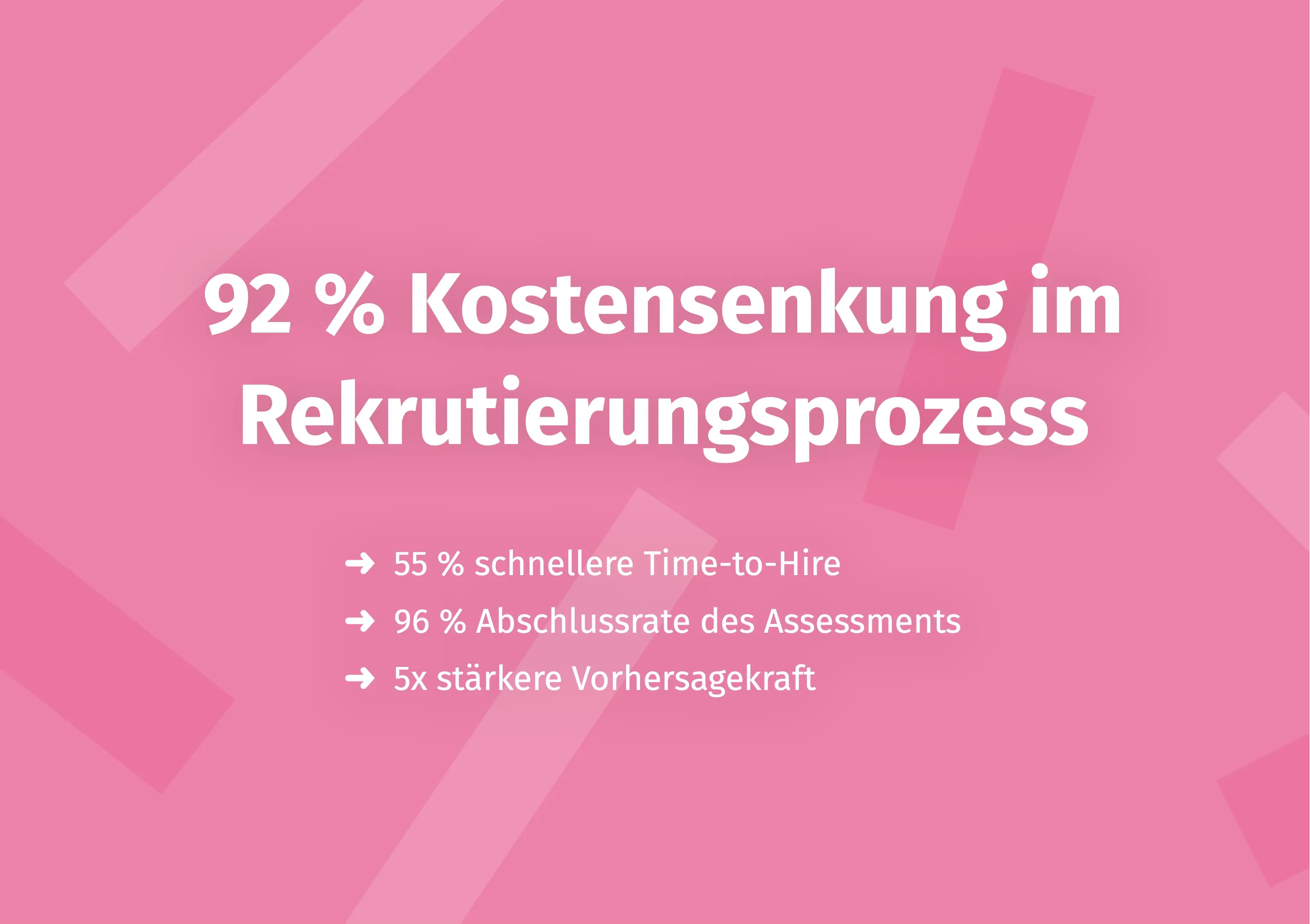
Analytics becomes particularly valuable when objective suitability data serves as a foundation. The Aivy platform demonstrates how scientifically validated assessments create a reliable data basis: Lufthansa achieves a 96% accuracy rate in predicting suitability compared to their in-house assessment through game-based assessments. Such objective data reduces unconscious bias and enables more precise prediction models for recruiting success.
Retention and Employee Engagement
People analytics identifies patterns in resignations: Are there specific departments with above-average turnover? Do employees leave after a certain length of service? Which factors correlate with high employee retention? Through these insights, HR teams can proactively implement measures before valuable talent leaves the organization.
Workforce Planning
Strategic workforce planning is based on data: How will staffing needs develop in different areas? Which skills will be needed in the future? Where do skills gaps exist? People analytics software supports succession planning, identifies critical positions, and helps develop successor candidates in time.
Diversity, Equity & Inclusion (DEI)
The software tracks DEI metrics across the entire employee lifecycle: How diverse is the candidate pipeline? Are there differences in promotion rates among different groups? Are development opportunities distributed equally? Analytics helps identify bias patterns and measure initiatives to promote equal opportunities.
Performance Management
Analysis of performance data enables the identification of high performers, understanding their success patterns, and transferring them to other employees. Additionally, connections between leadership behavior, team dynamics, and performance can be made visible.
Benefits of People Analytics Software
Data-Driven Decisions Instead of Gut Feeling
HR decisions have traditionally often been based on intuition and experience. People analytics complements this expertise with reliable data. Instead of assuming that a measure works, HR teams can measure and optimize its effect. This positions HR as a strategic partner on equal footing with other data-driven business areas.
Efficiency Gains and Cost Savings
Automated data integration and reporting save considerable time. Instead of manually exporting data from different systems and combining them in Excel, the software delivers real-time dashboards. These efficiency gains enable HR teams to focus on strategic tasks instead of administrative data work.
Proactive Action Through Predictive Analytics
Prediction models allow problems to be identified before they arise. When the software predicts an increased probability of resignation among valuable employees, retention conversations can be held in time. This proactive approach replaces reactive crisis management.
ROI Examples
Frankfurt School was able to reduce poor hiring decisions by 30% through people analytics – even before the first interview. The return on investment in the first year was 4 times the investment. Such metrics demonstrate the measurable business value of analytics investments.
Challenges and Risks
GDPR and Data Protection in Europe
Article 88 of the GDPR regulates employee data protection in the EU and sets strict requirements for processing personal employee data. In Germany, there is also the co-determination obligation of the works council: the collection of employee data requires the consent of employee representatives. A planned independent Employee Data Protection Act is intended to provide more legal clarity in the future.
Reputable people analytics software providers offer GDPR-compliant solutions with features such as anonymization, granular access rights, and audit trails. However, company practice is also crucial: transparency towards employees about data use and clear rules for what data may be used for are essential. Behavioral and performance monitoring is subject to particularly strict legal regulations.
Data Quality as Foundation
"Garbage in, garbage out" – this principle applies especially to analytics. If the source data is incomplete, inconsistent, or incorrect, even sophisticated algorithms lead to wrong conclusions. People analytics software can only be as good as the data quality in the connected systems. Many companies underestimate the effort required for data cleansing and harmonization.
Change Management and Acceptance
Implementing people analytics is not just a technical project, but above all a cultural one. Leaders must learn to make data-driven decisions. Employees need trust that data will not be misused for surveillance. The works council must be involved. Without thoughtful change management, analytics initiatives often fail due to lack of acceptance.
Ethical Boundaries and Surveillance Risks
People analytics can be used to increase efficiency – or for surveillance. When software tracks every email, every meeting attendance, every mouse click, information asymmetries arise between management and employees. Automated decisions about terminations or promotions based solely on algorithms are ethically problematic. Analytics should complement HR expertise, not replace it.
How to Choose the Right Software
Selection Criteria
Company size: SMEs need different features than corporations. While enterprise solutions map complex organizational structures and manage thousands of employees, SME-focused tools score through simplicity and quick implementation.
Existing HR tech landscape: Which systems are you already using? Integration with existing tools (ATS, HRIS, performance tools) is crucial. Some analytics platforms are designed as standalone solutions, others as modules within comprehensive HR suites.
Use cases: What is your priority? Recruiting optimization? Retention? Workforce planning? Not every tool is equally strong in all areas. Define your top 3 use cases and check the vendors' strengths in these areas.
Ease of use: How intuitive is the platform for HR generalists without a data science background? Pre-built dashboards and KPIs enable faster onboarding than tools that require extensive configuration.
Data protection: Is the vendor GDPR-compliant? Where is data stored? What certifications exist? European vendors often have better GDPR compliance than US vendors.
Vendor support: How good is onboarding? What support is available during and after implementation? A good vendor provides not only technical support but also assists with change management.
Implementation Tips
Start small: Begin with a clearly defined use case instead of trying to optimize all HR processes at once. A quick win – for example, automating a frequently used report – creates acceptance for further steps.
Check data quality: Conduct a data audit before implementation. What data is available? How consistent is it? Where are the gaps? Invest time in data cleansing.
Involve stakeholders: Get executives, works council, and IT on board early. Clarify expectations, address concerns, and create transparency about data use.
Build competencies: Plan training – both for technical use of the software and for analytics fundamentals. Many companies underestimate the need for analytics literacy.
Use demos: Test the software extensively before making a purchase decision. Conduct a proof of concept with real data to check whether the solution actually covers your use cases.
Frequently Asked Questions About People Analytics Software
What is the difference between people analytics and HR analytics?
People analytics focuses on employees and their development with a broad approach to optimizing employee experience. HR analytics focuses more strongly on HR processes and administrative metrics such as time-to-hire or cost-per-hire. In practice, the terms are often used synonymously, with people analytics being considered the more comprehensive term. Ben Waber from MIT formulates: "People analytics solves business problems, HR analytics solves HR problems."
What functions does people analytics software offer?
Modern tools offer data integration from various HR systems (HRIS, ATS, performance management, surveys), interactive dashboards and visualizations for quick KPI overview, descriptive analytics to answer "What happened?", predictive analytics for predictions about turnover and performance, and prescriptive analytics with concrete recommendations for action. Additionally, there are comprehensive reporting functions for different stakeholders.
What are the use cases for people analytics software?
The software supports recruiting through optimization of candidate experience, reduction of time-to-hire, and improvement of hiring quality. For retention, it helps identify turnover risks. In workforce planning, it supports demand planning and succession planning. For diversity, equity & inclusion, it enables tracking of DEI metrics. In performance management, it analyzes performance data and identifies high performers. It also measures employee engagement and satisfaction.
What about data protection and GDPR with people analytics software?
GDPR Art. 88 regulates employee data protection in the EU with strict requirements for personal data. In Germany, there is a co-determination obligation of the works council for employee data collection. Reputable providers offer GDPR-compliant solutions with anonymization and access rights. Transparency towards employees is crucial – clear communication about how data is used. Behavioral and performance monitoring is subject to strict legal regulations. A planned Employee Data Protection Act in Germany should provide more legal clarity in the future.
Do I need data scientists to use people analytics software?
Modern tools are increasingly user-friendly and designed for HR generalists without deep analytics knowledge. Pre-built dashboards and KPIs enable immediate start without configuration. For advanced analytics like predictive analytics or custom models, analytics skills are helpful. Many companies start with descriptive analysis and build expertise step by step. AI-powered tools increasingly offer automated insights and recommendations. A Head of People Analytics can be useful but is not mandatory for getting started.
What does people analytics software cost?
Prices vary greatly depending on vendor, feature set, and company size. SaaS models often cost between €5-20 per employee per month. Enterprise solutions offer individual quotes starting at several thousand euros annually. Additional costs arise for implementation, training, and data integration. ROI studies show: A 4-fold ROI in the first year is possible, as demonstrated by Frankfurt School. Some tools offer free trials or basic versions for free entry.
How do I choose the right people analytics software?
Consider your company size – SMEs need different features than corporations. Check integration with your existing HR tech landscape (ATS, HRIS, performance tools). Define your use cases: recruiting, retention, or workforce planning as priority? Pay attention to ease of use – how intuitive is the platform for HR generalists? Check GDPR compliance and vendor transparency. Use demos and test the software before purchase with a proof of concept. Also evaluate the quality of onboarding and ongoing support.
What are the risks with people analytics?
Data protection risks include potential GDPR violations or employee surveillance. Misinterpretation of data is a problem – correlation is not causation, analytics expertise is necessary. Bias in algorithms can occur when historical data reproduces discrimination. Information asymmetries arise when only management has access to data and power imbalances are reinforced. Ethical boundaries are crossed when automated decisions like terminations are made. Over-reliance is problematic – people analytics should complement HR expertise, not replace it.
Conclusion: People Analytics as a Strategic Lever
People analytics software is evolving from a "nice-to-have" to a strategic success factor for data-driven HR work. The tools enable workforce decisions to be based on a solid data foundation, increase efficiency, and enable proactive rather than reactive action. With annual growth of 9% and over 4,488 companies worldwide already using analytics tools, the trend is clear.
However, the technology is not self-implementing. Successful implementation requires data quality, change management, and a clear awareness of data protection and ethical boundaries. People remain at the core of HR – analytics provides insights, but decisions are still made by humans.
For HR professionals: Start with a clear use case, invest in data quality and competency building, and use analytics as a compass for better decisions – not as autopilot.
Would you like to use objective talent assessment in your recruiting process and create a reliable data foundation for data-driven HR decisions? Learn more about Aivy's scientifically validated assessments.
Sources
- Gartner Inc. (2025). Definition of People Analytics. https://www.gartner.com/en/human-resources/glossary/people-analytics
- 6sense (2025). Best People Analytics Software in 2025 – Market Report. https://6sense.com/tech/people-analytics
- European Union (2018). General Data Protection Regulation (GDPR) Art. 88 – Processing in the context of employment. https://gdpr-info.eu/art-88-gdpr/
- StartUs Insights (2024). 10 New People Analytics Companies and Startups – Industry Statistics. https://www.startus-insights.com/innovators-guide/new-people-analytics-companies-and-startups/
- Personio GmbH (2022). People Analytics: Definition, Benefits and Methods. https://www.personio.com/hr-lexicon/people-analytics/
- Culture Amp (2025). What is people analytics? HR's complete guide. https://www.cultureamp.com/blog/people-analytics-guide
- Wikipedia Community (2015). People Analytics. https://en.wikipedia.org/wiki/People_analytics
- Kim Behnke, People Managing People (2025). 28 Best People Analytics Software Tools for 2025. https://peoplemanagingpeople.com/tools/best-people-analytics-software/
Make a better pre-selection — even before the first interview
In just a few minutes, Aivy shows you which candidates really fit the role. Beyond resumes based on strengths.