
People Analytics KPIs are measurable performance indicators that make HR processes transparent and enable data-driven decisions. The most important ones include recruiting KPIs (Time-to-Hire, Cost-per-Hire, Quality-of-Hire), retention KPIs (turnover rate, eNPS), and performance KPIs (productivity, absenteeism). The right selection and continuous measurement of these metrics help companies optimize HR strategies, reduce costs, and increase employee satisfaction.
What Are People Analytics KPIs?
People Analytics KPIs (Key Performance Indicators) are key metrics that make the performance and efficiency of human resource processes measurable. Unlike simple metrics that merely capture measurable values, KPIs are directly linked to strategic business objectives. They show how successfully HR measures contribute to achieving these goals.
A simple example illustrates the difference: The number of applications received is a metric. However, if your company pursues the strategic goal of reducing recruiting costs by 20%, Cost-per-Hire becomes a KPI – because it directly measures progress toward goal achievement.
People Analytics encompasses the systematic analysis of personnel data with the goal of optimizing HR processes and making informed decisions. Data from various sources – from payroll to vacation bookings to employee surveys – is collected, analyzed, and visualized.
Purpose of People Analytics KPIs
People Analytics KPIs fulfill several central functions in personnel management:
Creating transparency: KPIs make personnel processes visible, comparable, and assessable. What previously relied on gut feeling becomes objectifiable through concrete numbers.
Controlling costs: By measuring metrics like Cost-per-Hire or turnover costs, KPIs enable better cost control and budget planning.
Supporting strategy: Thanks to HR KPIs, personnel management can be precisely aligned with business objectives. You quickly recognize where action is needed.
Promoting employee retention: With the right KPIs, you can identify early where turnover threatens and take countermeasures before valuable employees leave the company.
Why Are People Analytics KPIs Important?
The importance of People Analytics KPIs has increased significantly. According to Gallup, only 31% of employees are actively engaged, while 17% are actively disengaged.
Data-driven decisions: KPIs provide objective foundations instead of gut feeling. You know concretely: How long do job placements take? What are the recruiting costs? Where is turnover highest?
Budget justification: With KPIs, you demonstrate to management the added value of your work. Example: "Better onboarding reduces 90-Day Quit Rate by 15%".
Early detection: KPIs warn early of problems. Rising turnover or declining eNPS values enable timely countermeasures.
Process optimization: Continuous monitoring uncovers inefficiencies. Above-average Time-to-Hire signals optimization needs in recruiting.
The Most Important People Analytics KPIs at a Glance
The selection of the right KPIs depends on your business objectives. Nevertheless, there are core metrics that are relevant in most organizations. These can be divided into four main categories:
Recruiting KPIs
Time-to-Hire measures the time from job posting to contract signing. The German average is 50-70 days. Too long Time-to-Hire may mean qualified candidates drop out.
Cost-per-Hire calculates costs per new hire: (Internal + External Costs) / Number of Hires. In Germany, the average is €4,700, for executives €10,000-50,000.
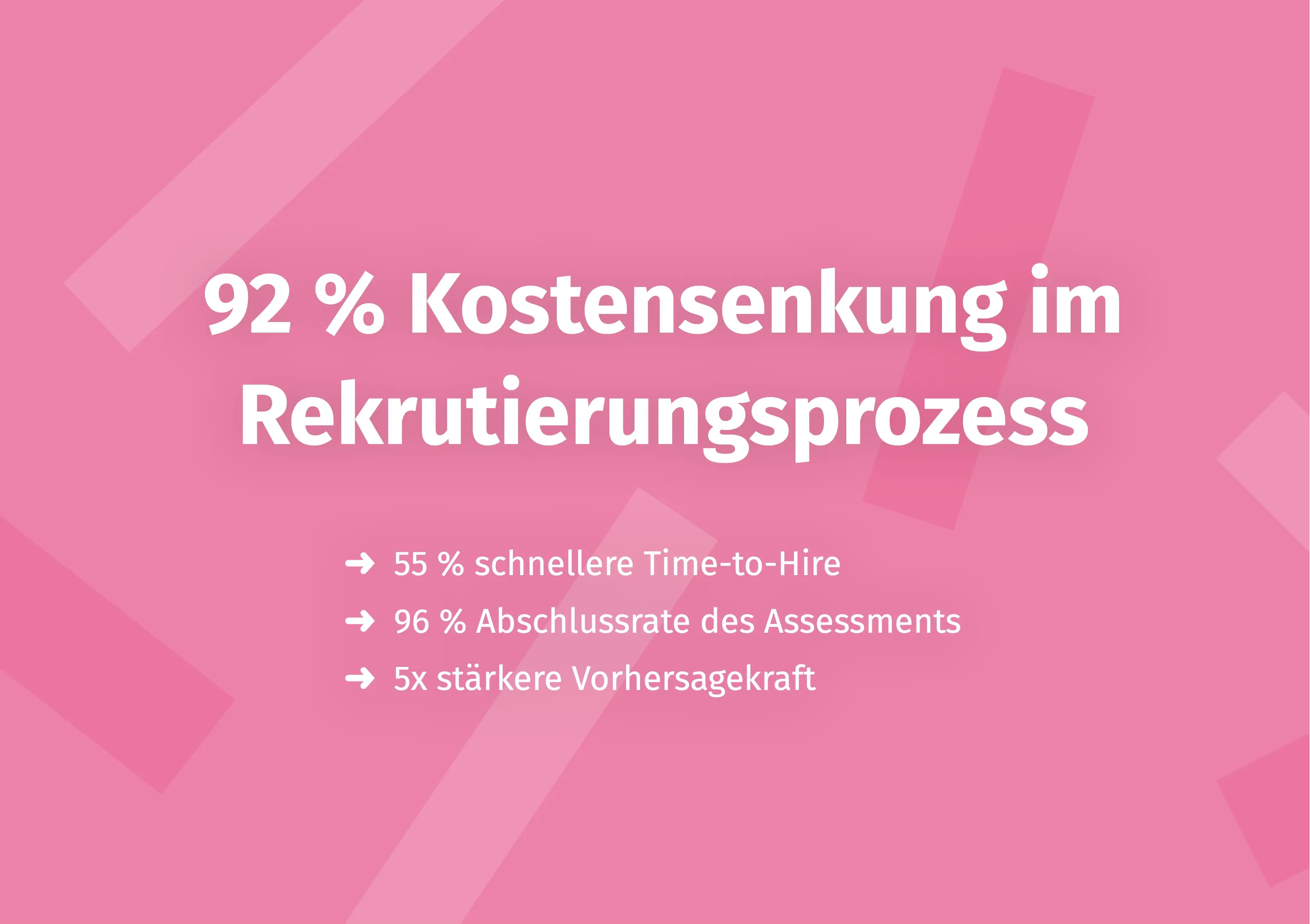
Quality-of-Hire measures the quality of new hires based on performance, retention, and cultural fit. Common formula: (Performance Score + Retention Score + Manager Satisfaction) / 3. MCI Germany achieved 5x predictive power compared to traditional methods through scientifically based aptitude diagnostics.
Source-of-Hire shows which recruiting channels deliver the best results and enables budget optimization.
Retention & Engagement KPIs
Turnover Rate shows the percentage of employees leaving the company. Calculation: (Number of Departures / Average Number of Employees) × 100. In Germany, the average is 10-15% annually. Important is the distinction between voluntary and involuntary turnover as well as the identification of "Regrettable Attrition" – the loss of high performers.
Employee Net Promoter Score (eNPS) measures employees' willingness to recommend the company (scale 0-10). Calculation: Percentage of Promoters (9-10) minus Detractors (0-6). Values above +10 are considered good, above +30 very good.
90-Day Quit Rate shows how many new employees quit within the first 90 days. A high rate indicates problems in onboarding or poor job fit.
Performance & Productivity KPIs
Productivity per Employee is often measured as revenue per employee and shows the cost-effectiveness of personnel deployment.
Absenteeism Rate records illness-related and other absences. High rates may indicate overwork or poor working climate.
Development & Diversity KPIs
Internal Promotion Rate measures the percentage of internally filled positions. A high rate signals good career opportunities and reduces recruiting costs.
Training Completion Rate shows how many employees complete offered training programs.
Diversity Metrics capture workforce diversity and help measure progress in diversity initiatives.
How Do I Select the Right KPIs?
The abundance of possible KPIs can be overwhelming. A thoughtful selection is crucial for the success of your People Analytics program.
Alignment with Business Objectives
Your KPIs should always be derived from strategic business objectives. If your company wants to grow, recruiting KPIs are particularly relevant. With a focus on cost efficiency, Cost-per-Hire and turnover costs are in the foreground. For innovation goals, engagement, training, and diversity KPIs become more important.
Apply SMART Criteria
Every KPI should meet the SMART criteria:
- Specific: Only one specific goal is measured
- Measurable: The metric can be quantified
- Achievable: The goal is desirable and motivating
- Realistic: The goal is achievable with available resources
- Time-bound: There is a clear timeframe
Less Is More
Don't try to track all possible KPIs. Focus on 5-10 core KPIs that are truly relevant. Too many metrics lead to overwhelm and diminishing utility. The rule of thumb: Better to measure few KPIs continuously and precisely than many superficially.
Quick-Start: These 5 KPIs for Beginners
If you're just starting with People Analytics, begin with these five basic KPIs:
- Time-to-Hire – Shows recruiting efficiency
- Cost-per-Hire – Enables budget planning
- Turnover Rate – Early warning system for employee retention
- eNPS – Measures employee satisfaction
- Productivity per Employee – Shows economic success
These five KPIs cover the most important HR areas and can be captured relatively easily with existing data. After 6 months, you can expand with more specific KPIs like Quality-of-Hire or diversity metrics.
People Analytics in Practice: Implementation
Implementing People Analytics requires a structured approach. Here are the most important steps:
Step 1: Create Data Foundation
Identify available data sources: payroll, vacation bookings, demographic data. An HRIS or ATS facilitates collection, but Excel suffices for getting started.
Step 2: Define KPIs
For each KPI, specify: calculation formula, data sources, collection frequency, target values, and responsible persons.
Step 3: Build Dashboards
Use visualizations with trend lines and traffic light logic (green/yellow/red). Tools like Personio, Tableau, or Power BI offer dashboard functions; Excel suffices for the start.
Step 4: Monitoring and Optimization
Establish regular reviews: weekly/monthly for operational KPIs, quarterly for strategic ones, annually for benchmark updates. Communicate results with business impact: "Turnover -5% = €200,000 savings".
Tools for Data-Driven Recruiting
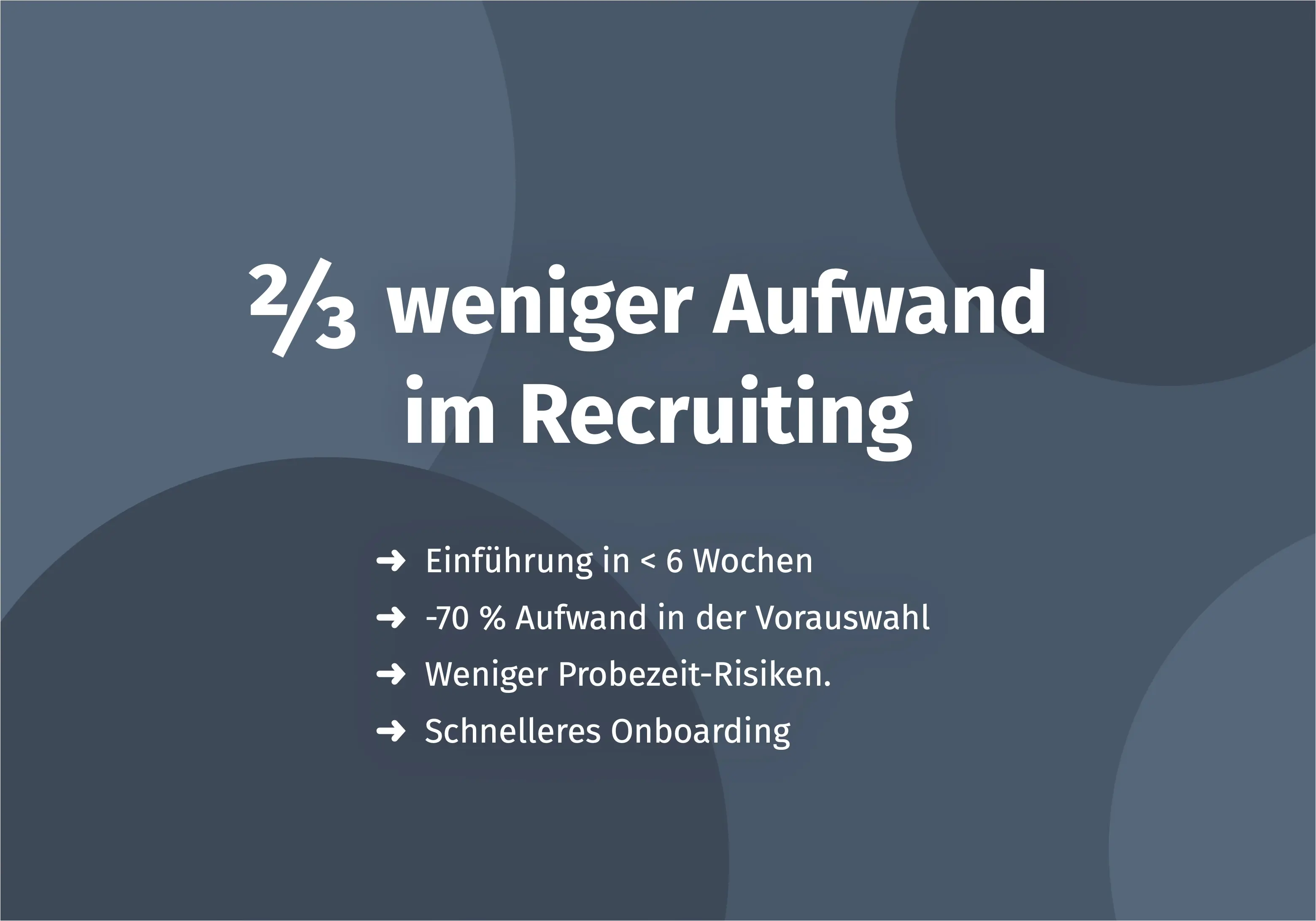
Objective measurement of recruiting KPIs is crucial for data-driven optimization. Scientifically based aptitude diagnostics platforms help measurably improve Quality-of-Hire and shorten Time-to-Hire.
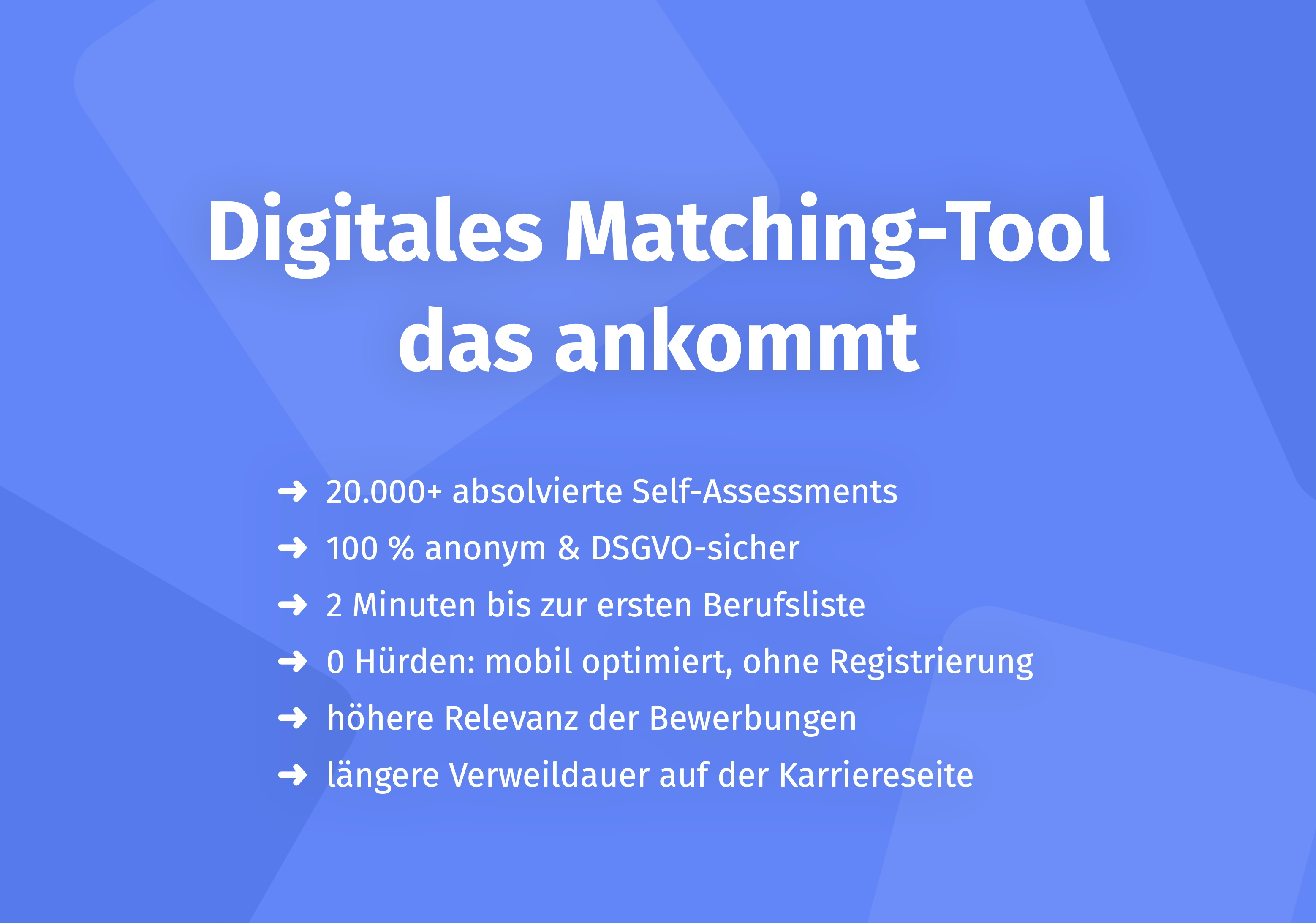
The digital platform Aivy offers game-based assessments and scientifically validated questionnaires (Free University of Berlin) that reduce unconscious bias and create objective data foundations for recruiting decisions. Objective measurement of recruiting KPIs enables data-driven process optimization. MCI Germany was able to reduce Time-to-Hire by 55% and simultaneously lower Cost-per-Hire by 92% through scientifically based aptitude diagnostics – with a 96% completion rate in the assessment. Lufthansa achieves a 96% accuracy rate with objective assessments and saves over 100 minutes of testing time per applicant.
Integration of such platforms with existing ATS systems (e.g., softgarden) enables seamless data collection and continuous monitoring of recruiting performance.
Learn more about objective aptitude diagnostics and data-driven recruiting with Aivy.
Frequently Asked Questions About People Analytics KPIs
What is the difference between metrics and KPIs?
Metrics are all measurable values. KPIs are special metrics directly linked to strategic goals. Example: Number of applications = metric. Cost-per-Hire with target "reduce costs by 20%" = KPI.
Which People Analytics KPIs should I track first?
Start with five core KPIs: Time-to-Hire, Cost-per-Hire, Turnover Rate, eNPS, and Productivity per Employee. Choose KPIs for which data already exists. Expand after 6 months.
How do I calculate Cost-per-Hire?
Formula: (Internal Costs + External Costs) / Number of Hires. Germany average: €4,700, executives €10,000-50,000. Important: Always view together with Quality-of-Hire.
What is a good turnover rate?
Germany average: 10-15% annually. Tech industry 15-20%, traditional industry 5-10%. Voluntary turnover <10% is considered good. Critical: Loss of high performers (Regrettable Attrition).
How often should I update KPIs?
Recruiting KPIs: Real-time. Turnover rate, absenteeism: monthly. eNPS, employee satisfaction: quarterly. Benchmarks: annually. Use dashboard automation.
Conclusion
People Analytics KPIs are indispensable instruments for modern, data-driven HR management. They make personnel processes transparent, enable informed decisions, and help measurably align HR strategies with business objectives. The most important KPIs – Time-to-Hire, Cost-per-Hire, Quality-of-Hire, Turnover Rate, and eNPS – should be present in every company.
The key to success lies in the thoughtful selection of relevant KPIs, a clean data foundation, and continuous monitoring. Start with 5-10 core KPIs that you consistently track, instead of trying to measure everything at once. Over time, you can expand and refine your People Analytics program.
The investment in People Analytics pays off: Companies with mature analytics programs make better personnel decisions, reduce costs, and increase employee satisfaction. In an era where talent shortage and employee retention present central challenges, data-driven HR management is no longer a nice-to-have, but a competitive advantage.
Sources
- State of the Global Workplace Report 2024. Gallup Inc., 2024. https://www.gallup.com/workplace/report.aspx
- HR-KPIs: Mit Personalkennzahlen strategische Ziele erreichen. Haufe, 2025. https://www.haufe.de/hr/magazin/hr-kpis-mit-personalkennzahlen-strategische-ziele-erreichen
- Cost per Hire – Bedeutung und Berechnung. Personalturm, 2023. https://www.personalturm.de/blog/cost-per-hire
- HR Analytics - Wichtige KPIs messen und verstehen. Agentur Jungesherz, 2024. https://www.agentur-jungesherz.de/hr-glossar/hr-analytics/
- HR KPIs 2025: Die wichtigsten Kennzahlen im Überblick. Softgarden, 2025. https://softgarden.com/de/magazin/blogartikel/hr-kpis/
- 14 HR-KPIs, die Sie im Jahr 2025 verfolgen müssen. Recruitee, 2025. https://recruitee.com/de/blog/hr-kpis
- Top Employee Engagement KPIs to Measure. Workday, 2025. https://blog.workday.com/de-de/top-employee-engagement-kpis-measure.html

Make a better pre-selection — even before the first interview
In just a few minutes, Aivy shows you which candidates really fit the role. Beyond resumes based on strengths.