You want to explore your strengths as a talent?

This way

Login

Millennial Recruiting: How to Successfully Attract Generation Y

Home
-
Lexicon
-
Millennial Recruiting: How to Successfully Attract Generation Y

The job market has fundamentally changed: companies no longer choose candidates – talent decides where they want to work. Generation Y – also known as Millennials – presents employers with new challenges. They are well-educated, digitally savvy, and have clear expectations of what work should look like.

According to the Deloitte Global Gen Z and Millennial Survey 2024, 89% of Millennials say that purpose is crucial for their job satisfaction. Even more remarkably: 44% have already rejected an employer whose values didn't align with their own. This shows that reaching Generation Y requires a fundamental shift in thinking.

In this guide, you'll learn who Millennials are, what they expect from employers, and how to design your recruiting process to attract the best talent from this generation – and keep them long-term. You'll get concrete strategies, research-backed insights, and practical checklists.

Who Are Millennials? Definition and Characteristics of Generation Y

Before adjusting your recruiting strategy, you should understand who you're actually trying to reach. Generation Y is not a homogeneous group, but there are shared experiences and values.

Definition: When Is Someone a Millennial?

Generation Y, also known as Millennials, includes people born between 1981 and 1995. The name derives from the millennium (year 2000), which they consciously experienced. This generation follows Generation X (1965-1980) and precedes Generation Z (1995-2010).

Millennials are considered the first "Digital Natives" – they grew up with the emergence of the internet, the spread of computers, and later smartphones. Unlike their parents, who had to learn technology as adults, the digital world is second nature to Millennials.

Currently, Millennials are between 30 and 44 years old. They make up approximately 35% of the workforce in Germany and increasingly hold leadership positions. This means they shape the job market not only as applicants but also as decision-makers.

The Formative Experiences of Generation Y

Every generation is shaped by certain events. For Millennials, these include:

  • Digitalization: They witnessed the internet evolve from a niche phenomenon to everyday life
  • The 2008 Financial Crisis: Many started their careers during or shortly after the economic downturn
  • Globalization: International connectivity and mobility are normal for them
  • Climate Awareness: Environmental issues gained importance during their youth
  • Terror and Uncertainty: 9/11 and subsequent crises affected their sense of security

These experiences have formed a shared value system: Millennials question authority, value flexibility, and seek meaning in what they do. At the same time, they know economic uncertainty and appreciate – despite all their willingness to change jobs – stable foundations.

Millennials vs. Generation Z: Key Differences

For successful recruiting, it's important not to confuse Millennials with the subsequent Generation Z. Although both are considered "digitally savvy," they differ significantly:

What both generations share: They expect mobile-optimized processes, fast responses, and fair treatment. These commonalities form the basis for modern recruiting.

What Millennials Expect from Employers: 7 Decisive Factors

The Kienbaum Generation Study (2023) shows: 73% of Millennials find purpose more important than a high salary. But what does that mean in practice? Here are the seven most important expectations:

1. Purpose and Meaning

Millennials want to understand why they do what they do. Simply "earning money" isn't enough. They seek employers whose mission they can support. The term Purpose describes exactly that: the overarching contribution a company makes.

A company that produces sustainable products or supports social projects appeals more to Millennials than one focused solely on profit maximization. The Deloitte Survey confirms this: 75% say that an employer's social engagement is an important factor in their job choice.

2. Flexible Work Models and Work-Life Balance

The traditional 9-to-5 office culture is outdated for many Millennials. They expect remote work options, trust-based working hours, and the ability to flexibly combine work and personal life. Work-Life Balance doesn't mean less work for them, but more autonomy over when and where they work.

According to the Deloitte Survey 2024, flexible working hours are the top criterion for employer choice – even before salary. Companies that exclusively rely on office presence lose significant attractiveness here.

3. Development Opportunities and Career Perspectives

68% of Millennials want regular feedback (Kienbaum, 2023). They don't just want to work – they want to grow. This means: clear career paths, training opportunities, and mentoring programs. A job without perspective is reason enough for many to switch.

4. Appreciative Company Culture

Millennials place great value on a positive work environment. Flat hierarchies, open communication, and team spirit matter more to them than status symbols. A toxic work atmosphere drives them away faster than any salary offer.

5. Fair Compensation and Transparent Benefits

Of course, salary plays a role – but differently than often assumed. Millennials primarily expect fairness and transparency. Non-transparent salary structures or feeling underpaid are absolute dealbreakers. When it comes to benefits, employers score with flexible options like bike leasing, training budgets, or sabbatical opportunities – not the classic company car.

6. Sustainability and Social Responsibility

According to Deloitte, 48% of Millennials have already pressured their employer to do more for climate protection. They expect companies to take responsibility – not just for profit, but for society and the environment. Corporate Social Responsibility is no longer a nice-to-have but a must-have.

7. Modern Technology and Digital Processes

As Digital Natives, Millennials expect the workplace to be modernly equipped. Outdated IT systems, cumbersome processes, or even paper applications seem like relics from another era. Modern tools and efficient workflows are self-evident to them.

Why Traditional Recruiting Methods Fail with Millennials

Many companies wonder why their applicant numbers are declining or top candidates drop out. The cause often lies in the recruiting process itself.

Long, Bureaucratic Application Processes

Millennials are used to getting things done quickly and easily. An application process that takes weeks, with endless forms and multiple interview rounds, doesn't match their expectations. They expect timely responses – those who wait too long lose the best candidates to faster competitors.

Lack of Mobile Optimization

83% of Millennials are active on social media multiple times a week – mostly via smartphone. If your career page or application form isn't mobile-optimized, you lose them at first contact. An application must be possible with just a few clicks.

Subjective Selection Processes Without Transparency

The Candidate Experience – the entire experience during the application process – plays a central role for Millennials. Subjective decisions based on "gut feeling" contradict their sense of fairness. They want to understand why they were selected or rejected.

Scientific studies confirm that unstructured interviews have significantly lower predictive validity than standardized procedures. Schmidt and Hunter (1998) showed in their meta-analysis that structured interviews achieve a validity of r=.51, while unstructured ones only reach r=.38. Objective aptitude tests perform even better at r=.54.

Poor Candidate Experience

No response after applying, impersonal standard rejections, or a non-transparent process leave a negative impression. Millennials share their experiences – on platforms like Glassdoor, but also within their network. A poor Candidate Experience damages not only current recruiting but also employer branding long-term.

The 5 Best Recruiting Channels for Millennials

Where can you best reach Millennials? The right channel selection is crucial for success.

LinkedIn: Professional Networking

LinkedIn is the central platform for Millennials for professional networking and job searching. Here you can not only post job ads but also practice active sourcing – specifically approaching suitable candidates. Important: Your company profile should be current and offer authentic insights.

Instagram and TikTok: Employer Branding Through Insights

Millennials use Instagram intensively – not just privately, but also to research employers. Show authentic insights into daily work life: team events, behind-the-scenes, employee stories. TikTok is also gaining importance, especially if you want to reach younger Millennials and Generation Z.

Specialized Job Boards

Indeed, LinkedIn Jobs, and industry-specific portals remain important channels. Focus on meaningful job postings with concrete benefits and a clear description of company culture. Google for Jobs indexes many job boards – so also optimize your career page for search engines.

Career Events and University Marketing

Personal contact remains valuable. Career fairs, university partnerships, and events offer the opportunity to approach Millennials directly and leave an authentic impression.

Employee Referrals

Millennials trust recommendations from their network. A structured referral program can generate high-quality applications. Important: Reward successful referrals and make it easy for your employees to share open positions.

The Ideal Application Process for Generation Y

What should a recruiting process look like that appeals to Millennials? Here are the key principles:

Mobile-First: Apply with Just a Few Clicks

The application must work on smartphones – without obstacles. Long forms, mandatory fields for irrelevant data, or forced uploads of formatted resumes deter applicants. Enable applications with LinkedIn profiles or one-click applications.

Fast Responses and Transparent Communication

Confirm receipt of the application immediately – automated but personally worded. Clearly communicate what the next steps look like and how long they take. Keep to the stated timeframes. Nothing frustrates more than silence or broken promises.

Objective Selection Processes Instead of Gut Feeling

Millennials expect fair processes. Structured interviews with standardized questions deliver better results than unstructured conversations and appear more professional. Even more objective are validated aptitude tests that measure competencies and potential – independent of sympathy or unconscious biases.

Cognitive biases like Affinity Bias (the tendency to favor people similar to us) or Confirmation Bias (confirming preconceptions) can unconsciously lead to poor decisions. Objective diagnostics minimize this risk.

Strengths-Based Feedback for All Applicants

Give rejected candidates constructive feedback too. This shows appreciation and leaves a positive impression – even with a rejection. Millennials value being understood and taking something away from the process.

Objective Aptitude Diagnostics: The Game Changer in Millennial Recruiting

How can you design your selection process to match Generation Y's expectations – while also enabling better decisions? The answer lies in modern aptitude diagnostics.

Why Game-Based Assessments Score with Millennials

Game-Based Assessments are playful testing procedures that measure competencies and potential in a scientifically validated way – without feeling like traditional tests. They are mobile-optimized, fun instead of stressful, and deliver objective, fair results.

For Millennials, this is attractive for several reasons:

  • Modern User Experience: The tests feel contemporary, not outdated
  • Mobile Use: No travel, no fixed appointments – flexible from your smartphone
  • Fairness: Selection is based on competencies, not CV aesthetics or sympathy
  • Strengths Orientation: Candidates learn where their potentials lie

Scientifically Validated: What Validated Tests Achieve

Not every "test" is equal. What matters is scientific validation – proof that the procedure actually measures what it's supposed to measure and enables reliable predictions.

The meta-analysis by Schmidt and Hunter (1998) showed that cognitive aptitude tests (r=.54) and structured interviews (r=.51) provide the best predictions for job success. Combining multiple valid procedures further increases accuracy.

Scientifically validated procedures also reduce Unconscious Bias – unconscious prejudices that can distort traditional selection processes. This not only meets Millennials' fairness expectations but also leads to better hiring decisions.

Case Study: How Lufthansa Achieves Success with Objective Diagnostics

Practice shows that objective aptitude diagnostics delivers measurable results. Lufthansa uses Game-Based Assessments to identify candidates – with impressive outcomes:

  • 81% satisfaction among applicants – a strong signal for positive candidate experience
  • 96% accuracy rate (correct prediction vs. in-house assessment) – high predictive validity
  • 100+ minutes saved testing time per applicant – more efficient for both sides
  • 86% completion rate in the assessment – low dropout thanks to engaging design

Susanne Berthold-Neumann from Lufthansa emphasizes: "We look at documents late because they only show a small part of the person and say little about whether someone has the competencies for future challenges."

This approach matches exactly what Millennials expect: evaluation based on potential, not paper credentials. More details in the Lufthansa success story.

How Objective Diagnostics Supports Companies in Reaching Millennials

Tools like Aivy – a scientific spin-off from Freie Universität Berlin – enable companies to align their recruiting process with Generation Y's expectations. The platform combines Game-Based Assessments with scientifically validated questionnaires and provides objective, data-driven decision-making foundations.

The benefits for Millennials:

  • Modern Experience: Playful tests instead of dry questionnaires
  • Fair Chances: Potential counts, not the perfect resume
  • Fast Process: Results in minutes, not weeks
  • Transparent Feedback: Strength profiles show where their potential lies

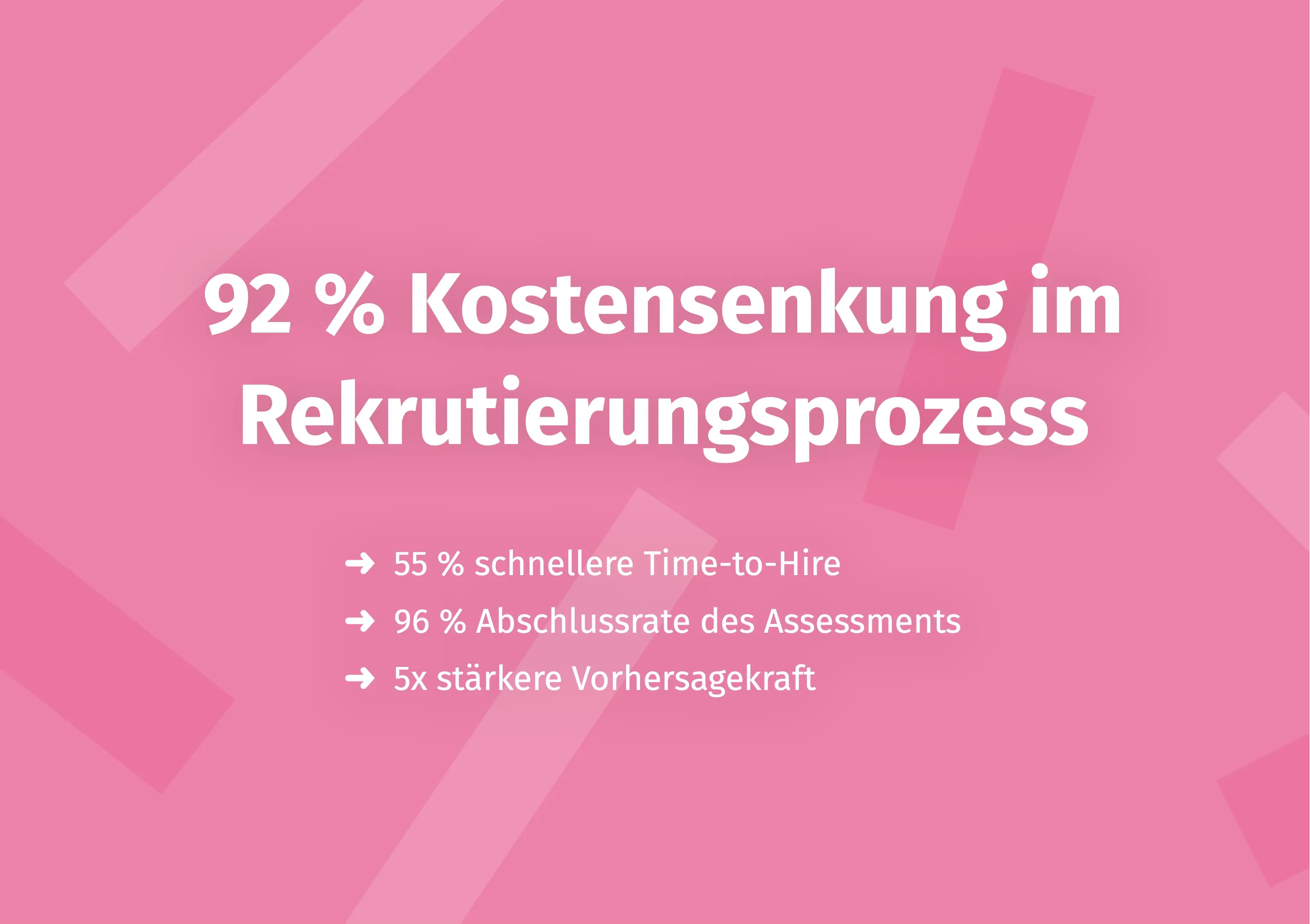
MCI Germany also achieved measurable success through objective aptitude diagnostics: 55% faster time-to-hire and 92% lower cost-per-hire. Matthias Kühne, Director People & Culture at MCI, highlights the "more objective evaluation basis" that has significantly professionalized the process.

OMR also reports positive experiences: "Aivy works. We reduce bias, gain more objectivity in hiring and strengthen diversity long-term," says Kaya Kruse, People Lead at OMR. Specifically, candidates were hired who would have been rejected based on their CV – proof that objective procedures reveal hidden potential.

Retaining Millennials Long-Term: 6 Strategies for Lower Turnover

Winning the best talent is the first step. Keeping them is the second. The Gallup "State of the Global Workplace" study (2023) shows: Only 23% of Millennials worldwide are "engaged" at work. However, high engagement leads to 21% less turnover. Here are six strategies for better retention:

Regular Feedback and Open Communication

68% of Millennials want regular feedback (Kienbaum, 2023). Annual performance reviews aren't enough. Establish a feedback culture with regular check-ins, constructive feedback, and the opportunity to give feedback themselves.

Training and Individual Development Plans

Offer concrete development opportunities: training budgets, mentoring programs, clear career paths. Millennials want to grow – if they can't do that with you, they'll look elsewhere.

Leadership at Eye Level

Command-and-control leadership doesn't work with Millennials. They expect leaders who coach rather than command, who listen and support. Flat hierarchies and participative decision-making processes are better received than rigid chains of command.

Flexible Benefits Instead of Standard Packages

Offer benefits that match their needs: remote work, sabbatical options, bike leasing, training budgets, mental health offerings. The classic company car is less attractive to many Millennials than flexibility.

Meaningful Tasks and Co-Creation

Explain the "why" behind tasks. Enable co-creation – whether in projects, processes, or company culture. Millennials don't just want to execute – they want to think along and have influence.

Diversity and Inclusion as Lived Values

Millennials pay attention to diversity – not just as lip service, but as lived practice. Fair selection processes, diverse teams, and an inclusive culture are important retention factors.

Cultural Fit – the alignment between a person's values and company culture – significantly determines long-term satisfaction and retention.

Frequently Asked Questions (FAQ)

What is Generation Y and when is someone a Millennial?
Generation Y, also known as Millennials, includes people born between 1981 and 1995. They grew up with the emergence of the internet and are considered the first "Digital Natives." The name derives from the millennium, which they consciously experienced.

Which recruiting channels do Millennials use?
Millennials primarily use LinkedIn for professional networking and job searching, social media like Instagram and TikTok for employer insights, job boards like Indeed and LinkedIn Jobs, Google for Jobs, and personal recommendations. 83% are active on social media multiple times a week.

How do I make the application process Millennial-friendly?
A Millennial-friendly process is: mobile-optimized (apply with just a few clicks), fast (timely responses, short time-to-hire), transparent (clear communication about next steps), objective (fair selection processes instead of gut feeling), and appreciative (feedback for all applicants).

What are Game-Based Assessments and why are they suitable for Millennials?
Game-Based Assessments are playful testing procedures that measure competencies and potential in a scientifically validated way. They're suitable for Millennials because they're mobile-optimized, fun instead of stressful, appear modern and innovative, and deliver objective, fair results – matching Generation Y's values.

Why do Millennials change jobs so frequently?
Millennials show high willingness to change when their values don't align with the employer, no development opportunities are offered, work-life balance isn't right, or they don't experience meaningful work. It's rarely about salary alone – according to Deloitte, 44% have already rejected an employer whose values didn't match theirs.

How can I retain Millennials long-term?
Successful retention strategies include: regular, constructive feedback, individual development opportunities and training, leadership at eye level rather than hierarchy, flexible work models, meaningful tasks with co-creation opportunities, and lived values like diversity and sustainability.

How important is Employer Branding for Millennial recruiting?
Very important: Millennials research employers intensively online before applying. They look for authentic insights into company culture, reviews on platforms like Glassdoor, social media presence, and alignment of company values with their own. 75% say social engagement is an important factor in employer choice.

What mistakes should I avoid in Millennial recruiting?
The most common mistakes are: overly long, bureaucratic application processes, lack of mobile optimization, impersonal job postings without culture insights, subjective selection processes without transparency, poor communication and feedback, and benefits that don't match their needs (e.g., company car instead of remote work).

Conclusion: 5 Quick Wins for Successful Millennial Recruiting

Winning and retaining Generation Y requires a shift in thinking – but not a revolution. Here are five quick wins you can implement immediately:

  1. Check Mobile Optimization: Test your career page and application forms on a smartphone. Does everything work smoothly?
  2. Speed Up Processes: Set a goal to respond to applications within 48 hours. Transparency about timelines builds trust.
  3. Offer Authentic Insights: Show real insights into daily work life on Instagram or LinkedIn – not staged stock photos, but real people.
  4. Introduce Objective Procedures: Use structured interviews and validated aptitude tests to make better decisions and signal fairness.
  5. Establish Feedback Culture: Give all applicants constructive feedback – and regularly gather internal feedback too.

Objective aptitude diagnostics tools like Aivy support you in achieving these goals. With Game-Based Assessments, you address Millennials at eye level – scientifically validated, mobile-optimized, and fair.

Sources

  • Deloitte (2024): Global Gen Z and Millennial Survey. deloitte.com/genzmillennialsurvey
  • Schmidt, F. L. & Hunter, J. E. (1998): The Validity and Utility of Selection Methods in Personnel Psychology. Psychological Bulletin, 124(2), 262-274.
  • Gallup (2023): State of the Global Workplace Report. gallup.com
  • Kienbaum (2023): Generation Study – Expectations of Generation Y in the Workplace.
  • Aivy Success Stories: aivy.app/erfolgsgeschichten
Home
-
lexicon
-
Millennial Recruiting: How to Successfully Attract Generation Y

The job market has fundamentally changed: companies no longer choose candidates – talent decides where they want to work. Generation Y – also known as Millennials – presents employers with new challenges. They are well-educated, digitally savvy, and have clear expectations of what work should look like.

According to the Deloitte Global Gen Z and Millennial Survey 2024, 89% of Millennials say that purpose is crucial for their job satisfaction. Even more remarkably: 44% have already rejected an employer whose values didn't align with their own. This shows that reaching Generation Y requires a fundamental shift in thinking.

In this guide, you'll learn who Millennials are, what they expect from employers, and how to design your recruiting process to attract the best talent from this generation – and keep them long-term. You'll get concrete strategies, research-backed insights, and practical checklists.

Who Are Millennials? Definition and Characteristics of Generation Y

Before adjusting your recruiting strategy, you should understand who you're actually trying to reach. Generation Y is not a homogeneous group, but there are shared experiences and values.

Definition: When Is Someone a Millennial?

Generation Y, also known as Millennials, includes people born between 1981 and 1995. The name derives from the millennium (year 2000), which they consciously experienced. This generation follows Generation X (1965-1980) and precedes Generation Z (1995-2010).

Millennials are considered the first "Digital Natives" – they grew up with the emergence of the internet, the spread of computers, and later smartphones. Unlike their parents, who had to learn technology as adults, the digital world is second nature to Millennials.

Currently, Millennials are between 30 and 44 years old. They make up approximately 35% of the workforce in Germany and increasingly hold leadership positions. This means they shape the job market not only as applicants but also as decision-makers.

The Formative Experiences of Generation Y

Every generation is shaped by certain events. For Millennials, these include:

  • Digitalization: They witnessed the internet evolve from a niche phenomenon to everyday life
  • The 2008 Financial Crisis: Many started their careers during or shortly after the economic downturn
  • Globalization: International connectivity and mobility are normal for them
  • Climate Awareness: Environmental issues gained importance during their youth
  • Terror and Uncertainty: 9/11 and subsequent crises affected their sense of security

These experiences have formed a shared value system: Millennials question authority, value flexibility, and seek meaning in what they do. At the same time, they know economic uncertainty and appreciate – despite all their willingness to change jobs – stable foundations.

Millennials vs. Generation Z: Key Differences

For successful recruiting, it's important not to confuse Millennials with the subsequent Generation Z. Although both are considered "digitally savvy," they differ significantly:

What both generations share: They expect mobile-optimized processes, fast responses, and fair treatment. These commonalities form the basis for modern recruiting.

What Millennials Expect from Employers: 7 Decisive Factors

The Kienbaum Generation Study (2023) shows: 73% of Millennials find purpose more important than a high salary. But what does that mean in practice? Here are the seven most important expectations:

1. Purpose and Meaning

Millennials want to understand why they do what they do. Simply "earning money" isn't enough. They seek employers whose mission they can support. The term Purpose describes exactly that: the overarching contribution a company makes.

A company that produces sustainable products or supports social projects appeals more to Millennials than one focused solely on profit maximization. The Deloitte Survey confirms this: 75% say that an employer's social engagement is an important factor in their job choice.

2. Flexible Work Models and Work-Life Balance

The traditional 9-to-5 office culture is outdated for many Millennials. They expect remote work options, trust-based working hours, and the ability to flexibly combine work and personal life. Work-Life Balance doesn't mean less work for them, but more autonomy over when and where they work.

According to the Deloitte Survey 2024, flexible working hours are the top criterion for employer choice – even before salary. Companies that exclusively rely on office presence lose significant attractiveness here.

3. Development Opportunities and Career Perspectives

68% of Millennials want regular feedback (Kienbaum, 2023). They don't just want to work – they want to grow. This means: clear career paths, training opportunities, and mentoring programs. A job without perspective is reason enough for many to switch.

4. Appreciative Company Culture

Millennials place great value on a positive work environment. Flat hierarchies, open communication, and team spirit matter more to them than status symbols. A toxic work atmosphere drives them away faster than any salary offer.

5. Fair Compensation and Transparent Benefits

Of course, salary plays a role – but differently than often assumed. Millennials primarily expect fairness and transparency. Non-transparent salary structures or feeling underpaid are absolute dealbreakers. When it comes to benefits, employers score with flexible options like bike leasing, training budgets, or sabbatical opportunities – not the classic company car.

6. Sustainability and Social Responsibility

According to Deloitte, 48% of Millennials have already pressured their employer to do more for climate protection. They expect companies to take responsibility – not just for profit, but for society and the environment. Corporate Social Responsibility is no longer a nice-to-have but a must-have.

7. Modern Technology and Digital Processes

As Digital Natives, Millennials expect the workplace to be modernly equipped. Outdated IT systems, cumbersome processes, or even paper applications seem like relics from another era. Modern tools and efficient workflows are self-evident to them.

Why Traditional Recruiting Methods Fail with Millennials

Many companies wonder why their applicant numbers are declining or top candidates drop out. The cause often lies in the recruiting process itself.

Long, Bureaucratic Application Processes

Millennials are used to getting things done quickly and easily. An application process that takes weeks, with endless forms and multiple interview rounds, doesn't match their expectations. They expect timely responses – those who wait too long lose the best candidates to faster competitors.

Lack of Mobile Optimization

83% of Millennials are active on social media multiple times a week – mostly via smartphone. If your career page or application form isn't mobile-optimized, you lose them at first contact. An application must be possible with just a few clicks.

Subjective Selection Processes Without Transparency

The Candidate Experience – the entire experience during the application process – plays a central role for Millennials. Subjective decisions based on "gut feeling" contradict their sense of fairness. They want to understand why they were selected or rejected.

Scientific studies confirm that unstructured interviews have significantly lower predictive validity than standardized procedures. Schmidt and Hunter (1998) showed in their meta-analysis that structured interviews achieve a validity of r=.51, while unstructured ones only reach r=.38. Objective aptitude tests perform even better at r=.54.

Poor Candidate Experience

No response after applying, impersonal standard rejections, or a non-transparent process leave a negative impression. Millennials share their experiences – on platforms like Glassdoor, but also within their network. A poor Candidate Experience damages not only current recruiting but also employer branding long-term.

The 5 Best Recruiting Channels for Millennials

Where can you best reach Millennials? The right channel selection is crucial for success.

LinkedIn: Professional Networking

LinkedIn is the central platform for Millennials for professional networking and job searching. Here you can not only post job ads but also practice active sourcing – specifically approaching suitable candidates. Important: Your company profile should be current and offer authentic insights.

Instagram and TikTok: Employer Branding Through Insights

Millennials use Instagram intensively – not just privately, but also to research employers. Show authentic insights into daily work life: team events, behind-the-scenes, employee stories. TikTok is also gaining importance, especially if you want to reach younger Millennials and Generation Z.

Specialized Job Boards

Indeed, LinkedIn Jobs, and industry-specific portals remain important channels. Focus on meaningful job postings with concrete benefits and a clear description of company culture. Google for Jobs indexes many job boards – so also optimize your career page for search engines.

Career Events and University Marketing

Personal contact remains valuable. Career fairs, university partnerships, and events offer the opportunity to approach Millennials directly and leave an authentic impression.

Employee Referrals

Millennials trust recommendations from their network. A structured referral program can generate high-quality applications. Important: Reward successful referrals and make it easy for your employees to share open positions.

The Ideal Application Process for Generation Y

What should a recruiting process look like that appeals to Millennials? Here are the key principles:

Mobile-First: Apply with Just a Few Clicks

The application must work on smartphones – without obstacles. Long forms, mandatory fields for irrelevant data, or forced uploads of formatted resumes deter applicants. Enable applications with LinkedIn profiles or one-click applications.

Fast Responses and Transparent Communication

Confirm receipt of the application immediately – automated but personally worded. Clearly communicate what the next steps look like and how long they take. Keep to the stated timeframes. Nothing frustrates more than silence or broken promises.

Objective Selection Processes Instead of Gut Feeling

Millennials expect fair processes. Structured interviews with standardized questions deliver better results than unstructured conversations and appear more professional. Even more objective are validated aptitude tests that measure competencies and potential – independent of sympathy or unconscious biases.

Cognitive biases like Affinity Bias (the tendency to favor people similar to us) or Confirmation Bias (confirming preconceptions) can unconsciously lead to poor decisions. Objective diagnostics minimize this risk.

Strengths-Based Feedback for All Applicants

Give rejected candidates constructive feedback too. This shows appreciation and leaves a positive impression – even with a rejection. Millennials value being understood and taking something away from the process.

Objective Aptitude Diagnostics: The Game Changer in Millennial Recruiting

How can you design your selection process to match Generation Y's expectations – while also enabling better decisions? The answer lies in modern aptitude diagnostics.

Why Game-Based Assessments Score with Millennials

Game-Based Assessments are playful testing procedures that measure competencies and potential in a scientifically validated way – without feeling like traditional tests. They are mobile-optimized, fun instead of stressful, and deliver objective, fair results.

For Millennials, this is attractive for several reasons:

  • Modern User Experience: The tests feel contemporary, not outdated
  • Mobile Use: No travel, no fixed appointments – flexible from your smartphone
  • Fairness: Selection is based on competencies, not CV aesthetics or sympathy
  • Strengths Orientation: Candidates learn where their potentials lie

Scientifically Validated: What Validated Tests Achieve

Not every "test" is equal. What matters is scientific validation – proof that the procedure actually measures what it's supposed to measure and enables reliable predictions.

The meta-analysis by Schmidt and Hunter (1998) showed that cognitive aptitude tests (r=.54) and structured interviews (r=.51) provide the best predictions for job success. Combining multiple valid procedures further increases accuracy.

Scientifically validated procedures also reduce Unconscious Bias – unconscious prejudices that can distort traditional selection processes. This not only meets Millennials' fairness expectations but also leads to better hiring decisions.

Case Study: How Lufthansa Achieves Success with Objective Diagnostics

Practice shows that objective aptitude diagnostics delivers measurable results. Lufthansa uses Game-Based Assessments to identify candidates – with impressive outcomes:

  • 81% satisfaction among applicants – a strong signal for positive candidate experience
  • 96% accuracy rate (correct prediction vs. in-house assessment) – high predictive validity
  • 100+ minutes saved testing time per applicant – more efficient for both sides
  • 86% completion rate in the assessment – low dropout thanks to engaging design

Susanne Berthold-Neumann from Lufthansa emphasizes: "We look at documents late because they only show a small part of the person and say little about whether someone has the competencies for future challenges."

This approach matches exactly what Millennials expect: evaluation based on potential, not paper credentials. More details in the Lufthansa success story.

How Objective Diagnostics Supports Companies in Reaching Millennials

Tools like Aivy – a scientific spin-off from Freie Universität Berlin – enable companies to align their recruiting process with Generation Y's expectations. The platform combines Game-Based Assessments with scientifically validated questionnaires and provides objective, data-driven decision-making foundations.

The benefits for Millennials:

  • Modern Experience: Playful tests instead of dry questionnaires
  • Fair Chances: Potential counts, not the perfect resume
  • Fast Process: Results in minutes, not weeks
  • Transparent Feedback: Strength profiles show where their potential lies

MCI Germany also achieved measurable success through objective aptitude diagnostics: 55% faster time-to-hire and 92% lower cost-per-hire. Matthias Kühne, Director People & Culture at MCI, highlights the "more objective evaluation basis" that has significantly professionalized the process.

OMR also reports positive experiences: "Aivy works. We reduce bias, gain more objectivity in hiring and strengthen diversity long-term," says Kaya Kruse, People Lead at OMR. Specifically, candidates were hired who would have been rejected based on their CV – proof that objective procedures reveal hidden potential.

Retaining Millennials Long-Term: 6 Strategies for Lower Turnover

Winning the best talent is the first step. Keeping them is the second. The Gallup "State of the Global Workplace" study (2023) shows: Only 23% of Millennials worldwide are "engaged" at work. However, high engagement leads to 21% less turnover. Here are six strategies for better retention:

Regular Feedback and Open Communication

68% of Millennials want regular feedback (Kienbaum, 2023). Annual performance reviews aren't enough. Establish a feedback culture with regular check-ins, constructive feedback, and the opportunity to give feedback themselves.

Training and Individual Development Plans

Offer concrete development opportunities: training budgets, mentoring programs, clear career paths. Millennials want to grow – if they can't do that with you, they'll look elsewhere.

Leadership at Eye Level

Command-and-control leadership doesn't work with Millennials. They expect leaders who coach rather than command, who listen and support. Flat hierarchies and participative decision-making processes are better received than rigid chains of command.

Flexible Benefits Instead of Standard Packages

Offer benefits that match their needs: remote work, sabbatical options, bike leasing, training budgets, mental health offerings. The classic company car is less attractive to many Millennials than flexibility.

Meaningful Tasks and Co-Creation

Explain the "why" behind tasks. Enable co-creation – whether in projects, processes, or company culture. Millennials don't just want to execute – they want to think along and have influence.

Diversity and Inclusion as Lived Values

Millennials pay attention to diversity – not just as lip service, but as lived practice. Fair selection processes, diverse teams, and an inclusive culture are important retention factors.

Cultural Fit – the alignment between a person's values and company culture – significantly determines long-term satisfaction and retention.

Frequently Asked Questions (FAQ)

What is Generation Y and when is someone a Millennial?
Generation Y, also known as Millennials, includes people born between 1981 and 1995. They grew up with the emergence of the internet and are considered the first "Digital Natives." The name derives from the millennium, which they consciously experienced.

Which recruiting channels do Millennials use?
Millennials primarily use LinkedIn for professional networking and job searching, social media like Instagram and TikTok for employer insights, job boards like Indeed and LinkedIn Jobs, Google for Jobs, and personal recommendations. 83% are active on social media multiple times a week.

How do I make the application process Millennial-friendly?
A Millennial-friendly process is: mobile-optimized (apply with just a few clicks), fast (timely responses, short time-to-hire), transparent (clear communication about next steps), objective (fair selection processes instead of gut feeling), and appreciative (feedback for all applicants).

What are Game-Based Assessments and why are they suitable for Millennials?
Game-Based Assessments are playful testing procedures that measure competencies and potential in a scientifically validated way. They're suitable for Millennials because they're mobile-optimized, fun instead of stressful, appear modern and innovative, and deliver objective, fair results – matching Generation Y's values.

Why do Millennials change jobs so frequently?
Millennials show high willingness to change when their values don't align with the employer, no development opportunities are offered, work-life balance isn't right, or they don't experience meaningful work. It's rarely about salary alone – according to Deloitte, 44% have already rejected an employer whose values didn't match theirs.

How can I retain Millennials long-term?
Successful retention strategies include: regular, constructive feedback, individual development opportunities and training, leadership at eye level rather than hierarchy, flexible work models, meaningful tasks with co-creation opportunities, and lived values like diversity and sustainability.

How important is Employer Branding for Millennial recruiting?
Very important: Millennials research employers intensively online before applying. They look for authentic insights into company culture, reviews on platforms like Glassdoor, social media presence, and alignment of company values with their own. 75% say social engagement is an important factor in employer choice.

What mistakes should I avoid in Millennial recruiting?
The most common mistakes are: overly long, bureaucratic application processes, lack of mobile optimization, impersonal job postings without culture insights, subjective selection processes without transparency, poor communication and feedback, and benefits that don't match their needs (e.g., company car instead of remote work).

Conclusion: 5 Quick Wins for Successful Millennial Recruiting

Winning and retaining Generation Y requires a shift in thinking – but not a revolution. Here are five quick wins you can implement immediately:

  1. Check Mobile Optimization: Test your career page and application forms on a smartphone. Does everything work smoothly?
  2. Speed Up Processes: Set a goal to respond to applications within 48 hours. Transparency about timelines builds trust.
  3. Offer Authentic Insights: Show real insights into daily work life on Instagram or LinkedIn – not staged stock photos, but real people.
  4. Introduce Objective Procedures: Use structured interviews and validated aptitude tests to make better decisions and signal fairness.
  5. Establish Feedback Culture: Give all applicants constructive feedback – and regularly gather internal feedback too.

Objective aptitude diagnostics tools like Aivy support you in achieving these goals. With Game-Based Assessments, you address Millennials at eye level – scientifically validated, mobile-optimized, and fair.

Sources

  • Deloitte (2024): Global Gen Z and Millennial Survey. deloitte.com/genzmillennialsurvey
  • Schmidt, F. L. & Hunter, J. E. (1998): The Validity and Utility of Selection Methods in Personnel Psychology. Psychological Bulletin, 124(2), 262-274.
  • Gallup (2023): State of the Global Workplace Report. gallup.com
  • Kienbaum (2023): Generation Study – Expectations of Generation Y in the Workplace.
  • Aivy Success Stories: aivy.app/erfolgsgeschichten

Heading 1

Heading 2

Heading 3

Heading 4

Heading 5
Heading 6

Lorem ipsum dolor sit amet, consectetur adipiscing elit, sed do eiusmod tempor incididunt ut laboratories et dolore magna aliqua. Ut Enim ad Minim Veniam, Quis Nostrud Exercitation Ullamco Laboris Nisi ut Aliquip ex ea Commodo Consequat. Duis aute irure dolor in reprehenderite in voluptate velit eat cillum dolore eu fugiate nulla pariature.

Block quote

Ordered list

  1. Item 1
  2. Item 2
  3. Item 3

Unordered list

  • Item A
  • Item B
  • Item C

Text link

Bold text

Emphasis

Superscript

Subscript

Heading 1

Heading 2

Heading 3

Heading 4

Heading 5
Heading 6

Lorem ipsum dolor sit amet, consectetur adipiscing elit, sed do eiusmod tempor incididunt ut laboratories et dolore magna aliqua. Ut Enim ad Minim Veniam, Quis Nostrud Exercitation Ullamco Laboris Nisi ut Aliquip ex ea Commodo Consequat. Duis aute irure dolor in reprehenderite in voluptate velit eat cillum dolore eu fugiate nulla pariature.

Block quote

Ordered list

  1. Item 1
  2. Item 2
  3. Item 3

Unordered list

  • Item A
  • Item B
  • Item C

Text link

Bold text

Emphasis

Superscript

Subscript

Florian Dyballa

CEO, Co-Founder

About Florian

  • Founder & CEO of Aivy — develops innovative ways of personnel diagnostics and is one of the top 10 HR tech founders in Germany (business punk)
  • More than 500,000 digital aptitude tests successfully used by more than 100 companies such as Lufthansa, Würth and Hermes
  • Three times honored with the HR Innovation Award and regularly featured in leading business media (WirtschaftsWoche, Handelsblatt and FAZ)
  • As a business psychologist and digital expert, combines well-founded tests with AI for fair opportunities in personnel selection
  • Shares expertise as a sought-after thought leader in the HR tech industry — in podcasts, media, and at key industry events
  • Actively shapes the future of the working world — by combining science and technology for better and fairer personnel decisions
success stories

You can expect these results

Discover what successes other companies are achieving by using Aivy. Be inspired and do the same as they do.

Many innovative employers already rely on Aivy

Say that #HeRoes

“Through the very high response rate Persuade and retain We our trainees early in the application process. ”

Tamara Molitor
Training manager at Würth
Tamara Molitor

“That Strengths profile reflects 1:1 our experience in a personal conversation. ”

Wolfgang Böhm
Training manager at DIEHL
Wolfgang Böhm Portrait

“Through objective criteria, we promote equal opportunities and Diversity in recruiting. ”

Marie-Jo Goldmann
Head of HR at Nucao
Marie Jo Goldmann Portrait

Aivy is the bestWhat I've come across so far in the German diagnostics start-up sector. ”

Carl-Christoph Fellinger
Strategic Talent Acquisition at Beiersdorf
Christoph Feillinger Portrait

“Selection process which Make fun. ”

Anna Miels
Learning & Development Manager at apoproject
Anna Miels Portrait

“Applicants find out for which position they have the suitable competencies bring along. ”

Jürgen Muthig
Head of Vocational Training at Fresenius
Jürgen Muthig Fresenius Portrait

“Get to know hidden potential and Develop applicants in a targeted manner. ”

Christian Schütz
HR manager at KU64
Christian Schuetz

Saves time and is a lot of fun doing daily work. ”

Matthias Kühne
Director People & Culture at MCI Germany
Matthias Kühne

Engaging candidate experience through communication on equal terms. ”

Theresa Schröder
Head of HR at Horn & Bauer
Theresa Schröder

“Very solid, scientifically based, innovative even from a candidate's point of view and All in all, simply well thought-out. ”

Dr. Kevin-Lim Jungbauer
Recruiting and HR Diagnostics Expert at Beiersdorf
Kevin Jungbauer
YOUR assistant FOR TALENT ASSESSMENT

Try it for free

Become a HeRo 🦸 and understand candidate fit - even before the first job interview...