
The talent shortage is no longer an abstract problem—it's a daily reality in HR departments worldwide. Traditional job postings yield fewer qualified applications, while the best talent often isn't actively looking for work. This is exactly where LinkedIn Recruiting comes in: With over 1 billion members globally, the business network provides access to a massive pool of professionals—including those you would never reach through traditional channels.
However, LinkedIn Recruiting is more than just posting job ads. It requires a well-thought-out strategy, the right tools, and an understanding of how to approach candidates convincingly. At the same time, research shows that LinkedIn profiles alone are not a valid basis for hiring decisions. The combination of smart sourcing and objective talent assessment leads to significantly better results.
In this guide, you'll learn how LinkedIn Recruiting works, which tools you really need, how to reach passive candidates—and why the profile is just the beginning.
What Is LinkedIn Recruiting?
LinkedIn Recruiting refers to the systematic use of the professional network LinkedIn for talent acquisition. It encompasses three core pillars: Active Sourcing (proactively searching for and directly approaching candidates), posting job advertisements, and strategically building your employer brand.
Unlike traditional recruiting, where companies wait for incoming applications, LinkedIn enables a proactive approach. Recruiters can filter specifically by qualifications, experience, and location, and directly contact promising talent—regardless of whether they're actively job hunting.
LinkedIn by the Numbers: Why the Network Matters
The relevance of LinkedIn for recruiting is reflected in impressive statistics:
- Over 1 billion members worldwide (as of 2025)
- 22+ million members in the DACH region alone
- 70% of professionals aren't actively job hunting but are open to new opportunities
- 87% of recruiters use LinkedIn for talent sourcing
- 59 million companies have a LinkedIn presence
These numbers make it clear: Anyone who doesn't integrate LinkedIn into their recruiting strategy is missing out on an enormous talent pool.
Difference from Traditional Recruiting
| Traditional Recruiting | LinkedIn Recruiting |
|---|---|
| Reactive: Waiting for applications | Proactive: Active candidate search |
| Reaches only active job seekers | Reaches passive candidates too |
| Limited information upfront | Detailed profile information |
| High scatter loss | Targeted filtering possible |
| Little interaction before application | Direct dialogue possible |
Benefits of LinkedIn Recruiting
LinkedIn offers decisive advantages over traditional recruiting channels that can make the difference between a successful and unsuccessful hire.
Access to Passive Candidates
LinkedIn's greatest advantage lies in providing access to passive candidates—professionals who aren't actively looking for a new job but would be open to attractive opportunities. This group makes up approximately 70% of the entire talent market and is virtually unreachable through traditional job boards.
Passive candidates are often particularly qualified: They're successful in their current jobs and have no pressure to quickly find a new position. That's exactly what makes them so valuable to companies—and LinkedIn is the best channel to reach them.
Targeted Search by Qualifications
LinkedIn enables precise filtering by:
- Job title and function (current and previous)
- Industry and company size
- Qualifications and skills
- Location and willingness to relocate
- Years of experience
- Education and certifications
With Boolean Search, these criteria can be combined even more precisely to find exactly the profiles that match the job requirements.
Employer Branding and Visibility
LinkedIn isn't just a recruiting channel—it's also the most important platform for employer branding. Through regular posts, insights into company culture, and employee stories, companies build a strong employer brand. This pays off twice: Better candidates apply proactively, and response rates to direct outreach increase.
LinkedIn Recruiting Tools Overview
LinkedIn offers various tools for talent acquisition—from free basic functions to premium solutions for professional recruiting.
Free LinkedIn Features
LinkedIn can be used for recruiting even without a budget:
- Advanced Search: Filter by location, industry, current company
- Company Page: Presentation as an employer, job postings
- Leverage Your Network: Engage employees as brand ambassadors
- Groups: Professional communities for sourcing and employer branding
- Free Job Posting: One active posting (max. 21 days)
Limitations: Limited search results, no InMails, no advanced filters.
LinkedIn Recruiter vs. Recruiter Lite
For professional active sourcing, LinkedIn offers two premium options:
| Feature | Recruiter Lite | LinkedIn Recruiter |
|---|---|---|
| Price | ~$170/month | ~$1,000+/month |
| InMails/Month | 30 | 150 |
| Search Filters | Basic | 40+ advanced filters |
| Profile Access | 3rd degree | Entire network |
| Team Features | No | Yes |
| CRM Integration | No | Yes |
| Talent Insights | No | Yes |
| Saved Searches | Limited | Unlimited |
Recommendation: For occasional recruiting, Recruiter Lite is sufficient. Those who regularly fill multiple positions or work in teams will benefit from the full LinkedIn Recruiter.
LinkedIn Jobs and Job Postings
In addition to active sourcing, LinkedIn allows posting job advertisements:
- Free Posting: One active posting, max. 21 days
- Sponsored Postings: Starting at ~$5/day, higher visibility
- Job Slots: For companies with many open positions
Job postings on LinkedIn reach both active job seekers and passive candidates who have set their profile to "Open to Work."
LinkedIn Recruiting Strategy: Step by Step
Successful LinkedIn Recruiting requires more than sporadic searches. A well-thought-out strategy maximizes results and saves time in the long run.
Optimize Your Company Page
Before approaching candidates, your company page should be compelling. Candidates research companies before responding to messages—an incomplete page is off-putting.
Company Page Checklist:
- Complete company description
- Current logo and cover image
- Regular posts (at least 2x per week)
- Employee stories and insights
- Open positions linked
- Company culture and benefits visible
- Career page linked
Use Boolean Search Effectively
Boolean Search is the most powerful tool for precise sourcing. It uses logical operators to specifically narrow or expand search results.
Important Operators:
OperatorFunctionExampleANDBoth terms must appearMarketing AND ManagerORAt least one termDeveloper OR EngineerNOTExclude termManager NOT Junior" "Exact phrase"Product Manager"( )Grouping(Developer OR Engineer) AND Python
Example Search String:
("Software Engineer" OR "Software Developer" OR Programmer)
AND (Java OR Python)
NOT Junior
NOT Freelancer
Tip: Test different spellings (Senior-Developer, Senior Developer, Sr. Developer), as LinkedIn doesn't automatically recognize these variations.
Approach Candidates Convincingly
The first message determines success or failure. Generic mass messages are ignored—personalization is key.
Best Practices for InMails:
- Personalize: Reference specific profile details (project, article, certification)
- Keep it short: Maximum 100 words, get to the point
- Offer value: What's in it for the candidate?
- Ask a question: Open a dialogue, not a monologue
- Avoid job titles in subject lines: "Exciting opportunity" seems generic
- Be authentic: No HR-speak, show genuine interest
Example of a Good InMail:
Hi [Name],
Your post about [topic] impressed me—especially the point about [detail]. At [Company], we're working on similar challenges and looking for someone with exactly this perspective.
Would you be interested in a brief chat—completely non-binding?
Best regards
Build a Talent Pool
Not every candidate is immediately available—but maybe in six months. A systematic talent pool ensures you don't lose promising contacts.
How to Build a Talent Pool:
- Categorize: By function, experience level, availability
- Maintain contact: Occasional messages, share relevant content
- Document: Notes on conversations, interests, salary expectations
- Activate: Approach specifically when a suitable position opens
A well-maintained talent pool significantly shortens time-to-hire for future vacancies.
Challenges in LinkedIn Recruiting
Despite all its advantages, LinkedIn Recruiting also presents hurdles that you should know about and address.
Low Response Rates
The average response rate to InMails is around 10-25%—meaning three out of four messages go unanswered. The reasons are varied: overflowing inboxes, generic messages, lack of interest.
Countermeasures:
- Increase personalization (see above)
- Test subject lines
- Optimize timing (Tuesday to Thursday, 9-11 AM)
- Send follow-ups (maximum 1-2)
The Limits of Profile Evaluation
Here lies a fundamental problem with LinkedIn Recruiting: Profiles can be deceiving. An impressive resume and professional photo say little about whether someone actually has the competencies that are crucial for the job.
Research clearly confirms this: A meta-analysis by Van Iddekinge et al. (2016) examined the predictive validity of social media profiles for job performance and came to a sobering result—the correlation was only r=0.12, which corresponds to practically no predictive power.
For comparison: The classic study by Schmidt and Hunter (1998) on the validity of selection methods shows that even the resume has only a correlation of r=0.18 with later job performance. Structured interviews achieve r=0.51, cognitive ability tests even r=0.51-0.65.
The Problem: Recruiters often make far-reaching preliminary decisions based on LinkedIn profiles—even though these profiles provide hardly any valid information about actual potential.
Unconscious Bias in Sourcing
LinkedIn profiles contain information that can trigger unconscious bias: profile photos, names, universities attended, former employers. Research shows that these factors strongly influence hiring decisions—often to the disadvantage of qualified candidates.
The groundbreaking study by Bertrand and Mullainathan (2004) demonstrated that applicants with typically "white" names like Emily or Greg received 50% more callbacks than candidates with African American names—with identical qualifications. Similar bias effects occur with photos, gender, and age.
In LinkedIn sourcing, these biases are particularly strong because recruiters decide within seconds which profiles to look at more closely—a situation where unconscious prejudices dominate.
From Profile to Potential: Objective Candidate Selection
The challenges of LinkedIn Recruiting show: Sourcing is just the first step. For well-founded hiring decisions, additional, objective methods are needed.
Why Profiles Aren't Enough
LinkedIn profiles show what candidates want to report about themselves—not what they can actually do. They capture:
- Past: Previous positions, projects, education
- Self-presentation: Consciously curated information
- Formal qualifications: Degrees, certificates
What they don't show:
- Actual competencies: How well does someone really master a skill?
- Potential: Can the person grow in a new role?
- Cultural fit: Do values and work style match the company?
- Soft skills: How does the person communicate, lead, collaborate?
For these dimensions, you need scientifically validated talent assessment.
Scientifically Validated Talent Assessment as a Complement
Objective talent assessment supplements LinkedIn sourcing with a well-founded evaluation layer. Scientifically validated methods are used to measure competencies, personality traits, and potential—independent of resume and profile picture.
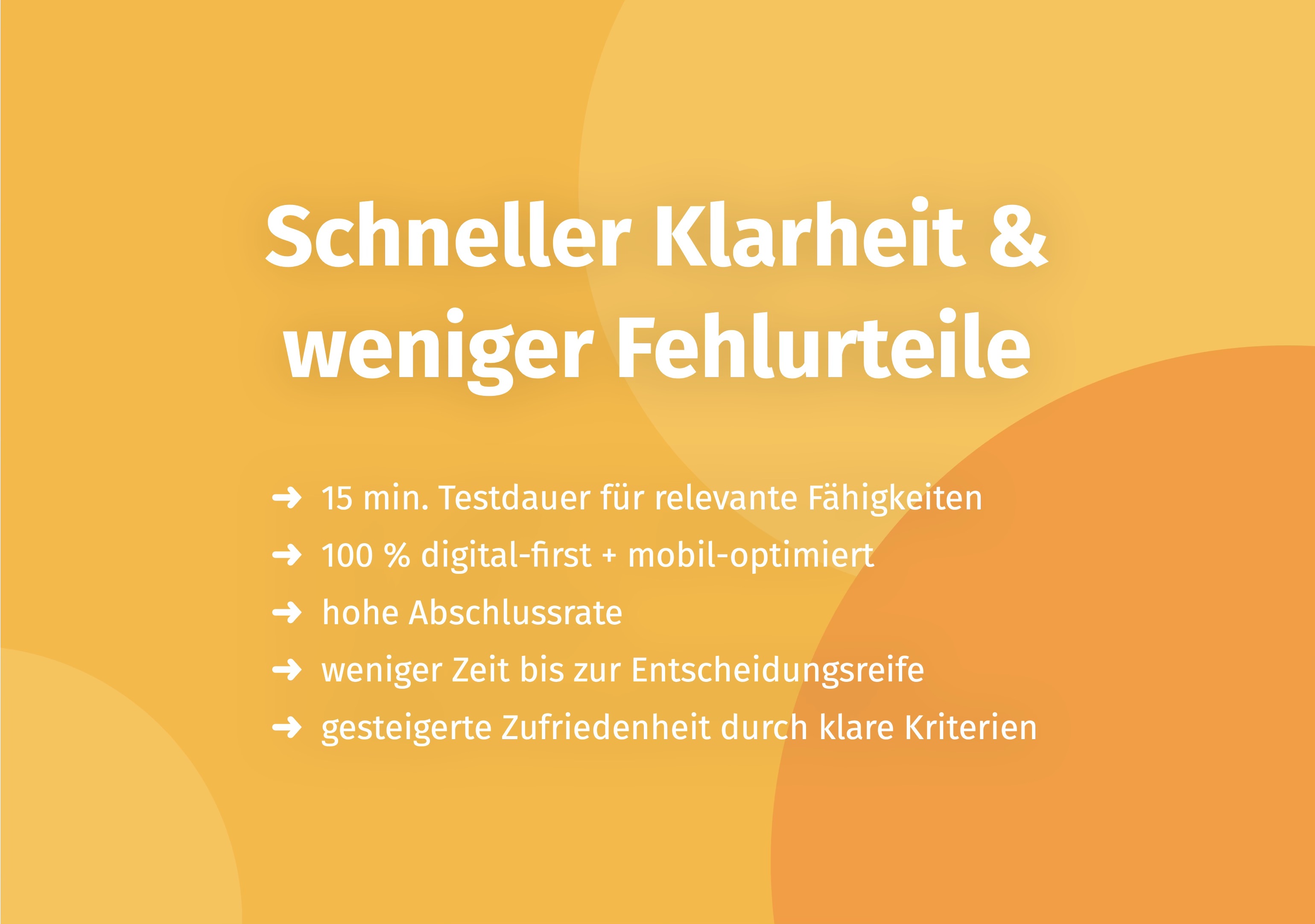
Game-Based Assessments are a modern approach that combines classic psychometric tests with gamified elements. Tools like Aivy use this method to capture cognitive abilities, problem-solving strategies, and behavioral tendencies—with a significantly better candidate experience than traditional tests.
The advantage: Results are based on objective behavior, not self-reporting or subjective profile evaluation. This reduces bias and significantly increases predictive validity for job success.
Practical Example: Combining LinkedIn + Objective Assessment
The combination of LinkedIn sourcing and scientific talent assessment demonstrably leads to better results. Several companies report significant improvements:
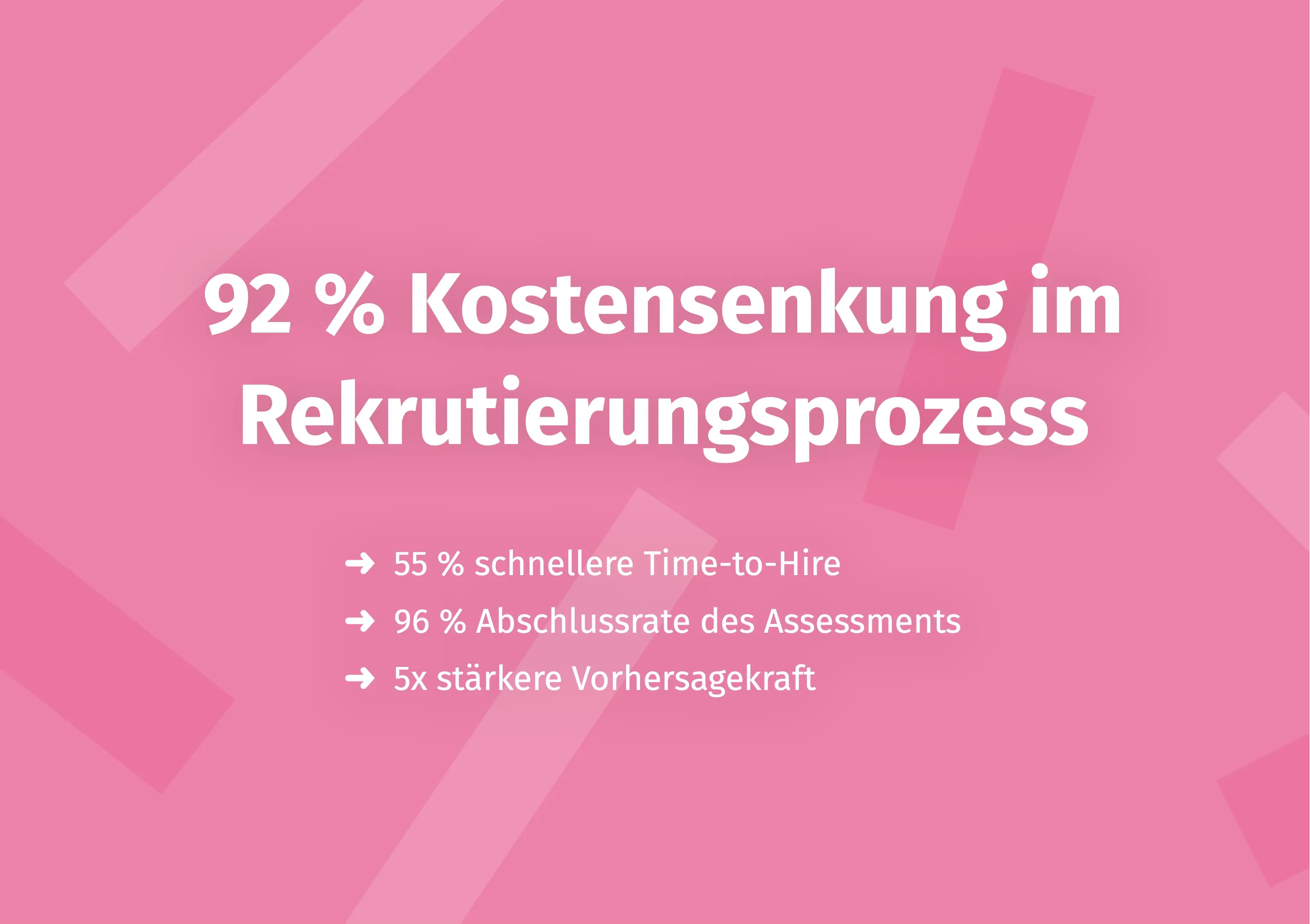
MCI Germany was able to achieve 55% faster time-to-hire and 92% lower cost-per-hire by integrating objective assessments after sourcing. The completion rate in the assessment was an impressive 96%. Matthias Kühne, Director People & Culture at MCI, summarizes: "With Aivy, we have digitized another process step in talent acquisition and significantly professionalized it through a more objective evaluation basis."
At OMR, the use of objective diagnostics led to concrete bias reduction: Candidates were hired who would have been rejected based on their CV. Kaya Kruse, People Lead at OMR, reports: "Aivy works. We reduce bias, gain more objectivity in hiring, and strengthen diversity in the long term."
Callways confirms the limits of pure profile evaluation. Co-CEO Achim Reinhardt puts it succinctly: "Resumes and references say little about future performance. With Aivy, we see what technology can really achieve."
These examples show: LinkedIn is excellently suited for finding and approaching talent. However, for well-founded evaluation, additional objective methods are needed.
LinkedIn Recruiting KPIs and Success Measurement
Without measurement, no optimization. These metrics help you evaluate the success of your LinkedIn Recruiting activities:
Sourcing KPIs:
- Response Rate: Percentage of candidates who respond to InMails
- Qualified Responses: Percentage of positive/interested responses
- Conversion Rate: From outreach to application to interview to hire
Efficiency KPIs:
- Time-to-Fill: Time from job posting to hire
- Cost-per-Hire: Total costs per successful hire
- Source-of-Hire: Percentage of hires through LinkedIn
Quality KPIs:
- Quality-of-Hire: Performance and retention of hired individuals
- Hiring Manager Satisfaction: Satisfaction of hiring departments
- Candidate Experience Score: Feedback from applicants
Tip: Track these KPIs regularly and compare them with other channels. This helps you determine whether the investment in LinkedIn Recruiting is worthwhile.
Frequently Asked Questions (FAQ)
What Is LinkedIn Recruiting?
LinkedIn Recruiting refers to using the professional network LinkedIn for talent acquisition. It includes active sourcing (proactive candidate search), posting job ads, and building the employer brand.
How Much Does LinkedIn Recruiting Cost?
Costs vary: Basic functions are free, LinkedIn Recruiter Lite costs around $170/month, the full LinkedIn Recruiter starts at around $1,000/month. Job postings start at around $5/day.
How Do I Find Passive Candidates on LinkedIn?
Use the advanced search with Boolean operators, filter by qualifications, experience, and location. Look for "Open to Work" signals and analyze career trajectories for signs of willingness to change.
How Do I Improve My InMail Response Rate?
Personalize every message, reference the profile, ask a specific question, keep the message short (under 100 words), and offer real value instead of just job offers.
What's the Difference Between LinkedIn Recruiter and Recruiter Lite?
Recruiter Lite offers 30 InMails/month and basic search filters. The full version offers 150 InMails, advanced filters, team features, Talent Insights, and CRM integration.
How Do I Know If a Candidate Really Fits?
LinkedIn profiles only show a snapshot. For objective evaluation, combining sourcing with talent assessment is recommended—e.g., Game-Based Assessments that measure competencies rather than credentials.
How Do I Avoid Bias in LinkedIn Recruiting?
Define clear, competency-based criteria before searching, use structured evaluation forms, hide photos when possible, and supplement with objective assessments.
Is LinkedIn Recruiting Also Useful for SMEs?
Yes, SMEs especially benefit since they're often less visible through traditional channels. With free features and targeted outreach, even small companies can reach top talent.
Summary: Best Practices for Successful LinkedIn Recruiting
LinkedIn is an indispensable channel for modern recruiting—but not a cure-all. The key takeaways:
For Successful LinkedIn Sourcing:
- Optimize your company page as the foundation
- Use Boolean Search for precise results
- Personalize every message consistently
- Build a systematic talent pool
- Measure and optimize continuously
For Better Hiring Decisions:
- Acknowledge the limits of profile evaluation
- Supplement sourcing with objective talent assessment
- Reduce unconscious bias through structured methods
- Combine reach (LinkedIn) with validity (assessments)
Companies with the best recruiting results have understood: LinkedIn is the ideal channel for finding and approaching talent. But the profile is just the beginning—for well-founded decisions, you need objective methods that show what candidates can really do.
Sources
- Bertrand, M. & Mullainathan, S. (2004). Are Emily and Greg More Employable than Lakisha and Jamal? A Field Experiment on Labor Market Discrimination. American Economic Review, 94(4), 991-1013.
- Schmidt, F. L. & Hunter, J. E. (1998). The Validity and Utility of Selection Methods in Personnel Psychology. Psychological Bulletin, 124(2), 262-274.
- Van Iddekinge, C. H. et al. (2016). Social Media for Selection? Validity and Adverse Impact Potential of a Facebook-Based Assessment. Journal of Management, 42(7), 1811-1835.
- LinkedIn (2025). LinkedIn Talent Solutions. https://business.linkedin.com/talent-solutions
- MCI Germany Case Study: https://www.aivy.app/en/success-stories/mci-deutschland-gmbh

Make a better pre-selection — even before the first interview
In just a few minutes, Aivy shows you which candidates really fit the role. Beyond resumes based on strengths.