
You're sitting in a job interview, asking your usual questions—and at the end, you still only have a vague gut feeling. Sound familiar? You're not alone. Many hiring managers struggle with this exact problem: they conduct interviews but gain no real insights into whether candidates are actually right for the job.
Yet science has shown for decades that there's a better way. The meta-analysis by Schmidt and Hunter (1998), which synthesized 85 years of personnel selection research, reaches a clear conclusion: structured interviews with standardized questions have a validity of r=.51—unstructured "chat-style" interviews only r=.38. In other words: with the right questions and a clear structure, you'll make significantly better hiring decisions.
In this guide, you'll learn which questions to ask in job interviews, how to build a structured interview process, and how to evaluate answers objectively. We'll also show you why interviews alone aren't enough—and how combining them with objective assessments maximizes your hiring accuracy.
Why Asking the Right Interview Questions Matters
A job interview is more than small talk with a resume review. It's your chance to find out whether someone is truly right for the role—professionally and personally. But here's the problem: most interviews are so unstructured that they have barely more predictive power than flipping a coin.
What Interviews Can Actually Predict (And What They Can't)
Professor Uwe Peter Kanning from Osnabrück University of Applied Sciences has studied the reality in German HR departments. His findings are sobering: unstructured job interviews have only about 4% predictive validity for later job success. That means if you filled your positions by drawing lots, you'd barely be worse off.
Why is this? In unstructured conversations, cognitive biases dominate perception. The Halo Effect makes us conclude from one positive trait (likeable demeanor, prestigious university) that all other characteristics are equally positive. Affinity Bias leads us to prefer people who are similar to us—same hobbies, same degree, same communication style. And Confirmation Bias ensures we spend the rest of the interview looking only for confirmation of our first impression.
The Scientific Evidence: Structured vs. Unstructured Interviews
The good news: there's a way out. Research clearly shows that structured interviews deliver significantly better results. A recent meta-analysis by Sackett and colleagues (2022) confirms: structured interviews are the selection instrument with the highest average validity.
| Selection Method | Validity (r) | Predictive Power |
|---|---|---|
| Unstructured Interview | .38 | Low |
| Structured Interview | .51 | Medium-high |
| Structured Interview + Cognitive Test | .63 | High |
The numbers speak for themselves: structured interviews have 35% higher predictive validity. When you combine them with a valid aptitude test, you achieve the highest accuracy of any known selection method.
Structured Interviews: The Science-Backed Approach
A structured interview isn't simply a conversation with a list of questions. It follows clear principles that together ensure objectivity and comparability.
What Makes an Interview "Structured"?
A structured interview meets three criteria:
- Standardized questions: All candidates are asked the same questions in the same order.
- Defined evaluation criteria: For each question, there are pre-established criteria for evaluating answers.
- Systematic scoring: Evaluations follow a uniform scheme, ideally using behaviorally anchored rating scales.
The difference from unstructured interviews is fundamental: instead of "Tell me about yourself," you ask "Describe a situation where you successfully completed a project under time pressure. How did you approach it?" Instead of gut feeling, you use a scorecard with clear criteria.
The 4 Levels of Structure According to Huffcutt
Research distinguishes four levels of structuring (Huffcutt et al., 2001):
Level 1 (no structure): No predetermined questions, no evaluation criteria. The interviewer asks whatever comes to mind. Validity: very low.
Level 2 (low structure): A rough topic list exists, but specific questions vary. Simple ranking of candidates (e.g., "good/average/poor").
Level 3 (high structure): Fixed question catalog, but follow-up questions are allowed. Evaluation uses standardized scales with defined anchor points. This is the optimal level—validity increases up to this point, then plateaus.
Level 4 (complete structure): All questions are exactly prescribed, follow-ups are restricted. Highest standardization, but less flexibility and often perceived as impersonal.
The practical recommendation: aim for Level 3. You have a fixed question catalog but can probe flexibly. Evaluation uses behaviorally anchored rating scales.
Why Only 3% of Companies Conduct Truly Structured Interviews
Professor Kanning's research (2016) provides concerning figures about practice in companies:
- 60% have an interview guide
- Less than 20% make binding content specifications
- Only about 10% have a fixed question catalog
- Just 3% assign points in advance for possible answers
This means: the vast majority of companies leave enormous potential for better hiring decisions untapped. The methods are known, the research is clear—but implementation is lacking.
The Best Questions for Your Job Interview
Now let's get concrete: which questions should you ask to truly learn something about your candidates? We distinguish between different question types, each providing different information.
Behavioral Questions (STAR Method)
Behavioral questions are the gold standard in structured interviews. They ask about concrete past behavior—because past behavior is the best predictor of future behavior.
The STAR Method gives you a framework for these questions:
- Situation: What situation was the person in?
- Task: What was their task?
- Action: What did they specifically do?
- Result: What was the outcome?
Example questions:
- "Describe a situation where you had to work with a difficult team member. What was the challenge, how did you handle it, and what was the result?"
- "Tell me about a project that didn't go according to plan. How did you respond?"
- "Give me an example of a mistake you made. How did you handle it?"
If the answer is incomplete, probe: "What exactly did you personally do?" or "How did you implement that specifically?"
Situational Questions (Hypothetical Behavior)
Situational questions present a hypothetical scenario and ask about the response. They're particularly useful for entry-level candidates without relevant experience.
Example questions:
- "Imagine a colleague complains to you about a management decision. How would you react?"
- "An important customer threatens to cancel because a delivery is late. How do you proceed?"
- "You notice that a team member is performing significantly worse than others. How do you address it?"
Situational questions have slightly lower validity than behavioral questions but are a good complement.
Questions About Motivation and Cultural Fit
These questions help you understand what drives the candidate and whether they fit your company culture. Cultural fit is an important factor for long-term satisfaction and retention.
Example questions:
- "What motivates you to come to work in the morning?"
- "What kind of work environment do you feel most comfortable in?"
- "What was the best workday you've ever had? Why?"
- "What would frustrate you in this job?"
Questions About Soft Skills and Competencies
Soft skills like communication ability, problem-solving competence, or resilience can't be read from a resume. Targeted questions are necessary.
Teamwork:
- "Describe your role in a successful team project. What was your specific contribution?"
Conflict resolution:
- "Tell me about a disagreement with a supervisor. How did you handle it?"
Problem-solving:
- "Describe a problem you solved in an unusual way."
Resilience:
- "When have you stepped outside your comfort zone professionally? How did you feel?"
Questions for Entry-Level Candidates and Apprentices
Entry-level candidates lack work experience—but not relevant experiences. Ask about situations from studies, internships, volunteer work, or part-time jobs.
Example questions:
- "Describe a group project at university that didn't go smoothly. How did you contribute to the solution?"
- "When did you show initiative in a part-time job or internship?"
- "Tell me about a difficult exam period. How did you organize yourself?"
Questions You Cannot Ask in Job Interviews
Employment discrimination laws protect candidates from discrimination. Certain questions are prohibited and can lead to legal liability.
Prohibited Questions Under Employment Law
Questions not permitted about:
- Family planning and pregnancy: "Are you planning to have children?"—Absolutely off-limits.
- Religious affiliation: Except for religious organizations where relevant.
- Political views: No questions about party membership or political opinions.
- Ethnic origin: No questions about birthplace or family origin.
- Disability: Only permissible if the disability is relevant to the job.
- Union membership: Also prohibited.
What If a Prohibited Question Was Asked?
If a prohibited question was asked in an interview—perhaps by an inexperienced hiring manager—candidates have the right to give an untruthful answer without consequences. For you as an employer, it's important to train all interviewers accordingly and establish clear guidelines.
How to Evaluate Answers Objectively
The best question is useless if you can't systematically evaluate the answer. This is where behaviorally anchored rating scales and scorecards come in.
Using Behaviorally Anchored Rating Scales (BARS)
A Behaviorally Anchored Rating Scale (BARS) defines concrete behavioral examples for each scale point. This makes evaluation traceable and comparable.
Example for the competency "Conflict Resolution" (5-point scale):
| Points | Behavioral Anchor |
|---|---|
| 5 | Proactively identified conflict, mediated between parties, found solution acceptable to all |
| 4 | Addressed conflict promptly, actively worked on solution, reached acceptable compromise |
| 3 | Responded to conflict, found compromise, but with delay |
| 2 | Avoided direct confrontation, escalated to supervisor |
| 1 | Ignored conflict or exacerbated it through own behavior |
With such anchors, different interviewers rate the same answer similarly—this significantly increases objectivity.
Creating an Interview Scorecard
An interview scorecard documents all relevant competencies and their ratings. It prevents you from relying solely on overall impression.
Structure of a scorecard:
- List all competencies to be evaluated (5-8 is realistic)
- Define a BARS for each competency
- Note specific statements as evidence during the interview
- Rate only after the interview, not during
- Calculate a total score as the basis for decision-making
Using Multiple Interviewers: How to Reduce Bias
Individual interviewers are susceptible to cognitive biases. Using multiple people reduces this effect. Recommendation:
- At least two interviewers per conversation
- Independent ratings before discussion
- Joint discussion only after individual ratings
- If there are major discrepancies: analyze reasons, possibly schedule second interview
Bias in Job Interviews: How to Become More Objective
Even with structured questions, interviews remain susceptible to unconscious bias. Awareness is the first step toward improvement.
Recognizing Halo Effect and Affinity Bias
The Halo Effect makes us conclude from one positive trait that all others are equally positive. The candidate graduated from a prestigious university? We automatically overestimate their soft skills too. Likeable demeanor? We believe in high professional competence.
Affinity Bias leads us to prefer people who are similar to us. Same hobbies, same degree, same background—all of this can unconsciously lead to better ratings, even though it says nothing about suitability.
Why Gut Feeling Is Misleading
Our brain loves shortcuts. Within milliseconds, we form a first impression—and spend the rest of the interview confirming it. This is evolutionarily sensible but fatal for hiring decisions.
Studies show: interviewers often decide in the first few minutes. The rest of the interview serves only to justify this pre-decision. Structured interviews with fixed questions and evaluation criteria break this pattern.
Structure as an Anti-Bias Strategy
The best strategy against bias is structure:
- Same questions for everyone: No spontaneous deviations
- Rate after the interview: Don't decide during the conversation
- Concrete criteria: BARS instead of "overall impression"
- Multiple perspectives: Different interviewers
- Documentation: Make decisions traceable
Interviews + Assessments: The Best Combination
Interviews alone—even structured ones—have limits. You achieve the highest predictive validity by combining them with objective assessments.
Why Interviews Alone Aren't Enough
Even the best structured interview cannot reliably assess certain aspects:
- Cognitive abilities: Intelligence and problem-solving skills can only be partially assessed in conversation
- Personality traits: Self-presentation in interviews can differ from actual personality
- Faking: Candidates can give socially desirable answers
The research is clear: the combination of structured interview and valid aptitude test (r=.63) outperforms any single method.
How Objective Assessments Before Interviews Help
Objective assessments before the interview offer several advantages:
- Better candidate screening: You only invite candidates who meet basic requirements
- Targeted questions: You know where to probe in the conversation
- Objectification: You have hard data alongside subjective impressions
- Bias reduction: Assessments are less susceptible to likability effects
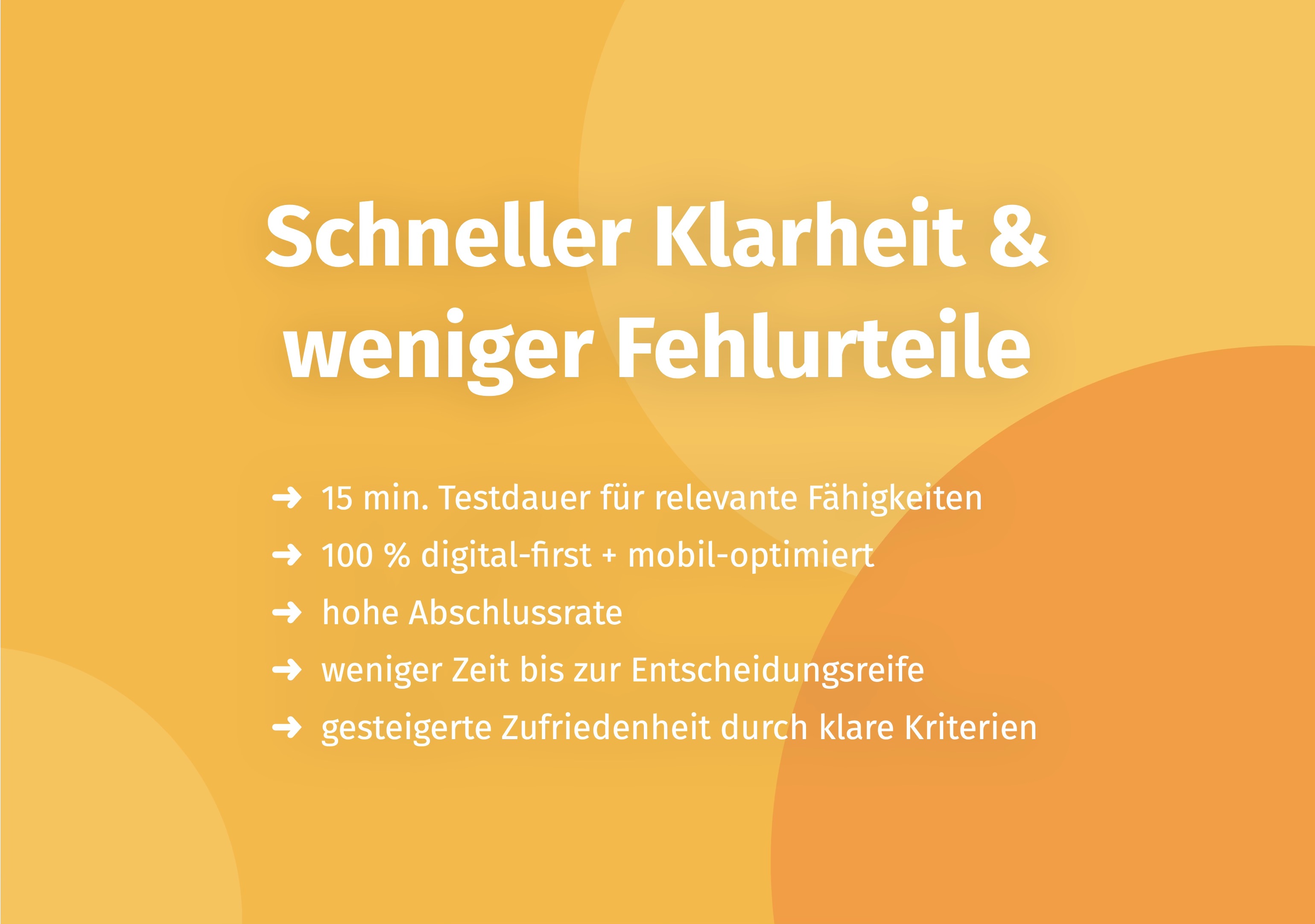
Tools for objective assessments like Aivy use scientifically validated methods. The platform employs game-based assessments that are engaging and fair—while still delivering valid results. As a scientific spin-off from Freie Universität Berlin, the methodology is based on solid psychometric research.
Case Study: How Lufthansa Combines Interviews and Assessments
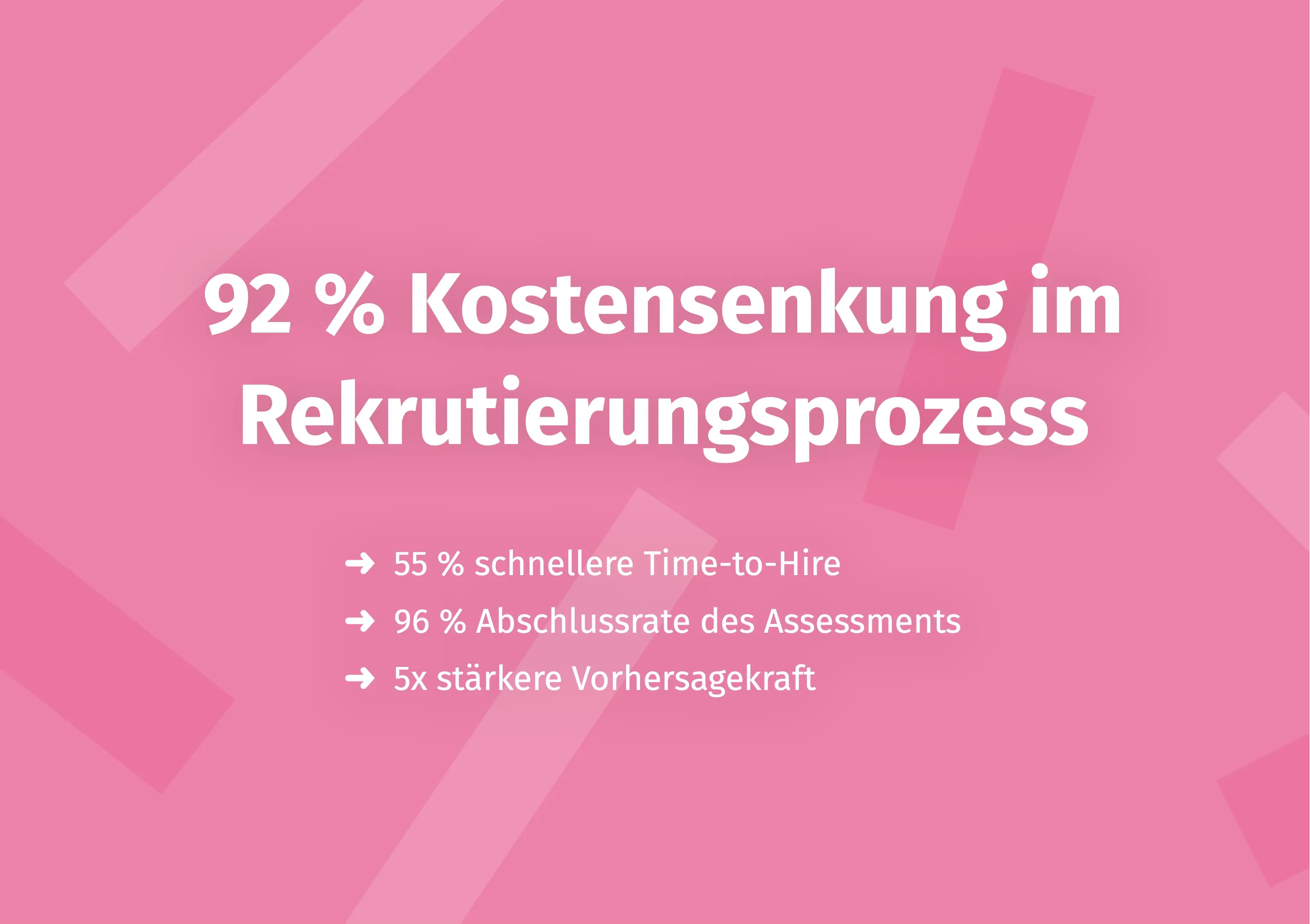
Practice shows that combining objective diagnostics with structured interviews delivers excellent results. Lufthansa achieves a 96% accuracy rate with this approach—correctly predicting outcomes compared to their elaborate in-house assessment center. At the same time, 81% of applicants report high satisfaction with the process, and over 100 minutes of testing time per applicant are saved.
Susanne Berthold-Neumann from Lufthansa explains the approach: "We look at the application documents late because they only show a small part of the person and say little about whether someone has the competencies for future challenges."
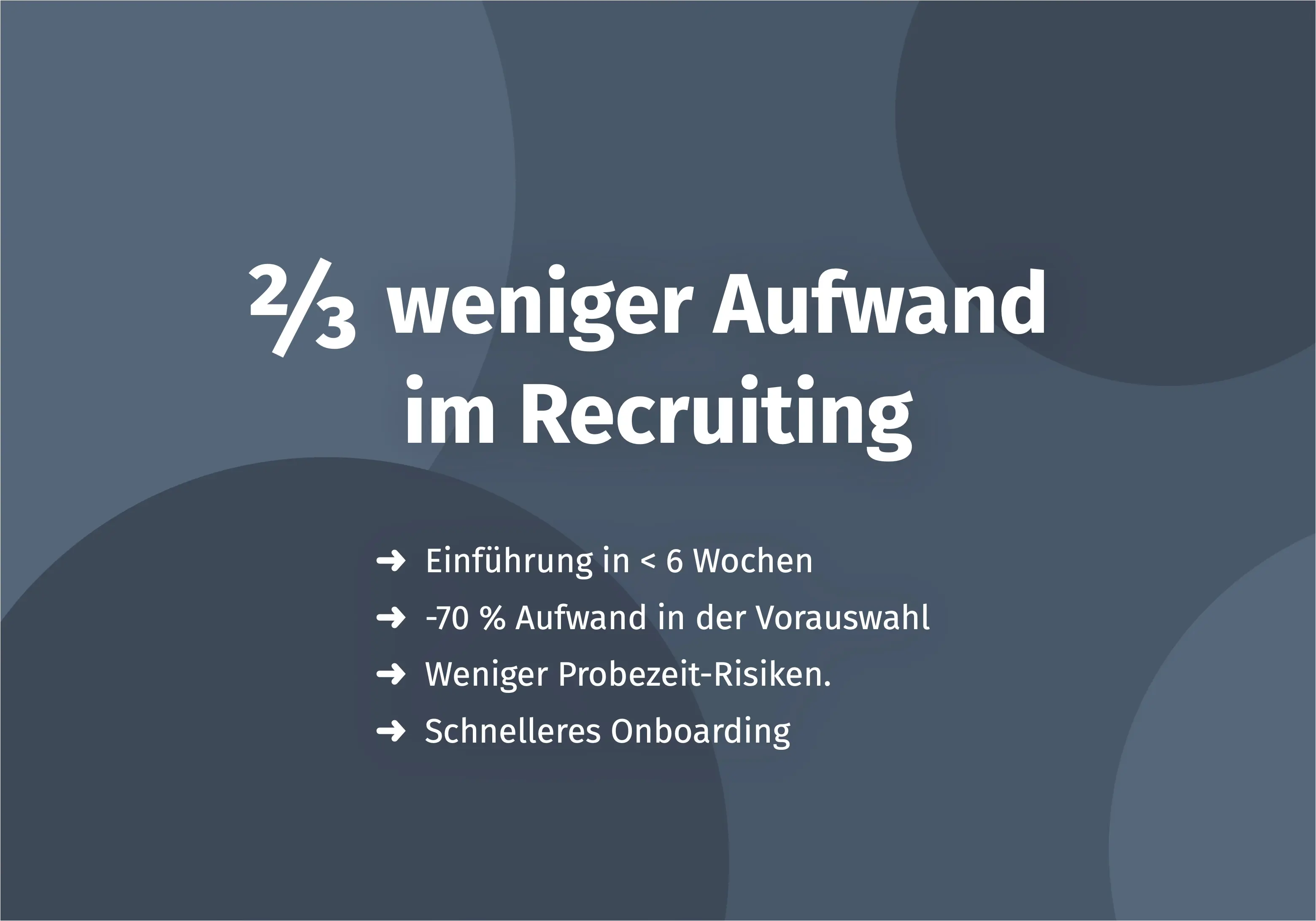
Callways has also optimized their recruiting process with objective assessments. CEO Achim Reinhardt reports: "The conversations are much better and more to the point." The recruiting process was completely restructured within 6 weeks—with the result that without this method, the company would have "2-3 times as much work" and would "recruit worse."
At Diehl, experiences in apprentice recruiting confirm this assessment. Training Manager Wolfgang Böhm emphasizes: "We want to select talents who bring the right strengths and potential, rather than just judging by top grades. With Aivy, this works great—the results in the strengths profile match 1:1 with our experience in personal conversations!"
Checklist: How to Conduct a Structured Interview
Here's a practical checklist for your next job interview:
Before the interview:
- Created job requirements profile with 5-8 core competencies
- Prepared question catalog (8-12 structured questions)
- Defined behaviorally anchored rating scales for each competency
- Created scorecard
- Aligned interviewers on questions and process
- Reviewed application documents, noted open questions
During the interview:
- Create comfortable atmosphere, explain process
- Ask all prepared questions
- Probe for incomplete answers (STAR)
- Note specific statements, don't rate
- Allow time for candidate questions
- Communicate next steps
After the interview:
- Enter ratings on scorecard
- Rate independently from other interviewers
- Only then: joint discussion
- Document and justify decision
Frequently Asked Questions (FAQ)
How many questions should I ask in a job interview?
Quality over quantity: 8-12 thoughtful, structured questions are better than 30 standard questions. With 60 minutes of interview time, plan about 5 minutes per core question, plus time for candidate questions and company presentation.
What is the STAR Method?
STAR stands for Situation-Task-Action-Result. It's a questioning technique for behavioral interviews. You ask about a specific situation, the person's task, their concrete action, and the result. This gives you reliable information instead of vague self-assessments.
How long should a job interview last?
45-60 minutes is optimal for a structured first interview. Shorter conversations provide too little information; longer ones exhaust both parties without additional benefit. For leadership positions, 60-90 minutes can be appropriate.
What's the difference between situational and behavioral questions?
Situational questions are hypothetical ("What would you do if..."). Behavioral questions ask about past behavior ("Describe a situation where..."). Behavioral questions have higher validity because past behavior is the best predictor of future behavior.
Can structured interviews completely eliminate bias?
No, complete elimination is impossible. But structured interviews significantly reduce bias. Combining them with objective assessments further strengthens this effect.
Conclusion: Your Path to Better Job Interviews
The science is clear: structured interviews with standardized questions and objective evaluation criteria lead to better hiring decisions. Validity increases by 35% compared to unstructured conversations. Combined with objective assessments, you achieve the highest predictive accuracy of any known selection method.
Key takeaways:
- Use behavioral questions (STAR Method) instead of general questions
- Ask all candidates the same questions in the same order
- Evaluate answers based on defined criteria (BARS), not gut feeling
- Use at least two interviewers
- Combine interviews with objective assessments for maximum accuracy
Want to take your interviews to the next level? Objective assessment tools like Aivy help you identify the right candidates before the conversation—and ask targeted questions in the interview. The combination of scientifically validated diagnostics and structured interviews is the key to better hiring decisions.
Sources
- Schmidt, F.L. & Hunter, J.E. (1998). The validity and utility of selection methods in personnel psychology: Practical and theoretical implications of 85 years of research findings. Psychological Bulletin, 124, 262-274.
- Sackett, P.R., Zhang, C., Berry, C.M. & Lievens, F. (2022). Revisiting meta-analytic estimates of validity in personnel selection. Journal of Applied Psychology.
- Kanning, U.P. (2016). Personnel selection in German companies. Wirtschaftspsychologie aktuell.
- Huffcutt, A.I., Conway, J.M., Roth, P.L. & Stone, N.J. (2001). Identification and meta-analytic assessment of psychological constructs measured in employment interviews. Journal of Applied Psychology, 86, 897-913.

Make a better pre-selection — even before the first interview
In just a few minutes, Aivy shows you which candidates really fit the role. Beyond resumes based on strengths.