
A job description is an internal document that defines the tasks, responsibilities, competencies, and organizational placement of a position. It forms the foundation for job postings, performance reviews, and structured hiring processes. With a professional template, you save time and ensure all relevant content is covered.
What Is a Job Description?
Definition
A job description (also known as a position description or role profile) is a formal HR document that captures all essential characteristics of a position within an organization. It describes which tasks are associated with a role, what responsibilities the person carries, and how the position fits into the organizational structure.
Unlike a job posting, the job description is primarily internal: It serves as guidance for managers, employees, and the HR department. At the same time, it forms the basis for external job advertisements.
Difference: Job Description vs. Job Posting vs. Candidate Profile
These three terms are often confused but serve different functions:
The job description is an internal document that describes the position itself: tasks, responsibilities, and organizational placement. It is written objectively and serves documentation purposes.
The job posting is an external document designed to attract applicants. In addition to tasks, it includes a company description, benefits, and a promotional tone.
The candidate profile (or requirements profile) describes not the position but the ideal person: What qualifications, competencies, and characteristics should a candidate bring? It forms the basis for personnel selection.
In practice, all three documents complement each other. The job description serves as the starting point from which the job posting and candidate profile are derived.
Why Is a Job Description Important?
Benefits for Organizations
A professional job description delivers measurable benefits for the entire organization:
Creating clear structures: By documenting tasks and responsibilities in writing, clear accountabilities emerge. This prevents overlaps and gaps in task distribution.
Accelerating recruitment: A good job description can quickly be converted into a job posting. This saves time and ensures consistent external communication.
Enabling performance reviews: The job description defines what is expected of a person. This makes it the foundation for fair and transparent employee evaluations.
Facilitating onboarding: New employees understand more quickly what their role encompasses and how they fit into the organization.
Supporting quality management: For certifications like ISO 9001, documented job descriptions are often required or recommended.
Benefits for Employees
From an employee perspective, a clear job description also provides value:
Orientation: Employees know exactly what is expected of them and can prioritize their work accordingly.
Development perspective: The job description shows which competencies are relevant for the position. This facilitates identifying areas for development.
Fairness: Clear criteria for tasks and requirements create transparency in evaluations and salary negotiations.
What Belongs in a Job Description? – Structure & Content
Required Elements
A complete job description contains the following core elements:
Job title: The official title of the position, preferably clear and industry-standard.
Organizational placement: Who does the position report to? Which positions report to it? Which department is it part of?
Position objective: A brief description of the purpose of the position (2-3 sentences). What should this role achieve?
Main responsibilities: The central activities, ideally with percentage weighting (e.g., "Customer support: 40%").
Accountabilities and authorities: What decisions can the person make independently? What are they responsible for?
Requirements: Professional qualifications (training, education), work experience, and required competencies.
Optional Elements
Depending on the organization and position, additional information may be useful:
Secondary tasks: Occasional activities that don't belong to the core area but are part of the role.
Interfaces: Which other departments or external partners does the position work with?
Special requirements: Travel, shift work, special certifications.
Development perspectives: Possible career paths from this position.
Creating a Job Description: Step by Step
Step 1: Conduct Task Analysis
Before you write, gather all relevant information. Interview current job holders: Which tasks take up the most time? Which activities are particularly important for the success of the position?
Also involve the direct manager. They understand the strategic importance of the role and can assess how tasks might evolve in the future.
Step 2: Define Competencies and Requirements
Consider which skills and characteristics are actually necessary for successfully performing the tasks. Distinguish between must-have criteria (absolutely required) and nice-to-have criteria (desirable).
Make sure to consider both technical competencies (hard skills) and interpersonal competencies (soft skills). Professional interests and value orientation in particular play an important role in long-term fit.
Step 3: Non-Discriminatory Wording
Equal opportunity legislation (such as Germany's AGG – General Equal Treatment Act, or similar laws in other countries) prohibits discrimination based on gender, age, origin, religion, disability, or sexual identity. When drafting, pay attention to:
Gender-neutral language: Use inclusive formulations or neutral terms (e.g., "person with experience in..." rather than gendered terms).
No age references: Avoid phrases like "young and dynamic" or "at least 10 years of experience" (unless they are objectively justifiable).
No unnecessary requirements: Only require qualifications that are actually relevant to the position.
Job Description Template & Sample for Download
A professional template contains all the elements mentioned above in a clear structure. You can download it as a Word document and adapt it to your needs.
Typical template structure:
- Header: Job title, department, location
- Organizational placement: Supervisor, direct reports
- Position objective: Brief description of purpose
- Main responsibilities: With percentage weighting
- Secondary tasks: Occasional activities
- Accountabilities and authorities
- Requirements: Qualifications, experience, competencies
- Footer: Creation date, approval, next review
Tip: Plan for updates from the start. Job descriptions should be reviewed at least every one to two years and immediately adjusted when changes occur.
From Job Description to Objective Hiring
The job description defines which tasks and competencies a position requires. But how can you verify whether applicants actually meet these requirements? Traditional methods like the job interview are susceptible to subjective bias.
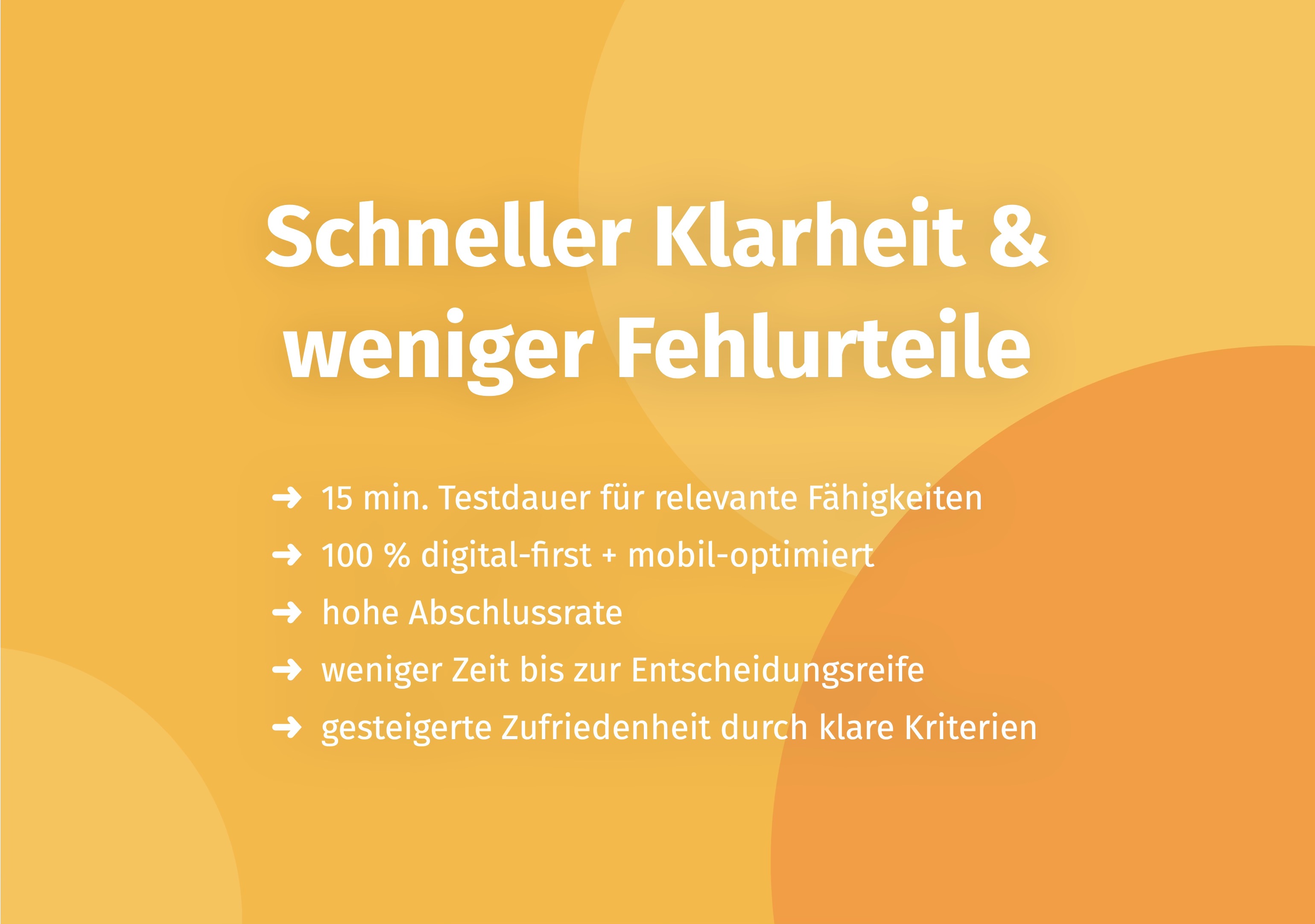
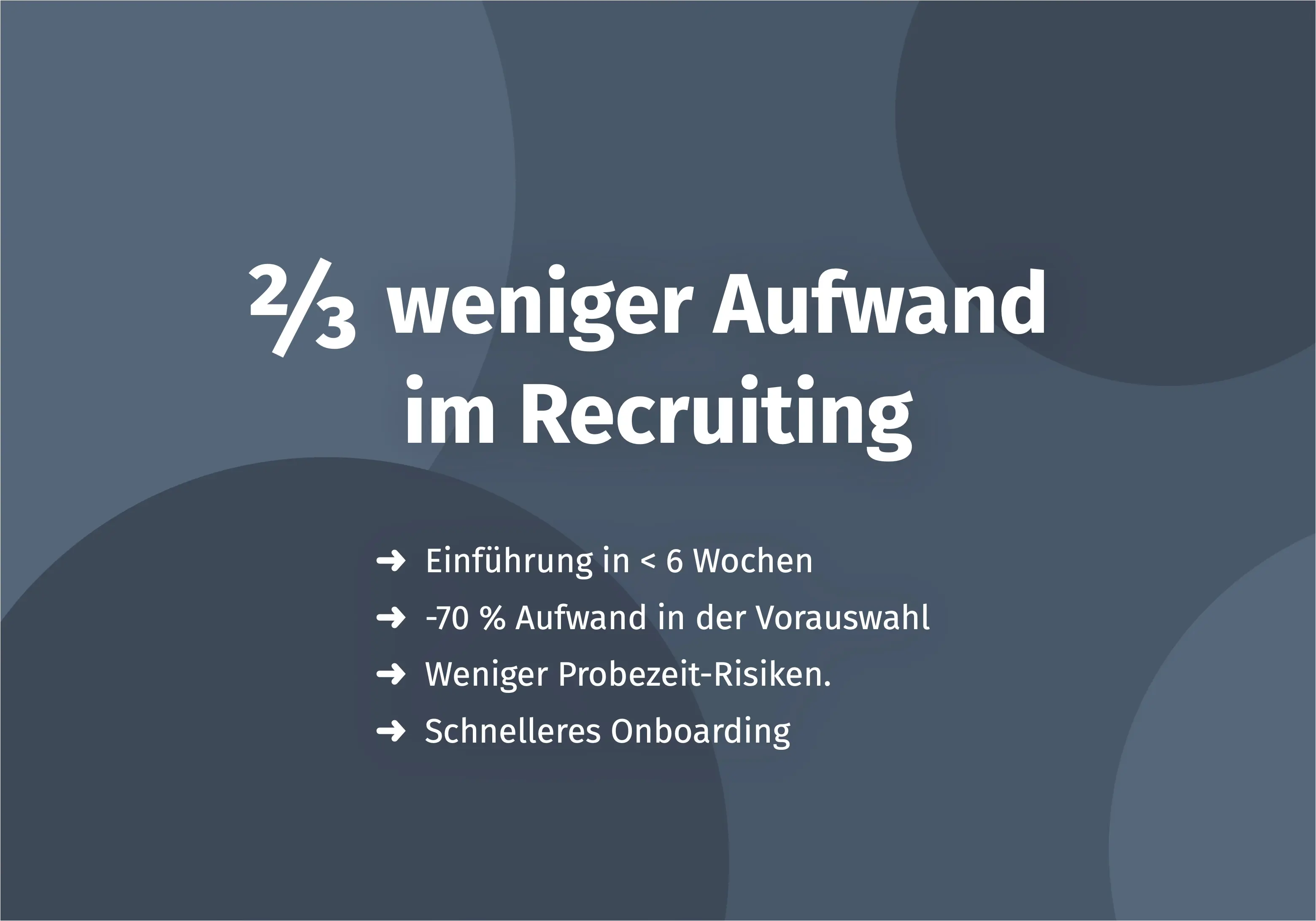
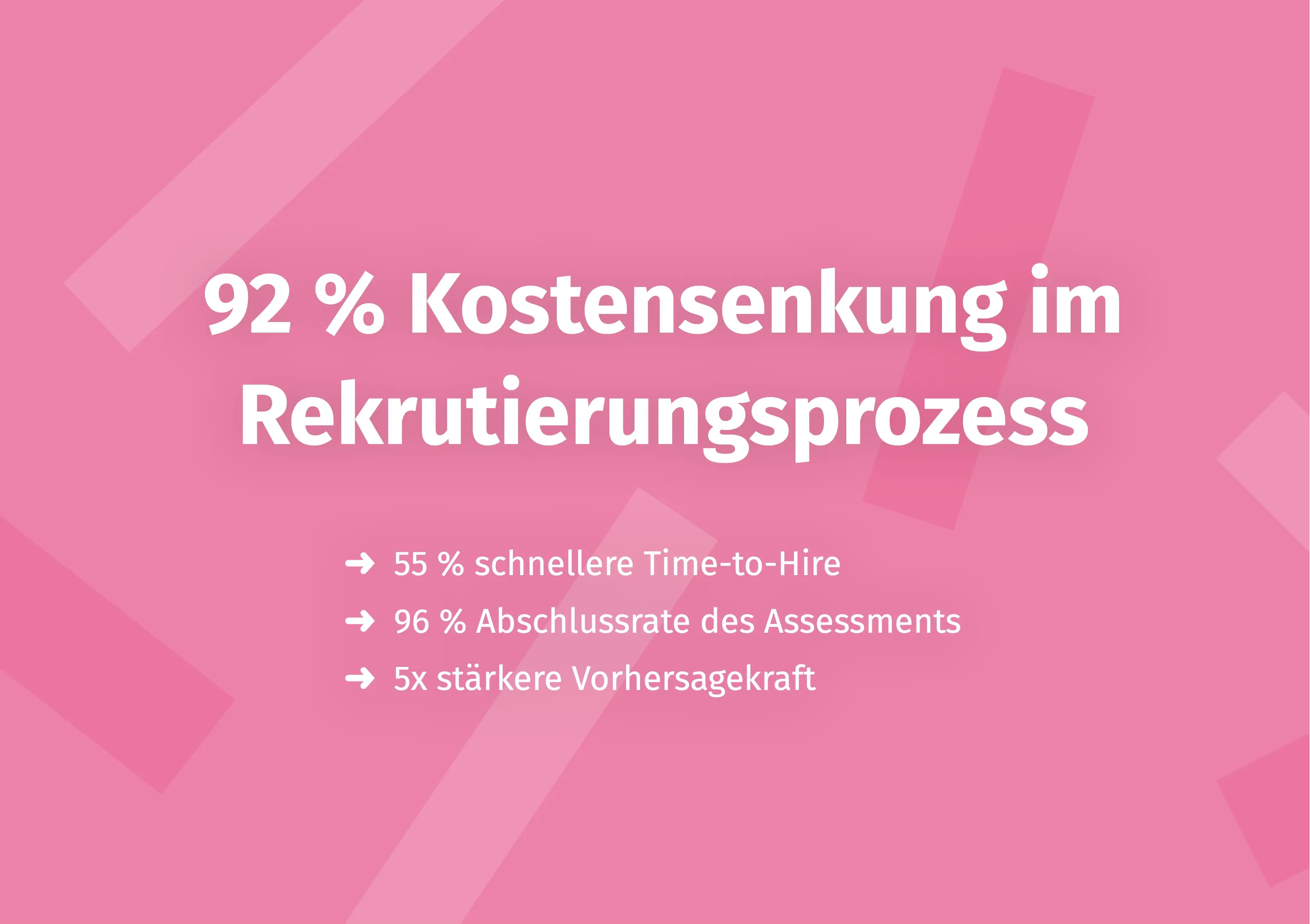
This is where scientifically validated assessment methods come in. The digital platform Aivy enables objective measurement of the competencies defined in the job description – through game-based assessments and validated questionnaires. Practice shows measurable results: MCI Germany was able to reduce time-to-hire by 55% through the use of objective diagnostics and achieved a completion rate of 96% in assessments.
Learn more about objective talent assessment
Frequently Asked Questions About Job Descriptions
What is the difference between a job description and a job posting?
A job description is an internal document that objectively documents a position's tasks and requirements. A job posting, on the other hand, is directed externally at potential applicants and additionally includes a company description, benefits, and promotional content. The job description often serves as the foundation for the job posting.
What should be included in a job description?
A complete job description contains: job title, organizational placement (supervisor, department), position objective, main responsibilities with percentage weighting, accountabilities and authorities, as well as required qualifications and competencies.
Is a job description legally required?
A job description is generally not legally mandated. However, it may be required in certain collective agreements or company agreements. For quality management certifications like ISO 9001, documented job descriptions are recommended. Regardless, it is considered best practice for structured HR management.
How often should a job description be updated?
Job descriptions should be reviewed at least every one to two years. When tasks or organizational structure change, immediate adjustment is required. Before filling any position, the description should be checked for currency.
Who creates the job description?
Typically, the HR department creates the job description in collaboration with the relevant manager. Technical input often comes from current job holders who know the daily tasks best. Final approval is given by supervisors.
What is the difference between a job description and a candidate profile?
The job description describes the position itself: tasks, responsibilities, organizational placement. The candidate profile describes the ideal person for this position: qualifications, competencies, characteristics. Both documents complement each other and together form the basis for sound hiring decisions.
Can a job description be legally binding?
If the job description is incorporated into the employment contract or attached as an appendix, it can be legally binding. As a unilateral employer document, however, it serves only as guidance. The employer can then adjust tasks within their management rights, as long as this does not contradict the employment contract.
Conclusion
A professional job description is more than a bureaucratic document. It creates clarity for all parties involved, accelerates recruitment, and forms the foundation for fair performance reviews. With a structured template, you save time and ensure all relevant content is considered.
Important: The job description is just the beginning. To objectively assess the defined requirements in applicants, scientifically validated selection methods are needed. This is how a good job description becomes a successful hire.
Sources
- DIN 33430: Requirements for occupational aptitude assessment. DIN German Institute for Standardization, 2016. https://www.din.de/de
- General Equal Treatment Act (AGG). German Federal Ministry of Justice, 2006 (last amended 2024). https://www.gesetze-im-internet.de/agg/
- Schuler, H. (2014): Psychological Personnel Selection. Introduction to Occupational Aptitude Assessment. Hogrefe Publishing.
- German Association for Human Resource Management (DGFP): Practice Papers on Competency Management, 2023. https://www.dgfp.de
Make a better pre-selection — even before the first interview
In just a few minutes, Aivy shows you which candidates really fit the role. Beyond resumes based on strengths.