
Are you planning a new position or noticing that your job postings aren't attracting the right candidates? Perhaps there's a lack of clarity about who's responsible for what in your team? Then it's time to take a closer look at your job descriptions.
What might seem like bureaucratic paperwork at first glance is actually one of the most important organizational tools in HR management. A precise job description forms the foundation for nearly all HR processes: from workforce planning and recruiting to performance reviews and talent development.
In times of talent shortage, its importance grows even greater: clear requirement profiles help you target exactly the candidates who truly fit the position – reducing the risk of costly bad hires. According to the Society for Human Resource Management (SHRM), the cost of a bad hire ranges from 0.5 to 2 times the annual salary.
In this guide, you'll learn everything you need to know about job descriptions: from definition and perfect structure to a step-by-step guide. We'll also show you how to formulate competencies correctly, avoid common mistakes, and connect your job description with objective candidate assessment.
What Is a Job Description? Definition and Fundamentals
A job description is a formal document that defines the tasks, responsibilities, and organizational placement of a position within your company. It's an internal organizational tool and serves as a binding foundation for all stakeholders – from HR and managers to the job holders themselves.
Unlike a job posting, which targets external candidates, the job description typically remains internal. It contains detailed information relevant to daily work and long-term workforce planning.
Distinction: Job Description vs. Requirements Profile vs. Job Posting
These three terms are often confused – yet they serve different functions:
| Document | Purpose | Target Audience | Content |
|---|---|---|---|
| Job Description | Internal organizational tool | HR, managers, job holders | Tasks, responsibilities, organizational placement, authorities |
| Requirements Profile | Definition of ideal candidates | HR, recruiting | Competencies, qualifications, traits |
| Job Posting | External communication for recruiting | Candidates | Job title, tasks (selection), benefits, CTA |
The job description answers the question: What is done? The requirements profile answers: Who should do it? And the job posting is the attractively formulated, externally-facing version of both documents.
In practice, job descriptions and requirements profiles are often combined. This makes sense because the requirements for a person derive directly from the tasks of the position.
Why Job Descriptions Are Essential for Your Organization
A professional job description delivers concrete benefits:
For Recruiting: Clear requirements lead to more suitable applications. You target exactly the candidates who truly fit the position – avoiding lengthy hiring processes with unsuitable applicants.
For Talent Development: With a complete job description, you can identify development needs: What competencies are missing? Where should the person grow?
For Performance Reviews: The job description provides objective criteria for employee evaluations. You assess only what actually belongs to the role – not based on gut feeling.
For Legal Protection: In cases of employment law questions or conflicts, a documented job description creates clarity.
For Team Transparency: When everyone knows what they're responsible for, they work more focused. Overlaps and gaps in task distribution become visible.
The Perfect Structure of a Job Description
A professional job description follows a clear structure with three central elements: the organizational framework, the task profile, and the requirements.
Organizational Framework: The Organizational Placement
The organizational framework describes where the position sits within the company. It answers questions like:
- Job Title: What is the official name of the position?
- Department/Area: In which team is the position located?
- Supervisor: Who does the position report to?
- Direct Reports: Does the person have personnel responsibility? If so, for whom?
- Backup: Who covers for the position during vacation or illness?
- Interfaces: Which other departments or external partners does the person work with?
This information is important for onboarding new employees and creates clarity about communication channels and decision-making authority.
Task Profile: Defining Primary and Secondary Tasks
The task profile is the heart of the job description. Here you list the specific activities associated with the position.
Distinguish between:
- Primary Tasks: The core activities that comprise most of the working time (approx. 70-80%)
- Secondary Tasks: Additional activities that occur regularly but not daily
- Special Tasks: Project-related or one-time assignments
Tip: Formulate tasks in an action-oriented way using verbs. Instead of "Responsibility for recruiting," write: "Creates job postings, conducts interviews, and makes hiring decisions in coordination with departments."
You should also define the purpose of the position: What should this role contribute to the company's success? This question helps prioritize tasks and clarify the meaning of the role.
Requirements: Competencies and Qualifications
The third part describes what prerequisites a person should bring to successfully fulfill the tasks. Here, the job description overlaps with the requirements profile.
Typical requirements include:
- Formal qualifications (education, degrees, certifications)
- Work experience (industry, years, specific activities)
- Technical competencies (hard skills)
- Methodological competencies
- Social competencies (soft skills)
- Personality traits
Important is the distinction between must-have criteria (mandatory) and nice-to-have criteria (desirable). This weighting helps you later in candidate selection – and prevents you from deterring potential talent with unrealistic requirements.
Creating a Job Description: Step-by-Step Guide
Want to create a new job description or revise an existing one? This guide will help you do it systematically.
Step 1: Conduct an As-Is Analysis – Involve Departments
Before you start writing, gather information. The best sources are:
- Current job holders: They know best what they do daily
- Managers: They know the strategic goals and expectations for the position
- Colleagues: They can describe interfaces and collaboration
Conduct brief interviews or use questionnaires to get a complete picture. Ask about:
- What tasks occur daily, weekly, monthly?
- How much time does each task take?
- What tools and systems are used?
- Who do they collaborate with?
- What are the biggest challenges?
For a completely new position, derive the tasks from company objectives. Ask yourself: What contribution should this position make?
Step 2: Define Tasks and Goals of the Position
Based on the as-is analysis, you now formulate the tasks. You should:
- Describe tasks concretely and action-oriented
- Prioritize primary and secondary tasks
- Define the overarching goal of the position
- Establish authorities and decision-making powers
Practical Tip: Use open formulations like "takes on additional tasks in the area of..." or "participates in projects." This keeps you flexible when requirements change.
Step 3: Establish Competencies and Requirements (Must-Have vs. Nice-to-Have)
Now you derive from the tasks which competencies are needed. A structure by competency types helps (more on this in the next chapter).
Consistently distinguish between:
- Must-Have Criteria: Without these, the person cannot perform the role (e.g., legally required qualifications, indispensable expertise)
- Nice-to-Have Criteria: These are desirable and can differentiate during selection (e.g., industry experience, certain soft skills)
Research shows that overly long requirement lists are off-putting – especially to women, who are less likely to apply for positions if they don't meet all criteria. Focus on what's essential.
Step 4: Write, Review, and Approve
Now you write the job description. Pay attention to:
- Clear, understandable language: Avoid jargon where possible
- Gender-neutral formulations: Use inclusive language
- Consistency: All job descriptions in the company should follow the same format
Have the job description reviewed by the position's manager and HR. After approval, it should be stored in a central location accessible to all stakeholders.
Important: Job descriptions are living documents. Plan regular reviews – at least every 1-2 years or during major changes.
Formulating Competencies Correctly: From Expertise to Soft Skills
Defining competencies is one of the most important parts of the job description. This determines whether you'll later find the right candidates.
A competency is a learnable ability that enables successful action in certain situations. Science distinguishes various types of competencies:
Technical Competencies (Hard Skills)
Technical competencies refer to the knowledge and skills required for a specific activity. These include:
- Educational degrees and certifications
- Industry knowledge
- Technical skills (e.g., programming languages, software proficiency)
- Language skills
- Specialized knowledge (e.g., employment law, accounting)
Example: "Completed degree in Business, Psychology, or comparable field" or "Solid knowledge of SAP SuccessFactors"
Methodological Competencies
Methodological competencies describe how someone works and solves tasks:
- Analytical thinking
- Project management
- Problem-solving ability
- Time management and self-organization
- Decision-making
Example: "Structured, results-oriented work style" or "Experience leading projects"
Social Competencies (Soft Skills)
Social competencies concern interaction with other people:
- Communication skills
- Teamwork ability
- Conflict resolution
- Empathy
- Persuasiveness
Example: "Strong communication skills when dealing with various stakeholders"
Personality Traits and Cultural Fit
Beyond competencies, personality traits also play a role. The well-known Big Five model in psychology distinguishes five central dimensions:
- Conscientiousness: Reliability, thoroughness, sense of duty
- Extraversion: Sociability, assertiveness
- Agreeableness: Cooperation, team orientation
- Openness: Creativity, curiosity, willingness to learn
- Emotional Stability: Resilience, stress resistance
A meta-analysis by Barrick and Mount (1991) shows: Conscientiousness correlates most strongly with job performance – across various occupational groups. This means: Reliable, thorough people are more successful in almost all jobs.
Cultural fit – the alignment with company culture – is also becoming increasingly important. Values, work style, and communication style should fit your team.
Common Mistakes in Job Descriptions – And How to Avoid Them
Even when the process is clear, mistakes often creep in. Avoid these three at all costs:
Mistake 1: The "Wish List" – Unrealistic Requirements
One of the most common traps: You pack everything into the requirements profile that would theoretically be desirable. The result is the famous "unicorn candidate" – a profile no one can fulfill.
The consequences:
- Qualified candidates don't apply because they don't meet all criteria
- You receive fewer applications than needed
- Candidate experience suffers
Solution: Focus on true must-have criteria. Ask yourself for each point: Can the person successfully complete the tasks without this competency? If yes, it's a nice-to-have criterion – or can be omitted entirely.
Mistake 2: Outdated Job Descriptions
Many job descriptions are created once and then forgotten. Years later, they no longer match reality – new tools, changed processes, different responsibilities.
The consequences:
- Job postings are based on wrong foundations
- Performance reviews become unfair
- New employees are onboarded incorrectly
Solution: Conduct regular reviews. A good rhythm: at least every 2 years or with any major change (reorganization, new systems, change of job holder).
Mistake 3: Missing Connection to Candidate Selection
The job description often ends up in a drawer once the position is filled. Yet it should be the foundation for the entire selection process.
The consequences:
- Interviews are conducted unstructured
- Selection criteria are subjective
- Suitability is not systematically assessed
Research is clear here: According to a meta-analysis by Schmidt and Hunter (1998), aptitude tests (validity r=.54) and structured interviews (r=.51) predict job success significantly better than unstructured interviews (r=.38) or even work experience (r=.18).
Solution: Use the competencies from the job description as the basis for structured interviews and – even better – for objective candidate assessment.
From Job Description to Objective Candidate Selection
A good job description is the first step. But how do you ensure you actually select the right candidates? The key lies in connecting the requirements profile with objective assessment.
How to Make Requirements Measurable
Many requirements in job descriptions are hard to verify. "Teamwork ability" or "communication skills" are important – but how do you measure them in the hiring process?
The answer: through standardized, scientifically validated methods. These measure competencies objectively and comparably – independent of subjective impressions or unconscious biases.
Validity – the predictive power for later job success – is crucial. The higher the validity, the better you can assess whether a person will be successful in the role.
Data-Driven Requirements Profiles: The Next Step
The classic approach – deriving requirements from experience and intuition – has limitations. Modern companies therefore rely on data-driven requirements profiles.
The approach: Analyze which competencies your most successful employees in a role have. From this, you derive what's really important – not what you assume, but what the data shows.
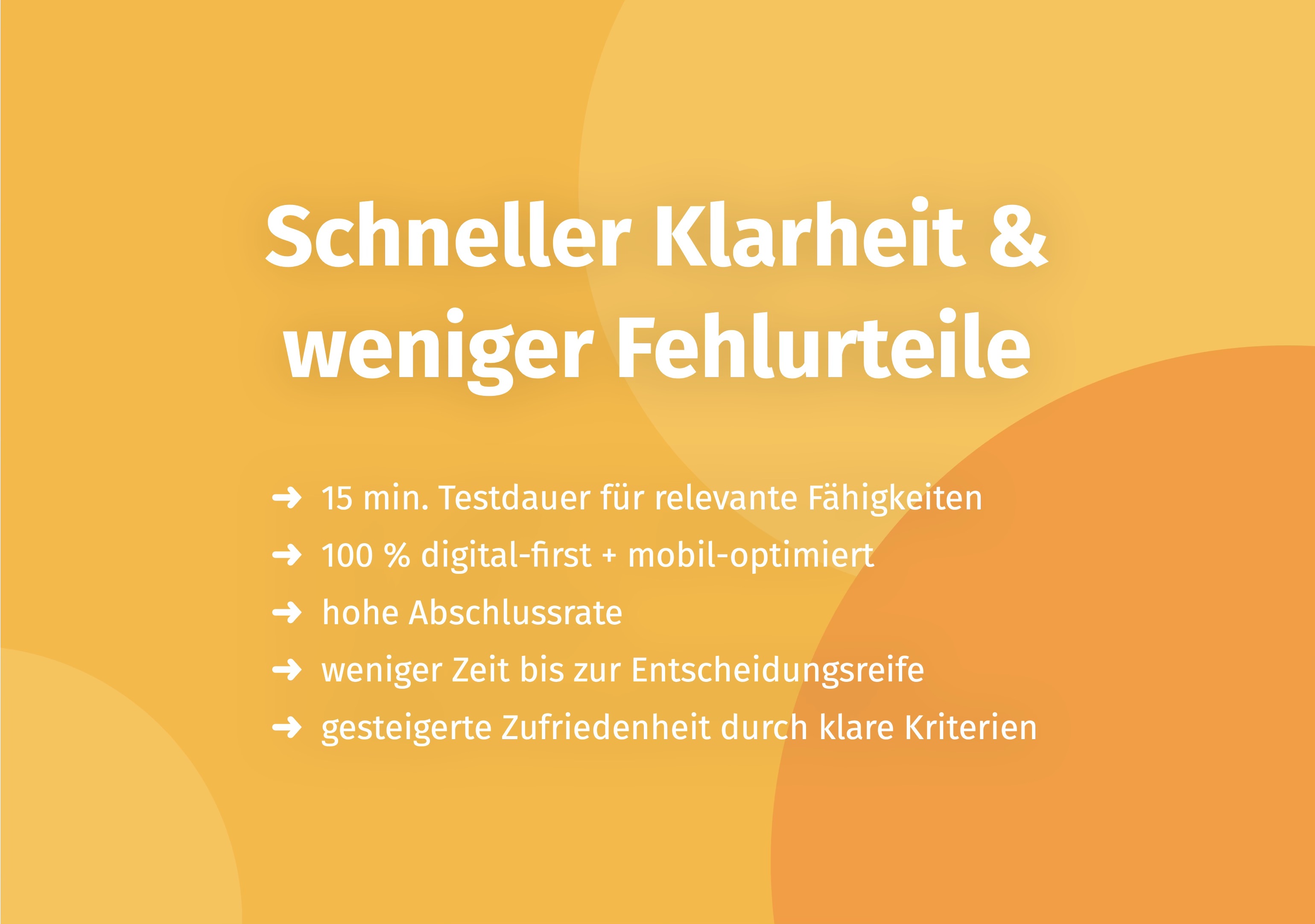
Tools for objective candidate assessment like Aivy enable exactly this: They capture competencies in a scientifically validated way and link them to the requirements profile. The result: data-based decisions instead of gut feeling.
Case Study: How Companies Make Better Decisions with Objective Assessment
Practice shows that objective candidate assessment delivers measurable results. Companies like Callways report significantly better interviews after implementing objective methods. CEO Achim Reinhardt emphasizes that conversations are "significantly better and more to the point" and that the investment pays off from day one.
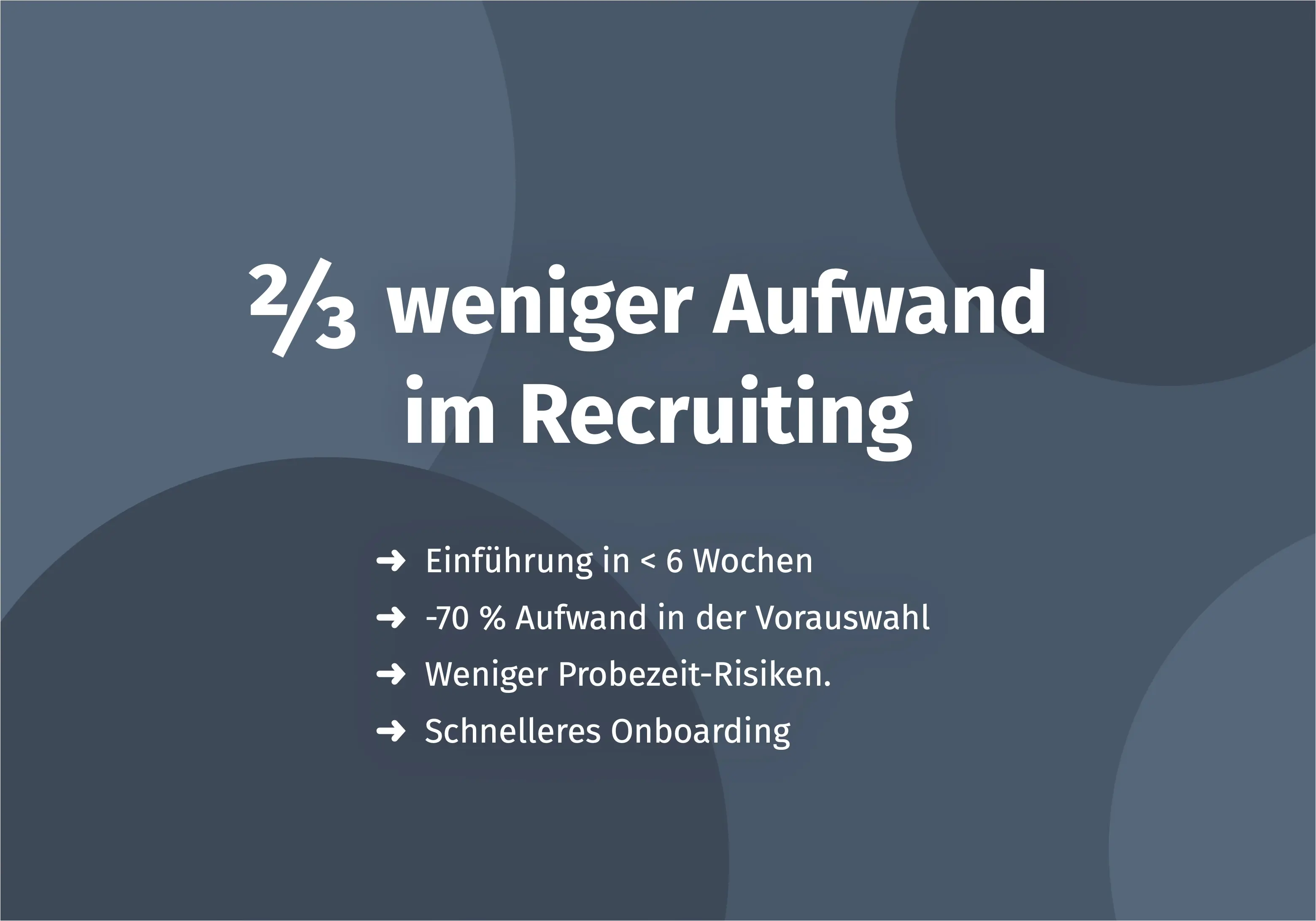
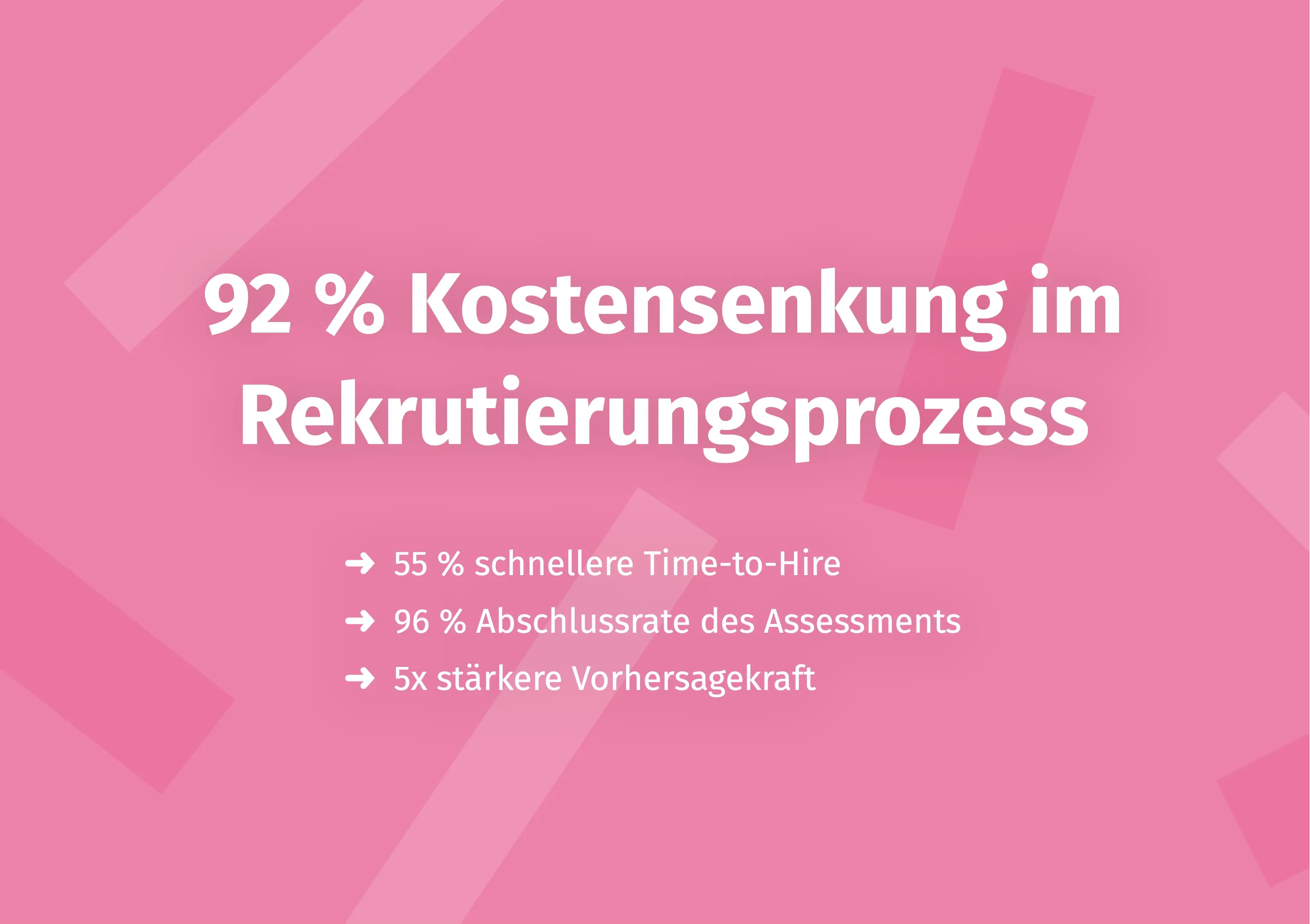
MCI was able to reduce time-to-hire by 55% through the use of game-based assessments while simultaneously reducing cost-per-hire by 92%. Matthias Kühne, Director People & Culture at MCI, highlights the "more objective assessment basis" that has significantly professionalized the process.
OMR also shows the effect: Candidates were invited who would have been rejected based on their CV – some of them were hired and now enrich the team. The requirements gathering process is quick and straightforward.
These examples show: Those who connect job descriptions with objective assessment make better hiring decisions. More details can be found in the MCI success story.
Legal Aspects and Compliance
When creating job descriptions, you must also consider legal aspects – particularly anti-discrimination laws.
Non-Discriminatory Formulations
Anti-discrimination legislation prohibits discrimination based on gender, age, ethnic origin, religion, disability, or sexual identity. This also applies to job descriptions and postings.
Pay attention to:
- Gender-neutral language: Use inclusive formulations. Avoid exclusively male or female forms.
- No age references: Phrases like "young and dynamic" or "for our young team" can be age-discriminatory.
- Focus on competencies: Don't require characteristics that might be associated with protected attributes.
Example: Instead of "We're looking for a dynamic salesman," better: "We're looking for a sales professional with strong communication skills."
Job Description and Employment Contract
A common question: Should the job description be part of the employment contract?
The clear recommendation: No. If the job description is part of the employment contract, changes are only possible with the employee's consent. This severely limits your flexibility.
Better: Maintain the job description as a separate, living document. In the employment contract, you can reference it without making it a contractual component.
Template and Sample: Job Description Download
A professional template facilitates creation and ensures uniform standards in your company.
Sample Job Description with Example Text
A complete job description contains the following elements:
Header Data:
- Job title
- Department/Area
- Location
- Date of creation/last update
Organizational Framework:
- Organizational placement
- Supervisor
- Direct reports
- Backup arrangements
Task Profile:
- Purpose of the position
- Primary tasks (approx. 5-8)
- Secondary tasks
- Authorities and decision-making powers
Requirements Profile:
- Formal qualifications (Must-Have/Nice-to-Have)
- Technical competencies (Must-Have/Nice-to-Have)
- Methodological competencies
- Social competencies
- Personality traits
Signatures:
- Creator
- Manager
- HR representative
Checklist: Quality Review of Your Job Description
Before approving a job description, verify:
- Are all tasks formulated concretely and action-oriented?
- Is the purpose of the position clearly defined?
- Are must-have and nice-to-have criteria distinguished?
- Is the language gender-neutral and compliant?
- Are the requirements realistic (no "wish list")?
- Is the organizational placement complete?
- Are authorities and responsibilities clear?
- Is a review date established?
Frequently Asked Questions (FAQ)
Who creates job descriptions? Creation is usually a collaboration: HR provides structure and templates, departments and managers provide content about tasks and requirements. For existing positions, current job holders should also be involved.
How often should I update job descriptions? At least every 1-2 years or during significant changes like reorganizations, new tools, or process adjustments. A good time is the annual performance review – this keeps the job description current.
Is the job description part of the employment contract? Typically not – and this is not recommended. If the job description becomes part of the contract, changes are only possible with consent. Better: Maintain it as a separate, flexible document and only reference it in the contract.
How do I distinguish must-have from nice-to-have criteria? Must-have criteria are mandatory – without them, the task cannot be fulfilled (e.g., legally required qualifications). Nice-to-have criteria are desirable and help differentiate between candidates but are not mandatory.
Can I objectively measure competencies from the job description?Yes, with scientifically validated methods. Game-based assessments or psychometric questionnaires can objectively capture competencies like problem-solving ability, conscientiousness, or communication skills – with higher predictive power than traditional interviews.
How do I avoid discrimination in job descriptions?Use gender-neutral formulations, avoid age references ("young and dynamic"), and focus on competencies rather than characteristics that might be associated with protected attributes. When in doubt: seek legal advice.
Conclusion: Job Descriptions as a Strategic Tool
A professional job description is far more than a bureaucratic document. It is:
- The foundation for successful recruiting – clear requirements lead to suitable applications
- An instrument for transparency – everyone knows who's responsible for what
- The basis for objective hiring decisions – competencies become measurable
- A tool for talent development – development needs become visible
- Legal protection – in conflicts, you have documented foundations
The effort of creation pays off: fewer bad hires, shorter onboarding times, more satisfied employees.
The next step? Connect your job descriptions with objective candidate assessment. Tools like Aivy – a scientific spin-off from Freie Universität Berlin – enable you to measure competencies from the requirements profile directly with validated assessments. The result: data-based decisions instead of gut feeling.
Sources
- Schmidt, F. L., & Hunter, J. E. (1998). The Validity and Utility of Selection Methods in Personnel Psychology. Psychological Bulletin, 124(2), 262-274.
- Barrick, M. R., & Mount, M. K. (1991). The Big Five Personality Dimensions and Job Performance. Personnel Psychology, 44(1), 1-26.
- Society for Human Resource Management (SHRM). (2022). The Cost of a Bad Hire. SHRM Research.
- Schuler, H., & Höft, S. (2013). Konstruktorientierte Verfahren der Personalauswahl. In H. Schuler (Ed.), Lehrbuch der Personalpsychologie. Hogrefe.

Make a better pre-selection — even before the first interview
In just a few minutes, Aivy shows you which candidates really fit the role. Beyond resumes based on strengths.