
An HR ROI Calculator is a tool for calculating the return on investment of HR initiatives. It helps HR professionals measure the financial value of recruiting investments, HR software, or employee development. The basic formula is: ROI = (Gain - Cost) / Cost x 100.
What is an HR ROI Calculator?
An HR ROI Calculator is an analytical tool that calculates and quantifies the return on investment (ROI) of HR initiatives. Return on investment refers to the percentage ratio between invested capital and generated profit – a business metric also known as capital return.
In the HR context, an ROI calculator enables the evaluation of investments in recruiting, onboarding, training, or HR software. The tool compares incurred costs with the achieved benefits – such as increased productivity, higher revenue, or time savings. For HR professionals, this is particularly important to justify budget decisions to leadership and make data-driven decisions instead of relying on gut feeling.
The basic formula for ROI calculation is:
ROI = (Gain from Investment - Cost of Investment) / Cost of Investment x 100
A positive ROI means the investment generated more value than it cost. A negative ROI signals a loss.
Why is ROI Measurement Important in HR?
HR initiatives have long been considered "overhead investments" whose value seemed difficult to measure. Yet especially in times of tight budgets, HR departments must prove that their initiatives contribute to business success. According to a 2024 study by the Society for Human Resource Management (SHRM), the average cost per hire in the United States is $4,129. In Europe, costs typically range between €3,000 and €10,000 – depending on position and recruiting process complexity.
Without ROI measurement, HR professionals cannot demonstrate:
- Which recruiting channels deliver the best candidates
- Whether an HR software investment pays off
- How process optimizations impact finances
- Which retention measures actually work
Key HR Metrics for ROI Calculation
To calculate HR ROI precisely, you need several metrics. Here are the most important ones:
Cost-per-Hire: What Does a New Hire Cost?
Cost-per-hire (CPH) refers to the average total cost of hiring a new employee. This metric includes both internal and external recruiting costs.
Calculation Formula:Cost-per-Hire = (Internal Recruiting Costs + External Recruiting Costs) / Number of Hires
Internal costs include:
- HR team personnel costs (proportional)
- Time spent on interviews and selection processes
- Onboarding costs
- Administrative overhead
External costs include:
- Job advertisements on job boards
- Recruiting software licenses
- Recruitment agency fees
- Employer branding campaigns
According to SHRM, the average cost-per-hire is approximately $4,129. Globally, it varies significantly by industry and hierarchy level: while entry-level positions often cost between $3,000-5,000, specialist and leadership roles can run $8,000-15,000.
Time-to-Hire: How Long Does Recruiting Take?
Time-to-hire measures the time span between job posting and contract signing. This metric is crucial because extended vacancies directly cause costs: productivity loss, overload of existing teams, and potential revenue losses.
Calculation Formula:Time-to-Hire = Number of days between job posting and contract signing
According to SHRM, the average time-to-hire is 42 days. Various factors influence this metric:
- Position complexity (junior vs. senior)
- Availability of qualified candidates in the market
- Recruiting process efficiency
- Number of interview rounds
- Decision-making speed within the organization
A shortened time-to-hire directly improves ROI – provided hiring quality remains high. Speed without diligence can lead to bad hires that are more expensive long-term than a few extra days in recruiting.
Quality of Hire: How Good Are Our Hires?
Quality of hire is one of the most important, yet most subjective HR metrics. It evaluates how well new employees fit their role and the company. According to LinkedIn's Global Talent Trends Report 2024, 88% of talent professionals consider quality of hire the most important recruiting metric.
Evaluation Criteria:
- Performance in the first 6-12 months (performance reviews)
- Cultural fit (team feedback, value alignment)
- Retention (does the person stay long-term?)
- Productivity (goal achievement, output)
- Development (willingness to learn, potential)
Calculation Formula (simplified):Quality of Hire = (Performance Score + Cultural Fit Score) / Number of Indicators x 100
Since this metric is difficult to quantify, many companies use qualitative methods: 360-degree feedback, manager evaluations, or self-assessments. High quality of hire reduces long-term costs through fewer bad hires, higher retention, and better team dynamics.
Employee Retention Rate: How Many Stay?
The employee retention rate shows what percentage of the workforce remains with the company over a defined period. A high retention rate is financially valuable: the costs of a new hire range between 30-150% of annual salary according to studies – depending on qualification level.
Calculation Formula:Retention Rate = (Number of employees at end of period / Number at beginning) x 100
A low retention rate indicates problems:
- Dissatisfaction with company culture
- Lack of development opportunities
- Competing offers in the market
- Bad hires in recruiting
Particularly critical: first-year attrition, meaning resignations in the first year. These indicate something went wrong in the recruiting process – such as unrealistic expectations or poor cultural fit.
Productivity & Performance: What Do New Employees Contribute?
Productivity and performance are the most difficult but most important factors for ROI calculations. According to Gallup's State of the Global Workplace Report 2024, highly engaged teams are 21% more profitable than teams with low engagement.
Measurement Approaches:
- Revenue contribution (sales roles)
- Output metrics (e.g., completed projects)
- Goal achievement (OKRs, KPIs)
- Innovation contribution (new ideas, process improvements)
- Customer satisfaction (customer-facing roles)
The Harvard Business Review found that structured interviews improve job performance prediction accuracy by 81%. This shows: better selection processes lead to higher productivity – and thus better ROI.
Calculating ROI: Step-by-Step Guide
The theoretical formula is simple – practical implementation requires careful data collection. Here's a concrete guide:
Step 1: Capture Costs
Direct Costs:
- Job advertisements (job boards, social media)
- Recruiting software (ATS, applicant management)
- Recruitment agency fees
- Assessment tools
- Background checks, references
- Candidate travel expenses
Indirect Costs:
- HR team working time (hourly rate x hours)
- Department working time (interviews)
- Onboarding costs (training, materials)
- Productivity loss during vacancy
Example:A mid-sized company hires 10 people:
- Job advertisements: $5,000
- Recruiter salary (proportional): $15,000
- Software licenses: $3,000
- Onboarding: $7,000
- Total costs: $30,000
Step 2: Quantify Benefits
Benefits are more complex to measure as they often work indirectly or long-term.
Quantifiable Benefits:
- Revenue increase through new employees
- Time savings through automation (value in $)
- Cost savings (e.g., less overtime in team)
- Productivity increase (output x value)
Example:The 10 new employees:
- Generate an average of $80,000 revenue per person in the first year
- Total revenue: $800,000
- Variable costs (salary, benefits): $500,000
- Net benefit: $300,000
Step 3: Apply ROI Formula
ROI = (Net Benefit - Costs) / Costs x 100
Example:ROI = ($300,000 - $30,000) / $30,000 x 100 = 900%
An ROI of 900% means: every dollar invested in recruiting brought $9 in profit.
Practical Example with Concrete Numbers
Scenario: A company invests in HR software for $20,000 annually.
Costs:
- Software license: $20,000
- Implementation: $5,000
- Training: $2,000
- Total costs: $27,000
Benefits in first year:
- Time savings HR team: 15 hours/week x 50 weeks x $50/hour = $37,500
- Faster time-to-hire saves 2 weeks vacancy costs per position (10 positions): $20,000
- Better quality of hire reduces bad hires by 30%: $15,000 saved
- Total benefit: $72,500
ROI Calculation:ROI = ($72,500 - $27,000) / $27,000 x 100 = 168.5%
The investment more than doubled in the first year.
Practical Implementation in Organizations
Theory is clear – but how do you implement ROI tracking in daily operations?
Tools and Software for ROI Tracking
Integrated HR Software:Platforms like Workday, BambooHR, or SAP SuccessFactors offer integrated analytics dashboards that automatically track key metrics. The advantage: all data (recruiting, onboarding, performance) is in one system.
Specialized ROI Calculators:Many HR tech providers offer free online ROI calculators. These help with initial calculations but don't replace continuous monitoring.
Excel/Google Sheets:For smaller companies, spreadsheets with monthly tracking often suffice. Important: consistency in data collection. Define clear collection methods and stick to them.
HR Analytics Platforms:Tools like PeopleInsight by HireRoad, Quantum Workplace, or dedicated people analytics software enable deeper analyses and visualizations.
Objective Skills Assessment as an ROI Driver
Beyond classic HR software solutions, objective skills assessment plays a central role in ROI improvement. Through scientifically validated selection processes, you can reduce bad hires and significantly increase quality of hire – with direct impact on return on investment.
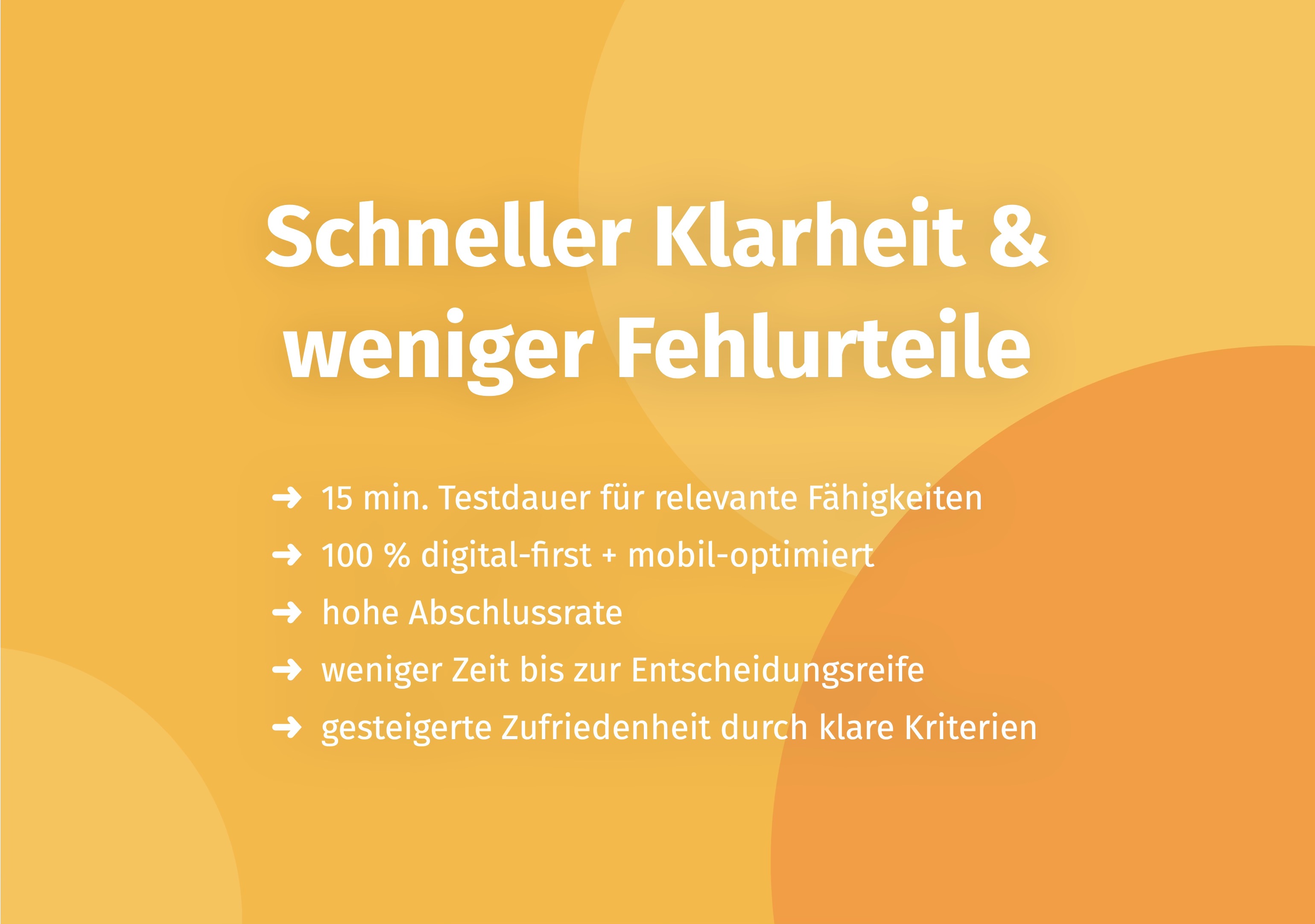
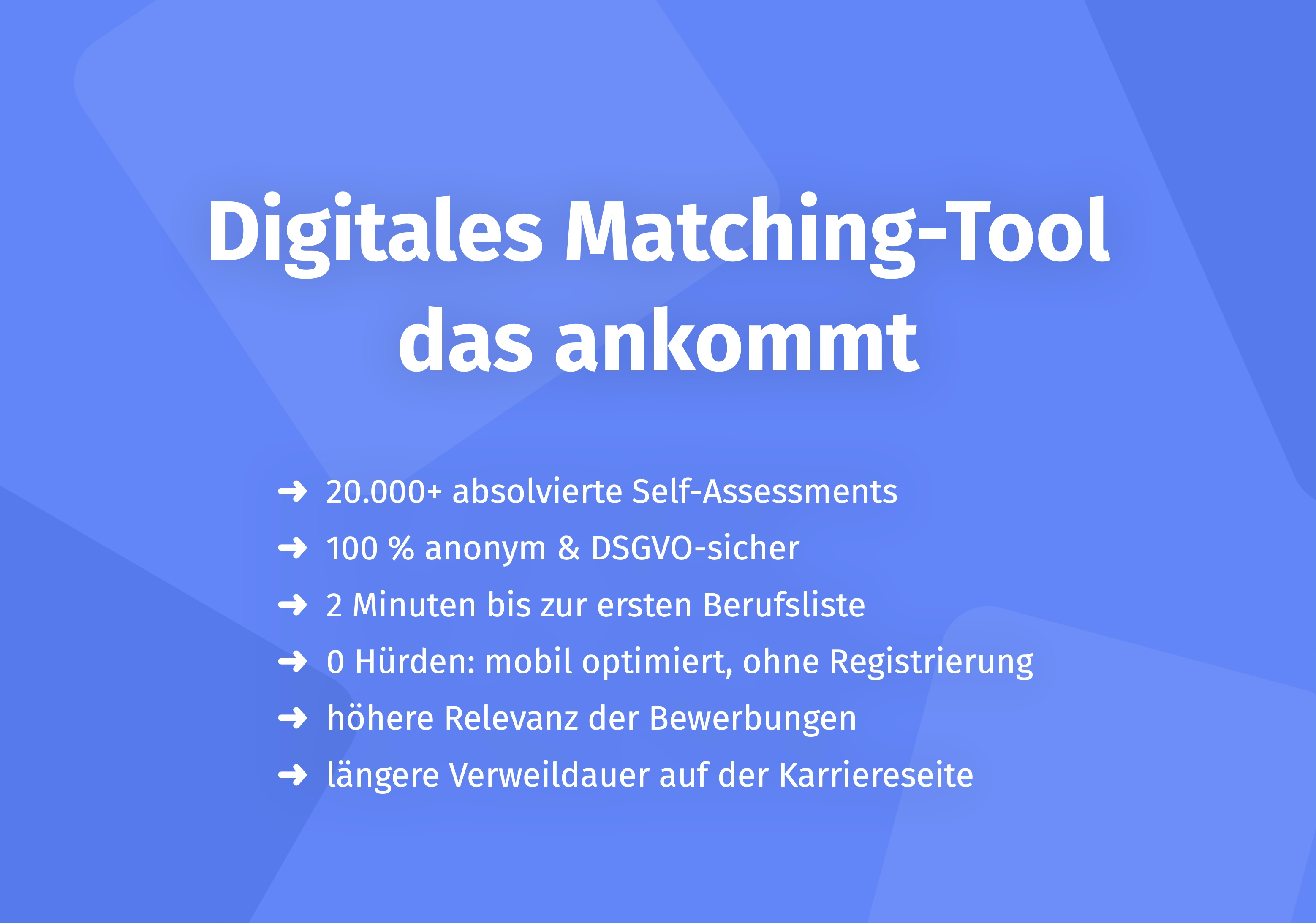
The digital platform Aivy uses game-based assessments that have been scientifically validated by Freie Universität Berlin. These objective methods reduce unconscious bias and enable data-driven hiring decisions. Practice shows measurable success: Frankfurt School achieved a 4x ROI in the first year after implementing objective skills assessment, while simultaneously reducing bad decisions by 30% before the first interview.
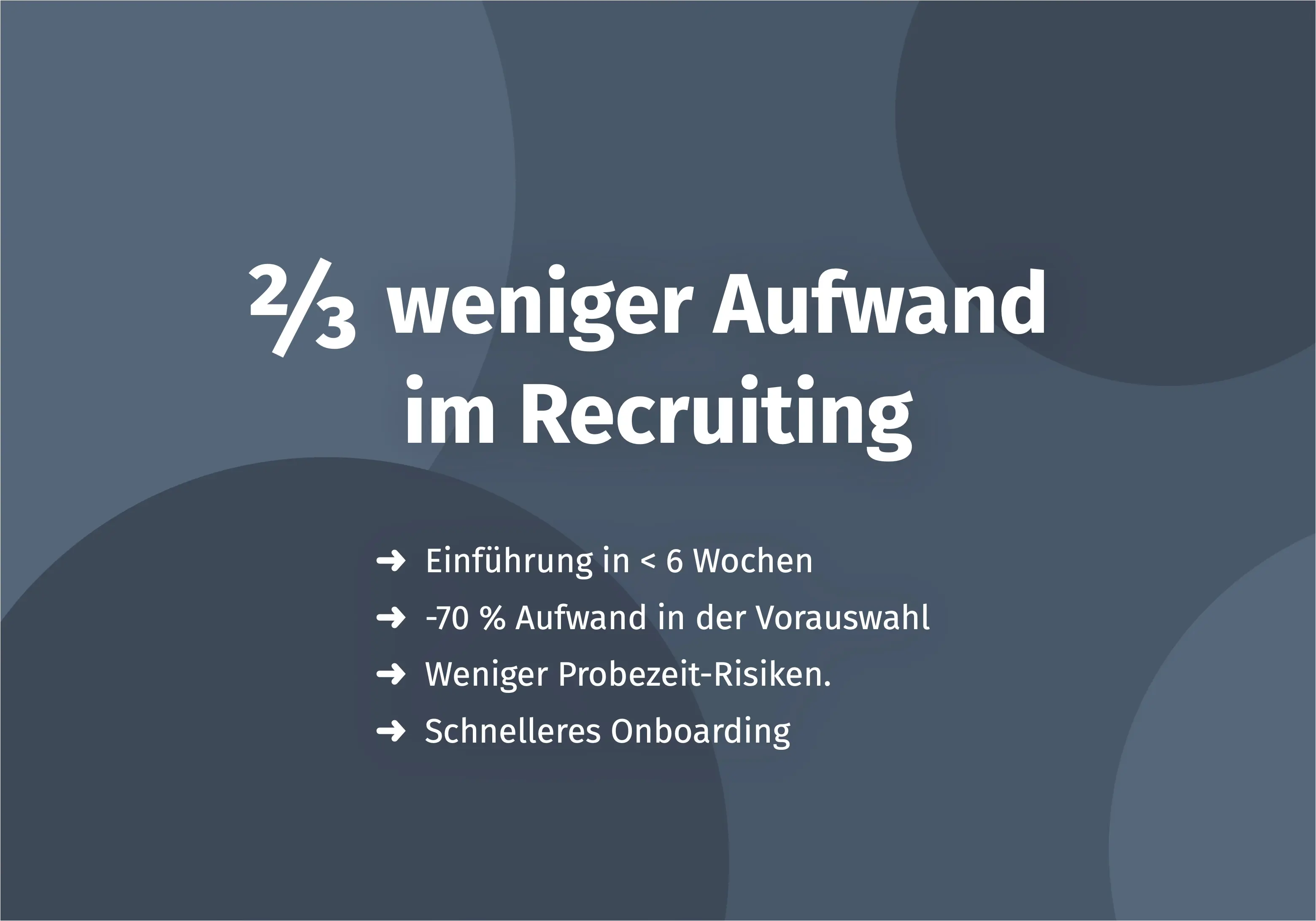
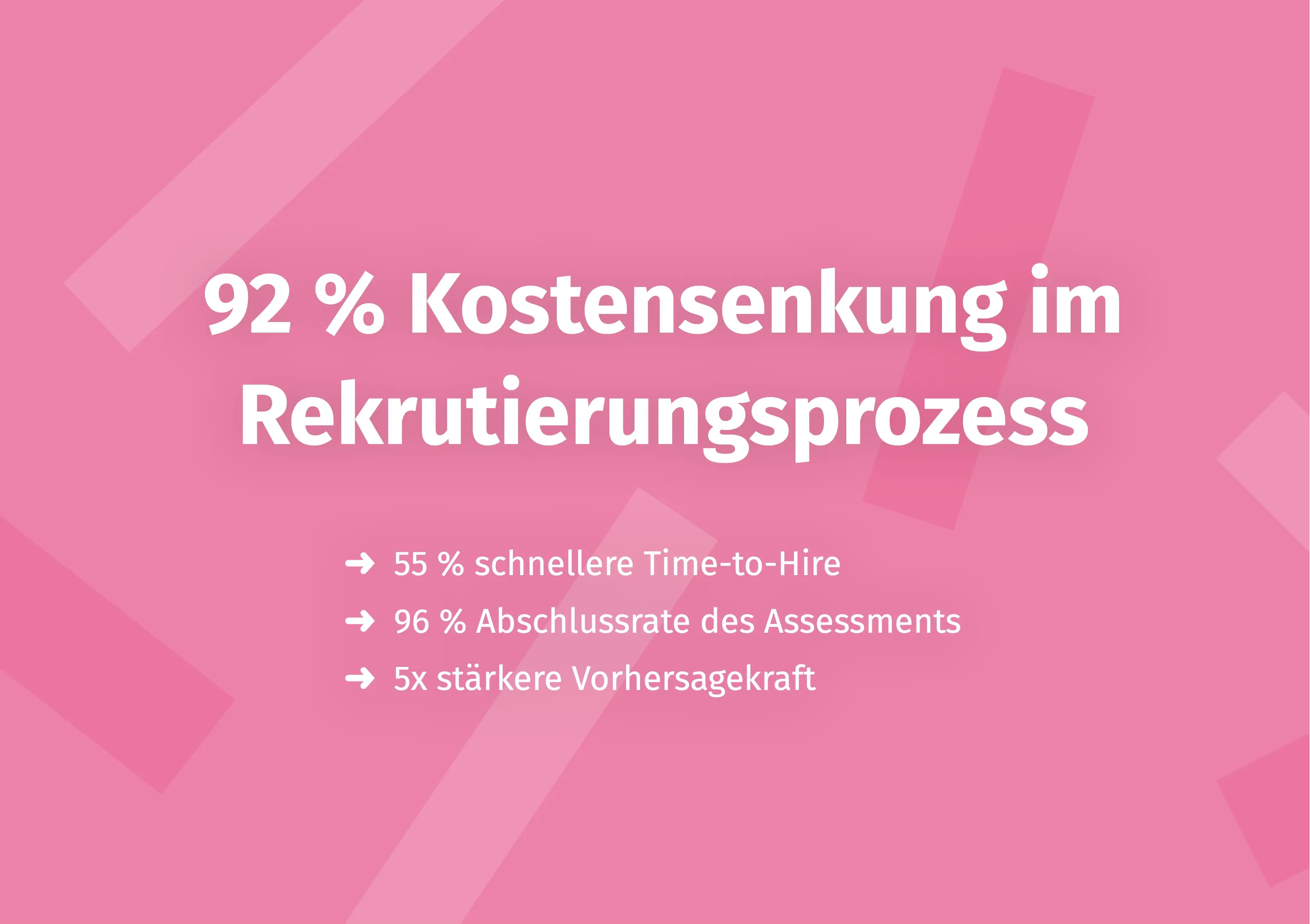
Particularly impressive are the efficiency gains: MCI Deutschland GmbH reduced time-to-hire by 55% and cost-per-hire by 92%. Matthias Kühne, Director People & Culture at MCI, emphasizes: "We had largely digitized our recruiting process thanks to softgarden. With Aivy, we have now digitized another step in recruitment and professionalized it significantly through more objective evaluation. Since both systems interact seamlessly, it not only saves time but is also really enjoyable in daily work."
The ROI advantage is clear: shorter recruiting processes reduce costs, better selection decisions reduce bad hires, and objective methods increase candidate experience – which in turn reduces dropout rates in the process.
Continuous Monitoring and Optimization
ROI calculation is not a one-time process but an ongoing cycle:
Monthly Tracking:
- Cost-per-hire by channel (which job board performs best?)
- Time-to-hire by position (where are bottlenecks?)
- Conversion rates (application → interview → offer → acceptance)
Quarterly Analysis:
- Quality of hire (performance reviews)
- Retention rate (analyze resignations)
- ROI of individual recruiting measures
Annual Strategy Reviews:
- Total cost-benefit analysis
- Comparison with industry benchmarks
- Adjustment of recruiting strategy based on data
Tip: Use dashboards for visualization. People understand graphics faster than columns of numbers – especially important for presentations to leadership.
Frequently Asked Questions About HR ROI Calculators
What is an HR ROI Calculator?
An HR ROI Calculator is a tool for calculating the return on investment of HR initiatives. It compares the costs of recruiting, onboarding, training, or HR software with the achieved benefits (productivity, revenue, time savings). The basic formula is: ROI = (Gain - Cost) / Cost x 100. ROI calculators can exist as Excel spreadsheets, online tools, or as part of HR software platforms.
How do I calculate ROI in recruiting?
The calculation follows three steps: First, capture all recruiting costs (job advertisements, personnel costs, tools, onboarding). Second, quantify the benefit (productivity of new hire, revenue increase, time savings). Third, apply the ROI formula: (Benefit - Costs) / Costs x 100. Example: With $10,000 in costs and $30,000 in benefits, the ROI is 200%.
Which metrics are important for HR ROI?
The most important metrics are: cost-per-hire (average cost per new hire), time-to-hire (duration from job posting to contract signing), quality of hire (performance and cultural fit of new employees), employee retention rate (percentage of employees who stay), and first-year attrition (percentage of departures in the first year). These metrics provide a holistic view of your HR initiatives' efficiency and effectiveness.
What does a new hire cost on average?
According to SHRM (2024), the average cost per hire in the United States is $4,129. Globally, costs range between $3,000 and $10,000 – depending on position, industry, and complexity. Costs include job advertisements, recruiter salaries, tools, onboarding, and training. Indirect costs like productivity loss during vacancy and onboarding time add to this.
What is a good ROI in recruiting?
A positive ROI (above 0%) already means the investment paid off. 10-30% is considered solid ROI that justifies the investment. 30-100% is strong ROI indicating a very profitable investment. Over 100% is excellent ROI – the investment more than doubled. Example: Frankfurt School achieved a 4x ROI (400%) in the first year with objective skills assessment.
How can I improve time-to-hire?
Recruiting processes can be accelerated through several measures: automate recurring tasks with applicant management software. Use objective pre-selection through skills assessment like game-based assessments to identify unsuitable candidates early. Streamline interview processes through structured interviews instead of multiple rounds. Improve candidate experience to reduce dropouts in the process. Example: MCI reduced time-to-hire by 55% through objective skills assessment.
Is HR software financially worthwhile?
Yes, if the ROI calculation is positive. Typical benefits include: time savings through automation (average 10-15 hours per week for HR teams), better data quality for informed decisions, and faster processes. ROI results from lower cost-per-hire, shorter time-to-hire, and better quality of hire. Amortization often occurs within 6-12 months. Important: the software must fit your specific requirements.
How do I justify HR investments to leadership?
Prepare a concrete ROI calculation with numbers. Use industry benchmarks (e.g., SHRM studies) for comparison values. Present success examples from similar companies with measurable results. Show long-term benefits: better quality of hire, higher retention, increased productivity. Create a business case with costs vs. expected benefits over 1-3 years. Visualize data in graphics – this facilitates understanding and increases persuasiveness.
Conclusion: ROI as a Strategic Management Tool
An HR ROI Calculator is more than a numbers tool – it's a strategic instrument for data-driven management of HR processes. Through systematic capture of costs and benefits, you as an HR professional can not only conduct budget discussions with facts but also continuously optimize recruiting processes.
Key insights: cost-per-hire, time-to-hire, and quality of hire are central metrics for ROI calculations. Structured, objective selection processes demonstrably improve accuracy and reduce long-term costs. Continuous monitoring enables early intervention when negative developments occur.
Investments in HR software, objective skills assessment, or training often pay off in the first year – provided you track the right metrics and derive concrete optimization measures. The transformation of HR from cost center to strategic business partner begins with measurable success.
Want to achieve measurable recruiting success with objective skills assessment? Learn more about Aivy's scientific skills assessment.
Sources
- Society for Human Resource Management (SHRM). "2024 Talent Acquisition Benchmarking Report". SHRM, 2024. https://www.shrm.org/topics-tools/research/talent-acquisition-benchmarking
- Gallup. "State of the Global Workplace 2024". Gallup, 2024. https://www.gallup.com/workplace/reports
- LinkedIn. "Global Talent Trends 2024". LinkedIn, 2024. https://business.linkedin.com/hire/resources/talent-strategy
- Aivy GmbH. "Frankfurt School Success Story". Aivy, 2025. https://www.aivy.app/en/success-stories/frankfurt-school
- Aivy GmbH. "MCI Deutschland GmbH Success Story". Aivy, 2025. https://www.aivy.app/en/success-stories/mci-deutschland-gmbh
- AIHR Academy. "Recruitment ROI Explained Plus How To Calculate It". AIHR, 2025. https://www.aihr.com/blog/recruitment-roi/
- Recruiterflow. "Recruitment ROI in 2026: Complete Guide, Formulas & Metrics". Recruiterflow, 2026. https://recruiterflow.com/blog/recruitment-roi/
- Harvard Business Review. "The Science of Structured Interviews". HBR, 2023. https://hbr.org

Make a better pre-selection — even before the first interview
In just a few minutes, Aivy shows you which candidates really fit the role. Beyond resumes based on strengths.