You want to explore your strengths as a talent?

This way

Login

Headhunter: Costs, Process & When They're Really Worth It

Home
-
Lexicon
-
Headhunter: Costs, Process & When They're Really Worth It

Your job postings have been online for weeks, qualified applications are scarce, and that critical position on your team remains unfilled. Sound familiar? You're not alone. The talent shortage is hitting companies harder than ever – and many HR professionals face the question: Should we hire a headhunter?

The answer isn't simple. Headhunters promise access to the best talent on the market, but costs can quickly reach five figures. Is it really worth it? And if so – how do you find a reputable provider?

In this guide, you'll learn everything you need to know about headhunters: from the various fee models to the real advantages and disadvantages, to concrete selection criteria. We'll also show you how objective candidate assessment can significantly increase your hiring success rate – because current research confirms: the right combination of headhunting and scientifically validated selection methods makes the difference between a good and an outstanding hiring decision.

What Is a Headhunter? Definition and Distinctions

A headhunter is a specialized recruitment consultant who helps companies find skilled professionals and executives. The term literally means "head hunter" – which is quite fitting: headhunters actively "hunt" for the best minds in the market.

Unlike traditional recruiters who wait for incoming applications, headhunters take a proactive approach. They directly contact candidates who aren't actively job searching – so-called passive candidates. This direct approach, also known as active sourcing, is the core business of headhunting.

Headhunter vs. Recruitment Agency: The Key Differences

The terms are often used interchangeably, but there are significant differences:

Characteristic Headhunter Recruitment Agency
Focus Executives, specialists Broad spectrum, including entry-level positions
Method Direct approach (active sourcing) Job postings + existing candidate pool
Candidates Primarily passive (not searching) Primarily active job seekers
Cost Higher (25–35% of annual salary) Often lower (15–25%)
Specialization Usually industry-specific Often broader scope

Headhunters are typically engaged when traditional recruiting methods reach their limits: for hard-to-fill positions, when searching for very specific profiles, or when discretion is required.

Executive Search vs. Headhunting: The Same or Not?

Executive Search refers to the specialized search for top executives at board or C-level positions. It's essentially the "premier league" of headhunting – with even higher specialization, absolute discretion, and correspondingly higher fees.

In practice, both terms are often used interchangeably. The difference lies mainly in the hierarchy level: Executive Search focuses on top leadership positions, while headhunting also covers middle management and highly specialized professionals.

How Does a Headhunter Work? The Typical Process

A professional headhunting engagement typically goes through these phases:

  1. Briefing: The headhunter works with you to capture the requirements profile – technical qualifications, soft skills, salary range, and cultural fit.
  2. Research: Based on the profile, the headhunter identifies potential candidates – through networks, business platforms like LinkedIn, and targeted research in target companies.
  3. Direct Approach: Identified talents are contacted discreetly – usually by phone or personalized message.
  4. Qualification: Interested candidates are assessed for suitability in initial conversations.
  5. Presentation: The headhunter presents you with a shortlist of 3-5 qualified candidates, including their assessment and recommendation.
  6. Interview Support: Many headhunters also support the interview process and assist with contract negotiations.
  7. Onboarding Support: Reputable providers remain available as contacts even after hiring – particularly during the probation period.

The entire process typically takes 8-12 weeks, longer for particularly complex searches.

When Is a Headhunter Worth It? 5 Situations Where External Help Makes Sense

The question "Do we need a headhunter?" can't be answered universally. It depends on your specific situation. Here are five scenarios where engaging one is particularly worthwhile:

Hard-to-Fill Positions and Talent Shortages

If your job postings haven't generated qualified applications for months, that's a clear signal. In industries with extreme talent shortages – such as IT, engineering, or healthcare – the best talents are rarely actively job searching. A headhunter with a relevant network can make the crucial difference here.

Confidential Search: When Discretion Is Essential

Sometimes no one can know you're searching – neither the current position holder nor the competition. Perhaps you're planning a strategic replacement or don't want to create unrest in the team. Headhunters are professionals in discreet communication: they contact candidates confidentially and often don't reveal the client until advanced discussions.

Access to Passive Candidates

Research shows: many of the best professionals and executives are "passive" – they're satisfied in their current job but would be open to the right offer. You won't reach these talents through job postings. A headhunter with a good network and persuasive skills can approach exactly this target group and get them excited about your company.

Lack of Internal Resources or Know-How

Not every HR department has the capacity or expertise for elaborate executive searches. Especially in small and medium-sized companies, the time, networks, and methodological know-how for professional headhunting are often lacking. Here, an external specialist can meaningfully complement internal resources.

Time and Cost Pressure for Critical Positions

An unfilled key position costs money – often more than many realize. Projects are delayed, teams are overloaded, growth is inhibited. When fast placement is business-critical, the headhunter with their focused approach can deliver results significantly faster than an internal search done on the side.

What Does a Headhunter Cost? Fee Models and Cost Overview

The cost question is often the first thought when deciding for or against a headhunter. Here's a transparent overview of common models and realistic price expectations.

Success-Based Commission (Contingency)

The most popular model: you only pay when the headhunter successfully places someone. The commission is only due when a candidate signs the employment contract.

Advantages:

  • No upfront financial risk
  • Clear success incentive for the headhunter
  • Good for less complex searches

Disadvantages:

  • Headhunters may invest fewer resources (since no guaranteed fee)
  • For exclusive searches without advance payment, often lower prioritization

Retainer Model with Advance Payment

With this model, you pay the fee in several installments – regardless of search success:

  • 30% at assignment
  • 30% at shortlist presentation
  • 40% upon successful hiring

Advantages:

  • Highest prioritization and resource deployment
  • More comprehensive guarantees are typical
  • Ideal for complex or particularly important positions

Disadvantages:

  • Financial commitment even without guaranteed success
  • Higher initial risk

Typical Fees: 20-35% of Annual Salary

The specific fee amount depends on several factors:

Position Level Typical Commission Example Calculation (€80,000 annual salary)
Professionals 20–25% €16,000–20,000
Middle Management 25–30% €20,000–24,000
Senior Management / C-Level 30–35% €24,000–28,000

According to the German Federal Association of Management Consultants (BDU), 69% of German headhunters work with commissions between 20 and 30 percent of annual salary. The industry average is 27.8%.

Important: Clarify upfront which salary components are included in the calculation basis. Some headhunters calculate fees based on gross annual salary including variable components, bonuses, and company cars – this can significantly increase the sum.

Hidden Costs and Guarantee Provisions

Pay attention to these points in contract design:

  • Guarantee Period: Reputable headhunters offer 3-6 months guarantee. If the candidate leaves during this time, replacement is searched for free.
  • Expense Provisions: Some providers charge travel and research costs separately.
  • Exclusivity: Exclusive assignments can have advantages and disadvantages – negotiate the duration.
  • Partial Payments: Contingency models sometimes require a deposit.

Advantages and Disadvantages of Headhunters

An informed decision requires an honest look at both sides. Here are the most important pros and cons:

The 7 Most Important Advantages

  1. Access to Passive Talent: Headhunters reach candidates who aren't actively searching – often the most qualified in the market.
  2. Time Savings: The extensive research, outreach, and pre-qualification is handled by the headhunter. You receive a curated shortlist.
  3. Discretion: Sensitive searches remain confidential – neither employees nor competitors learn about them.
  4. Expertise and Market Knowledge: Specialized headhunters know their industry, know where the talent is, and can assess their willingness to change.
  5. Network: Long-standing headhunters have an extensive contact network that no job posting reaches.
  6. Negotiation Support: Experienced headhunters moderate salary negotiations and can bring both sides together.
  7. Risk Minimization: Professional pre-selection and guarantee provisions reduce the risk of bad hires.

Potential Disadvantages and Risks

Despite the advantages, there are also critical points:

  • High Costs: 20-35% commission is a significant investment, especially for highly paid positions.
  • Quality Differences: The market is unregulated. Not everyone who calls themselves a headhunter delivers professional work.
  • Possible Dependency: Those who rely too heavily on external service providers may neglect building their own recruiting competencies.
  • No Success Guarantee: Even headhunters can fail – despite the fee, risk remains.
  • Bias Risk: Headhunters are also subject to unconscious biases. A study by Bertrand and Mullainathan (2004) shows that applicants with "white-sounding" names receive 50% more callbacks than those with African American names – with identical qualifications. This bias risk exists in all selection processes, including headhunting.
  • Cultural Fit Hard to Assess: The cultural fit between candidate and company can only be partially judged by an external consultant.

Headhunter vs. In-House Recruiting: A Cost Comparison

Many companies underestimate the hidden costs of in-house recruiting. A fair comparison:

Cost Factor In-House Recruiting Headhunter
Personnel Costs (HR time) High (opportunity cost) None
Job Postings €500–3,000 per platform None
LinkedIn Recruiter €8,000–15,000/year Included
Tools & Software €2,000–10,000/year None
Time to Fill 3–6 months 8–12 weeks
Commission None 20–35%

The calculation shows: with longer vacancies and multiple unsuccessful attempts, a headhunter can actually be cheaper in the end – not to mention the productivity loss from the unfilled position.

How Do You Find the Right Headhunter? 5 Selection Criteria

Choosing the right partner is crucial for success. Here are the key criteria to consider:

Industry Expertise and Specialization

Good headhunters limit themselves to certain industries or functional areas – and then really know them well. An IT headhunter understands technical requirements profiles, knows the relevant networks, and speaks the language of candidates.

Ask specifically:

  • In which industries and functions is the headhunter active?
  • How many similar positions have they filled in the last 12 months?
  • Does the headhunter have personal professional experience in the relevant industry?

Transparency and Communication

Professional headhunters communicate openly about their process, success probability, and potential challenges.

Red Flags:

  • Unrealistic promises ("We'll find the perfect candidate within 2 weeks")
  • Lack of transparency about costs and conditions
  • No regular status updates during the search

References and Success Rates

Get concrete references and ask about measurable successes:

  • What is the placement rate (successfully completed mandates)?
  • How long does the average search take?
  • How many placed candidates are still with the company after 12 months?

Candidate Selection Methods

This is where a headhunter's quality particularly shows. Ask about the selection process:

  • How are candidates identified and approached?
  • What methods does the headhunter use for qualification? (Structured interviews? Assessments? Reference checks?)
  • How is cultural fit assessed?

Integration of Objective Assessment Methods

A criterion many overlook: Does the headhunter use scientifically validated methods for candidate evaluation?

The research is clear: According to the landmark meta-analysis by Schmidt and Hunter (1998), structured interviews achieve a validity of r=.51, unstructured only r=.38. Assessment tests achieve even r=.54 – meaning they predict later job success significantly better than gut feeling.

So ask specifically: Does the headhunter work with validated testing procedures? Or do they rely solely on their intuition?

The Secret to Successful Placements: Why Objective Assessment Makes the Difference

Here comes perhaps the most important point of this guide – and one that most competitor articles completely ignore: The combination of professional headhunting and objective candidate assessment significantly maximizes hiring success rates.

The Limits of Gut Feeling: Bias in Candidate Selection

Even experienced headhunters and HR professionals aren't immune to unconscious biases. Confirmation bias leads us to prefer information that confirms our initial assessment. Affinity bias (also called similarity bias) describes the tendency to prefer people who are similar to us – for example, attended the same university or share the same hobbies.

These cognitive biases happen unconsciously and unintentionally – but they massively influence hiring decisions. The result: qualified candidates are overlooked while others are preferred based on superficial sympathy.

Scientific Foundations: What Studies Say About Selection Methods

Research provides clear evidence for the superiority of structured, objective methods:

  • Schmidt & Hunter (1998) analyzed 85 years of personnel selection research and found: aptitude tests (r=.54) and structured interviews (r=.51) have significantly higher predictive validity than unstructured conversations (r=.38).
  • Society for Human Resource Management (SHRM) estimates the cost of a bad hire at 50-200% of annual salary – through onboarding, productivity loss, renewed search, and team dynamics.
  • Studies show that resumes say little about future performance. CV-based decisions reproduce existing inequalities and biases.

Headhunting + Assessment = Maximum Success Rate

The logical consequence: Combine the best of both worlds.

The headhunter brings network, market knowledge, and the ability for candidate outreach. Objective assessment – such as through Game-Based Assessments or scientifically validated questionnaires – provides reliable data on competencies, personality, and cultural fit.

Tools like Aivy address exactly this: As a scientific spin-off from the Free University of Berlin, the platform offers validated psychometric methods that reduce bias and enable data-driven decisions. With over 100,000 completed assessments, practice shows: companies that use objective assessment demonstrably make better hiring decisions.

Practical Example: How Companies Achieve Better Results with Objective Assessment

The theory sounds convincing – but does it work in practice? Concrete examples show that the combination of structured search and scientific assessment produces measurable successes.

Lufthansa uses objective candidate assessment in their selection process and achieves impressive results:

  • 96% accuracy rate (correct prediction vs. in-house assessment)
  • 81% candidate satisfaction
  • 100+ minutes saved testing time per applicant

Susanne Berthold-Neumann from Lufthansa puts it succinctly: "We look at the documents late because they only show a small part of the person and say little about whether someone has the competencies for future challenges."

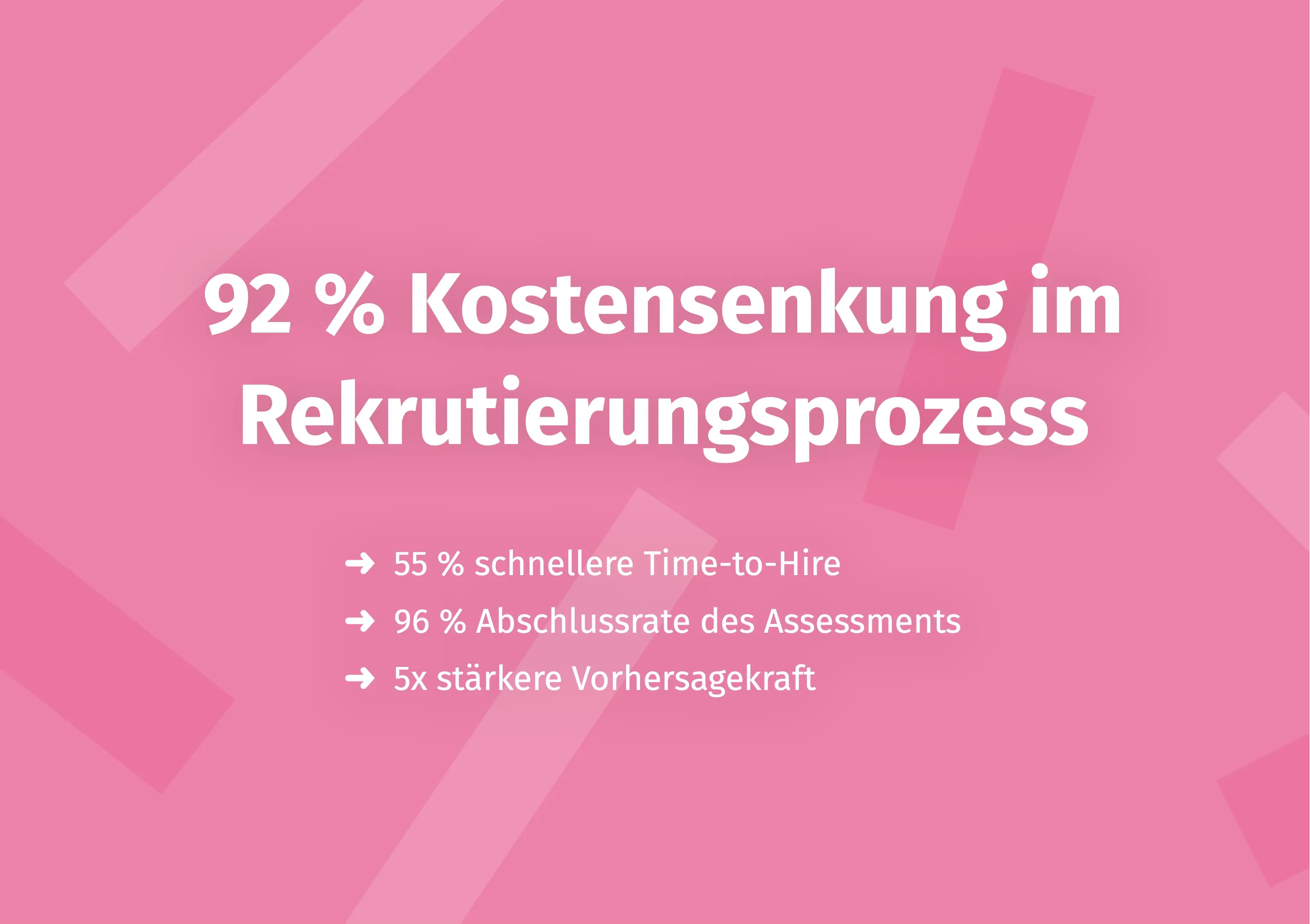
MCI Germany was able to drastically increase recruiting efficiency through the use of Game-Based Assessments:

  • 55% faster time-to-hire
  • 92% lower cost-per-hire
  • 96% completion rate in assessment

Matthias Kühne, Director People & Culture at MCI, highlights the "more objective evaluation basis" that has significantly professionalized the process.

Frankfurt School significantly reduced bad hires through objective pre-selection:

  • 30% fewer wrong decisions before the first interview
  • 4x ROI in the first year
  • 30% better candidate experience

These examples show: whether you work with a headhunter or recruit yourself – supplementing with validated assessment methods pays off. More details can be found in the Lufthansa success story.

Checklist: How to Optimally Prepare for Working with a Headhunter

Good preparation makes the difference between a successful and a frustrating collaboration. Use this checklist before the briefing meeting:

Clarify Before Engagement:

  • Set Budget: What commission is realistic? Is there a maximum limit?
  • Define Timeline: By when must the position be filled?
  • Create Requirements Profile: Clearly document technical and personal requirements
  • Establish Salary Range: Realistic and market-appropriate
  • Describe Cultural Fit: What makes your company culture unique?
  • Plan Interview Process: Who is involved in the selection process and when?

Verify When Selecting a Headhunter:

  • Industry Specialization: Does the expertise match the vacancy?
  • Get References: Request at least 2-3 comparable mandates
  • Compare Contract Terms: Fee model, guarantee periods, additional costs
  • Test Communication: How quickly and professionally does the provider respond?
  • Inquire About Selection Methods: Does the headhunter use structured procedures?

During the Collaboration:

  • Arrange Regular Updates: Weekly status calls are standard
  • Give Feedback: Constructive feedback on presented candidates helps the headhunter
  • Respond Quickly: Good candidates are off the market quickly – keep the process agile
  • Use Objective Assessment: Complement the headhunter's evaluation with validated tests

Frequently Asked Questions (FAQ)

What is the difference between a headhunter and a recruitment agency?
Headhunters focus on hard-to-fill leadership and specialist positions and actively search for passive candidates (direct approach). Recruitment agencies work more broadly, also place for simpler positions, and often draw from an existing candidate pool.

What guarantees do headhunters offer?
Reputable headhunters offer guarantee periods of 3-6 months. If the candidate leaves or is terminated during this time, replacement is searched for free. With retainer models, guarantees are often more comprehensive than with purely success-based models.

How long does a headhunter search take?
A typical executive search takes 8-12 weeks from briefing to contract signing. For particularly complex positions or tight markets, it can take longer. First candidate profiles are usually presented after 2-4 weeks.

Can I as a job seeker hire a headhunter?
Traditional headhunters work on behalf of companies and are free for job seekers. However, there is also "reverse headhunting," where executives themselves hire a consultant to strategically position themselves – this is fee-based and primarily targets experienced managers.

How do I prevent bad hires despite using a headhunter?
Supplement headhunting with objective candidate assessment: validated tests and structured assessments provide additional data on competencies and cultural fit. Studies show that structured methods (r=.51-.54) deliver significantly more valid results than unstructured interviews (r=.38).

How do I recognize a reputable headhunter?
Look for: industry specialization and demonstrable market knowledge, transparent communication and regular updates, provable success rates with references, structured selection methods instead of pure gut feeling, and clear contract terms without hidden costs.

Are headhunter costs tax-deductible?
Yes, headhunter fees are tax-deductible as business expenses. They count as personnel acquisition costs and correspondingly reduce taxable profit.

Conclusion: Headhunters as a Strategic Investment – With the Right Supplement

A good headhunter can make the difference when traditional recruiting methods fail. The combination of industry network, direct approach competence, and professional process support justifies the investment in many cases – especially during talent shortages, for confidential searches, or time-critical placements.

The key takeaways at a glance:

  • Headhunters typically cost 20-35% of annual salary, with the industry average at 27.8%
  • The investment is particularly worthwhile for passive candidates, leadership positions, and talent shortages
  • When selecting, look for industry expertise, transparency, and structured methods
  • Scientifically validated assessment methods significantly increase success rates
  • The combination of headhunting and objective candidate assessment delivers the best results

Whether you decide on a headhunter or not – don't forget: finding the best candidate is only the first step. Ensuring they truly fit the position and culture requires more than a good network and gut feeling.

Objective assessment tools like Aivy support you in making the right decisions – scientifically founded, fair, and with proven accuracy.

Sources

  • Schmidt, F. L., & Hunter, J. E. (1998). The Validity and Utility of Selection Methods in Personnel Psychology. Psychological Bulletin, 124(2), 262-274.
  • Bertrand, M., & Mullainathan, S. (2004). Are Emily and Greg More Employable than Lakisha and Jamal? American Economic Review, 94(4), 991-1013.
  • Bundesverband Deutscher Unternehmensberater (BDU): Industry Study on Executive Search
  • Society for Human Resource Management (SHRM): The Cost of a Bad Hire

Home
-
lexicon
-
Headhunter: Costs, Process & When They're Really Worth It

Your job postings have been online for weeks, qualified applications are scarce, and that critical position on your team remains unfilled. Sound familiar? You're not alone. The talent shortage is hitting companies harder than ever – and many HR professionals face the question: Should we hire a headhunter?

The answer isn't simple. Headhunters promise access to the best talent on the market, but costs can quickly reach five figures. Is it really worth it? And if so – how do you find a reputable provider?

In this guide, you'll learn everything you need to know about headhunters: from the various fee models to the real advantages and disadvantages, to concrete selection criteria. We'll also show you how objective candidate assessment can significantly increase your hiring success rate – because current research confirms: the right combination of headhunting and scientifically validated selection methods makes the difference between a good and an outstanding hiring decision.

What Is a Headhunter? Definition and Distinctions

A headhunter is a specialized recruitment consultant who helps companies find skilled professionals and executives. The term literally means "head hunter" – which is quite fitting: headhunters actively "hunt" for the best minds in the market.

Unlike traditional recruiters who wait for incoming applications, headhunters take a proactive approach. They directly contact candidates who aren't actively job searching – so-called passive candidates. This direct approach, also known as active sourcing, is the core business of headhunting.

Headhunter vs. Recruitment Agency: The Key Differences

The terms are often used interchangeably, but there are significant differences:

Characteristic Headhunter Recruitment Agency
Focus Executives, specialists Broad spectrum, including entry-level positions
Method Direct approach (active sourcing) Job postings + existing candidate pool
Candidates Primarily passive (not searching) Primarily active job seekers
Cost Higher (25–35% of annual salary) Often lower (15–25%)
Specialization Usually industry-specific Often broader scope

Headhunters are typically engaged when traditional recruiting methods reach their limits: for hard-to-fill positions, when searching for very specific profiles, or when discretion is required.

Executive Search vs. Headhunting: The Same or Not?

Executive Search refers to the specialized search for top executives at board or C-level positions. It's essentially the "premier league" of headhunting – with even higher specialization, absolute discretion, and correspondingly higher fees.

In practice, both terms are often used interchangeably. The difference lies mainly in the hierarchy level: Executive Search focuses on top leadership positions, while headhunting also covers middle management and highly specialized professionals.

How Does a Headhunter Work? The Typical Process

A professional headhunting engagement typically goes through these phases:

  1. Briefing: The headhunter works with you to capture the requirements profile – technical qualifications, soft skills, salary range, and cultural fit.
  2. Research: Based on the profile, the headhunter identifies potential candidates – through networks, business platforms like LinkedIn, and targeted research in target companies.
  3. Direct Approach: Identified talents are contacted discreetly – usually by phone or personalized message.
  4. Qualification: Interested candidates are assessed for suitability in initial conversations.
  5. Presentation: The headhunter presents you with a shortlist of 3-5 qualified candidates, including their assessment and recommendation.
  6. Interview Support: Many headhunters also support the interview process and assist with contract negotiations.
  7. Onboarding Support: Reputable providers remain available as contacts even after hiring – particularly during the probation period.

The entire process typically takes 8-12 weeks, longer for particularly complex searches.

When Is a Headhunter Worth It? 5 Situations Where External Help Makes Sense

The question "Do we need a headhunter?" can't be answered universally. It depends on your specific situation. Here are five scenarios where engaging one is particularly worthwhile:

Hard-to-Fill Positions and Talent Shortages

If your job postings haven't generated qualified applications for months, that's a clear signal. In industries with extreme talent shortages – such as IT, engineering, or healthcare – the best talents are rarely actively job searching. A headhunter with a relevant network can make the crucial difference here.

Confidential Search: When Discretion Is Essential

Sometimes no one can know you're searching – neither the current position holder nor the competition. Perhaps you're planning a strategic replacement or don't want to create unrest in the team. Headhunters are professionals in discreet communication: they contact candidates confidentially and often don't reveal the client until advanced discussions.

Access to Passive Candidates

Research shows: many of the best professionals and executives are "passive" – they're satisfied in their current job but would be open to the right offer. You won't reach these talents through job postings. A headhunter with a good network and persuasive skills can approach exactly this target group and get them excited about your company.

Lack of Internal Resources or Know-How

Not every HR department has the capacity or expertise for elaborate executive searches. Especially in small and medium-sized companies, the time, networks, and methodological know-how for professional headhunting are often lacking. Here, an external specialist can meaningfully complement internal resources.

Time and Cost Pressure for Critical Positions

An unfilled key position costs money – often more than many realize. Projects are delayed, teams are overloaded, growth is inhibited. When fast placement is business-critical, the headhunter with their focused approach can deliver results significantly faster than an internal search done on the side.

What Does a Headhunter Cost? Fee Models and Cost Overview

The cost question is often the first thought when deciding for or against a headhunter. Here's a transparent overview of common models and realistic price expectations.

Success-Based Commission (Contingency)

The most popular model: you only pay when the headhunter successfully places someone. The commission is only due when a candidate signs the employment contract.

Advantages:

  • No upfront financial risk
  • Clear success incentive for the headhunter
  • Good for less complex searches

Disadvantages:

  • Headhunters may invest fewer resources (since no guaranteed fee)
  • For exclusive searches without advance payment, often lower prioritization

Retainer Model with Advance Payment

With this model, you pay the fee in several installments – regardless of search success:

  • 30% at assignment
  • 30% at shortlist presentation
  • 40% upon successful hiring

Advantages:

  • Highest prioritization and resource deployment
  • More comprehensive guarantees are typical
  • Ideal for complex or particularly important positions

Disadvantages:

  • Financial commitment even without guaranteed success
  • Higher initial risk

Typical Fees: 20-35% of Annual Salary

The specific fee amount depends on several factors:

Position Level Typical Commission Example Calculation (€80,000 annual salary)
Professionals 20–25% €16,000–20,000
Middle Management 25–30% €20,000–24,000
Senior Management / C-Level 30–35% €24,000–28,000

According to the German Federal Association of Management Consultants (BDU), 69% of German headhunters work with commissions between 20 and 30 percent of annual salary. The industry average is 27.8%.

Important: Clarify upfront which salary components are included in the calculation basis. Some headhunters calculate fees based on gross annual salary including variable components, bonuses, and company cars – this can significantly increase the sum.

Hidden Costs and Guarantee Provisions

Pay attention to these points in contract design:

  • Guarantee Period: Reputable headhunters offer 3-6 months guarantee. If the candidate leaves during this time, replacement is searched for free.
  • Expense Provisions: Some providers charge travel and research costs separately.
  • Exclusivity: Exclusive assignments can have advantages and disadvantages – negotiate the duration.
  • Partial Payments: Contingency models sometimes require a deposit.

Advantages and Disadvantages of Headhunters

An informed decision requires an honest look at both sides. Here are the most important pros and cons:

The 7 Most Important Advantages

  1. Access to Passive Talent: Headhunters reach candidates who aren't actively searching – often the most qualified in the market.
  2. Time Savings: The extensive research, outreach, and pre-qualification is handled by the headhunter. You receive a curated shortlist.
  3. Discretion: Sensitive searches remain confidential – neither employees nor competitors learn about them.
  4. Expertise and Market Knowledge: Specialized headhunters know their industry, know where the talent is, and can assess their willingness to change.
  5. Network: Long-standing headhunters have an extensive contact network that no job posting reaches.
  6. Negotiation Support: Experienced headhunters moderate salary negotiations and can bring both sides together.
  7. Risk Minimization: Professional pre-selection and guarantee provisions reduce the risk of bad hires.

Potential Disadvantages and Risks

Despite the advantages, there are also critical points:

  • High Costs: 20-35% commission is a significant investment, especially for highly paid positions.
  • Quality Differences: The market is unregulated. Not everyone who calls themselves a headhunter delivers professional work.
  • Possible Dependency: Those who rely too heavily on external service providers may neglect building their own recruiting competencies.
  • No Success Guarantee: Even headhunters can fail – despite the fee, risk remains.
  • Bias Risk: Headhunters are also subject to unconscious biases. A study by Bertrand and Mullainathan (2004) shows that applicants with "white-sounding" names receive 50% more callbacks than those with African American names – with identical qualifications. This bias risk exists in all selection processes, including headhunting.
  • Cultural Fit Hard to Assess: The cultural fit between candidate and company can only be partially judged by an external consultant.

Headhunter vs. In-House Recruiting: A Cost Comparison

Many companies underestimate the hidden costs of in-house recruiting. A fair comparison:

Cost Factor In-House Recruiting Headhunter
Personnel Costs (HR time) High (opportunity cost) None
Job Postings €500–3,000 per platform None
LinkedIn Recruiter €8,000–15,000/year Included
Tools & Software €2,000–10,000/year None
Time to Fill 3–6 months 8–12 weeks
Commission None 20–35%

The calculation shows: with longer vacancies and multiple unsuccessful attempts, a headhunter can actually be cheaper in the end – not to mention the productivity loss from the unfilled position.

How Do You Find the Right Headhunter? 5 Selection Criteria

Choosing the right partner is crucial for success. Here are the key criteria to consider:

Industry Expertise and Specialization

Good headhunters limit themselves to certain industries or functional areas – and then really know them well. An IT headhunter understands technical requirements profiles, knows the relevant networks, and speaks the language of candidates.

Ask specifically:

  • In which industries and functions is the headhunter active?
  • How many similar positions have they filled in the last 12 months?
  • Does the headhunter have personal professional experience in the relevant industry?

Transparency and Communication

Professional headhunters communicate openly about their process, success probability, and potential challenges.

Red Flags:

  • Unrealistic promises ("We'll find the perfect candidate within 2 weeks")
  • Lack of transparency about costs and conditions
  • No regular status updates during the search

References and Success Rates

Get concrete references and ask about measurable successes:

  • What is the placement rate (successfully completed mandates)?
  • How long does the average search take?
  • How many placed candidates are still with the company after 12 months?

Candidate Selection Methods

This is where a headhunter's quality particularly shows. Ask about the selection process:

  • How are candidates identified and approached?
  • What methods does the headhunter use for qualification? (Structured interviews? Assessments? Reference checks?)
  • How is cultural fit assessed?

Integration of Objective Assessment Methods

A criterion many overlook: Does the headhunter use scientifically validated methods for candidate evaluation?

The research is clear: According to the landmark meta-analysis by Schmidt and Hunter (1998), structured interviews achieve a validity of r=.51, unstructured only r=.38. Assessment tests achieve even r=.54 – meaning they predict later job success significantly better than gut feeling.

So ask specifically: Does the headhunter work with validated testing procedures? Or do they rely solely on their intuition?

The Secret to Successful Placements: Why Objective Assessment Makes the Difference

Here comes perhaps the most important point of this guide – and one that most competitor articles completely ignore: The combination of professional headhunting and objective candidate assessment significantly maximizes hiring success rates.

The Limits of Gut Feeling: Bias in Candidate Selection

Even experienced headhunters and HR professionals aren't immune to unconscious biases. Confirmation bias leads us to prefer information that confirms our initial assessment. Affinity bias (also called similarity bias) describes the tendency to prefer people who are similar to us – for example, attended the same university or share the same hobbies.

These cognitive biases happen unconsciously and unintentionally – but they massively influence hiring decisions. The result: qualified candidates are overlooked while others are preferred based on superficial sympathy.

Scientific Foundations: What Studies Say About Selection Methods

Research provides clear evidence for the superiority of structured, objective methods:

  • Schmidt & Hunter (1998) analyzed 85 years of personnel selection research and found: aptitude tests (r=.54) and structured interviews (r=.51) have significantly higher predictive validity than unstructured conversations (r=.38).
  • Society for Human Resource Management (SHRM) estimates the cost of a bad hire at 50-200% of annual salary – through onboarding, productivity loss, renewed search, and team dynamics.
  • Studies show that resumes say little about future performance. CV-based decisions reproduce existing inequalities and biases.

Headhunting + Assessment = Maximum Success Rate

The logical consequence: Combine the best of both worlds.

The headhunter brings network, market knowledge, and the ability for candidate outreach. Objective assessment – such as through Game-Based Assessments or scientifically validated questionnaires – provides reliable data on competencies, personality, and cultural fit.

Tools like Aivy address exactly this: As a scientific spin-off from the Free University of Berlin, the platform offers validated psychometric methods that reduce bias and enable data-driven decisions. With over 100,000 completed assessments, practice shows: companies that use objective assessment demonstrably make better hiring decisions.

Practical Example: How Companies Achieve Better Results with Objective Assessment

The theory sounds convincing – but does it work in practice? Concrete examples show that the combination of structured search and scientific assessment produces measurable successes.

Lufthansa uses objective candidate assessment in their selection process and achieves impressive results:

  • 96% accuracy rate (correct prediction vs. in-house assessment)
  • 81% candidate satisfaction
  • 100+ minutes saved testing time per applicant

Susanne Berthold-Neumann from Lufthansa puts it succinctly: "We look at the documents late because they only show a small part of the person and say little about whether someone has the competencies for future challenges."

MCI Germany was able to drastically increase recruiting efficiency through the use of Game-Based Assessments:

  • 55% faster time-to-hire
  • 92% lower cost-per-hire
  • 96% completion rate in assessment

Matthias Kühne, Director People & Culture at MCI, highlights the "more objective evaluation basis" that has significantly professionalized the process.

Frankfurt School significantly reduced bad hires through objective pre-selection:

  • 30% fewer wrong decisions before the first interview
  • 4x ROI in the first year
  • 30% better candidate experience

These examples show: whether you work with a headhunter or recruit yourself – supplementing with validated assessment methods pays off. More details can be found in the Lufthansa success story.

Checklist: How to Optimally Prepare for Working with a Headhunter

Good preparation makes the difference between a successful and a frustrating collaboration. Use this checklist before the briefing meeting:

Clarify Before Engagement:

  • Set Budget: What commission is realistic? Is there a maximum limit?
  • Define Timeline: By when must the position be filled?
  • Create Requirements Profile: Clearly document technical and personal requirements
  • Establish Salary Range: Realistic and market-appropriate
  • Describe Cultural Fit: What makes your company culture unique?
  • Plan Interview Process: Who is involved in the selection process and when?

Verify When Selecting a Headhunter:

  • Industry Specialization: Does the expertise match the vacancy?
  • Get References: Request at least 2-3 comparable mandates
  • Compare Contract Terms: Fee model, guarantee periods, additional costs
  • Test Communication: How quickly and professionally does the provider respond?
  • Inquire About Selection Methods: Does the headhunter use structured procedures?

During the Collaboration:

  • Arrange Regular Updates: Weekly status calls are standard
  • Give Feedback: Constructive feedback on presented candidates helps the headhunter
  • Respond Quickly: Good candidates are off the market quickly – keep the process agile
  • Use Objective Assessment: Complement the headhunter's evaluation with validated tests

Frequently Asked Questions (FAQ)

What is the difference between a headhunter and a recruitment agency?
Headhunters focus on hard-to-fill leadership and specialist positions and actively search for passive candidates (direct approach). Recruitment agencies work more broadly, also place for simpler positions, and often draw from an existing candidate pool.

What guarantees do headhunters offer?
Reputable headhunters offer guarantee periods of 3-6 months. If the candidate leaves or is terminated during this time, replacement is searched for free. With retainer models, guarantees are often more comprehensive than with purely success-based models.

How long does a headhunter search take?
A typical executive search takes 8-12 weeks from briefing to contract signing. For particularly complex positions or tight markets, it can take longer. First candidate profiles are usually presented after 2-4 weeks.

Can I as a job seeker hire a headhunter?
Traditional headhunters work on behalf of companies and are free for job seekers. However, there is also "reverse headhunting," where executives themselves hire a consultant to strategically position themselves – this is fee-based and primarily targets experienced managers.

How do I prevent bad hires despite using a headhunter?
Supplement headhunting with objective candidate assessment: validated tests and structured assessments provide additional data on competencies and cultural fit. Studies show that structured methods (r=.51-.54) deliver significantly more valid results than unstructured interviews (r=.38).

How do I recognize a reputable headhunter?
Look for: industry specialization and demonstrable market knowledge, transparent communication and regular updates, provable success rates with references, structured selection methods instead of pure gut feeling, and clear contract terms without hidden costs.

Are headhunter costs tax-deductible?
Yes, headhunter fees are tax-deductible as business expenses. They count as personnel acquisition costs and correspondingly reduce taxable profit.

Conclusion: Headhunters as a Strategic Investment – With the Right Supplement

A good headhunter can make the difference when traditional recruiting methods fail. The combination of industry network, direct approach competence, and professional process support justifies the investment in many cases – especially during talent shortages, for confidential searches, or time-critical placements.

The key takeaways at a glance:

  • Headhunters typically cost 20-35% of annual salary, with the industry average at 27.8%
  • The investment is particularly worthwhile for passive candidates, leadership positions, and talent shortages
  • When selecting, look for industry expertise, transparency, and structured methods
  • Scientifically validated assessment methods significantly increase success rates
  • The combination of headhunting and objective candidate assessment delivers the best results

Whether you decide on a headhunter or not – don't forget: finding the best candidate is only the first step. Ensuring they truly fit the position and culture requires more than a good network and gut feeling.

Objective assessment tools like Aivy support you in making the right decisions – scientifically founded, fair, and with proven accuracy.

Sources

  • Schmidt, F. L., & Hunter, J. E. (1998). The Validity and Utility of Selection Methods in Personnel Psychology. Psychological Bulletin, 124(2), 262-274.
  • Bertrand, M., & Mullainathan, S. (2004). Are Emily and Greg More Employable than Lakisha and Jamal? American Economic Review, 94(4), 991-1013.
  • Bundesverband Deutscher Unternehmensberater (BDU): Industry Study on Executive Search
  • Society for Human Resource Management (SHRM): The Cost of a Bad Hire

Heading 1

Heading 2

Heading 3

Heading 4

Heading 5
Heading 6

Lorem ipsum dolor sit amet, consectetur adipiscing elit, sed do eiusmod tempor incididunt ut laboratories et dolore magna aliqua. Ut Enim ad Minim Veniam, Quis Nostrud Exercitation Ullamco Laboris Nisi ut Aliquip ex ea Commodo Consequat. Duis aute irure dolor in reprehenderite in voluptate velit eat cillum dolore eu fugiate nulla pariature.

Block quote

Ordered list

  1. Item 1
  2. Item 2
  3. Item 3

Unordered list

  • Item A
  • Item B
  • Item C

Text link

Bold text

Emphasis

Superscript

Subscript

Heading 1

Heading 2

Heading 3

Heading 4

Heading 5
Heading 6

Lorem ipsum dolor sit amet, consectetur adipiscing elit, sed do eiusmod tempor incididunt ut laboratories et dolore magna aliqua. Ut Enim ad Minim Veniam, Quis Nostrud Exercitation Ullamco Laboris Nisi ut Aliquip ex ea Commodo Consequat. Duis aute irure dolor in reprehenderite in voluptate velit eat cillum dolore eu fugiate nulla pariature.

Block quote

Ordered list

  1. Item 1
  2. Item 2
  3. Item 3

Unordered list

  • Item A
  • Item B
  • Item C

Text link

Bold text

Emphasis

Superscript

Subscript

Florian Dyballa

CEO, Co-Founder

About Florian

  • Founder & CEO of Aivy — develops innovative ways of personnel diagnostics and is one of the top 10 HR tech founders in Germany (business punk)
  • More than 500,000 digital aptitude tests successfully used by more than 100 companies such as Lufthansa, Würth and Hermes
  • Three times honored with the HR Innovation Award and regularly featured in leading business media (WirtschaftsWoche, Handelsblatt and FAZ)
  • As a business psychologist and digital expert, combines well-founded tests with AI for fair opportunities in personnel selection
  • Shares expertise as a sought-after thought leader in the HR tech industry — in podcasts, media, and at key industry events
  • Actively shapes the future of the working world — by combining science and technology for better and fairer personnel decisions
success stories

You can expect these results

Discover what successes other companies are achieving by using Aivy. Be inspired and do the same as they do.

Many innovative employers already rely on Aivy

Say that #HeRoes

“Through the very high response rate Persuade and retain We our trainees early in the application process. ”

Tamara Molitor
Training manager at Würth
Tamara Molitor

“That Strengths profile reflects 1:1 our experience in a personal conversation. ”

Wolfgang Böhm
Training manager at DIEHL
Wolfgang Böhm Portrait

“Through objective criteria, we promote equal opportunities and Diversity in recruiting. ”

Marie-Jo Goldmann
Head of HR at Nucao
Marie Jo Goldmann Portrait

Aivy is the bestWhat I've come across so far in the German diagnostics start-up sector. ”

Carl-Christoph Fellinger
Strategic Talent Acquisition at Beiersdorf
Christoph Feillinger Portrait

“Selection process which Make fun. ”

Anna Miels
Learning & Development Manager at apoproject
Anna Miels Portrait

“Applicants find out for which position they have the suitable competencies bring along. ”

Jürgen Muthig
Head of Vocational Training at Fresenius
Jürgen Muthig Fresenius Portrait

“Get to know hidden potential and Develop applicants in a targeted manner. ”

Christian Schütz
HR manager at KU64
Christian Schuetz

Saves time and is a lot of fun doing daily work. ”

Matthias Kühne
Director People & Culture at MCI Germany
Matthias Kühne

Engaging candidate experience through communication on equal terms. ”

Theresa Schröder
Head of HR at Horn & Bauer
Theresa Schröder

“Very solid, scientifically based, innovative even from a candidate's point of view and All in all, simply well thought-out. ”

Dr. Kevin-Lim Jungbauer
Recruiting and HR Diagnostics Expert at Beiersdorf
Kevin Jungbauer
YOUR assistant FOR TALENT ASSESSMENT

Try it for free

Become a HeRo 🦸 and understand candidate fit - even before the first job interview...