You want to explore your strengths as a talent?

This way

Login

Employee Turnover – Definition, Costs & Strategies

Home
-
Lexicon
-
Employee Turnover – Definition, Costs & Strategies

Employee Turnover

Employee turnover refers to the movement of employees in and out of an organization. The turnover rate in Germany averaged 18.6% in 2024, with 10% attributed to voluntary (controllable) resignations. Each turnover case incurs costs between €43,000 and a full annual salary – however, targeted employee retention measures can significantly reduce turnover.

What is Employee Turnover? Definition

Employee turnover describes the movement of personnel into and out of a company within a specific period. The term encompasses both departures (resignations, retirement, exits) and arrivals (new hires). In HR practice, the focus is typically on the departure rate, as this presents the greatest challenges for organizations.

The turnover rate is a key metric in HR controlling. It indicates how many employees have left the organization relative to the average workforce. A high turnover rate can signal problems with organizational culture, leadership behavior, or employee retention – and it also generates substantial costs.

Types of Employee Turnover

Employee turnover can be divided into three main categories, each with different causes and varying options for HR intervention.

Natural Turnover

Natural turnover includes departures that are part of the normal lifecycle and cannot be influenced by either the company or the employee. This includes retirement, deaths, or permanent work incapacity. This form of turnover is approximately 5-10% in Germany and should be viewed as healthy and unavoidable.

Controllable Turnover

Controllable turnover occurs when employees voluntarily resign – that is, they leave the company of their own accord. According to the AGA survey 2024, this rate is 10% in Germany. This form of turnover is the key lever for HR measures, as companies can counteract it through employee retention, better leadership, development opportunities, or more attractive working conditions.

Controllable turnover has increased significantly in recent years – a sign that employees today are more willing to change employers if their expectations are not met.

Uncontrollable Turnover

Uncontrollable turnover includes departures that the company cannot prevent but also did not cause. This includes resignations due to relocation, operational dismissals, or departure for family reasons. In 2024, this rate was 8.6% in Germany.

Calculating Turnover Rate – Formula and Example

The turnover rate is an important metric for measuring and managing personnel movement in the organization. There are two common calculation formulas.

BDA Formula vs. Schlüter Formula

BDA Formula (German Employers' Association):

Turnover Rate = (Number of Departures / Average Workforce) × 100

This formula is straightforward and considers all departures relative to the average workforce.

Schlüter Formula:

Turnover Rate = (Voluntary Departures / (Starting Workforce + New Hires)) × 100

The Schlüter formula focuses on voluntary resignations and accounts for new hires. It is more precise for analyzing controllable turnover.

Practical Calculation Example

A company with 500 employees at the beginning of the year hires 50 new employees during the year. 60 people leave the company, 40 of them voluntarily.

BDA Formula:

  • Average workforce: (500 + 490) / 2 = 495
  • Turnover rate: (60 / 495) × 100 = 12.1%

Schlüter Formula:

  • Turnover rate: (40 / (500 + 50)) × 100 = 7.3%

The Schlüter formula shows controllable turnover here, while the BDA formula measures total turnover.

Turnover Rate in Germany 2024 – Current Statistics

The turnover rate in Germany varies significantly by industry and economic conditions. According to the AGA survey 2024, the average turnover rate is 18.6% – an increase of 3.3 percentage points compared to the previous year.

Industry Comparison 2024:

  • Retail: 25.7% (highest turnover)
  • Wholesale and foreign trade: 17.6%
  • Service sector: 15.0%
  • Manufacturing: 5.0% (lowest turnover)

According to the German Economic Institute (IWD), the turnover coefficient in 2022 was approximately 33%, meaning that about one-third of all employment relationships were either started or ended within one year.

Turnover Costs: What Does a Resignation Really Cost?

The costs of employee turnover are frequently underestimated. In addition to obvious recruiting expenses, indirect costs arise that significantly burden company results.

Direct Turnover Costs

Direct costs are clearly measurable and include:

Exit Costs:

  • Unused vacation payout, overtime compensation
  • Severance payments (if agreed)
  • Administrative expenses (termination letters, personnel files)
  • Offboarding process, exit interviews
  • Creation of employment references

Recruiting Costs:

  • Job postings and job boards
  • Recruitment agencies or headhunters
  • Interviews (time investment)
  • Background checks and references
  • Contract negotiations

Onboarding Costs:

  • Training period (reduced productivity)
  • Training and development programs
  • Mentoring by experienced employees
  • IT equipment and workplace setup

According to the 2016 Turnover Cost Study by the Competence Center for Employee Retention, these direct costs average €43,069 per case.

Indirect Turnover Costs

Indirect costs are harder to quantify but often equal the direct costs:

Productivity Loss:

  • Vacancy period (unfilled position)
  • Training phase (reduced performance)
  • Additional burden on existing team
  • Delayed projects

Knowledge Loss:

  • Loss of expertise and experience
  • Loss of customer relationships
  • Interruption of work processes
  • Potential customer poaching

Team Dynamics:

  • Demotivation in the team
  • Uncertainty among remaining employees
  • Deterioration of work atmosphere

Calculating Turnover Costs – Formula and Example

Total turnover costs can be calculated using the following formula:

Turnover Costs = (Exit Costs + Recruiting Costs + Onboarding Costs +
Opportunity Costs + Misplacement Risk) × Number of Turnover Cases

Rule of Thumb: Each turnover case generates costs amounting to 90-200% of the annual salary of the departing employee.

Example Calculation:

A company with 1,000 employees and a turnover rate of 10% (100 departures per year) with average costs of €43,000 per case:

Total Costs = €43,000 × 100 = €4,300,000 per year

By reducing the turnover rate by just 3 percentage points (to 7%), the company would save €1,290,000 annually.

Causes of High Employee Turnover

The reasons for voluntary resignations are diverse. According to the Gallup Engagement Index 2024, only 15% of employees in Germany are truly engaged – a clear indicator of the need for action.

Lack of Recognition and Leadership Quality

Poor leadership behavior is one of the main reasons for resignations. When employees do not feel valued, receive no constructive feedback, or suffer under toxic leadership, willingness to resign increases dramatically. Studies show: people don't leave companies, they leave managers.

Lack of Development Opportunities

Employees want to develop. Without clear career paths, training opportunities, or advancement possibilities, high performers in particular look for alternatives. According to studies, a strong learning culture can increase employee retention by 30-50%.

Misplacements and Poor Cultural Fit

When employees don't fit the position or organizational culture, early turnover often occurs. Misplacements frequently result from subjective selection decisions, unconscious bias, or unclear job requirements. These poor decisions are particularly expensive: in addition to normal turnover costs, approximately €7,200 per case is incurred.

Insufficient Work-Life Balance

Overwork, constant availability, and lack of flexibility drive employees to resign. Generation Y and Z in particular place great value on balanced work-life integration and are willing to change employers to achieve it.

Below-Market Compensation

While salary is rarely the sole reason for resignation, it plays an important role. When compensation is significantly below market level and no other benefits offset this, willingness to change increases – especially in times of skill shortages.

Reducing Turnover – 10 Effective Measures for HR

A high turnover rate is not inevitable. With targeted measures, companies can significantly reduce controllable turnover.

Structured Onboarding from Day 1

Professional onboarding is crucial for long-term retention. Studies show: poor onboarding doubles the probability of early turnover. Good onboarding includes clear training plans, dedicated contact persons, regular check-ins during the first 90 days, and a genuine welcome culture.

Regular Employee Conversations and Feedback Culture

Continuous dialogue prevents internal resignations. Establish regular feedback conversations (quarterly or semi-annually) discussing goals, development, and satisfaction. According to Gallup, employee engagement reduces resignation rates by 59%.

Targeted Training and Career Paths

Invest in your employees' development. Offer individual training opportunities, transparent career paths, and internal advancement opportunities. Clearly show which development steps are possible and actively support personal development.

Objective Personnel Selection (Avoiding Misplacements)

Misplacements are a primary cause of early turnover. Objective talent assessment helps identify the right candidates – based on actual competencies rather than gut feeling.

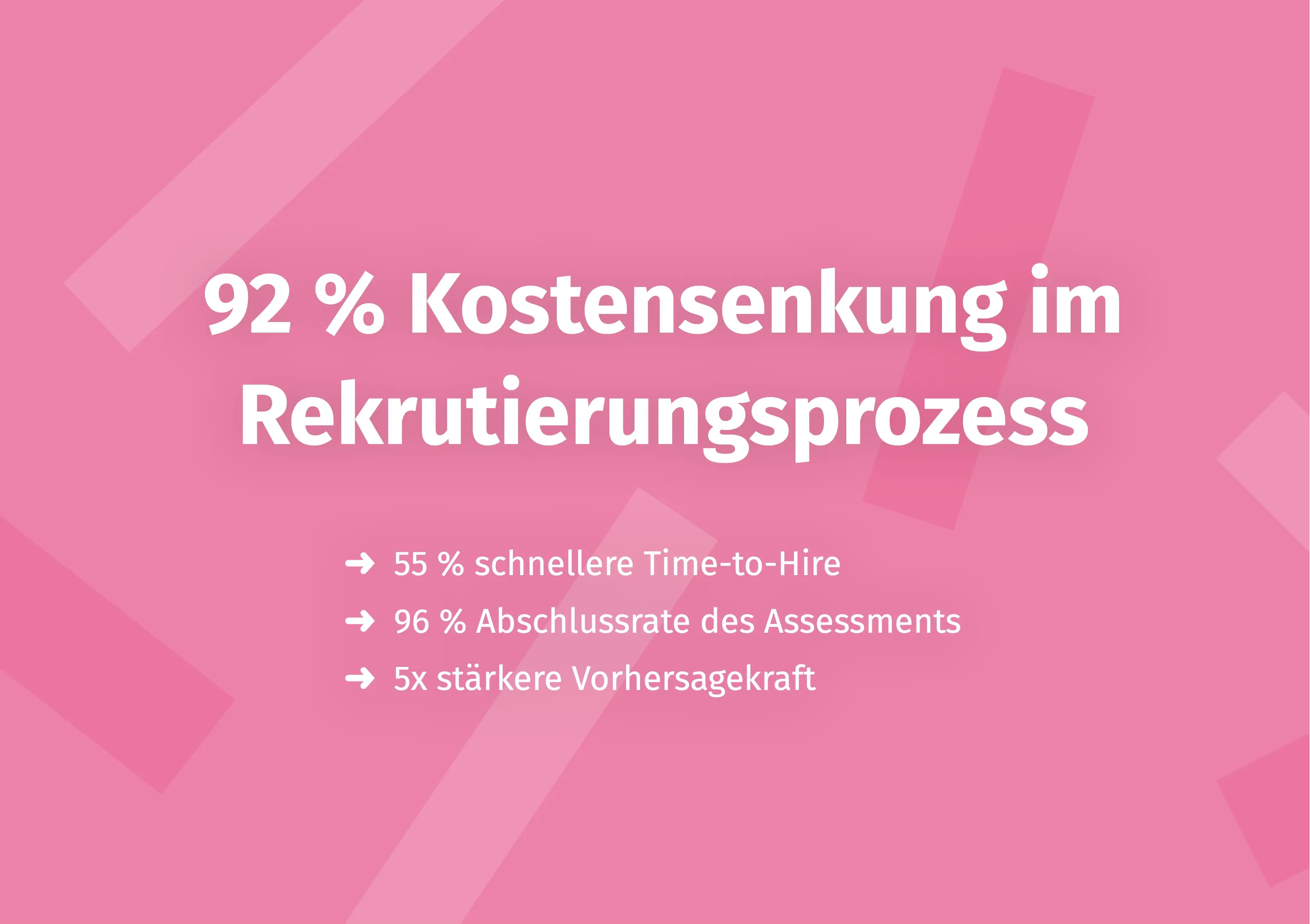
Frankfurt School achieved 30% fewer wrong decisions even before the first interview through objective assessments. Additionally, a 4x ROI was achieved in the first year. Tools like the digital platform Aivy use scientifically validated game-based assessments to reduce unconscious bias and ensure better cultural fit. Over 100,000 assessments have already been conducted.

Recognition, Compensation and Benefits

Ensure your compensation is competitive. Supplement salary with attractive benefits such as flexible working hours, home office options, company pension plans, or health programs. Even more important: practice a genuine culture of recognition through regular feedback, acknowledgment of achievements, and respectful interactions.

Frequently Asked Questions About Employee Turnover

What is a normal/healthy turnover rate?

The average in Germany in 2024 was 18.6%, with 10% controllable turnover. A turnover rate below 15% is considered good. However, the rate is highly industry-dependent: 25.7% is normal in retail, while only 5% in manufacturing. Natural turnover of 5-10% through retirement and relocation is healthy and unavoidable.

How do you calculate the turnover rate?

The BDA formula is: (Number of Departures / Average Workforce) × 100. The Schlüter formula calculates: (Voluntary Departures / (Starting Workforce + New Hires)) × 100. Important: count only voluntary resignations, not retirement or operational dismissals. Example: 50 departures with 500 employees = 10% turnover rate.

How high are turnover costs per employee?

On average, minimum costs of €43,069 per case according to the 2016 study. The rule of thumb: 90-200% of the departing employee's annual salary. Costs comprise exit, recruiting, onboarding, and productivity loss. For misplacements, add approximately €7,200 (20% probability of renewed turnover).

What are the main causes of high turnover?

The five most common reasons are: lack of recognition and poor leadership behavior, missing development and career opportunities, insufficient work-life balance and excessive workload, misplacements due to wrong expectations or poor cultural fit, and inadequate compensation compared to industry standards.

How can turnover be effectively reduced?

Five proven measures: structured onboarding reduces early turnover by 50%. Regular employee conversations and open feedback culture increase engagement. Targeted training and clear career paths show perspectives. Objective talent assessment in recruiting prevents misplacements. Competitive compensation and attractive benefits retain talent.

What is the difference between controllable and uncontrollable turnover?

Controllable turnover: the employee resigns voluntarily (2024 in Germany: 10%). HR can counteract this through employee retention. Uncontrollable turnover: retirement, relocation, or operational dismissals (2024: 8.6%). The company can hardly prevent these departures. Natural turnover through retirement is unavoidable and should be viewed as healthy.

What role does Generation Y/Z play in rising turnover?

Millennials (Generation Y) show the highest willingness to change of all generations. 60% have already worked in 2-4 different companies. They have higher expectations regarding meaningful work, regular feedback, and personal development. The skill shortage strengthens their negotiating position – those who are in demand use their options.

How does employee engagement affect turnover?

Only 15% of employees in Germany are truly engaged according to Gallup 2024. High engagement reduces resignation rates by 59%. Every sixth employee has already mentally resigned. Economic costs due to lack of engagement are estimated at €118.4 billion annually – enormous savings potential for companies.

Conclusion: Understanding and Actively Managing Turnover

Employee turnover is a natural part of personnel work, but high turnover rates are avoidable and expensive. At an average of €43,000 per case, costs quickly accumulate to millions – money that would be better invested in employee retention.

The key lies in distinguishing between controllable and uncontrollable turnover. While 8.6% of departures are unavoidable, the 10% voluntary resignations can be significantly reduced through targeted HR measures. Structured onboarding, regular feedback, genuine development opportunities, and objective personnel selection are the most important levers.

Particularly important: avoid misplacements from the start. Those who rely on objective, scientifically validated selection processes in recruiting significantly reduce the risk of early turnover and save costs in the long term.

Would you like to reduce misplacements and lower turnover through objective personnel selection? The digital platform Aivy supports you with scientifically validated assessments.

Sources

Home
-
lexicon
-
Employee Turnover – Definition, Costs & Strategies

Employee Turnover

Employee turnover refers to the movement of employees in and out of an organization. The turnover rate in Germany averaged 18.6% in 2024, with 10% attributed to voluntary (controllable) resignations. Each turnover case incurs costs between €43,000 and a full annual salary – however, targeted employee retention measures can significantly reduce turnover.

What is Employee Turnover? Definition

Employee turnover describes the movement of personnel into and out of a company within a specific period. The term encompasses both departures (resignations, retirement, exits) and arrivals (new hires). In HR practice, the focus is typically on the departure rate, as this presents the greatest challenges for organizations.

The turnover rate is a key metric in HR controlling. It indicates how many employees have left the organization relative to the average workforce. A high turnover rate can signal problems with organizational culture, leadership behavior, or employee retention – and it also generates substantial costs.

Types of Employee Turnover

Employee turnover can be divided into three main categories, each with different causes and varying options for HR intervention.

Natural Turnover

Natural turnover includes departures that are part of the normal lifecycle and cannot be influenced by either the company or the employee. This includes retirement, deaths, or permanent work incapacity. This form of turnover is approximately 5-10% in Germany and should be viewed as healthy and unavoidable.

Controllable Turnover

Controllable turnover occurs when employees voluntarily resign – that is, they leave the company of their own accord. According to the AGA survey 2024, this rate is 10% in Germany. This form of turnover is the key lever for HR measures, as companies can counteract it through employee retention, better leadership, development opportunities, or more attractive working conditions.

Controllable turnover has increased significantly in recent years – a sign that employees today are more willing to change employers if their expectations are not met.

Uncontrollable Turnover

Uncontrollable turnover includes departures that the company cannot prevent but also did not cause. This includes resignations due to relocation, operational dismissals, or departure for family reasons. In 2024, this rate was 8.6% in Germany.

Calculating Turnover Rate – Formula and Example

The turnover rate is an important metric for measuring and managing personnel movement in the organization. There are two common calculation formulas.

BDA Formula vs. Schlüter Formula

BDA Formula (German Employers' Association):

Turnover Rate = (Number of Departures / Average Workforce) × 100

This formula is straightforward and considers all departures relative to the average workforce.

Schlüter Formula:

Turnover Rate = (Voluntary Departures / (Starting Workforce + New Hires)) × 100

The Schlüter formula focuses on voluntary resignations and accounts for new hires. It is more precise for analyzing controllable turnover.

Practical Calculation Example

A company with 500 employees at the beginning of the year hires 50 new employees during the year. 60 people leave the company, 40 of them voluntarily.

BDA Formula:

  • Average workforce: (500 + 490) / 2 = 495
  • Turnover rate: (60 / 495) × 100 = 12.1%

Schlüter Formula:

  • Turnover rate: (40 / (500 + 50)) × 100 = 7.3%

The Schlüter formula shows controllable turnover here, while the BDA formula measures total turnover.

Turnover Rate in Germany 2024 – Current Statistics

The turnover rate in Germany varies significantly by industry and economic conditions. According to the AGA survey 2024, the average turnover rate is 18.6% – an increase of 3.3 percentage points compared to the previous year.

Industry Comparison 2024:

  • Retail: 25.7% (highest turnover)
  • Wholesale and foreign trade: 17.6%
  • Service sector: 15.0%
  • Manufacturing: 5.0% (lowest turnover)

According to the German Economic Institute (IWD), the turnover coefficient in 2022 was approximately 33%, meaning that about one-third of all employment relationships were either started or ended within one year.

Turnover Costs: What Does a Resignation Really Cost?

The costs of employee turnover are frequently underestimated. In addition to obvious recruiting expenses, indirect costs arise that significantly burden company results.

Direct Turnover Costs

Direct costs are clearly measurable and include:

Exit Costs:

  • Unused vacation payout, overtime compensation
  • Severance payments (if agreed)
  • Administrative expenses (termination letters, personnel files)
  • Offboarding process, exit interviews
  • Creation of employment references

Recruiting Costs:

  • Job postings and job boards
  • Recruitment agencies or headhunters
  • Interviews (time investment)
  • Background checks and references
  • Contract negotiations

Onboarding Costs:

  • Training period (reduced productivity)
  • Training and development programs
  • Mentoring by experienced employees
  • IT equipment and workplace setup

According to the 2016 Turnover Cost Study by the Competence Center for Employee Retention, these direct costs average €43,069 per case.

Indirect Turnover Costs

Indirect costs are harder to quantify but often equal the direct costs:

Productivity Loss:

  • Vacancy period (unfilled position)
  • Training phase (reduced performance)
  • Additional burden on existing team
  • Delayed projects

Knowledge Loss:

  • Loss of expertise and experience
  • Loss of customer relationships
  • Interruption of work processes
  • Potential customer poaching

Team Dynamics:

  • Demotivation in the team
  • Uncertainty among remaining employees
  • Deterioration of work atmosphere

Calculating Turnover Costs – Formula and Example

Total turnover costs can be calculated using the following formula:

Turnover Costs = (Exit Costs + Recruiting Costs + Onboarding Costs +
Opportunity Costs + Misplacement Risk) × Number of Turnover Cases

Rule of Thumb: Each turnover case generates costs amounting to 90-200% of the annual salary of the departing employee.

Example Calculation:

A company with 1,000 employees and a turnover rate of 10% (100 departures per year) with average costs of €43,000 per case:

Total Costs = €43,000 × 100 = €4,300,000 per year

By reducing the turnover rate by just 3 percentage points (to 7%), the company would save €1,290,000 annually.

Causes of High Employee Turnover

The reasons for voluntary resignations are diverse. According to the Gallup Engagement Index 2024, only 15% of employees in Germany are truly engaged – a clear indicator of the need for action.

Lack of Recognition and Leadership Quality

Poor leadership behavior is one of the main reasons for resignations. When employees do not feel valued, receive no constructive feedback, or suffer under toxic leadership, willingness to resign increases dramatically. Studies show: people don't leave companies, they leave managers.

Lack of Development Opportunities

Employees want to develop. Without clear career paths, training opportunities, or advancement possibilities, high performers in particular look for alternatives. According to studies, a strong learning culture can increase employee retention by 30-50%.

Misplacements and Poor Cultural Fit

When employees don't fit the position or organizational culture, early turnover often occurs. Misplacements frequently result from subjective selection decisions, unconscious bias, or unclear job requirements. These poor decisions are particularly expensive: in addition to normal turnover costs, approximately €7,200 per case is incurred.

Insufficient Work-Life Balance

Overwork, constant availability, and lack of flexibility drive employees to resign. Generation Y and Z in particular place great value on balanced work-life integration and are willing to change employers to achieve it.

Below-Market Compensation

While salary is rarely the sole reason for resignation, it plays an important role. When compensation is significantly below market level and no other benefits offset this, willingness to change increases – especially in times of skill shortages.

Reducing Turnover – 10 Effective Measures for HR

A high turnover rate is not inevitable. With targeted measures, companies can significantly reduce controllable turnover.

Structured Onboarding from Day 1

Professional onboarding is crucial for long-term retention. Studies show: poor onboarding doubles the probability of early turnover. Good onboarding includes clear training plans, dedicated contact persons, regular check-ins during the first 90 days, and a genuine welcome culture.

Regular Employee Conversations and Feedback Culture

Continuous dialogue prevents internal resignations. Establish regular feedback conversations (quarterly or semi-annually) discussing goals, development, and satisfaction. According to Gallup, employee engagement reduces resignation rates by 59%.

Targeted Training and Career Paths

Invest in your employees' development. Offer individual training opportunities, transparent career paths, and internal advancement opportunities. Clearly show which development steps are possible and actively support personal development.

Objective Personnel Selection (Avoiding Misplacements)

Misplacements are a primary cause of early turnover. Objective talent assessment helps identify the right candidates – based on actual competencies rather than gut feeling.

Frankfurt School achieved 30% fewer wrong decisions even before the first interview through objective assessments. Additionally, a 4x ROI was achieved in the first year. Tools like the digital platform Aivy use scientifically validated game-based assessments to reduce unconscious bias and ensure better cultural fit. Over 100,000 assessments have already been conducted.

Recognition, Compensation and Benefits

Ensure your compensation is competitive. Supplement salary with attractive benefits such as flexible working hours, home office options, company pension plans, or health programs. Even more important: practice a genuine culture of recognition through regular feedback, acknowledgment of achievements, and respectful interactions.

Frequently Asked Questions About Employee Turnover

What is a normal/healthy turnover rate?

The average in Germany in 2024 was 18.6%, with 10% controllable turnover. A turnover rate below 15% is considered good. However, the rate is highly industry-dependent: 25.7% is normal in retail, while only 5% in manufacturing. Natural turnover of 5-10% through retirement and relocation is healthy and unavoidable.

How do you calculate the turnover rate?

The BDA formula is: (Number of Departures / Average Workforce) × 100. The Schlüter formula calculates: (Voluntary Departures / (Starting Workforce + New Hires)) × 100. Important: count only voluntary resignations, not retirement or operational dismissals. Example: 50 departures with 500 employees = 10% turnover rate.

How high are turnover costs per employee?

On average, minimum costs of €43,069 per case according to the 2016 study. The rule of thumb: 90-200% of the departing employee's annual salary. Costs comprise exit, recruiting, onboarding, and productivity loss. For misplacements, add approximately €7,200 (20% probability of renewed turnover).

What are the main causes of high turnover?

The five most common reasons are: lack of recognition and poor leadership behavior, missing development and career opportunities, insufficient work-life balance and excessive workload, misplacements due to wrong expectations or poor cultural fit, and inadequate compensation compared to industry standards.

How can turnover be effectively reduced?

Five proven measures: structured onboarding reduces early turnover by 50%. Regular employee conversations and open feedback culture increase engagement. Targeted training and clear career paths show perspectives. Objective talent assessment in recruiting prevents misplacements. Competitive compensation and attractive benefits retain talent.

What is the difference between controllable and uncontrollable turnover?

Controllable turnover: the employee resigns voluntarily (2024 in Germany: 10%). HR can counteract this through employee retention. Uncontrollable turnover: retirement, relocation, or operational dismissals (2024: 8.6%). The company can hardly prevent these departures. Natural turnover through retirement is unavoidable and should be viewed as healthy.

What role does Generation Y/Z play in rising turnover?

Millennials (Generation Y) show the highest willingness to change of all generations. 60% have already worked in 2-4 different companies. They have higher expectations regarding meaningful work, regular feedback, and personal development. The skill shortage strengthens their negotiating position – those who are in demand use their options.

How does employee engagement affect turnover?

Only 15% of employees in Germany are truly engaged according to Gallup 2024. High engagement reduces resignation rates by 59%. Every sixth employee has already mentally resigned. Economic costs due to lack of engagement are estimated at €118.4 billion annually – enormous savings potential for companies.

Conclusion: Understanding and Actively Managing Turnover

Employee turnover is a natural part of personnel work, but high turnover rates are avoidable and expensive. At an average of €43,000 per case, costs quickly accumulate to millions – money that would be better invested in employee retention.

The key lies in distinguishing between controllable and uncontrollable turnover. While 8.6% of departures are unavoidable, the 10% voluntary resignations can be significantly reduced through targeted HR measures. Structured onboarding, regular feedback, genuine development opportunities, and objective personnel selection are the most important levers.

Particularly important: avoid misplacements from the start. Those who rely on objective, scientifically validated selection processes in recruiting significantly reduce the risk of early turnover and save costs in the long term.

Would you like to reduce misplacements and lower turnover through objective personnel selection? The digital platform Aivy supports you with scientifically validated assessments.

Sources

Heading 1

Heading 2

Heading 3

Heading 4

Heading 5
Heading 6

Lorem ipsum dolor sit amet, consectetur adipiscing elit, sed do eiusmod tempor incididunt ut laboratories et dolore magna aliqua. Ut Enim ad Minim Veniam, Quis Nostrud Exercitation Ullamco Laboris Nisi ut Aliquip ex ea Commodo Consequat. Duis aute irure dolor in reprehenderite in voluptate velit eat cillum dolore eu fugiate nulla pariature.

Block quote

Ordered list

  1. Item 1
  2. Item 2
  3. Item 3

Unordered list

  • Item A
  • Item B
  • Item C

Text link

Bold text

Emphasis

Superscript

Subscript

Heading 1

Heading 2

Heading 3

Heading 4

Heading 5
Heading 6

Lorem ipsum dolor sit amet, consectetur adipiscing elit, sed do eiusmod tempor incididunt ut laboratories et dolore magna aliqua. Ut Enim ad Minim Veniam, Quis Nostrud Exercitation Ullamco Laboris Nisi ut Aliquip ex ea Commodo Consequat. Duis aute irure dolor in reprehenderite in voluptate velit eat cillum dolore eu fugiate nulla pariature.

Block quote

Ordered list

  1. Item 1
  2. Item 2
  3. Item 3

Unordered list

  • Item A
  • Item B
  • Item C

Text link

Bold text

Emphasis

Superscript

Subscript

Florian Dyballa

CEO, Co-Founder

About Florian

  • Founder & CEO of Aivy — develops innovative ways of personnel diagnostics and is one of the top 10 HR tech founders in Germany (business punk)
  • More than 500,000 digital aptitude tests successfully used by more than 100 companies such as Lufthansa, Würth and Hermes
  • Three times honored with the HR Innovation Award and regularly featured in leading business media (WirtschaftsWoche, Handelsblatt and FAZ)
  • As a business psychologist and digital expert, combines well-founded tests with AI for fair opportunities in personnel selection
  • Shares expertise as a sought-after thought leader in the HR tech industry — in podcasts, media, and at key industry events
  • Actively shapes the future of the working world — by combining science and technology for better and fairer personnel decisions
success stories

You can expect these results

Discover what successes other companies are achieving by using Aivy. Be inspired and do the same as they do.

Many innovative employers already rely on Aivy

Say that #HeRoes

“Through the very high response rate Persuade and retain We our trainees early in the application process. ”

Tamara Molitor
Training manager at Würth
Tamara Molitor

“That Strengths profile reflects 1:1 our experience in a personal conversation. ”

Wolfgang Böhm
Training manager at DIEHL
Wolfgang Böhm Portrait

“Through objective criteria, we promote equal opportunities and Diversity in recruiting. ”

Marie-Jo Goldmann
Head of HR at Nucao
Marie Jo Goldmann Portrait

Aivy is the bestWhat I've come across so far in the German diagnostics start-up sector. ”

Carl-Christoph Fellinger
Strategic Talent Acquisition at Beiersdorf
Christoph Feillinger Portrait

“Selection process which Make fun. ”

Anna Miels
Learning & Development Manager at apoproject
Anna Miels Portrait

“Applicants find out for which position they have the suitable competencies bring along. ”

Jürgen Muthig
Head of Vocational Training at Fresenius
Jürgen Muthig Fresenius Portrait

“Get to know hidden potential and Develop applicants in a targeted manner. ”

Christian Schütz
HR manager at KU64
Christian Schuetz

Saves time and is a lot of fun doing daily work. ”

Matthias Kühne
Director People & Culture at MCI Germany
Matthias Kühne

Engaging candidate experience through communication on equal terms. ”

Theresa Schröder
Head of HR at Horn & Bauer
Theresa Schröder

“Very solid, scientifically based, innovative even from a candidate's point of view and All in all, simply well thought-out. ”

Dr. Kevin-Lim Jungbauer
Recruiting and HR Diagnostics Expert at Beiersdorf
Kevin Jungbauer
YOUR assistant FOR TALENT ASSESSMENT

Try it for free

Become a HeRo 🦸 and understand candidate fit - even before the first job interview...