
A competency assessment is a structured process for evaluating the skills and potential of employees or job applicants. Unlike performance appraisals, it does not focus on past results but on existing competencies and how well they match a given role. Objective methods such as scientifically validated assessments significantly improve the quality and fairness of evaluations.
What Is a Competency Assessment?
A competency assessment is a method for examining the current skill level of employees or applicants and comparing it against the requirements of a specific role. At its core, it is a gap analysis: What skills does a person bring, and what skills are needed for a particular position?
Different types of competencies are evaluated:
- Technical competencies: Job-specific knowledge and technical skills
- Methodological competencies: Problem-solving ability, analytical thinking, systems thinking
- Social competencies: Teamwork, communication, conflict resolution
- Personal competencies: Self-organization, sense of responsibility, initiative
The competency assessment reveals skill gaps and provides the foundation for targeted professional development, informed hiring decisions, or strategic succession planning.
Competency Assessment vs. Performance Appraisal
These two terms are often confused, but they differ fundamentally:
| Characteristic | Performance Appraisal | Competency Assessment |
|---|---|---|
| Focus | Past work results | Existing skills and potential |
| Orientation | Output (What was achieved?) | Input (What can the person do?) |
| Time reference | Past-oriented | Future-oriented |
| Goal | Compensation, goal achievement | Development, role fit |
A performance appraisal evaluates whether agreed-upon targets were met—such as sales figures or project completions. A competency assessment, on the other hand, analyzes what skills a person possesses and whether these match their current or a future role.
Both approaches complement each other: The performance appraisal shows the result; the competency assessment explains why someone delivers that performance—and where development potential lies.
Methods of Competency Assessment
Various methods are available for conducting a well-founded competency assessment. The choice depends on the context: Is it about existing employees or applicants in the selection process?
Self-Assessment
In a self-assessment, employees evaluate their own competencies using a structured questionnaire. This method promotes self-reflection and personal responsibility. However, it is prone to bias: Some people overestimate themselves, while others systematically underestimate their abilities.
Supervisor Assessment
The direct manager evaluates competencies based on day-to-day observations. The advantage: Supervisors know the role requirements and can assess behavior in the work context. The disadvantage: Subjective perceptions and unconscious biases can distort the results.
360-Degree Feedback
In 360-degree feedback, a person is evaluated from multiple perspectives: by supervisors, colleagues, direct reports, and sometimes by clients or business partners. This method provides a differentiated picture since various viewpoints come together. However, the effort required is higher than with simpler methods.
Competency-Based Assessments
Scientifically validated assessments measure competencies objectively and in a standardized way. Unlike subjective evaluations, validated testing methods are used here—developed according to quality criteria such as those outlined in DIN 33430, the German standard for job-related aptitude diagnostics.
Modern approaches use game-based assessments: Instead of traditional questionnaires, participants solve game-like tasks that measure cognitive abilities and personality traits. This method reduces unconscious bias and delivers more objective data than subjective evaluations.
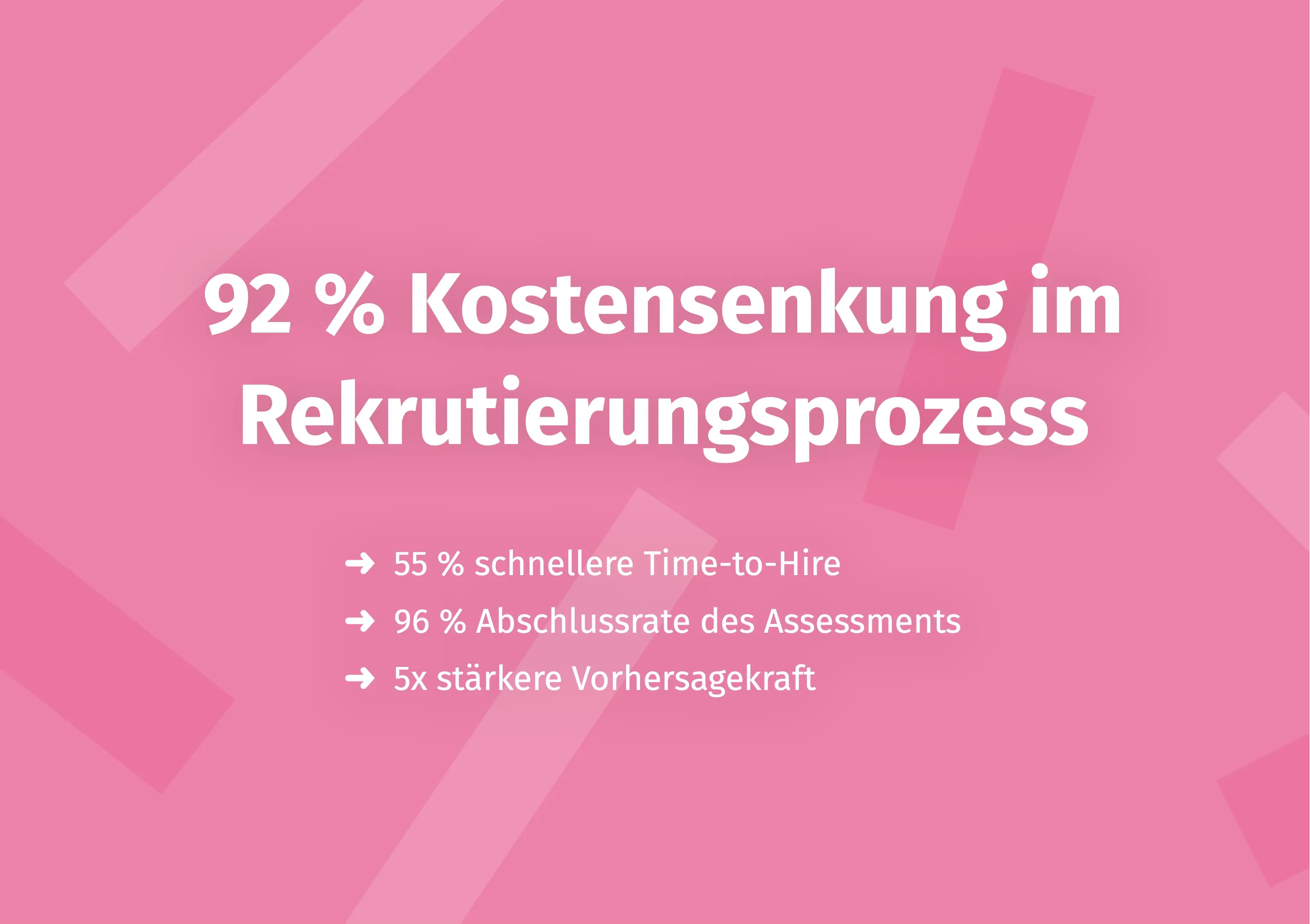
Practice shows: Companies like Lufthansa achieve a 96% accuracy rate with scientifically validated assessments in predicting which applicants will succeed in subsequent selection stages—while maintaining 81% participant satisfaction.
Conducting a Competency Assessment: Step by Step
A structured competency assessment follows a clear process:
1. Define Competencies
Before you can assess competencies, you need to know which skills are relevant for the respective role. A competency model—a structured list of requirements—forms the foundation. Distinguish between must-have competencies (essential) and nice-to-have competencies (desirable).
2. Select the Method
Choose the appropriate assessment method based on the context:
- For existing employees: Self-assessment combined with supervisor assessment or 360-degree feedback
- For applicants: Competency-based assessments in the selection process, supplemented by structured interviews
3. Conduct the Assessment
Carry out the assessment transparently and fairly. Inform the affected individuals about the purpose, method, and use of results. When multiple assessors are involved, a uniform rating scale should be used to ensure comparability.
4. Use the Results
The competency assessment is not an end in itself. Use the results for concrete actions: targeted training, adjustment of responsibilities, or well-founded decisions regarding promotions. Discuss the results in a personal conversation and agree on next steps together.
Benefits of Objective Competency Assessment
Subjective evaluations are prone to distortions: First impressions, personal sympathy, or unconscious stereotypes influence the outcome. Objective methods reduce these sources of error and offer additional benefits:
- Fairness and equal opportunity: Everyone is evaluated according to the same criteria
- Better predictive validity: Scientifically validated methods predict later job success better than gut feeling or unstructured interviews (Schmidt & Hunter, 1998)
- Legal compliance: Standardized procedures meet the requirements of anti-discrimination laws for bias-free selection decisions
- Acceptance: Transparent criteria increase acceptance among those being assessed
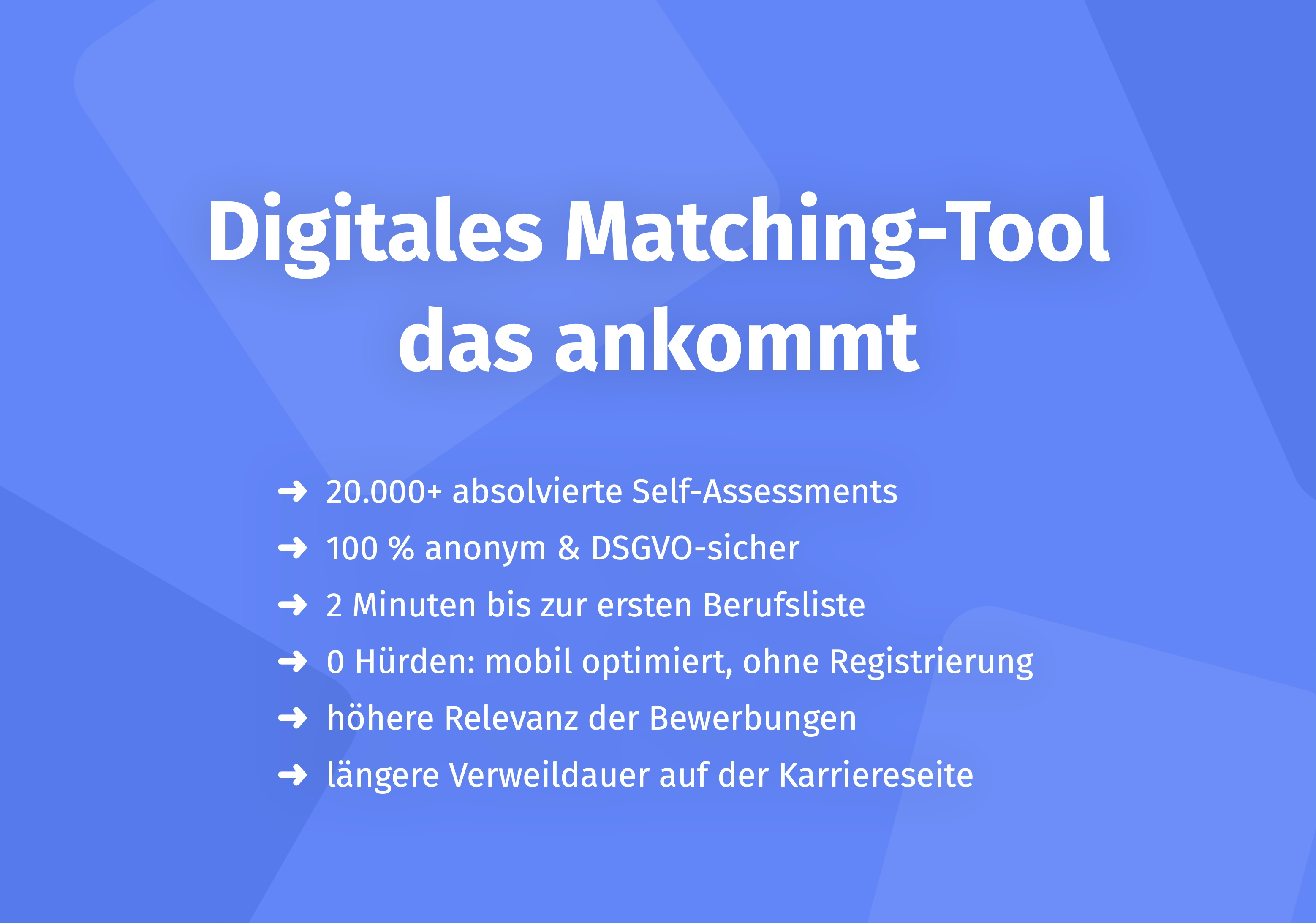
Digital aptitude diagnostics platforms like Aivy enable objective competency assessment based on scientifically validated methods. The platform's game-based assessments measure cognitive abilities and personality traits without the influence of résumé or photo—thus promoting equal opportunity and diversity in the selection process.
Frequently Asked Questions About Competency Assessment
What is a competency assessment?
A competency assessment is a structured process for evaluating skills, knowledge, and potential. It compares existing competencies with the requirements of a role and forms the basis for professional development, hiring, and promotions.
What is the difference between competency assessment and performance appraisal?
A performance appraisal evaluates past work results and is output-oriented. A competency assessment, on the other hand, analyzes existing skills and potential—it is input-oriented and future-focused. While the performance appraisal asks "What was achieved?", the competency assessment asks "What can the person do?".
What methods of competency assessment are there?
The most common methods are: self-assessment, supervisor assessment, 180- and 360-degree feedback, and competency-based assessments. Scientifically validated assessments deliver the most objective results because they are standardized and validated.
How often should a competency assessment take place?
In the selection process, the assessment occurs once. For existing employees, an annual assessment is recommended, for example as part of the annual review. Additional assessments should be conducted when roles change or promotions are considered.
Who should assess competencies?
Ideally, multiple perspectives: direct supervisors for day-to-day observations, colleagues for collaboration insights, and objective tests for bias-free data. The multi-rater approach (multiple assessors) increases the validity of results.
What is a skills matrix?
A skills matrix is an overview table showing which employees possess which competencies at what level. It visualizes skill gaps and strengths within a team and forms the basis for strategic workforce planning.
Which competencies should be assessed?
The relevant competencies depend on the role. Typically, four categories are assessed: technical competencies (job-specific knowledge), methodological competencies (problem-solving, analytical thinking), social competencies (teamwork, communication), and personal competencies (self-organization, sense of responsibility).
Conclusion
Competency assessment is a central tool for well-founded HR decisions—from hiring through development to succession planning. Unlike backward-looking performance appraisals, it focuses on skills and potential, enabling future-oriented workforce management.
The choice of method is crucial: Subjective evaluations are prone to bias, while scientifically validated methods deliver more objective and meaningful results. Modern approaches like game-based assessments combine objectivity with a positive candidate experience.
Want to assess competencies objectively and scientifically? Learn more about the Aivy aptitude diagnostics platform
Sources
- DIN 33430 – Requirements for Job-Related Aptitude Diagnostics. German Institute for Standardization (DIN), 2016. https://www.din.de/de
- Schmidt, F. L. & Hunter, J. E. (1998). The Validity and Utility of Selection Methods in Personnel Psychology: Practical and Theoretical Implications of 85 Years of Research Findings. Psychological Bulletin, 124(2), 262–274.
- General Equal Treatment Act (AGG). German Federal Ministry of Justice, 2006. https://www.gesetze-im-internet.de/agg/
- Personio HR Lexicon: Competency Model – Definition, Tasks and Approach. https://www.personio.de/hr-lexikon/kompetenzmodell/

Make a better pre-selection — even before the first interview
In just a few minutes, Aivy shows you which candidates really fit the role. Beyond resumes based on strengths.