You want to explore your strengths as a talent?

This way

Login

Candidate Experience: Definition, Optimization & Tools

Home
-
Lexicon
-
Candidate Experience: Definition, Optimization & Tools

Candidate Experience: How to make your recruiting a real experience

Imagine you're going to a restaurant. You will be greeted warmly, the service is attentive and the food tastes excellent. You'll recommend this experience and maybe even become a regular guest. That is exactly the goal of a positive Candidate Experience in recruiting: Treating applicants in such a way that, even if rejected, they have a positive experience with your company and become brand ambassadors.

In an increasingly tight job market, an excellent candidate experience is no longer a luxury, but a decisive competitive advantage. It decides whether the best talent comes to you, stays with you and recommend your company — or whether they choose the competition.

In this article, you will learn what is behind the term, why it is so important and how to make your recruiting processes scientifically sound and human at the same time.

What is candidate experience? A definition

The candidate experience describes the The entirety of all experiences, which an applicant does with your company during the entire application process. It doesn't just start with the application, but much earlier: when you first contact your employer brand, be it via social media, your career website or a job advertisement. It also does not end with acceptance or rejection, but extends right through to familiarization or, in the event of rejection, until the end of communication.

A positive application process is characterized by the following features:

  • Fast & transparent communication: Applicants are regularly informed about the status of their application.
  • Simple & intuitive processes: Applying is uncomplicated and ideally also possible on the go.
  • Respectful & respectful treatment: Applicants feel that they are taken seriously and valued as a person.
  • Fairness & Objectivity: The decision-making processes are comprehensible and free from unconscious prejudices.
  • Feedback culture: Applicants receive constructive feedback.

The candidate journey: phases and stumbling blocks

In order to understand and optimize the candidate experience, it helps to understand the applicants' entire journey. This so-called Candidate Journey can be divided into several phases:

  1. Research and interest phase: Here, potential applicants browse through your career website, social media channels, and job boards. An unclear or unattractive appearance can lead to abandonment here.
  2. Application phase: The core process. Is the application form too long? Do you have to cumbersome manually type out a resume even though the data is already attached? High bounce rates are inevitable here.
  3. Assessment phase: Your HR colleagues review the documents, conduct interviews and assessments. A lack of feedback after the application or an unclear process of the next steps are common points of criticism here. Unfair or one-sided selection methods can also leave a negative experience.
  4. Acceptance or rejection phase: Regardless of the outcome, quick, personal and respectful communication is crucial. A standardized rejection without a reason is the opposite of a positive candidate experience.
  5. Engagement phase (onboarding): If the candidate is hired, the transition to the company is decisive. A poor onboarding program quickly fades away the positive experience built up earlier.

The biggest stumbling blocks along the way:

  • Long response times: Applicants who wait weeks for feedback.
  • Lack of transparency: Unclear contact persons and next steps.
  • Lack of appreciation: Standardised mass emails and impersonal communication.
  • Inconsistent experiences: The candidate journey is not consistent from the research phase to the contract.

Why a positive candidate experience determines the success of your company

The importance of candidate experience goes far beyond just “being nice.” It has a direct impact on the most important HR figures:

  • Lowering the bounce rate: The more positive the application experience, the lower the probability that qualified candidates will cancel the process prematurely. A Glassdoor study shows that companies that invest in a positive candidate experience can reduce their bounce rate in the application process by 40%.
  • Strengthening the employer brand: A positive candidate experience strengthens your employer branding. Satisfied applicants become ambassadors and share their positive experiences within their network. According to a CareerArc study, this affects 72% of satisfied candidates. That makes your company more attractive. (https://www.careerarc.com/blog/candidate-experience-study-infographic/)
  • Increasing the quality of applicants: A strong brand attracts better talent.
  • Improving hiring quality: A fair and objective candidate experience helps to find the really suitable talent, which increases long-term employee retention and satisfaction.
  • Legal protection: A transparent and fair process that actively avoids discrimination protects you against legal risks.

Especially in industries with a shortage of skilled workers or in competitive talent markets (e.g. IT, engineering), the candidate experience can be the decisive factor in setting yourself apart from the competition. It is not only a tool for finding the right people, but also for not hiring the wrong people.

How you can measure and analyze candidate experience

To improve your candidate experience, you must first measure it. The most important key figures (KPIs) are:

  • Candidate Satisfaction Score: You can use short surveys to determine after the process is complete.
  • Bounce rate (drop off rate): Where in the process do most candidates drop out?
  • Duration of the application process (time-to-hire: How long does it take from application to acceptance?
  • Recommendation rate (NPS): How likely is it that applicants would recommend your company as an employer?

10 tips to improve the candidate experience

Optimizing the candidate experience is an ongoing process. With the following best practices, you can immediately take your recruiting to a new level.

  1. Transparent communication: Proactively inform applicants about the status of their application and the next steps.
  2. Efficient processes: Keep application forms short and streamlined. Avoid unnecessary bureaucracy.
  3. Show appreciation: Every applicant should receive confirmation of receipt and, in case of rejection, personal, constructive feedback.
  4. Get feedback: Use surveys to systematically record and evaluate applicants' experiences.
  5. Use modern technologies: Use digital tools that automate the process and make it intuitive for applicants.
  6. Realistic job offer: Avoid creating unrealistic expectations during the selection process. Offer candidates an authentic insight into corporate culture.
  7. Gamification: Playful elements can not only make the application process more attractive, but also provide more objective data.
  8. Fairness & Objectivity: Make sure that the selection processes are free from unconscious prejudices (bias). (A link to an article about bias in recruiting could follow here).
  9. Optimize job ads: Make job ads more accessible by using gender-sensitive language and formulating requirements precisely.

Give feedback: Even after a rejection, applicants should receive professional and appreciative feedback.

Scientific approach meets technology

Many companies recognize the importance of candidate experience, but implementation often fails due to unstructured processes and a lack of objective, scientifically based tools. The problem: Traditional methods such as classic cover letters, unstructured interviews or standardized personality tests are often time-consuming, subjective and do not offer a positive user experience. This is where a modern, digital approach comes in.

One solution to this problem is to use Game-based assessments and scientifically based questionnaires that are integrated into a user-friendly digital platform. Such tools enable you to combine the best of two worlds:

  1. Objectivity & Fairness: The methods are scientifically validated and measure the relevant competencies that predict successful performance on the job. This helps to minimize unconscious bias in the selection process and to ensure non-discriminatory decision-making, as required by DIN 33430. [Set link to DIN 33430 article].
  2. Attractive candidate experience: Instead of boring, static forms, applicants go through interactive, playful assessments. This makes the process a positive, exciting experience, is appreciative and leads to better conversations.
  3. Efficiency & transparency: The processes are automated and give applicants immediate feedback on their strengths.

Aivy: A solution that combines science and experience

The Aivy platform was developed precisely for these challenges. It combines scientific aptitude diagnostics with cutting-edge technology and a focus on user experience.

  • Scientific basis: The assessments are based on the latest psychological findings. They measure relevant soft skills, cognitive abilities, and fit with corporate culture in a way that is objective and fair.
  • Gamification as an experience: Applicants complete playful tasks on smartphones. It's intuitive, fun and creates a positive, modern candidate experience. Frankfurt School was thus able to achieve a 30% higher candidate experience thanks to Aivy. Studies show that gamification works well regardless of age.
  • Transparency and feedback: After completing the assessment, applicants receive a detailed evaluation of their strengths and potential. This immediate, appreciative feedback is a key element for a positive CE, even if rejected.

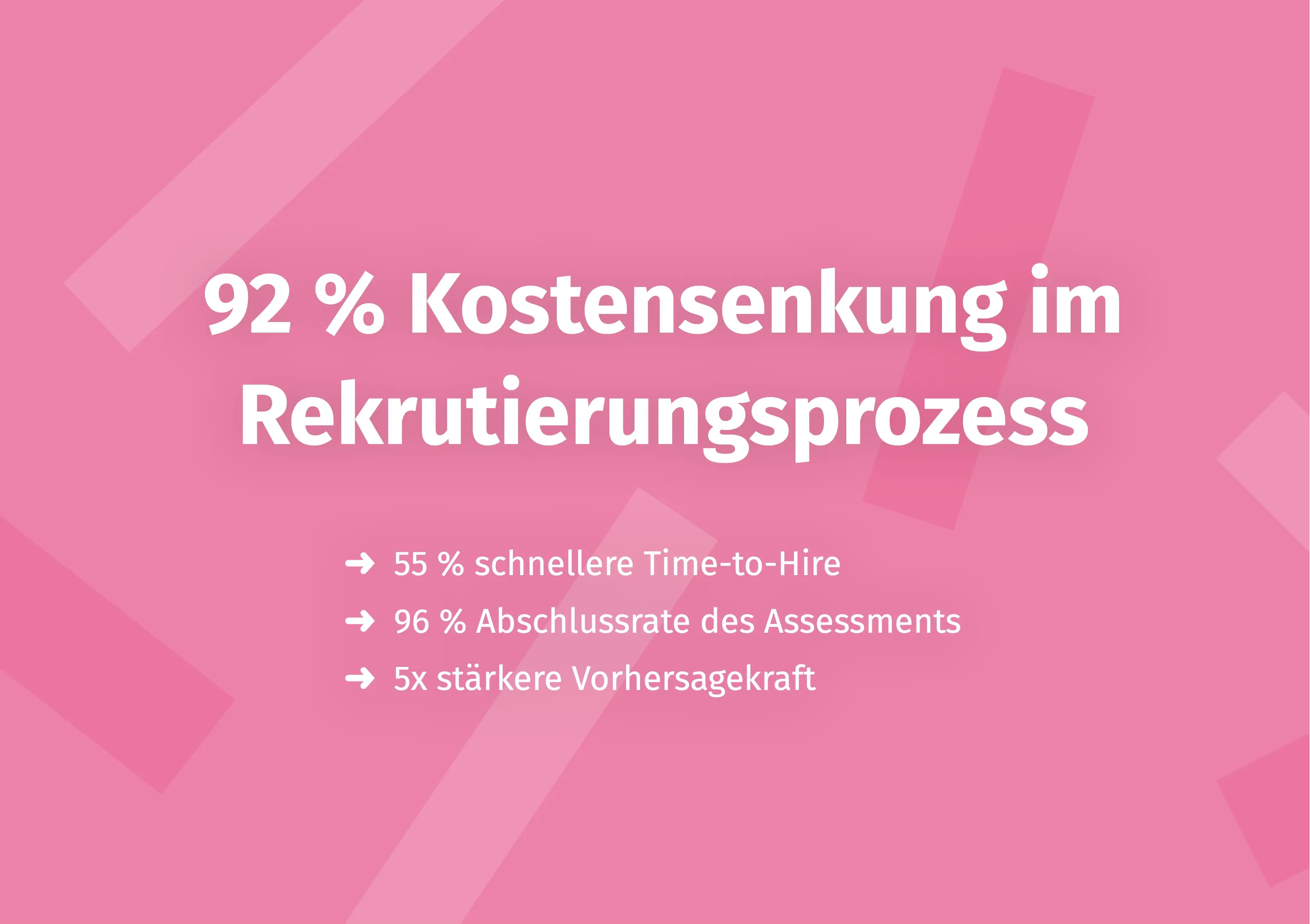
Efficiency for HR teams: The platform automates time-consuming steps so that HR experts can focus on what's important: human contact and strategic selection. This reduces time-to-hire by 55%.

Practical example: How Diehl snatches applicants away from other companies

The company Diehl was looking for an opportunity to modernize its recruiting processes. A decisive point was to improve the candidate experience for the young target group. By using Aivy, the application processes were digitized and enhanced with playful elements. The result: The application rate rose and candidate satisfaction improved significantly. So strong that they were even able to “snatch away” the best talent from other companies. The company was thus able to position itself as a modern, attractive employer.

Conclusion: Candidate experience as a strategic success factor

Candidate experience is much more than just a trend — it is a strategic success factor in modern recruiting. In a world where talent is scarce, the company that not only finds the best candidates but also treats them best wins.

The basis for this is a smooth, transparent and, above all, appreciative application process. By using scientifically based, digital solutions such as those from Aivy, you can create a candidate experience that not only inspires your applicants, but also achieves your recruiting goals more efficiently. It is the path to fair, objective and human recruiting that strengthens your company in the long term.

Frequently asked questions (FAQ) about the candidate experience

  1. What is candidate experience? The Candidate Experience describes all experiences that applicants have with a company during the entire application process. This includes initial contact via the job advertisement, the application itself, interviews, tests, acceptance or rejection and onboarding.
  2. Why is a good candidate experience so important? A positive candidate experience significantly contributes to strengthening the employer brand, reduces the bounce rate in the application process and increases the quality of hired employees. It can represent a decisive competitive advantage in the event of a shortage of skilled workers.
  3. How can you improve the candidate experience? To improve the candidate experience, you should look at the entire process from the applicants' perspective. Important measures include fast and transparent communication, a simple, mobile application process, appreciative feedback and the use of objective, fair selection methods.
  4. How do you measure candidate experience? The candidate experience can be measured using key figures such as applicant satisfaction (e.g. through surveys), the bounce rate in the process, or the duration of the application process. Feedback from applicants is also an important source.
  5. How can gamification contribute to the candidate experience? Gamification in recruiting, as used in game-based assessments, makes the application process more interactive, entertaining and fair. Applicants can demonstrate their skills in a playful environment, which positively influences the candidate experience and at the same time provides objective data for the selection process.

Sources:

  • Blouin, D., Day, A.G., & Pavlov, A. (2012). Comparative Reliability of Structured Versus Unstructured Interviews in the Admission Process of a Residency Program. Journal of Graduate Medical Education, 4(1) 101—105 https://doi.org/10.4300/jgme-d-10-00248.1 
  • Bohnet, I. (2016). Ten Evidence-Based Practices for De-Biasing the Workplace. Harvard Kennedy School.
  • CareerArc (2018). 2018 Candidate Experience Study.
  • DIN. (2016). DIN 33430: Requirements for work-related aptitude diagnostics. Beuth Verlag.
  • Leutner, F., Ahmetoglu, G., Chamorro-Premuzic, T., & Kostopoulos, G. (2023). Game-based assessments of cognitive ability in recruitment: validity, fairness, and test-taking experience. Frontiers in Psychology, 14, 942662. https://doi.org/10.3389/fpsyg.2022.942662 
  • Talent Board (2022). 2022 Candidate Experience Benchmark Research Report.

Home
-
lexicon
-
Candidate Experience: Definition, Optimization & Tools

Candidate Experience: How to make your recruiting a real experience

Imagine you're going to a restaurant. You will be greeted warmly, the service is attentive and the food tastes excellent. You'll recommend this experience and maybe even become a regular guest. That is exactly the goal of a positive Candidate Experience in recruiting: Treating applicants in such a way that, even if rejected, they have a positive experience with your company and become brand ambassadors.

In an increasingly tight job market, an excellent candidate experience is no longer a luxury, but a decisive competitive advantage. It decides whether the best talent comes to you, stays with you and recommend your company — or whether they choose the competition.

In this article, you will learn what is behind the term, why it is so important and how to make your recruiting processes scientifically sound and human at the same time.

What is candidate experience? A definition

The candidate experience describes the The entirety of all experiences, which an applicant does with your company during the entire application process. It doesn't just start with the application, but much earlier: when you first contact your employer brand, be it via social media, your career website or a job advertisement. It also does not end with acceptance or rejection, but extends right through to familiarization or, in the event of rejection, until the end of communication.

A positive application process is characterized by the following features:

  • Fast & transparent communication: Applicants are regularly informed about the status of their application.
  • Simple & intuitive processes: Applying is uncomplicated and ideally also possible on the go.
  • Respectful & respectful treatment: Applicants feel that they are taken seriously and valued as a person.
  • Fairness & Objectivity: The decision-making processes are comprehensible and free from unconscious prejudices.
  • Feedback culture: Applicants receive constructive feedback.

The candidate journey: phases and stumbling blocks

In order to understand and optimize the candidate experience, it helps to understand the applicants' entire journey. This so-called Candidate Journey can be divided into several phases:

  1. Research and interest phase: Here, potential applicants browse through your career website, social media channels, and job boards. An unclear or unattractive appearance can lead to abandonment here.
  2. Application phase: The core process. Is the application form too long? Do you have to cumbersome manually type out a resume even though the data is already attached? High bounce rates are inevitable here.
  3. Assessment phase: Your HR colleagues review the documents, conduct interviews and assessments. A lack of feedback after the application or an unclear process of the next steps are common points of criticism here. Unfair or one-sided selection methods can also leave a negative experience.
  4. Acceptance or rejection phase: Regardless of the outcome, quick, personal and respectful communication is crucial. A standardized rejection without a reason is the opposite of a positive candidate experience.
  5. Engagement phase (onboarding): If the candidate is hired, the transition to the company is decisive. A poor onboarding program quickly fades away the positive experience built up earlier.

The biggest stumbling blocks along the way:

  • Long response times: Applicants who wait weeks for feedback.
  • Lack of transparency: Unclear contact persons and next steps.
  • Lack of appreciation: Standardised mass emails and impersonal communication.
  • Inconsistent experiences: The candidate journey is not consistent from the research phase to the contract.

Why a positive candidate experience determines the success of your company

The importance of candidate experience goes far beyond just “being nice.” It has a direct impact on the most important HR figures:

  • Lowering the bounce rate: The more positive the application experience, the lower the probability that qualified candidates will cancel the process prematurely. A Glassdoor study shows that companies that invest in a positive candidate experience can reduce their bounce rate in the application process by 40%.
  • Strengthening the employer brand: A positive candidate experience strengthens your employer branding. Satisfied applicants become ambassadors and share their positive experiences within their network. According to a CareerArc study, this affects 72% of satisfied candidates. That makes your company more attractive. (https://www.careerarc.com/blog/candidate-experience-study-infographic/)
  • Increasing the quality of applicants: A strong brand attracts better talent.
  • Improving hiring quality: A fair and objective candidate experience helps to find the really suitable talent, which increases long-term employee retention and satisfaction.
  • Legal protection: A transparent and fair process that actively avoids discrimination protects you against legal risks.

Especially in industries with a shortage of skilled workers or in competitive talent markets (e.g. IT, engineering), the candidate experience can be the decisive factor in setting yourself apart from the competition. It is not only a tool for finding the right people, but also for not hiring the wrong people.

How you can measure and analyze candidate experience

To improve your candidate experience, you must first measure it. The most important key figures (KPIs) are:

  • Candidate Satisfaction Score: You can use short surveys to determine after the process is complete.
  • Bounce rate (drop off rate): Where in the process do most candidates drop out?
  • Duration of the application process (time-to-hire: How long does it take from application to acceptance?
  • Recommendation rate (NPS): How likely is it that applicants would recommend your company as an employer?

10 tips to improve the candidate experience

Optimizing the candidate experience is an ongoing process. With the following best practices, you can immediately take your recruiting to a new level.

  1. Transparent communication: Proactively inform applicants about the status of their application and the next steps.
  2. Efficient processes: Keep application forms short and streamlined. Avoid unnecessary bureaucracy.
  3. Show appreciation: Every applicant should receive confirmation of receipt and, in case of rejection, personal, constructive feedback.
  4. Get feedback: Use surveys to systematically record and evaluate applicants' experiences.
  5. Use modern technologies: Use digital tools that automate the process and make it intuitive for applicants.
  6. Realistic job offer: Avoid creating unrealistic expectations during the selection process. Offer candidates an authentic insight into corporate culture.
  7. Gamification: Playful elements can not only make the application process more attractive, but also provide more objective data.
  8. Fairness & Objectivity: Make sure that the selection processes are free from unconscious prejudices (bias). (A link to an article about bias in recruiting could follow here).
  9. Optimize job ads: Make job ads more accessible by using gender-sensitive language and formulating requirements precisely.

Give feedback: Even after a rejection, applicants should receive professional and appreciative feedback.

Scientific approach meets technology

Many companies recognize the importance of candidate experience, but implementation often fails due to unstructured processes and a lack of objective, scientifically based tools. The problem: Traditional methods such as classic cover letters, unstructured interviews or standardized personality tests are often time-consuming, subjective and do not offer a positive user experience. This is where a modern, digital approach comes in.

One solution to this problem is to use Game-based assessments and scientifically based questionnaires that are integrated into a user-friendly digital platform. Such tools enable you to combine the best of two worlds:

  1. Objectivity & Fairness: The methods are scientifically validated and measure the relevant competencies that predict successful performance on the job. This helps to minimize unconscious bias in the selection process and to ensure non-discriminatory decision-making, as required by DIN 33430. [Set link to DIN 33430 article].
  2. Attractive candidate experience: Instead of boring, static forms, applicants go through interactive, playful assessments. This makes the process a positive, exciting experience, is appreciative and leads to better conversations.
  3. Efficiency & transparency: The processes are automated and give applicants immediate feedback on their strengths.

Aivy: A solution that combines science and experience

The Aivy platform was developed precisely for these challenges. It combines scientific aptitude diagnostics with cutting-edge technology and a focus on user experience.

  • Scientific basis: The assessments are based on the latest psychological findings. They measure relevant soft skills, cognitive abilities, and fit with corporate culture in a way that is objective and fair.
  • Gamification as an experience: Applicants complete playful tasks on smartphones. It's intuitive, fun and creates a positive, modern candidate experience. Frankfurt School was thus able to achieve a 30% higher candidate experience thanks to Aivy. Studies show that gamification works well regardless of age.
  • Transparency and feedback: After completing the assessment, applicants receive a detailed evaluation of their strengths and potential. This immediate, appreciative feedback is a key element for a positive CE, even if rejected.

Efficiency for HR teams: The platform automates time-consuming steps so that HR experts can focus on what's important: human contact and strategic selection. This reduces time-to-hire by 55%.

Practical example: How Diehl snatches applicants away from other companies

The company Diehl was looking for an opportunity to modernize its recruiting processes. A decisive point was to improve the candidate experience for the young target group. By using Aivy, the application processes were digitized and enhanced with playful elements. The result: The application rate rose and candidate satisfaction improved significantly. So strong that they were even able to “snatch away” the best talent from other companies. The company was thus able to position itself as a modern, attractive employer.

Conclusion: Candidate experience as a strategic success factor

Candidate experience is much more than just a trend — it is a strategic success factor in modern recruiting. In a world where talent is scarce, the company that not only finds the best candidates but also treats them best wins.

The basis for this is a smooth, transparent and, above all, appreciative application process. By using scientifically based, digital solutions such as those from Aivy, you can create a candidate experience that not only inspires your applicants, but also achieves your recruiting goals more efficiently. It is the path to fair, objective and human recruiting that strengthens your company in the long term.

Frequently asked questions (FAQ) about the candidate experience

  1. What is candidate experience? The Candidate Experience describes all experiences that applicants have with a company during the entire application process. This includes initial contact via the job advertisement, the application itself, interviews, tests, acceptance or rejection and onboarding.
  2. Why is a good candidate experience so important? A positive candidate experience significantly contributes to strengthening the employer brand, reduces the bounce rate in the application process and increases the quality of hired employees. It can represent a decisive competitive advantage in the event of a shortage of skilled workers.
  3. How can you improve the candidate experience? To improve the candidate experience, you should look at the entire process from the applicants' perspective. Important measures include fast and transparent communication, a simple, mobile application process, appreciative feedback and the use of objective, fair selection methods.
  4. How do you measure candidate experience? The candidate experience can be measured using key figures such as applicant satisfaction (e.g. through surveys), the bounce rate in the process, or the duration of the application process. Feedback from applicants is also an important source.
  5. How can gamification contribute to the candidate experience? Gamification in recruiting, as used in game-based assessments, makes the application process more interactive, entertaining and fair. Applicants can demonstrate their skills in a playful environment, which positively influences the candidate experience and at the same time provides objective data for the selection process.

Sources:

  • Blouin, D., Day, A.G., & Pavlov, A. (2012). Comparative Reliability of Structured Versus Unstructured Interviews in the Admission Process of a Residency Program. Journal of Graduate Medical Education, 4(1) 101—105 https://doi.org/10.4300/jgme-d-10-00248.1 
  • Bohnet, I. (2016). Ten Evidence-Based Practices for De-Biasing the Workplace. Harvard Kennedy School.
  • CareerArc (2018). 2018 Candidate Experience Study.
  • DIN. (2016). DIN 33430: Requirements for work-related aptitude diagnostics. Beuth Verlag.
  • Leutner, F., Ahmetoglu, G., Chamorro-Premuzic, T., & Kostopoulos, G. (2023). Game-based assessments of cognitive ability in recruitment: validity, fairness, and test-taking experience. Frontiers in Psychology, 14, 942662. https://doi.org/10.3389/fpsyg.2022.942662 
  • Talent Board (2022). 2022 Candidate Experience Benchmark Research Report.

Heading 1

Heading 2

Heading 3

Heading 4

Heading 5
Heading 6

Lorem ipsum dolor sit amet, consectetur adipiscing elit, sed do eiusmod tempor incididunt ut laboratories et dolore magna aliqua. Ut Enim ad Minim Veniam, Quis Nostrud Exercitation Ullamco Laboris Nisi ut Aliquip ex ea Commodo Consequat. Duis aute irure dolor in reprehenderite in voluptate velit eat cillum dolore eu fugiate nulla pariature.

Block quote

Ordered list

  1. Item 1
  2. Item 2
  3. Item 3

Unordered list

  • Item A
  • Item B
  • Item C

Text link

Bold text

Emphasis

Superscript

Subscript

Heading 1

Heading 2

Heading 3

Heading 4

Heading 5
Heading 6

Lorem ipsum dolor sit amet, consectetur adipiscing elit, sed do eiusmod tempor incididunt ut laboratories et dolore magna aliqua. Ut Enim ad Minim Veniam, Quis Nostrud Exercitation Ullamco Laboris Nisi ut Aliquip ex ea Commodo Consequat. Duis aute irure dolor in reprehenderite in voluptate velit eat cillum dolore eu fugiate nulla pariature.

Block quote

Ordered list

  1. Item 1
  2. Item 2
  3. Item 3

Unordered list

  • Item A
  • Item B
  • Item C

Text link

Bold text

Emphasis

Superscript

Subscript

Florian Dyballa

CEO, Co-Founder

About Florian

  • Founder & CEO of Aivy — develops innovative ways of personnel diagnostics and is one of the top 10 HR tech founders in Germany (business punk)
  • More than 500,000 digital aptitude tests successfully used by more than 100 companies such as Lufthansa, Würth and Hermes
  • Three times honored with the HR Innovation Award and regularly featured in leading business media (WirtschaftsWoche, Handelsblatt and FAZ)
  • As a business psychologist and digital expert, combines well-founded tests with AI for fair opportunities in personnel selection
  • Shares expertise as a sought-after thought leader in the HR tech industry — in podcasts, media, and at key industry events
  • Actively shapes the future of the working world — by combining science and technology for better and fairer personnel decisions
success stories

You can expect these results

Discover what successes other companies are achieving by using Aivy. Be inspired and do the same as they do.

Many innovative employers already rely on Aivy

Say that #HeRoes

“Through the very high response rate Persuade and retain We our trainees early in the application process. ”

Tamara Molitor
Training manager at Würth
Tamara Molitor

“That Strengths profile reflects 1:1 our experience in a personal conversation. ”

Wolfgang Böhm
Training manager at DIEHL
Wolfgang Böhm Portrait

“Through objective criteria, we promote equal opportunities and Diversity in recruiting. ”

Marie-Jo Goldmann
Head of HR at Nucao
Marie Jo Goldmann Portrait

Aivy is the bestWhat I've come across so far in the German diagnostics start-up sector. ”

Carl-Christoph Fellinger
Strategic Talent Acquisition at Beiersdorf
Christoph Feillinger Portrait

“Selection process which Make fun. ”

Anna Miels
Learning & Development Manager at apoproject
Anna Miels Portrait

“Applicants find out for which position they have the suitable competencies bring along. ”

Jürgen Muthig
Head of Vocational Training at Fresenius
Jürgen Muthig Fresenius Portrait

“Get to know hidden potential and Develop applicants in a targeted manner. ”

Christian Schütz
HR manager at KU64
Christian Schuetz

Saves time and is a lot of fun doing daily work. ”

Matthias Kühne
Director People & Culture at MCI Germany
Matthias Kühne

Engaging candidate experience through communication on equal terms. ”

Theresa Schröder
Head of HR at Horn & Bauer
Theresa Schröder

“Very solid, scientifically based, innovative even from a candidate's point of view and All in all, simply well thought-out. ”

Dr. Kevin-Lim Jungbauer
Recruiting and HR Diagnostics Expert at Beiersdorf
Kevin Jungbauer
YOUR assistant FOR TALENT ASSESSMENT

Try it for free

Become a HeRo 🦸 and understand candidate fit - even before the first job interview...