
You've been searching for weeks for the right candidate for a key position – and can't find anyone. Or worse: you make a hire, and three months later it becomes clear that it's not working out. Sound familiar? Then it's time to think about Talent Acquisition.
The talent shortage is now a reality. According to the World Economic Forum (2024), 63% of companies cite the skills gap as the biggest barrier to their transformation. At the same time, 40% of required skills will change in the coming years. This means: those who only react when positions become vacant are falling behind.
In this guide, you'll learn what Talent Acquisition really means, how to develop a successful strategy, and which science-backed methods help you find the right talent. You'll discover the six phases of the TA process, understand current trends, and receive concrete examples from companies that have successfully transformed their talent sourcing.
What is Talent Acquisition? Definition and Meaning
Talent Acquisition describes the strategic, long-term process of sourcing talent. Unlike traditional recruiting, it's not just about filling immediate vacancies. Talent Acquisition encompasses employer branding, building talent pipelines, and systematic relationship management with potential candidates – often long before a position even becomes available.
Imagine continuously building relationships with IT talent before new developer positions even exist. When a position does open up, you already have a pool of qualified candidates who know your company and have shown interest. That's Talent Acquisition in practice.
The Difference Between Talent Acquisition and Recruiting
Many use the terms interchangeably – but there are significant differences:
| Aspect | Recruiting | Talent Acquisition |
|---|---|---|
| Time Horizon | Short-term, reactive | Long-term, proactive |
| Focus | Fill current vacancy | Talent pipeline for future needs |
| Approach | Job posting → Application → Hire | Relationship building → Qualification → Matching |
| Employer Branding | Side effect | Core component |
| Success Metric | Time-to-Fill | Quality of Hire, Pipeline Quality |
Recruiting is like a band-aid: there's an open position, and it needs to be filled quickly. The search begins when the need arises.
Talent Acquisition, on the other hand, is like preventive care: you plan ahead, identify future needs, and systematically build relationships. When a position opens up, you already have qualified candidates in your pipeline.
Why Strategic Talent Sourcing is Critical Today
The world of work has fundamentally changed. Three factors make Talent Acquisition indispensable:
1. The talent shortage is intensifying: Qualified talent has more options today than ever before. Those who only react when positions become vacant are too late.
2. Candidate expectations are rising: Applicants expect fast, fair, and transparent processes. A poor candidate experience spreads – and damages your employer branding sustainably.
3. Skills are changing rapidly: With digitalization, new requirements are constantly emerging. Companies need talent that not only has relevant skills today but also tomorrow – or the potential to develop them.
The 6 Phases of a Successful Talent Acquisition Process
A structured TA process consists of six phases that build upon each other. Each phase contributes to overall success.
1. Strategic Planning and Needs Analysis
Before you start searching for talent, you need to understand who you're actually looking for. This sounds basic but is often neglected.
The key questions:
- What roles will we need to fill in the next 12-24 months?
- What competencies and potential do we need – today and in the future?
- What talent do we already have internally, and where are the gaps?
A data-driven job profile helps avoid subjective assessments. Instead of vague requirements like "team player" or "resilient," you define concretely measurable competencies.
2. Employer Branding and Candidate Attraction
Talent doesn't apply to companies they don't know or find attractive. Employer branding is therefore not a "nice-to-have" but a strategic necessity.
Important questions:
- What does your company stand for as an employer?
- What differentiates you from others?
- What channels do your target talent use?
Authenticity is crucial. Exaggerated promises backfire at the latest during onboarding when reality doesn't match expectations.
3. Talent Sourcing and Pipeline Building
Talent Sourcing involves actively searching for potential candidates – not just when a position becomes available.
A Talent Pipeline is a pool of pre-qualified candidates who can be quickly approached when needed. You maintain a list of interested professionals who regularly receive updates about your company.
Effective sourcing channels:
- LinkedIn for active sourcing
- Career fairs and networking events
- Employee referral programs
- Alumni networks
- University partnerships
4. Screening and Pre-Selection
This is where the wheat is separated from the chaff – and where most mistakes happen. Traditional screening methods like pure resume analysis are susceptible to unconscious bias.
The research is clear: A meta-analysis by Schmidt and Hunter (1998/2016) shows that structured selection procedures enable significantly better predictions of job success than unstructured methods. While unstructured interviews only achieve a validity of r=.38, structured interviews reach r=.51 and aptitude tests r=.54.
What does this mean in practice? Instead of trusting your gut feeling, you should rely on standardized, objective procedures.
5. Assessment and Interviews
Assessment involves systematically testing candidates' suitability. Various methods are used here:
Structured Interviews: All candidates receive the same questions in the same order. Answers are evaluated according to predefined criteria.
Aptitude Tests: Scientifically validated tests measure cognitive abilities, personality traits, or specific competencies.
Work Samples: Candidates work on realistic tasks from the future job.
Assessment Centers: Combination of different methods in a multi-hour process.
Combining multiple methods significantly increases predictive power. Schmidt and Hunter (2016) show that combining cognitive tests with structured interviews achieves a validity of r=.76.
6. Onboarding and Integration
Talent Acquisition doesn't end with the signature. Professional onboarding is crucial for whether new employees quickly become productive and stay long-term.
The first 90 days are critical: New talent needs clear expectations, support, and quick wins. Companies that invest here have lower early turnover and higher employee retention.
Talent Acquisition Trends 2025: What You Need to Know Now
The TA landscape is changing rapidly. Three trends are particularly shaping developments.
AI and Automation in Recruiting
Artificial intelligence is fundamentally changing Talent Acquisition. According to a Korn Ferry study (2025), 84% of TA leaders will use AI by 2026. Applications range from automated screening to chatbots for candidate communication to matching algorithms.
But be careful: Only 11% of executives feel well-prepared for the AI transformation, according to the same study. Technology alone doesn't solve problems – it must be strategically embedded.
Interestingly, the study also shows: 73% of TA leaders see critical thinking as the most important competency for 2025 – ahead of AI skills. The reason: AI can process data, but humans must judge whether the results make sense.
Skills-Based Hiring Instead of Resume Thinking
The trend is moving away from formal qualifications toward actual skills. Skills-Based Hiring means: hiring based on demonstrated competencies rather than degrees or resumes.
Instead of "degree required," you test whether candidates have the necessary skills – regardless of how they acquired them. This opens up new talent pools and promotes diversity.
In practice, this means: away from the question "What degree do you have?" toward "What can you do?". Objective assessments play a key role because they reveal potential that doesn't appear on a resume.
Candidate Experience as Competitive Advantage
The experience candidates have during the application process is becoming a decisive differentiator. In a job seeker's market, top talent can choose where they want to work.
What do candidates expect?
- Fast, transparent communication
- Fair, comprehensible selection processes
- Respectful treatment – even in rejections
- Feedback on their application
Companies that invest here not only win better talent but also strengthen their employer branding. Because even rejected candidates talk about their experiences.
Science-Backed Methods for Better Hiring Decisions
The quality of your hiring decisions depends significantly on the methods used. Research provides clear guidance on which procedures work – and which don't.
What Research Says About Selection Methods
The Schmidt and Hunter meta-analysis is among the most influential works in personnel psychology. The researchers analyzed over 85 years of research on selection procedures and their predictive power for job success.
The key findings:
| Method | Validity (r) | Rating |
|---|---|---|
| Cognitive Tests + Integrity Tests | .78 | Very high |
| Cognitive Tests + Structured Interviews | .76 | Very high |
| Structured Interviews | .51 | Medium-high |
| Aptitude Tests | .54 | Medium-high |
| Unstructured Interviews | .38 | Low-medium |
| Work Experience (years) | .18 | Low |
| References | .26 | Low |
What do these numbers mean? Validity indicates how well a procedure predicts later job success. A value of r=.50 means the procedure is significantly better than chance. Combining multiple valid methods further increases predictive power.
Why Gut Feeling Doesn't Work: Avoiding Unconscious Bias
Gut feeling often feels right – but it's deceptive. Unconscious biases distort our perception and lead to systematic bad decisions.
The most common bias types in recruiting:
Affinity Bias describes the tendency to prefer people who are similar to us. A recruiter who studied at a particular university unconsciously rates candidates from the same university more positively.
Confirmation Bias leads us to seek and interpret information that confirms our preconceptions. If you have the impression a candidate "isn't the type," you unconsciously look for everything that confirms this impression.
The Halo Effect describes how a single positive trait overshadows the entire perception. A particularly likable candidate is also rated better on professional competencies – even though the two have nothing to do with each other.
A groundbreaking study by Bertrand and Mullainathan (2004) made the extent of bias visible: applicants with typically "white" names received 50% more callbacks than those with African-American names – with identical qualifications.
Objective Assessment as the Solution
How can these biases be reduced? The answer: through standardized, objective procedures that leave less room for subjective interpretation.
Objective assessment uses scientifically validated tests to capture competencies, potential, and personality traits. Evaluation follows established criteria – not gut feeling.
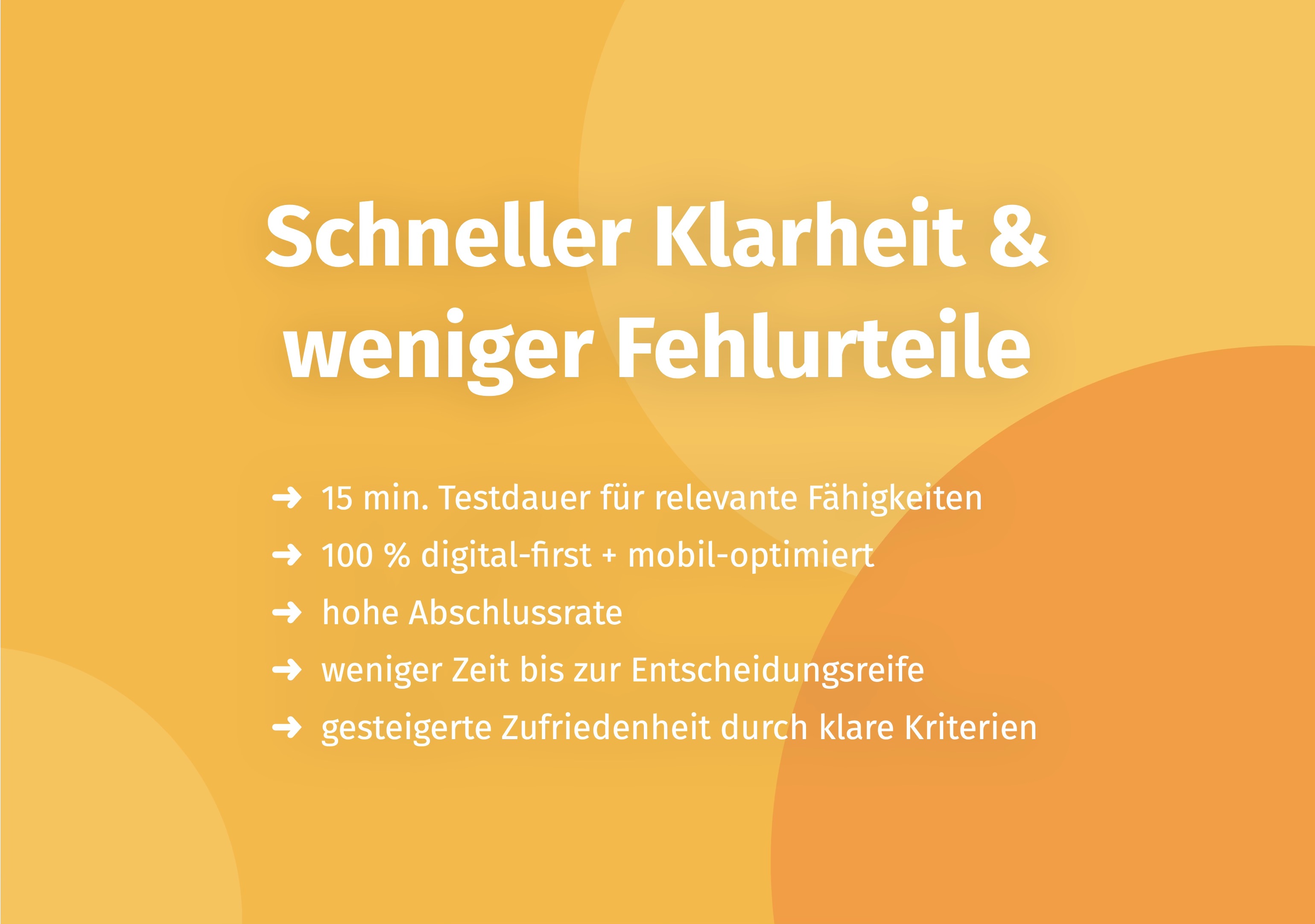
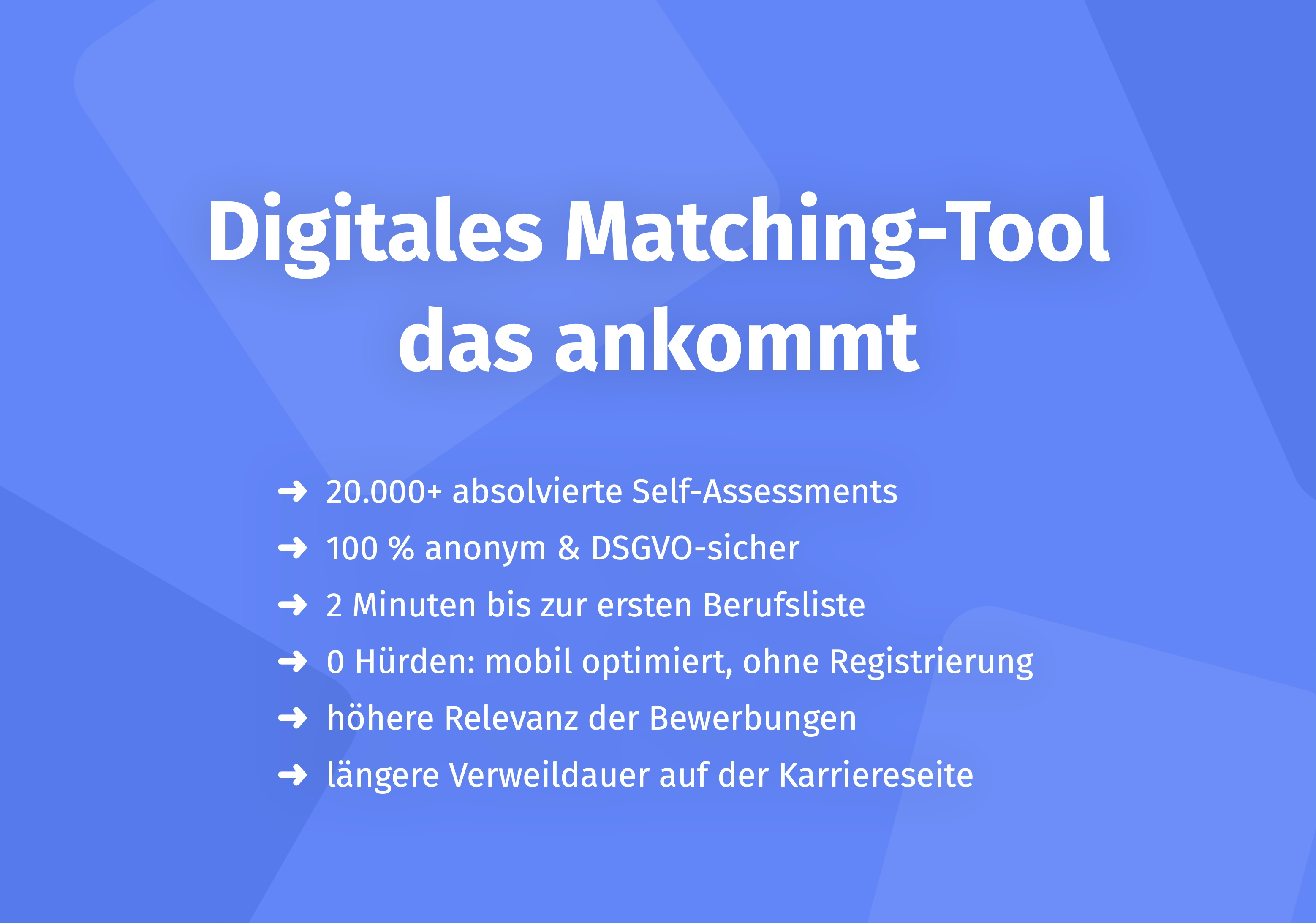
Tools like Aivy use Game-Based Assessments: playful test procedures that are scientifically based but offer candidates a positive experience. The methodology was developed as a scientific spin-off from Freie Universität Berlin and combines psychological expertise with modern technology.
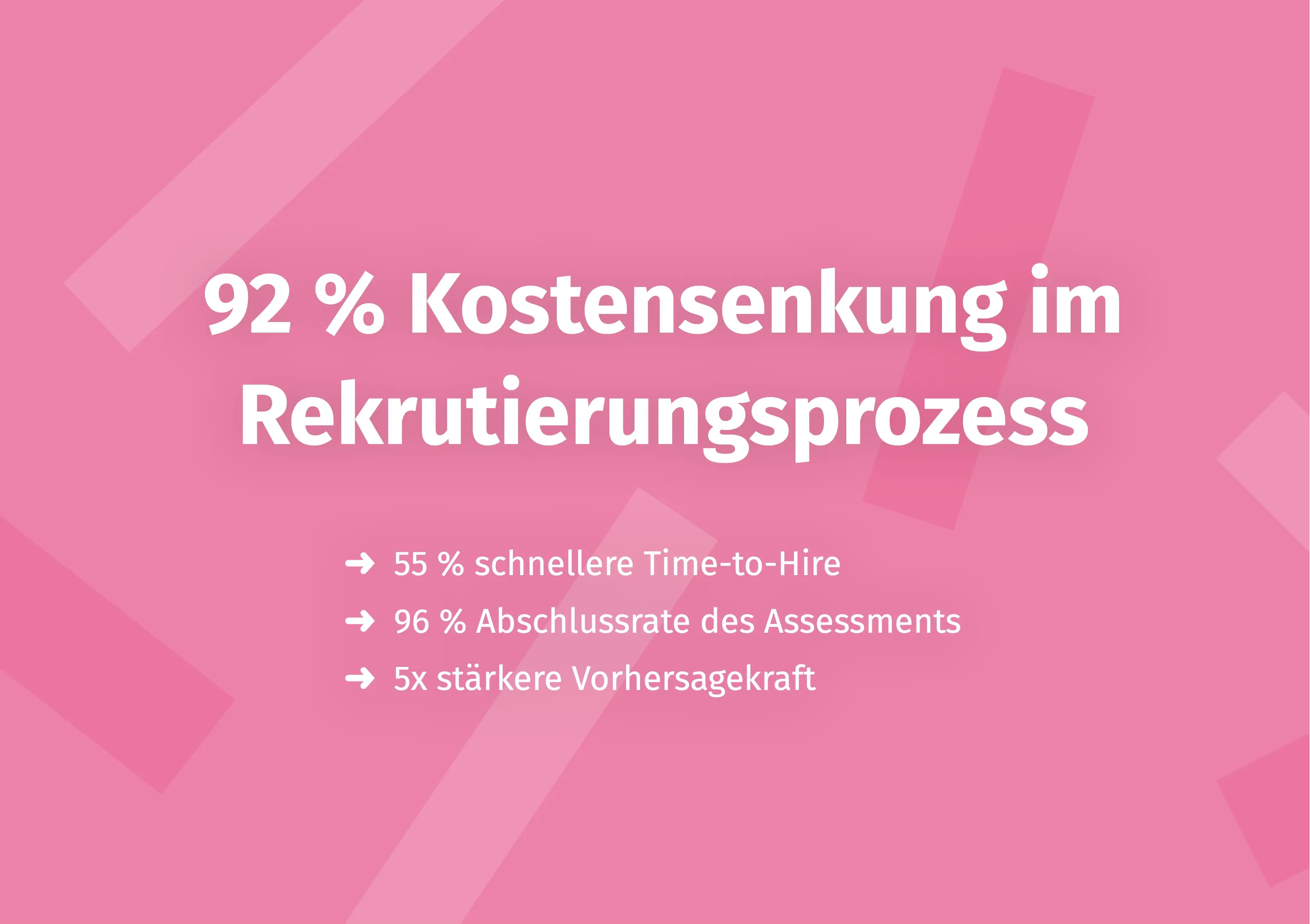
Practice shows measurable results: MCI was able to reduce time-to-hire by 55% and simultaneously lower cost-per-hire by 92% through the use of game-based assessments. Matthias Kühne, Director People & Culture at MCI, highlights the "more objective evaluation basis" that has strongly professionalized the process.
Lufthansa also shows impressive results: the company achieves a hit rate of 96% in predicting candidate suitability – with 81% candidate satisfaction. Per applicant, 100+ minutes of test time are saved. Susanne Berthold-Neumann from Lufthansa puts it succinctly: "We look at the documents late because they only show a small part of the person and say little about whether someone has the competencies for future challenges."
Learn more in the Lufthansa success story and the MCI success story.
How to Develop Your Talent Acquisition Strategy
A successful TA strategy doesn't happen overnight. It requires a systematic approach and continuous optimization.
Step-by-Step Guide
Step 1: Analyze the status quo - Before building something new, understand what you have. What channels do you currently use? How long does it take on average to fill a position? How satisfied are departments with the quality of hires?
Step 2: Define goals - What do you specifically want to achieve? Formulate measurable goals: "We reduce time-to-hire by 30%" is better than "We want to hire faster."
Step 3: Understand target groups - Who do you want to reach? Create personas for your most important talent groups. Where are they active? What motivates them? What expectations do they have of employers?
Step 4: Design processes - Define clear procedures for each phase of the TA process. Who is responsible when? What tools are used? How are decisions documented?
Step 5: Select tools and technology - Choose technologies that match your goals. An Applicant Tracking System (ATS) is basic equipment. Beyond that, assessment tools, sourcing platforms, and automation solutions can be useful.
Step 6: Pilot and optimize - Start with a pilot project before rolling out the new strategy company-wide. Learn from experiences and adjust.
The Most Important TA KPIs
No measurement, no improvement. These KPIs should be on your radar:
Time-to-Hire measures the time span from the start of the job posting to hiring. An important indicator of process efficiency. Benchmark: 30-45 days for typical positions.
Cost-per-Hire captures all costs associated with a hire: job advertisements, recruiter time, tools, external service providers. Helps with budget planning and efficiency analysis.
Quality of Hire measures the long-term success of new hires. Possible indicators: performance reviews after 6-12 months, promotion rates, retention rates.
Offer Acceptance Rate shows how many candidates accept your offer. A low rate may indicate unattractive conditions or problems in the selection process.
Candidate Satisfaction captures how satisfied applicants are with the process – regardless of whether they were hired. Important for employer branding.
Practical Example: Rapid Transformation
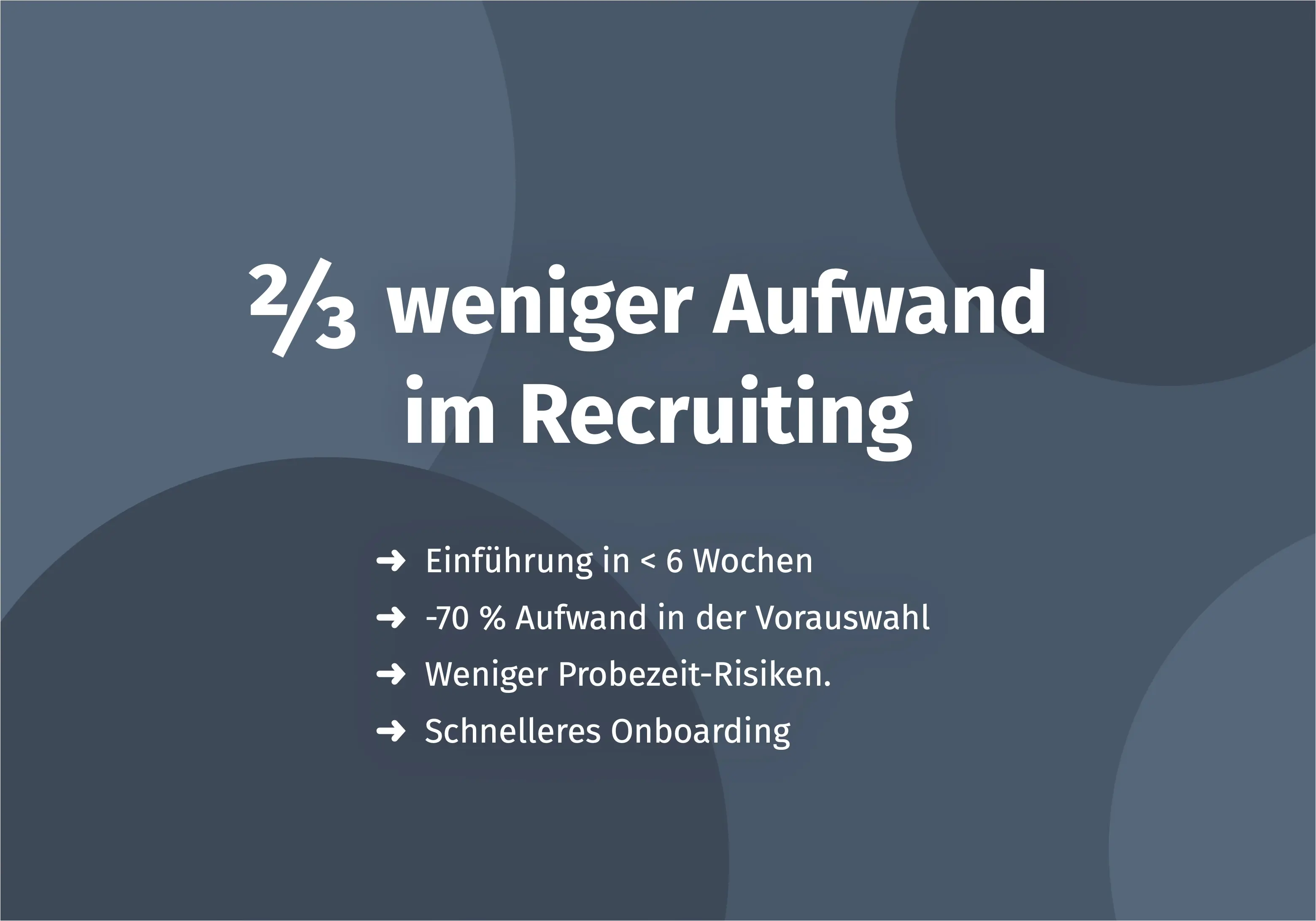
That a TA transformation doesn't have to take years is demonstrated by Callways. The company completely transformed its recruiting process within six weeks – with measurable success. Co-CEO Achim Reinhardt emphasizes: "Without Aivy, we would have 2-3 times as much work and recruit worse."
The key: clear focus on objective, data-based decisions instead of gut feeling. According to Reinhardt, the conversations are "significantly better and more to the point."
Frequently Asked Questions (FAQ)
What is the difference between Talent Acquisition and Recruiting? Recruiting is reactive and fills immediate vacancies. Talent Acquisition is strategic, long-term, and proactively builds relationships with talent before positions become available. TA also includes employer branding and pipeline building.
What phases does the Talent Acquisition process have? The TA process consists of six phases: 1. Strategic Planning, 2. Employer Branding, 3. Talent Sourcing, 4. Screening and Pre-Selection, 5. Assessment and Interviews, 6. Onboarding and Integration.
What is a Talent Pipeline and how do I build one? A Talent Pipeline is a pool of pre-qualified candidates who can be quickly approached when needed. Building through: continuous networking, employer branding, maintaining talent pools in ATS, active sourcing, and employee referrals.
What selection methods are scientifically validated? According to the meta-analysis by Schmidt and Hunter (1998/2016), structured interviews (r=.51) and aptitude tests (r=.54) have significantly higher validity than unstructured interviews (r=.38). Combining multiple methods further increases predictive power.
How can I reduce Unconscious Bias in Talent Acquisition? Through objective assessments, structured interviews, standardized evaluation criteria, and scientifically validated assessment procedures. The key: less room for subjective interpretation.
What is Skills-Based Hiring? Hiring based on demonstrated abilities rather than degrees or resumes. Focus on potential and competencies rather than formal qualifications. Objective tests make abilities measurable that aren't visible on a resume.
What KPIs measure Talent Acquisition success? The most important: Time-to-Hire (speed), Cost-per-Hire (efficiency), Quality of Hire (long-term performance), Offer Acceptance Rate (attractiveness), and Candidate Satisfaction (process quality).
What role does AI play in Talent Acquisition? AI automates screening, personalizes communication, and supports matching. 84% of TA leaders will use AI by 2026. Important: AI complements human judgment but doesn't replace it. Critical thinking remains the most important competency.
Conclusion: Talent Acquisition as a Strategic Success Factor
Talent Acquisition is more than an HR trend – it's a strategic necessity. In a world of work where qualified talent is scarce and requirements are constantly changing, the quality of your talent sourcing determines business success.
The key takeaways:
Talent Acquisition fundamentally differs from traditional recruiting through its long-term, proactive approach. Instead of just filling vacancies, you systematically build relationships with talent.
Science-backed methods like structured interviews and objective assessments are significantly superior to gut-feeling decisions. The research is clear on this.
The combination of technology and human expertise produces the best results. AI can support, but critical thinking and people skills remain indispensable.
Candidate experience becomes a competitive advantage. Fair, fast, and transparent processes attract better talent and strengthen your employer branding.
What you can do now: Analyze your current TA process. Where is there room for improvement? What methods do you use for pre-selection? How objective are your decision criteria?
Objective assessment tools like Aivy can help you make better hiring decisions – faster, fairer, and data-driven. The successes of companies like Lufthansa and MCI show what's possible.
Sources
- Schmidt, F.L. & Hunter, J.E. (1998/2016). The Validity and Utility of Selection Methods in Personnel Psychology. Psychological Bulletin.
- Korn Ferry (2025). Talent Acquisition Trends 2025/2026.
- World Economic Forum (2024). Future of Jobs Report.
- Bertrand, M. & Mullainathan, S. (2004). Are Emily and Greg More Employable than Lakisha and Jamal? American Economic Review.

Make a better pre-selection — even before the first interview
In just a few minutes, Aivy shows you which candidates really fit the role. Beyond resumes based on strengths.